


Fixing an axle seal leak is a repair most vehicle owners can tackle with basic tools and a clear step-by-step process — and acting quickly is what separates a $200 fix from a $2,000 drivetrain overhaul. An axle seal is the rubber or silicone ring that sits between the spinning axle shaft and the differential or transmission housing, and when it fails, gear oil or transmission fluid escapes directly into areas that can destroy bearings, contaminate brakes, and starve gears of lubrication. The good news is that catching the problem early and following the right repair process restores the seal, refills the drivetrain fluid, and protects every component downstream.
Knowing the symptoms of a leaking axle seal is the first practical skill this guide builds. The signs range from obvious — an oil puddle under your rear wheel, a greasy film on your tire sidewall — to subtle, like a faint burning smell after highway driving or a transmission that hesitates to engage. Understanding what each symptom points to helps you move from “something is dripping” to “I know exactly which seal has failed and why.”
Once symptoms are identified, understanding the root causes of axle seal failure makes the repair stick the first time. Seals wear naturally over years of heat cycles and friction, but the more common cause of premature failure is improper axle installation — a misaligned seal, a scored shaft surface, or a blocked vent tube building internal pressure. Knowing the cause before you install the new seal is what prevents the frustrating cycle of replacing a seal that leaks again within weeks.
Beyond the basic repair, this guide also covers the cost of fixing an axle seal leak versus ignoring it, how to handle persistent leaks after replacement, and how drivetrain type affects the job. Whether you own a daily commuter, a truck with a solid rear axle, or an AWD crossover with CV axles, the principles here apply — and by the end, you will have a complete picture of the repair from diagnosis to the Post-repair fluid level setting procedure that most beginners overlook.
What Is an Axle Seal and What Does It Do?
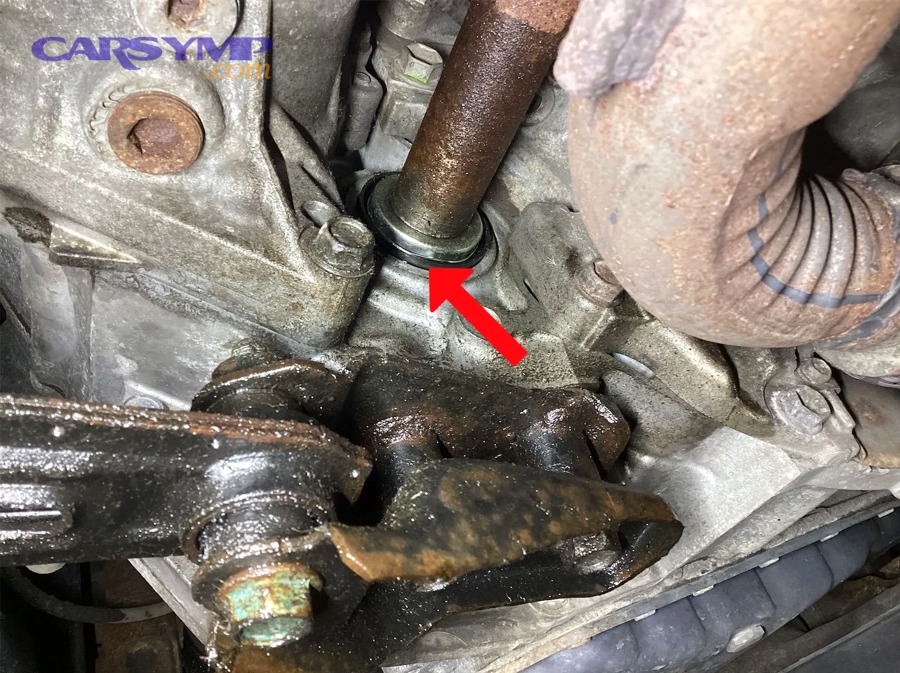
An axle seal is a precision rubber or silicone ring — seated at the point where the axle shaft exits the differential or transmission housing — designed to contain drivetrain fluid while blocking contaminants from entering. It is a small component with a critical job: every drop of gear oil or transmission fluid that lubricates your gears, bearings, and internal drivetrain components stays where it belongs because of this seal.

To better understand why axle seal failure has such serious consequences, it helps to look at how the seal works and how it is positioned within the drivetrain system.
How Does an Axle Seal Work Inside a Drivetrain?
The axle seal works through a flexible lip mechanism that maintains continuous contact with the surface of the spinning axle shaft. This seal lip is engineered to flex and self-adjust as the shaft rotates, creating a dynamic barrier that holds fluid inside under pressure while the axle spins at speed.
The seal faces constant friction and heat. Every time you drive, the seal lip rubs against the axle shaft surface, generating heat that gradually breaks down the rubber or silicone material over time. Heat cycles — engine-warm, then cooling overnight, then warming again — cause the seal material to expand and contract repeatedly. After enough cycles, even a high-quality seal becomes less pliable, begins to harden, or develops micro-cracks that allow fluid to seep past. Vehicles left sitting for long periods face a related problem: the seal dries out, bonds to the shaft surface, and tears when the vehicle is first moved. The type of fluid in contact with the seal also matters — gear oil (used in most rear differentials) and transmission fluid (used in transaxle-equipped vehicles) each interact differently with seal materials, which is why OEM-spec seals are formulated for the specific fluid in your drivetrain.
What Is the Difference Between an Axle Seal and a Differential Seal?
An axle seal and a differential seal are two distinct components, though both contain drivetrain fluid and are frequently confused — especially when a beginner is trying to locate the source of a leak. An axle seal sits at the outer end of the axle housing, where the axle shaft exits toward the wheel. A differential seal — most commonly the pinion seal — sits at the center of the differential, where the driveshaft connects.
The practical difference matters for diagnosis. An axle seal leak appears near the wheel end of the vehicle, often showing up as oil on the inside of the tire or on the brake backing plate. A pinion seal or differential cover gasket leak appears closer to the center of the axle housing, typically dripping from the differential casing itself. Both leak the same fluid — gear oil — which is why identifying the location of the wet area before beginning any repair is the most important first diagnostic step.
Is an Axle Seal Leak Serious? Can You Drive with One?
Yes, an axle seal leak is serious — though the immediate urgency depends directly on the rate of fluid loss and the proximity of leaked fluid to your brake components. A small seep may allow limited driving if fluid levels are maintained, but an active drip demands immediate attention.
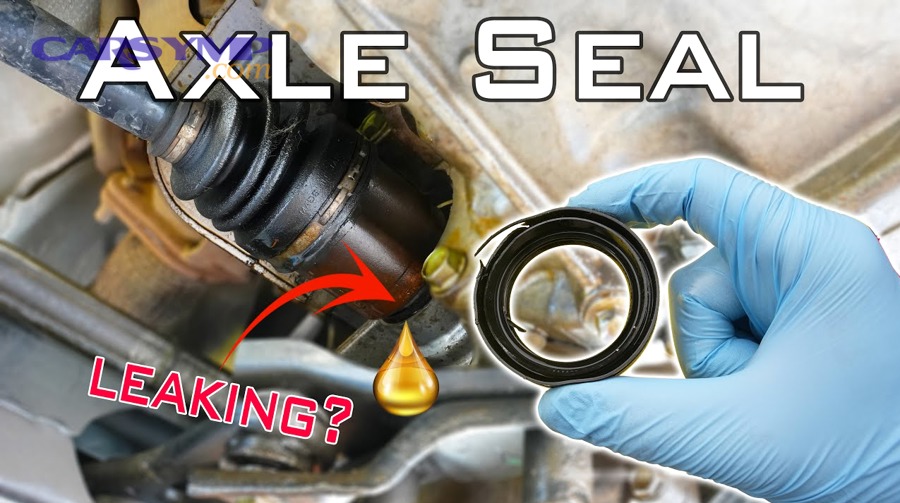
Specifically, the severity of an axle seal leak exists on a spectrum, and understanding where your leak falls on that spectrum determines what you should do next.
What Happens If You Ignore a Leaking Axle Seal?
Ignoring a leaking axle seal triggers a predictable chain of mechanical failures, each more expensive than the last. The progression moves from a simple seal replacement into full drivetrain repair if fluid loss goes unaddressed.
The damage path follows this sequence:
- Seal leaks → fluid level in the differential or transmission begins to drop
- Fluid loss → gears and bearings receive less lubrication; friction and heat increase
- Bearing wear → wheel bearings run dry, generating heat and metal debris
- Differential or transmission damage → gears strip, surfaces score, internal components fail
- Axle breakdown → complete drivetrain failure requiring full replacement
Beyond the mechanical chain, there is a safety dimension that escalates urgency further. When a rear axle seal fails, gear oil can migrate onto the brake shoes or drum lining. Oil-contaminated brakes lose friction dramatically — a vehicle that feels like it stops normally can suddenly have a brake pull or near-zero rear braking force in an emergency stop. This is why many professional mechanics refuse to install new brake components until an active axle seal leak is repaired first.
Cost comparison makes the urgency concrete. A seal replacement costs $150–$400 at a shop, or as little as $15–$50 in parts for a competent DIYer. A failed differential or transmission as a result of ignored fluid loss costs $1,000–$3,000 or more. The seal is always the better investment.
What Are the Symptoms of a Leaking Axle Seal?
There are two main categories of axle seal leak symptoms: visual symptoms you can see without moving the vehicle, and non-visual symptoms you notice while driving or after parking. Recognizing both categories ensures you catch a leak early, even when the fluid loss is too small to produce a visible puddle.

Below, each symptom category is broken down in detail so you can accurately identify a leak before beginning diagnosis.
What Does an Axle Seal Leak Look Like? (Visual Symptoms)
The most reliable visual symptoms of a leaking axle seal are oil deposits in locations that only make sense if fluid is escaping from the axle housing.
Look for these specific visual indicators:
- Oil puddle or drip spots on the ground directly beneath the wheel area after the vehicle has been parked overnight. Place a clean piece of cardboard under the vehicle before bed and check for drips in the morning — this is the simplest confirmation test.
- Greasy or oily film on the inside sidewall of the rear tire. On solid axle vehicles, this is the most definitive visual sign of an axle seal failure.
- Wet, oily residue on the brake backing plate or drum. If you remove the wheel and see oil-soaked brake components, the axle seal has been leaking long enough to contaminate the brake system.
- Fluid streaking along the axle housing tube running outward from the differential toward the wheel.
The fluid color helps confirm the source. The table below summarizes fluid identification by color and location:
| Fluid Type | Color (Fresh) | Color (Used) | Location of Leak |
|---|---|---|---|
| Gear oil (differential) | Clear to light yellow | Dark brown to black | Rear wheel end, axle housing |
| Transmission fluid (transaxle) | Bright red to pink | Dark red to brown | Front wheel end, transaxle housing |
| Brake fluid | Clear to light yellow | Light tan | Caliper area, behind backing plate |
This table is useful when you find fluid but are not immediately certain which system is leaking — the color, location, and viscosity together confirm the source.
What Are the Non-Visual Symptoms of an Axle Seal Leak?
Several axle seal leak symptoms appear through your senses while driving rather than through visual inspection. These non-visual signals are often the first indication of a leak, occurring before fluid loss is large enough to leave a puddle.
Watch and listen for:
- Burning smell after driving, especially after highway speeds. Gear oil or transmission fluid contacting hot exhaust components, brake drums, or wheel bearing housings produces a distinctive burnt-oil smell.
- Smoke near the wheel area after stopping. If gear oil reaches the brakes, the friction heat during braking vaporizes it, producing visible smoke from the wheel well.
- Transmission slipping or hesitation while driving at highway speed. Axle seals on transaxle-equipped vehicles seal transmission fluid — a leak here reduces fluid volume and causes the transmission to slip between gear changes.
- Whining, grinding, or humming noise from the wheel end. This indicates that the leak has been active long enough to reduce lubrication to the wheel bearing, which is now running with metal-to-metal contact.
What Causes an Axle Seal to Leak?
There are four primary causes of axle seal leaks: natural material wear, improper installation, a damaged axle shaft contact surface, and excessive internal pressure from a blocked vent system. Identifying the correct cause before installing a new seal is what prevents a repeat leak within weeks.

Most beginners assume age is the only cause — but improper installation and shaft damage are responsible for the majority of seals that fail prematurely or fail again after replacement.
Does an Axle Seal Wear Out on Its Own Over Time?
Yes, an axle seal will wear out naturally over time, primarily due to the accumulated effects of heat, friction, and rubber degradation — but the timeline varies significantly based on driving conditions and maintenance habits.
Under normal conditions, an axle seal can last 50,000–100,000 miles or more. Accelerated wear occurs when:
- The vehicle runs hot consistently, increasing the operating temperature at the seal lip and accelerating rubber hardening
- The differential or transmission is overfilled, creating excess internal pressure that forces fluid past the seal lip faster than normal wear would
- The vehicle sits unused for extended periods, causing the rubber seal lip to dry out, lose elasticity, and bond to the axle shaft surface — leading to a tear when the vehicle is first moved
A seal that has failed due to natural wear typically shows a hardened, cracked, or flattened lip when removed. If the old seal looks like this and the axle shaft surface is clean and smooth, a straightforward seal replacement resolves the problem.
Can Improper Installation Cause an Axle Seal to Leak?
Yes — improper installation is the single most common cause of premature axle seal failure, and it is also the most preventable. A seal that is not perfectly seated will leak from the first moment the vehicle is driven.
The most frequent installation errors include:
- Installing the seal at an angle rather than perfectly square to the housing bore, creating an uneven contact area between the seal lip and the shaft
- Damaging the seal lip during installation by pressing it in without a proper seal driver or suitable socket — a seal driver ensures even pressure across the entire seal face
- Scoring the axle shaft surface when removing the old seal with a chisel or screwdriver — even a shallow groove on the shaft surface creates a leak path the new seal cannot bridge
- Nicking the housing bore during old seal extraction, preventing the outer diameter of the new seal from seating flush against the housing
A key insight many beginners miss: when removing an old seal, a seal puller tool should always be used in preference to a chisel or flat-blade screwdriver. Chisel marks in the housing bore are a hidden cause of leaks that a new seal alone cannot fix.
How Do You Diagnose an Axle Seal Leak Step by Step?
Diagnosing an axle seal leak follows a systematic 4-step process — cardboard test, visual trail-following, fluid identification, and leak source isolation — and the entire process requires no special tools. Completing these steps before purchasing parts ensures you replace the correct seal the first time.

How Do You Tell If It’s the Axle Seal and Not Another Leak?
The axle seal can be distinguished from other nearby leaks — including the differential cover gasket, the pinion seal, and brake fluid leaks — by combining three clues: fluid location on the vehicle, fluid color and viscosity, and the specific components that are wet.
Use this comparison framework:
| Leak Source | Fluid Type | Location of Wet Area | Other Visual Clues |
|---|---|---|---|
| Axle seal | Gear oil or ATF | At wheel end, inside tire sidewall | Oily brake backing plate |
| Differential cover gasket | Gear oil | Rear face of differential housing | Gasket surface wet, fluid drips from housing center |
| Pinion seal | Gear oil | Front of differential, near driveshaft yoke | Fluid slung onto driveshaft or floor under diff center |
| Brake fluid | Brake fluid | Behind caliper or wheel cylinder | Spongy brake pedal, fluid is thinner and less oily |
This table gives you a clear diagnostic framework before any disassembly begins. Confirming the leak source by location and fluid type prevents unnecessary work and ensures the right part is ordered.
Do You Need Special Tools to Diagnose an Axle Seal Leak?
No — diagnosing an axle seal leak requires no special tools beyond a flashlight, clean rags, and a piece of cardboard. The clean-and-drive method is the most reliable technique for beginner diagnosis.
Follow this sequence:
- Clean the suspected area thoroughly with brake cleaner or rags to remove old oil buildup
- Place cardboard under the vehicle at the wheel area and drive normally for 24–48 hours
- Inspect the cardboard for fresh drips and follow the trail upward on the vehicle to the exact leak point
- Use a flashlight to inspect the axle shaft, housing bore, tire sidewall, and brake backing plate for wetness
- Identify the fluid by color and viscosity as described in the table above
This no-tool approach gives beginners a confident diagnosis before spending money on parts or scheduling shop time.
How Do You Fix a Leaking Axle Seal? (Step-by-Step Repair Guide)
Replacing a leaking axle seal involves 9 key steps — from raising the vehicle and removing the wheel to pressing in the new seal and refilling the drivetrain fluid — and the complete repair takes 2–4 hours for a beginner on a straightforward rear solid axle. The expected outcome is a permanently dry axle housing, restored fluid levels, and full protection of the differential or transmission.

Difficulty varies by axle type: solid rear axles are the most accessible for beginners, while semi-floating, full-floating, and CV axle configurations add disassembly steps. Regardless of configuration, the core principles remain identical.
What Tools Do You Need to Replace an Axle Seal?
Gathering the correct tools before starting prevents the most common beginner mistake — beginning disassembly and discovering a missing tool mid-repair.
Required tools and materials:
- Floor jack and two jack stands (never work under a vehicle supported only by a floor jack)
- Lug wrench or impact wrench
- Drain pan (minimum 2-quart capacity)
- Seal puller or flat pry bar with rag protection
- Seal driver set or a socket matching the outer diameter of the new seal
- Rubber mallet
- Torque wrench
- Clean rags and brake cleaner spray
- Replacement seal (OEM or quality aftermarket — see Supplementary Content for guidance)
- Fresh gear oil or ATF in the correct specification for your vehicle
- Optional: thin bead of RTV silicone sealant for the seal outer diameter if the housing bore shows minor surface irregularities
What Are the Basic Steps to Replace a Rear Axle Seal?
Replacing a rear axle seal follows a logical 9-step sequence that moves from vehicle preparation through disassembly, seal swap, reassembly, and critical post-repair steps. Each step builds on the previous one.
Step 1: Loosen the lug nuts before lifting. With the vehicle on level ground, break the lug nuts loose by a half-turn before jacking — the wheel needs resistance from the ground to allow this.
Step 2: Raise and secure the vehicle. Jack the vehicle at the correct lift point, then lower it onto jack stands. Never work under a vehicle on a floor jack alone.
Step 3: Remove the wheel, brake drum (or caliper and rotor). Set these aside on a clean surface. Inspect brake shoes or pads immediately for oil contamination — oil-soaked brakes must be replaced, not just cleaned.
Step 4: Pull the axle shaft from the housing. On C-clip axle designs, you must first remove the differential cover and the C-clip retaining pin to release the shaft. On bolt-flange designs, the retaining bolts are removed from the axle flange directly.
Step 5: Extract the old seal carefully. Use a seal puller tool or a pry bar with a rag protecting the housing bore. Work around the perimeter of the seal evenly to avoid scoring the bore. Inspect the bore surface for nicks after removal.
Step 6: Clean and inspect the seal bore and axle shaft. Run your finger around the shaft contact surface — any groove or rough texture is a hidden leak source. Clean the bore with brake cleaner and a rag. If the shaft is scored, a repair sleeve (wear ring) must be installed before the new seal.
Step 7: Lubricate and install the new seal. Apply a thin film of clean gear oil or the appropriate grease to the seal lip. Place the seal squarely against the bore opening and drive it in evenly using a seal driver or matching socket and rubber mallet — never strike the seal face directly.
Step 8: Reinstall the axle shaft, brake assembly, and wheel. Reverse the disassembly steps in order. Torque all fasteners to the manufacturer’s specification.
Step 9: Refill the differential to the correct fluid level. This is the post-repair fluid level setting procedure that most beginners skip or do incorrectly. Do not fill to the absolute top of the fill port — fill until fluid just begins to seep from the fill hole with the vehicle on level ground, then reinstall the fill plug. Overfilling creates internal pressure that pushes fluid past the new seal from the first drive.
What Should You Inspect While the Axle Is Removed?
With the axle shaft out, four additional components should be inspected before reassembly — because any one of them can cause a new seal to fail almost immediately if overlooked.
1. Axle shaft contact surface. Run your fingernail across the seal contact zone. Any groove, scoring, or rust pattern that your nail catches represents a leak path that the new seal cannot compensate for. Solution: install a seal repair sleeve (wear ring) that provides a fresh, smooth surface.
2. Wheel bearing condition. With the shaft removed, check the bearing by rotating it by hand and listening and feeling for roughness, grinding, or looseness. A worn wheel bearing creates shaft movement that cyclically distorts the seal lip — causing a new seal to fail within months.
3. Differential fluid condition. When you drain or access the differential, pour the fluid into a clear container and look for metallic particles or a milky, water-contaminated appearance. Metal shavings indicate internal wear that warrants further inspection before reassembly.
4. Seal bore in the housing. Any nick, chisel mark, or rust in the housing bore can create a leak path around the outside diameter of the new seal — a perimeter leak that looks identical to a lip seal leak but is not solved by another seal replacement. Light surface irregularities can be addressed with a thin bead of RTV silicone on the outer diameter of the seal before installation.
How Much Does It Cost to Fix an Axle Seal Leak?
Fixing an axle seal leak costs between $15–$50 in parts for a DIY repair, or $150–$400 for professional shop labor plus parts — making it one of the most cost-effective drivetrain repairs available compared to the damage that results from ignoring it.
The financial case for prompt repair becomes clear when the numbers are compared directly:
| Repair Scenario | Estimated Cost |
|---|---|
| DIY seal + fluid refill (parts only) | $15–$50 |
| Professional axle seal replacement (parts + labor) | $150–$400 |
| Differential rebuild or replacement (from neglect) | $1,000–$3,000+ |
| Transmission repair from ATF loss (transaxle) | $1,500–$4,000+ |
This table reflects why a transmission leak repair or axle seal replacement addressed early is always the economically rational choice. The seal itself is inexpensive — the labor is what adds cost at a shop, and that labor scales steeply when surrounding components have been damaged by prolonged fluid loss.
One additional consideration: a leaking axle seal may be covered under your vehicle’s Powertrain Warranty if the vehicle is still within the warranty period. Check your warranty documentation before paying for the repair out of pocket.
Beyond the Basics — Axle Seal Leak Scenarios, Drivetrain Differences, and Repeat Failure Causes
Preventing repeat leaks requires understanding the specific scenarios that cause new seals to fail — including drivetrain type differences, persistent post-replacement leaks, and seal quality choices that most beginner guides overlook. This section addresses the questions that arise after a basic repair has been attempted.

What Is the Difference Between a Front and Rear Axle Seal Leak?
Front and rear axle seals differ in three key ways: the fluid they contain, the mechanical system they protect, and the complexity of replacement. Front seals on transaxle-equipped vehicles seal transmission fluid; rear seals on differential axles seal gear oil.
The risk profile of each failure is distinct:
- Front axle seal (CV axle / transaxle): A leaking front seal allows transmission fluid to escape. Transmission fluid loss leads to slipping, hesitation, and eventual transmission damage — a far more expensive repair than differential failure. Front axle seal replacement also requires navigating the CV axle shaft, which must be carefully withdrawn from the transaxle without damaging the differential side gears.
- Rear axle seal (solid/straight axle): A leaking rear seal allows gear oil to escape from the differential and can contaminate the rear brakes. On vehicles with a live solid axle, the C-clip or bolt-flange axle design determines the disassembly method. Solid axle rear seal replacement is generally more beginner-accessible than front CV axle seal work.
Why Does My Axle Seal Keep Leaking After Replacement?
A replaced axle seal that continues leaking is almost always caused by one of five root conditions: a scored axle shaft, an improperly seated seal, a blocked differential vent tube, differential overfill, or a damaged housing bore.
Preventing repeat leaks requires systematically ruling out each cause:
- Scored axle shaft — The most common cause. A groove worn into the shaft by the old seal lip creates a spiral leak path that a new seal cannot bridge. Inspect the shaft contact zone visually and by feel; install a seal repair sleeve if any groove is present.
- Improperly seated new seal — A seal driven in crooked or not fully flush with the housing bore will leak from installation. Always use a proper seal driver and verify the seal face is perfectly square before reassembly.
- Blocked differential vent tube — This is the most overlooked cause of repeat leaks. The differential has a small breather vent designed to equalize internal air pressure as the oil heats and cools. If this vent is clogged with mud, debris, or accumulated grime, pressure builds inside the housing and forces fluid past the seal lip. Clean or replace the vent tube before installing a new seal.
- Differential overfill — Filling the differential to the absolute top of the fill hole creates hydraulic pressure that pushes fluid past any seal. The correct fill level is fluid just reaching the bottom edge of the fill hole with the vehicle on level ground — not brimming over it.
- Housing bore damage — A perimeter leak (fluid escaping around the outside of the seal, not through the lip) occurs when the bore surface has nicks or scratches. Address this with fine emery cloth for light damage, or RTV sealant applied to the seal’s outer diameter during installation.
Does Axle Type Affect How You Fix the Seal? (Solid vs. Semi-Floating vs. Full-Floating)
Yes — axle type significantly affects both the disassembly procedure and the difficulty level of the seal replacement. There are three main axle configurations, each requiring a different approach.
Solid axle (most common on older trucks and SUVs):
The axle shaft spans the full distance from the differential to the wheel hub. Seal access requires removing the C-clip inside the differential (on C-clip designs) or the axle retaining bolts. This is the most beginner-friendly configuration.
Semi-floating axle (common on light-duty trucks and rear-wheel-drive cars):
The axle shaft carries vehicle weight in addition to transmitting torque. This means the axle bearing — which sits at the outer end of the housing alongside the seal — also takes vertical load. If the bearing has worn due to a long-running seal leak, it must be replaced along with the seal, adding complexity and cost.
Full-floating axle (found on heavy-duty trucks and larger commercial vehicles):
The wheel hub carries the vehicle’s weight independently of the axle shaft, which only transmits torque. Seal replacement requires removing the large outer hub assembly before the axle shaft and seal are accessible — a more involved procedure that typically requires specialty hub socket tools and is less common in beginner DIY scenarios.
Knowing your axle type before starting the repair determines your tool list, your parts order, and your realistic time estimate.
Should You Use OEM or Aftermarket Axle Seals?
OEM seals deliver guaranteed fit and correct material specification for your vehicle’s specific fluid and operating temperature; quality aftermarket seals from trusted brands offer equivalent performance at lower cost, while generic low-cost seals are the leading preventable cause of repeat seal failures.
The comparison breaks down into three tiers:
- OEM seals are manufactured to the exact dimensions and rubber compound specification of the original seal. They fit correctly, resist the precise fluid chemistry in your drivetrain, and carry the manufacturer’s quality assurance. Cost: typically $20–$60 per seal.
- Quality aftermarket seals (brands such as Timken, National Seal, and SKF) are manufactured to equivalent or near-equivalent specifications. These are a reliable choice for most passenger vehicles and light trucks and cost less than OEM. Cost: typically $10–$30 per seal.
- Generic or unbranded seals are the high-risk option. These seals may have dimensional tolerances that are slightly off, use lower-grade rubber compounds that harden or swell prematurely, or lack the surface coatings that prevent dry installation damage. The cost saving of $5–$10 is rarely worth the risk of a repeat labor investment.
The practical recommendation: if your vehicle is a common make and model, a quality aftermarket seal from a reputable brand is the right balance of cost and reliability. If your vehicle is a specialty truck, European import, or commercial fleet vehicle with a specific fluid chemistry, OEM is the safer choice.
By following this guide from symptom identification through to seal selection and the correct post-repair fluid level setting procedure, you now have everything needed to diagnose, repair, and permanently fix an axle seal leak — the right way, the first time.