


A post-repair adaptation and road test checklist is the most reliable way to confirm that a vehicle actually performs correctly after transmission service, because it verifies fluid integrity, electronic adaptation, shift behavior, drivability, and final safety in a structured order rather than by guesswork alone.
That core goal becomes more important when the repair involves electronic controls, clutch pressure learning, or transmission solenoid replacement, because the vehicle may leave the workshop with the repair technically completed but not yet fully validated under real driving conditions. In that sense, the checklist is not just a routine step; it is the proof stage of the repair.
Drivers and technicians also need to know what to inspect before, during, and after the road test so they can tell the difference between normal relearning and true post-repair problems. This matters because mild temporary changes in shift feel can occur during adaptation, while persistent slip, flare, harsh engagement, or warning lights usually point to incomplete repair or incorrect setup.
Some vehicles add another layer of complexity through scan-tool resets, temperature-specific drive cycles, and manufacturer-specific relearn procedures. Next, the main content explains the checklist from the first safety check to the final pass or fail decision.
What Is a Post-Repair Adaptation and Road Test Checklist?
A post-repair adaptation and road test checklist is a step-by-step verification process that confirms a vehicle’s transmission operates correctly after service by checking safety, electronic relearn status, shift quality, leaks, warnings, and drivability under real conditions.
To better understand the checklist, it helps to see it as the bridge between “the repair is finished” and “the vehicle is truly ready to return to the driver.”
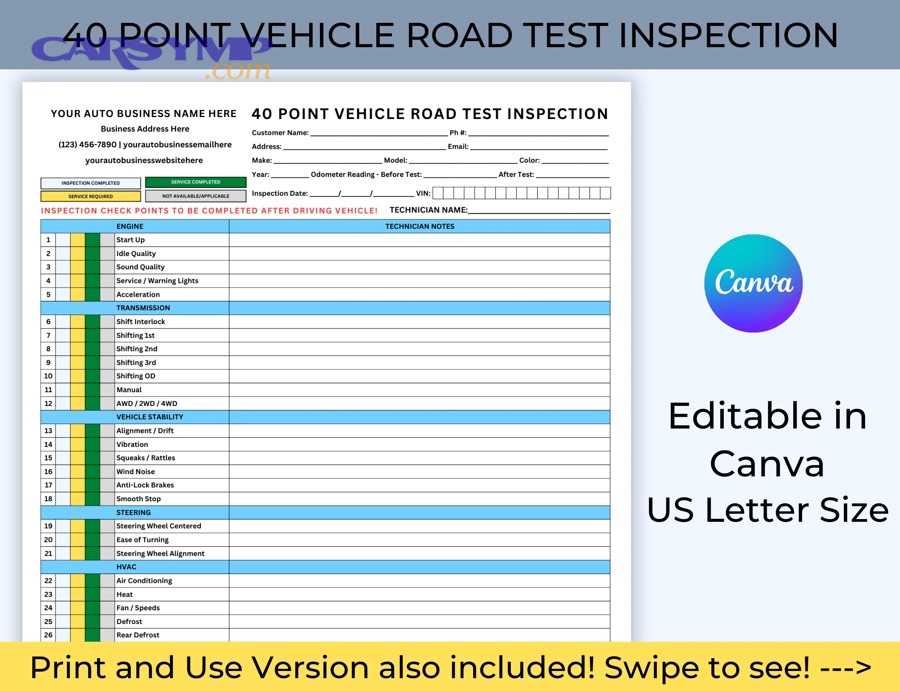
A good checklist exists because modern transmission work is no longer limited to replacing a gasket or topping up fluid. Many repairs affect the hydraulic, electrical, and software sides of the transmission at the same time. A shop may replace a valve body component, repair a wiring issue, perform transmission solenoid replacement, or address clutch pressure control. Yet none of those tasks proves success until the vehicle moves through the conditions that triggered the original complaint.
In practical terms, the checklist answers five direct questions. First, is the vehicle safe to drive? Second, were the repair steps and adaptation procedures completed correctly? Third, does the transmission engage and shift properly in real traffic conditions? Fourth, does the problem stay gone after temperature rises and load changes? Fifth, can the vehicle be released with confidence?
This definition also helps separate a real verification process from a casual test drive. A casual drive often misses the exact speed, load, or temperature range where the complaint happens. By contrast, a checklist-driven road test starts with pre-test inspection, moves into controlled driving stages, and ends with a post-drive recheck. That structure is what gives the result value.
Is a Road Test Always Required After Transmission Service?
Yes, a road test is usually required after transmission service because it confirms repair effectiveness, exposes problems that do not appear in the bay, and verifies safe operation under real driving load.
Specifically, the road test matters because many transmission faults only appear when the gearbox is asked to shift under throttle, coast, stop, or re-engage after deceleration. A vehicle can idle smoothly and still slip on the 2–3 upshift, bang into reverse, or trigger a code only after warm-up. Without a road test, those faults remain hidden until the driver experiences them later.
A second reason is that adaptation often happens dynamically. Some vehicles relearn clutch fill times, pressure response, or shift timing during live operation. If the technician skips that step, the transmission may feel inconsistent or log repeat faults. This is one reason final validation is especially important after any work involving solenoids, pressure regulation, or electronic controls.
A third reason is customer protection. When a vehicle returns to the owner without a structured verification process, the risk of comeback increases. The driver may report that the car was “fixed but still shifts strangely,” when the real issue is that the original shop did not complete the confirmation stage.
Road testing is not always possible immediately. If the vehicle has severe leaks, no reverse, unstable brake function, or clear limp mode behavior, the correct choice is to stop and reinspect rather than force a drive. In those cases, safety overrides process.
What Does “Adaptation” Mean After Transmission Repair?
Adaptation means the transmission control system relearns operational values such as clutch fill timing, line pressure response, and shift behavior after repair or service changes.
More specifically, adaptation is the electronic and hydraulic settling process that aligns software commands with the transmission’s actual mechanical condition. When worn fluid, failing solenoids, or damaged components are corrected, the old learned values may no longer match the new behavior. The control module then needs either automatic relearning through driving, a scan-tool reset, or both.
This matters because drivers often confuse adaptation with a simple reset. A reset only clears stored values or commands the module to start learning again. Adaptation is the larger process in which the vehicle observes how the transmission responds and then adjusts its control strategy. That is why the road test is closely tied to the adaptation stage.
In a practical service context, adaptation can follow several repairs. It may occur after fluid and filter work, valve body service, clutch-related repair, or transmission solenoid replacement. It can also matter when a shop must choose the correct diagnostic path based on Solenoid-related codes and meanings, since those codes sometimes point to electrical faults, sometimes to hydraulic response problems, and sometimes to mechanical issues that prevent normal relearning.
The term also helps explain why some mild shift differences right after service are not automatically a failure. If the behavior improves quickly, stays within normal limits, and no codes return, the vehicle may simply be learning. If the behavior worsens, repeats consistently, or triggers warnings, the problem is no longer normal adaptation.
According to a study by the National Highway Traffic Safety Administration, in its long-running consumer complaint and defect-tracking work, drivability and shift-quality problems often become apparent only after vehicles are driven under the same operating conditions that triggered the fault, reinforcing the need for real-world validation after repair.
What Should Be Checked Before Starting the Road Test?
A proper pre-road-test inspection should verify safety, fluid integrity, electronic status, and basic transmission engagement before the vehicle moves, because these checks prevent avoidable damage and make the road test meaningful.
Before the test begins, the vehicle must prove that it is ready for controlled driving rather than simply able to start and idle.
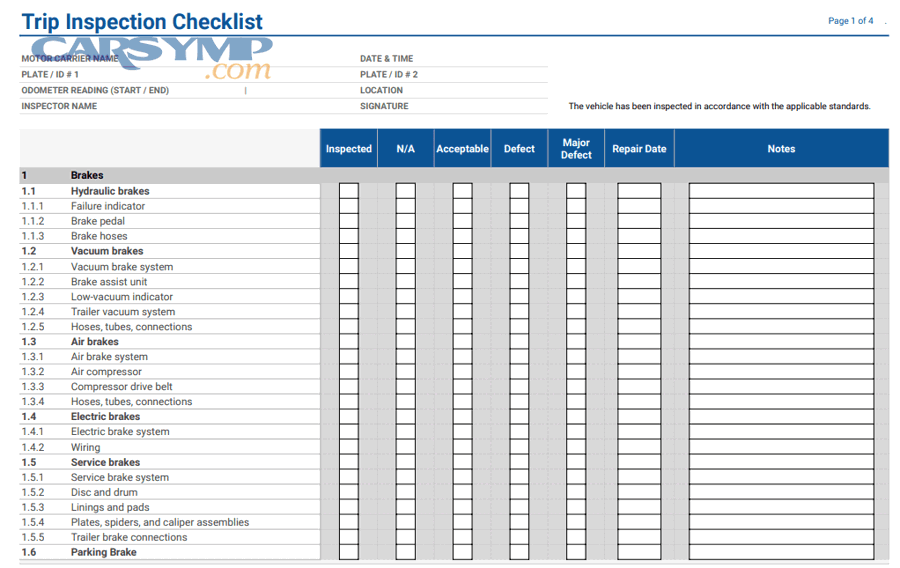
The pre-test phase starts with fluid and leak control. Transmission fluid level must match the manufacturer’s checking procedure, since many units require specific temperature ranges, gear cycling, or level plug methods rather than a traditional dipstick. The fluid should also be checked for smell, discoloration, aeration, and contamination. Burnt odor, metallic debris, or foaming fluid changes the meaning of everything that follows in the test.
The next step is the visual inspection underneath and around the repair area. The technician should confirm that cooler lines, harness connectors, sensor plugs, pan bolts, shields, and mounts are secure. Even a minor fluid seep can become a major leak once line pressure and temperature rise on the road. Likewise, a loosely seated connector can produce intermittent symptoms that look like a deeper internal failure.
Battery voltage and charging performance matter more than many drivers realize. Modern transmissions depend heavily on accurate electrical supply for solenoid control, sensor feedback, and module operation. A weak battery or unstable charging system can distort shift behavior, create false codes, or interrupt adaptation.
Then comes the scan step. Pending, stored, and active codes should be reviewed before driving. Freeze-frame data should be captured when available. If the repair included a reset or relearn, the technician should verify that the procedure was completed correctly. A road test without that confirmation can waste time because the vehicle may still be operating on old learned values.
Finally, the vehicle should be checked at standstill for gear engagement quality. Shift into drive and reverse with the brake applied. Observe delay time, engagement feel, idle stability, abnormal clunking, and warning light behavior. If the car shows severe delay, violent engagement, or immediate fault messages, the correct choice is not to continue driving.
Which Pre-Test Checks Confirm the Vehicle Is Safe to Drive?
The main pre-test safety checks are leak inspection, secure components, brake readiness, basic gear engagement, and warning light status.
Let’s explore these checks in the exact order that protects the vehicle and the driver most effectively.
First, inspect for fluid leaks under pressure-sensitive areas. The pan gasket, level plug, cooler fittings, axle seals, and service points deserve special attention. A minor drip at idle may become a major loss once the transmission warms up. Because transmission units depend on hydraulic stability, losing fluid during the test can quickly turn a manageable issue into clutch damage.
Second, confirm that everything disturbed during repair is secure. This includes splash shields, crossmembers, mounts, electrical plugs, brackets, and intake components removed for access. This step becomes important when the repair involved Access: pan-drop vs full teardown differences. In a pan-drop job, the risk often centers on pan sealing, filter seating, and external connections. In a more invasive teardown, the risk expands to internal assembly quality, harness routing, and multiple reinstalled components.
Third, verify brake function and steering readiness. Although these systems are not part of the transmission itself, they determine whether the road test can be performed safely. A post-repair test that includes stop-and-go traffic, reverse engagement, and low-speed turns requires predictable braking and steering response from the first minute.
Fourth, confirm basic drive and reverse engagement. A long hesitation, violent bang, or refusal to engage is a stop condition. There is no diagnostic value in forcing a road test when the vehicle already fails the basic readiness check.
Fifth, review the dashboard. Active check-engine, transmission, stability, or ABS warnings can change how the vehicle behaves and how the test should be interpreted. Some warnings may not block the test, but they must be known before the vehicle moves.
Should Codes Be Cleared and Adaptation Be Confirmed Before Driving?
Yes, codes should usually be reviewed and relevant adaptations confirmed before driving, because that prevents false conclusions, preserves diagnostic clarity, and ensures the road test actually validates the repair.
However, the key word is “reviewed” before “cleared.” If the technician clears codes too early, valuable freeze-frame data disappears. That data may show temperature, gear, speed, and load at the moment the fault occurred. It can also help distinguish between an electrical solenoid control issue and a performance-related fault caused by pressure or mechanical response.
Once the diagnostic information is saved, code-clearing may be appropriate if the repair has addressed the confirmed cause and the procedure calls for a fresh learning cycle. This often applies after valve body work, transmission solenoid replacement, or software-related repair steps. The same logic applies to relearn procedures. If the vehicle requires a reset or scan-tool-guided adaptation, that process should be completed before the drive begins.
This step also affects how the road test result is interpreted. If the transmission still carries old fault memory or incomplete adaptation status, the first few miles may reflect those old conditions rather than the quality of the repair. A clean test begins with a known baseline.
In short, clear only after you capture data, confirm the repair, and follow the correct procedure. Otherwise, the road test becomes less scientific and more speculative.
According to guidance published by vehicle manufacturers and independent transmission diagnostic training programs, pre- and post-repair scan comparison is one of the most effective ways to verify whether a repair corrected the fault or only changed the symptom pattern.
What Should Drivers Check During the Road Test?
Drivers should check shift timing, engagement feel, RPM behavior, warning lights, noises, vibration, and repeatability across different driving conditions during the road test.
Then, the road test should move from simple to demanding conditions so the transmission is evaluated logically rather than randomly.
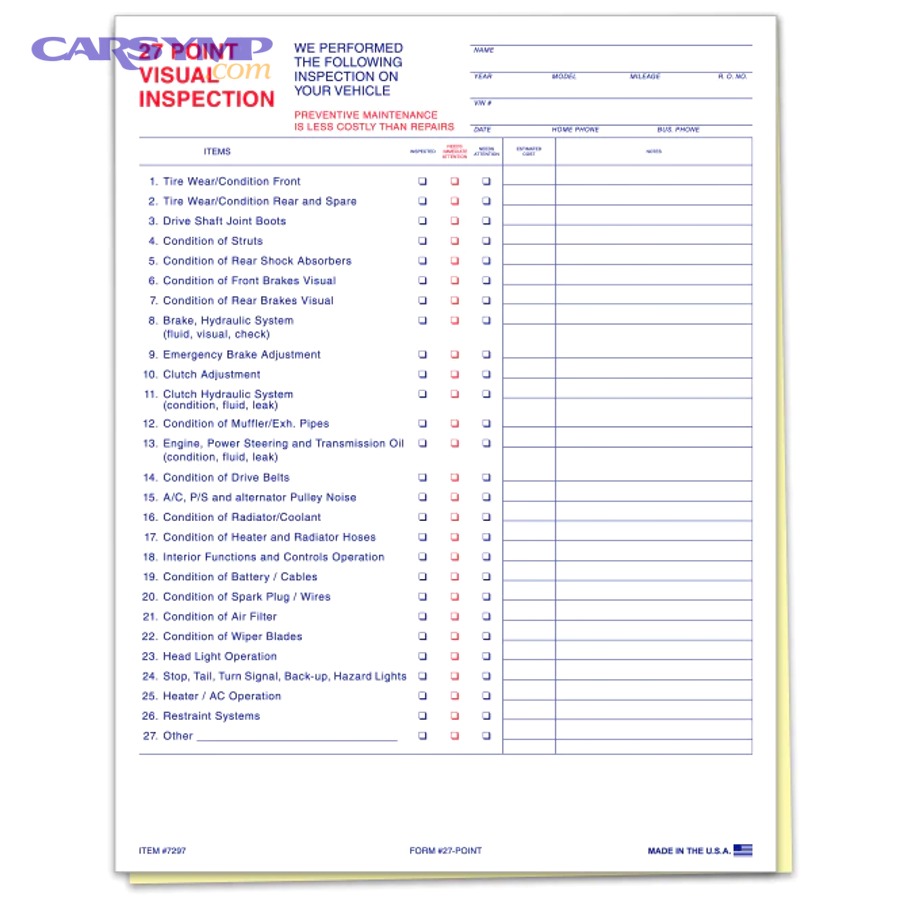
A useful test begins at low speed in a low-stress environment. The driver should feel the initial engagement into drive, monitor the first one or two upshifts, and listen for new noises. The first stage answers a simple question: does the car behave normally in the easiest possible conditions? If the answer is no, there is little value in pushing farther.
Next comes moderate acceleration. This stage reveals shift flare, delayed apply, slipping, harshness, or RPM instability that may not show at light throttle. The driver should note whether shifts occur cleanly or whether the engine speed rises without matching vehicle acceleration.
Steady cruising matters because some problems appear only after the transmission reaches operating temperature and settles into a higher gear. During this stage, the driver should watch for converter shudder, hunting between gears, or sudden downshifts without command.
Deceleration and stop-and-go traffic are equally important. Some vehicles behave acceptably on acceleration but show hard downshifts, clunking, or delayed re-engagement when slowing down and pulling away again. This is also the moment to test reverse after warm-up, since some faults change with fluid temperature.
A complete test also includes parking-lot maneuvers and tight turns where safe. These conditions can reveal mount issues, axle-related noises, or low-speed engagement irregularities that normal straight-line driving misses.
Which Driving Conditions Best Reveal Shift or Adaptation Problems?
The best driving conditions are cold start, light throttle, moderate throttle, steady cruise, stop-and-go operation, deceleration, reverse engagement, and loaded or uphill driving where safe.
Specifically, each condition tests a different side of transmission behavior.
Cold start is valuable because some units show delayed engagement or pressure-related problems before the fluid warms. If the original complaint happened in the first few minutes of driving, that condition must be recreated. Warm-only testing can miss the fault.
Light-throttle driving reveals baseline smoothness. A properly functioning transmission should make its early shifts with minimal drama. If it jerks, hesitates, or flares at low load, the issue is usually easy to reproduce and document.
Moderate throttle exposes pressure-control and clutch-apply problems. Under stronger demand, the system must respond quickly and consistently. A weak or erratic response can point to hydraulic leakage, incorrect adaptation, or electronic control trouble.
Steady cruising helps detect hunting, torque converter shudder, and unstable shift logic. These symptoms often show only when the transmission is trying to hold a gear rather than transition between gears.
Stop-and-go operation matters because repeated launch, shift, brake, and re-launch cycles stress the low-speed control side of the unit. That is often where customer complaints are strongest.
Deceleration tests downshift quality. Some transmissions bang on coast-down, while others hesitate and then re-engage awkwardly when throttle is reapplied.
Reverse engagement and parking maneuvers are final checks that often reveal issues hidden by forward motion. If reverse is delayed or harsh only when warm, the road test must capture that.
What Signs Show the Transmission Is Operating Normally During the Road Test?
Normal operation shows as prompt gear engagement, smooth and consistent shifts, stable RPM, predictable downshifts, no abnormal noises, and no returning warning lights.
For example, when the driver selects drive or reverse, the transmission should engage within a normal, repeatable time without a violent bang. During acceleration, the engine speed should rise and fall in sync with vehicle speed rather than flare or hang between gears. At cruise, the vehicle should hold gears steadily. On deceleration, downshifts should feel orderly rather than abrupt.
Consistency is the key marker. One slightly firmer shift during relearning may still fall within normal behavior. Repeated harsh 2–3 shifts, repeated flare into third gear, or repeated delay when selecting reverse do not.
Temperature stability is another sign of normal function. A vehicle that behaves well cold but becomes erratic warm is not yet proven. A passing result requires stable behavior as the transmission approaches normal operating temperature.
Drivers should also pay attention to the dashboard and to cabin feel. No new warnings should appear. There should be no fresh vibration, chime, or limp-mode behavior. The vehicle should feel calmer and more predictable after repair, not more uncertain.
What Is the Difference Between Normal Relearning and a Real Post-Repair Problem?
Normal relearning involves mild, temporary shift variation that improves as the vehicle adapts, while a real post-repair problem is persistent, repeatable, worsening, or associated with codes, slipping, noise, or unsafe engagement.
However, the difference becomes clear only when the driver observes pattern and progression rather than reacting to one isolated sensation.
Normal relearning usually has three traits. It is minor, not severe. It improves over time rather than getting worse. It does not trigger warnings or create clear drivability faults. For instance, a slightly firmer early upshift that smooths out over the next drive cycle may be acceptable.
A real problem usually shows one or more red flags. The symptom repeats in the same gear or condition. It becomes stronger with temperature or load. It returns the same warning code. It causes obvious flare, slipping, harsh impact, or delayed engagement. It interferes with normal driving confidence.
This difference is especially important after repairs involving solenoids or valve body control. Solenoid-related codes and meanings can mislead inexperienced readers into assuming every code requires the same repair. In reality, a code may reflect a control circuit issue, a stuck valve, pressure loss, or a performance failure downstream of the solenoid command. If the shift problem remains after the code is cleared and the same operating condition reproduces it, the adaptation stage is no longer the main explanation.
A useful rule is simple: improvement suggests relearning; repetition suggests reinspection.
According to technical training materials used in automatic transmission diagnostics, repeatable faults under the same load and temperature conditions are treated as confirmation patterns, while non-repeatable minor changes immediately after service are more often categorized as adaptation or normalization effects.
What Should Be Verified After the Road Test Is Complete?
After the road test, the vehicle should be checked again for leaks, codes, fluid behavior, consistent shift results, and final release readiness.
In addition, the post-test phase matters because driving load and heat often reveal issues that a cold inspection cannot.

The first post-drive step is another visual leak inspection. Heat expansion and operating pressure can expose seepage that was invisible before the test. The pan, cooler lines, fittings, axle seals, and service plugs deserve special attention. If fluid is found, the repair is not fully complete, regardless of how well the car shifted.
The second step is scan verification. Read the system again and compare the results with the pre-test state. Look for returning codes, pending faults, temperature-related flags, or adaptation status changes. This is where the road test becomes measurable rather than subjective.
The third step is fluid behavior review. On many units, correct level can only be confirmed at a specified temperature after cycling through gears. That means the final level check often belongs after the road test, not before it. Incorrect final level can explain new shift complaints after otherwise proper work.
The fourth step is symptom review. Did the original complaint disappear? Did any new issue appear? Did the transmission behave the same across repeated events? These questions must be answered clearly before the vehicle is released.
Finally, the shop or driver should document what happened. Recording road conditions, temperature state, shift observations, and scan results creates a clean handover and protects against confusion later.
Which Post-Test Results Mean the Repair Passed?
A repair passes when the original complaint is gone, no new leaks or active codes appear, fluid level is correct, and the transmission behaves consistently across normal operating conditions.
To sum up, a passing result is not based on one good shift. It is based on a complete pattern of normal behavior.
The original symptom must be gone or meaningfully corrected. If the vehicle came in for delayed reverse and reverse now engages promptly both cold and warm, that is a strong positive sign. If the original 2–3 flare never reappears during the same conditions that used to trigger it, the repair has real credibility.
No fresh leak should appear after the test. No active warning should return. No repeatable harsh or slipping event should remain. If the scan shows a clean result and the road test confirms stable operation, the vehicle moves much closer to release readiness.
The fluid level must also be correct under the correct temperature and procedure. This is not a minor detail. A transmission can feel nearly normal with slightly wrong fluid level, then develop inconsistent complaints days later. Final verification closes that gap.
The last passing marker is consistency. If the transmission performs well across low speed, moderate throttle, deceleration, stop-and-go use, and reverse, the evidence supports a successful repair rather than a lucky short drive.
When Should the Vehicle Be Reinspected Instead of Returned to the Driver?
Yes, the vehicle should be reinspected instead of returned if slipping, flare, harsh engagement, persistent delay, repeat codes, warning lights, or leaks remain after the road test.
More importantly, any symptom that affects safety or points to active damage risk should stop the release process immediately.
Repeated delayed engagement is one example. If drive or reverse still takes too long to apply, the issue is not resolved. Persistent shift flare is another. When engine speed rises without matching acceleration, internal holding capacity or pressure control may still be compromised. Harsh banging into gear, renewed limp mode, or fresh fluid loss are equally clear reasons to stop.
Reinspection is also required when the road test creates a new symptom not present before service. A repair may have fixed one issue and introduced another through assembly error, level error, connector fault, or incomplete adaptation. That still counts as a failed release result.
For drivers, the practical rule is simple: if the vehicle feels less trustworthy after service than it should, it deserves another look before normal use resumes.
According to service training guidance used in drivability diagnostics, repeat faults after a structured verification drive are among the strongest indicators that the root cause remains active or that an installation or calibration step was missed.
How Can Drivers Use a Simple Pass/Fail Checklist After Transmission Service?
Drivers can use a simple pass/fail checklist by reviewing pre-drive safety, monitoring behavior during the test, and confirming post-drive results in a repeatable yes-or-no format.
Below, that simplified approach turns technical verification into a practical tool for everyday drivers.
The value of a pass/fail checklist is clarity. Many drivers know that something feels “off” after service, but they struggle to describe it precisely. A checklist transforms impressions into observations. That helps both the driver and the technician.
Before the drive, the driver should confirm there are no visible leaks under the car, no major warning lights, and no obvious delay or slam when selecting drive or reverse. During the drive, the driver should note whether shifts are smooth, whether the RPM rises naturally, and whether any hesitation, shudder, or clunk repeats. After the drive, the driver should recheck for leaks, smell for burnt fluid, and confirm that no warning light returned.
The table below summarizes a simple pass/fail version of the post-repair checklist for drivers.
| Test stage | Check item | Pass result | Fail result |
|---|---|---|---|
| Before driving | Visible leaks | No fresh fluid under vehicle | Fresh red/brown fluid visible |
| Before driving | Warning lights | No new transmission-related warnings | Warning appears before or at startup |
| Before driving | Drive/reverse engagement | Prompt and controlled | Delay, slam, or refusal to engage |
| During drive | Light-throttle shifts | Smooth and repeatable | Flare, harshness, hesitation |
| During drive | Cruise behavior | Stable RPM and gear holding | Hunting, shudder, unexpected downshift |
| During drive | Stop-and-go response | Predictable re-engagement | Clunk, lag, jerking |
| During drive | Reverse when warm | Normal engagement | Delayed or harsh reverse |
| After drive | Leak recheck | Dry repair area | New seepage or drip |
| After drive | Dashboard status | No warning returns | Fault light returns |
| After drive | Overall confidence | Vehicle feels more normal than before | Vehicle still feels unreliable |
This kind of table is useful because it creates language the shop can act on. “Fails at warm reverse engagement after 20 minutes” is far more useful than “still feels weird.”
What Items Belong on a Minimal Post-Repair Checklist for Everyday Drivers?
A minimal post-repair checklist should include leaks, warning lights, drive/reverse engagement, shift smoothness, RPM behavior, vibration, reverse operation, and a final recheck after parking.
Specifically, these items matter because they are observable without advanced tools and still capture the most important signs of success or failure.
Leaks are first because fluid loss can damage the transmission quickly. Warning lights come next because they compress a large amount of system information into one visible sign. Engagement quality matters because it reveals whether the transmission can apply gears properly from rest. Shift smoothness and RPM behavior show whether the unit is holding and changing gears correctly. Vibration and noise add a mechanical dimension that electronics may not always report. Warm reverse operation matters because some issues appear only after temperature rises. The final parking-lot recheck confirms whether driving exposed any new seepage.
That limited list keeps the process realistic for non-technical readers while still aligning with how professionals validate drivability.
Should Drivers Record Findings During the Test Drive?
Yes, drivers should record findings during the test drive because notes improve accuracy, reveal patterns, and help technicians reproduce the complaint if further work is needed.
For example, instead of writing “shift problem,” a useful note would say, “After 15 minutes of driving, 2–3 upshift flares lightly at moderate throttle; no warning light.” That sentence captures temperature, gear event, severity, and condition. It creates diagnostic value.
Drivers should write down when the symptom appears, whether it repeats, whether the vehicle is cold or warm, what kind of throttle was used, and whether any sound or light accompanied the event. Even short notes on a phone can be enough.
Recording matters even more when the vehicle has already undergone transmission solenoid replacement or related electronic work, because intermittent electrical or hydraulic issues often need precise reproduction conditions before they can be confirmed.
In short, notes convert uncertainty into evidence.
How Do OEM Adaptation Rules, Scan Tools, and Drive Cycles Affect the Final Result?
OEM adaptation rules, scan tools, and drive cycles can significantly change the final result because some vehicles relearn automatically, some require guided procedures, and some only confirm success after specific temperature and load conditions are completed.
To better understand this deeper layer, it helps to move beyond the universal checklist and look at the specialized factors that shape how different vehicles finish the repair process.

Universal checklist logic still applies across most vehicles: inspect, verify, drive, and recheck. Yet modern transmissions differ in how they manage learning values, shift adaption, and fault confirmation. One unit may relearn naturally after several normal drive cycles. Another may require a scan-tool reset followed by a tightly defined sequence of accelerations, decelerations, and warm-up stages. A third may appear normal until the final drive cycle completes and then suddenly log a performance code.
That variation explains why two vehicles can receive similar repairs but require different release procedures. It also explains why generic assumptions often cause misdiagnosis. A technician who skips the manufacturer-specific step may think the repair failed, when the real problem is incomplete setup. On the other hand, a technician who assumes “it just needs to learn” may miss a genuine installation or hydraulic issue.
This is where deep diagnostic context matters. Solenoid-related codes and meanings cannot be read in isolation. A code for a shift solenoid may describe an electrical control problem, a rationality problem, or a performance failure under certain conditions. OEM logic decides how and when that code sets. That means the final result depends on both hardware condition and procedural correctness.
Do All Vehicles Require the Same Adaptation or Relearn Procedure?
No, vehicles do not require the same adaptation or relearn procedure because manufacturers use different control strategies, fault thresholds, and validation logic.
Meanwhile, this difference is one of the main reasons a generic “drive it and see” approach can fail.
Some transmissions adapt passively. After the repair, the control module gradually refines shift pressure and timing during normal use. Others need an active reset so the module stops relying on old learned values. Still others demand a formal service routine performed with a scan tool before the road test begins.
The practical takeaway is simple: the checklist framework stays the same, but the adaptation details may not. A reliable process always checks what the specific vehicle requires instead of assuming all units behave alike.
What Is the Difference Between a Manual Relearn, Automatic Relearn, and Scan-Tool Reset?
Manual relearn is driver-performed through defined driving steps, automatic relearn happens through normal monitored operation, and a scan-tool reset clears or initializes adaptation values electronically before relearning begins.
However, those three processes often overlap, which is why they are easy to confuse.
A manual relearn usually gives the driver or technician exact instructions: hold certain speeds, use specific throttle ranges, perform repeated upshifts and downshifts, or warm the vehicle to a target temperature. The idea is to present the module with a clean set of inputs so it can rebuild learned values efficiently.
An automatic relearn is less structured. The transmission refines its behavior over normal operation. This does not mean the road test is optional. It means the learning process continues after the initial validation, as long as no fault reappears.
A scan-tool reset is the electronic starting point. It does not by itself prove success. Instead, it clears previous learned values or commands the system into relearn mode. The road test and post-test recheck still determine whether the reset led to a correct result.
Can Temperature, Load, and Drive Cycle Completion Change the Test Outcome?
Yes, temperature, load, and drive cycle completion can change the test outcome because many transmission behaviors and fault monitors appear only under certain thermal and operating conditions.
Especially in modern electronically managed units, a short drive may tell only part of the story.
Temperature affects viscosity, pressure response, clutch apply timing, and monitor readiness. A transmission may engage acceptably when cold but reveal flare or shudder when warm. Load matters because light throttle does not stress the system the same way moderate acceleration or uphill demand does. Drive cycle completion matters because some monitors need a specific sequence before they declare the repair successful or failed.
This is why the final result should never be based on one parking-lot lap or a single smooth shift. A true pass requires the vehicle to behave correctly across the conditions that matter.
What Should Be Documented Before Returning the Vehicle to the Customer?
The final documentation should include the original complaint, repair performed, adaptation status, scan results, road test conditions, observed outcomes, and return instructions if symptoms recur.
In short, documentation turns repair quality into something visible and defensible.
A strong handover record states what problem the vehicle had, what was repaired, whether a scan-tool reset or relearn was performed, how the road test was conducted, and what the result was. It should also note if the vehicle may continue minor adaptation within normal limits and what symptoms would not be considered normal.
This protects the customer because expectations become clear. It also protects the shop because the release decision is based on written facts rather than memory.
For drivers, the most valuable part of the documentation is the final summary: what was fixed, what was tested, and what signs would justify coming back. That closes the loop started by the post-repair adaptation and road test checklist and turns a technical process into a confident return to normal driving.
According to guidance used in professional service quality control, documented post-repair verification reduces comeback confusion because it links the complaint, the repair, the test conditions, and the release decision into one traceable record.