


Yes, you should often change the transmission fluid and, when the design allows, the filter during solenoid replacement because the repair commonly opens the same service area, old fluid can carry debris that affects hydraulic control, and bundled service reduces the chance of repeat labor. That direct answer matters for car owners because transmission solenoid replacement is not only an electrical or mechanical repair; it often intersects with fluid condition, filter restriction, and the overall health of the valve body.
Next, the service steps involved in this repair explain why the question comes up so often. Many transmissions require pan removal, fluid draining, connector inspection, and reassembly before the new solenoid can operate correctly. Once the pan is off, technicians can inspect the magnet, evaluate debris, and decide whether filter service should happen at the same time.
Then, the choice between a fluid change, filter replacement, and a full flush requires a more careful decision than many owners expect. These are not identical services, and the best option depends on filter design, contamination level, manufacturer procedure, and the reason the solenoid failed. A smart repair plan protects shift quality without adding unnecessary risk.
Below, other details such as serviceable versus non-serviceable filters, OEM fluid specification, relearn procedures, and Solenoid-related codes and meanings can also influence results. Introduce a new idea: the main content will show not only whether this bundled service makes sense, but also when it is necessary, when it is optional, and what questions car owners should ask before approving the work.
Should You Change Transmission Fluid and Filter During Solenoid Replacement?
Yes, transmission fluid and filter service is often recommended during solenoid replacement because the same labor area is already open, contaminated fluid can affect hydraulic performance, and combined service usually lowers repeat-work risk.
To better understand this issue, it helps to separate the broad answer from the exceptions, because not every transmission uses the same filter design or repair path.

Is Transmission Fluid and Filter Service Necessary Every Time a Solenoid Is Replaced?
No, fluid and filter service is not necessary every single time a solenoid is replaced, but it is necessary in many common repairs where the pan must come off or the internal filter sits in the same service path. The key factor is access. If the technician reaches the failed solenoid only after draining fluid and removing the transmission pan, the repair already overlaps with routine service steps. In that situation, skipping fresh fluid or a serviceable filter can be shortsighted.
That said, some transmissions use externally mounted solenoids or assemblies that do not require pan removal. In those cases, a shop may not need to disturb the fluid at all, or it may need to top off only a small amount. Other vehicles use internal filters that are not considered routine-service parts. A sealed transmission may have a screen, an internal pickup, or a filter buried so deeply that replacing it is not part of a standard solenoid job.
The practical answer for car owners is this: if the repair opens the hydraulic side of the transmission, fluid service is usually a smart companion service. If the repair does not enter that area, full filter service may not apply. This is why one estimate may include fluid, filter, gasket, and cleaning supplies while another estimate includes only the solenoid, labor, and a fluid top-off.
A second reason bundled service is common involves contamination control. Solenoids regulate hydraulic pressure and clutch application. Dirty fluid, varnish, friction material, or metallic debris can interfere with that control environment. Reinstalling the system with worn-out fluid increases the chance that the new part will work in a less-than-ideal condition.
What Does “Fluid and Filter Service During Solenoid Replacement” Mean?
Fluid and filter service during solenoid replacement is a maintenance-and-repair bundle that usually includes draining old ATF, removing the pan when required, replacing the filter or screen if serviceable, cleaning internal surfaces, reinstalling parts, and refilling with the correct fluid.
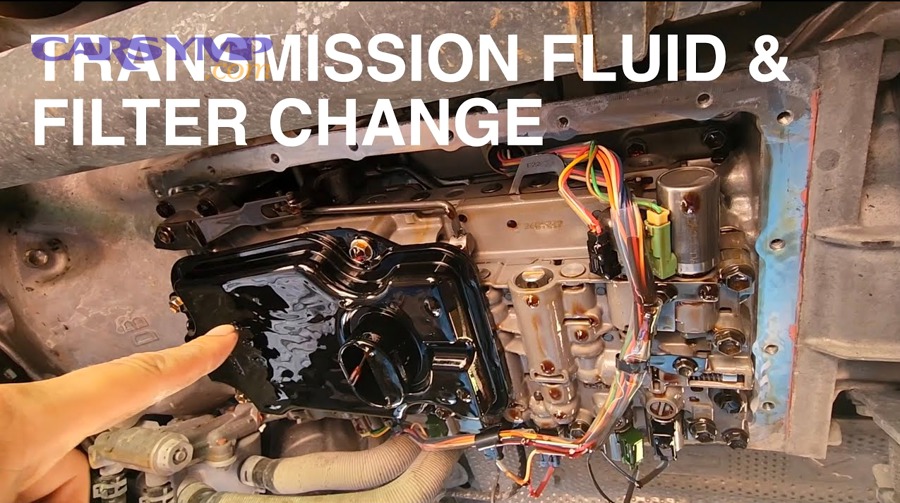
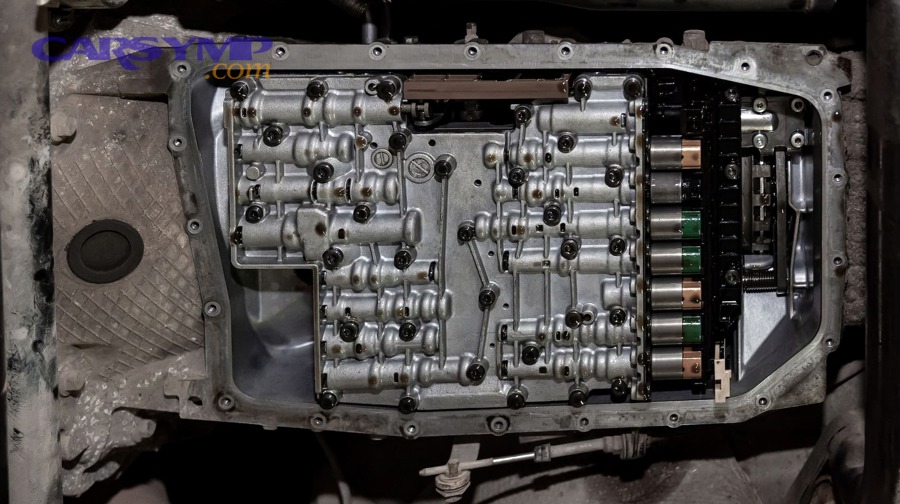
Specifically, this service is not the same as simply swapping one electrical part and sending the vehicle back out. In many automatic transmissions, the solenoids sit near or inside the valve body. To access them, the technician may remove the transmission pan, disconnect the internal harness, remove fasteners, and expose the lower hydraulic assembly. Once that happens, the fluid is already drained and the filter is often visible. That overlap is why shops frequently recommend doing both tasks together.
The “service” portion often includes:
- Draining used transmission fluid
- Removing the pan and old gasket
- Inspecting the magnet and pan residue
- Replacing a serviceable filter or cleaning a screen when appropriate
- Checking connectors, seals, and harness condition
- Installing the new solenoid or solenoid pack
- Reassembling the pan with the correct torque sequence
- Refilling with the OEM-specified fluid
- Verifying fluid level at the proper temperature
- Road testing and, in some vehicles, performing an adaptation or relearn
This bundled definition matters because many owners hear the term transmission solenoid replacement and assume it is a small electrical fix. In reality, the repair often crosses into fluid management, hydraulic cleanliness, and preventive maintenance. That broader scope is also why Solenoid replacement labor time varies so much by vehicle. An easy external component may take far less time than an internal unit that requires pan-off access, debris inspection, and refill procedures.
According to a study by General Motors from its service information publications, in multiple electronically controlled automatic transmissions, proper fluid level, correct ATF specification, and contamination-free internal service directly affect shift quality and solenoid performance.
What Service Steps Are Usually Involved in Solenoid Replacement?
There are several main service steps in solenoid replacement: diagnosis, access, fluid management, component replacement, reassembly, refill, and verification.
Let’s explore these steps closely, because the repair sequence explains why fluid and filter service often becomes part of the same job.

What Parts and Service Tasks Are Commonly Included in This Repair?
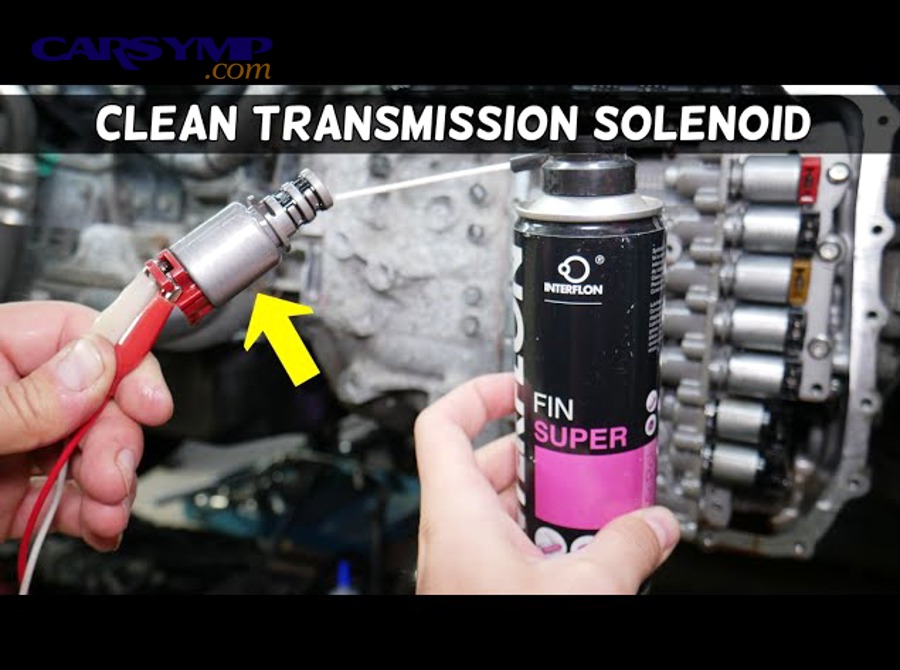
There are several commonly included parts and tasks in this repair: the solenoid itself, transmission fluid, filter or screen when serviceable, pan gasket, seals, electrical connectors, cleaning materials, and post-repair verification. The exact list depends on whether the failed component is a single shift solenoid, a pressure control solenoid, a lockup solenoid, or a full solenoid pack.
A typical workflow starts with diagnosis. The technician scans the vehicle for faults, reviews live data, and identifies whether the issue is electrical, hydraulic, or mechanical. This is where Solenoid-related codes and meanings become useful. Codes such as P0750 through P0770 often point toward shift solenoid circuit or performance faults, while other codes may reference pressure control behavior or torque converter clutch operation. A good technician does not stop at the code name; they verify whether the problem comes from wiring, low pressure, contaminated fluid, internal wear, or the solenoid itself.
After diagnosis, the technician gains access. In many front-wheel-drive units, this means lifting the vehicle, removing shields, draining fluid, and dropping the transmission pan. Once exposed, the technician may remove the filter, inspect the valve body, disconnect the internal harness, and unbolt the faulty solenoid or assembly.
During that same stage, several service tasks become logical:
- Clean the pan and magnet
- Inspect for metal flakes, clutch material, or sludge
- Replace the pan gasket
- Replace or reinstall the filter depending on design
- Check connector pins and wiring insulation
- Confirm valve body fastener torque where relevant
- Refill the unit with the correct fluid quantity and specification
The post-repair stage matters as much as the disassembly stage. Technicians verify leaks, fluid level, shift timing, converter clutch engagement, and temperature behavior during a road test. Some late-model vehicles also require a scan-tool reset or adaptive relearn so the transmission control module can recalibrate line pressure and shift timing.
How Does Solenoid Replacement Compare With a Standard Transmission Fluid Service?
Solenoid replacement wins in corrective repair, standard fluid service is best for preventive maintenance, and a combined pan-off service is optimal when both access and contamination concerns overlap.
However, the difference lies in purpose. A standard transmission fluid service is maintenance. It aims to refresh fluid, protect internal components, and maintain shift quality. Solenoid replacement is a targeted repair. It addresses a failed control component that may cause harsh shifting, slipping, delayed engagement, wrong-gear starts, or diagnostic trouble codes.
The labor scope also differs. A routine drain-and-fill may take much less labor because the technician may not remove internal hardware. A transmission solenoid replacement can require diagnosis time, internal access, connector checks, part replacement, reassembly, and validation. That deeper labor explains why Solenoid replacement labor time ranges from modest to extensive depending on layout.
For the car owner, the overlap creates the main decision point. If the pan is already off for the repair, the incremental cost of adding fresh fluid, a gasket, and a serviceable filter is usually lower than doing those items later as separate labor operations. This is why many repair orders combine the jobs. You are already paying for access, so it often makes financial and mechanical sense to complete the service while the unit is open.
Why Is Changing the Fluid and Filter Often Recommended During This Repair?
Yes, changing the fluid and filter is often recommended during this repair because fresh fluid supports hydraulic accuracy, a clean filter improves flow protection, and bundled service reduces the chance that debris will undermine the new solenoid.
More importantly, this recommendation is based on how automatic transmissions function. Solenoids do not work in isolation; they operate inside a fluid-driven control system.

Can Old Fluid or a Dirty Filter Contribute to Solenoid Problems?
Yes, old fluid or a dirty filter can contribute to solenoid-related problems because degraded ATF loses stability, suspended debris can circulate through hydraulic passages, and restriction can alter line pressure behavior. That does not mean bad fluid is the only reason a solenoid fails, but it can be a meaningful contributing factor.
Automatic transmission fluid does far more than lubricate. It transfers hydraulic force, manages friction, cools internal components, and supports precise actuation of clutches and bands. As fluid ages, heat cycles can oxidize it. Friction material from clutch wear can suspend in the fluid. Fine metallic particles may collect on the magnet or circulate before they settle. If the filter becomes restricted, flow behavior can change under load and temperature.
A solenoid that meters hydraulic flow or pressure depends on a stable operating environment. When fluid quality drops, the system can show delayed shifts, harsh shifts, flare, shudder, or inconsistent engagement. Sometimes the solenoid itself is still electrically sound, but the environment around it is not ideal. Other times the solenoid has already failed, and old fluid threatens the performance of the replacement part.
This is also why professional diagnosis goes beyond codes. Solenoid-related codes and meanings tell the technician where to look, but the fluid condition tells them what kind of environment the transmission has been operating in. Burnt odor, dark color, heavy debris, or glitter-like metal in the pan can point toward broader wear beyond the solenoid alone.
What Are the Main Reasons Mechanics Bundle These Services Together?
There are several main reasons mechanics bundle these services together: labor overlap, contamination control, preventive maintenance, reduced comeback risk, and better value for the customer. These reasons explain why the recommendation is so common across repair shops.
First, labor overlap saves time. If the pan is already removed for transmission solenoid replacement, much of the work needed for fluid and filter service is already done. Repeating that labor later would be inefficient and more expensive.
Second, contamination control improves the repair environment. A new solenoid installed into dirty fluid may face the same varnish, sludge, or debris that affected the old component or the surrounding hydraulic system. Fresh fluid and a clean filter help reset operating conditions as much as the design allows.
Third, preventive maintenance adds long-term value. Even if the filter is only moderately dirty, replacing it while access is available can delay future restriction problems. A fresh gasket also lowers the chance of seepage from reusing old sealing materials.
Fourth, combined service reduces comeback risk. If a customer declines fluid or filter service and later experiences shifting complaints linked to old fluid condition, the shop and the customer both face frustration. Bundling the work creates a cleaner, more complete repair path.
Finally, the value argument is strong. Because access is the expensive part of many internal transmission jobs, combining overlapping tasks usually produces better cost efficiency than spacing them out across multiple visits.
According to service guidance published by several major vehicle manufacturers, pan-off internal transmission repairs frequently call for inspection of fluid condition, pan debris, and replaceable filter elements because those factors affect the quality of the final repair.
How Do You Know Whether a Fluid Change, Filter Change, or Flush Is the Right Choice?
A drain-and-fill with filter replacement usually wins for most pan-off solenoid repairs, a filter-only decision is rare because fluid is already disturbed, and a full flush is best only when the manufacturer procedure and transmission condition clearly support it.
To better understand that choice, you need to compare the services by scope, risk, and purpose rather than treating them as interchangeable.
What Is the Difference Between a Fluid Change, a Filter Replacement, and a Transmission Flush?
A fluid change, a filter replacement, and a transmission flush are three different services with different scope. A fluid change replaces part of the old ATF, a filter replacement addresses flow protection, and a flush exchanges a larger amount of fluid through the system.
Specifically, a drain-and-fill usually removes only the fluid held in the pan and immediate lower section of the unit. Because some fluid remains in passages, the converter, and coolers, the percentage of exchanged fluid may be moderate rather than complete. This service is often the lowest-risk option during a standard pan-off repair.
Filter replacement focuses on the serviceable filter or screen. In many transmissions, the filter sits above or within the pan area. Once the pan is removed, the filter can be changed with modest extra labor. In other designs, the “filter” is a screen or internal assembly not intended for routine replacement. That design difference matters.
A flush exchanges more total fluid, often through a machine or a manufacturer-approved method. This can be beneficial in some maintenance scenarios, but it is not automatically the best choice during every solenoid repair. If the unit shows heavy wear, burnt fluid, or significant debris, an aggressive flush may not be the smartest move unless the service information specifically supports it. The right decision depends on condition, design, and procedure.
The table below summarizes what each service usually includes.
| Service type | What it usually includes | Best use during solenoid repair | Main caution |
|---|---|---|---|
| Drain-and-fill | Pan drain, refill with new ATF | Common pan-off repairs | Does not replace all fluid |
| Filter replacement | Serviceable filter or screen work | Best when filter is accessible | Not all filters are routine-service parts |
| Flush | Higher fluid exchange volume | Only when appropriate by condition and procedure | Not ideal for every worn unit |
For most car owners, the practical lesson is simple: do not ask for a flush by default. Ask what the transmission design supports, what the pan inspection showed, and what the shop recommends based on actual condition.
Which Service Is Best During Solenoid Replacement for Most Car Owners?
A drain-and-fill plus serviceable filter replacement is best for most car owners during solenoid replacement because it matches the repair access, refreshes the hydraulic medium, and avoids unnecessary extra intervention. That combination fits the majority of pan-off repair scenarios.
However, the best service changes when the transmission design changes. A unit with a non-serviceable internal filter may only receive fresh fluid and reassembly. A unit with severe debris may need more diagnostic caution before any aggressive fluid exchange is considered. A vehicle with an external solenoid may not need a full internal service at all.
The best way to decide is to ask four grounded questions:
- Did the repair require pan removal?
- Is the filter serviceable on this transmission?
- What did the pan, magnet, and fluid condition show?
- Does the manufacturer recommend a drain-and-fill, a flush, or only a refill to specification?
This decision framework keeps the conversation practical rather than generic. It also helps you read an estimate more intelligently. If you see charges for a gasket, fluid, filter, and pan cleaning alongside transmission solenoid replacement, that often means the shop is following the logic of combined access rather than upselling random services.
When Should You Replace the Filter, and When Might It Not Be Possible?
You should replace the filter when the transmission uses a serviceable design and the repair already exposes it, but it may not be possible when the unit uses a sealed, internal, or non-routine filter arrangement.
Besides that basic rule, car owners need to understand that the word filter does not mean the same thing across every transmission family.

Do All Transmissions Have a Replaceable Filter During Solenoid Repair?
No, not all transmissions have a replaceable filter during solenoid repair because some use reusable screens, some use internal filters not intended for routine service, and some designs place filtration in areas not reached during a standard repair. This is one of the biggest reasons estimates vary.
Older or more traditionally serviceable automatics often use a pan-mounted replaceable filter. In these designs, the answer is simple: if the pan is off, replacing the filter is usually straightforward and sensible.
Other units use a screen rather than a cartridge-style filter. The screen may be cleaned, inspected, or left in place depending on condition and manufacturer guidance. Some late-model or “sealed” transmissions have internal filtration that is not part of ordinary periodic service. Access may require major disassembly beyond the scope of a solenoid repair. In those vehicles, the shop may replace fluid only, perform the solenoid repair, and document that no routine filter replacement was available.
This is why it is important not to compare one repair invoice with another without understanding transmission architecture. The same phrase—fluid and filter service—can mean a simple pan-off job on one model and a non-applicable item on another.
How Do Serviceable and Non-Serviceable Transmission Filters Compare?
Serviceable filters win in maintenance access, non-serviceable designs are best for compact internal packaging, and routine screens are optimal only when the manufacturer treats them as inspectable rather than disposable. The comparison matters because it affects repair strategy, cost, and long-term maintenance planning.
A serviceable filter gives the owner a clear preventive maintenance opportunity. When the pan is off, replacing it is relatively easy. That supports cleaner fluid flow, better contamination control, and more predictable service intervals.
A non-serviceable filter shifts the strategy. The technician focuses on fluid condition, magnet inspection, and correct refill procedure because there may be no routine filter element to replace. In those cases, the condition of the fluid becomes even more important as a diagnostic clue.
A screen-based design falls somewhere in the middle. It may not trap fine debris the same way a dedicated filter does, but it still plays a role in protecting the pickup system. Whether it is replaced, cleaned, or simply inspected depends on the exact design.
For owners, the comparison leads to one useful takeaway: always ask the shop whether your transmission has a serviceable filter, a screen, or a non-routine internal filter. That one question clarifies why the estimate includes—or does not include—filter service.
What Should Car Owners Ask the Shop Before Approving the Repair?
Car owners should ask about repair scope, filter serviceability, fluid specification, debris findings, warranty, and post-repair testing before approving the repair because those questions reveal whether the job is complete, appropriate, and cost-effective.
In addition, these questions help you understand not just the price, but the quality and completeness of the proposed work.
What Questions Help You Confirm the Repair Scope and Parts Included?
There are several essential questions to confirm repair scope: what failed, what parts are included, whether the filter is serviceable, what fluid will be used, what the pan inspection showed, and whether a relearn or road test is part of the job.
Ask the shop:
- Which solenoid failed, and how was it diagnosed?
- Is this a single solenoid replacement or a full solenoid pack replacement?
- Does this repair require pan removal?
- Is my transmission filter serviceable?
- Are you replacing the pan gasket and related seals?
- What fluid specification are you using?
- Did you find metal, clutch debris, or sludge in the pan?
- Will you clear codes, road test the vehicle, and verify fluid level at temperature?
- Does this transmission require a relearn or adaptation after repair?
- What warranty applies to both parts and labor?
These questions do two things at once. First, they help you identify whether the estimate is thorough. Second, they help you interpret technical language. For example, if the shop mentions Solenoid-related codes and meanings, ask whether the code indicated an electrical circuit problem, a stuck performance issue, or a symptom caused by another fault. If the answer is vague, the diagnosis may still be incomplete.
You should also ask about Solenoid replacement labor time. Not because labor time alone tells you whether the estimate is fair, but because it helps you understand how much of the charge comes from access complexity versus the part itself. A small part can still produce a large bill when the transmission layout is labor-intensive.
Is Bundling Fluid and Filter Service More Cost-Effective Than Doing It Separately?
Yes, bundling fluid and filter service is usually more cost-effective than doing it separately because the repair already includes overlapping labor, fresh service materials reduce repeat-visit risk, and the customer avoids paying access costs twice. This is especially true for pan-off internal repairs.
To illustrate, imagine the transmission pan must come off to reach the failed solenoid. If you decline filter and fluid service now, then choose to do it later, the next technician still has to lift the car, open the same area, remove hardware, clean surfaces, and refill fluid. That repeats labor you already paid for once.
Bundling also helps from a reliability standpoint. A repair that combines new solenoid hardware with clean fluid, a fresh serviceable filter, and a clean pan gives the transmission a better environment to operate in. It does not guarantee every shifting problem disappears, especially if broader internal wear exists, but it creates a stronger repair baseline.
Still, cost-effectiveness is not the same as automatic necessity. If your transmission design does not have a serviceable filter, or if the solenoid is external and does not require pan removal, a shop should not force an unrelated service into the invoice. The most cost-effective decision is the one that matches the actual repair path.
According to maintenance guidance used across dealership and independent-service environments, bundled service during overlapping labor operations typically reduces total customer cost compared with scheduling the same access-dependent maintenance as a separate future visit.
What Additional Transmission Details Can Affect Solenoid Replacement Results?
Several additional transmission details can affect solenoid replacement results: correct fluid specification, pan debris interpretation, electronic relearn needs, and sealed-transmission design.
Moreover, these details sit beyond the core answer but still deepen the quality of the repair and the long-term result for the driver.
How Does OEM Fluid Specification Affect Shift Quality After Solenoid Replacement?
OEM fluid specification affects shift quality because the transmission control system is calibrated around a specific fluid’s friction behavior, viscosity range, and thermal characteristics. Using the wrong fluid can produce harsh shifts, flare, shudder, or converter clutch problems even when the new solenoid is installed correctly.
This matters more than many owners realize. Modern automatic transmissions are not generic hydraulic boxes. They are tightly calibrated systems. The control module, valve body, clutch materials, and pressure-control strategy all assume a certain fluid behavior. When the wrong ATF goes in, the newly replaced solenoid may still operate in a system that feels wrong on the road.
That is why one of the best shop questions is also one of the simplest: “Which exact fluid specification are you using?” A good repair order should answer that clearly.
What Can Pan Debris and Magnet Inspection Reveal During the Repair?
Pan debris and magnet inspection can reveal whether the transmission shows only normal wear residue or signs of deeper internal damage such as heavy clutch material, steel fragments, or abnormal contamination. This is valuable because it helps distinguish a contained solenoid issue from a broader wear pattern.
A light paste on the magnet may be normal in many higher-mileage units. Larger flakes, shiny particles, or excessive friction material tell a more serious story. If the technician finds heavy debris, the solenoid may be only one part of the problem. That should change the repair conversation. In such cases, the owner may need to decide whether to continue with the repair, plan for further diagnosis, or prepare for more extensive work later.
This inspection is one reason combined service has diagnostic value. The pan does not only hold fluid; it also holds clues.
Do Some Vehicles Need a Relearn or Adaptation After Solenoid Replacement?
Yes, some vehicles need a relearn or adaptation after solenoid replacement because the control module may need to recalibrate line pressure, clutch fill time, or shift timing based on the restored component behavior. This is more common in electronically managed late-model transmissions.
A relearn is not a universal requirement, but when it applies, it should not be skipped. Without it, the vehicle may still shift oddly for a period of time, or the transmission may not immediately use the best pressure strategy for the new component. Some procedures occur automatically through a controlled drive cycle. Others require a scan tool.
For the owner, this means the road test is not just a courtesy. It is part of the repair outcome. Ask whether the vehicle needs a formal adaptation procedure and whether that labor is included.
How Do Sealed or Internal-Filter Transmissions Change the Service Strategy?
Sealed or internal-filter transmissions change the service strategy by limiting routine filter access, increasing the importance of exact fluid procedure, and sometimes narrowing the repair to the failed solenoid plus refill rather than a traditional fluid-and-filter package. That design difference explains why generalized maintenance advice can be misleading.
In a sealed unit, even checking fluid level may require a temperature-based process and a special overflow method. In an internal-filter design, replacing the filter may demand major disassembly beyond the practical scope of a standard transmission solenoid replacement. In those vehicles, the shop’s focus may shift toward correct fluid quantity, precise temperature verification, code clearing, adaptation, and documentation of internal condition.
This does not make the repair worse. It simply makes the service strategy more specialized. The broad principle still holds: when access and design allow it, fresh fluid and filter service during solenoid replacement is usually a strong choice. When design does not allow it, the correct strategy is the one the transmission architecture supports.
In short, the best answer for most car owners is yes: change the transmission fluid and, when possible, the filter during solenoid replacement if the repair already opens that part of the transmission. That approach aligns labor efficiency, hydraulic cleanliness, and repair completeness. The most reliable repair, however, is always the one matched to the exact transmission design, fluid specification, diagnostic findings, and service procedure.