


Diagnosing uneven tire wear starts with a simple truth: the tread pattern on your tires often reveals the problem underneath. When tread wears more on one edge, in the center, in scalloped patches, or in a feathered direction, the pattern usually points to a specific cause such as improper inflation, poor alignment, wheel imbalance, or worn suspension parts. That means the fastest route to an uneven tire wear fix is not guessing, but matching the pattern to the right mechanical or maintenance issue.
The next question is practical: which patterns matter most, and what do they mean for an everyday driver? The most common patterns include center wear, both-edge wear, one-sided shoulder wear, cupping, and feathering. Each one reflects a different stress on the tire, so reading the pattern correctly helps you avoid wasting money on the wrong repair.
Drivers also want to know what to do after they identify the pattern. Some cases call for a pressure correction, some need an alignment, and some point to balance or suspension faults such as Cupping from worn shocks/struts. In other words, pattern recognition is only useful when it leads to the right repair decision, the right replacement decision, and a realistic view of the Cost to fix uneven tire wear causes.
Introduce a new idea: once you understand what the tire is showing you, the whole diagnosis becomes more logical. The main content below moves from definition, to pattern recognition, to root cause, to repair choice, and finally to the Rotation strategy to prevent uneven wear from coming back.
What do uneven tire wear patterns tell you about your car?
Uneven tire wear is a diagnostic signal that shows how inflation, alignment, balance, suspension, and driving conditions are affecting the tire’s contact with the road.
To better understand that signal, you need to treat the tread like evidence rather than just damage. A tire does not wear unevenly at random. It wears unevenly because one force, or several forces working together, change how that tire loads, rolls, scrubs, or bounces across the pavement.
What is uneven tire wear, and why does it matter?
Uneven tire wear is abnormal tread loss that develops faster in one area than another because the tire is not meeting the road evenly under normal driving conditions.
Specifically, this matters because tires are designed to spread load across the full tread face. When one part of the tread does more work than the rest, the tire loses life faster, grip changes across the contact patch, and the vehicle may begin to pull, vibrate, or make more road noise. A tire with inner-edge wear may look acceptable from outside the car while being close to unsafe on the hidden shoulder. A cupped tire may still show usable depth in some areas, but the ride quality and braking behavior can deteriorate.
Uneven wear also creates compound costs. First, the tire loses service life. Second, the underlying problem often worsens if left untreated. Third, the driver may end up replacing tires before fixing the cause, which allows the new set to wear the same way again. That is why a proper uneven tire wear fix always begins with diagnosis rather than replacement alone.
According to NHTSA, drivers should inspect tires regularly for uneven wear patterns and maintain proper inflation, rotation, balancing, and alignment because these factors directly affect tire safety and durability.
Can you diagnose car problems by looking at tire wear patterns?
Yes, tire wear patterns can help diagnose car problems because tread shape reveals how the tire loads the road, how the wheel tracks, and whether the suspension keeps the tire stable.
However, tire wear is best understood as a strong clue rather than a complete diagnosis by itself. For example, one-sided wear strongly suggests an alignment issue, but worn bushings, bent components, or ride-height changes may be part of the real cause. Cupping suggests bouncing or unstable tire contact, yet the root issue may be bad shocks, weak struts, imbalance, or even a combination of those factors. Feathering often points toward toe misalignment, but steering looseness can contribute.
A good diagnostic approach combines three things: visual tread inspection, simple driver observations, and a mechanical check. If the car pulls to one side, the steering wheel sits off-center, or the ride feels unstable, those symptoms help confirm what the tread is already suggesting. If the tire shows one wear pattern but the vehicle shows several symptoms, you should assume more than one issue may be present.
Michelin notes that uneven tire wear is a sign to check alignment and inspect for worn parts, while changes in handling or steering response can accompany poor alignment.
What are the most common uneven tire wear patterns?
There are 7 main uneven tire wear patterns drivers should know: center wear, both-edge wear, outer-edge wear, inner-edge wear, feathering, cupping, and diagonal or patchy wear.
Next, the value of this classification is that each pattern narrows the list of likely causes. Instead of starting with every possible tire or chassis issue, you begin with the shape of the wear itself.
What are the main types of uneven tire wear patterns drivers should know?
There are 7 main types of uneven tire wear patterns based on where the tread wears faster and how the tire touches the road over time.
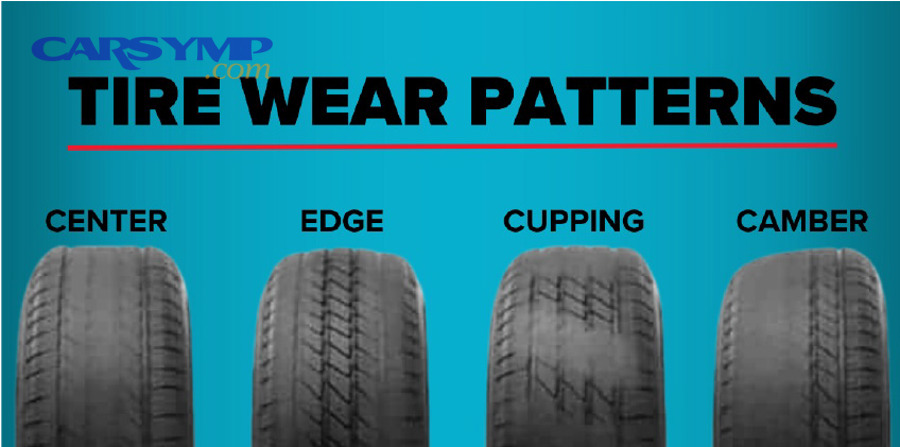
Center wear appears when the middle rib or central blocks lose tread faster than the shoulders. Both-edge wear means both shoulders wear faster than the center. Outer-edge wear affects only the outer shoulder and often appears on tires that experience alignment issues or repeated aggressive cornering. Inner-edge wear develops on the inside shoulder and is especially important because many drivers do not inspect it closely enough.
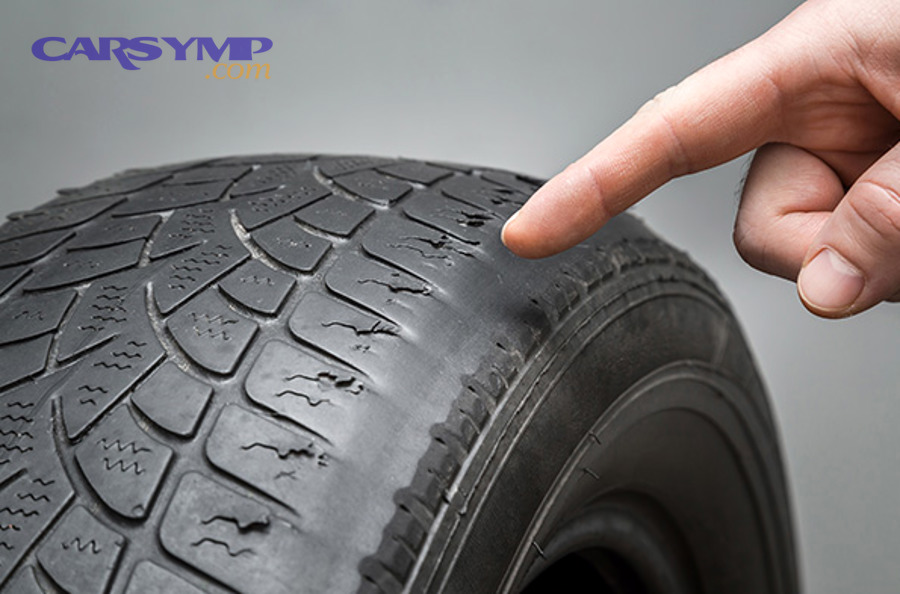
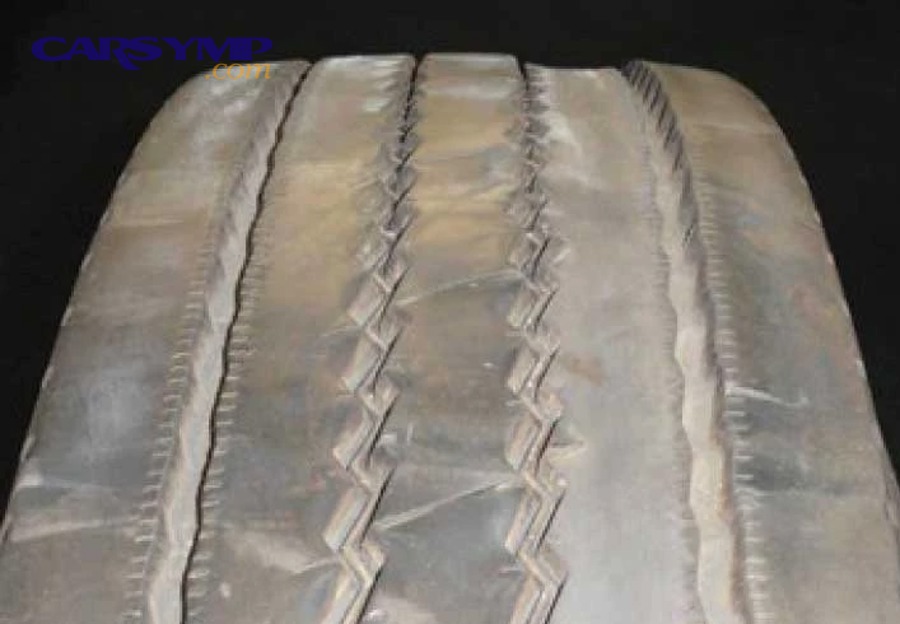
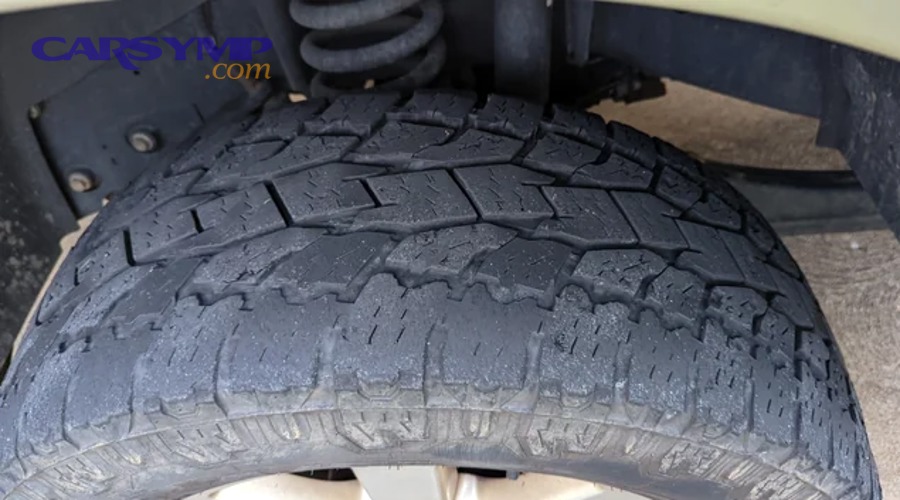
Feathering creates a directional feel across the tread. When you slide your hand across the tread blocks, one direction feels smooth and the opposite direction feels sharp. Cupping, also called scalloping, forms dips or high-low patches around the tread circumference. Diagonal or patchy wear appears as irregular sections across the tread and may relate to more complex alignment or suspension conditions.
This grouping matters because wear location and texture are not random details. They are the logic of diagnosis. Location tells you which part of the tire is overloaded. Texture tells you whether the problem is steady, like pressure or camber, or dynamic, like bouncing or scrub.
Michelin’s commercial tire guidance identifies one-sided wear as a sign of alignment problems such as camber, toe, or axle parallelism issues, while Bridgestone identifies cupping as a separate pattern linked to unstable tire contact.
How is cupping different from feathering, edge wear, and center wear?
Cupping wins as the most bounce-related pattern, feathering is most associated with toe scrub, edge wear is most associated with shoulder overload, and center wear is most associated with overinflation.
More specifically, cupping looks and feels uneven in patches. It often creates a rhythmic hum or drone that rises with speed because parts of the tire strike the road harder than others. Feathering feels directional. The tread blocks develop a sawtooth edge because the tire scrubs slightly sideways as it rolls. Edge wear is simpler to read visually because one or both shoulders wear down faster than the rest of the tread. Center wear is usually the most symmetrical of the group because excessive pressure concentrates the load in the middle.
The most important practical difference is what each pattern suggests you should check first. With center wear, check cold inflation against the vehicle placard. With both-edge wear, check for persistent underinflation or overload. With feathering, inspect toe alignment and steering geometry. With cupping, start thinking about balance and especially about cupping from worn shocks/struts if the ride has become bouncy or noisy.
Bridgestone explains that tire cupping can result from worn shocks, struts, bushings, misalignment, or unbalanced tires, while Michelin links one-sided wear to out-of-spec alignment parameters.
What causes each uneven tire wear pattern?
The main causes of uneven tire wear are improper inflation, poor alignment, wheel imbalance, worn suspension parts, missed rotation intervals, and in some cases overloading or impact damage.
Then, to connect pattern to cause correctly, it helps to separate steady forces from unstable forces. Steady forces create consistent wear zones, while unstable forces create irregular or repeating damage patterns.
What causes center wear, both-edge wear, and shoulder wear?
Center wear is usually caused by overinflation, both-edge wear is usually caused by underinflation or overload, and shoulder wear is often caused by alignment errors, repeated cornering stress, or suspension geometry problems.
Specifically, overinflation rounds the tire’s contact patch so the center takes more load. Underinflation allows the shoulders to bear more of the weight, and heat buildup increases as the tire flexes more than intended. If both shoulders wear faster than the center, you should also think about chronic low pressure, heavy cargo, or towing loads that push the tire harder than normal.
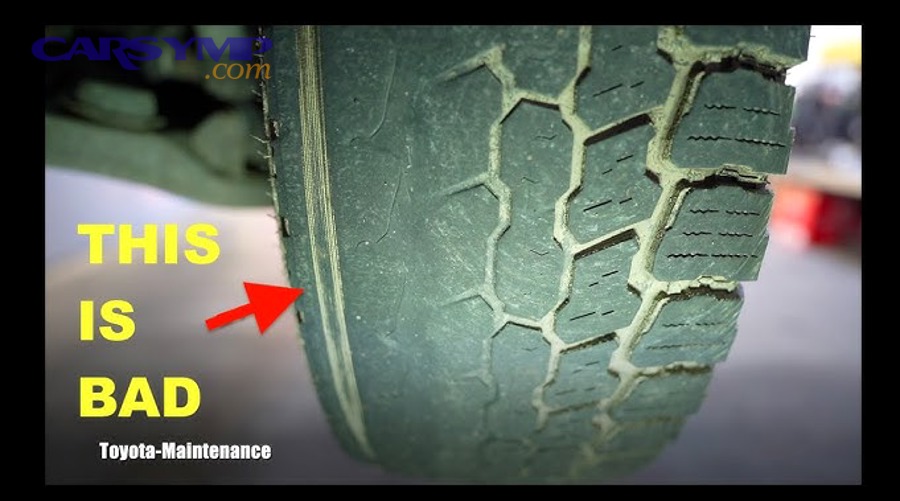
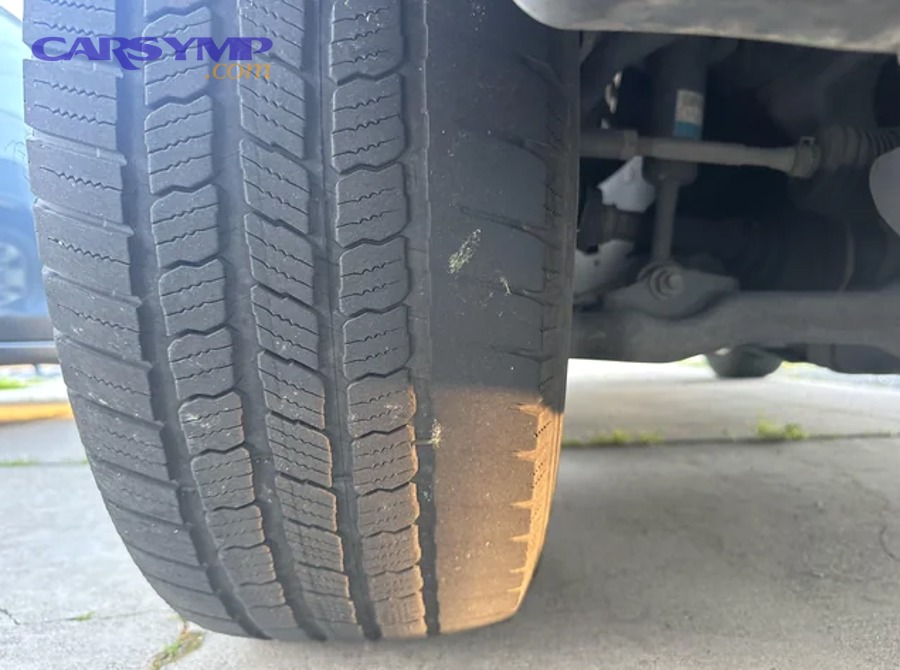
Shoulder wear becomes more nuanced when only one side of the tread wears quickly. Outer shoulder wear may reflect a vehicle that corners hard, but it can also reflect alignment drift. Inner shoulder wear often points more strongly toward camber or toe issues and is one of the patterns drivers miss because it sits under the vehicle. This is why a quick look at the outer face of the tire is not enough for diagnosis.
Pressure-related wear and alignment-related wear also differ in symmetry. Inflation problems usually affect tires in a more balanced pattern. Alignment problems often create wear that is directional, one-sided, or more severe on one axle than the other.
NHTSA advises checking tire pressure when tires are cold and maintaining proper pressure monthly, while the U.S. Department of Energy reports that underinflation reduces fuel economy and increases rolling resistance.
What causes cupping, feathering, and one-sided tire wear?
Cupping is usually caused by unstable tire contact, feathering is usually caused by toe-related scrub, and one-sided tire wear is usually caused by alignment errors such as camber or toe being out of specification.
For example, a tire cups when it bounces instead of rolling smoothly. That bouncing can happen because shocks or struts no longer control motion well, because a wheel is out of balance, or because worn bushings allow unwanted movement. This is why drivers often connect cupping with a rougher ride or a droning sound at speed. In many real-world cases, the best uneven tire wear fix is not just replacing the tire but correcting the instability that caused the tire to skip and slap the road.
Feathering works differently. The tire rolls slightly out of line, and the tread blocks scrub as they travel. The result is a tread surface that feels different depending on which direction you run your hand across it. Toe misalignment is the classic cause, but worn steering components can make the condition worse.
One-sided tire wear, especially on the inner shoulder, often indicates that the wheel is leaning or tracking incorrectly. Camber and toe errors are frequent contributors. When the problem continues for thousands of miles, the tire may wear to cords on one shoulder while the rest of the tread still looks usable.
According to Michelin Commercial Tires, one-sided wear commonly reflects alignment parameters such as camber, toe, or axle parallelism being out of specification. Bridgestone states that tire cupping is commonly linked to misalignment, worn suspension and shocks, or unbalanced tires.
How can you tell which cause is most likely from the wear pattern?
You can identify the most likely cause by combining 4 checks: tread shape, tread feel, pressure status, and driving symptoms.
To better understand the issue, you should not inspect the tire in only one way. The wear shape shows the pattern, but the feel of the tread and the way the car behaves often confirm the real cause faster.
How can you inspect tires at home to spot uneven wear correctly?
A reliable at-home inspection uses 5 steps: check cold pressure, view the tread straight on, compare inner and outer shoulders, feel the tread blocks by hand, and inspect all four tires together.
Below, that sequence matters because it reduces the chance of misreading the pattern. Start with tire pressure when the tires are cold. Use the pressure on the driver-door placard or owner’s manual, not the maximum number on the tire sidewall. Then look across the tread width from shoulder to shoulder. If the center is visibly lower, think overinflation. If both shoulders are lower, think underinflation or load.
Next, inspect the inner shoulder by turning the wheel or using a flashlight and mirror if needed. Many severe alignment cases hide here. After that, drag your palm lightly across the tread in both directions. A feathered tire will feel smooth one way and sharp the other. Finally, compare all four tires. A single abnormal tire often points toward a localized issue such as one worn shock, one bad bushing, or one wheel that took impact damage.
A simple comparison table makes this diagnosis easier:
| Wear clue | What it often looks or feels like | Most likely first check |
|---|---|---|
| Center wear | Middle tread lower than shoulders | Overinflation |
| Both-edge wear | Both shoulders lower than center | Underinflation or overload |
| Inner-edge wear | Inside shoulder worn faster | Camber/toe alignment |
| Outer-edge wear | Outside shoulder worn faster | Alignment or cornering overload |
| Feathering | Smooth one way, sharp the other | Toe alignment |
| Cupping | Scalloped high-low patches | Shocks/struts, balance, suspension |
This table shows how visible tread clues connect to the most likely first inspection point. It does not replace a full inspection, but it helps narrow the diagnosis quickly.
NHTSA recommends monthly tire inspections for treadwear and pressure, and notes that pressure should be checked cold for an accurate reading.
Which symptoms help confirm whether the problem is alignment, inflation, balance, or suspension?
Alignment is most strongly confirmed by pulling or off-center steering, inflation by broad tread-shape changes, balance by vibration, and suspension by bouncing, instability, or repeated cupping.
However, symptoms overlap, so the goal is to look for the dominant pattern. If the steering wheel is crooked on a straight road and one shoulder is wearing faster, alignment rises to the top of the list. If the car does not pull but the tire hums loudly and shows scalloped patches, balance or suspension becomes more likely. If ride quality has worsened and the tire seems to hop over rough pavement, worn shocks or struts become a stronger suspect.
Inflation-related issues are usually quieter in the early stage. They change how the tread wears and how efficiently the vehicle rolls, but they may not immediately produce a dramatic symptom beyond reduced comfort, reduced fuel economy, or vague handling. That is why regular pressure checks matter. The tire can be wearing incorrectly long before the driver feels a strong warning sign.
The DOE notes that underinflation increases rolling resistance and lowers fuel economy, while Michelin advises checking alignment when irregular tread wear first appears.
Should you replace the tires or fix the cause first?
Yes, you should fix the cause first in most cases because the root problem will keep damaging the tire, reduce safety, and waste money on premature replacement.
In addition, the answer depends on tire condition. If the tire is already severely worn, damaged, or near the legal limit, you may need to replace the tire and fix the cause at the same time. The key is to avoid replacing a symptom while leaving the disease untreated.
Can uneven tire wear be fixed without replacing the tire?
Yes, the cause of uneven tire wear can often be fixed without replacing the tire, but the worn tread itself cannot be restored and the tire may still need replacement if the wear is advanced.
More specifically, an alignment can stop one-sided wear from getting worse. A pressure correction can stop center or shoulder overload. A balance service can reduce vibration, and new shocks or struts can control the bouncing that created the cupping. Those repairs solve the cause, not the already missing tread. Once rubber is gone, it does not return.
That distinction matters when people search for an uneven tire wear fix. In early cases, correcting the cause may allow the tire to continue safely for a useful period, especially if tread depth remains good and wear is still moderate. In advanced cases, the tire may remain noisy, rough, or unsafe even after the mechanical issue is fixed. If cords are visible, if the inner shoulder is nearly bald, or if the tread is worn to indicators, replacement is the responsible choice.
Michelin states that once tread reaches the wear indicator level of 2/32 inch, the tire must be changed, and also advises checking alignment at the first sign of irregular treadwear.
When should you replace tires vs correct alignment, inflation, or suspension problems?
Replace the tire when wear is severe or unsafe, correct inflation when wear is early and pressure-related, correct alignment when wear is directional or one-sided, and repair suspension when the tire shows bounce-related damage such as cupping.
To illustrate, mild center wear with plenty of tread left often means you caught the issue early enough to correct pressure and monitor the tire. Mild both-edge wear may respond well to corrected pressure and a better maintenance routine. One-sided wear usually deserves an alignment inspection immediately because delaying the repair often accelerates the damage sharply.
Cupping deserves extra caution. When the tire has deep scallops, road noise may remain even after the suspension problem is fixed. If the tread is still deep and the cupping is light, the tire may continue in service, but many drivers choose replacement because comfort and noise remain poor. When the cause is clearly cupping from worn shocks/struts, the ideal repair sequence is to restore suspension control first, then assess whether the tire can continue or whether replacement makes more economic sense.
The cost to fix uneven tire wear causes also varies by category. Pressure correction is nearly free aside from time. A wheel alignment is usually one of the lower-cost mechanical fixes. Balancing is also relatively modest. Suspension repairs such as shocks, struts, control arm bushings, or related components can cost far more than routine tire service, but delaying them often destroys tires faster and can affect braking and stability. The cheapest repair today is not always the lowest total cost over the next 10,000 miles.
Bridgestone notes that correcting the cause of tire cupping promptly can help owners avoid extra tire and repair expense, and Michelin states that poor alignment generates excessive heat and reduces tire durability.
How can you prevent uneven tire wear from coming back?
Preventing uneven tire wear requires 5 habits: correct inflation, regular rotation, timely alignment checks, balancing when needed, and suspension inspection when ride or noise changes.
Moreover, prevention works best when it follows the same logic as diagnosis. If you know what created the wear, you can build a maintenance routine that removes that cause before it has time to reshape the tread.
What maintenance habits prevent uneven tire wear patterns?
The most effective maintenance habits are monthly pressure checks, scheduled tire rotations, prompt alignment checks after impacts, periodic balancing, and early suspension inspection when ride quality changes.
First, check pressure monthly and before long trips, always with cold tires. Underinflation and overinflation do more than change wear; they also change rolling resistance, comfort, and heat generation. Second, rotate tires at the interval recommended by the vehicle or tire maker. A good rotation strategy to prevent uneven wear spreads workload across positions so that front-axle steering forces and rear-axle load patterns do not repeatedly punish the same tires.
Third, treat curb hits and potholes seriously. A vehicle can feel “mostly fine” and still be slightly out of alignment. Fourth, balance tires when new tires are installed, when vibration appears, or when repeated cupping suggests unstable rotation. Fifth, pay attention to shocks, struts, and bushings as the mileage climbs. Tires often reveal suspension fatigue before the driver identifies it confidently.
For everyday drivers, the best prevention plan is simple: air, rotation, alignment awareness, and early response. Tire problems become expensive when they stay subtle for too long.
NHTSA recommends monthly pressure checks plus recurring tire rotation, balancing, and alignment services as part of regular tire maintenance.
Is tire rotation enough to prevent uneven wear on its own?
No, tire rotation alone is not enough because it redistributes wear, but it does not correct pressure errors, alignment faults, imbalance, or worn suspension parts.
In short, rotation is a distribution strategy, not a cure. It helps because front and rear tires often do different jobs. Front tires steer, absorb more cornering stress, and often wear differently from rears. By changing positions on schedule, you reduce the chance that one axle creates extreme wear while the other stays relatively fresh.
But rotation cannot solve the underlying geometry or control problems. A tire with low pressure will still wear incorrectly after rotation. A tire on a vehicle with bad toe settings will continue to feather. A tire on a vehicle with worn shocks may continue to cup in its new location. The right way to think about rotation is that it supports even wear only when the other fundamentals are already under control.
That is why the strongest rotation strategy to prevent uneven wear includes two parts: move the tires on schedule and inspect the patterns each time you do it. Every rotation is also a diagnostic checkpoint.
Michelin advises checking pressure monthly and inspecting tires frequently for irregular treadwear, while NHTSA includes rotation as one part of a broader tire-care routine rather than a standalone solution.
What less common tire wear patterns and hidden warning signs should drivers know?
Drivers should know 4 less common or less noticed warning signs: diagonal wear, hidden inner-edge wear, suspension-related wear clues, and noise or vibration that points to irregular tread damage.
Besides the common patterns, these rarer clues matter because they often appear later, hide from casual inspection, or suggest deeper mechanical issues than simple inflation mistakes.
What is diagonal tire wear, and what usually causes it?
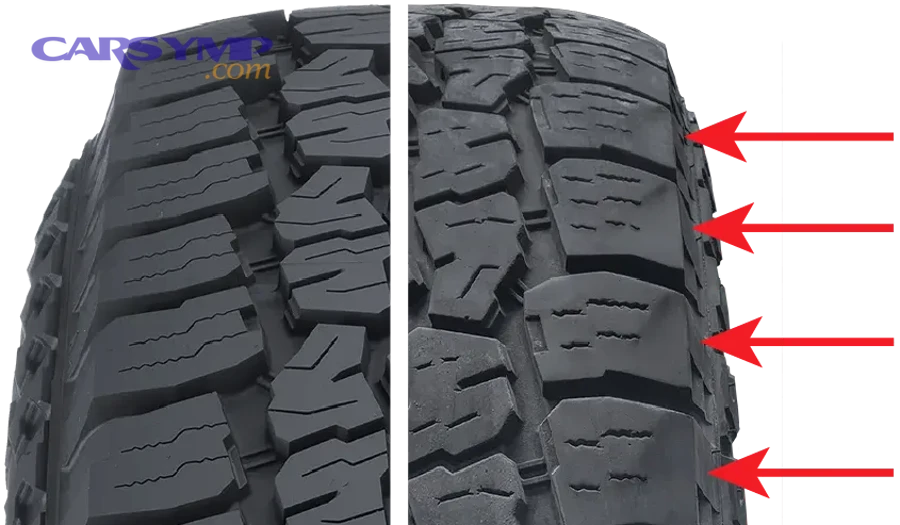
Diagonal tire wear is an irregular pattern that crosses the tread at an angle and is usually caused by alignment geometry problems, axle tracking issues, or other advanced chassis faults.
Specifically, diagonal wear does not look like simple center wear or shoulder wear. It appears as a slanted or alternating pattern across the tread, which is why some technicians refer to related patterns as tread scuffing. Because this pattern is less intuitive, it often deserves a more thorough alignment and suspension inspection rather than a quick pressure-only correction.
Drivers should treat diagonal wear as a sign that the vehicle may have a geometry problem beyond a basic front-end drift. If the pattern appears on more than one tire or returns after service, deeper chassis measurement may be necessary.
Michelin Commercial Tires identifies diagonal and one-sided irregular wear as patterns associated with alignment-related specification problems such as toe, camber, or axle parallelism.
Can inner-edge tire wear go unnoticed until the tire becomes unsafe?
Yes, inner-edge tire wear can go unnoticed because it hides under the vehicle, progresses quickly in alignment faults, and may leave the outer tread looking deceptively normal.
Especially on modern cars with limited wheel-well visibility, many drivers inspect only the outer face of the tire. That habit misses one of the most dangerous patterns because inner-shoulder wear can advance to cords while the rest of the tread still looks usable. A vehicle with slight toe or camber error can quietly consume the inner edge over thousands of miles without dramatic early symptoms.
The lesson is practical: turn the steering wheel, crouch down, use a flashlight, and inspect the inside shoulder. If you cannot see it clearly, ask for it to be checked during service. This is one of the highest-value habits in tire safety because it catches a hidden failure pattern before it becomes expensive or dangerous.
Michelin advises frequent inspection for irregular treadwear, and its wear-indicator guidance states that tires worn to the treadwear indicators at 2/32 inch must be changed.
How is suspension-related tire wear different from inflation-related wear?
Suspension-related tire wear is more dynamic and irregular, while inflation-related tire wear is more stable and shape-based across the tread width.
More specifically, inflation changes how the tire sits under load. Too much air tends to crown the center. Too little air tends to overload the shoulders. Suspension problems change how the tire moves. The tire may bounce, skip, tilt, or shift under braking and cornering, creating cupping, patchy wear, or repeating irregular contact.
This difference also changes the driving feel. Inflation errors may show up first as vague handling, harsher ride, or lower fuel economy. Suspension faults are more likely to produce bounce, clunks, instability over rough roads, or recurring cupping patterns. In everyday diagnosis, this distinction helps separate a maintenance oversight from a mechanical repair need.
Bridgestone explains that worn suspension and shocks can cause a tire to bounce slightly and create cupping, while DOE sources show that improper inflation increases rolling resistance and reduces fuel economy.
Can road noise or vibration help identify rare uneven tire wear patterns?
Yes, road noise and vibration can help identify irregular tread wear because certain patterns change how the tire contacts the road and how forces travel through the wheel, suspension, and cabin.
For example, cupped tires often create a humming or droning sound that gets louder with speed. Imbalance often creates a steering-wheel or seat vibration at certain speeds. Feathering may produce a rougher sound on smooth pavement. These clues are not perfect by themselves, but when they match what the tread is showing, they sharpen the diagnosis considerably.
Drivers often dismiss these symptoms as “just tire noise,” yet sound and vibration are part of the evidence chain. When a tire suddenly becomes louder, when the steering shakes at highway speed, or when a new vibration appears after impact damage, you should inspect the tread rather than wait for the next routine service.
Bridgestone notes that tire cupping reflects uneven points of pressure caused by unstable tire contact, which commonly produces the noise and ride complaints drivers notice as the pattern worsens.
In sum, uneven tire wear patterns are one of the clearest ways a car tells you what is wrong before a bigger failure develops. Read the pattern, confirm it with pressure and driving symptoms, fix the cause before replacing the symptom, and use a disciplined rotation and inspection routine to keep the next set of tires wearing evenly.