


Tire rotation is one of the most practical ways to reduce irregular tread loss, extend tire life, and improve day-to-day driving safety. For most everyday drivers, the best tire rotation strategy is not a single universal pattern but a schedule and pattern matched to drivetrain, tire design, and current wear condition. In other words, preventing uneven tire wear starts with rotating the right tires in the right direction at the right interval, not simply swapping positions at random. (nhtsa.gov)
That core answer becomes more useful when you connect it to the first secondary intent: the pattern itself. Front-wheel-drive, rear-wheel-drive, and all-wheel-drive vehicles do not load their tires in the same way, so they do not wear tires in the same way either. A strong rotation plan therefore uses the vehicle’s layout and the tire’s construction to distribute stress more evenly across all four contact patches. (nhtsa.gov)
The next secondary intent is timing. Rotating too late allows irregular wear to become established, while rotating on time helps keep small differences from turning into permanent tread pattern problems. That is why owner’s manuals, tire makers, and safety guidance consistently connect rotation intervals with visual inspection, inflation checks, and early correction of abnormal wear. (nhtsa.gov)
The third secondary intent is diagnosis. Rotation helps prevent many wear problems, but it cannot solve every one of them. If a tire already shows cupping, feathering, shoulder wear, or vibration-related wear, the real cause may involve alignment, balance, inflation, or suspension condition. Introduce a new idea: the main content below explains how to choose the best rotation strategy, when to use it, and when to move beyond rotation into a more complete uneven tire wear fix. (goodyear.com)
What Is the Best Tire Rotation Strategy to Prevent Uneven Wear?
The best tire rotation strategy to prevent uneven wear is a vehicle-specific rotation plan that uses the correct pattern, the correct interval, and regular inspections to spread tread load more evenly across all tires.
To better understand that issue, it helps to separate the idea of “rotation” from the broader idea of “strategy.” Rotation is the physical act of moving the tires. Strategy is the maintenance system behind that act: when you rotate, how you rotate, what wear pattern you are trying to stop, and what supporting checks you perform before and after the tires change positions.
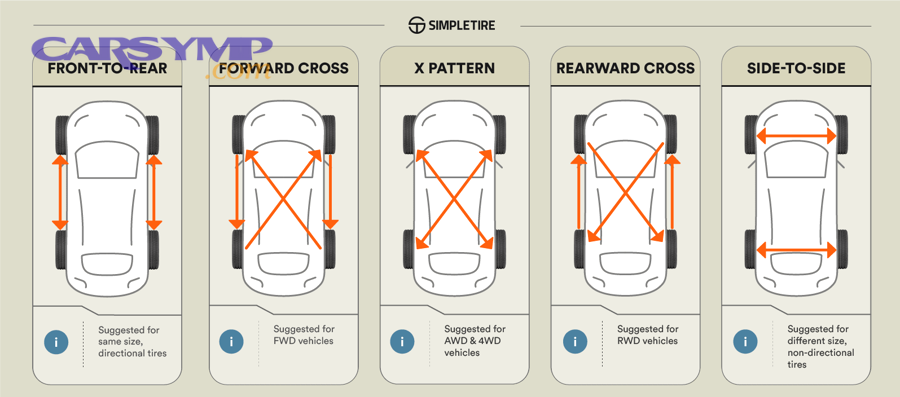
For everyday drivers, an effective strategy usually includes four connected actions. First, you follow the vehicle manufacturer’s recommended interval or a broadly accepted mileage window. Second, you match the rotation pattern to the drivetrain and tire type. Third, you inspect tread depth, pressure, and visible wear before the tires move. Fourth, you treat any abnormal wear as a possible symptom instead of assuming rotation alone will erase it.
Is tire rotation really necessary to prevent uneven wear?
Yes, tire rotation is necessary in most vehicles because front and rear tires do different work, side-to-side loads vary in real driving, and regular position changes help distribute tread wear before it becomes severe.
Specifically, front tires on many daily-driven vehicles carry extra steering forces and often more braking load. On front-wheel-drive vehicles, they also handle engine torque. Rear tires may wear more slowly in some conditions, but they are not immune to uneven wear, especially on vehicles that tow, carry frequent cargo, or have suspension or alignment issues. By moving the tires through different positions, you reduce the chance that one tire remains stuck in the same high-stress role for too long.
That matters because tread wear usually starts as a small difference. A little extra shoulder scrub, a slight toe-related scuff, or a mild front-heavy wear pattern may seem minor at first. However, once those patterns develop deeply, the tire’s contact with the road changes, and the wear can accelerate. Regular rotation interrupts that cycle early.
Rotation also supports consistency in handling. When tires wear at dramatically different rates, braking feel, wet traction, and road noise can all change from one axle to the other. Even if the driver does not notice the changes immediately, the vehicle often becomes less predictable over time. A preventive strategy is therefore cheaper and more effective than waiting for obvious symptoms.
According to the National Highway Traffic Safety Administration, if recommended by the vehicle manufacturer, drivers should rotate tires every 5,000 to 8,000 miles or sooner if uneven wear appears, because rotation helps reduce irregular wear and helps tires last longer. (nhtsa.gov)
What makes a tire rotation strategy effective?
A tire rotation strategy is effective when it combines the right pattern, the right timing, clear wear inspection, and correction of any underlying mechanical issue before the wear pattern becomes permanent.
More specifically, the pattern must fit the vehicle. A forward-cross pattern may work well in one application, while front-to-rear movement may be the only acceptable option for directional tires. Timing matters just as much. Rotating very early is usually harmless, but rotating far too late allows wear to “set” into the tread. Inspection is the third pillar. A strategy only works if the driver or technician looks for feathering, cupping, one-shoulder wear, and pressure-related wear before the tires move.
The last part is diagnosis. Many drivers assume that uneven wear automatically means “I need a rotation.” Sometimes that is true. Sometimes it is incomplete. A proper strategy asks a better question: is this wear pattern caused by tire position alone, or is there also a deeper issue involving inflation, wheel balance, alignment angles, or worn suspension parts? That is why the best plan for everyday drivers is not simply rotational movement; it is rotational movement plus maintenance logic.
This distinction is where many articles stop too early. A real-world uneven tire wear fix often begins with rotation, but it may also require the driver to verify pressure, confirm tread depth across the width of the tire, and inspect the vehicle for pull, vibration, or noise. In practical terms, strategy is what turns a routine service into meaningful wear prevention.
According to Michelin, regular inspections help detect problems early and reduce uneven tire wear, while alignment and balancing checks become especially important when drivers notice vibration, pulling, or steering instability. (michelinman.com)
How Do Different Tire Rotation Patterns Work?
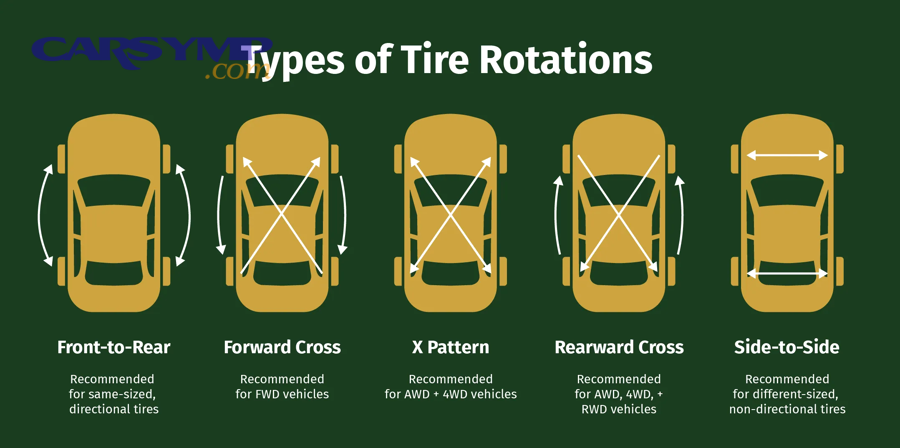
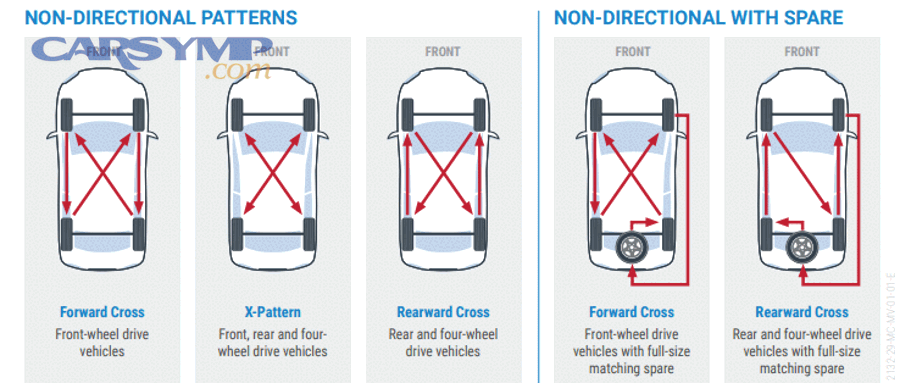
There are four main tire rotation pattern groups drivers commonly use: forward cross, rearward cross, X-pattern, and front-to-rear, based on drivetrain layout, tire directionality, and fitment limits.
Let’s explore that structure first, because the pattern determines how wear is redistributed. The purpose of each pattern is the same: move tires from high-load positions to lower-load positions and change the type of work each tire performs. The difference is in how the tire travels across the vehicle.
What are the main tire rotation patterns drivers should know?
There are four main rotation patterns most drivers should know: forward cross, rearward cross, X-pattern, and front-to-rear, each chosen according to drivetrain, tire design, and whether cross-rotation is allowed.
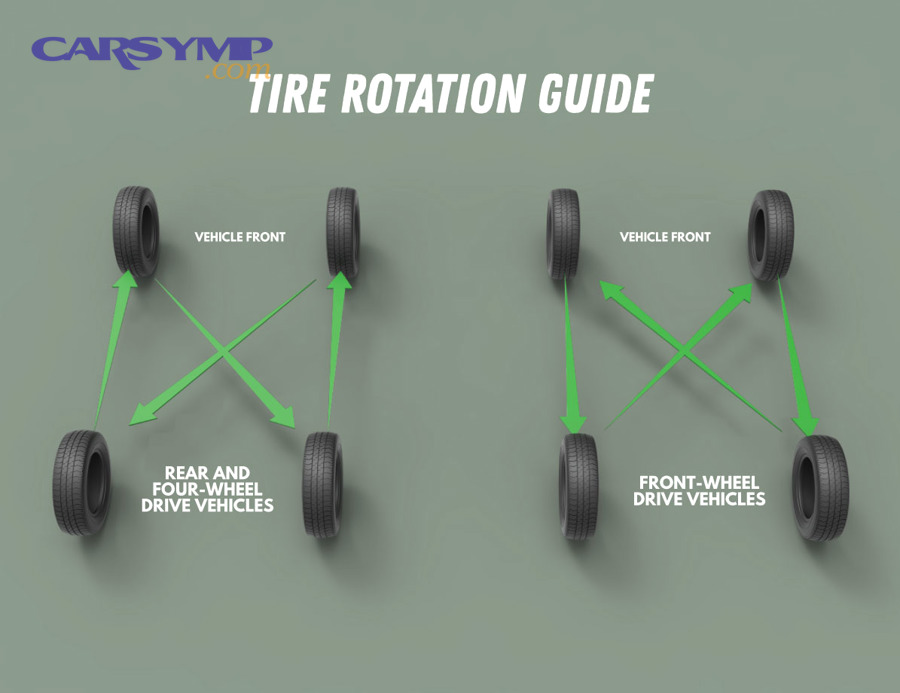
Forward cross is commonly associated with rear-wheel-drive and some all-wheel-drive applications using non-directional, same-size tires. In this pattern, rear tires move straight forward, and front tires cross to the rear. Rearward cross is often used on front-wheel-drive vehicles, where front tires move straight back and rear tires cross to the front. The X-pattern also crosses both axles and can be used on some same-size, non-directional tire setups. Front-to-rear rotation is the most restrictive but also the safest choice for many directional tire applications because it preserves the tire’s designed rolling direction.
The logic behind these patterns is simple. A tire that has spent thousands of miles handling steering loads or drive torque benefits from moving to a different role. Cross-rotation also changes the direction of stress across the tread blocks, which can help even out certain developing wear differences on non-directional tires. By contrast, directional tires must continue rolling in the same direction, so their positions can usually change only front to rear on the same side unless the tire is dismounted and remounted on the wheel.
Below is a quick reference that shows what the common patterns are trying to achieve.
| Rotation pattern | Common use case | Main benefit | Main limitation |
|---|---|---|---|
| Forward cross | Many RWD/AWD vehicles with same-size non-directional tires | Balances rear-drive wear and axle loading | Not for directional or staggered setups |
| Rearward cross | Many FWD vehicles with same-size non-directional tires | Redistributes front-heavy drive and steering wear | Not for directional or staggered setups |
| X-pattern | Some same-size non-directional tire vehicles | Broad redistribution across all four corners | Must match manufacturer guidance |
| Front-to-rear | Directional tires or limited-fitment vehicles | Keeps rolling direction correct | Less flexibility in correcting side-specific wear |
The table above shows that the “best” pattern is not the most aggressive-looking one. It is the one that fits the tire and wheel package already on the vehicle. A driver who ignores that rule can create noise, handling issues, or even fitment problems.
According to NHTSA, drivers should check the owner’s manual for both the recommended rotation frequency and the best rotation pattern, and for some vehicles rotation may not be recommended if front and rear tires are different sizes. (nhtsa.gov)
How do front-wheel drive, rear-wheel drive, and AWD rotation patterns differ?
Front-wheel drive wins for front-heavy tread wear, rear-wheel drive is best managed by redistributing rear axle load, and AWD needs the most consistent interval because all four tires share torque and must stay more closely matched.
However, the real difference is not only the pattern name. It is the wear logic behind the pattern. Front-wheel-drive vehicles usually ask the front tires to steer, brake, and transmit power, so those tires often wear faster. Rear-wheel-drive vehicles separate steering and propulsion across different axles, which changes the wear balance. All-wheel-drive systems spread power to more than one axle, but they still develop unequal wear because steering forces, weight transfer, road crown, and suspension geometry remain unequal in real driving.
On many FWD vehicles, the front tires usually deserve earlier attention because they do the most work. That is why rearward-cross logic is so common there. On RWD vehicles, rear tires may show faster center or overall tread loss if torque and loading are high, especially in stronger vehicles or in towing use. AWD and 4WD vehicles often benefit from disciplined, shorter intervals because keeping overall tread depths close helps both wear balance and drivetrain harmony.
This is also where everyday drivers should avoid overconfidence. Two cars with the same drivetrain may still need different rotation approaches if one uses directional tires, one has staggered wheels, or one owner’s manual specifies a unique sequence. The drivetrain explains the wear tendency, but the tire construction and fitment decide the legal or safe pattern.
According to Michelin, EVs and other high-torque electrified vehicles make rotation even more important because uneven wear can develop more quickly, and Michelin recommends rotation every 5,000 to 7,500 miles or as recommended by the vehicle manufacturer. (michelinman.com)
When Should You Rotate Tires to Avoid Uneven Wear?
The most practical tire rotation interval for everyday driving is usually every 5,000 to 8,000 miles or at the first sign of uneven wear, unless the owner’s manual specifies a different schedule.
Then, the useful question becomes not only “how often,” but also “how soon is too soon to wait?” Tires do not suddenly become uneven on one exact mileage mark. Wear develops gradually, so the goal is to rotate before the difference becomes obvious enough to degrade traction, create noise, or shorten tire life.
How often should tires be rotated for everyday driving?
Tires should usually be rotated every 5,000 to 8,000 miles for everyday driving, with shorter or stricter intervals for high-torque vehicles, severe service, and any vehicle that starts showing visible irregular wear sooner.
More specifically, a practical habit is to connect tire rotation to another recurring service point. Many drivers rotate during routine oil changes or scheduled multi-point inspections because that reduces the chance of forgetting the service. What matters most is consistency. A driver who rotates at regular intervals typically gets better wear balance than a driver who waits until the tread already looks uneven.
Driving conditions also matter. Stop-and-go commuting, rough pavement, potholes, hard launches, long highway runs with poor inflation, frequent cargo loads, and hot climates can all accelerate tire stress. Electric vehicles and plug-in hybrids can add extra weight and instant torque, which may increase the need for careful inspection and disciplined timing. The owner’s manual remains the first authority, but real-world wear should guide the final decision.
A useful way to think about interval choice is this: the more demanding the vehicle or the driving pattern, the less wise it is to wait for the widest mileage window. In easy highway use, the upper end may be fine. In urban or torque-heavy driving, the lower end often makes more sense.
According to NHTSA, manufacturers often recommend rotation every 5,000 to 8,000 miles, while Michelin notes that EV tire rotation may be especially important at roughly 5,000 to 7,500 miles because heavier weight and torque can increase uneven wear risk. (nhtsa.gov)
Which signs show your tires need rotation sooner than planned?
There are five common signs a vehicle may need tire rotation sooner: faster front wear, one-shoulder wear, feathering, early cupping, and changes in road noise or vibration.
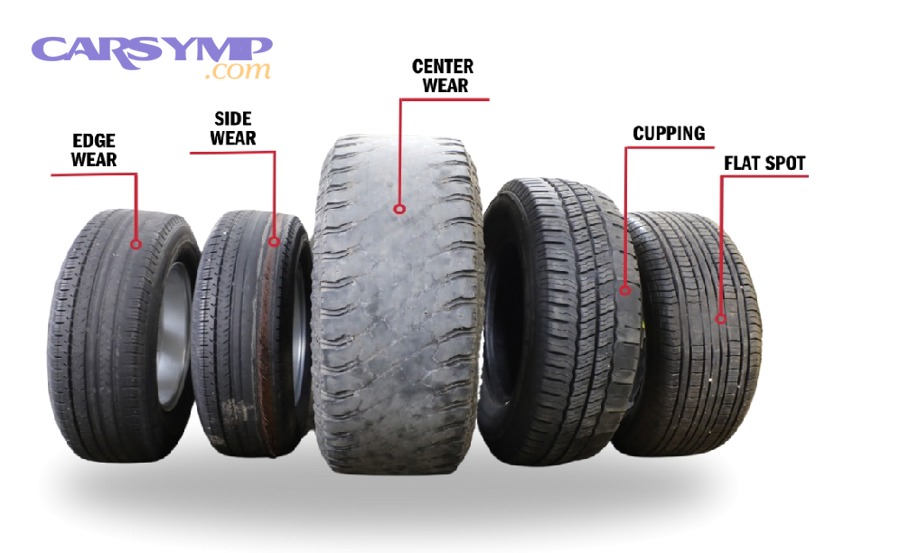
To better understand those signs, drivers should look at the tread across the full width of the tire rather than only glancing at the center. Faster front wear often appears first on front-wheel-drive vehicles. One-shoulder wear may suggest alignment or inflation issues, but it also tells you that rotation timing should not be ignored. Feathering feels like a saw-tooth edge when you slide your hand across the tread. Cupping shows scallops or dips. Noise and vibration often arrive when tread blocks begin wearing unevenly enough to affect contact with the road.
Not every symptom points to the same cause. That is the important caution. Rotation can help when the issue is mainly position-related. But if the tire feels choppy, the car pulls, or the steering wheel shakes, a deeper inspection matters more than a fast tire swap. Drivers should treat early signs as a signal to inspect, not as a license to assume a single service solves everything.
Routine visual checks make this easier. When you wash the car, check pressure, or inspect brakes, take thirty extra seconds per tire to look for edge wear, unusual grooves, embedded debris, and differences between left and right sides. Small clues discovered early are much easier to address than late-stage irregular wear.
According to Goodyear, if tires show uneven wear, drivers should have any misalignment, imbalance, or other mechanical problem corrected before rotation, because irregular tire wear is not always solved by tire position changes alone. (goodyear.com)
Which Tire Setup Changes the Best Rotation Strategy?
The tire setup that changes the best rotation strategy most is the one that limits how the tire can move, especially directional tires, non-directional tires, staggered setups, and asymmetrical performance fitments.
Next, that means everyday drivers should stop thinking about rotation as a universal pattern chart and start thinking about rotation as a fitment-specific decision. Two vehicles parked side by side may both have four tires, but one may allow cross-rotation while the other allows only front-to-rear movement or very limited changes.
Can directional and non-directional tires use the same rotation pattern?
No, directional and non-directional tires should not automatically use the same rotation pattern because directional tread must keep the same rolling direction, while non-directional tires usually allow more flexible cross-rotation options.
Specifically, a directional tire is engineered to rotate one way for water evacuation and intended performance. You can usually identify it by an arrow on the sidewall showing the correct direction of travel. Because of that built-in direction, a simple side-to-side swap on the vehicle would reverse the tire’s direction and is normally not appropriate unless the tire is removed from the wheel and remounted. That is why many directional tire vehicles use front-to-rear rotation on the same side.
Non-directional tires are more flexible. They can often cross from side to side and axle to axle, which gives the technician more tools to redistribute wear. That flexibility is valuable when one axle or one side is clearly working harder than the other. It does not mean every non-directional tire should be rotated in every pattern, but it does widen the list of acceptable choices.
Drivers should also remember that “directional” and “asymmetrical” are not the same thing. An asymmetrical tire has different inner and outer tread zones, but it may still be non-directional. The sidewall markings and the owner’s manual together tell you what movement is acceptable.
According to NHTSA, some vehicles cannot use the same rotation method because front and rear tires may differ in size or other fitment details, so the owner’s manual should guide both whether to rotate and how to rotate. (nhtsa.gov)
What is the best rotation strategy for staggered tire setups?
The best rotation strategy for a staggered tire setup is usually limited rotation, often side-to-side only when allowed, because different front and rear tire sizes prevent normal front-to-rear position changes.
More specifically, staggered setups use different tire widths or diameters between the front and rear axles. Performance cars commonly use this arrangement to improve grip, balance, or appearance. The downside is reduced rotation flexibility. If the front tires and rear tires are different sizes, you generally cannot swap them between axles. If the tires are also directional, even side-to-side movement may be restricted without dismounting and remounting.
That limitation matters because staggered vehicles may wear their tires unevenly faster than owners expect, especially when aggressive alignment settings, spirited driving, or poor inflation are involved. In those vehicles, prevention depends even more on pressure checks, alignment verification, and early inspection, because the usual wear-balancing benefit of a full four-corner rotation may not be available.
For everyday drivers who own performance trims, sport packages, or luxury cars with larger rear tires, this is one of the most overlooked maintenance realities. They assume the service desk can rotate the tires normally, but the tire and wheel package itself says otherwise. In that case, the correct strategy may focus more on monitoring and diagnosis than on broad rotational movement.
According to NHTSA, some vehicles may not be rotatable in the usual way when front and rear tire sizes differ, which is why manufacturer guidance is essential before choosing a rotation pattern. (nhtsa.gov)
What Else Should Be Checked During Tire Rotation to Prevent Uneven Wear?
The most important items to check during tire rotation are inflation pressure, tread depth, wear pattern, wheel balance symptoms, alignment clues, and visible suspension-related damage or looseness.
In addition, this is the section where a simple tire service turns into real preventive maintenance. Rotation works best when it is paired with inspection, because tread tells a story. The shape of the wear often reveals what the vehicle has been doing to the tire long before the driver notices a handling problem.
What should be inspected before and after rotating tires?
There are six main items to inspect before and after rotation: pressure, tread depth, tread pattern, sidewall condition, embedded damage, and how the vehicle feels on the road.
Specifically, start with cold tire pressure and compare it with the vehicle placard, not the number printed on the tire sidewall. Next, measure tread depth across the inner shoulder, center, and outer shoulder. This helps reveal whether wear is even or concentrated. Then inspect the tread pattern itself. Look for feathering, cupping, center wear, one-side wear, or patchy wear. Move outward to inspect the sidewalls for bulges, cuts, and impact damage. Finally, connect what you see to what you feel: pull, shake, rhythmic hum, harshness, or braking instability.
After rotation, the inspection does not end. Confirm that pressures were set correctly for the new positions, lug nuts were torqued properly by the service provider, and any TPMS position issue has been addressed if the vehicle requires relearn. Then pay attention during the next several drives. If vibration or pull appears right after rotation, the driver should not assume the vehicle “just needs time.” It may indicate a balance issue, a preexisting mechanical issue, or an incorrect setup.
This is also the best time to decide whether the tires are still worth saving. If one tire has severe cupping, exposed cords, or tread at replacement depth, no rotation strategy will restore it. Rotation is preventive maintenance, not tread repair.
According to Michelin, drivers should inspect for uneven wear, impact marks, and visible damage before installing or remounting tires, because structural damage can contribute to vibration, air loss, or tire failure. (michelinman.com)
How is tire rotation different from alignment and balancing?
Tire rotation redistributes wear, alignment corrects wheel angles through suspension adjustment, and balancing corrects weight distribution in the wheel-and-tire assembly; suspension diagnosis addresses worn components that can keep creating irregular wear.
More importantly, this is where many drivers need clearer language, because “Alignment vs balance vs suspension diagnosis” is not a technical debate for specialists only. It is a practical framework for solving uneven wear correctly. Rotation changes tire location. Alignment changes how the tire meets the road. Balancing changes how smoothly the wheel assembly spins. Suspension diagnosis checks whether worn hardware is allowing the wheel to move incorrectly under load.
An easy way to separate the services is by symptoms. If the vehicle drifts, the steering wheel is crooked, or one shoulder wears faster, alignment becomes a leading suspect. If the steering wheel or seat shakes at certain speeds, balance may be involved. If the tire has cupping, feathering, or unstable wear patterns that keep returning, the technician should consider shocks, struts, bushings, or joints. Rotation helps in many cases, but it works downstream of those other causes.
This matters because drivers often search for an uneven tire wear fix when what they really need is diagnosis first and rotation second. Uneven tire wear patterns and causes are closely connected. Center wear can suggest overinflation. Both shoulders may suggest underinflation. Feathering can point toward toe-related alignment or suspension movement. Cupping often raises concern about balance and suspension damping. When the pattern points away from pure tire position, repair comes before rotation.
Preventing future uneven wear with maintenance means treating rotation as part of a system. Pressure checks, alignment checks after impacts, routine balancing, and early suspension inspection all reduce the chance that tires will keep wearing abnormally after they are moved.
According to Goodyear, wheel alignment corrects the angle of the wheels by adjusting the vehicle’s suspension to help maintain proper tread wear, while Bridgestone notes that regular balancing and yearly alignment and suspension checks reduce the likelihood of cupping and other irregular tire wear. (goodyear.com)
How Do Special Vehicle Types and Advanced Tire Setups Affect Rotation Strategy?
Special vehicle types and advanced tire setups affect rotation strategy by changing tire loading, limiting tire movement, and increasing the importance of inspection, especially on EVs, performance vehicles, asymmetrical setups, and post-repair vehicles.
Besides, this is where semantic depth matters. The main answer for everyday drivers stays the same: rotate correctly and on time. But some vehicles magnify the consequences of getting that advice wrong, so they deserve separate attention after the primary search intent has already been answered.

Do electric vehicles need a different tire rotation strategy?
Yes, electric vehicles often need a more disciplined tire rotation strategy because extra vehicle weight, instant torque, and regenerative braking can accelerate uneven tire wear.
Specifically, EVs can place more immediate torque through the tires and often carry substantial battery mass. That does not mean every EV destroys tires quickly, but it does mean tire maintenance becomes more important, not less. Rotation intervals should be respected carefully, and inspections for pressure and developing wear should be frequent.
Drivers should also avoid assuming that an EV’s quiet cabin means the tires are fine. Reduced engine noise can make it easier to notice tire noise, but it can also delay attention to tread issues if the owner is focused only on range. Tires influence range, braking, comfort, and wear cost. That makes preventive maintenance especially valuable on electric vehicles.
Another point is drivetrain variety. Some EVs are front-drive, some rear-drive, and some all-wheel-drive. The general logic of tire loading still applies, but the torque delivery may make the lower end of the normal interval range more sensible. For many owners, disciplined rotation is one of the simplest ways to protect both tire life and consistent vehicle efficiency.
According to Michelin, uneven wear can be even more significant on EVs because of their heavier weight, and rotation is key for even tread wear, with rotation often recommended every 5,000 to 7,500 miles or as specified by the manufacturer. (michelinman.com)
How does a performance or asymmetrical setup limit tire rotation options?
A performance or asymmetrical setup limits rotation options when tire sizes, wheel widths, tread orientation, or aggressive fitment prevent normal cross-rotation or front-to-rear movement.
However, the key distinction is that asymmetrical does not always mean unrotatable. An asymmetrical tire has different inner and outer tread zones and must be mounted correctly relative to the wheel, but it may still be non-directional. A true limit appears when asymmetry combines with directional design, staggered sizes, or wheel packages that only fit one axle.
Performance vehicles also often run more aggressive alignment settings to improve turn-in and grip. Those settings may increase inner-edge or shoulder wear compared with a comfort-focused daily driver. In that case, rotation remains useful when allowed, but alignment strategy and driving style become much bigger contributors to tire life.
This is why performance-car owners should avoid generic quick-service assumptions. The correct plan may be limited side-to-side rotation, no axle swap, or a manufacturer-specified sequence that seems less intuitive than common tire-shop charts. The more specialized the setup, the less room there is for guesswork.
According to NHTSA, some vehicles do not support standard rotation when front and rear tires differ in size, reinforcing that fitment, not convenience, decides what pattern is safe. (nhtsa.gov)
Should you rotate tires after an alignment, suspension repair, or new tire installation?
Yes, tires may need rotation after alignment, suspension repair, or new tire installation because the repair resets how the tires contact the road, and a fresh baseline can help manage wear more evenly going forward.
More specifically, the right sequence depends on tire condition. If the tires already show severe irregular wear, repair comes first. Once the alignment is corrected or the worn suspension part is replaced, rotating the tires may help distribute the remaining usable tread more evenly. If new tires are installed, the technician or driver should begin a clear maintenance schedule immediately rather than waiting until a problem appears.
This is a good example of preventing future uneven wear with maintenance rather than chasing old wear after the fact. A post-repair rotation does not erase previous tread damage, but it can help the vehicle start from a more balanced position. The same logic applies after replacing shocks or struts, correcting toe or camber issues, or addressing repeated vibration complaints.
The caution is simple: if a tire is already too damaged or too irregular, moving it does not restore lost rubber. The driver may still need replacement. Rotation helps the remaining tread wear more evenly after the vehicle has been corrected.
According to Michelin, alignment and balancing should be checked when putting on new tires or after impacts and instability symptoms, because early correction reduces uneven wear and handling issues. (michelinman.com)
Does TPMS relearn matter after tire rotation?
Yes, TPMS relearn can matter after tire rotation because some vehicles track sensor position by wheel location, and incorrect mapping can confuse pressure warnings even when the tires themselves are healthy.
In addition, this issue does not usually change the mechanical value of tire rotation, but it does affect maintenance accuracy. If the system believes the front-left sensor is still in its original position when the tire has moved, the dashboard may report the wrong tire location during a pressure alert. That can mislead the driver and slow down diagnosis.
Not every vehicle needs a relearn after rotation. Some systems relearn automatically while driving, and some do not track position in the same way. Still, it is worth asking about, especially if the vehicle manual or service information mentions TPMS initialization or relearn after tire service.
For everyday drivers, the practical takeaway is straightforward. TPMS supports maintenance, but it does not replace inspection. Even with a working TPMS, drivers should still check cold pressure manually and look at the tread. That remains the best way to catch uneven wear before it becomes costly.
According to NHTSA’s TPMS rule, passenger vehicles are required to alert drivers when a tire becomes significantly underinflated, which shows why correct system operation matters even though TPMS is not a substitute for regular tire inspection and rotation planning. (nhtsa.gov)
In short, the best tire rotation strategy to prevent uneven wear for everyday drivers is a matched system: use the right pattern for the drivetrain and tire setup, rotate at disciplined intervals, inspect for abnormal tread clues, and diagnose alignment, balance, or suspension problems before they ruin the next set of tires. That approach answers both the practical maintenance question and the deeper search behind it: not just how to rotate tires, but how to keep them wearing evenly over time. (nhtsa.gov)