How to Fix Uneven Tire Wear for Drivers: Causes, Alignment, and Tire Wear Patterns Explained
Uneven tire wear is a tire problem with a mechanical story behind it, and the right fix starts with identifying the cause before replacing parts or tires. Drivers usually solve it by matching the wear pattern to the fault, then correcting wheel alignment, inflation pressure, rotation habits, wheel balance, or worn suspension components that are forcing the tread to wear abnormally.
The next question is how to read the tread itself, because the tread pattern often points to the source of the problem faster than guesswork does. Inner shoulder wear, outer edge wear, center wear, feathering, and cupping all leave different clues, and those clues help drivers make smarter decisions about tire & wheel service.
Then, the practical issue becomes choosing the right repair path instead of treating symptoms only. Many drivers want clear answers about Alignment vs balance vs suspension diagnosis, the Cost to fix uneven tire wear causes, and When to replace tires vs correct the problem, because the wrong order wastes money and shortens tire life again.
Introduce a new idea: the most useful way to understand uneven tire wear is to move from definition to pattern recognition, then from diagnosis to repair, and finally to prevention so the problem does not return.
What Is Uneven Tire Wear and Why Does It Matter for Drivers?
Uneven tire wear is abnormal tread loss that develops at different rates across a tire because alignment, inflation, rotation, balance, or suspension conditions are no longer keeping the contact patch stable.
To better understand why this matters, drivers need to see uneven wear as both a warning sign and a repair clue rather than a cosmetic flaw.
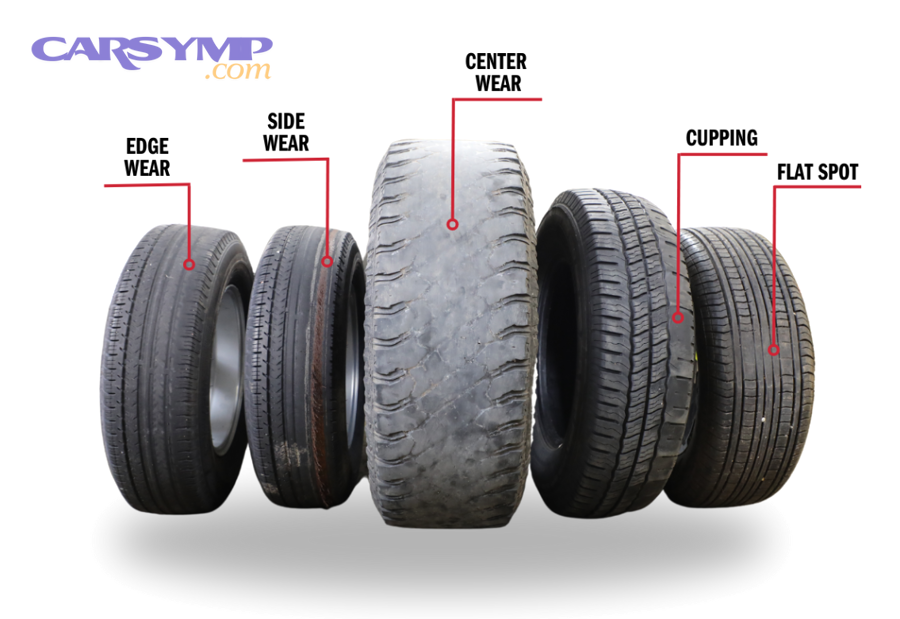
Normal tread wear happens gradually and relatively evenly from shoulder to shoulder across the tire. Uneven tire wear does not. It removes tread from one section faster than another, which changes how the tire grips the road, how it evacuates water, how much noise it makes, and how long it remains safe to use. That is why the main keyword, uneven tire wear fix, is not just about making the tread look better. It is about restoring the conditions that allow the tire to roll straight, carry load evenly, and maintain traction under braking, cornering, and wet-road driving.
A driver usually notices the problem in one of four ways. First, the vehicle may pull slightly to one side. Second, the tread may look lower on the inside edge, outside edge, or center rib. Third, the car may start humming or droning at highway speed. Fourth, the steering wheel may feel less stable or the ride may feel rougher than before. Each sign matters because the tire is part of a system, not an isolated part.
Is Uneven Tire Wear a Sign That Something Is Wrong With the Car?
Yes, uneven tire wear usually signals that something is wrong with the car because the tread pattern often reflects a fault in alignment geometry, inflation pressure, wheel balance, or suspension control.
More specifically, the issue in this heading matters because the tire records what the chassis has been doing over time.
The tread behaves like a rolling diagnostic surface. If toe is off, the tire may scrub sideways as it rolls, which creates feathering or fast edge wear. If camber is excessive, one shoulder can carry more load than the other. If a shock or strut no longer controls wheel motion, the tire can bounce and create Cupping from worn shocks/struts. If pressure stays too high or too low for too long, the center or shoulders can wear faster than the rest of the tread. In other words, the tire wear pattern is often the result, not the root cause.
That distinction matters for repair planning. A driver who only rotates tires without correcting alignment or replacing worn dampers may spread the problem to additional tires. A driver who buys new tires before correcting suspension play can ruin those new tires quickly. This is why Fixing uneven wear: parts to inspect first should always include tire pressure, tread pattern, alignment angles, ball joints, tie rods, bushings, shocks, and struts.
What Does Uneven Tire Wear Mean Compared With Normal Tread Wear?
Uneven tire wear means the tread is wearing asymmetrically or irregularly, while normal tread wear means the tire is losing rubber at a relatively uniform rate across the usable contact area.
However, the difference becomes clearer when drivers compare what the tread looks like and how the car behaves.
With normal wear, the tread blocks remain even in height across the tire, and tread depth declines steadily across service intervals. The car usually tracks straight, braking remains predictable, and noise rises gradually as the tire ages. With uneven wear, one area of the tread drops faster, some tread blocks may feel sharp on one side and smooth on the other, and the car may become noisier or less stable well before the tire should be worn out.
The practical takeaway is simple: normal wear calls for maintenance and replacement at the proper time; uneven wear calls for diagnosis first. That is the foundation of any reliable uneven tire wear fix.
According to the National Highway Traffic Safety Administration, proper tire inflation and tread condition are essential to safe driving performance, especially in braking and wet-road traction, which is why abnormal tread wear should not be ignored.
What Tire Wear Patterns Should Drivers Look For First?
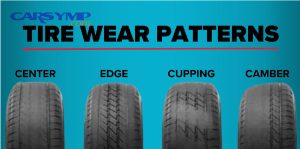
There are five main types of uneven tire wear patterns drivers should look for first: inner-edge wear, outer-edge wear, center wear, feathering, and cupping, based on where and how the tread is being removed.
To better understand the problem, drivers should read the pattern before they buy tires, book alignment, or approve suspension work.
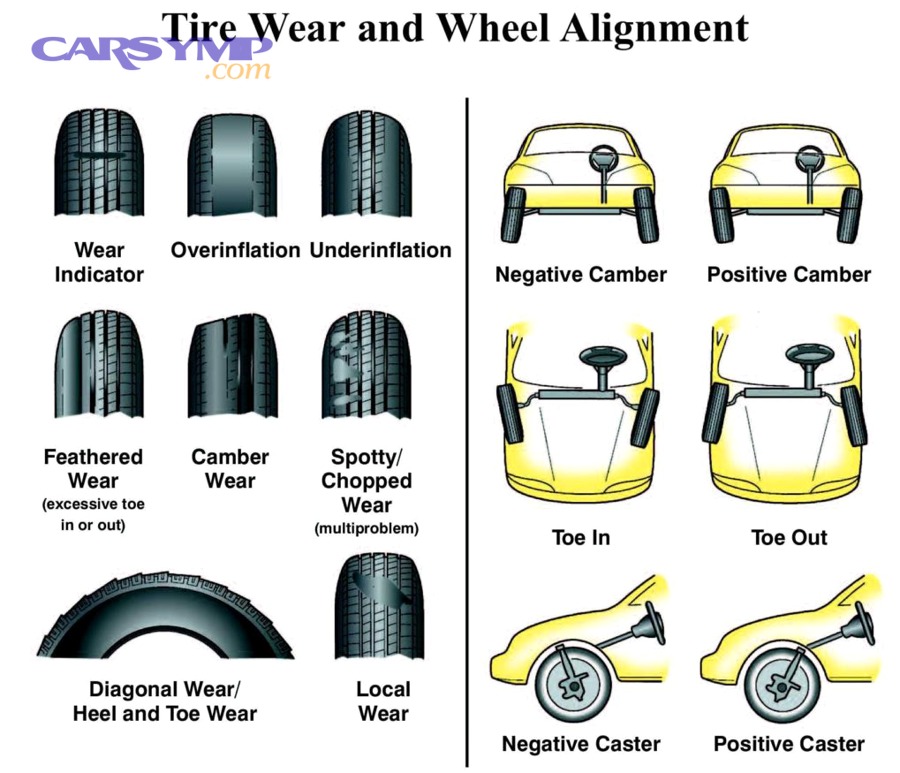
The reason pattern reading matters is that different faults leave different signatures. Uneven tire wear patterns and causes are tightly connected. When drivers understand that connection, they stop guessing and start testing the most likely source first.
What Are the Main Types of Uneven Tire Wear Patterns?
There are five main types of uneven tire wear patterns: inner-edge wear, outer-edge wear, center wear, feathering, and cupping, classified by the location and texture of tread loss.
Specifically, each pattern points toward a different kind of load problem or motion problem.
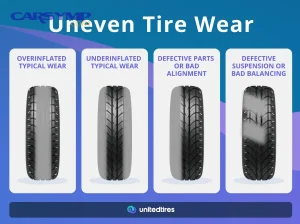
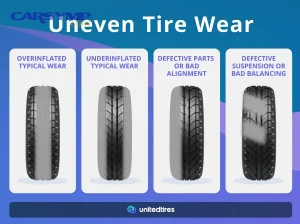
Inner-edge wear appears on the inside shoulder of the tire and often suggests alignment geometry issues, especially excessive negative camber or incorrect toe. This is one of the most common signs behind Inner edge wear from camber/toe issues. On many front-wheel-drive cars, inner shoulder wear can progress quietly because drivers do not inspect the inside edge often enough.
Outer-edge wear develops on the outside shoulder and may come from underinflation, aggressive cornering, or alignment conditions that load the outer shoulder heavily. It can also appear if tires are not rotated consistently and one axle works harder in daily driving.
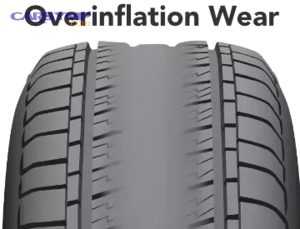
Center wear happens when the middle rib or center portion of the tread wears faster than both shoulders. This pattern usually suggests overinflation. It directly relates to the phrase Center wear from overinflation vs underinflation, because inflation mistakes create highly recognizable wear differences.
Feathering creates a directional feel across the tread blocks. If a driver runs a hand across the tread, one direction feels smooth while the other feels sharp. This often indicates a toe issue, because the tire is being dragged slightly sideways instead of rolling cleanly.
Cupping, sometimes called scalloping, appears as repeated dips or scooped-out patches around the tread. It often results from uncontrolled wheel movement, usually because shocks or struts are worn or balance is poor. Cupping from worn shocks/struts is especially common on vehicles that have accumulated mileage without damper replacement.
How Is Edge Wear Different From Cupping, Feathering, and Center Wear?
Edge wear is concentrated on one or both shoulders, cupping appears as repeating scooped depressions, feathering creates a directional texture, and center wear removes tread mainly from the middle rib.
Meanwhile, the key difference lies in whether the tire is carrying load unevenly, bouncing, scrubbing sideways, or running at the wrong pressure.
Edge wear is usually a load-distribution problem. The tire still rolls, but it is not carrying its share evenly across the tread width. Center wear is primarily a pressure problem. The tire crowns slightly, putting more work into the center. Feathering is a tracking problem. The tire gets pushed sideways as it rolls, shaving tread block edges. Cupping is a motion-control problem. The wheel repeatedly loses and regains steady road contact because damping is weak or the tire assembly is not rotating smoothly.
This comparison matters because repair follows diagnosis. Edge wear often leads to alignment and pressure checks. Center wear begins with inflation correction. Feathering points strongly toward toe measurement. Cupping requires a harder look at shocks, struts, wheel balance, and any looseness in the suspension or steering system.
| Wear pattern | What it looks like | Most likely cause | First inspection step |
|---|---|---|---|
| Inner-edge wear | Inside shoulder wears fastest | Camber or toe issue | Check alignment angles |
| Outer-edge wear | Outside shoulder wears fastest | Underinflation or alignment | Check pressure and alignment |
| Center wear | Middle tread wears faster | Overinflation | Set cold pressure correctly |
| Feathering | Tread blocks feel sharp one way | Toe misalignment | Measure toe and inspect steering links |
| Cupping | Scalloped dips around tread | Worn shocks/struts or imbalance | Inspect dampers and balance |
The table above summarizes the most common patterns, what they usually indicate, and the first place a technician or driver should look before deciding on repairs.
According to tire service guidance published by major manufacturers such as Michelin and Bridgestone, tread wear patterns often reveal whether the main problem is inflation, alignment, or chassis control, which is why reading the pattern is one of the fastest diagnostic steps in tire & wheel service.
What Causes Uneven Tire Wear on a Car?
Uneven tire wear on a car is mainly caused by bad alignment, incorrect tire pressure, missed tire rotation, poor wheel balance, and worn suspension or steering components.
Let’s explore these causes in order, because the most accurate fix comes from separating geometry faults from maintenance faults.

Many drivers ask for a simple answer, but the real answer is layered. Tires wear unevenly when the contact patch does not stay evenly loaded and evenly controlled. That imbalance can come from chassis angles, air pressure, wheel assembly issues, or mechanical play.
Can Bad Wheel Alignment Cause Uneven Tire Wear?
Yes, bad wheel alignment can cause uneven tire wear because incorrect toe, camber, or caster changes how the tire contacts the road and how much it scrubs as it rolls.
More importantly, alignment faults often create repeat wear even after tires are rotated or replaced.
Toe is one of the biggest tread killers. If the wheels point slightly inward or outward relative to one another, the tires no longer roll straight ahead with minimal scrub. Instead, they drag across the surface at a slight angle. That repeated scrub can create feathering and accelerated edge wear. Camber changes how much the tire leans relative to the road. Too much negative camber can overload the inner shoulder. Too much positive camber can overload the outer shoulder. Caster affects stability more than direct tread pattern, but when combined with other issues it can contribute to handling symptoms that mask the true cause.
This is why Alignment vs balance vs suspension diagnosis matters so much. Alignment explains where the tire is pointed and how it sits on the road. Balance explains how smoothly the wheel and tire spin. Suspension explains how well the wheel stays controlled over the road surface. Confusing one for the other leads to partial repairs.
A proper alignment check becomes especially important after the vehicle hits a pothole, curb, or road debris, after steering or suspension parts are replaced, or when a driver sees one-sided wear appearing early on one axle.
Can Incorrect Tire Pressure, Missed Rotation, or Poor Wheel Balance Cause It Too?
Yes, incorrect tire pressure, missed rotation, and poor wheel balance can all cause uneven tire wear because each one changes how the tire carries load, shares work, or rotates under speed.
In addition, these causes often overlap, which is why technicians should verify them before recommending larger repairs.
Pressure mistakes are common and easy to miss. Overinflation reduces the tire’s effective contact area and can create center wear. Underinflation allows the shoulders to do more work and can wear both outer areas faster. The phrase Center wear from overinflation vs underinflation matters here because these patterns are often confused by drivers who only glance at the tread instead of measuring depth across the tire.
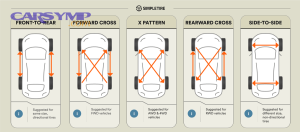
Missed rotation is another major factor. Front tires and rear tires do not live the same life. On many vehicles, front tires steer, brake, and carry more cornering load. On drive axles, they also handle propulsion. If the tires stay in one position too long, small wear differences become big wear differences. A smart Rotation strategy to prevent uneven wear helps equalize that workload before the tread pattern becomes permanent.
Poor wheel balance usually causes vibration first, but if it continues, the wheel can bounce subtly at speed. Over time, that instability can contribute to irregular wear and may work with weak shocks or struts to produce cupping.
According to guidance from the Rubber Manufacturers Association and major tire brands, maintaining recommended inflation pressure and rotating tires at regular service intervals significantly improves tread life and reduces irregular wear risk.
How Do You Fix Uneven Tire Wear the Right Way?
The right way to fix uneven tire wear is to diagnose the wear pattern, inspect the likely cause, correct that root cause, and only then rotate, realign, repair, or replace tires as needed.

To better understand the fix, drivers should think in sequences rather than isolated services.
An effective uneven tire wear fix is not a single product or one shop service. It is a workflow. First, inspect the tread and confirm the pattern. Second, check cold inflation pressure and compare it to the door-jamb recommendation. Third, inspect tread depth across the tire. Fourth, look for vibration, pull, steering looseness, or bounce. Fifth, measure alignment if the pattern points to geometry or scrub. Sixth, inspect dampers and suspension joints if cupping or instability is present. Only after the cause is confirmed should the repair plan move forward.
Should Drivers Fix the Cause Before Replacing or Rotating the Tires?
Yes, drivers should fix the cause before replacing or rotating the tires because untreated alignment, suspension, or pressure problems will damage replacement tires and spread irregular wear across more positions.
More specifically, this order protects both money and tread life.
This is where When to replace tires vs correct the problem becomes crucial. If a driver installs new tires on a vehicle with excessive toe, those new tires begin scrubbing immediately. If a driver rotates cupped front tires to the rear before checking shocks or balance, the noise may move rather than disappear. If a driver resets pressure but ignores a bent component or worn tie-rod end, the improvement may be brief.
The better approach is root-cause-first. Correct inflation. Inspect for mechanical looseness. Measure alignment. Repair worn suspension or steering parts. Rebalance if vibration exists. Then decide whether the current tires can be rotated and monitored or whether wear has advanced too far.
That sequence also improves estimates. The Cost to fix uneven tire wear causes varies widely because inflation correction costs almost nothing, alignment service usually costs far less than suspension repair, and tire replacement adds a separate expense. Doing the job in the right order prevents paying twice.
What Is the Correct Fix for Each Uneven Tire Wear Cause?
The correct fix depends on the cause: alignment for scrub or edge wear, pressure correction for center or shoulder wear, rotation for position-based wear, balancing for vibration-related irregularity, and suspension repair for cupping or unstable contact.
Specifically, the best repair plan matches the pattern to the system that created it.
If the tire shows inner edge wear from camber/toe issues, start with alignment measurement and inspect related steering or suspension parts that could prevent an accurate adjustment from holding. If the tire shows center wear, correct inflation practices immediately and verify the tire has not been routinely overfilled beyond the manufacturer’s recommendation. If shoulder wear appears on both sides of the tread, check for chronic underinflation and confirm load use is appropriate.
If feathering is present, inspect toe settings and verify steering components are tight enough to hold adjustment. If cupping appears, inspect shocks and struts for loss of damping, look for loose bushings or joints, and confirm wheel balance. If tires have simply worn differently because they stayed too long in one position, apply a Rotation strategy to prevent uneven wear after the underlying conditions are verified.
In service terms, Fixing uneven wear: parts to inspect first usually means:
- Tire pressure and valve condition
- Tread depth across each tire
- Alignment angles, especially toe and camber
- Shocks and struts
- Ball joints, tie rods, control-arm bushings
- Wheel bearings if noise or play is present
- Balance condition if vibration is reported
According to service information used across professional repair shops, tires that show irregular wear should be inspected together with suspension and alignment components because correcting only the tire symptom does not restore the system that caused the wear.
Can Unevenly Worn Tires Be Saved or Do They Need Replacement?
Unevenly worn tires can sometimes be saved if enough usable tread remains and the wear is not structurally dangerous, but they need replacement when the wear is severe, noisy, unstable, or below safe tread limits.
However, the correct answer depends on depth, pattern severity, location, and whether the underlying cause has already been fixed.
Drivers often want a single rule, but tread condition exists on a spectrum. Some tires can continue in service after alignment and rotation. Others are so uneven that the pattern will keep causing noise or reduced wet grip even after the root cause is corrected.
Is It Safe to Keep Driving on Uneven Tire Wear?
No, it is not always safe to keep driving on uneven tire wear because abnormal tread can reduce traction, increase hydroplaning risk, create vibration, and signal underlying steering or suspension faults.
More importantly, safety depends on how advanced the wear is and what caused it.
A mildly uneven tire that still has good tread depth and no structural damage may remain usable for a limited time after the cause is corrected. A severely cupped tire that shakes the car, a tire worn to cords on the inside edge, or a tire with extreme shoulder wear is different. That tire may have less wet grip, less braking stability, more heat buildup, and a greater chance of failure. If the tire shows exposed fabric or steel, localized bald areas, bulges, or deep irregular wear, driving on it is unsafe.
This is why When to replace tires vs correct the problem is not an either-or choice at first. The cause must still be corrected either way. Then the driver can decide whether the tire remains serviceable or whether replacement is the safer path.
How Do You Know if a Tire Can Be Rotated, Monitored, or Replaced?
A tire can usually be rotated if wear is mild and even enough to stabilize after repair, monitored if the pattern is limited and tread depth remains healthy, and replaced if the wear is severe, noisy, unsafe, or near the legal limit.
In short, the decision depends on severity, not just on whether the tire still holds air.
A practical approach is to measure tread depth across the inner shoulder, center, and outer shoulder. If the difference is small and the root cause has been corrected, rotation may help equalize the wear over time. If the difference is moderate, the tire may still be usable, but the driver should monitor noise, steering feel, and wet-road performance. If one shoulder is nearly bald while the rest of the tire still has tread, the tire has already lost too much usable surface balance and should usually be replaced.
The same goes for cupping. Once cupping becomes pronounced, the tire may continue to make noise even after shocks, struts, or balance are corrected because the tread surface itself is now uneven. In that case, the mechanical fix stops further damage, but tire replacement restores ride quality.
According to the U.S. Department of Transportation and tire industry safety guidance, tires should be replaced when tread depth reaches unsafe levels or when abnormal wear compromises traction and control.
How Can Drivers Prevent Uneven Tire Wear From Coming Back?
Drivers can prevent uneven tire wear from coming back by checking pressure regularly, rotating on schedule, correcting alignment early, and inspecting suspension parts before small handling issues turn into tire damage.

Next, prevention works best when it becomes routine rather than reactive.
Preventing future uneven wear with maintenance is cheaper than fixing advanced wear after the tire is already damaged. Tires respond to neglect slowly at first and then expensively later. A monthly pressure check takes minutes. A missed rotation interval can cost months of tread life.
What Maintenance Habits Prevent Uneven Tire Wear Best?
The maintenance habits that prevent uneven tire wear best are monthly pressure checks, scheduled rotations, prompt alignment checks after impacts, and regular inspection of shocks, struts, and steering parts.
Specifically, each habit controls one of the major causes before it can create a visible tread pattern.
Check cold tire pressure at least once a month and before long trips. Always use the vehicle manufacturer’s recommended pressure, not the maximum pressure listed on the tire sidewall. That single habit prevents many cases of center wear and shoulder wear.
Rotate tires at the interval recommended by the vehicle or tire manufacturer. This is where Rotation strategy to prevent uneven wear becomes part of ownership rather than repair. Vehicles with front-heavy braking and steering loads especially benefit from consistent rotation.
Schedule alignment checks when the car hits potholes or curbs, when steering begins to pull, when a new set of tires is installed, or when suspension parts are replaced. Alignment early is cheaper than worn tires later.
Inspect shocks, struts, and steering joints during routine service. If the ride becomes floaty, bouncy, or noisy, do not wait for visible cupping to confirm the problem.
How Is Preventing Uneven Tire Wear Different From Fixing It After It Starts?
Preventing uneven tire wear is proactive maintenance that keeps tread wear stable, while fixing it after it starts is reactive diagnosis and repair that tries to stop an existing pattern from becoming expensive or unsafe.
To sum up, prevention protects tread life; repair protects the vehicle after the warning sign has already appeared.
Prevention focuses on habits, intervals, and early checks. Repair focuses on symptoms, measurements, and correcting faults that have already changed the tread. Prevention usually costs less because it uses routine tire & wheel service. Repair can involve alignment work, balancing, suspension parts, and sometimes tire replacement.
That difference is why drivers should not wait for obvious tread damage to act. The sooner a mild pull, vibration, or noise is inspected, the better the odds that the tire can be saved rather than replaced.
According to the Car Care Council, preventive maintenance such as pressure checks, rotation, and suspension inspection helps extend tire life and reduce the likelihood of irregular tread wear.
What Advanced Tire Wear Cases Should Drivers Understand After Fixing the Main Problem?
Drivers should understand advanced tire wear cases such as camber wear, toe wear, recurrence on new tires, and warranty or noise implications because these cases explain why some problems return or remain noticeable after the main repair.

In addition, these edge cases help drivers make better long-term decisions after the initial uneven tire wear fix is complete.
Once the main cause has been corrected, the remaining questions are often more technical. These questions do not change the primary fix, but they deepen the driver’s understanding of why the problem happened and why it may still affect comfort, cost, or tire life afterward.
How Is Camber Wear Different From Toe Wear on a Tire?
Camber wear usually loads one shoulder more heavily, while toe wear usually scrubs tread blocks across the surface and often creates feathering or accelerated edge wear.
More specifically, camber tilts the tire, while toe points the tire in the wrong direction relative to travel.
That difference matters in diagnosis. A tire with steady inner shoulder wear and little texture change may point more strongly to camber. A tire with a sawtooth feel across the tread blocks often points more strongly to toe. In practice, both angles can contribute at the same time, which is why a proper alignment reading is more reliable than visual guesswork alone.
Can New Tires Wear Unevenly Again if the Underlying Cause Is Not Fixed?
Yes, new tires can wear unevenly again if the underlying cause is not fixed because new rubber cannot compensate for bad geometry, poor damping, chronic overinflation, or loose suspension parts.
Therefore, replacing tires without correcting the cause is often the most expensive version of the same mistake.
Drivers sometimes hope that fresh tread will restore smoothness on its own. It may improve ride temporarily, but it cannot hold alignment angles, stop wheel hop, or fix toe scrub. That is why tire replacement should be the final decision, not the first assumption.
Does Uneven Tire Wear Affect Road Noise, Fuel Economy, or Tire Warranty?
Yes, uneven tire wear can affect road noise, fuel economy, and sometimes tire warranty because irregular tread changes rolling behavior, increases resistance in some cases, and may reflect maintenance conditions excluded from warranty coverage.
Besides, these effects often continue after the initial cause is fixed if the tread surface itself has become badly irregular.
Road noise rises because the tread no longer contacts the pavement evenly. Fuel economy can suffer when tires run underinflated or scrub due to toe error. Warranty outcomes vary, but manufacturers often expect proper inflation, rotation, and alignment maintenance. A tire destroyed by an unresolved suspension or alignment issue may not qualify for the same consideration as a tire that simply wore out under proper service.
What Is the Difference Between a Temporary Improvement and a Permanent Fix for Uneven Tire Wear?
A temporary improvement reduces symptoms briefly, while a permanent fix corrects the root cause that created the wear pattern in the first place.
In short, symptom relief makes the car feel better; root-cause correction keeps the next set of miles from repeating the same damage.
A temporary improvement may include inflating a low tire, rotating noisy tires, or balancing a wheel that still sits on a misaligned suspension. Those actions can help, but they do not always end the problem. A permanent fix identifies which system caused the pattern, repairs that system, confirms the correction, and then decides whether the existing tires can continue in service.
That is the real meaning of a complete uneven tire wear fix. The goal is not only to stop visible tread loss. The goal is to restore stable contact, predictable handling, and long-term tire life through the correct sequence of diagnosis, repair, and maintenance.