


A bad water pump can absolutely make your car overheat, and the most useful clue is not just the temperature rising but how it rises. When overheating happens together with unstable gauge readings, coolant loss, steam, or unusual front-engine noise, the pattern often points to reduced coolant circulation rather than a random hot-running episode.
That diagnostic pattern matters because many drivers notice the symptom before they notice the cause. Some cars overheat mainly at idle, some spike quickly after a short drive, and some fluctuate between normal and hot as a weak pump loses the ability to move coolant consistently through the engine and radiator.
The next layer of diagnosis comes from related clues. Coolant residue near the front of the engine, weak cabin heat, steam under the hood, and a Grinding/whining noise from water pump bearings often appear alongside overheating, turning a vague complaint into a more focused cooling-system diagnosis.
Just as important, overheating does not always mean the water pump is the only suspect. Thermostat failure, radiator airflow problems, trapped air, and even head gasket issues can mimic some of the same symptoms. Introduce a new idea: the sections below break down the overheating patterns, the related water pump failure symptoms, and the checks that help you decide when the pump is the most likely cause.
Can a Bad Water Pump Cause Your Car to Overheat?
Yes, a bad water pump can cause your car to overheat because it reduces coolant circulation, lowers heat transfer, and allows engine temperature to rise beyond its normal operating range.
To better understand that overheating pattern, you need to look at the water pump as the circulation center of the cooling system rather than as a simple accessory part. When the pump works properly, it moves coolant through the engine passages, radiator, hoses, and heater core in a continuous loop. When the pump leaks, the bearing wears, or the impeller no longer moves coolant effectively, that loop becomes weak or interrupted. The result is one of the most common Water pump failure signs: heat builds faster than the system can shed it.
What does a water pump do in the cooling system?
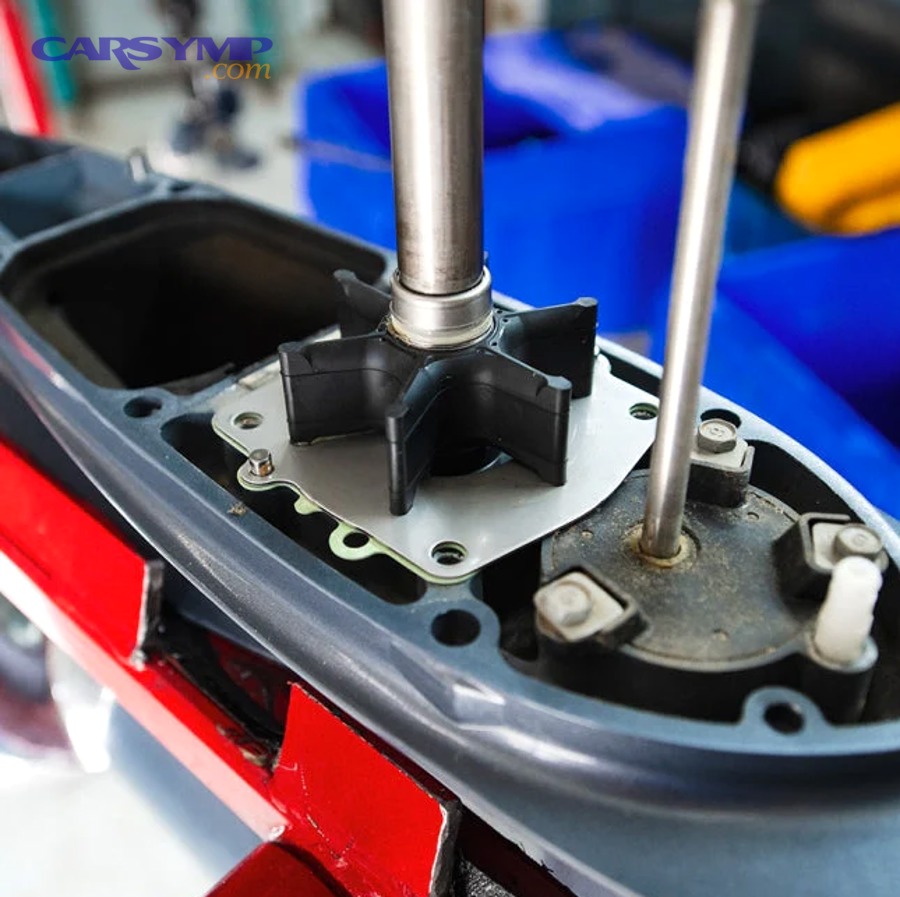
A water pump is the component that circulates coolant through the engine and radiator so the engine can maintain a stable operating temperature.
Specifically, the pump pushes coolant through hot engine passages where the liquid absorbs heat, then sends that hot coolant toward the radiator where airflow removes the heat before the coolant cycles back again. That basic movement supports several systems at once: engine temperature control, heater operation, and protection against localized hot spots inside the cylinder head and block.
Because the pump is tied directly to coolant movement, the failure pattern can vary. A leaking shaft seal may lower coolant level first. A worn bearing may create sound before temperature problems become obvious. A damaged or eroded impeller may reduce flow enough to create intermittent overheating before a major leak ever appears. That is why water pump failure symptoms often appear as a cluster rather than as a single warning sign.
According to RepairPal in 2022, common symptoms of a bad water pump include engine overheating, coolant leaks, poor heater performance, and unusual noise, which supports the link between pump function and system-wide temperature control.
When does overheating usually point to water pump failure?
Overheating usually points to water pump failure when it appears with coolant loss, front-engine noise, weak heater output, steam, or repeated temperature instability.
More specifically, a water-pump diagnosis becomes stronger when the overheating does not act like an isolated event. If the temperature gauge climbs repeatedly over several trips, if the engine runs hotter after coolant drops, or if the car overheats while also showing residue or dampness near the pump area, the pattern becomes more consistent with pump trouble than with a one-time environmental issue.
This is also where many drivers miss the early stage. The vehicle may still run, the check engine light may not immediately appear, and the temperature may come back down once the car is moving. But that temporary recovery does not rule out pump trouble. It may simply mean airflow through the radiator is compensating for weak coolant movement for a short time.
According to AutoZone, key signs of a bad water pump include overheating, coolant leaks or residue, and whining or squealing noises from the engine, all of which commonly appear together rather than alone.
What Overheating Patterns Suggest a Bad Water Pump?
There are three common overheating patterns that suggest a bad water pump: overheating at idle or low speed, sudden or repeated temperature spikes, and unstable gauge movement that rises and falls instead of staying steady.
To better understand those patterns, it helps to think in terms of behavior rather than just peak temperature. The most informative question is not only “Did it overheat?” but also “Under what conditions did it overheat, and what else happened at the same time?” That hook leads directly into the most useful symptom grouping for diagnosis.
Does the engine overheat at idle, in traffic, or at low speed?
Yes, overheating at idle, in traffic, or at low speed can suggest water pump trouble because coolant circulation may be weak enough that the engine relies too heavily on low-demand conditions and limited airflow.
For example, many drivers report that the temperature climbs while sitting at a light or creeping through traffic, then drops somewhat once the car gains speed. That pattern is often associated with cooling-system inefficiency. Sometimes the issue is fan-related, but a weak water pump can create a similar pattern by failing to move enough coolant through the system when thermal load accumulates.
The hook here is coolant movement. At idle, the engine still generates heat, but the system has less margin to hide circulation problems. If the pump impeller is worn or slipping, or if internal pump efficiency has dropped, the engine may edge toward hot in slow conditions first. That makes idle overheating one of the more useful Water pump failure signs, especially when paired with leaks, noise, or poor cabin heat.
At the same time, this pattern is not exclusive to the pump. A failed cooling fan or blocked radiator can do something similar, which is why idle overheating alone is not enough. The diagnosis becomes stronger when the overheating pattern chains into pump-specific clues, such as coolant residue near the front of the engine or a Grinding/whining noise from water pump bearings.
According to AutoZone, overheating signs commonly include a high temperature gauge, steam, unusual smells, and visible leaks, which supports using the full symptom pattern rather than one condition alone.
Does the temperature rise gradually or spike suddenly?
A bad water pump can produce either a gradual rise or a sudden spike, depending on whether the problem is reduced flow, intermittent circulation, or rapid coolant loss.
Specifically, a gradual rise often points to declining efficiency. The impeller may be worn, coolant flow may be weak, or the pump may be circulating enough liquid to delay failure but not enough to control temperature under load. In that case, the gauge drifts upward over minutes rather than jumping instantly.
A sudden spike can happen when the pump leak becomes severe, when coolant level drops below a useful threshold, or when circulation fails abruptly. The engine may appear normal early in the drive, then climb fast once trapped heat overwhelms the remaining coolant’s ability to absorb and release heat. That is why one of the most important diagnostic questions is whether the vehicle runs hot all the time or suddenly becomes hot after seeming normal.
The hook-chain matters here: if you notice a gradual pattern, watch for companion clues like weak heater output or repeated top-offs. If you notice a sudden spike, pay closer attention to visible coolant loss, steam, or a fresh puddle under the vehicle. Both paths can still point to the same root problem.
According to RepairPal, overheating caused by water pump gasket or seal failure can become dangerous quickly because coolant loss reduces the system’s ability to remove combustion heat.
Does the temperature go up and down instead of staying stable?
Yes, a temperature gauge that rises and falls instead of staying stable can indicate inconsistent coolant circulation from a failing water pump.
More specifically, unstable temperature often appears when the pump is not fully dead but is no longer dependable. Coolant may circulate enough during part of the drive, then lose effectiveness under heat load, engine speed change, or reduced coolant volume. The driver sees a pattern of normal-warm-hot-normal rather than a single steady climb.
That instability matters because healthy cooling systems are designed for control, not drama. The gauge may move slightly under extreme conditions, but it should not wander frequently. When it does, something is usually interrupting steady heat exchange. A thermostat can cause similar fluctuation, but a pump becomes more suspect when the temperature swings are paired with leaks, noise, or heater inconsistency.
In practical terms, gauge fluctuation is often one of the earliest warnings that the problem is becoming systemic. It tells you the car is no longer managing heat in a predictable way. That alone justifies inspection, because repeated heat cycling increases the risk of hose failure, gasket stress, and more severe engine damage.
According to J.D. Power, erratic temperature changes can appear with thermostat problems, which is why fluctuating temperature should be compared with other symptoms before blaming the pump alone.
What Other Symptoms Usually Appear with Water-Pump-Related Overheating?
Water-pump-related overheating usually appears with three supporting symptoms: coolant leakage, unusual front-engine noise, and steam, smell, or repeated coolant loss.
To better understand the diagnosis, treat overheating as the lead symptom and these related clues as confirmation signals. When the pattern links together, the probability of pump failure rises sharply compared with overheating alone.

Is coolant leaking near the front of the engine?
Yes, coolant leaking near the front of the engine is one of the strongest signs that the water pump seal, gasket, or housing may be failing.
Specifically, water pump leaks often show up as puddles under the front of the vehicle, dampness around the pump area, or crusty residue left behind after coolant evaporates. Depending on the coolant type, the liquid may look green, orange, pink, or blue. Some leaks are obvious on the ground, while others leave only staining on nearby components or the underside of the hood insulation.
That leak pattern matters because coolant level is part of the overheating chain. Even a pump that still spins cannot control engine temperature well if the system has lost enough coolant volume. A small leak can therefore create a big temperature problem over time. This is why many water pump failure symptoms seem to “worsen together”: the leak lowers coolant, lower coolant weakens heat transfer, and weak heat transfer pushes temperature higher.
Drivers should also remember that a hidden leak does not clear the pump. Some pumps seep slowly, and the coolant may evaporate on hot components before it ever forms a clear puddle.
According to NAPA in 2021, a noticeable coolant leak toward the front of the vehicle is one of the most telling early signs of a failing water pump.
Do you hear whining, grinding, or squealing noises?
Yes, whining, grinding, or squealing noises can indicate water pump bearing wear, pulley issues, or internal pump damage.
More specifically, a Grinding/whining noise from water pump bearings often develops as the bearing loses lubrication or the shaft begins to wobble. That sound may start as a light whine, then become rougher or more metallic as wear increases. In some vehicles, belt slip can also add squealing, which means the sound should be checked in context rather than in isolation.
The hook from noise to overheating is mechanical efficiency. A worn bearing can affect pulley alignment, strain the belt, and signal internal wear severe enough to compromise the pump’s ability to move coolant. That means unusual front-engine noise is not just an annoyance. It can be one of the earliest Water pump failure signs before severe overheating begins.
Drivers sometimes dismiss this clue because the car still runs and the sound seems minor. But a noisy pump tends to worsen, not heal. Once the bearing or shaft degrades enough, coolant seal failure and circulation loss often follow.
According to AutoZone, whining or squealing noises from the engine are among the common signs of a bad water pump, especially when they appear with overheating or coolant leakage.
Is there steam, a sweet smell, or repeated coolant loss?
Yes, steam, a sweet coolant smell, or repeated coolant loss often signal that overheating is tied to a coolant-system problem such as a failing water pump.
For example, steam from under the hood usually means coolant is reaching surfaces hot enough to vaporize it, whether from boiling in the system or from an external leak hitting hot metal. A sweet smell points in the same direction because antifreeze has a distinctive odor. Repeated coolant loss without a visible large puddle suggests that the system is leaking, consuming, or venting coolant somewhere in the heat cycle.
This symptom chain is important because it narrows the field. A car can run hot for many reasons, but steam and sweet smell strongly connect the problem to coolant behavior. Once that link is established, the water pump becomes a more likely suspect if the leak location, heater behavior, or pump noise also line up.
According to AutoZone, sweet smells, visible leaks, and overheating are among the classic indicators of coolant-system trouble, while NAPA notes that steam under the hood is a telltale sign that the engine is overheating and should not continue to be driven.
How Can You Tell a Bad Water Pump from Other Causes of Overheating?
A bad water pump is most likely when overheating appears with leaks, pump-area noise, weak heater output, or unstable circulation, while other causes usually reveal their own distinct pattern.
To better understand that comparison, the key is not to ask which part can cause overheating, because many parts can. The better question is which part best explains the full symptom cluster you are seeing.
| Possible Cause | Typical Overheating Pattern | Supporting Clues | Why It Can Be Mistaken for a Water Pump |
|---|---|---|---|
| Bad water pump | Repeated overheating, fluctuation, idle heat rise, or sudden spike after coolant loss | Coolant leak near pump, whining/grinding, weak heater, steam | It affects both coolant flow and coolant level |
| Faulty thermostat | Runs hot because coolant flow is restricted or erratic | Erratic temperature, heater changes, possible overcooling in some failures | Both can create unstable temperature behavior |
| Radiator fan or airflow issue | Often overheats at idle or in traffic more than at highway speed | Fan not turning, AC performance changes, less overheating when moving | Idle overheating can resemble weak coolant circulation |
| Trapped air in system | Overheating and gurgling after cooling-system service | Poor heater performance, bubbling, recent coolant work | Both can reduce effective coolant flow |
| Head gasket issue | Overheating that may worsen rapidly or recur | White exhaust smoke, coolant contamination, pressure problems | Both can cause coolant loss and overheating |
The table above shows the main ways overheating patterns overlap and diverge across common cooling-system failures.
Is it a bad water pump or a thermostat problem?
A water pump is more likely when overheating appears with pump noise, leakage, or poor circulation clues, while a thermostat problem is more centered on coolant flow restriction or erratic opening behavior.
Specifically, a thermostat issue often shows up as overheating from improper opening or closing at the correct temperature. Some thermostat failures also cause the engine to run too cool or to take too long to warm up. By contrast, a pump problem is more likely to pair overheating with physical clues such as leaks from the pump area, bearing sound, or weak heater operation caused by reduced circulation.
The hook-chain here is symptom context. If your vehicle overheats and also makes front-engine noise or leaves coolant traces near the pump, that leans pump. If your car shows erratic temperature behavior without those pump-specific signs, the thermostat stays higher on the list.
According to J.D. Power in 2024, faulty thermostat symptoms can include overheating, erratic temperature changes, strange sounds, and heater problems, which is why comparison with leak location and pump noise is essential.
Is it a bad water pump or a radiator / cooling fan issue?
A radiator or fan issue is often more likely when the car overheats mainly at idle and improves with speed, but a water pump remains likely if that pattern also includes leaks, noise, or heater inconsistency.
For example, if the cooling fan fails, the engine may run hotter when sitting still because the radiator does not receive enough forced airflow. Once the car moves faster, natural airflow can temporarily reduce temperature. That looks similar to some pump failures, which is why idle overheating alone cannot identify the culprit.
The most useful separator is the rest of the pattern. Fan problems do not usually create coolant residue near the pump, and radiator airflow issues do not usually create a Grinding/whining noise from water pump bearings. On the other hand, if the radiator is restricted internally, the distinction becomes harder because both systems can create flow-related temperature behavior.
In short, the pump becomes more likely when airflow explanations do not account for the leak, noise, or circulation clues.
Is it a bad water pump or something more serious like a head gasket?
A head gasket problem is more likely when overheating appears with white exhaust smoke, coolant contamination, pressure problems, or combustion-related symptoms, while a water pump problem is more mechanical and circulation-focused.
More specifically, both issues can cause coolant loss and overheating, but they usually differ in how they do it. A bad water pump loses or misdirects coolant circulation. A head gasket can force combustion gases into the cooling system, mix coolant with oil, or let coolant enter the combustion chamber. Those are more serious system-integrity failures than a worn pump bearing or leaking seal.
This comparison matters because many drivers fear the worst as soon as a car overheats. In reality, a leaking, noisy, circulation-poor pump is bad, but it is still a more defined repair path than internal engine damage. The danger comes from continuing to drive until a manageable cooling problem becomes a major engine problem.
What Should You Check First If You Suspect Water Pump Failure?
The best first check uses five factors: coolant level, visible leak evidence, pump-area noise, heater performance, and the exact overheating pattern you observed.
Let’s explore those checks in a practical order. The goal is not to confirm the repair yourself with absolute certainty but to narrow the diagnosis safely and avoid the mistake of driving an overheating vehicle farther than necessary.
What can you inspect safely at home?
You can safely inspect coolant level when the engine is cold, look for residue or puddles, listen for abnormal pump-area noise, and note heater and gauge behavior during operation.
To begin, only inspect the cooling system when the engine is fully cool. Opening a hot system is dangerous because pressurized coolant can spray out and cause burns. Start with the coolant reservoir level and compare it with the “cold” mark if visible. Then look around the water pump area and the front of the engine for dampness, staining, crusty deposits, or belt contamination.
Next, listen carefully with the engine running. A rough whine, grinding sound, or belt-related squeal from the pump area supports the diagnosis. Then think about cabin heat. If the heater blows weakly or becomes inconsistent while the engine temperature behaves erratically, that adds another circulation clue.
Finally, write down the overheating pattern itself:
- Did it overheat at idle, on the highway, or after shutdown?
- Did the gauge drift up slowly or jump quickly?
- Did it recover once you started moving?
- Did steam, smell, or coolant loss appear at the same time?
That sequence helps you describe the problem clearly to a technician and also helps you distinguish a pump problem from a general overheating complaint.
According to AutoZone, signs of coolant leaks include low coolant levels, puddles, sweet smell, and overheating, while RepairPal notes that poor heater performance can also point to inadequate coolant circulation from a bad pump.
When should you stop driving to avoid engine damage?
You should stop driving immediately if the gauge reaches the hot zone, steam appears, coolant pours out, or overheating repeats after cooldown.
More importantly, do not treat short-term recovery as a fix. Some drivers see the temperature drop after turning on the heater or increasing speed and assume the car is safe to continue driving. That can be misleading. If the pump is leaking, the bearing is failing, or coolant circulation has become unreliable, continued driving can turn a replaceable pump into warped engine components, hose rupture, or severe internal damage.
A practical rule is simple: once the vehicle shows severe overheating, steam, or rapid coolant loss, the safest next step is towing rather than “just making it home.” This is especially true if the car also has obvious Water pump failure signs such as leakage or front-engine noise.
According to NAPA, extremely low coolant can damage the water pump and risk destroying the engine, and steam under the hood is a sign to stop driving and have the vehicle towed for inspection.
What Less Common Water Pump Failure Patterns Can Make Diagnosis Harder?
Less common water pump failure patterns include overheating without a visible leak, weak cabin heat, different failure behavior in electric versus belt-driven pumps, and symptom overlap with trapped air or radiator blockage.
Below the main diagnosis, these harder cases expand the picture. They matter because some of the most confusing vehicles are not the ones with obvious leaks and loud noise, but the ones that overheat “for no clear reason” until the pattern becomes severe.

Can a bad water pump cause overheating without a visible leak?
Yes, a bad water pump can cause overheating without a visible leak if the impeller is worn, damaged, or no longer circulating coolant effectively.
Specifically, some pumps fail internally before they fail externally. The housing may stay dry while the impeller erodes, cracks, slips, or loses efficiency. In those cases, the system may still hold coolant, but heat transfer drops because the coolant is not moving with enough force through the engine and radiator.
That pattern is easy to misread. Drivers expect a failed pump to drip. When no puddle appears, they may assume the pump is fine. But a dry exterior does not guarantee a healthy interior. This is one reason persistent overheating with no obvious leak still deserves a water-pump inspection.
According to NAPA in 2022, overheating can occur even when the pump does not leak because pump fins can wear down or suffer cavitation damage, reducing coolant movement.
How does cabin heater performance help diagnose water pump issues?
Cabin heater performance helps diagnose water pump issues because the heater depends on hot coolant flow, so weak or inconsistent heat can signal poor circulation.
More specifically, the heater core is a small radiator that relies on the same coolant loop as the rest of the system. If the pump cannot move coolant efficiently, the cabin heater may blow cool air, take too long to warm up, or alternate between warm and cool. That makes heater behavior a subtle but valuable clue in the overall hook chain from overheating to diagnosis.
This clue becomes even more useful when paired with temperature fluctuation. If the gauge is unstable and the heater loses heat at the same time, circulation becomes a much stronger suspect than ambient conditions alone.
According to RepairPal, the car’s heater may stop working properly when a leaking or failing water pump reduces coolant level or circulation.
Do electric and belt-driven water pumps fail in different ways?
Yes, electric and belt-driven water pumps can fail differently because one depends on electric control and motor operation while the other depends on mechanical drive, shaft, bearing, and belt-related integrity.
Specifically, a traditional belt-driven pump often gives mechanical clues first: shaft noise, bearing wear, wobble, seepage, or belt contamination. An electric pump may fail more suddenly or trigger different control-related symptoms, especially in newer vehicles with electronically managed cooling strategies. In both cases, the end result is the same: coolant movement suffers, and overheating may follow.
The useful takeaway is not that one type is always easier to diagnose, but that older-style pumps more often announce themselves through sound and leakage, while electric systems may require scan-tool diagnosis or manufacturer-specific testing sooner.
Why is water pump overheating sometimes mistaken for trapped air or radiator blockage?
Water pump overheating is often mistaken for trapped air or radiator blockage because all three problems interfere with effective coolant circulation and heat exchange.
For example, trapped air can cause gurgling, poor heater performance, and overheating after service work. A blocked radiator can limit heat rejection even if the pump is still moving coolant. A failing pump can mimic both by reducing circulation enough to create the same visible outcome: unstable or rising temperature.
That overlap explains why good diagnosis uses pattern stacking instead of guessing. If the vehicle recently had cooling-system work, trapped air becomes more plausible. If the radiator is clogged or airflow is restricted, heat rejection becomes the focus. But if the pattern includes pump noise, leak location, and circulation clues, the water pump moves back to the center of the diagnosis.
According to AutoZone, trapped air in the cooling system can cause overheating, gurgling noises, and poor heater performance, which is why service history and symptom grouping matter when ruling out a water pump.
What Is the Typical Repair Cost Range for Water Pump Issues?
The Typical repair cost range for water pump issues is broad, but many passenger vehicles fall somewhere between about $600 and $1,100 for replacement, with some models much lower and others far higher.
To better understand the price, the pump itself is only part of the bill. Labor varies widely based on engine layout, whether the pump is easy to access, and whether it is driven by an external belt or located in a much more labor-intensive position. Some compact cars can land in the mid-hundreds, while certain vehicles—especially those with more complex packaging—can exceed $1,500 or even $2,000.
| Source / Vehicle Example | Estimated Cost Range | What It Suggests |
|---|---|---|
| RepairPal national average | $857–$1,106 | Reasonable benchmark for many mainstream vehicles |
| Toyota Corolla example | $442–$582 | Some simpler jobs can be much lower |
| Toyota Camry example | $611–$791 | Mid-range replacement cost is common |
| Ford Escape example | $965–$1,230 | Labor and access can push cost higher |
| Lincoln MKZ example | $1,517–$2,085 | Some layouts are substantially more expensive |
The table above shows why cost advice must be framed as a range rather than a single number.
More importantly, cost should be considered alongside risk. Delaying a pump replacement to avoid a four-figure repair can lead to much more expensive overheating damage. If the vehicle already shows leakage, noise, or repeated overheating, the better financial decision is often early diagnosis before the engine suffers secondary damage.
According to RepairPal in 2026, the average cost for a water pump replacement is between $857 and $1,106, while specific model estimates range from roughly the mid-$400s to well above $2,000 depending on the vehicle and labor complexity.
In short, the most valuable takeaway is this: overheating becomes much easier to interpret when you watch the full pattern. If the gauge climbs in traffic, rises and falls unpredictably, or pairs with leaks, weak heat, steam, or a Grinding/whining noise from water pump bearings, the water pump moves high on the suspect list. Recognizing those Water pump failure signs early is the best way to reduce repair cost, avoid roadside breakdowns, and protect the engine from damage.