


A driver should treat early water pump failure signs as a direct warning that coolant circulation may be weakening, heat may start building inside the engine, and a small symptom can quickly turn into a breakdown. In most cases, the most important clues are a coolant leak, rising temperature, steam, and abnormal noise from the front of the engine, because the water pump moves coolant through the engine and radiator to control heat. [autozone.com]
Many readers searching this topic also want to know how a bad water pump changes engine temperature in real driving, especially at idle, in traffic, or during stop-and-go use. That matters because overheating does not always begin as a constant red-zone event; it can start as a gauge that climbs higher than normal, spikes unpredictably, or worsens when the engine has less airflow and weaker coolant circulation. [firestonecompleteautocare.com]
Readers also need to separate water pump failure symptoms from similar cooling-system problems such as a thermostat fault, a leaking hose, a radiator issue, or air trapped in the system. That comparison matters because several cooling faults can cause overheating, but the pattern of leak location, noise, steam, and coolant loss often helps point more strongly toward the pump than toward another component. [autozone.com]
Just as important, drivers want to know how urgent the problem is and whether they can keep driving. The practical answer is that a failing pump should never be ignored, because coolant loss or loss of circulation can escalate into severe overheating and engine damage. Next, the main content breaks down the exact symptoms, the likely causes behind them, and the safest way to respond before the problem gets worse. [autozone.com]
What are the early signs of water pump failure in your car?
The early signs of water pump failure in your car are coolant leaks, a hotter-than-normal engine, whining or squealing sounds, visible residue around the pump, and steam when cooling performance drops sharply.
To better understand those signs, it helps to look at what changes first when a water pump starts wearing out. A water pump usually does not fail in silence. Instead, it often leaves a trail of clues: coolant seeps from seals, bearings begin to wear, circulation weakens, and heat management becomes less stable. That is why the earliest water pump failure symptoms often look small at first but become easier to spot when you connect them as one chain rather than as isolated annoyances.
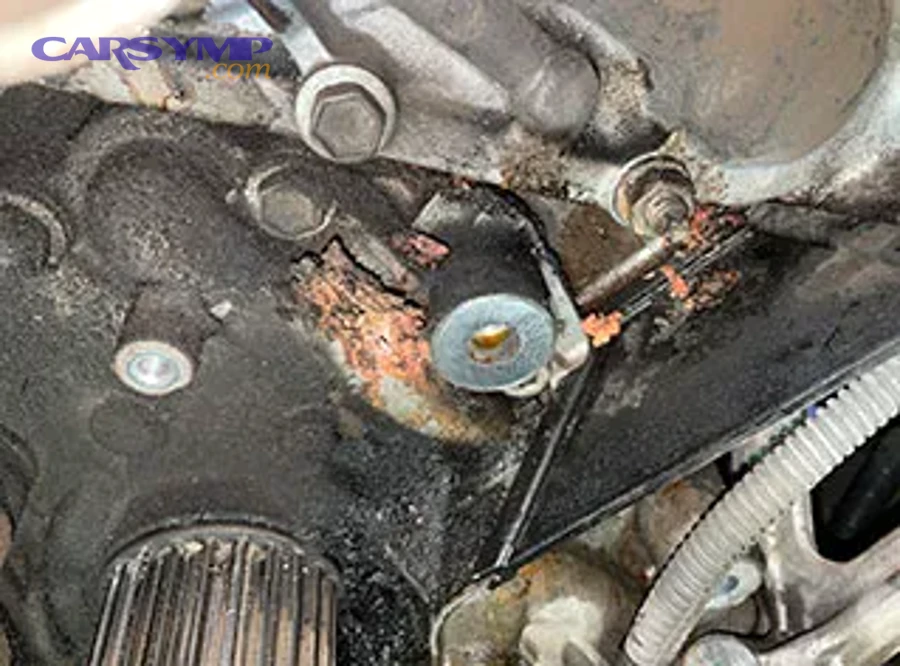
A driver may first notice a few drops of coolant on the ground near the front of the engine. Another common first clue is a sweet smell after parking, especially if a small leak lands on hot metal and begins to evaporate. In other vehicles, the first sign is not fluid on the ground but dried coolant residue around the pump housing, pulley area, or nearby timing cover. If the seal is wearing out slowly, the leak may come and go with temperature and pressure changes, which makes early diagnosis easy to miss. [autozone.com]
Early heat-related changes also matter. The gauge may sit slightly higher than usual, especially after idling in traffic or climbing a hill. The car may still drive normally at highway speed because airflow helps the radiator, yet cooling performance can still be marginal. That is one reason many drivers delay action: the problem feels inconsistent. However, inconsistency is often part of the warning pattern of a bad water pump, not proof that the problem is harmless. [firestonecompleteautocare.com]
Noise gives another early clue. A good water pump should not create a noticeable whining, squealing, or grinding sound on its own. When the pump bearing wears, belt-driven load can create a sharper sound from the front of the engine. Some drivers describe it as a chirp that rises with engine speed; others hear a rough whine that appears when the engine is hot. That sound does not confirm the pump by itself, but combined with coolant loss or temperature rise, it becomes a strong sign. [autozone.com]
Is a coolant leak under the front of the car a sign of water pump failure?
Yes, a coolant leak under the front of the car can be a sign of water pump failure because the pump seal can leak, the weep hole can seep coolant, and nearby circulation pressure can expose wear.
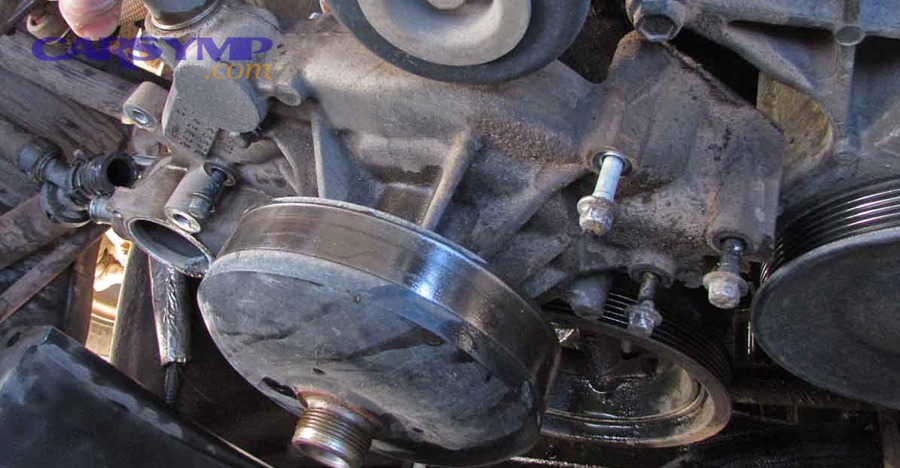
More specifically, the location of the leak matters. Coolant that appears near the front-center or front-side of the engine may point toward the pump area, especially if the water pump sits behind the accessory drive or timing cover in that part of the engine bay. The fluid may look green, orange, pink, or yellow depending on coolant type, and it often leaves a sweet smell.
A small leak can begin as residue before it becomes a puddle. That is where Coolant leak at weep hole diagnosis becomes useful. The weep hole is designed to allow coolant to escape when the internal seal starts failing, so seepage in that area is often a stronger water-pump clue than a random wet spot elsewhere. On the other hand, a radiator hose, radiator tank, or thermostat housing can also leak coolant, so the right approach is to trace the wettest point upward to the source rather than assuming every puddle means a bad water pump. [firestonecompleteautocare.com]
What does a failing water pump sound like?
A failing water pump usually sounds like a whine, squeal, chirp, or rough grinding noise because worn bearings or pulley-related stress create abnormal movement and friction.
Specifically, a belt-driven pump often becomes louder as engine speed increases. A bearing noise may sound dry or rough, while belt slip can sound sharper and more squeal-like. Some drivers hear the noise mostly during cold start, while others notice it when the engine is fully warm and the system is under more strain. The sound alone does not prove the pump is failing, but when it appears with coolant residue or heat problems, it becomes part of a highly consistent diagnosis pattern.
According to AutoZone’s bad water pump guide, leaking or residue from the front of the engine, overheating, and whining or squealing noises are among the common symptoms of a bad water pump. [autozone.com]
What does a bad water pump do to engine temperature?
A bad water pump raises engine temperature by reducing coolant circulation, which makes heat harder to move away from the engine and more likely to build into overheating or steam.
To better understand the temperature pattern, remember the pump’s job: it pushes coolant through the engine, then through the radiator, where heat can be released. When circulation drops, the engine still creates heat, but the cooling system cannot move that heat efficiently. That imbalance shows up first as hotter-than-normal operation and later as full overheating. [autozone.com]
At first, the gauge may only drift upward during heavy use. Over time, the rise can become more obvious. A driver may see the needle run near the hot side after idling at a drive-through, crawling in traffic, towing, or climbing a grade. In more advanced cases, the gauge spikes quickly, steam appears from under the hood, and the vehicle loses cooling capacity fast. That progression is one reason water pump failure symptoms deserve immediate attention instead of watchful waiting. [firestonecompleteautocare.com]
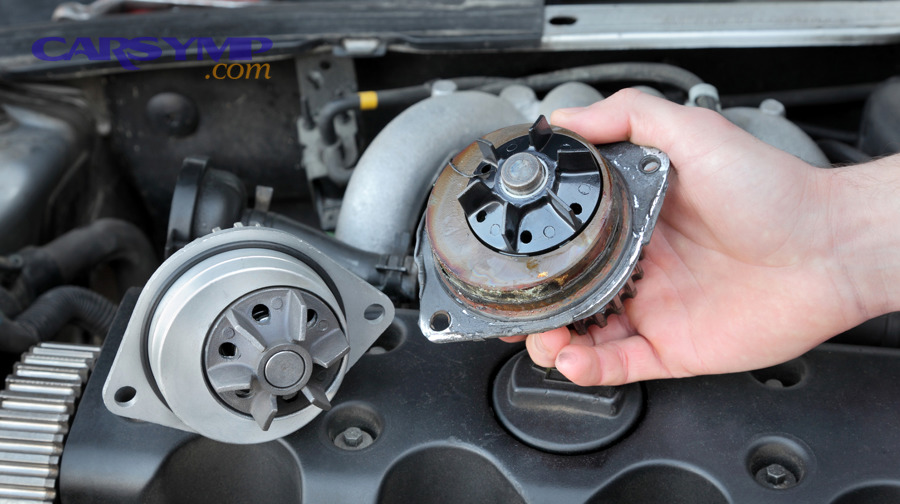
Heat behavior can also help separate minor cooling-system weakness from urgent failure. If the temperature returns to normal only when the car is moving fast, airflow may be masking reduced coolant circulation. If the gauge spikes and steam appears, the system has probably moved beyond a mild warning stage. In that situation, continuing to drive invites head gasket damage, warped cylinder heads, and other expensive consequences tied to overheating. [firestonecompleteautocare.com]
Can a failing water pump cause overheating at idle or in traffic?
Yes, a failing water pump can cause overheating at idle or in traffic because coolant circulation weakens, airflow may be limited, and heat builds faster in low-speed conditions.
For example, highway speed gives the radiator more airflow, so a weakened pump can sometimes hide behind that extra cooling help. At idle or in slow traffic, the engine still produces heat, but the system has less natural airflow and depends even more on proper circulation. That is why some drivers report that the car behaves almost normally on the road but overheats in a parking lot or traffic jam. [firestonecompleteautocare.com]
What temperature gauge patterns suggest water pump problems?
Temperature gauge patterns that suggest water pump problems include a gradual climb above normal, spikes toward hot, unstable fluctuation, or overheating that appears first during idle, traffic, or heavier load.
Those patterns matter because they show cooling performance is inconsistent rather than fully stable. A thermostat problem can also change temperature behavior, but a weak pump often adds supporting clues such as coolant loss, pump-area residue, or noise. When the gauge rises together with a sweet smell, steam, or visible leakage, the pump becomes a much stronger suspect.
According to Firestone’s overheating guidance, drivers may notice steam under the hood and a temperature gauge that spikes toward “H” when cooling-system problems such as water pump failure interrupt heat control. [firestonecompleteautocare.com]
Which symptoms most strongly point to water pump failure?
The symptoms that most strongly point to water pump failure are coolant leakage, overheating, whining or squealing noise, pump-area residue, steam, and visible corrosion or deposits around the housing.
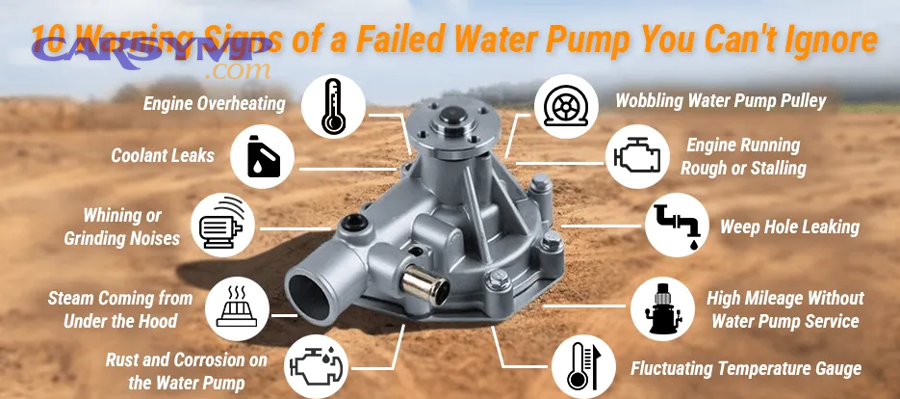
Below that direct answer, the real diagnostic value comes from grouping the signs together instead of chasing one symptom at a time. A bad water pump may show one clue first, but the diagnosis gets stronger when the clues overlap. For example, a leak plus a noise is more telling than either symptom alone. A leak plus rising temperature is even more significant because it points to both seal failure and circulation trouble. [autozone.com]
In practice, the most reliable symptom groups are easy to recognize. A driver sees coolant on the ground, then hears a new whine, then notices the gauge running warmer than usual. Another driver sees crusty residue near the pump and later experiences intermittent overheating. The details vary, but the pattern stays consistent: pump wear affects sealing, bearing health, and circulation at the same time. That is why articles about water pump failure symptoms consistently emphasize leaks, temperature change, and noise as the core trio. [autozone.com]
What are the most common warning signs drivers should check first?
There are six main warning signs drivers should check first: coolant leak, hotter engine temperature, whining noise, steam, low coolant level, and visible residue or corrosion around the pump area.
To make that checklist more useful, start with the simplest visual checks:
- Look for puddles or dried coolant near the front of the engine.
- Check whether the coolant reservoir level drops repeatedly.
- Watch for a gauge that runs warmer than it used to.
- Listen for whining or squealing that changes with engine speed.
- Inspect for white, green, pink, or orange crusty residue near the pump.
- Treat steam or repeated overheating as urgent, not optional.
This grouped approach helps everyday drivers spot a bad water pump before the issue becomes catastrophic. It also supports Preventing water pump failure from turning into full engine overheating, because early action on a leak or bearing sound is always cheaper than driving until the gauge pegs hot. [autozone.com]
Are rust, corrosion, or crusty coolant deposits signs of a bad water pump?
Yes, rust, corrosion, or crusty coolant deposits can be signs of a bad water pump because long-term seepage and contaminated coolant often leave visible residue around the housing or nearby surfaces.
More specifically, dried coolant often leaves a chalky or crusted trail. Rust can appear when moisture stays around metal surfaces over time, while mineral deposits can build where coolant evaporates slowly. These signs do not always mean the pump is the only failed part, but they strongly suggest chronic leakage or poor cooling-system condition. They also matter because old or contaminated coolant can contribute to seal wear and corrosion, which increases the chance of future pump trouble. [autozone.com]
According to Firestone’s coolant-service guidance, old coolant can contribute to overheating and can damage water-pump and radiator components when the cooling system is neglected. [firestonecompleteautocare.com]
How can you tell water pump failure from other cooling system problems?
You can tell water pump failure from other cooling system problems by comparing leak location, noise, overheating pattern, coolant loss, and pump-area residue instead of relying on temperature alone.
However, this distinction matters because overheating is a shared symptom across several cooling faults. A thermostat can stick, a hose can collapse, a radiator can clog or leak, and trapped air can disturb circulation. The pump becomes a stronger suspect when overheating appears together with a front-engine coolant leak, seepage from the weep hole, or whining from the pump area. [autozone.com]
One helpful way to compare causes is to think in terms of symptom clusters. A hose problem often shows visible swelling, softness, kinking, or collapse. Air trapped in the system may create gurgling sounds and poor cabin heat. A radiator issue may center more on external damage, clogging, or broader leak points. A water pump problem more often combines circulation trouble with pump-area leak evidence or bearing-type noise. This comparison does not replace pressure testing or professional diagnosis, but it helps drivers ask better questions and avoid guessing blindly. [autozone.com]
Is it the water pump or the thermostat?
The water pump wins as the likelier cause when overheating comes with coolant leakage, pump-area residue, or whining noise, while the thermostat is more often suspected when temperature control fails without those pump-specific clues.
Specifically, a thermostat problem may cause the engine to run too hot or sometimes too cool depending on whether it sticks closed or open. Yet the thermostat usually does not create a bearing-type whine or a weep-hole leak. The pump, by contrast, can affect both mechanical sound and coolant sealing. If the only symptom is a temperature issue, the comparison remains open. If temperature issues appear alongside leakage and noise at the front of the engine, the water pump becomes the stronger diagnosis. [autozone.com]
Is it the water pump or a radiator, hose, or head gasket issue?
The water pump is more likely when the problem centers on front-engine leakage, weep-hole seepage, or pump noise, while radiator, hose, and head gasket faults each tend to show different dominant clues.
For example, a bad hose may show cracks, swelling, softness, or collapse. A radiator problem may show leak points at the core or tanks and broader cooling inefficiency. A head gasket problem often raises concern when overheating comes with white exhaust smoke, bubbling, combustion-gas contamination, or unexplained coolant loss without an obvious external leak. The point is not to make every driver a technician; the point is to recognize when a bad water pump is the most coherent explanation among several cooling-system possibilities. [autozone.com]
According to AutoZone’s cooling-system leak guidance, puddles, sweet smell, low coolant, and overheating are common signs of coolant leakage, while hose-specific symptoms often include visible deterioration or collapse rather than pump bearing noise. [autozone.com]
Should you keep driving with water pump failure signs?
No, you should not keep driving with water pump failure signs because coolant loss can worsen, circulation can fail, and overheating can lead to severe engine damage and roadside breakdown.
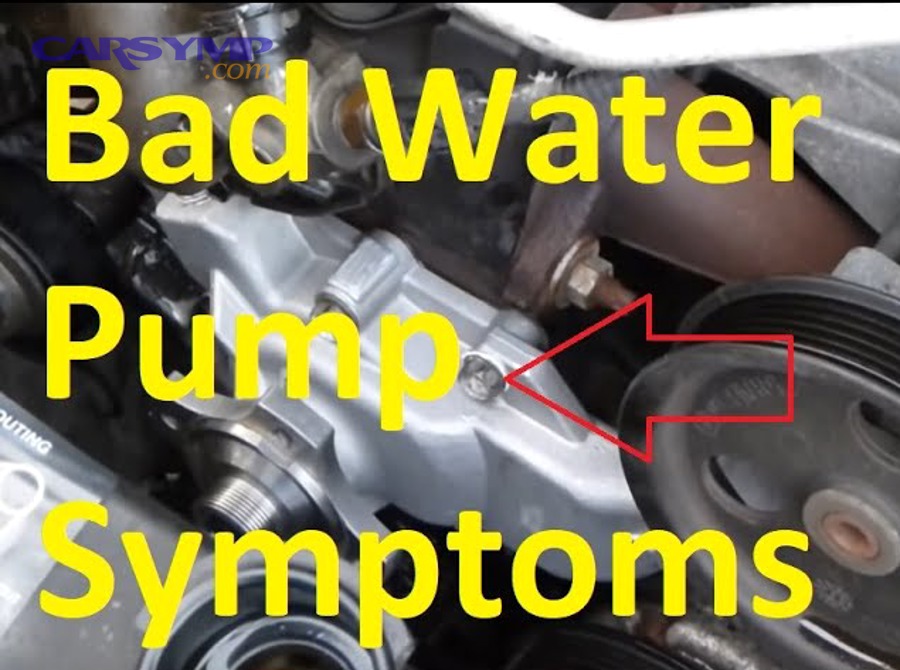
That answer is especially important because many drivers ask, “Can you drive with a failing water pump?” The safest practical response is that you should avoid regular driving once the signs are clear. A short repositioning move may sometimes be unavoidable, but routine driving with active leakage, rising temperature, steam, or a loud pump noise is a high-risk decision. Heat damage spreads fast once coolant flow collapses. [autozone.com]
The danger comes from both fluid loss and circulation loss. If coolant escapes quickly, the engine can overheat from low coolant volume. If the impeller or bearing fails, the system may still contain coolant but fail to move it effectively. In both cases, the engine runs hotter, metal expands under stress, and the cost of ignoring the problem rises dramatically. Even if the gauge comes back down later, the event itself is a warning that the cooling system is no longer dependable. [firestonecompleteautocare.com]
Can you drive with a failing water pump?
No, you should not drive with a failing water pump because overheating can intensify, coolant can drain unexpectedly, and a minor symptom can turn into major engine damage without much warning.
For example, a pump that only seeps today can leak heavily tomorrow. A bearing that only whines today can seize or throw belt alignment off later. A car that only runs warm in traffic can overheat much faster on a hot day, under load, or after another small cooling-system weakness joins the problem. That is why “wait and see” is a poor strategy once several water pump failure symptoms are present. [firestonecompleteautocare.com]
When should you replace the water pump immediately?
You should replace the water pump immediately when you have active coolant leakage, repeated overheating, visible weep-hole seepage, strong bearing noise, steam, or clear circulation failure.
More importantly, replacement becomes urgent when the car can no longer maintain stable temperature in normal driving. Immediate action is also wise when the pump is driven by a timing belt and service access overlaps with major scheduled maintenance, because postponing replacement can increase labor duplication and risk. Early replacement is not only about fixing the current symptom; it is also a core part of preventing water pump failure from triggering collateral damage in the rest of the cooling system.
According to AutoZone and Firestone guidance, it is not safe to drive with an active coolant leak or overheating condition because both can lead to severe engine damage, and visible seepage from the water pump weep hole is a recognized warning sign that replacement may be needed. [firestonecompleteautocare.com]
What causes water pump failure and which less common patterns should drivers know?
Water pump failure is usually caused by seal wear, bearing wear, coolant neglect, corrosion, belt-related stress, or internal pump damage, while less common patterns include impeller wear, cavitation, and overheating that shows up mainly at idle.
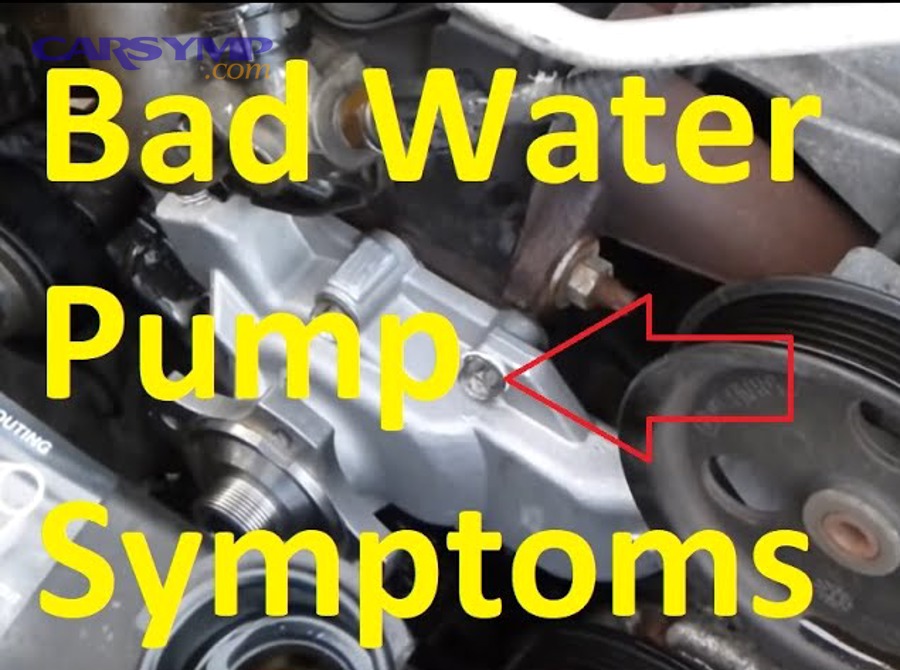
Besides the obvious symptoms, understanding the causes helps drivers respond sooner and maintain the cooling system more intelligently. The water pump lives in a harsh environment: constant rotation, heat cycling, belt load on many designs, and exposure to coolant chemistry over time. As those stresses build, the pump can fail externally through leakage or internally through reduced circulation. [autozone.com]
This section sits beyond the main diagnostic answer and expands the context. In other words, once you know what the warning signs look like, the next useful question is why they happen and why some cases look different from the usual leak-noise-overheat pattern. That extra layer deepens diagnosis and helps readers make better maintenance choices instead of treating every failure as random bad luck.
What causes a car water pump to fail?
A car water pump usually fails because seals wear out, bearings wear under load, coolant degrades, corrosion develops, or belt-related stress damages the pump over time.
Specifically, old coolant loses some of its protective performance and can allow more corrosion or deposit buildup. Bearing wear can accelerate if belt tension is poor or if the pump pulley runs under abnormal load. Repeated heat cycles also age seals until they no longer hold pressure effectively. In many cars, the pump simply reaches the end of its service life after years of heat, motion, and contamination exposure. Preventing water pump failure therefore depends on routine coolant service, early leak inspection, and fast action when unusual noise appears. [autozone.com]
What is a weep hole leak and why does it matter?
A weep hole leak is coolant seeping from a small opening in the pump that indicates internal seal wear, and it matters because it is one of the clearest diagnostic clues of a failing water pump.
More specifically, the weep hole is not random damage. It is part of the pump design and becomes noticeable when the internal seal begins to fail. A tiny amount of moisture can progress into visible seepage and then into steady leakage. That progression makes coolant leak at weep hole diagnosis especially valuable for catching failure before the pump loses more coolant or circulation performance. If you see seepage there, treat it as a targeted warning, not as a cosmetic issue. [firestonecompleteautocare.com]
Can impeller wear or cavitation cause hidden water pump problems?
Yes, impeller wear or cavitation can cause hidden water pump problems because the pump may lose circulation efficiency even before a large external leak becomes obvious.
That pattern is less common in everyday diagnosis, but it explains why some cars overheat intermittently without leaving a dramatic puddle. If the impeller becomes damaged or circulation efficiency drops, the cooling system may still hold some pressure yet move coolant poorly. The driver then sees symptoms such as hotter running in traffic, unstable temperature, or recurring warm-ups that do not always match a simple external leak story. That is why the absence of a big puddle does not automatically clear the pump.
How are electric water pump symptoms different from belt-driven water pump symptoms?
Electric water pump symptoms are often more centered on circulation failure and fault behavior, while belt-driven water pump symptoms more often include bearing noise, pulley issues, and mechanically related leakage clues.
In a belt-driven design, drivers may hear whining, squealing, or rough mechanical sound as the bearing wears. In an electric design, the clue may be less about pulley noise and more about overheating behavior, poor circulation, or fault-related operation patterns. The practical takeaway is simple: the exact symptom mix can vary by design, but the central risk remains the same—when coolant stops moving effectively, the engine starts losing temperature control.
According to AutoZone and Firestone cooling-system guidance, a bad water pump disrupts coolant movement, and visible leakage, overheating, steam, or front-engine seepage are among the most useful real-world signs that the pump is no longer doing its job properly. [autozone.com]