


When you need to diagnose wheel bearing vs tire noise, the fastest correct answer is this: wheel bearing noise usually changes with load and turning, while tire noise usually follows tread pattern, wear condition, and road surface. That distinction matters because a bad bearing is a safety concern, while a noisy tire usually points to wear, alignment, inflation, or balance issues that need correction but rarely require the same urgency. To begin, this guide separates the two sounds in practical terms so you can identify the most likely source before replacing parts.
The next step is understanding the sound patterns that drivers actually notice on the road. A wheel bearing often creates a steady hum, growl, or droning noise that gets louder with speed and may change during gentle lane shifts. Tire noise, by contrast, often sounds like road roar, tread hum, or a rhythmic helicopter-like pattern caused by cupping or feathering. Then, once you know how each noise behaves, the diagnosis becomes much more accurate.
Besides sound alone, simple checks can reveal whether the problem is in the tire or the hub area. You can compare how the noise reacts to left and right turns, inspect tread wear, rotate the tires, and check for looseness or roughness with the wheel off the ground. More importantly, those checks also help you avoid unnecessary wheel bearing replacement when the real issue is irregular tread wear or suspension-related tire damage.
Some noises still sit in the gray zone, especially when brake drag, CV joints, alignment faults, or aggressive tread patterns mimic bearing symptoms. Introduce a new idea: by the end of the main content, you will have a step-by-step process to narrow the fault safely, understand Press-in vs hub assembly bearing differences, recognize DIY bearing replacement risks and tools, and use a Post-repair torque and test drive checklist if repairs are needed.
What is the difference between wheel bearing noise and tire noise?
Wheel bearing noise is a mechanical droning or growling sound from the hub area, while tire noise is road-contact noise caused by tread design, wear pattern, inflation, or surface texture.
To better understand that difference, you need to compare not only what each sound resembles but also how each one changes as the vehicle moves, turns, and loads the suspension.
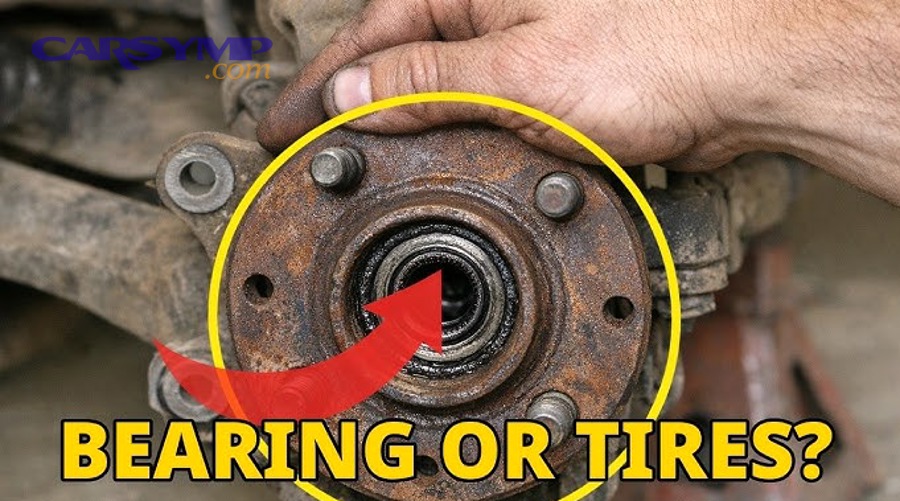
A wheel bearing supports the wheel and hub while allowing smooth rotation under load. When the bearing races or rolling elements wear, the sound tends to become more mechanical and more consistent. Drivers often describe it as a humming, roaring, or low growl that becomes more obvious as speed rises. The key feature is not just loudness, but the way the sound reacts to vehicle load. When the body leans in a turn, the stressed side can get noisier.
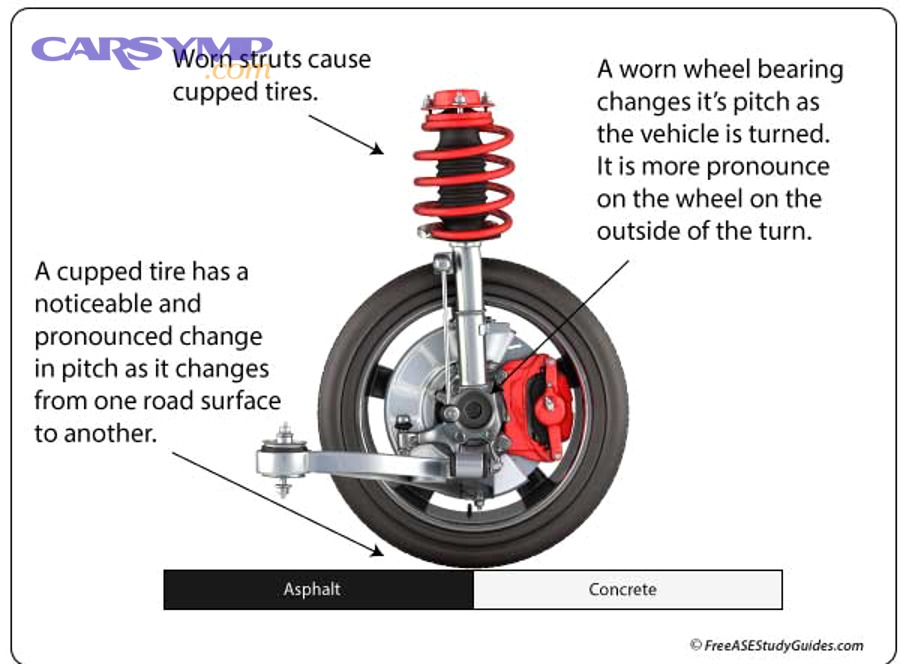
Tire noise comes from a different mechanism. The tread blocks strike and release against the road many times per second. That pattern is affected by tread design, inflation pressure, alignment, suspension condition, balance, and pavement texture. As a result, tire noise often changes more clearly when you move from smooth asphalt to rough concrete, or when you inspect the tread and find feathering, cupping, or heel-and-toe wear.
This is why drivers confuse the two. Both can create a low-frequency hum at road speed. Both can seem to come from one corner of the car. Both can become louder over time. However, the source physics differs: a bearing makes noise because the rotating assembly is damaged or rough under load, while a tire makes noise because the contact patch and tread pattern are interacting with the road in an abnormal or amplified way.
That distinction also affects repair decisions. If the diagnosis points to a wheel bearing, the fix may involve a full wheel bearing replacement, either as a bolt-on hub assembly or as a press-fit bearing depending on the vehicle design. If the diagnosis points to the tire, replacement may not even be the first answer. Rotation, alignment correction, inflation adjustment, or suspension repair may be needed first.
What does wheel bearing noise usually sound like?
Wheel bearing noise usually sounds like a hum, growl, drone, or rough roar that rises with road speed and often changes when the vehicle’s weight shifts during a turn.
Specifically, a worn bearing creates a more mechanical sound than a tire does. It tends to be steady rather than patterned, and it usually persists across road surfaces. A driver may notice that the noise becomes more pronounced when loading one side of the vehicle during a gentle curve or lane change. That pattern happens because the bearing on the loaded side experiences a greater force through the damaged raceway or rolling elements.
The sound can begin subtly. At first, it may resemble a mild tire hum. Later, it may turn into a droning roar that can be heard even over normal cabin noise. In more advanced cases, the bearing may also produce a rough feel when the wheel is spun by hand with the vehicle lifted. Some failures add looseness, heat, or intermittent grinding.
Timken notes that grinding or excessive noise that changes with turning or load shift is a common symptom of wheel hub bearing damage, which supports using on-road turning behavior as a diagnostic clue. ([timken.com](https://www.timken.com/resources/md17-symptoms-of-a-worn-wheel-hub-bearing/?))
What does tire noise usually sound like?
Tire noise usually sounds like tread hum, road roar, or a rhythmic pattern that changes with surface texture, tread wear, and sometimes tire position on the vehicle.
For example, an aggressive tread pattern can produce a normal hum even when the tire is healthy. But when wear becomes uneven, the sound often changes character. Cupping can create a helicopter-like whir or repeated rise-and-fall sound. Feathering can create a rough rushing sound, especially on certain asphalt surfaces. A worn tread block pattern can also create noise that seems to move from the front to the rear of the cabin depending on seating position and vehicle insulation.
Tire noise is also more sensitive to context. A driver may report that the sound is much louder on coarse concrete than on smooth blacktop. That is a strong clue that the tires are involved. Likewise, if the noise changes significantly after tire rotation, the tires are the more likely source.
Bridgestone states that tire cupping appears as uneven scooped patches in the tread and is commonly associated with alignment or balance issues, both of which can generate abnormal tire noise. ([bridgestonetire.com](https://www.bridgestonetire.com/learn/maintenance/tire-cupping/?))
Can you tell wheel bearing noise from tire noise by how the sound changes while driving?
Yes, you can often tell wheel bearing noise from tire noise while driving by watching three factors: turning response, road-surface response, and how steadily the sound rises with speed.
Then, once those three clues are observed together, the diagnosis becomes much stronger than relying on sound description alone.
A road test works because a moving vehicle loads each wheel differently as it accelerates, coasts, turns, and crosses different surfaces. A wheel bearing usually responds more to side loading than to pavement changes. A noisy tire usually responds more to tread-road interaction than to gentle steering load. That difference is small in theory but very useful in real-world diagnosis.
You do not need an aggressive maneuver to check this. A safe drive on a straight road followed by gentle lane changes at moderate speed can reveal whether the noise grows when the vehicle leans slightly left or right. The goal is not to provoke the car, but to observe what naturally changes when the load transfers across the chassis.
At the same time, note the road surface. If the hum becomes dramatically louder on rough pavement and then softens on smooth asphalt, the tires move higher on the suspect list. If the sound stays mechanically present regardless of surface, the wheel bearing becomes more likely.
Does the noise change when you turn left or right?
Yes, a noise that changes when you turn left or right often points toward a wheel bearing because turning shifts vehicle load from one side to the other.
When you steer gently left, the right-side wheels typically carry more load. When you steer gently right, the left-side wheels carry more load. If a worn bearing is on the side being loaded, its internal damage may become louder. That is why many drivers notice the hum increasing during one curve and easing during the opposite curve. The exact side diagnosis is not always perfect, but the load-sensitive pattern is useful.
This clue is strongest when the sound change is repeatable. If the same gentle rightward sweep makes the sound grow every time, that repeatability favors a bearing. Tire noise can sometimes change during a turn too, especially with badly worn shoulders or unusual tread patterns, but it usually does not respond as clearly to modest load transfer unless the tire wear is severe.
The caution here is that other parts can mimic the pattern. A damaged outer CV joint may click during sharper turns, and some suspension or brake issues can also respond to side loading. That is why steering behavior should be paired with tread inspection and, if needed, a lifted-wheel check.
Timken’s technical guidance states that bearing-related grinding or excessive noise is commonly heard when turning or when there is a shift in load, reinforcing the value of gentle steering tests in diagnosis. ([timken.com](https://www.timken.com/resources/md17-symptoms-of-a-worn-wheel-hub-bearing/?))
Does the noise change with speed or road surface?
Yes, both noises often increase with speed, but tire noise usually changes more with pavement type, while wheel bearing noise usually stays more consistent across surfaces.
As speed increases, both the wheel and the tire rotate faster, so either source can become louder. That is why speed alone does not diagnose the fault. The more useful question is how the sound behaves when only the road surface changes. If the hum becomes much louder on coarse concrete and calmer on smooth asphalt, the tires are usually the better suspect. If the sound keeps the same mechanical tone across both surfaces, a bearing becomes more plausible.
Road-surface sensitivity is especially helpful with all-season, winter, or off-road tires. Large tread blocks naturally create more sound, and worn blocks magnify that effect. By contrast, a failing wheel bearing tends to produce a droning sound that feels less tied to the texture under the tire.
In practice, drivers should listen for three things together: whether the tone changes with surface, whether the volume changes with speed, and whether steering load changes it. That combination gives far better results than any single clue alone.
What signs point to tire noise instead of wheel bearing noise?
The strongest signs that point to tire noise are irregular tread wear, clear road-surface sensitivity, noise movement after rotation, and the absence of bearing roughness or wheel play.
Moreover, these clues matter because many tire problems mimic a bearing closely enough to trigger unnecessary parts replacement.
Tire-related noise often leaves visual evidence. The tread may show cupping, feathering, patchy shoulder wear, or differences across the width of the tread. The vehicle may also pull, drift, or feel harsh over certain surfaces. These patterns often result from alignment issues, worn shocks or struts, improper inflation, poor rotation history, or balance problems. In other words, the noisy tire is often the symptom, not the original cause.
A second major clue is that tire noise tends to move with the tire. If you rotate the suspect tires front to rear and the sound shifts in location or intensity, the tire itself becomes the prime suspect. A bad wheel bearing will not move because the hub location has not changed.
Tire noise also often comes with fewer hub-specific symptoms. You usually do not feel gritty rotation in the hub when spinning the wheel by hand, and you usually do not find looseness from a tire problem alone. That absence matters just as much as the presence of irregular tread.
Which tire wear patterns create noise that mimics a bad wheel bearing?
The main tire wear patterns that mimic a bad wheel bearing are cupping, feathering, heel-and-toe wear, and uneven shoulder wear caused by alignment or suspension faults.
Cupping creates the most convincing imitation. It forms a series of scalloped or scooped spots around the tread. As those spots strike the pavement, they create a repetitive roar or helicopter-like hum that many drivers mistake for a worn hub bearing. Feathering, by contrast, creates a sawtooth feel across the tread blocks. When you run your hand across the tread, one direction feels smoother than the other. That pattern often produces a rushing or humming sound, especially at highway speed.
Heel-and-toe wear is also common in some tread designs, especially if rotation intervals are stretched. One edge of each tread block wears differently from the opposite edge, which can create a cyclical hum. Shoulder wear can add noise as well, particularly when underinflation, overinflation, or poor camber control changes the contact patch.
A short table helps separate the most common patterns and the noises they create:
| Tire wear pattern | What it looks like | Typical noise clue | Likely underlying issue |
|---|---|---|---|
| Cupping | Scooped high-low patches | Helicopter-like whir or roar | Worn shocks/struts, imbalance, misalignment |
| Feathering | Sawtooth tread edges | Rushing hum, rough road noise | Toe misalignment, rotation neglect |
| Heel-and-toe wear | Uneven leading/trailing tread block edges | Cyclical hum | Rotation interval issues, tread design sensitivity |
| Shoulder wear | Excessive inner or outer edge wear | Constant road roar | Alignment, inflation, suspension geometry |
This table shows how tread condition can produce noise patterns that sound mechanical even though the bearing is fine.
Bridgestone identifies cupping as uneven scooped tread wear and links it to misalignment or imbalance, while NHTSA service guidance also notes feathering or edge wear as recognizable tread conditions that may improve with rotation timing and maintenance. ([bridgestonetire.com](https://www.bridgestonetire.com/learn/maintenance/tire-cupping/?))
Can tire rotation confirm that the noise comes from the tires?
Yes, tire rotation can strongly confirm tire noise because a sound that follows the tire’s new position is far more likely to come from the tire than from the wheel bearing.
This works because rotation changes the tire position but does not change the hub or bearing location. If the sound moves from the front to the rear of the vehicle, or if the cabin perception changes after rotation, the diagnosis shifts toward the tire. A front tire moved to the rear may also become less noticeable if the vehicle’s cabin insulation hides rear tire noise better, which is another clue.
Rotation is not always conclusive on its own. Some tire patterns are noisy in every position, and some rear-bearing noises can echo forward through the cabin structure. Still, as a low-cost diagnostic step, rotation is one of the best tools for separating a tire problem from a hub problem.
This is also the point where many drivers avoid an unnecessary wheel bearing replacement. A noisy tire can sound severe enough to imitate a failed hub, but if the noise follows the tire after rotation, replacing the bearing first would waste both money and labor.
NHTSA service material notes that feathering and edge wear conditions may even out or improve with rotation strategy, which supports using rotation as both a maintenance step and a diagnostic clue. ([static.nhtsa.gov](https://static.nhtsa.gov/odi/tsbs/2025/MC-11015409-0001.pdf?))
What signs point to a bad wheel bearing instead of tire noise?
The strongest signs of a bad wheel bearing are load-sensitive humming, roughness when spinning the wheel, possible wheel play, and a noise that does not meaningfully follow road surface or tire rotation.
More specifically, a bearing diagnosis becomes stronger when several of those clues appear together rather than in isolation.
A wheel bearing carries rotational load at the hub, so its symptoms often remain tied to the corner of the vehicle rather than to the tire itself. If the sound stays on the same side after rotation, if it changes during gentle curves, and if the wheel feels rough when turned by hand, the balance of evidence shifts toward the bearing.
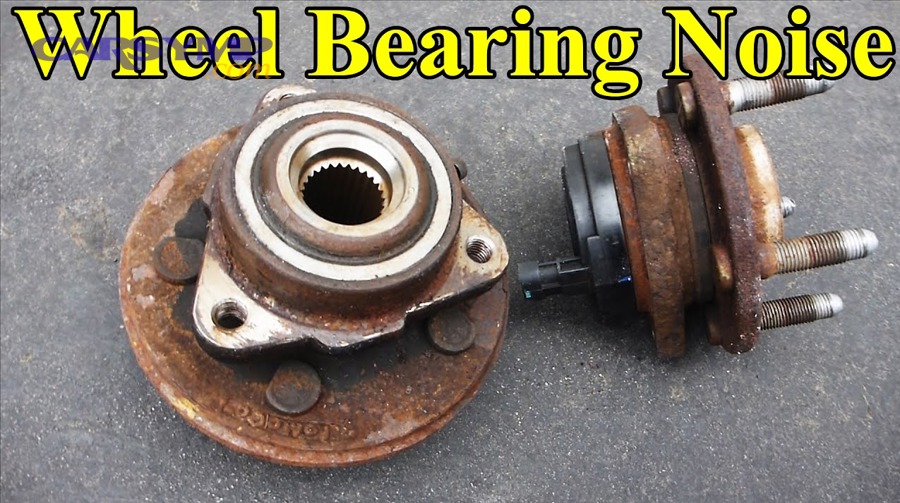
The severity of symptoms also matters. A mild bearing may only hum under certain loads. A more advanced one can drone constantly, develop looseness, overheat, or affect braking feel. On modern vehicles, some bearings are integrated into a sealed hub assembly. Others are press-in units mounted into the knuckle. That matters later for repair planning because Press-in vs hub assembly bearing differences affect labor, tools, and DIY difficulty.
Is wheel play or roughness a sign of a bad wheel bearing?
Yes, wheel play or roughness can be a sign of a bad wheel bearing because a healthy bearing should rotate smoothly and hold the hub without noticeable looseness.
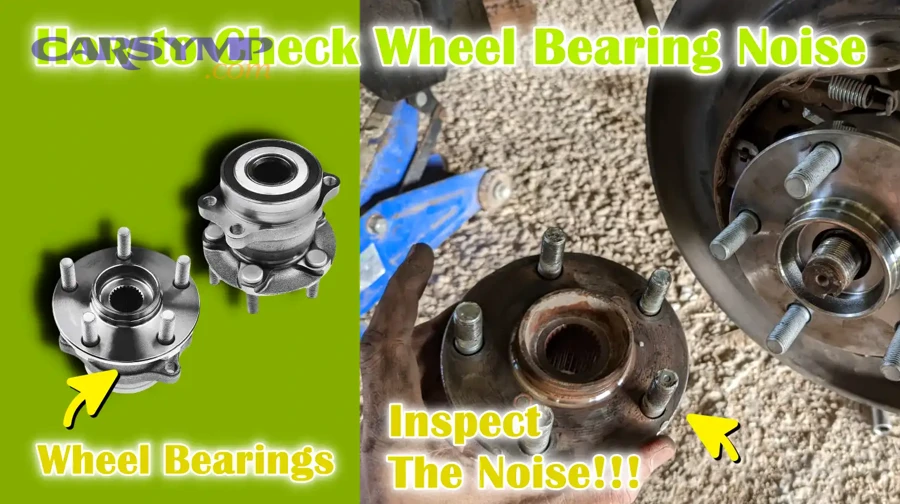
When the vehicle is safely lifted and supported, the wheel can be checked in two ways. First, spin it by hand and listen for grinding, roughness, or an uneven gritty feel. Second, hold the tire at the top and bottom and gently rock it. If there is free play, the cause may be the bearing, though ball joints, tie rods, or suspension wear can also contribute depending on where the looseness appears.
Roughness is often more useful than looseness in the earlier stages. Many sealed hub bearings get noisy before they develop obvious play. By the time looseness is clear, the failure may be more advanced. That is why a combination of spin feel, road-test pattern, and visual inspection is more reliable than any single check.
Timken’s wheel hub damage guide links excessive noise and vibration with bearing retention or hub damage and highlights torque-wrench use in diagnosis and service, which supports careful mechanical inspection rather than guesswork. ([timken.com](https://www.timken.com/wp-content/uploads/2017/08/LV7-Wheel-Hub-Damage-Analysis-Guide.pdf?))
Can vibration and humming mean the wheel bearing is failing?
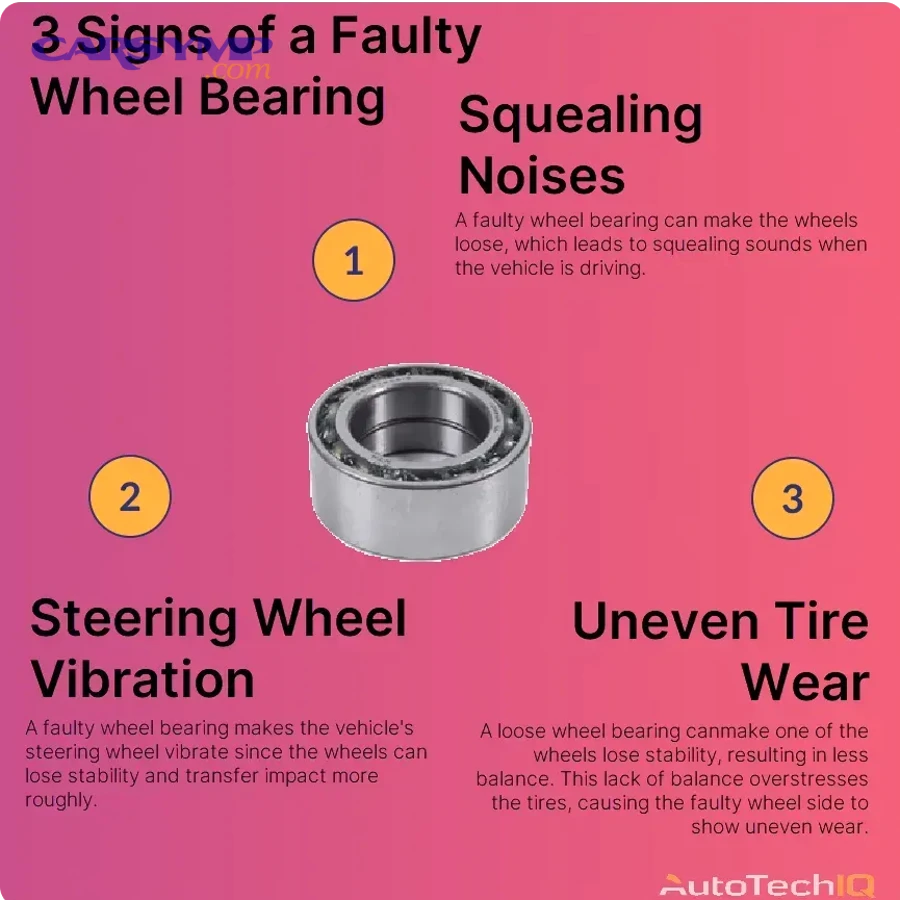
Yes, vibration and humming can mean the wheel bearing is failing, but humming is the more reliable clue because vibration is also common with tire imbalance, tire defects, and worn suspension parts.
A failing bearing often begins as a hum or drone. Vibration may appear later, especially if the wear becomes severe or if the hub develops excess movement. However, many drivers misread steering wheel shake as a bearing fault when the real cause is a balance issue, force variation problem, or uneven tread wear. That is why vibration should not be used alone to call the bearing bad.
The smarter approach is to pair humming with the questions already covered: Does the noise react to turning? Does it ignore road-surface changes? Does the hub feel rough by hand? Does the sound stay at the same corner after tire rotation? If the answer trends yes, the bearing becomes more likely.
SKF notes that good bearings produce a soft purring sound, while grinding and other irregular sounds usually indicate damage or improper operating condition. ([vehicleaftermarket.skf.com](https://vehicleaftermarket.skf.com/binaries/pub12/Images/0901d1968064c148-Bearing-failures—14219_2-EN_tcm_12-297619.pdf?))
How can car owners diagnose wheel bearing vs tire noise step by step?
Car owners can diagnose wheel bearing vs tire noise in five steps: road-test, compare turns, compare surfaces, inspect tread, and check the wheel off the ground for roughness or play.
Below, that sequence matters because it moves from the safest and easiest clues to the more conclusive mechanical checks.
This method keeps the diagnosis organized. It prevents one common mistake: replacing parts based on the first suspicious sound. It also helps you decide when a shop visit is needed and whether the likely repair is a tire correction, an alignment-related fix, or a wheel bearing replacement.
What is the safest DIY road-test checklist?
The safest DIY road-test checklist uses controlled driving, moderate speed, gentle steering input, and note-taking rather than aggressive maneuvers.
Start with a straight, smooth road at a moderate speed. Listen for a hum, drone, or roar, and note whether it rises steadily with speed. Then drive over a second road surface if available, such as smoother asphalt after rough concrete. If the sound changes sharply with pavement type, the tires become more likely.
Next, perform gentle lane shifts only when traffic and road conditions allow. Do not jerk the wheel or attempt high-speed swerves. Simply observe whether the sound grows when the car leans slightly one way and eases when it leans the other. A repeatable change favors a wheel bearing.
Then pay attention to throttle position. Some drivetrain sounds change under acceleration or deceleration, while wheel bearings and tire noise are more closely tied to road speed. That extra observation helps rule out transmission or differential-related noises.
A safe road-test checklist looks like this:
- Drive at a steady speed on a straight road
- Listen for hum, drone, growl, or patterned roar
- Compare two road surfaces if possible
- Make only gentle lane changes when safe
- Note whether the sound changes with left or right load
- Note whether the tone feels mechanical or tread-related
- Avoid aggressive steering or risky testing
This step is especially valuable before buying parts. A few minutes of structured listening can prevent a wrong diagnosis and a costly repair that does not solve the noise.
What should you inspect when the vehicle is parked or lifted?
When the vehicle is parked or lifted, inspect tread wear, tire pressure, wheel roughness, wheel play, brake drag signs, and whether the hub rotates smoothly.
Start with the tires on the ground. Look across the tread for cupping, sawtooth feathering, shoulder wear, or isolated patches. Run your hand lightly across the tread in both directions to feel for a rough directional texture. Check inflation pressure against the vehicle placard, not just the tire sidewall. Uneven pressure can distort tread contact and create noise.
If you can lift the vehicle safely with proper support, spin the wheel by hand. Listen for scraping, grinding, or roughness. Then check for movement at top and bottom and side to side. Be aware that looseness can also come from other parts, so interpret the result carefully.
Also inspect for signs that complicate the diagnosis. A dragging brake can add noise and heat. A damaged splash shield can rub. Suspension wear can cause the tire wear pattern that created the noise in the first place. Diagnosis is strongest when those nearby causes are considered, not ignored.
If repair becomes necessary, the inspection stage is also where you must understand Press-in vs hub assembly bearing differences. A bolt-on hub assembly is often simpler to replace because the bearing comes integrated into the unit. A press-in bearing sits in the knuckle and usually requires a shop press or specialized installer tools. That difference changes labor time, risk, and whether the job is realistic for a home mechanic.
DIY bearing replacement risks and tools should be taken seriously. The job may require a torque wrench, breaker bar, axle socket, puller, press tools, snap-ring pliers, and sometimes a hydraulic press. A wrong installation angle, hammering force, or reused axle nut can damage the new bearing before the car even leaves the driveway. This is why many successful DIYers still choose a professional press-in service for the knuckle while handling removal and reinstallation themselves.
Timken’s training resources specifically identify wheel bearing replacement steps and stress tool choice and proper service procedure, which aligns with using the correct installation method rather than improvisation. ([timken.com](https://www.timken.com/product/automotive-techtips-training-resources/?))
When should you stop diagnosing and get a professional inspection?
You should stop diagnosing and get a professional inspection when the noise grows quickly, the hub feels rough or loose, heat develops, braking changes, or the source remains unclear after basic checks.
In addition, stopping at the right time prevents a minor noise investigation from turning into a safety problem.
A tire issue can often wait long enough for a planned shop visit, but a wheel bearing problem deserves more caution. As bearing damage progresses, internal friction and looseness can increase. That can affect ABS sensor readings, brake rotor alignment, and overall hub stability. Even before catastrophic failure, the risk of collateral damage rises.
Professional inspection is also the right move when the diagnosis gets muddy. Some noises echo through the cabin and seem to come from the wrong corner. Some rear-wheel noises sound like front-end faults. AWD systems, brake drag, and driveline issues can all confuse the picture. A technician can use chassis ears, lift inspection, and experience to narrow the source faster.
This is also the stage where post-repair discipline matters. Whether you perform the service yourself or a shop handles it, a post-repair torque and test drive checklist helps confirm the fix. Lug nuts must be torqued to spec, axle nuts must be torqued correctly where applicable, brake components must be seated properly, and the test drive should confirm that the original sound is gone rather than merely changed.
Is it safe to keep driving with suspected wheel bearing noise?
No, it is not ideal to keep driving with suspected wheel bearing noise because the condition can worsen, create heat and looseness, and eventually affect hub integrity and braking performance.
A mild noise does not always mean imminent failure, but it does mean the system deserves prompt attention. Bearings do not usually heal or quiet down on their own. If the noise becomes louder quickly, if the wheel feels loose, or if there is vibration and heat at one corner, continued driving becomes a poor risk.
By contrast, a tire-noise diagnosis usually gives you more planning time, though it still requires correction. Irregular tread wear can reduce ride quality, shorten tire life, and sometimes affect wet grip. So even when the issue is “only” the tire, it should still lead to alignment, suspension, inflation, or rotation checks.
What if the noise is not from the bearing or the tires?
If the noise is not from the bearing or the tires, the next likely causes include brake drag, CV joints, suspension wear, alignment-related tread damage, and sometimes driveline components.
This is where many DIY diagnoses stall. The sound may resemble a bearing on the road but come from a brake shield touching the rotor. It may seem like a tire hum but actually be caused by a worn shock that created the tire wear pattern. It may even be a driveline or differential noise that tracks with speed. That is why a professional inspection becomes valuable when the clues conflict.
A final practical point: after any wheel bearing replacement, the repair is not complete until torque and verification are complete. A good post-repair torque and test drive checklist includes verifying axle nut torque where required, torquing wheel fasteners to manufacturer specification, confirming no ABS warning lights appear, checking for brake drag, listening for the original noise on the same test route, and rechecking hardware after the initial drive if the procedure calls for it. Good diagnosis solves the right problem; good repair procedure ensures the solution lasts.
What other noises can be confused with wheel bearing or tire noise?
The noises most often confused with wheel bearing or tire noise come from alignment-related tire wear, suspension faults, brake drag, CV joints, aggressive tread patterns, and force-variation or imbalance issues.
To sum up the diagnosis, this final section expands the picture so you can avoid false positives after the primary bearing-versus-tire question has already been answered.
Many automotive noises overlap in the same frequency range. That is why the best diagnosis does not stop at one clue. It uses sound character, turning behavior, tread inspection, rotation results, and mechanical checks together. Once you do that, the misleading lookalikes become easier to sort out.
Can alignment or suspension problems sound like tire noise?
Yes, alignment or suspension problems can sound like tire noise because they often create the uneven tread wear patterns that generate humming, roaring, or cyclical road noise.
A tire rarely cups or feathers without a reason. Worn shocks allow the tire to bounce, creating cupping. Incorrect toe can feather tread blocks. Camber problems can overload one shoulder. Loose bushings or joints can let the tire scrub abnormally. In those cases, replacing the noisy tire alone may reduce the sound temporarily, but the next tire may develop the same problem if the root cause remains.
That is why tire noise diagnosis should always include a cause diagnosis. Noise is an outcome. Tread wear pattern tells you why the outcome happened.
Can brake drag, CV joints, or hub issues sound like wheel bearing noise?
Yes, brake drag, CV joints, and nearby hub issues can sound like wheel bearing noise because all three can create rotational noises from the same corner of the vehicle.
Brake drag may add scraping, heat, and a speed-related rubbing sound. A bent dust shield can mimic a light metallic contact noise. CV joints often click during turns rather than drone at steady speed, but some driveline faults can still confuse the diagnosis. A loose or damaged hub interface can also cause noise and vibration even if the new bearing itself is not the original problem.
This is another reason why wheel bearing replacement should never be based on sound alone. A correct diagnosis protects both time and parts cost.
Do tire type and road surface make diagnosis harder?
Yes, tire type and road surface make diagnosis harder because they can amplify normal tread noise and mask the more subtle hum of an early wheel bearing.
Winter tires, all-terrain tires, mud-terrain tires, and some performance tires naturally create more road noise than standard touring tires. Coarse pavement also reflects and amplifies that sound. A driver may think something failed when the noise is simply a combination of tread design and surface texture. On the other hand, a naturally noisy tire can also hide a real bearing hum until the bearing becomes much worse.
This is why diagnosis should include multiple surfaces and, when possible, a known-good comparison of tread condition and position.
Is road-force variation different from wheel bearing failure?
Yes, road-force variation is different from wheel bearing failure because it comes from tire and wheel uniformity issues, while a bearing failure comes from damage or wear in the hub’s rolling assembly.
Road-force variation can cause vibration, harshness, and sometimes a sound that feels mechanical from the driver’s seat. But the root cause is in the tire or wheel assembly, not the bearing races and rollers. That means the fix may involve match mounting, balancing, tire replacement, or wheel correction rather than a bearing job.
This distinction matters because vibration often pushes drivers toward the hub too quickly. In short, when the noise story is incomplete, always separate vibration source, tread condition, turning response, and hub feel before committing to a repair.
According to Bridgestone warranty documentation, abnormal noise and irregular wear patterns such as cupping and feathering remain recognized tire-related conditions after measurable tread wear, underscoring that tire-generated noise can persist and mimic mechanical faults if wear patterns are not identified correctly. ([bridgestonetire.com](https://www.bridgestonetire.com/content/dam/consumer/bst/na/warranties/bs_replacement_us_en_2024v2.pdf?))