


A bad wheel bearing usually reveals itself through a repeating hum, growl, grind, vibration, or looseness that changes with speed and load. In practical terms, the title question is really about diagnosis: drivers want to know which symptoms point to the bearing itself, how early those signs appear, and when the issue becomes unsafe to ignore. Common repair guides and diagnostic references consistently describe unusual noise, steering vibration, and wheel play as the most recognizable warning signs.
That primary answer naturally leads to the first secondary intent: what a failing wheel bearing sounds and feels like on the road. Drivers often notice wheel bearing noise first because it tends to rise with vehicle speed, become more noticeable on smooth pavement, and sometimes change while cornering. Understanding that pattern helps separate a true bearing problem from ordinary road noise.
The next major intent is differentiation. Many symptoms overlap with other wheel-end problems, so readers also need a practical framework for Wheel bearing vs tire noise diagnosis, plus a way to compare bearing symptoms with brake drag, CV joint noise, or alignment-related wear. That distinction matters because the correct fix may be wheel bearing replacement, tire service, brake work, or suspension repair instead of guessing and replacing parts blindly.
Finally, most readers want urgency guidance: can they keep driving, or is the vehicle asking for immediate attention? That question becomes more important once the noise gets louder, the wheel feels loose, or heat and instability appear around the hub area. Introduce a new idea: the main content below moves from symptom recognition to diagnosis, comparison, and action so the article answers the full search intent clearly and completely.
What are bad wheel bearing symptoms drivers should watch for?
Yes, bad wheel bearing symptoms usually show up as noise, vibration, looseness, and changing road feel for three main reasons: the bearing loses smooth rotation, it develops internal roughness, and it no longer supports wheel load correctly.
To better understand those warning signs, it helps to start with the symptoms most drivers notice before the problem becomes severe.
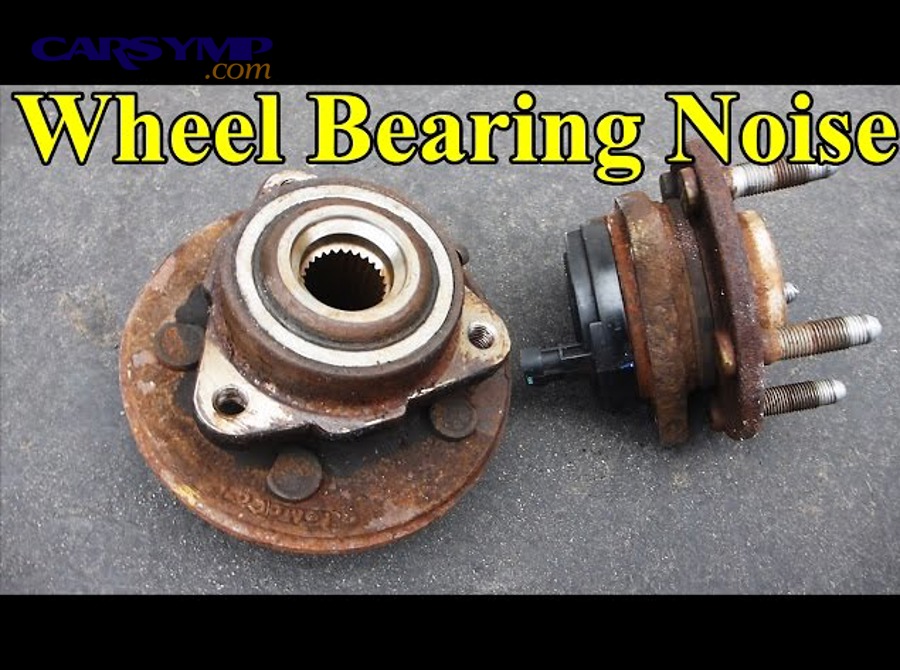
What does a bad wheel bearing sound like?
A bad wheel bearing sound is usually a humming, growling, rumbling, roaring, or grinding noise that comes from the wheel area and often gets louder as the vehicle speed increases.
Specifically, wheel bearing noise tends to repeat with wheel rotation rather than engine rpm. That pattern matters because many drivers first assume the problem is engine-related, exhaust-related, or simply the sound of rough pavement. In reality, the bearing sits at the hub and carries both rotational load and vehicle weight, so wear inside the bearing creates friction and roughness every time the wheel turns.
In early stages, the sound may be subtle. It can resemble a faint tire drone at highway speed. In moderate stages, the sound becomes more like a coarse hum or growl. In advanced stages, the sound may become grinding, rumbling, or metallic, especially if the bearing has significant internal damage or lubrication failure. Some vehicles also produce snapping, clicking, or popping when excessive internal movement develops in the bearing or hub assembly. That is why sound description matters so much in a Car Symp-style diagnostic checklist: the exact type of noise often gives the first clue about severity.
The most useful rule for drivers is this: if the sound follows road speed and seems to come from one corner of the car, a wheel bearing deserves inspection. According to Kelley Blue Book, common signs of a failing wheel bearing include humming, squealing or growling, clicking or popping, and other unusual sounds from the wheel area.
Can a bad wheel bearing cause vibration or rough driving feel?
Yes, a bad wheel bearing can cause vibration or a rough driving feel for at least three reasons: it creates uneven rolling resistance, it allows extra wheel movement, and it transmits roughness into the steering wheel, floor, or cabin.
More specifically, vibration appears when the bearing no longer keeps the hub rotating smoothly under load. On front-wheel corners, drivers may feel that roughness through the steering wheel. On rear-wheel corners, they may notice it more through the seat, floor, or body shell. The vibration does not always appear as violent shaking. In many vehicles, it starts as a mild roughness that seems to come and go with speed or surface quality.
That is why drivers sometimes misread the symptom as a balance problem. A wheel balance issue often causes a more consistent vibration at certain speed ranges, while a worn wheel bearing can create roughness plus audible noise plus a sense that the vehicle is not rolling cleanly. If looseness develops, the feeling may progress from mild buzz to wobble or steering imprecision.
A rough feel also matters because wheel bearings affect more than comfort. Once wear increases, the wheel may stop tracking with the precision the suspension geometry expects. According to AutoZone, worn wheel bearings can cause steering wheel vibrations along with humming, rumbling, or popping sounds, especially as speed rises. (autozone.com)
Which warning signs usually appear first in a failing wheel bearing?
There are 2 broad stages of wheel bearing symptoms: early warning signs and advanced warning signs, grouped by severity and by how much internal wear the bearing has developed.
To illustrate, early warning signs usually include:
- A faint humming or droning sound at road speed
- Slight roughness on smooth pavement
- Noise that changes a little during gentle turns
- A subtle feeling that one wheel corner sounds “different” than the others
Advanced warning signs usually include:
- Louder growling, roaring, or grinding
- Steering wheel vibration or chassis shake
- Wheel looseness or wobble
- Heat around the hub area
- Uneven tire wear or ABS warning overlap in some hub assemblies
This grouping is useful because many drivers wait too long when the sound is still mild. In the early phase, the bearing may only produce a speed-related hum. In the later phase, the bearing can create enough play to affect tire wear, hub stability, and safety. That progression is exactly why early diagnosis matters more than waiting for an obvious grinding failure.
According to O’Reilly Auto Parts, early diagnosis often includes listening for noise, feeling for roughness while the wheel spins, and checking for looseness because noticeable movement suggests the bearing is excessively worn.
How can you tell if the wheel bearing symptom gets worse while driving?
Yes, a wheel bearing symptom often gets worse while driving because speed increases rotational load, turns shift weight from side to side, and smooth roads make subtle wheel-end sounds easier to hear.
Then, once the bearing is under real driving load, the symptom pattern becomes much more diagnostic than a quick guess made in the driveway.
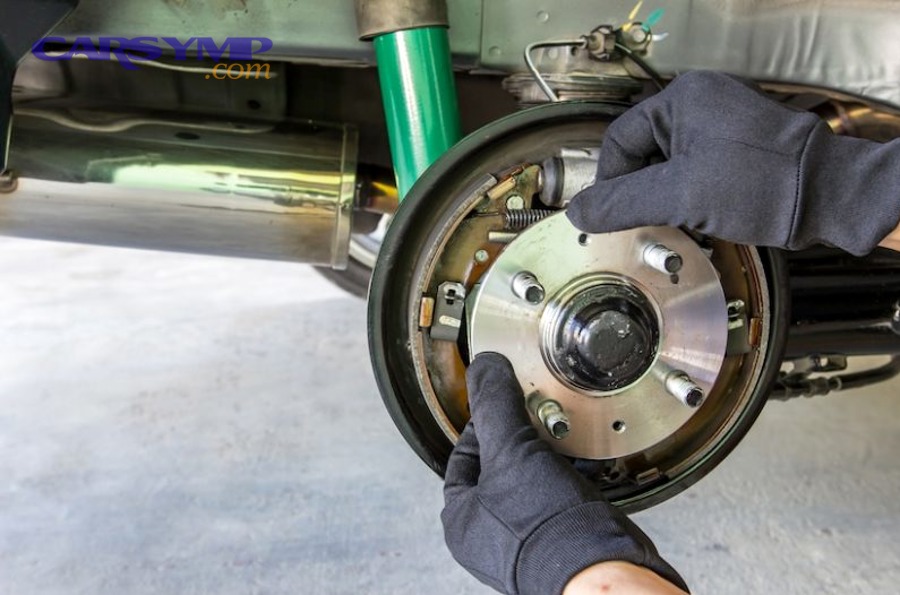
Do wheel bearing noises get louder as speed increases?
Yes, wheel bearing noises usually get louder or higher in pitch as speed increases because the damaged bearing rotates faster, carries more repeated load cycles, and produces more frictional roughness per second.
Specifically, the sound often becomes easier to hear between neighborhood speed and highway speed. At lower speeds, tire tread, wind, and drivetrain sounds may mask it. At higher speeds, the worn bearing’s internal roughness repeats rapidly enough that the hum, rumble, or growl becomes obvious. This is one reason a driver may insist the car sounds normal around town but noisy on the highway.
The important distinction is that wheel bearing noise usually follows vehicle speed, not engine speed. If the sound increases when the car accelerates in any gear and remains tied to road speed, the wheel end becomes a stronger suspect. If the sound changes with engine rpm while the car is stationary, the source is likely elsewhere.
This pattern also helps prioritize diagnosis. A bearing that becomes dramatically louder with speed deserves prompt inspection because the load-related change suggests the damage is not simply cosmetic or incidental. According to AutoZone, a bad wheel bearing commonly creates a humming noise that may increase in pitch as speeds go up. (autozone.com)
How do bad wheel bearing symptoms change when turning left or right?
A bad wheel bearing often changes during left or right turns because load transfer places more force on one side of the vehicle, which can make the failing bearing louder when that corner is heavily loaded.
More specifically, when a vehicle turns, weight shifts laterally across the suspension. That extra load can amplify a damaged bearing’s internal roughness. In many cases, a driver notices the noise becomes louder during a gentle curve in one direction and quieter in the other direction. That does not always identify the bad side with perfect certainty, but it is a valuable clue.
For example, if a hum becomes stronger during a right-hand sweep, one wheel bearing is likely reacting to the increased side load more than the others. Technicians combine that road-test pattern with a lift inspection, wheel play check, and spin test before confirming the exact corner. This step matters because directional changes in sound can also be affected by tire tread pattern, road crown, and suspension geometry.
Still, cornering behavior remains one of the most useful clues in real-world diagnosis. According to AutoZone’s hub bearing guidance, unusual clicks, rumbles, and groans from a worn hub bearing often intensify when cornering or turning slightly. (autozone.com)
What driving situations make wheel bearing symptoms easier to notice?
There are 4 especially useful driving situations for noticing wheel bearing symptoms: steady highway speed, long sweeping turns, gentle lane changes, and smooth road surfaces with low background noise.
To better understand why, consider how each situation removes distractions or adds load. A steady highway cruise makes a repeating hum easier to identify because engine speed and throttle input stay stable. Long curves add sustained side load, which can expose a weak bearing more clearly than a quick turn through an intersection. Gentle lane changes offer a short but noticeable load transfer, helping the driver hear whether the noise grows on one side. Smooth roads reduce masking from tire slap and suspension impact, which makes subtle wheel bearing noise stand out more.
Cold starts and short trips are less helpful because many other transient sounds occur at the same time. Very rough roads are also less useful because impacts can hide the symptom. The best diagnostic road test is calm, steady, and repeatable.
That is also why experienced technicians often prefer a controlled drive before disassembly. It lets them build a symptom pattern rather than chasing a one-time sound. According to O’Reilly Auto Parts, diagnosing wheel bearing issues often starts with listening for noise and feeling roughness under controlled conditions before confirming the bearing on a lift.
What are the most common signs of a bad front or rear wheel bearing?
There are 2 main location-based patterns of wheel bearing symptoms: front-bearing symptoms, which often affect steering feel, and rear-bearing symptoms, which more often sound like cabin or rear-corner drone without strong steering feedback.
Moreover, identifying front versus rear clues helps drivers describe the problem more accurately before inspection or wheel bearing replacement.
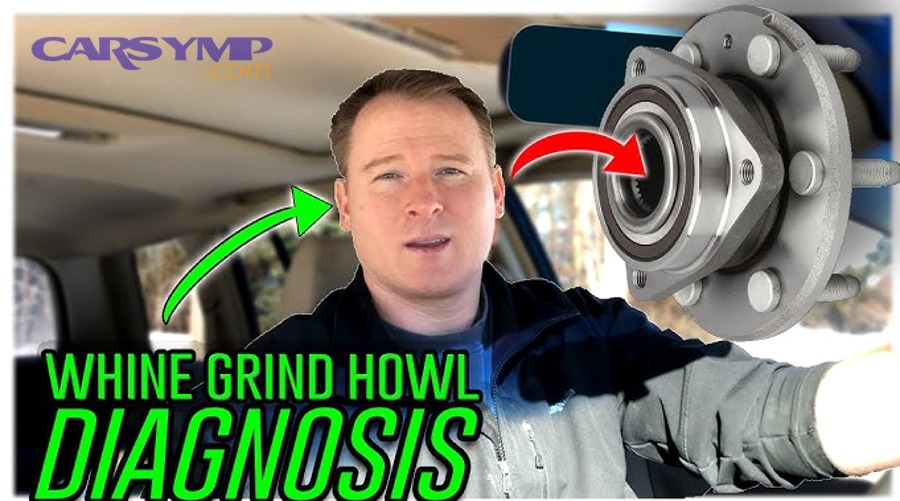
Is a bad front wheel bearing different from a bad rear wheel bearing?
Yes, a bad front wheel bearing and a bad rear wheel bearing can feel different because the front wheels connect directly to steering forces, while the rear wheels more often transmit symptoms through noise, body vibration, and rear-end roughness.
Front bearing problems often announce themselves through the steering wheel. Drivers may feel a faint shake, imprecision, or roughness during turns or while cruising. Because the front suspension manages steering input, any looseness or rough rolling in the hub can be easier to detect through the hands.
Rear bearing problems can be trickier. The noise may sound like it is coming from the middle of the car or from the rear cargo area, especially in SUVs and hatchbacks where cabin acoustics reflect sound. Drivers may notice a droning or humming that changes with speed but does not strongly affect the steering wheel. That can delay diagnosis because rear-wheel noise sometimes sounds like tire noise or road texture.
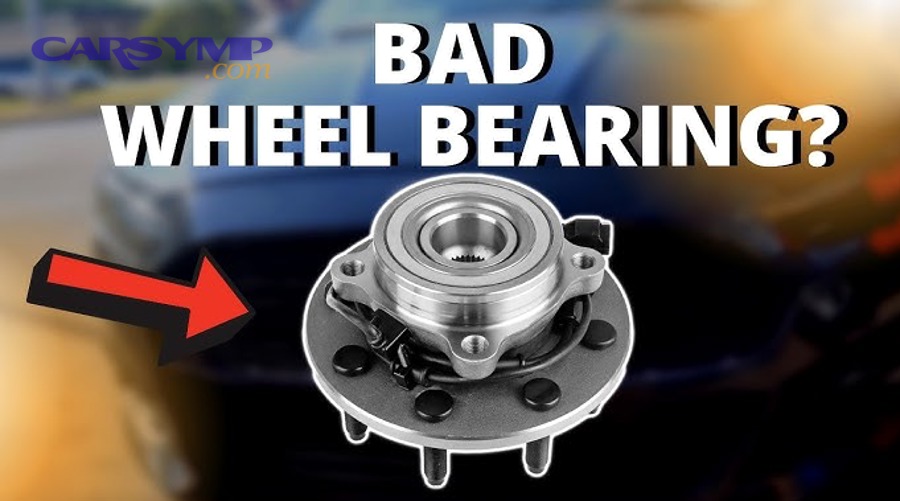
The difference also matters for repair method. Some vehicles use integrated hub assemblies that bolt on as one unit, while others use serviceable or press-fit bearings that require more involved removal and installation. That is where the phrase Press-in vs hub assembly bearing differences becomes important: symptom recognition may be similar, but replacement procedure, tooling, labor time, and cost can differ substantially. According to O’Reilly and AutoZone, wheel bearings may be replaced either as part of a hub assembly or by pressing in a separate bearing, depending on vehicle design.
Where does the noise come from when a wheel bearing is bad?
The noise from a bad wheel bearing comes from the wheel hub area, where the bearing supports the wheel and allows it to rotate smoothly under load, but cabin acoustics often make the exact corner hard to pinpoint.
For example, a front-left bearing may sound as if the noise is under the floorboard, while a rear-right bearing may echo forward into the cabin. That happens because body structure, tire resonance, pavement texture, and wheel-well shape can all redirect the sound. Drivers should therefore avoid relying on sound location alone.
A better description includes where the noise seems loudest, when it appears, whether it changes with turns, and whether the steering wheel or floor vibrates. Those details give a technician far more diagnostic value than simply saying, “It sounds weird.” Sound character plus load behavior usually tells a better story than sound location by itself.
This is also why a hub-area inspection matters. If one corner is hotter than the others after a short drive, or if a lifted wheel feels rough when spun, that physical evidence supports what the road test suggested. According to O’Reilly’s hub assembly guidance, noise from the wheel end, unusual hub heat, looseness, or wobble are all signs that the hub assembly may need replacement.
Which symptoms suggest the wheel bearing problem is getting dangerous?
There are 5 especially serious warning signs that a wheel bearing problem is becoming dangerous: loud grinding, heavy vibration, obvious wheel looseness, excessive hub heat, and unstable handling.
More importantly, these symptoms signal that the issue has moved beyond annoyance and into safety risk. A loud grinding sound suggests major internal wear or damage. Heavy vibration indicates the wheel is no longer rotating smoothly or holding proper alignment under load. Obvious play in the wheel means the bearing may no longer maintain firm hub support. Excessive heat points to abnormal friction. Unstable handling means the wheel end is affecting control.
At this stage, continuing to drive can increase the chance of damage to nearby parts such as the hub, ABS sensor, brake components, or tire. In the worst cases, severe bearing failure can compromise wheel retention and create a crash risk. That is why late-stage symptoms should never be treated like a minor nuisance.
According to Kelley Blue Book, bad wheel bearings can progress from sloppy steering and grinding noises to a worst-case scenario in which the wheel could come off while driving. (kbb.com)
Could these symptoms be something other than a bad wheel bearing?
Yes, these symptoms can come from something other than a bad wheel bearing because tire wear, brake problems, CV joints, and alignment issues can all create noise, vibration, or instability that feels similar at first.
However, comparison is exactly how a good diagnosis gets made, so this section separates the most common look-alike problems from true bearing failure.
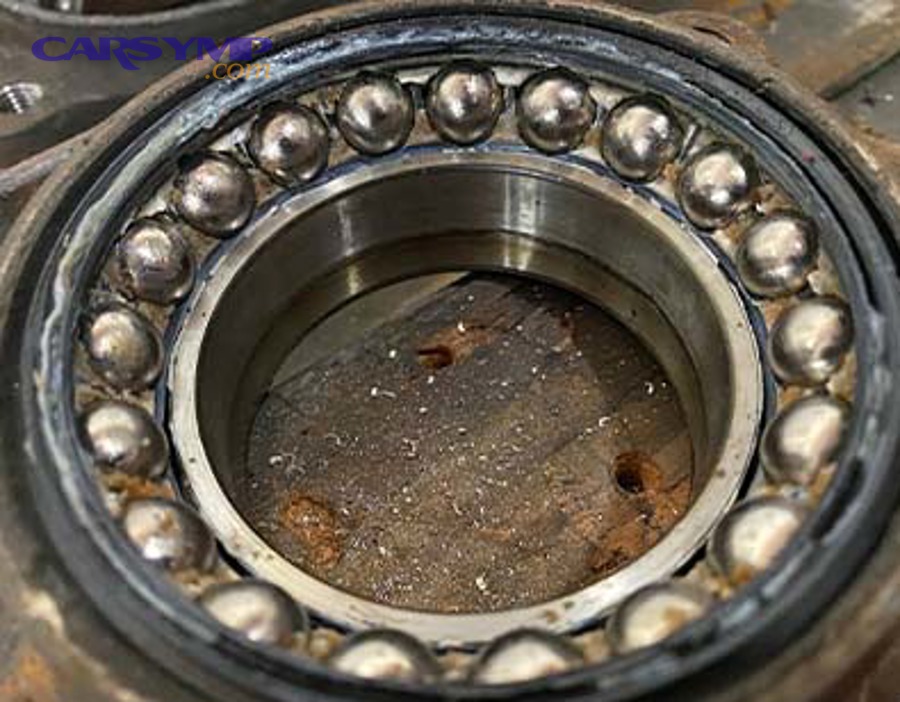
Is wheel bearing noise the same as tire noise?
No, wheel bearing noise is not the same as tire noise because wheel bearing noise usually reflects internal hub roughness under load, while tire noise usually comes from tread pattern, road surface, or uneven wear across the tire.
Specifically, Wheel bearing vs tire noise diagnosis starts with pattern recognition. Bearing noise usually rises with speed, may change when turning, and often sounds like a focused hum, growl, or rumble from one corner. Tire noise also rises with speed, but it often depends more on pavement texture, tread design, inflation, and wear pattern. Cupped or unevenly worn tires can create a roar that resembles a bad bearing, which is why this comparison confuses so many drivers.
A useful clue is consistency across surfaces. Tire noise often changes noticeably between smooth asphalt and coarse concrete. Bearing noise usually remains present regardless of road type, although background noise may mask it. Another clue is rotation history. If the sound pattern changes after tire rotation, the tires deserve strong suspicion. If the noise responds more to turning load than to tire position, the bearing becomes more likely.
This distinction matters because replacing a wheel bearing when the real issue is tread cupping wastes money and leaves the original problem unresolved. According to O’Reilly Auto Parts, uneven tire wear can point to multiple issues, including alignment or steering problems, so further testing is often necessary before blaming the wheel bearing.
How is a bad wheel bearing different from brake, CV joint, or alignment problems?
A bad wheel bearing wins as the most likely cause when the symptom is speed-related hum or growl plus load-sensitive change in turns, while brake issues are strongest during braking, CV joints are most known for clicking in turns, and alignment issues usually show up through pull and tire wear.
Meanwhile, each comparison becomes clearer when you match the symptom to the condition that triggers it:
- Brake problems: Brake drag, warped rotors, or stuck calipers often create heat, pull, or noise that becomes most obvious during braking or immediately after braking.
- CV joint problems: Outer CV joints commonly click or pop in turns, especially during acceleration from a stop with the steering turned.
- Alignment problems: Misalignment more often creates pull, off-center steering, and irregular tire wear than a true rotational growl.
- Wheel bearing problems: These most often create humming, rumbling, grinding, or roughness that follows wheel speed and load.
This comparison helps readers avoid overgeneralizing “front-end noise” into one category. A technician will still inspect multiple systems because real vehicles can have more than one problem at once. But the dominant symptom trigger often points in the right direction.
According to AutoZone and Kelley Blue Book, bad wheel bearings commonly cause speed-related noise, steering looseness, vibration, and uneven tire wear, while other systems produce different trigger patterns and should be ruled out during diagnosis. (autozone.com)
What simple checks can help confirm a bad wheel bearing?
There are 4 simple checks that can help confirm a bad wheel bearing: listen during a controlled road test, spin the wheel while lifted, check for play at the tire, and compare hub heat after driving.
To illustrate, a road test helps establish whether the noise follows speed and changes with gentle left or right loading. A lift inspection then allows the wheel to spin freely. If the wheel feels rough or sounds gritty while spinning, the bearing becomes a stronger suspect. A play check at the top and bottom of the tire can reveal looseness, though technicians must rule out ball joints and suspension play too. A heat comparison can also help because an overly hot hub suggests abnormal friction.
These checks are useful because they combine sound, feel, and physical evidence. No single quick test is perfect on every vehicle, but several clues together usually produce a reliable diagnosis. Drivers performing any lift inspection should follow safe support procedures and use the correct points for jacking and stands.
According to O’Reilly Auto Parts, diagnosing wheel bearing problems often involves lifting the vehicle, spinning the wheel to feel roughness, and checking for in-and-out movement because excessive looseness can indicate bearing failure.
Should you keep driving with bad wheel bearing symptoms?
No, you should not keep driving for long with bad wheel bearing symptoms because the bearing can worsen quickly, handling can degrade, and severe failure can create a serious wheel-end safety hazard.
In short, drivers should treat persistent wheel bearing noise, vibration, or looseness as a repair issue rather than a background annoyance.
Is it safe to drive with a bad wheel bearing?
No, it is not safe to drive with a bad wheel bearing for long because wear increases friction, reduces wheel support, and can progress from noise and roughness to looseness and loss of stability.
More specifically, the danger depends on severity. A faint early-stage hum may not mean the wheel is about to fail immediately, but it still indicates that the bearing is deteriorating. Once the symptom becomes grinding, wobbling, or strongly vibrational, the risk increases sharply. At that point, the bearing may also damage the hub, ABS sensor, or brake components.
Drivers sometimes continue because the car still moves normally. That logic is risky because bearings often worsen under continued heat and load. The absence of an immediate breakdown does not make the condition safe. Safe driving depends on predictable wheel control, and a worn bearing undermines that.
According to Kelley Blue Book, the short answer on driving with bad wheel bearings is “not for too long,” because the condition can progress from unpleasant symptoms to dangerous wheel-end failure. (kbb.com)
When should drivers get the vehicle inspected immediately?
Drivers should get the vehicle inspected immediately when there is loud grinding, strong steering vibration, obvious wheel wobble, excessive hub heat, ABS warning overlap, or rapidly worsening noise.
Especially when two or more of those signs appear together, the vehicle has moved beyond “monitor it and see” territory. Loud grinding suggests advanced internal wear. Strong steering vibration affects control. Wheel wobble points to looseness in the wheel end. Excessive heat indicates friction. An ABS light can appear on some vehicles because the wheel speed sensor is integrated into the hub assembly. Rapid worsening is its own warning because bearing failure often accelerates rather than staying stable.
This urgency also supports smarter repair planning. Immediate inspection does not always mean catastrophic damage has already happened, but it greatly improves the chance of fixing the problem before secondary damage develops. That can reduce parts cost and keep the repair focused on the actual fault.
According to O’Reilly’s hub assembly guidance and AutoZone’s wheel bearing replacement cost guidance, loose wheels, hot hubs, humming or grinding during turns, vibration, and ABS warning light overlap are meaningful signs that the wheel end needs prompt attention.
What should drivers do next after noticing wheel bearing warning signs?
Drivers should follow 4 next steps after noticing wheel bearing warning signs: reduce unnecessary driving, confirm the symptom pattern, schedule inspection, and plan the correct wheel bearing replacement method for the vehicle design.
More specifically, start by limiting high-speed or long-distance driving until the issue is diagnosed. Next, note the sound type, speed range, turning behavior, and whether any vibration or pull accompanies it. Then schedule a professional inspection or perform a safe diagnostic lift inspection if you have the right tools and experience. Finally, confirm whether the vehicle uses a serviceable press-fit bearing or a complete bolt-on hub assembly.
That last step matters because Press-in vs hub assembly bearing differences affect labor time, tooling, and cost. A press-fit bearing usually requires removal of the knuckle and a press procedure, while a hub assembly often bolts on more directly but may include an integrated sensor and a higher part price. Understanding the design helps drivers interpret estimates more realistically.
According to AutoZone and O’Reilly, wheel bearing replacement can involve either pressing in a separate bearing or replacing a complete hub, and correct tools plus torque procedures are critical to a lasting repair.
What other wheel bearing warning patterns can help drivers diagnose the issue earlier?
There are 4 additional warning patterns that can help drivers diagnose a wheel bearing early: early-vs-late symptom progression, ABS or heat overlap, confusion with cupped tires or road noise, and related hub or suspension damage.
Below, these supplementary patterns expand the core diagnosis and strengthen semantic coverage beyond the primary symptom list.
How do early-stage and late-stage wheel bearing symptoms compare?
Early-stage wheel bearing symptoms are usually milder, quieter, and more speed-specific, while late-stage symptoms are louder, rougher, more vibration-heavy, and more likely to affect wheel stability.
For example, early-stage symptoms often include a faint hum at highway speed, a small change in sound during sweeping turns, or a slight roughness on very smooth pavement. Many drivers dismiss these signs because they seem inconsistent or minor. Late-stage symptoms are harder to ignore. They include louder growling, metal-on-metal grinding, obvious vibration, and sometimes noticeable play when the wheel is checked on a lift.
This comparison matters because a bearing rarely jumps from perfect to catastrophic overnight. Most failures pass through a usable warning window. Drivers who recognize the early stage often avoid more expensive collateral damage and reduce the risk of a roadside problem.
According to Kelley Blue Book and AutoZone, common wheel bearing symptoms can begin with humming or growling and escalate into rough ride quality, vibration, looseness, and dangerous instability if replacement is delayed.
Can ABS, heat, or uneven tire wear appear with wheel bearing problems?
Yes, ABS issues, hub heat, and uneven tire wear can appear with wheel bearing problems because worn bearings can affect wheel speed sensor performance, create abnormal friction, and allow wheel movement that changes how the tire contacts the road.
In addition, these secondary clues are useful because they widen the diagnostic picture. An ABS light does not automatically mean the sensor itself has failed; on some vehicles, the sensor is integrated with the hub assembly, so bearing or hub wear can disturb signal quality. Hub heat matters because excess friction generates temperature. Uneven tire wear matters because a loose or unstable wheel end may stop tracking properly under load.
None of these clues alone proves a bad bearing. However, when they appear alongside classic wheel bearing noise, the case becomes much stronger. A warm or hot hub, especially if only one corner differs significantly from the others after a short drive, deserves attention.
According to AutoZone’s wheel bearing replacement cost guidance, damaged wheel bearings can be associated with grinding or humming during turns, vibration or wobbling, uneven tire wear, and even ABS warning light activation. (autozone.com)
Why are wheel bearing symptoms often confused with cupped tires or road noise?
Wheel bearing symptoms are often confused with cupped tires or road noise because all three can create a hum or roar at speed, and the cabin often masks the exact source until the vehicle is tested under controlled conditions.
More specifically, tire cupping creates repeating tread impacts that sound surprisingly similar to a worn bearing, especially on rough pavement. Aggressive tread patterns and certain road surfaces also create a roar that can mislead even experienced drivers. The confusion gets worse when a vehicle has both an aging bearing and uneven tire wear at the same time.
The best way to sort it out is pattern testing. Tire noise tends to vary more with road texture and tire position. Bearing noise tends to vary more with load transfer and wheel speed. That is why tire rotation history, tread inspection, and a careful cornering road test remain so useful.
This nuance is important for content authority because many readers are not just asking, “What is the symptom?” They are asking, “How do I avoid misdiagnosis?” According to O’Reilly Auto Parts, uneven tire wear can result from several causes besides a bad bearing, which is why additional testing is necessary before confirming the fault.
Can a bad wheel bearing lead to wheel hub or suspension-related damage?
Yes, a bad wheel bearing can contribute to wheel hub or nearby component damage because excessive play, heat, and rough rotation place added stress on the hub, sensor, brake components, and the entire wheel-end assembly.
More importantly, continued driving can turn a focused repair into a larger bill. When looseness grows, the hub assembly may wear abnormally, wheel studs can experience abnormal stress, ABS sensors may malfunction, and brake rotor alignment can be affected. The bearing may start as the main failure point, but the surrounding parts do not remain isolated from that movement and heat.
That is why the smartest approach is early inspection and accurate replacement planning. If the vehicle uses an integrated hub, replacing the complete assembly may address the bearing and sensor together. If the design uses a press-fit bearing, the surrounding knuckle and hub surfaces must be inspected carefully during service to ensure the new bearing seats and performs correctly.
According to O’Reilly’s hub assembly guidance, worn bearings, damaged wheel studs, and failing integrated wheel speed sensors can all be part of wheel-end damage that leads to hub assembly replacement.
In sum, bad wheel bearing symptoms are usually recognizable when you focus on three consistent patterns: noise that follows speed, behavior that changes with load, and physical signs such as vibration, heat, or looseness. Once you understand those patterns, wheel bearing vs tire noise diagnosis becomes easier, wheel bearing replacement decisions become more informed, and the differences between service methods, including Press-in vs hub assembly bearing differences, make more practical sense for real-world repair planning.