


A vacuum leak whistle and a mechanical whine can sound similar, but they usually come from different causes and follow different patterns. In most cars, a vacuum leak whistle comes from unmetered air entering the intake system through a crack, loose hose, or leaking gasket, while a mechanical whine usually comes from a rotating part such as a pulley, alternator, pump, bearing, or gear-driven component. That distinction matters because the wrong assumption can send you toward the wrong repair.
The first practical clue is the sound itself. A vacuum leak tends to sound airy, sharp, and hiss-like, especially at idle or light throttle, while a mechanical whine usually sounds smoother, more tonal, and more tightly linked to RPM or load. That is why many drivers describe one as a whistle and the other as a high-pitched whining noise from engine accessories or driveline parts.
The second clue is the symptom pattern around the noise. A vacuum leak often comes with rough idle, a higher-than-normal idle speed, hesitation, lean trouble codes, or stalling. A mechanical whine more often appears with steering effort changes, charging issues, belt wear, overheating risk, or a sound that follows engine speed more cleanly. Those companion symptoms make comparison much more reliable than sound alone.
The third clue is diagnosis. You can often narrow the cause with observation, a careful visual inspection, and a few safe checks before using tools. Introduce a new idea: the sections below compare both noises directly, show the most common culprits, and walk through DIY inspection steps for engine whining so you can build an accurate Engine whining noise causes checklist before booking a repair.
What Is the Difference Between a Vacuum Leak Whistle and a Mechanical Whine?
A vacuum leak whistle is an airflow noise caused by unmetered air entering the intake system, while a mechanical whine is a rotating-component noise caused by bearings, belts, gears, pumps, or pulleys.
To better understand that difference, it helps to compare not only what each sound is, but also how it is created inside the vehicle.

What Is a Vacuum Leak Whistle?
A vacuum leak whistle happens when air slips through a small opening somewhere after the air has already been measured or where intake vacuum should remain sealed. Common leak points include vacuum hoses, intake boots, intake manifold gaskets, PCV lines, brake booster hoses, and throttle body gaskets.
Because the opening is often narrow, the escaping or entering air can create a whistle similar to air moving through a small gap in a window seal. In many engines, the sound is easiest to hear at idle because intake vacuum is highest then. That high vacuum pulls air through the leak more aggressively, which makes the sound sharper and more noticeable.
The key characteristic is that the sound is aerodynamic rather than rotational. The leak does not depend on a bearing or a pulley to make noise. Instead, the sound depends on pressure difference and the size of the opening. That is why a vacuum leak often changes with idle quality, warm-up behavior, or throttle position rather than sounding perfectly tied to engine RPM.
What Is a Mechanical Whine?
A mechanical whine comes from a moving part that spins, rotates, pumps fluid, or meshes with another component. Common sources include the alternator, idler pulley, belt tensioner, power steering pump, water pump, supercharger, transmission, and differential.
Unlike a whistle, a whine usually has a smoother, steadier pitch. Drivers often describe it as electric, turbine-like, or gear-like. That sound develops when worn bearings create friction, when pumps cavitate or struggle, or when gears and pulleys generate tonal vibration as speed increases.
A mechanical whine usually tracks more closely with engine speed, steering load, or road speed. If the sound rises in a clean, predictable way as RPM rises, that leans toward a rotating source. This is why a whining noise from engine accessories often becomes easier to identify when you observe whether it changes during revving, steering input, or accessory loading.
A useful rule is simple: a leak whistles because air passes through an opening, but a part whines because a component rotates under stress.
According to CarParts in April 2025, common vacuum leak symptoms include a hissing or whistling noise, rough running, stalling, and increased idle RPM, which supports the distinction between airflow-generated noise and a purely mechanical sound. )
Can You Tell by Sound Alone Whether the Noise Is a Vacuum Leak or a Mechanical Whine?
Yes, you can often form a strong first suspicion by sound alone, but no, sound alone is rarely enough for a final diagnosis because both noises can overlap in pitch, location, and intensity.
However, the sound still gives you an important starting point, especially when you listen for tone, texture, and when the noise appears.
Does a Vacuum Leak Usually Sound More Like a Whistle or Hiss?
Yes, a vacuum leak usually sounds more like a whistle, hiss, or airy squeal than a steady whine. The sound often seems sharper and thinner than the noise from a bad bearing or pump. In some cars it sounds almost like a tea kettle, a faint compressed-air leak, or wind moving through a narrow crack.
That sound also tends to be more obvious at idle, on a cold start, or during light throttle transitions. When the throttle opens more, the relationship can change. A small leak may become less obvious because the engine is moving more total air, so the leak becomes a smaller percentage of the airflow.
You should also pay attention to texture. Vacuum leaks often sound irregular or position-sensitive. They may seem to come and go with engine movement, temperature changes, or hose flex. That behavior is different from a bearing or pulley that typically produces a more constant tone.
Does a Mechanical Whine Usually Sound More Like a Steady High-Pitched Tone?
Yes, a mechanical whine usually sounds more like a smooth, steady, high-pitched tone because it comes from continuous rotation, friction, or fluid pumping inside a component. When drivers hear a stable pitch that rises in a clean line with RPM, they are often dealing with an accessory, bearing, pump, or gear-driven source.
The strongest clue is repeatability. If the noise becomes louder every time the RPM climbs and drops every time the RPM falls, the cause is more likely mechanical. A worn alternator bearing, power steering pump, or idler pulley behaves more like that than a leaking vacuum hose.
Still, overlap exists. A small intake leak can whistle in a way that resembles a light whine, and a failing pump can create a tone that seems like a hiss at low speed. That is why sound alone should guide your next test rather than end your diagnosis.
To make that practical, use this quick comparison before moving to inspection.
| Sound clue | More consistent with vacuum leak whistle | More consistent with mechanical whine |
|---|---|---|
| Airy, sharp, hiss-like tone | Yes | Less common |
| Smooth, tonal, turbine-like sound | Less common | Yes |
| Most obvious at idle | Often | Sometimes |
| Closely follows RPM every time | Sometimes | Often |
| Changes with steering input | Rarely | Common with power steering issues |
| Comes with rough idle or lean codes | Often | Less common |
The table above summarizes the acoustic clues that help separate a leak-driven whistle from a rotating-part whine before any tools come out.
According to CarParts in 2025, vacuum leaks commonly produce hissing or whistling noises and can trigger lean-related drivability problems, while AutoZone notes that power steering whine is commonly linked to low fluid, a worn pump, or belt issues, reinforcing that sound texture alone suggests direction, not certainty. )
How Does the Noise Change at Idle, RPM, and Acceleration?
A vacuum leak whistle often stands out most at idle or light throttle, while a mechanical whine usually rises more predictably with RPM, steering effort, or component load.
Specifically, observing when the noise grows, fades, or changes under different operating conditions is one of the fastest ways to separate the two.
Does a Vacuum Leak Whistle Get Louder at Idle or Light Throttle?
Yes, many vacuum leak whistles become easier to hear at idle or light throttle because intake vacuum is strongest when the throttle is mostly closed. Under those conditions, the engine pulls harder on any small opening in the intake tract or vacuum circuit.
That is why some leaks make the engine sound normal at moderate throttle but obvious at idle in a parking lot. You may also hear the noise during tip-in, which is the small transition when you first press the accelerator. During that moment, airflow and vacuum conditions shift, and the leak can briefly become more audible.
Small leaks can also behave differently from large leaks. A tiny crack may whistle clearly but cause only mild drivability symptoms. A larger leak may produce more of a broad hiss than a sharp whistle and may cause rough idle, misfire, or stalling before the sound becomes the main complaint.
Does a Mechanical Whine Rise More Predictably With RPM or Load?
Yes, a mechanical whine usually rises more predictably with RPM or load because the noise comes from a part that is spinning, pumping, or meshing faster as speed increases. If the sound climbs smoothly when you rev the engine in park, that points toward a belt-driven accessory or another engine-speed-related source.
Load matters too. A power steering pump often whines more when you turn the wheel near full lock because hydraulic demand increases. An alternator may grow louder when electrical load rises. A supercharger whine may intensify under throttle. A transmission or differential whine may follow road speed rather than engine RPM, which creates another useful diagnostic split.
This pattern matters because it helps you classify the noise by system. If revving the engine changes the sound but driving speed does not, suspect engine-driven accessories. If road speed changes the sound more than engine speed, suspect drivetrain parts. If idle quality changes along with the noise, suspect an airflow problem such as a vacuum leak.
According to CarParts in 2025, vacuum leak-related performance problems are often most obvious at idle because unmetered air has a bigger effect when airflow through the throttle plate is low, while recent repair guidance on pulley and pump noises shows that worn rotating components often produce sounds that scale with speed or load. )
What Symptoms Usually Accompany a Vacuum Leak Whistle vs a Mechanical Whine?
A vacuum leak usually comes with rough idle, lean running, hesitation, or a check engine light, while a mechanical whine more often appears with steering issues, charging symptoms, belt wear, overheating risk, or persistent speed-related noise.

More importantly, these companion symptoms often tell you more than the sound itself.
What Symptoms Usually Appear With a Vacuum Leak?
A vacuum leak disrupts the air-fuel balance because extra air enters the engine without being measured correctly. That can create a lean mixture, and a lean mixture often leads to rough idle, misfires, hesitation, stalling, increased idle speed, and poor throttle response.
You may also see a check engine light and lean-related codes. In real-world diagnosis, fuel trims often rise positive because the engine computer adds fuel to compensate for the extra air. That makes scan data useful when the sound is subtle.
Other clues include idle hunting, rough cold starts, a faint whistle from the intake side, and occasional improvement when the engine warms up. In turbocharged cars, a leak may also reduce boost performance or create strange transition noises between vacuum and boost states.
What Symptoms Usually Appear With a Mechanical Whine?
A mechanical whine usually brings clues tied to the affected component. A power steering pump may whine more when you turn the steering wheel and may also come with heavy steering, foamy fluid, or low fluid level. An alternator bearing may whine with RPM and may later show charging problems. A failing idler or tensioner may create chirping, roughness, belt wander, or pulley vibration.
A water pump or belt-drive problem may bring coolant loss, overheating risk, or wobble. A transmission or differential whine may intensify with speed and may be paired with vibration or load-sensitive changes. In short, mechanical noises often come with a physical performance symptom from the same system that makes the sound.
This is where an Engine whining noise causes checklist becomes useful. Instead of asking only, “What does it sound like?” ask four linked questions:
- Does the engine idle poorly?
- Does steering input change the sound?
- Does RPM change the sound in park?
- Does road speed change the sound while driving?
That checklist moves you from guessing to pattern recognition.
According to CarParts in April 2025, vacuum leaks commonly cause rough running, stalling, increased idle RPM, and whistling noises, while AutoZone’s power steering guidance notes that whining often appears with low fluid, a worn pump, or a faulty belt, which shows how companion symptoms separate intake leaks from mechanical faults. )
Which Parts Most Commonly Cause a Vacuum Leak Whistle and Which Parts Most Commonly Cause a Mechanical Whine?
There are two main groups of causes: vacuum leak whistle sources on the intake or vacuum side, and mechanical whine sources in rotating accessories, pumps, pulleys, bearings, or drivetrain components.
To better understand the problem, classify the likely parts by the system that creates the sound.
Which Components Commonly Cause a Vacuum Leak Whistle?
The most common vacuum leak whistle sources are cracked vacuum hoses, loose intake boots, intake manifold gasket leaks, throttle body gasket leaks, PCV hoses, brake booster hoses, EVAP vacuum lines, and plastic fittings that harden with age.
These parts share one trait: they are meant to keep intake vacuum contained. Once they crack, loosen, or deform, they let air enter where it should not. Small leaks often whistle. Larger leaks may hiss more than whistle and may produce more severe drivability symptoms.
Location also helps. If the sound seems to come from the upper intake area, throttle body area, PCV plumbing, or firewall side near the brake booster hose, a vacuum leak becomes more likely. If the noise changes when you gently move a hose by hand with the engine off and then restarts with a different intensity, that also supports a leak hypothesis.
Which Components Commonly Cause a Mechanical Whine?
Common mechanical whine sources include the alternator, idler pulley, belt tensioner, power steering pump, water pump, air conditioning compressor pulley, supercharger, transmission, and differential. In some cases, the serpentine belt itself contributes by slipping or vibrating due to tension or alignment problems, although belt noise more often sounds like squeal or chirp than true whine.
The most common under-hood whine sources are usually belt-driven accessories. Because they spin whenever the engine runs, they can create a whining noise from engine speed changes even when the vehicle is stationary. That makes them easier to test by revving the engine in park.
Below is a practical grouping table to narrow the source.
| Component group | Typical sound | When it changes most | Extra clue |
|---|---|---|---|
| Vacuum hose or intake leak | Whistle or hiss | Idle, light throttle | Rough idle, lean codes |
| PCV or brake booster hose leak | Whistle | Idle, decel | Idle instability |
| Alternator bearing | Whine or whir | Engine RPM | Possible charging symptoms |
| Idler pulley or tensioner | Whine, chirp, rough spin | Engine RPM | Belt tracking issues |
| Power steering pump | Whine | Steering input, RPM | Heavy steering, low fluid |
| Water pump | Whine or grind | Engine RPM | Coolant issues, wobble |
| Transmission or differential | Whine | Road speed, load | Changes on acceleration or decel |
The table above gives a system-based shortlist so readers can connect sound behavior to the most probable hardware.
According to CarParts in 2025, broken intake components, manifold gaskets, brake booster issues, and faulty vacuum lines are common vacuum leak causes, while AutoZone and current repair guidance on idler pulleys note that worn pumps, belts, and pulley bearings are frequent mechanical-noise sources. )
How Do You Diagnose a Vacuum Leak Whistle vs a Mechanical Whine Step by Step?
The best method is a six-step process: identify when the noise occurs, locate the side of the engine bay, compare idle versus RPM behavior, check symptom patterns, inspect likely parts, and confirm with the right test.
Let’s explore that process in a practical order so you can do safe DIY inspection steps for engine whining before deciding whether professional testing is needed.
What Quick Checks Can Drivers Do Before Using Tools?
Start with simple listening and observation. First, listen at idle with the hood open. Note whether the sound seems airy and localized to hoses or the intake area, or whether it seems rotational and tied to the belt side of the engine.
Second, rev the engine lightly in park. If the pitch rises very cleanly with RPM, suspect a mechanical source. If the sound is strongest at idle and changes oddly with slight throttle, suspect a vacuum leak.
Third, pay attention to steering input. Turn the wheel slightly while stationary if your vehicle uses hydraulic power steering. If the sound changes immediately, the power steering pump becomes a strong suspect.
Fourth, inspect visible parts with the engine off:
- Look for cracked, brittle, or collapsed vacuum hoses
- Check intake boots for splits near clamps or bends
- Look for loose hose connections
- Inspect the serpentine belt for glazing, cracks, or edge wear
- Check pulleys visually for wobble or misalignment
- Look for fluid loss around the power steering pump or water pump
These basic checks often cut the possibilities in half.
Which Tests Confirm a Vacuum Leak and Which Tests Confirm a Mechanical Whine?
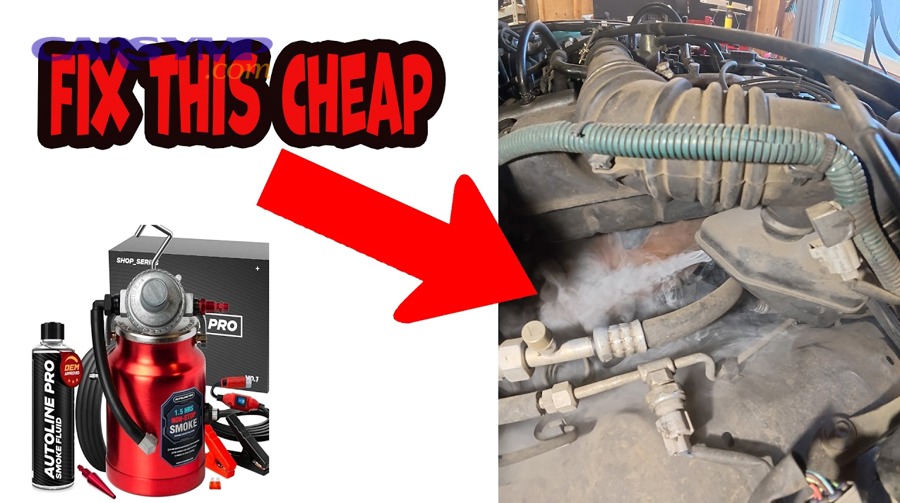
A smoke test is one of the best confirmation methods for a vacuum leak because it shows where intake vacuum is escaping or where outside air enters the system. Scan data can help too. When positive fuel trims are high at idle and improve as RPM rises, that pattern often supports a small vacuum leak.
For a mechanical whine, confirmation usually comes from isolating rotating parts. A technician may use a stethoscope, inspect pulley roughness, check shaft play, evaluate steering fluid condition, or temporarily isolate the belt drive during diagnosis. For drivers, the safe version is visual inspection and pattern observation rather than component removal.
Use this step-by-step checklist:
- Listen at idle
- Lightly rev the engine
- Note whether steering changes the sound
- Check for rough idle or lean symptoms
- Inspect hoses, intake boots, belt, and pulleys
- Confirm a leak with smoke testing or confirm a rotating fault with accessory inspection
That sequence is often more valuable than replacing parts based on guesswork.
According to CarParts in February 2025, smoke testing helps identify small air leaks that can trigger warning lights and lean-running conditions, and fuel-trim behavior is widely used in diagnosis because unmetered air often affects idle more strongly than higher-RPM airflow. ([carparts.com](https://www.carparts.com/blog/car-smoke-tests-what-you-need-to-know-and-why-its-necessary/?srsltid=AfmBOoq-maByEwHtyJrSW0qxKfOkkuUhnwyugV9NowFvhvIz5JKWClSh&))
Is It Safe to Drive With a Vacuum Leak Whistle or Mechanical Whine?
Yes, some cars can still be driven briefly with either problem, but no, neither issue should be ignored because both can worsen and a mechanical whine can become urgent faster.

More importantly, the safety decision depends on the symptom pattern, not just the sound.
When Is a Vacuum Leak Mostly a Drivability Risk?
A small vacuum leak is often more of a drivability and efficiency problem than an immediate breakdown hazard. The car may still run, but it may idle roughly, hesitate, stall at stops, or waste fuel while running lean. If the leak is minor, you may drive the car a short distance, but you should avoid treating that as a long-term solution.
The bigger risk appears when the leak becomes large enough to cause repeated stalling, hard starting, severe misfire, or significant lean operation. That can make the car unpredictable in traffic. Even when the vehicle still moves, drivability degradation can make merging, idling, and stop-and-go driving much less safe.
When Is a Mechanical Whine a Higher Immediate Risk?
A mechanical whine can become urgent faster because the source part may seize, shed the belt, lose fluid pressure, or fail suddenly. A power steering pump can make steering much harder. A failing tensioner or idler can damage the belt system. A water pump or belt-related failure can lead to overheating. An alternator problem can leave the vehicle with a dead battery.
That is why a whining noise from engine accessories deserves more caution when it gets louder quickly, is accompanied by wobble, burning smell, charging warnings, overheating signs, or heavy steering. Those are not “watch and wait” symptoms.
Use this quick safety guide:
- Mild whistle + rough idle only = schedule repair soon
- Loud whistle + stalling or major hesitation = avoid unnecessary driving
- Light whine + no performance issue = inspect promptly
- Whine + steering loss, overheating, charging problem, or severe belt issue = stop driving and inspect immediately
In short, a vacuum leak usually threatens drivability first, while a mechanical whine may threaten the accessory system or engine more suddenly.
According to CarParts in 2025, vacuum leaks can cause stalling and incorrect idle speed, and current power-steering and pulley guidance shows that pump, belt, and bearing-related whines can progress into harder steering or belt-drive failure, which increases immediate risk. )
What Other Noises Can Be Confused With a Vacuum Leak Whistle or Mechanical Whine?
There are four common look-alike noises: belt squeal, exhaust leak whistle, normal forced-induction whine, and intake-related issues that only scan data can separate from true mechanical problems.
Besides the main comparison, these overlap noises matter because they often trick drivers into chasing the wrong system.
Could a Belt Squeal Be Mistaken for a Mechanical Whine?
Yes, a belt squeal can be mistaken for a mechanical whine, especially when it first appears as a high-pitched front-of-engine noise. The difference is texture. A squeal is sharper and more friction-like, while a whine is smoother and more tonal.
A slipping belt often appears at startup, in wet conditions, or when accessory load suddenly rises. A worn bearing usually produces a more continuous tone. That difference can save time because belts and pulley bearings often live in the same area but fail differently.
Could an Exhaust Leak Sound Like a Vacuum Leak Whistle?
Yes, a small exhaust leak can sound like a whistle or tick and can mislead drivers into thinking the intake side is leaking. The difference is location and condition. Exhaust leaks usually become more obvious under load or when the metal is cold, while vacuum leaks are often most noticeable at idle or light throttle.
Exhaust leaks also sit on the pressure side of the engine, not the vacuum side. That means they may affect sound strongly without producing the same lean-idle pattern associated with intake leaks.
Can a Turbo or Supercharger Create a Normal Whine Instead of a Problem Noise?
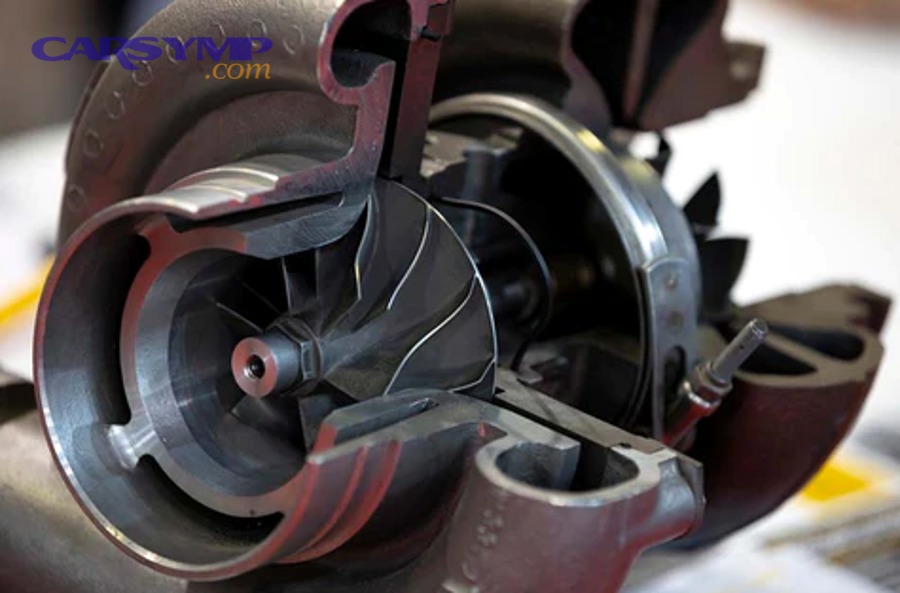
Yes, some turbocharged and supercharged vehicles naturally produce induction sounds that are normal. A supercharger especially can create a distinct whine under load, and some intake systems amplify turbo spool sounds.
The key question is whether the sound is new, louder than before, or paired with drivability changes. A normal forced-induction tone is usually consistent and repeatable. A problem-related tone often arrives suddenly or brings reduced performance, leaks, or other symptoms.
Can Fuel Trims or Scan Data Help Separate an Air Leak From a Mechanical Noise?
Yes, scan data can help because positive fuel trims at idle often support the presence of unmetered air entering the engine. If trims are strongly positive at idle and improve as RPM rises, that pattern often points toward a small vacuum leak rather than a mechanical source.
This does not replace listening or inspection, but it adds an objective clue. That matters when the sound itself is ambiguous. If the car has a whistle, rough idle, and idle-sensitive fuel trim correction, the intake side becomes much more likely. If scan data looks normal and the sound still tracks RPM tightly, a rotating component becomes more likely.
According to field-proven diagnostic guidance on fuel trims, unmetered air leaks often show their strongest effect at idle, while AutoZone’s pulley and steering articles continue to distinguish squeal, pulley roughness, and pump-related whining from airflow leaks. ([facebook.com](https://www.facebook.com/ScannerDanner/posts/identifying-a-vacuum-leak-using-fuel-trim-at-different-rpms/1343410590787384/?))
In sum, comparing a vacuum leak whistle with a mechanical whine works best when you combine sound quality, operating conditions, companion symptoms, and one confirming test. That approach is more reliable than listening alone, and it gives drivers a clear path from first suspicion to confident diagnosis.