


A whine that changes with RPM usually points to a rotating component that speeds up with the engine, not automatically to one specific failed part. In practice, the most common suspects are belt-driven accessories, pulleys, the alternator, the power steering system, turbo hardware on forced-induction vehicles, and in some cases transmission or input-shaft-related parts. That is why the right approach is not to guess from the sound alone, but to match the sound to the exact condition that triggers it. (carcare.org)
The first clue is whether the noise follows engine speed or vehicle speed. If the pitch rises when you rev the engine in Park or Neutral, the problem usually lives on the engine side of the diagnosis tree. If it only changes with road speed while the engine stays at similar RPM, the source may be farther downstream in the driveline, wheel area, or tires. That distinction prevents one of the most common misdiagnoses car owners make when chasing a whining noise from engine complaints. (carcare.org)
The second clue is operating load. Steering input can point toward the power steering system. Electrical load can make a weak alternator or bearing noise more obvious. Boost and throttle can highlight turbo-related sounds. Temperature can also matter because some steering and accessory noises get worse in cold conditions or before fluid circulation stabilizes. (static.nhtsa.gov)
The third clue is urgency. Some RPM-related whines are annoying but manageable for a short period, while others signal a charging-system failure, belt-driven accessory seizure, steering assist problem, or turbo fault that can escalate quickly. Introduce a new idea: the main content below walks through the symptom in the same order a careful mechanic would use, so you can narrow the cause before paying for parts you may not need. (static.nhtsa.gov)
What Does a Whine That Changes With RPM Usually Mean?
A whine that changes with RPM is usually a rotating-component symptom caused by parts that spin in direct relationship to engine speed, especially accessories, pulleys, pumps, bearings, or boosted-air hardware.
To better understand that symptom, start with the word “usually.” RPM-linked noises do not always mean catastrophic damage, but they almost always mean the noise is being generated by something whose speed depends on crankshaft speed. That is why a serpentine belt drive, alternator bearing, idler pulley, power steering pump, or turbocharger often lands high on the suspect list before more distant components do. Car Care Council guidance on vehicle systems notes that the belt drive system powers key accessories, and Firestone’s maintenance guidance explains that the serpentine belt commonly drives the alternator, power steering pump, air conditioning compressor, and sometimes the water pump. (carcare.org)
When drivers describe a whining noise from engine areas, they are often reporting one of three sound patterns. The first is a smooth, high-pitched mechanical whine that rises steadily with revs. The second is a hydraulic or pump-like groan that becomes more obvious at low-speed maneuvering or under steering load. The third is a whistle or boost-related sound that appears under throttle. Those patterns matter because the ear alone cannot identify the failed part, but the pattern plus the trigger often can. (static.nhtsa.gov)
An RPM-sensitive whine also tells you what the problem probably is not. If the sound depends only on road speed, changes while cornering at the same RPM, or moves with tire rotation instead of engine revs, the root cause may be a wheel bearing, tire pattern noise, or differential issue rather than an engine-bay accessory. That comparison is essential because many owners replace a belt or alternator when the real issue only appears once the vehicle is moving. (carcare.org)
Is a Whine That Changes With RPM Usually a Rotating Component Problem?
Yes, a whine that changes with RPM is usually a rotating-component problem because engine speed directly changes pulley speed, accessory speed, pump speed, and bearing load.
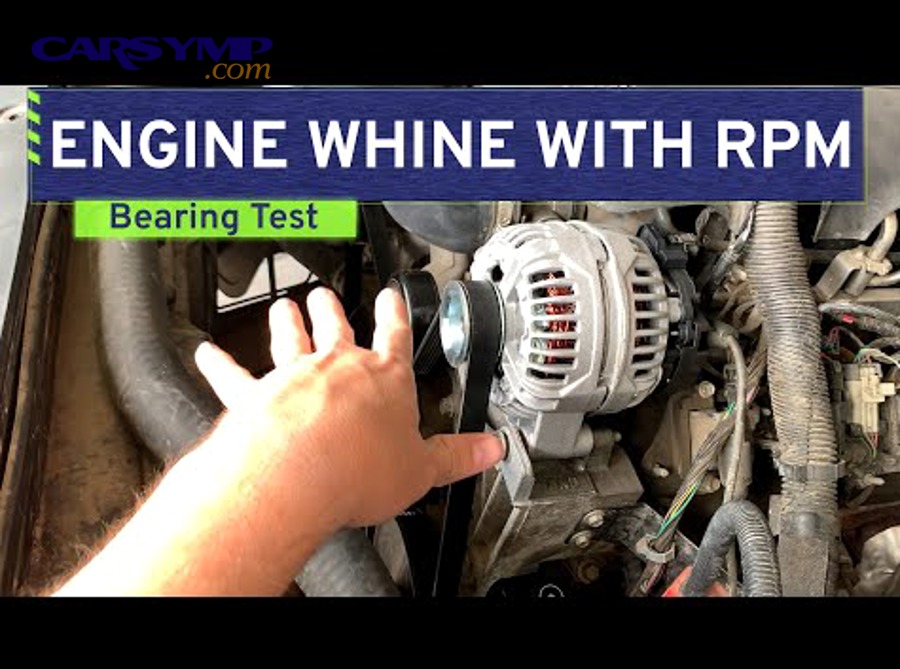
Specifically, that is why belt-driven systems deserve attention first. A slipping or glazed belt can make noise, but so can the parts the belt drives. A worn tensioner pulley bearing, alternator bearing, or A/C clutch pulley can all produce a tone that seems to come from “the engine” even though the engine internals are fine. The belt system acts like a sound transmitter, so the noise can bounce around the front of the engine and become hard to localize by ear alone. Firestone’s serpentine-belt guidance notes that wear, glazing, slippage, and misalignment all affect the belt system and can contribute to abnormal noise.
However, “usually” does not mean “always.” A few exceptions can imitate mechanical whine. Air leaks can whistle. Audio-system alternator interference can sound like a whine that rises with RPM, but it comes through the speakers rather than from the engine bay. Some intake and turbo systems also create a whistle that is normal at low levels yet abnormal when it becomes loud, sudden, or paired with lost power. The safe diagnostic habit is to confirm where the sound is actually coming from before replacing hardware. (garrettmotion.com)
According to AAA automotive guidance, a whine or growl from the engine, especially when electrical systems are loaded, can indicate an alternator problem, while noise from belts and other accessories can create similar symptoms and should be professionally checked. (aaa.com)
What Is the Difference Between an RPM-Related Whine and a Speed-Related Whine?
An RPM-related whine follows engine revs, while a speed-related whine follows vehicle motion, wheel rotation, or driveline speed.
More specifically, the fastest way to separate the two is to perform a simple stationary check. If the car is safely parked and the sound changes when you lightly raise engine RPM, the source is more likely tied to the engine or its accessories. If the sound only appears while the car is moving, or gets louder with road speed regardless of gear choice, you should widen the diagnosis beyond the engine front end. That simple split keeps you from confusing an accessory-drive problem with a tire, wheel, or differential issue. (carcare.org)
This distinction matters because the same word “whine” is used for very different failures. An alternator bearing can whine. A power steering pump can whine. A transmission input bearing can whine. A worn tire can also create a humming or whining sound that many drivers describe with the same vocabulary. Good diagnosis begins by classifying the sound by dependency: engine speed, road speed, steering load, or boost load. That is the foundation of any reliable Engine whining noise causes checklist. (aaa.com)
Which Parts Most Commonly Cause a Whine That Changes With RPM?
There are five main groups of parts that commonly cause a whine that changes with RPM: belt-drive accessories, pulleys and tensioners, steering components, turbo-related hardware, and selected drivetrain bearings.
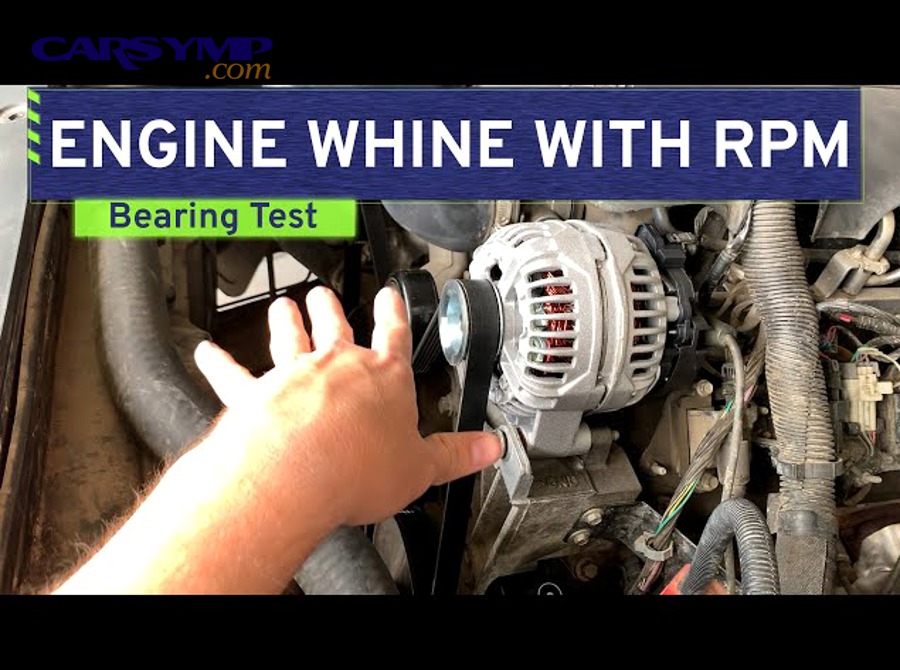
To better understand that grouping, think in terms of what spins whenever the crankshaft spins. The belt-drive group includes the alternator, power steering pump on hydraulic systems, and A/C compressor. The pulley group includes idler pulleys and tensioner assemblies. The steering group includes pumps, fluid, and sometimes air in the system. The turbo group includes the turbocharger and related intake or boost leaks. The drivetrain group includes transmission input-side components that can mimic an engine-bay whine under certain conditions. (static.nhtsa.gov)
That classification helps because each group has a different trigger pattern. Belt and pulley noises often change immediately with revs and may be most obvious at startup or during blips of the throttle. Steering-related noises respond to steering input, especially at parking-lot speeds. Turbo-related sounds usually appear under load and boost rather than simple free revving. Transmission-input noises may change with clutch engagement, gear state, or load transfer instead of only with light revs in Neutral. (static.nhtsa.gov)
| Part group | Typical trigger | Common clue | Risk if ignored |
|---|---|---|---|
| Belt / pulley system | Startup, rev changes, accessory load | Front-of-engine noise, chirp, squeal, whine | Accessory loss, belt failure |
| Alternator | Electrical load, RPM increase | Whine with dim lights or battery warning | Charging failure, vehicle shutdown |
| Power steering pump | Steering input, low-speed turns, cold weather | Groan or whine while turning | Loss of assist, pump wear |
| Turbo / intake | Throttle and boost | Whistle or loud whine under load | Boost loss, turbo damage |
| Transmission input side | Gear state, clutch behavior, load | Whine linked to engagement conditions | Internal wear escalation |
The table above shows the most common RPM-linked whine groups, the operating condition that usually exposes each one, and why the symptom should not be dismissed as “just noise.” The value of the table is not to force a guess, but to help you choose the next test that makes the diagnosis narrower instead of broader.
What Engine and Accessory Parts Can Create an RPM-Dependent Whine?
There are four common engine-side accessory suspects: the serpentine belt system, the alternator, the power steering pump, and the A/C compressor or its pulley assembly.
For example, the serpentine belt system can create noise in several ways. The belt itself can slip if it is glazed, contaminated, loose by design failure, or riding on a misaligned pulley. The idler pulley or tensioner can develop bearing wear that produces a dry, rising whine. The alternator can make a growling or whining sound if its bearings wear or if charging problems appear under load. Firestone notes that serpentine belts can wear, glaze, crack, or slip, and AAA notes that engine whine or growl under electrical load can indicate alternator trouble. (aaa.com)
The A/C compressor family should also stay on your list. A noisy clutch, pulley bearing, or compressor can change the sound only when the air conditioning is engaged, which makes it one of the easiest suspects to test. If the noise appears with A/C on and fades with A/C off, you have a much cleaner clue than you do from random rev testing alone. That kind of load-on versus load-off observation is more useful than simply saying, “the car whines.”
What Drivetrain Parts Can Also Cause a Whine That Changes With RPM?
There are two major drivetrain-side suspects: input-side transmission components and bearings whose noise changes with engine load rather than pure road speed.
Meanwhile, this is where diagnosis gets trickier. Some transmission-related noises seem RPM-related because they are tied to input shaft speed, clutch engagement, or torque load. On a manual transmission, clutch-in versus clutch-out behavior can reveal whether the noise is upstream or inside the gearbox area. On an automatic, a pump or internal wear issue may become more audible during specific ranges of acceleration or gear loading. This is one reason road testing with a technician can be more revealing than listening in the driveway. (carcare.org)
A useful rule is this: if the sound changes with free revving in Park or Neutral, start with accessories and engine-side rotating parts. If the sound depends more on gear engagement, clutch behavior, or moving load, extend the diagnosis toward the transmission and related bearings. The clue pattern matters more than the sound adjective alone.
Which Clues Help Identify the Exact Source of the Whine?
The most useful clues are trigger condition, sound location, temperature, and load because those four factors narrow the cause faster than tone description alone.
Let’s explore those clues in the same order a technician would. First, determine whether the noise appears at idle, while blipping the throttle, under acceleration, during steering input, with A/C on, or when lights and blower are turned on. Second, identify whether the sound is strongest at the front of the engine, near the accessory drive, near the firewall, or underneath. Third, note whether the noise is worse cold or hot. Fourth, note whether the sound is tied to boost or steering. Those details turn a vague symptom into a diagnostic map. (static.nhtsa.gov)
Many car owners miss the value of repeatability. If the sound happens every single time you turn the steering wheel at low speed, that pattern is more meaningful than the sound’s exact pitch. If the whine grows when headlights, rear defroster, and blower motor are on, that pattern pushes the alternator higher on the list. If the sound only appears during boost, you should think much harder about turbo or intake issues than about a random pulley. Pattern beats guesswork. (aaa.com)

Does the Whine Get Worse During Acceleration, Steering, or Electrical Load?
Yes, the trigger condition often identifies the system because acceleration, steering, and electrical demand load different parts in different ways.
More specifically, acceleration under throttle can expose belt slip, turbo whistle problems, or transmission input noise. Steering input at parking-lot speed strongly suggests the steering system on hydraulic setups, especially when the wheel is turned near full lock. Electrical load can spotlight an alternator issue because charging demand rises when accessories such as lights, blower motors, and defrosters are on. AAA guidance specifically notes that a whine or growl from the engine can indicate alternator trouble, especially when electrical systems are running. (aaa.com)
Cold weather adds another layer. NHTSA-posted service bulletins document power steering whine complaints during extreme low-temperature operation and discuss how fluid behavior, system pressure, and trapped air can contribute to steering noise in affected vehicles. That does not mean every cold-weather whine is a steering pump failure, but it does show why temperature belongs on your note sheet during diagnosis. (static.nhtsa.gov)
According to service information posted through NHTSA, some power steering noise cases become more noticeable in very low temperatures or when air remains in the system, which shows that trigger conditions can be as important as the sound itself. (static.nhtsa.gov)
What Diagnostic Clues Matter Most: Location, Temperature, Load, or RPM Range?
The most important clues are load and location first, then RPM range, then temperature, because those factors most directly separate similar-sounding causes.
To illustrate, load is first because it changes the demand on specific systems. A steering-related whine without steering input is less convincing than one that appears instantly when the wheel is turned. Location comes next because a noise strongest at the belt drive is a very different clue from one strongest near the turbo plumbing. RPM range follows because some noises only appear at startup, others in a narrow band, and others throughout the rev range. Temperature rounds out the list because cold-only versus warm-only behavior often hints at fluid viscosity, belt stiffness, or changing clearances. (static.nhtsa.gov)
A practical notebook entry should include six items: when the noise starts, where it seems loudest, whether it changes with steering, whether it changes with electrical load, whether A/C affects it, and whether it changes after the engine warms up. That simple record often saves paid diagnostic time because it gives the technician conditions they can reproduce instead of a generic description.
How Can You Compare Alternator, Belt, Power Steering, Turbo, and Transmission Whine?
The belt system wins in startup and front-engine clues, the alternator is best matched by electrical-load clues, power steering is most tied to steering effort, the turbo is most obvious under boost, and the transmission is most linked to gear or engagement behavior.
However, that comparison only works when you test under the right condition. A lot of misdiagnosis comes from free revving the engine and then assuming the same clue explains a highway-load sound. The right comparison is condition-specific. Belt and pulley noises often appear during startup or quick rev changes. Alternator noises become more suspicious when voltage warnings, dim lights, or loaded electrical systems join the sound. Power steering noise becomes more suspicious during turns. Garrett’s turbo guidance states that a loud whistling turbo is not normal and indicates that something is wrong. (static.nhtsa.gov)
This is also the section where car owners ask the most useful real-world question: is the sound normal or a problem? For naturally aspirated cars, a persistent high-pitched engine whine is usually not a normal sound signature. For turbocharged cars, some spool noise can be normal, but loud, new, or worsening whistle and whine patterns deserve attention. That is the right frame for Turbo whine normal vs problem signs. (garrettmotion.com)
| Suspect | Best clue | What makes it more likely | What makes it less likely |
|---|---|---|---|
| Alternator | Electrical load | Battery light, dim lights, loaded accessories | No voltage symptoms, no change with load |
| Belt / tensioner / idler | Front-engine sound | Startup noise, visible belt wear, pulley roughness | No change with revs or accessory state |
| Power steering pump | Steering input | Noise while turning, cold-related groan/whine | No change with steering at all |
| Turbo | Boost and throttle | Loud whistle under load, power loss, smoke | No change under boost, appears at idle only |
| Transmission input side | Gear or clutch behavior | Changes with engagement or torque state | Same sound in free-rev Park/Neutral |
The table above compares the five most common suspects using the clue that separates each one most efficiently. The goal is not to declare a winner from the chair, but to reduce wasted repairs by matching the sound to the condition that provokes it.
How Is Alternator Whine Different From Belt or Pulley Whine?
Alternator whine is more convincing when electrical load and charging symptoms join the noise, while belt or pulley whine is more convincing when the sound lives at the front of the engine and follows startup or belt-path behavior.
More specifically, a failing alternator often brings company with it. The battery light may come on. Voltage may fluctuate. Headlights may dim or flicker. The engine may produce a whine or growl that becomes more noticeable when more electrical systems are turned on. AAA and NHTSA-posted service information both tie alternator problems to warning lights, charging issues, and noisy operation. (aaa.com)
By contrast, belt and pulley problems often show visible clues. The belt may be cracked, glazed, or contaminated. The tensioner may flutter. A pulley may feel rough when spun by hand during inspection. Firestone’s maintenance guidance specifically notes glazing, slippage, and wear as serpentine-belt problems, and the belt system’s job of driving multiple accessories explains why one bad bearing can sound larger than it really is.
According to AAA automotive guidance, a whine or growl from the engine that becomes more obvious when headlights or other electrical systems are on can indicate alternator trouble, while worn belts and related accessories can create similar noises and need inspection. (aaa.com)
How Is Turbo Whine Different From Power Steering or Transmission Whine?
Turbo whine is mostly load-and-boost dependent, power steering whine is mostly steering dependent, and transmission whine is mostly engagement or gear-load dependent.
On the other hand, the similarity in sound can trick you. Turbo noise usually grows with throttle as boost rises. A normal turbo may produce a light spool sound, but Garrett states that loud whistling from a turbo is not normal, which makes a new or suddenly louder boost-related whistle worth investigating. If power falls off, smoke appears, or the noise changes sharply, the concern rises even more. (garrettmotion.com)
Power steering whine behaves differently. It often appears when the wheel is turned, especially at low speed or near full lock, and some service information shows that cold temperature or air in the system can make the complaint worse. That makes steering input the most valuable clue. (static.nhtsa.gov)
Transmission whine is the most context-sensitive of the three. It may depend on whether the car is in gear, whether the clutch is engaged, or whether load is being applied through the drivetrain. If the sound disappears when you isolate engine speed from drivetrain load, it moves lower on the engine-accessory list and higher on the transmission side.
Can You Diagnose a Whine That Changes With RPM at Home Safely?
Yes, you can safely narrow a whine that changes with RPM at home by using visual checks, load tests, and condition-based observations, as long as you avoid moving belts and unsafe hands-on listening.
To better understand the safe method, think “observe first, touch later, and only touch when the engine is off.” Open the hood with the engine off and look for belt cracking, glazing, frayed edges, pulley wobble, fluid leaks, and anything loose in the intake or charge piping. Then start the engine and listen from a safe distance. Turn accessories on one at a time. Switch A/C on and off. Turn the steering wheel only when it is safe and only enough to reproduce the sound. Never place hands, clothing, or tools near a running belt. Firestone’s belt guidance and NHTSA-posted technical bulletins both support the idea that belt condition, steering-system behavior, and load changes provide meaningful clues. (static.nhtsa.gov)
At-home diagnosis works best when you aim for elimination, not certainty. You may not prove that the alternator bearing is bad from the driveway, but you can often prove that the noise does not change with steering, does not react to electrical load, and does not disappear with A/C off. That narrows the path. Likewise, if the sound appears only under boost on the road, you can stop chasing a simple stationary belt theory and inspect turbo plumbing more seriously. This method is how a practical Engine whining noise causes checklist becomes useful instead of overwhelming.
What Safe At-Home Checks Can Help Confirm the Cause?
There are six safe at-home checks: belt inspection, load testing, steering testing, A/C on-off testing, cold-versus-warm observation, and sound-location comparison.
Below, each check matters because it changes only one variable at a time. Start with a cold-start observation if possible, since some noises are loudest then. Next, watch the belt path visually for wobble or flutter. Then turn major electrical loads on. Then switch A/C on and off. Then gently test steering effect in a safe, stationary setting if your vehicle uses hydraulic assist. Finally, repeat once warm. Each test should answer one clean yes-or-no question rather than creating new variables. (static.nhtsa.gov)
- Does the sound change when you raise RPM in Park or Neutral?
- Does the sound get worse with headlights, blower, and rear defroster on?
- Does the sound get worse when turning the wheel at low speed?
- Does A/C engagement change the sound immediately?
- Is the belt visibly glazed, cracked, frayed, or wet?
- Is the noise strongest cold, warm, or only under boost?
Those questions are more valuable than trying to name the part too early. The goal is to produce a symptom profile that makes professional testing faster and cheaper.
Should You Keep Driving if the Whine Keeps Getting Louder?
No, you should not keep driving a worsening RPM-related whine because the cause may involve charging loss, steering assist loss, belt failure, or escalating bearing damage.
More importantly, the risk is not just inconvenience. NHTSA recall and service materials show that alternator output loss can illuminate charging warnings and, if driving continues without battery recharge, the vehicle can eventually shut off. Belt-drive failures can also disable multiple accessories because one belt commonly powers several components. A worsening steering-system whine can signal reduced assist or fluid-related stress. Those are not “wait and see for weeks” symptoms. (static.nhtsa.gov)
You may be able to drive a short distance to a repair facility if the vehicle still steers normally, charges normally, and the sound is mild and stable, but that is a judgment call, not a guarantee. If the battery light comes on, the steering becomes heavy, the smell of hot rubber appears, the belt path looks unstable, or the turbo noise is joined by smoke or sudden power loss, stop driving and arrange inspection. Those are escalation clues, not background noise. (static.nhtsa.gov)
What Should Car Owners Do Next After Identifying the Most Likely Clue Pattern?
Car owners should match the clue pattern to a focused next step: inspect and book service for mild accessory clues, reduce driving for moderate charging or steering clues, and stop driving for severe warning-light, smoke, or assist-loss clues.
Then, turn your observations into a repair note. Write down when the sound occurs, what makes it worse, what does not change it, and whether warning lights are present. This helps the shop reproduce the complaint quickly. If electrical load changes the sound, ask for charging-system and alternator testing. If steering triggers it, ask for steering fluid condition, air-in-system checks, and pump evaluation where applicable. If boost triggers it, ask for intake, charge-pipe, and turbo inspection. A short, accurate clue log is often more useful than a long story. (static.nhtsa.gov)
The other smart next step is to avoid replacing parts based on popularity alone. Alternators, belts, and pulleys are all common suspects, but common is not the same as confirmed. This is why diagnosis by trigger condition is superior to diagnosis by online anecdote. The best repair is the one that explains both the sound and the conditions that produce it.
What Is the Best Next Step for a Minor, Moderate, or Severe RPM-Related Whine?
There are three sensible next steps: schedule inspection for minor stable noise, limit driving and test promptly for moderate clue-rich noise, and stop driving for severe noise with warning signs.
For a minor case, the sound is faint, repeatable, and not joined by warning lights, steering change, or power loss. In that case, inspect the belt path, note conditions, and schedule service. For a moderate case, the sound is louder, more frequent, or clearly tied to electrical load, A/C engagement, or steering input. In that case, reduce unnecessary driving and get diagnostic testing soon. For a severe case, the noise is getting worse fast or is paired with battery warnings, steering heaviness, smoke, burning smell, or major performance loss. That case justifies immediate action. (static.nhtsa.gov)
This severity-based approach keeps the advice realistic. Not every whine means a tow truck, but some do. The safest rule is that increasing noise plus functional symptoms is always more urgent than increasing noise alone.
When Does an RPM-Related Whine Point to an Urgent Repair?
An RPM-related whine points to urgent repair when it is paired with charging warnings, heavy steering, hot-rubber smell, smoke, sudden power loss, or fast worsening sound.
In short, urgency comes from consequence, not only from volume. NHTSA materials tie alternator-output loss to warning lights and possible engine shutdown if the vehicle continues running without recharge. Steering-system bulletins and owner notices connect steering-assist problems to hard steering, especially at low speeds. Garrett’s turbo guidance states that loud turbo whistling is not normal, which matters even more if it comes with smoke or reduced performance. Together, those clues mark the difference between “book it this week” and “do not continue the trip.” (static.nhtsa.gov)
What Less Common RPM-Related Whine Scenarios Can Mislead Car Owners?
There are four less common but important scenarios that mislead car owners: speaker whine mistaken for engine noise, temperature-specific whine, A/C or electrical-load-only whine, and bell-housing or input-bearing whine.
Besides the main diagnosis path, these edge cases matter because they create false certainty. A driver hears a sound rise with RPM and immediately buys an alternator, but the sound is actually entering the cabin through the speakers. Another driver assumes every turbo whistle is normal spool, even though the sound has become much louder than before. Another ignores a cold-only steering whine that is actually a fluid or air-related issue. Rare does not mean unimportant. It means easy to miss. (aaa.com)
This is the point where semantic coverage matters for readers and search engines alike. You already know the main suspects. What follows are the edge-case filters that prevent the wrong repair.
Can Alternator Whine Come From the Speakers Instead of the Engine Bay?
Yes, alternator whine can come from the speakers instead of the engine bay because audio-system interference can rise with engine speed without any mechanical noise source under the hood.
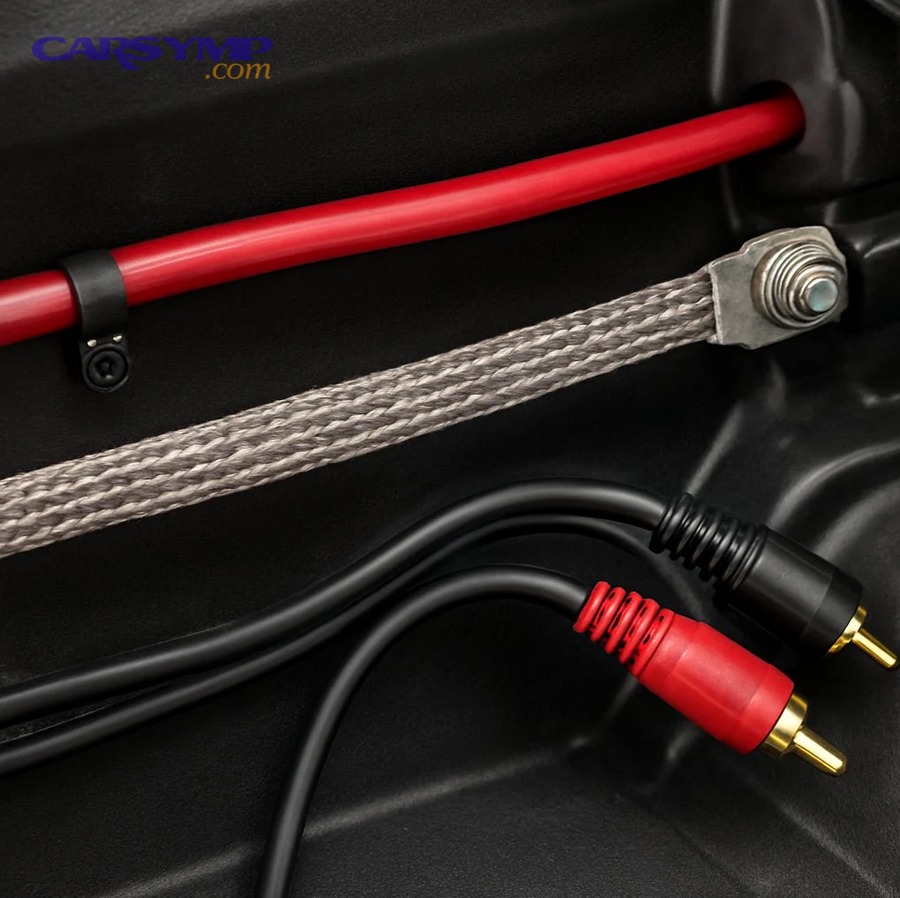
More specifically, this kind of whine usually changes with RPM but is heard through the speakers, not from the front of the engine. It can be caused by grounding issues, signal routing problems, or charging-system electrical noise coupling into the audio path. The key clue is location: if muting the audio system changes the symptom, you are not diagnosing a pulley bearing. This is a classic reason some people chase a whining noise from engine symptoms when the engine itself is not creating the sound.
What Is the Difference Between a Cold-Start Whine and a Warm-Engine Whine?
A cold-start whine often points more strongly to fluid viscosity, belt stiffness, or temporary circulation issues, while a warm-engine whine more often points to persistent wear or load-related faults.
Specifically, NHTSA-posted steering bulletins show that some steering-noise complaints become more apparent in extreme cold, which supports the idea that temperature-sensitive complaints deserve separate treatment from warm-only complaints. A cold-only whine that fades quickly may still need service, but it tells a different story than a fully warm whine that grows louder after ten minutes of driving. (static.nhtsa.gov)
A good habit is to document exactly how long it takes for the sound to change. “Gone after thirty seconds” is a better clue than “it does it when cold.”
Can A/C Compressor Load or High Electrical Demand Create a Similar Whine?
Yes, A/C compressor load or high electrical demand can create a similar whine because both conditions add load to accessory-drive components and can expose weak bearings, belts, or charging hardware.
For example, switching the A/C on can instantly change the accessory-drive load and reveal a pulley or compressor-related issue. Turning on heavy electrical loads can increase alternator demand and make a noisy alternator more obvious. AAA specifically links engine whine or growl under electrical load to possible alternator trouble, while serpentine-belt guidance explains why increased accessory demand can expose a weak belt-drive system. (aaa.com)
This is why good driveway testing changes one system at a time. If the sound changes the moment A/C engages, that is not a small clue. It is a directional clue.
What Rare Bell Housing or Input Bearing Clues Should You Not Ignore?
The rare bell-housing or input-bearing clues you should not ignore are noises that change with clutch engagement, gear selection, or torque transfer more than with simple free revving.
Thus, if the engine can be revved in Neutral without reproducing the sound, but the noise appears when the drivetrain is engaged, the diagnosis should broaden. A transmission-input or bell-housing-area issue may sound like an engine whine from the cabin, yet the trigger pattern is different. That does not make the accessory-drive suspects impossible, but it does stop you from replacing the obvious part first and the correct part second.
To sum up, an RPM-related whine is not one problem but a clue category. If you classify it by dependency, load, temperature, and location, you can usually narrow the field to the right system quickly. That is the difference between guessing at a sound and diagnosing it.