


When the coolant temperature warning light (engine overheat light) comes on, the safest response is to reduce heat load immediately, pull over as soon as it’s safe, and shut the engine down before high temperature causes permanent damage—then follow a calm, step-by-step cool-down and inspection routine.
Next, it helps to understand what the warning actually means on your car (red vs blue, “TEMP” message vs a gauge climb), because that meaning determines whether you can limp to a safe spot or must stop right now.
Besides the meaning, you also need a practical plan for the most common causes—low coolant from a leak, thermostat issues, radiator fan failure, radiator blockage, or a weak pressure cap—so your next steps after cooling down are targeted instead of random.
Introduce a new idea: the most valuable skill is knowing when to stop troubleshooting and call for a tow, because one extra mile of overheating can cost far more than a tow bill.
Does the Coolant Temperature Warning Light Mean You Must Stop Driving Immediately?
Yes—when the coolant temperature warning light signals overheating, you should treat it as an immediate stop situation because (1) overheating can warp metal quickly, (2) coolant can boil and lose cooling ability, and (3) continuing to drive can turn a small cooling issue into engine failure.
Then, the key is to translate that urgency into safe actions rather than panic braking in traffic.
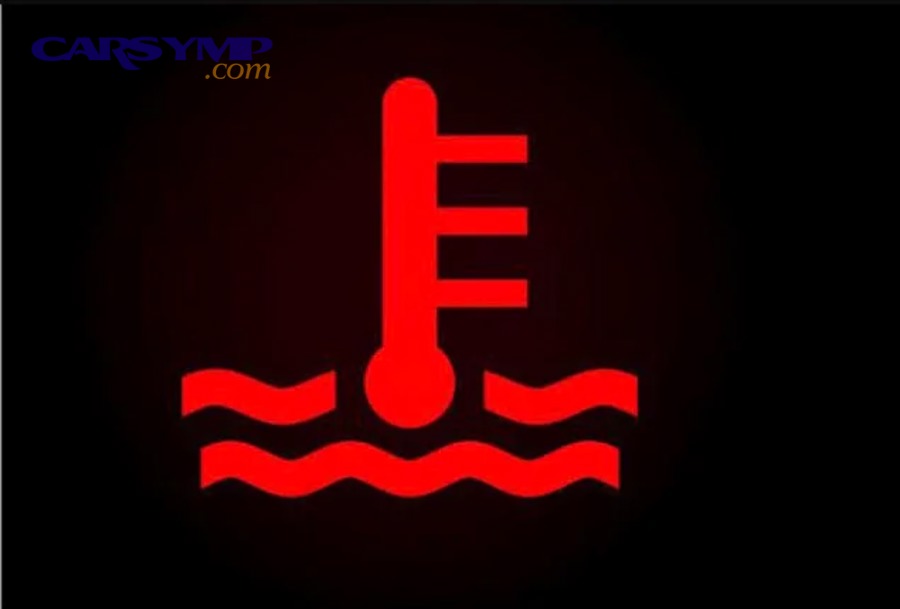
In real driving, “stop immediately” does not mean “slam the brakes.” It means you prioritize a safe place to pull over within the next minute or two while you reduce heat load (turn off A/C, ease off throttle) and prepare to shut down. Heat damage doesn’t require an hour of overheating—many engines can be harmed by minutes of sustained high temperature, especially if coolant is low or circulation has failed.
A useful mental model is this: the warning light is not telling you to diagnose; it’s telling you to protect the engine first. Diagnosis happens after the engine is safe and cooling.
Is it safe to drive if the light turns off after a minute?
No—if the coolant temperature warning light turns off after a minute, it still indicates a real overheating trigger because (1) temperature can spike and drop quickly with airflow changes, (2) sensors and clusters may “average” readings, and (3) intermittent overheating often means low coolant or a fan/thermostat issue that will return.
However, the moment it turns off can feel reassuring, so you need a simple rule to keep you anchored.
Treat “light came on, then off” as a near-miss. Your safest move is to continue to a safe pull-off (shoulder, parking lot, exit ramp) at gentle load and then stop and cool down. If you ignore it and resume normal driving, the same trigger can come back harder—especially at the next stoplight (fan problem) or the next hill (low coolant or pump issue).
What’s happening mechanically is predictable:
- Airflow masks the problem. At highway speed, airflow through the radiator can temporarily compensate for a weak fan or marginal coolant level.
- Idle exposes the problem. At low speed or stopped, the system relies more on the cooling fan and correct coolant volume.
- Heat soak makes it worse. When you shut off and restart without a proper cool-down, trapped heat can spike temperature again.
So, “light went off” is not a green light—it’s a warning that you still have time to prevent damage if you act conservatively.
Should you shut the engine off right away or idle first?
Idling wins when you need 30–60 seconds to stabilize and position the car safely, but shutting the engine off is best for preventing damage once you’re safely stopped and the temperature is truly high.
Meanwhile, your decision should be based on what you see and feel, not on hope.
Use this comparison logic:
- Idle briefly (only if you must):
- You’re still moving into a safer spot (narrow shoulder, curve, no refuge).
- Temperature is rising but not pegged, and there’s no heavy steam cloud.
- You need a short moment for airflow while you signal and maneuver.
- Shut off as soon as you’re stopped (most cases):
- The warning is red / “HOT” / gauge near the top.
- You see steam or smell hot coolant.
- Power feels reduced or the engine sounds rough.
- The temperature climbed rapidly in seconds.
A practical approach: once safely parked, shift to Park/Neutral, set hazards, and shut off the engine. If you keep idling “to cool it,” you can worsen the situation if coolant is low or circulation has failed; the engine continues generating heat, and there may be no effective way to remove it.
What Should You Do First When the Engine Overheat Light Comes On While Driving?
The best method is a 6-step response—reduce load, increase cabin heat sink, find a safe pull-off, stop, shut down, and begin a timed cool-down—so you lower temperature quickly while protecting yourself and the engine.
To begin, treat this like a roadside safety event first and a mechanical problem second.
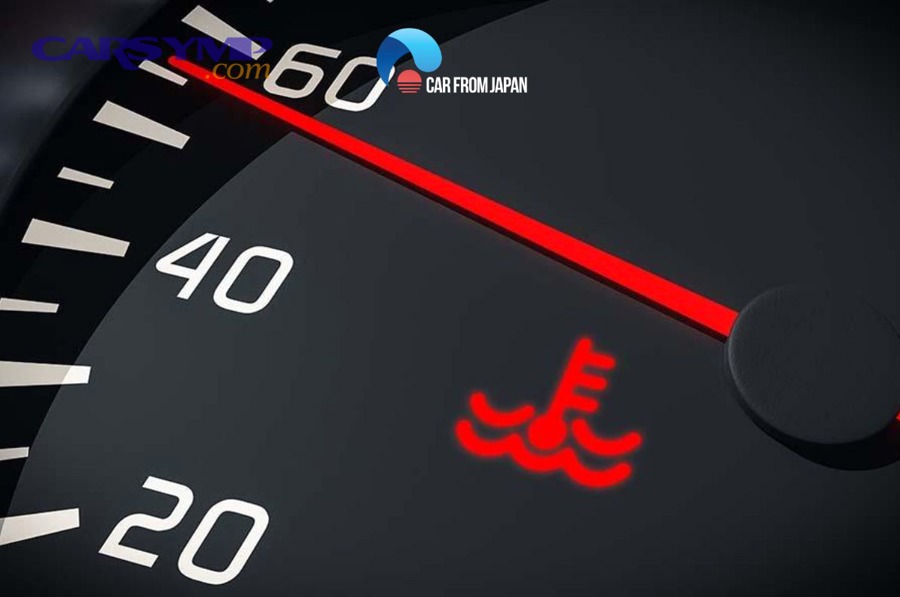
Step-by-step (do this in order):
- Turn off the A/C. A/C adds load and heat to the cooling system.
- Ease off throttle. Avoid hard acceleration, hills, and high RPM.
- Turn the heater to full HOT and fan to high (if safe). This pulls heat from coolant into the cabin.
- Signal early and move to a safe stopping place. Choose a parking lot, wide shoulder, or exit.
- Stop, hazards on, and shut off the engine. Prevent further heat generation.
- Wait and cool down before opening anything. Your next steps happen after temperature drops.
This is the “protect the engine and your skin” workflow. You can’t win an overheating event by racing to the destination; you win by stabilizing temperature and preventing the conditions that bend metal, blow hoses, or scald hands.
Should you turn the A/C off and turn the heater on to full hot?
Yes—turning the A/C off and the heater on full hot helps because (1) it reduces engine load, (2) it turns the heater core into a small radiator, and (3) it can slow or reverse a rising temperature long enough to reach a safe pull-off.
Specifically, the heater is a controlled way to dump heat when the cooling system is still circulating coolant.
Turning the heater on is not magic, but it’s often effective when overheating is caused by marginal cooling capacity—like a weak fan, partially blocked radiator, or heavy load in hot weather. You may feel uncomfortable, but discomfort is cheaper than damage.
Use it wisely:
- Turn the fan high and temp to max heat.
- Crack windows to vent the heat.
- Keep your driving gentle—no hard acceleration.
Important caution: if the heater blows cold air while the engine is overheating, that can be a clue that coolant is very low or not circulating. In that case, the heater trick may not work, which is even more reason to pull over and shut down quickly.
Should you keep the car moving to get airflow or pull over immediately?
Pulling over wins for safety and engine protection, while “keeping it moving for airflow” only helps in narrow situations—so the correct choice is to pull over as soon as you can do so safely.
However, the airflow idea is tempting, so it needs boundaries.
If you are in heavy traffic with no shoulder, gentle movement toward an exit can be reasonable only if:
- The gauge is rising slowly, not pegging.
- You have no steam cloud and no warning chime escalation.
- You can reach a safe stop in under a couple minutes at low load.
But if the temperature is climbing quickly, you’re seeing steam, or the warning is severe, the correct move is to stop at the earliest safe spot even if it’s not perfect—because once coolant boils or circulation stops, additional driving can accelerate damage.
What Are the Biggest “Don’ts” During an Overheat Event?
There are 6 major “don’ts” during a coolant temperature warning: don’t open caps hot, don’t keep driving normally, don’t pour cold water on a hot engine, don’t rev to “cool it,” don’t ignore repeated warnings, and don’t use stop-leak as a first move—because each one increases injury risk or engine damage.
More importantly, these mistakes are common because they feel like quick fixes.

Here’s why these “don’ts” matter: overheating creates pressure + temperature + fragile materials. Hoses soften, plastic tanks expand, caps hold pressure, and boiling coolant can flash into steam. The goal is to reduce heat and pressure gradually, not violently.
Should you ever open the radiator cap or coolant reservoir cap when it’s hot?
No—you should not open the radiator cap or coolant reservoir cap when it’s hot because (1) the system is pressurized, (2) hot coolant can erupt and cause severe scalds, and (3) sudden depressurization can trigger boiling and overflow.
In addition, opening a hot cap often doesn’t “solve” the overheating—it just adds danger.
Follow a safe cap rule:
- Wait at least 30 minutes after shutdown (longer in extreme heat).
- Only approach the cap when there is no steam and the upper hose is not rock-hard.
- If your car uses a pressurized reservoir (common on many vehicles), treat that cap with the same respect as a radiator cap.
If you must check levels later, do it when the engine is cool to the touch, not just “cooler than before.”
Is adding water a safe emergency fix? Coolant vs water vs “stop-leak.”
Water can be a temporary emergency fix, but coolant mix is best, and stop-leak is the least reliable option—because (1) water lacks corrosion protection and boiling margin, (2) proper coolant maintains freeze/boil protection, and (3) stop-leak can clog small passages and complicate repairs.
Especially, what you add should match the situation you’re actually in.
Use this comparison:
- Best: Correct premixed coolant (or concentrate mixed with water to the right ratio).
- Good emergency option: Clean water (preferably distilled) to restore circulation and prevent an immediate overheat.
- Avoid as a first move: Stop-leak products unless you are stranded with no alternative and accept possible downstream issues.
If coolant is low because of a leak, topping up is not a “repair.” It is a controlled way to regain temperature stability long enough to reach service—if the system can hold enough fluid to circulate.
Also, never pour very cold water into a very hot engine rapidly. Thermal shock is a real risk for hot components, and rapid cooling can crack or stress parts depending on materials and conditions.
After You Stop: What Is the Safest Cool-Down and First Inspection Routine?
The safest routine is to cool down first, then inspect second: wait, vent heat safely, check for obvious leaks, confirm coolant level only when cool, and restart only if temperature remains stable—because rushing the inspection increases burn risk and hides the real cause.
Next, treat the cool-down as an active process you manage, not just “waiting around.”
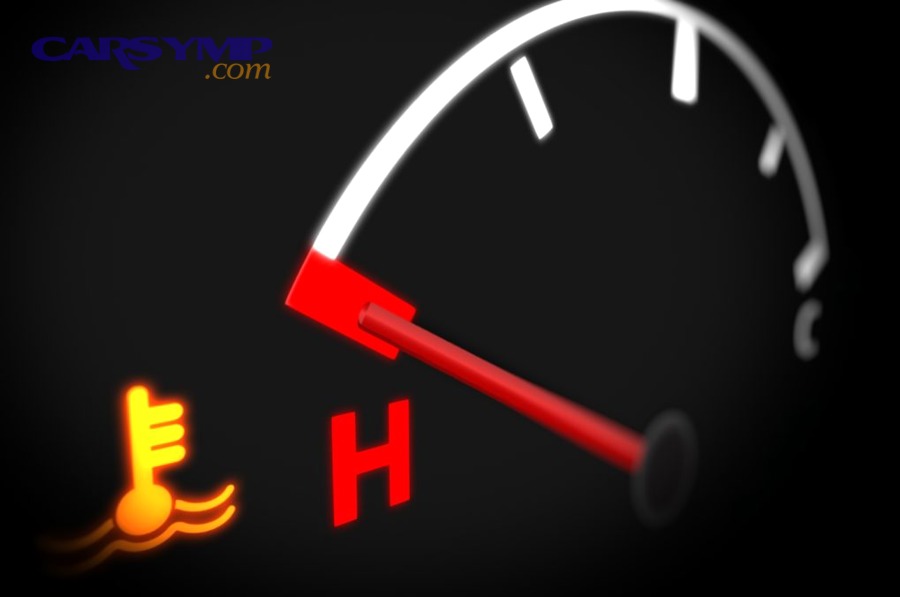
A good cool-down and inspection routine has three goals:
- Protect you from burns and traffic hazards.
- Protect the engine from continued heat soak.
- Collect enough clues to decide “drive a short distance” vs “tow.”
How long should you wait before checking under the hood?
You should wait at least 30 minutes before checking under the hood because (1) pressure needs time to drop, (2) metal and coolant temperatures remain dangerous after shutdown, and (3) a calm inspection is more accurate than a rushed one.
Then, use visible cues to decide if you should wait longer.
Practical cues that it’s still too hot:
- Steam continues to billow or hiss.
- The temperature gauge stays high (if the ignition is on).
- You smell strong hot coolant and see wet areas near the radiator or reservoir.
- The upper radiator hose feels extremely firm (pressure retained).
While waiting, you can do useful things safely:
- Put on hazard lights and set triangles/flares if you carry them.
- Call roadside assistance.
- Note exactly what happened: speed, outside temp, A/C on/off, how fast the gauge climbed.
Those details often speed up diagnosis later.
What quick checks can you do without tools?
There are 7 quick checks you can do without tools: look for puddles, smell for sweet coolant odor, check reservoir level (when cool), inspect hoses visually, check belt condition, watch cooling fan behavior, and scan the dash for additional warnings.
More specifically, these checks help you classify the problem into “likely leak,” “likely airflow/fan,” or “likely circulation.”
1) Look under the car
- Fresh puddles (green/orange/pink/blue) suggest a coolant leak.
- Clear water could be A/C condensate (normal), but don’t assume—use smell and color.
2) Smell the air
- Sweet odor often indicates coolant vapor.
- Burnt smell could be oil, belt slip, or overheated plastic.
3) Check the coolant reservoir level (engine cold)
- If it’s below MIN or empty, low coolant is likely.
- If it’s overfull or bubbling after cooldown, that’s a red flag for pressure/boiling issues.
4) Inspect hoses and connections visually
- Look for splits, wet hose ends, crusty residue, or spray patterns.
5) Check the serpentine belt
- A slipping or broken belt can stop the water pump (on many engines) and cause overheating.
6) Observe the radiator fan (when safe)
- Fans should typically run when the engine is hot or A/C is on (varies by vehicle).
- If it never runs in hot conditions, fan circuit issues are likely.
7) Check other warnings
This is where basic dashboard warning lights diagnosis matters: if you also see oil warnings, charging warnings, or power reduction messages, you might have a broader problem. For example, Oil pressure light vs oil level warning can change the decision to restart: low oil pressure can create heat and engine damage even if coolant is fine.
What Causes the Coolant Temperature Warning Light to Come On Most Often?
There are 5 main causes of a coolant temperature warning light—low coolant/leaks, thermostat problems, radiator fan failure, restricted radiator flow, and water pump or belt issues—based on whether the system lacks coolant, lacks airflow, or lacks circulation.
To better understand the fix, you need to match the cause to the pattern you experienced.
Overheating is rarely mysterious when you classify it correctly:
- Low coolant/leak: not enough fluid to carry heat away.
- Airflow problem (fan/radiator): heat can’t leave the radiator effectively.
- Circulation problem (thermostat/pump): coolant isn’t moving through the radiator at the right time.
Is low coolant usually the main cause ?
Yes—low coolant is one of the most common triggers because (1) leaks are common in aging hoses and plastic tanks, (2) even small leaks reduce cooling margin, and (3) low coolant can introduce air pockets that disrupt circulation.
Besides, low coolant leaves the clearest physical clues if you know where to look.
Signs that strongly suggest low coolant:
- Reservoir is below MIN (checked only when cool).
- You find a puddle or dried crusty residue near hose ends, radiator seams, or the water pump area.
- The heater output becomes weak or fluctuates.
- The warning appears after a longer drive or during a climb (heat load rises), then improves with light driving.
If coolant is repeatedly low, do not treat topping up as the solution. Topping up is a temporary stabilization, and the real solution is finding and repairing the leak.
How do you compare thermostat vs fan failure symptoms?
Thermostat issues show up as temperature spikes tied to coolant flow timing, while fan failures show up as overheating at idle or low speed—so thermostat wins the “highway then sudden spike” pattern, and fan failure wins the “city driving and stoplights” pattern.
However, both can overlap, so patterns matter.
The table below compares thermostat vs radiator fan failure symptoms so you can match what you felt on the road to the most likely cause.
| Symptom pattern | More consistent with thermostat issue | More consistent with fan issue |
|---|---|---|
| Overheats mostly at stoplights / idle | Sometimes | Often |
| Overheats mostly at highway speed | Sometimes (if stuck closed or restricted flow) | Less common |
| Temperature swings up/down rapidly | Often | Sometimes |
| Heater goes cold while engine is hot | Can happen (air pocket / flow issue) | Less common |
| Turning heater on helps a lot | Sometimes | Often |
A thermostat that sticks closed can cause a fast, severe overheat. A fan that doesn’t run can cause a slower rise that becomes obvious when airflow drops. In either case, the correct response during the warning remains the same: reduce load, pull over, shut down, cool down, and then diagnose.
Can You Keep Driving After an Overheat Warning, or Should You Tow?
Towing is the safer default after an overheat warning because (1) repeated overheating multiplies damage risk, (2) a leak can empty the system suddenly, and (3) you can’t confirm internal damage from the roadside—but a very short, cautious drive can be acceptable if temperature stays stable and there are no severe red flags.
Especially, your decision should be based on observable criteria, not on distance left to home.
This is where many drivers gamble. A gamble can work once and fail the next time. So use a clear decision rule.
Should you tow if there’s steam, a puddle, or the temp pegs quickly?
Yes—you should tow if there’s steam, a puddle, or the temperature pegs quickly because (1) active boiling means cooling has failed, (2) a visible leak can drop coolant to zero fast, and (3) pegged temperature indicates high risk of head gasket or warping damage.
More importantly, towing is the cheapest option when the alternative is engine repair.
Tow/stop-now red flags:
- Thick steam cloud from the engine bay.
- Coolant pouring or spraying.
- Temperature warning returns immediately after restart.
- Engine runs rough, knocks, or loses power.
- You see multiple warnings at once (overheat + oil pressure + battery/charging).
This is also where “other warning lights” matter. If you’re already dealing with TPMS warning light troubleshooting on a long trip, that’s usually safe to postpone; an overheat warning is not.
Is it okay to drive to a shop if the coolant level is restored and temperature stays normal?
Yes—sometimes it’s okay to drive a short distance to a shop if coolant level is restored and temperature stays normal because (1) the system may have had a minor low-level event, (2) stable temperature suggests cooling capacity is sufficient at light load, and (3) immediate professional inspection can prevent recurrence—but only under strict limits.
In addition, your driving plan must be built around stopping quickly if the temperature rises again.
Use strict limits:
- Drive only a short distance (think: local streets, not a 30-mile highway run).
- Keep speed moderate and avoid hills.
- Keep the heater on if it helps.
- Watch the gauge continuously; if it rises again, stop immediately.
If you need to add coolant/water to make the car drivable, bring extra premix (or water) and plan a route with safe pull-offs. If you can’t keep temperature stable, stop and tow.
How Can You Tell if Overheating Caused Damage (and what symptoms are red flags)?
You can suspect overheating damage if you see persistent coolant loss, white exhaust smoke, milky oil, repeated overheating, rough running, or overheating immediately after restart—because these signs indicate internal leaks, warped surfaces, or compromised sealing.
Then, your job is to distinguish “scary but normal after heat” from “stop driving now.”
Some symptoms appear right away (misfire, steam), while others appear later (coolant disappearing, oil contamination). The earlier you catch them, the better.
Are white exhaust smoke and “milky oil” always a head gasket problem?
No—white exhaust smoke and milky oil are not always a head gasket problem, but they are serious red flags because (1) coolant entering the combustion chamber creates persistent white vapor, (2) coolant mixing with oil creates a milky emulsion, and (3) both conditions reduce lubrication and can destroy bearings quickly.
However, you should treat them as “do not keep driving” until proven otherwise.
Context matters:
- A small puff of white vapor on a cold morning can be normal condensation.
- Persistent thick white smoke after warm-up is not normal.
- Milky residue only on the oil cap can sometimes be condensation from short trips, but milky oil on the dipstick or rising oil level is more concerning.
If you suspect internal coolant-oil mixing, the safest move is to avoid driving and get a professional inspection (pressure test, combustion gas test, scan data review).
What should you monitor for the next 24–72 hours after an overheating event?
You should monitor 8 items for 24–72 hours: coolant level, temperature behavior, leaks, heater performance, oil condition, idle quality, warning light recurrence, and odors—because delayed symptoms often reveal whether the root problem was a leak, airflow issue, or internal damage.
To illustrate, monitoring turns “I think it’s fine” into real evidence.
Use this checklist:
- Coolant level (engine cold): Does it drop below MIN again?
- Temperature stability: Does the gauge climb higher than normal in traffic?
- Visible leaks: Any new puddles or wet areas after parking overnight?
- Heater output: Consistent heat usually implies circulation; inconsistent heat can signal air pockets.
- Oil appearance: Check dipstick for milkiness; watch for rising oil level.
- Engine behavior: Any new misfires, rough idle, or hesitation?
- Warning lights/messages: Do you see the overheat warning again? Any new warnings?
- Smells: Sweet coolant smell or burning odor after drives.
If any of these worsen, treat it as an unresolved issue—not as “it’s probably okay.”
How Can You Prevent Coolant Temperature Warnings and Avoid Repeat Overheating?
You can prevent most coolant temperature warnings by maintaining coolant quality and level, ensuring airflow and pressure integrity, and validating temperature readings—because overheating usually comes from neglected coolant, small leaks, weak caps, or failing fans that give early warnings before a breakdown.
Next, prevention works best when you focus on the few parts that quietly control the entire system’s margin.
Below are four prevention angles that expand your semantic coverage beyond “what to do right now,” while still keeping the advice practical.
What maintenance prevents overheating best: coolant flush intervals, cap testing, and hose inspection?
- Coolant service: Follow your vehicle’s interval; old coolant loses corrosion inhibitors, increasing radiator and water pump wear.
- Hose inspection: Look for swelling, soft spots, cracking, and wet ends at clamps.
- Pressure cap condition: Replace a weak cap proactively if it no longer holds pressure; a cap is cheap compared to an engine.
- Radiator and condenser cleaning: Remove debris from fins carefully; airflow matters as much as coolant.
- Fan function check: Confirm fans run when the engine is hot and when A/C is engaged (varies by model).
- Belt health: A worn belt can slip under load and reduce pump output on systems where the pump is belt-driven.
A small habit that prevents big problems: once a month, do a quick under-hood scan and a cold coolant level glance. That one-minute check catches slow leaks before they become overheats.
How do you compare coolant temperature readings: dashboard gauge vs scan tool ECT vs infrared thermometer?
Dashboard gauges are simplified for stability, scan-tool ECT data is the most direct sensor reading, and infrared thermometers measure surface temperature—not coolant—so scan-tool ECT is best for diagnosis, the gauge is best for quick monitoring, and infrared is best for spot-checking hotspots.
However, the three tools become powerful when you compare them correctly.
- Dashboard gauge: Often “damped,” meaning it stays near the middle across a range to avoid alarming drivers. It can hide early overheating trends.
- Scan tool ECT (Engine Coolant Temperature): Reads the sensor value the ECU uses for fuel, fan control, and protection strategies. Best for seeing real numbers.
- Infrared thermometer: Measures what it “sees” on the surface—useful on radiator inlet/outlet tanks or thermostat housing, but it’s sensitive to emissivity and angle.
A real-world takeaway: if your gauge looks normal but the scan tool shows unusually high ECT, you may be dealing with a cluster/gauge behavior issue—or you may be catching overheating early.
According to a study by the University of Eastern Finland from the Department of Technical Physics, in 2023, after a cold start the engine coolant in their real-world winter measurements needed nearly the entire 13.8 km drive (about 19 minutes) to reach >60°C, showing how slowly coolant temperature can change and why numeric ECT data can clarify what the dashboard is smoothing over.
Why does the radiator cap matter (pressure, boiling point, and “mysterious” coolant loss)?
The radiator cap matters because it holds system pressure, raises the coolant’s boiling point, and controls overflow/return flow—so a weak cap can allow boiling and coolant loss even when the radiator and hoses look fine.
More importantly, cap problems often look like “random overheating” because they are inconsistent.
When pressure drops, coolant can boil at a lower temperature, creating vapor pockets that reduce heat transfer. Boiling also pushes fluid into the overflow tank; if the cap can’t manage return flow properly, you can end up with low coolant later.
Practical cap-related clues:
- Coolant smell without obvious leaks.
- Coolant pushed into overflow repeatedly.
- Overheating only under high load or heat, then “fine” later.
A cap is not glamorous, but it is a core control valve of the entire cooling system.
What’s different on hybrids/EVs with coolant temperature warnings and multiple cooling loops?
Hybrids and EVs can have multiple cooling loops (engine, inverter, battery, cabin systems), electric coolant pumps, and different protection strategies—so a coolant temperature warning may involve non-engine components, and the safest response is still to reduce load, stop safely, and follow the vehicle’s warning guidance.
Especially, the message on the screen can be more specific than a generic “hot” light.
Key differences you may notice:
- Electric pumps: Cooling can be controlled differently than belt-driven systems.
- Multiple temperature sensors: The car may warn about inverter or battery cooling, not just engine coolant.
- Power limiting (“limp mode”): The vehicle may reduce power automatically to prevent damage.
- Service procedures: Some systems require specific bleeding or fill procedures to avoid air pockets.
Because these systems vary by model, don’t rely on guesswork. Follow the vehicle’s instructions, and if the warning persists, get professional service.