


A no-start can be ECU-related, but it’s rarely the first thing you should blame—because a weak battery, bad grounds, fuel delivery, spark, or security lockouts can create the same “dead engine” outcome. The goal is to prove (or disprove) ECU involvement with objective tests, not assumptions.
Next, you’ll learn the difference between crank-no-start, no-crank, and start-then-stall, because each pattern points to a different set of likely causes—and only some of them truly implicate the ECU.
Then, we’ll walk through the most common no-start ECU-related causes (power/ground, sensor inputs, CAN/network, internal hardware, and software/programming). You’ll also see where immobilizer authorization fits, since modern vehicles can “block start” even when the ECU itself is healthy.
Introduce a new idea: once you can recognize the starting pattern and gather hard data, ECU diagnosis becomes a step-by-step process you can document—so you don’t waste money on unnecessary parts or the wrong repair path.
Can ECU-related issues really cause a no-start, and how do you prove it?
Yes—ECU-related issues can cause a no-start because the ECU is the decision-maker for fuel, spark, throttle, and sometimes starter authorization; however, you prove it only when (1) power/ground integrity checks pass, (2) inputs look plausible, and (3) outputs/communication are missing in a way that can’t be explained by simpler faults.
More importantly, the trick is to eliminate look-alikes first, because low voltage and network faults can impersonate ECU failure.
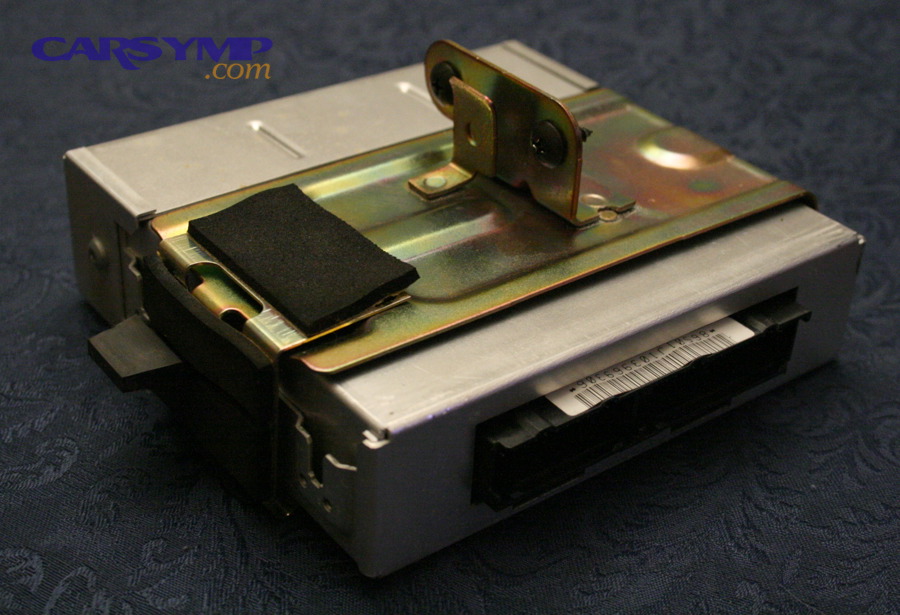
Is a no-start usually ECU-related or power/fuel/spark-related?
Most no-starts are power, fuel, spark, air, or security-related, not a “dead ECU.” The ECU is often blamed because it sits at the center of the system, but it depends on basics that fail more often.
- Battery and cranking voltage (a weak battery can drop below the ECU’s stable operating threshold during crank)
- Power distribution (blown fuses, failing relays, corroded fusebox feeds)
- Fuel delivery (pump, filter restriction, low pressure, injector power)
- Ignition/spark (coil feed, crank signal missing, ignition driver control inhibited)
- Air/engine mechanical (flooded engine, low compression, jumped timing, severe vacuum leaks)
To illustrate, a crank-no-start with normal cranking speed is frequently fuel/spark/input related. A no-crank is more often starter circuit, neutral safety, brake switch (push-to-start), battery cables, or immobilizer/starter authorization related.
Can a bad ground or low voltage mimic ECU failure?
Yes—bad grounds and voltage drops are the #1 ECU impersonators because they can cause intermittent resets, lost communication, and nonsense sensor readings that look like ECU chaos.
Specifically, watch for these classic mimics:
- Dash lights flicker while cranking
- Scanner connects sometimes, then drops
- Multiple unrelated modules show low-voltage codes
- Random “implausible signal” codes across many sensors
- Starter cranks slow or changes speed during crank
A key concept is testing voltage under load, not just “12.6V at rest.” A cable can read fine with no load but collapse when the starter draws hundreds of amps.
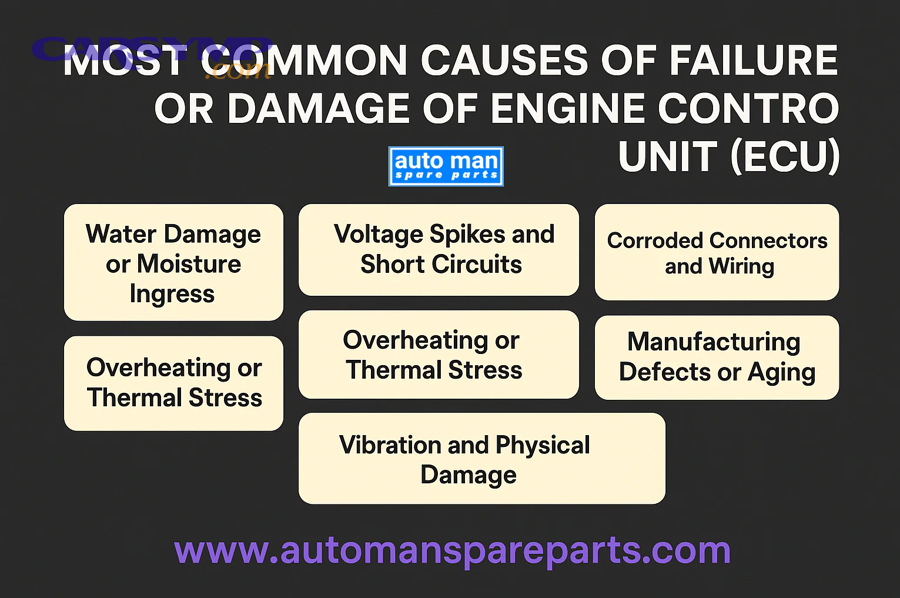
What “hard evidence” points to ECU as the root cause?
Hard evidence means findings that remain after you eliminate basics. The strongest ECU-focused indicators include:
- Verified ECU power and ground integrity (under load)
- All required B+ feeds present
- Ignition/switched feed present (if applicable)
- Grounds show minimal voltage drop during cranking
- No communication with ECU when other modules communicate normally
- Scanner can access BCM/ABS, but ECU is missing
- Network checks point to ECU pulling the bus down (or ECU is bus-off)
- Inputs are present, but commanded outputs never occur
- Crank signal is present and plausible
- ECU sees RPM during crank
- Yet injectors/spark are not commanded (and immobilizer authorization is confirmed)
- Repeatable failure pattern tied to heat, moisture, or vibration
- Starts cold, fails hot
- Fails after rain/car wash
- Fails when harness is moved
- Known-good substitution or bench test confirmation
- A tested ECU (or cloned replacement) resolves the issue
- Bench testing confirms internal driver failure or corrupted memory
If you can’t check at least the first two categories, you’re still guessing—not diagnosing.
When should you stop testing and call a specialist?
You should escalate when:
- You’ve confirmed power/grounds and still have no ECU communication
- You suspect CAN bus faults (requires waveform/termination checks)
- Immobilizer/security requires dealer-level tools or secure access
- The vehicle is late-model with module coding dependencies
At that point, you’re not “giving up”—you’re avoiding costly trial-and-error. A specialist can perform ECU diagnosis (including pin-level verification, network isolation, and module testing) faster and with less risk of collateral damage.
What does “no-start ECU-related causes” mean in plain English?
“No-start ECU-related causes” means the engine won’t start because the ECU can’t power up correctly, can’t trust its inputs, can’t communicate, or can’t legally authorize start—so it withholds fuel/spark/throttle (or the start request never reaches it).
In addition, the phrase includes scenarios where the ECU is functional but its software/configuration or immobilizer link prevents start.
What an ECU actually controls during cranking and start-up
During crank and initial fire, the ECU typically:
- Reads crankshaft position (CKP) and often camshaft position (CMP) to determine timing
- Calculates injector pulse width (fuel) and ignition timing (spark), or commands a separate ignition module
- Controls idle air strategy (throttle body or IAC) to stabilize first combustion events
- Monitors voltage, reference circuits, sensor plausibility, and may enter failsafe modes
- Communicates with other modules (BCM/immobilizer, gateway, transmission) depending on architecture
So if the ECU can’t determine engine position (no CKP), it often won’t trigger fuel/spark. If it’s rebooting due to low voltage, it may “never stay alive” long enough to start.
What “no start” patterns matter: crank-no-start vs no-crank vs start-then-stall
This distinction changes everything:
- Crank-no-start: starter turns engine normally, but it won’t fire
Likely: fuel/spark/air/inputs/security authorization. - No-crank: starter doesn’t turn the engine (or only clicks)
Likely: battery/cables/starter circuit/neutral safety/push-button authorization. - Start-then-stall (fires briefly): engine catches then dies
Likely: immobilizer authorization failure, fuel cut strategy, throttle/air control issues, or major sensor plausibility conflict.
Matching your tests to the pattern prevents the classic mistake: replacing the ECU for a no-crank that’s really a battery cable problem.
How immobilizer and ECU authorization can block starting
Modern vehicles often require a “handshake” among the key (or fob), immobilizer/BCM, and ECU. If authorization fails, the engine may:
- crank but have no injector pulse
- start briefly and stall
- display a security light and store immobilizer-related codes
This is where many drivers misread the symptoms as ECU failure. The ECU may be doing exactly what it’s programmed to do—refusing to start without authorization.
What are the most common ECU-related no-start causes?
There are 5 main types of ECU-related no-start causes: (1) ECU power/ground supply issues, (2) critical sensor input faults, (3) communication/CAN bus faults, (4) internal ECU hardware failures, and (5) software/calibration/programming problems—grouped by what prevents the ECU from making or executing a valid “start” decision.
Besides, each group leaves different clues in scan data and electrical tests.
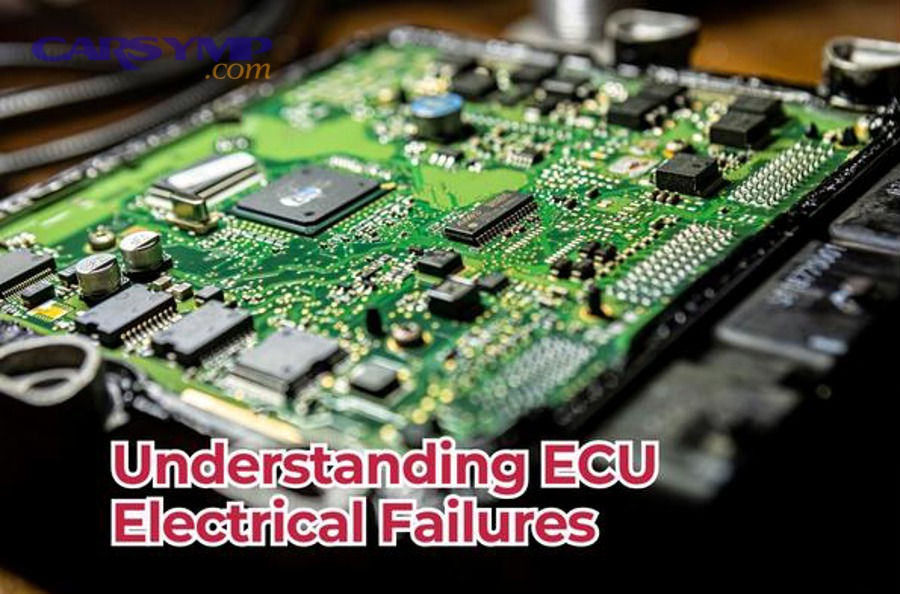
Power and ground supply failures to the ECU
If the ECU can’t stay powered, it can’t start the engine. Common triggers:
- Blown ECU fuse(s) (main B+ or ignition feed)
- Main relay failure (ECU relay)
- Corroded fusebox or water intrusion in power distribution
- High resistance in battery cables, ground strap, or ECU ground splice
- Loose ECU connector pins or fretting corrosion
Practical clues:
- ECU resets during crank (data drops out)
- Communication is intermittent
- Multiple modules show undervoltage codes
A simple but overlooked tactic is a loaded voltage drop test on ECU grounds and power feeds while cranking.
Sensor input faults that prevent start (CKP/CMP, throttle, etc.)
Some sensors are “start-critical.” If their signal is missing or implausible, the ECU may inhibit spark/fuel:
- CKP sensor (often mandatory for spark and injector timing)
- CMP sensor (sometimes required for sequential injection or certain strategies)
- Throttle position / electronic throttle plausibility (can trigger limp strategies)
- Engine coolant temperature (extreme false readings can cause flooding or poor fueling)
- MAP/MAF (less commonly a total no-start alone, but can contribute)
The key is not “a code exists,” but whether the ECU can derive a stable RPM and synchronization during crank. If RPM stays at 0 while cranking, you’re likely chasing CKP power/ground, sensor, wiring, or tone ring issues—not an ECU.
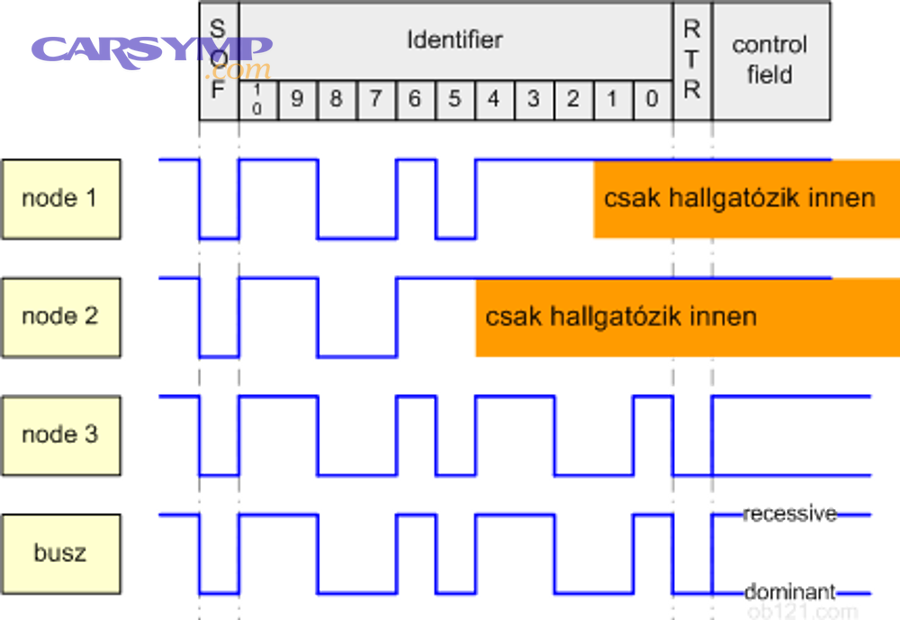
Communication and CAN bus faults (no comm, bus-off)
Modern vehicles are networks. If the ECU can’t communicate—or the network is shorted—no-start can result because:
- Start authorization doesn’t reach the ECU
- The ECU goes bus-off or is “invisible” to the scanner
- A shorted module/harness segment collapses CAN voltages and disrupts multiple modules
Common causes:
- Water intrusion in a connector
- Harness chafing near the engine/transmission
- Aftermarket accessories tied into CAN lines
- Faulty module pulling the network down
According to a study by Zhejiang University from the State Key Laboratory of Fluid Power and Mechatronic Systems, in 2024, researchers demonstrated a method that could correctly localize intermittent short-circuit faults in CAN networks across different topologies using testbed case studies.
Internal ECU hardware failures (water intrusion, cracked solder, driver failure)
When the ECU itself fails internally, you may see:
- Persistent no communication even with verified powers/grounds
- Burnt smell, visible corrosion, green/white residue on pins
- Repeated failure after rain or humidity exposure
- Output driver failures (injector, coil, relay control drivers)
High-risk environments include ECUs mounted low in the engine bay, under cowl areas, or in places with known water paths.
According to a study by University of Maryland from the Mechanical Engineering Department, in 2019, researchers noted that molded ECU designs using epoxy molding compound can increase internal stresses during manufacturing and operation—an important reliability factor for electronic packaging under harsh conditions.
Software, calibration, and programming issues (corrupt flash, wrong file)
Not all ECU “failures” are hardware. Common software-related no-start scenarios:
- Corrupted flash (interrupted reflash, low voltage during programming)
- Wrong calibration file (incorrect ECU variant)
- Misconfigured immobilizer alignment after module replacement
- Incomplete coding/adaptation required by the platform
These problems often present as:
- ECU communicates but the vehicle won’t start
- Odd mismatch codes (VIN mismatch, configuration errors)
- Immobilizer/security-related faults after ECU swap
This is where ECU programming and immobilizer pairing become decisive: the ECU can be electrically fine but logically “not allowed” to run the engine.
How do you perform a step-by-step ECU diagnosis for a no-start?
A reliable ECU diagnosis uses 7 steps—starting with battery/cranking fundamentals and ending with network isolation and programming decisions—so you can determine whether the ECU is the cause, a victim, or simply doing what the security logic demands.
To better understand the no-start, each step narrows the fault domain while protecting you from false ECU failure symptoms.
Step 1 — Confirm battery voltage, crank speed, and power distribution
Start with measurable basics:
- Battery resting voltage is informative, but cranking voltage matters more
- Verify the engine cranks at a healthy speed (slow crank can prevent start)
- Check main power distribution points (battery terminals, fusebox feeds)
If the engine cranks slowly, fix that first. ECU logic can’t compensate for insufficient cranking speed on many systems.
Step 2 — Check ECU fuses, relays, and voltage drops under load
Do not stop at “fuse looks okay.”
- Confirm ECU fuses have power on both sides (key on and during crank where applicable)
- Confirm ECU relay operation (listen/feel, measure output)
- Measure voltage drop from battery positive to ECU power pin during crank
This is where many “ECU is dead” conclusions collapse—because the ECU simply isn’t being fed correctly.
Step 3 — Verify ECU grounds and reference voltages
Ground integrity is foundational:
- Measure voltage drop from ECU ground pin to battery negative during crank
- Check 5V reference circuits (shorts can pull down reference and confuse ECU)
If the 5V reference is missing, unplug sensors one-by-one to see if a shorted sensor/harness is dragging it down. This is still not an ECU condemnation—this is identifying why the ECU can’t read inputs.
Step 4 — Scan for codes, live data, and “no communication” clues
Now apply scan logic:
- Can you communicate with the ECU?
- If yes: read codes, monitor RPM during crank, check immobilizer status (if available), check key data PIDs
- If no: confirm other modules communicate; if they do, suspect ECU power/ground/network isolation rather than “scanner issue”
This is where ECU diagnosis becomes evidence-based. You’re looking for a coherent story: does the ECU see crank RPM? Does it show “engine start allowed”?
Step 5 — Validate crank/cam signals and injector/spark commands
If RPM is missing or unstable:
- Test CKP/CMP power/ground and signal integrity
- Confirm wiring condition and connector pin tension
- Verify the tone ring isn’t damaged (where accessible)
If RPM is present but still no start:
- Check whether injectors have power
- Check whether injector pulse is commanded (noid light or scope)
- Check whether coils have power and whether spark is commanded
A big takeaway: the ECU can be healthy while intentionally withholding outputs due to security authorization or critical plausibility failures.
Step 6 — Isolate CAN/network problems and check termination
If communication is erratic or multiple modules are offline:
- Inspect for water intrusion at common connectors and splices
- Check the CAN bus for shorts (to ground, to power, between lines)
- Verify termination behavior (platform-specific, but you’re looking for “network looks normal” vs “collapsed”)
Network faults can masquerade as a dead ECU. If unplugging a suspect module restores communication, you’ve found a bus offender—not necessarily the ECU.
Step 7 — Decide: repair, replacement, programming
Only after you’ve proven the ECU is at fault (or corrupted) should you decide:
- Repair (internal fault repair, driver repair, connector repair)
- Replace (new/reman/used)
- Clone/program (move data and re-establish authorization)
At this stage, you should already have a documented test trail—voltages, communication status, and input/output confirmation—so the next step is a controlled fix, not a gamble.
How do you avoid misdiagnosing the ECU and wasting money?
You avoid ECU misdiagnosis by doing the three “anti-mistake” checks first: (1) loaded voltage-drop tests on powers/grounds, (2) start-pattern matching (no-crank vs crank-no-start vs start-then-stall), and (3) network sanity checks—because these are the top reasons people replace a good ECU.
Moreover, good documentation turns ECU diagnosis from opinion into proof.
What tests you should do before blaming the ECU
Before you accuse the ECU, confirm:
- Battery and cables can support cranking load
- Starter circuit behaves normally (for no-crank complaints)
- ECU has stable B+, ignition feed (if applicable), and clean grounds
- 5V reference isn’t shorted by a sensor or harness
- Immobilizer status isn’t blocking start
- You can communicate with at least some modules to establish baseline network health
If any of these are failing, fix them first. Otherwise, you’re still diagnosing downstream of a power or network problem.
What symptoms are “false ECU failure symptoms”
These are the traps that generate expensive wrong decisions:
- Multiple random codes after a low-voltage event
- Intermittent scanner connection during cranking (often voltage related)
- “No communication” caused by a shorted CAN line elsewhere
- Start-then-stall due to immobilizer denial
- Misfires, rough running, or sensor codes that are actually wiring/ground issues
Treat ECU failure symptoms as hypotheses—not conclusions—until the electrical foundation checks out.
How to document findings to protect yourself at a shop
If you’re working with a shop (or you’re the one writing the work order), keep a simple record:
- Battery voltage at rest and during crank
- ECU power feed voltage during crank
- ECU ground voltage drop during crank
- Scan tool communication results (which modules respond)
- Key PIDs: RPM during crank, immobilizer start allowed/denied (if visible)
- Any isolation steps performed (unplugging sensors/modules)
This documentation helps the shop skip repeated tests and reduces the risk you pay for a replacement ECU when the real issue is a corroded ground splice.
When a second opinion or module testing service makes sense
Consider a second opinion when:
- The shop jumps to ECU replacement without showing power/ground measurements
- The diagnosis relies only on “it has codes” or “it’s common on this model”
- The vehicle needs immobilizer-related work (where mistakes are costly)
Bench testing and module testing services can confirm internal faults, especially if the failure is intermittent or moisture-related.
When is ECU repair vs replacement the right option for no-start problems?
ECU repair vs replacement options depend on (1) the failure type (power/driver/corrosion vs software), (2) security dependencies, and (3) total cost and downtime—because a “cheap” used ECU can become expensive once programming and immobilizer work are added.
Meanwhile, choosing the wrong path can create new no-start issues (coding mismatches, immobilizer denial, configuration errors).
ECU repair vs replacement options: cost, turnaround, success rate
Here’s a practical comparison framework (always confirm for your exact vehicle/platform):
- ECU repair (internal board repair, driver repair, connector repair)
Best when: water intrusion is localized, drivers are repairable, data must be preserved.
Risk: depends on repair quality and whether the root cause (like water path) is fixed. - New ECU
Best when: you want maximum reliability and proper support.
Constraint: may require dealer programming and authorization steps. - Remanufactured ECU
Best when: you want warranty support at lower cost than new.
Risk: quality varies; verify warranty terms. - Used ECU
Best when: older vehicles, limited budget, and programming support is available.
Risk: unknown history + may require cloning/coding/immobilizer alignment.
The “best” option is the one that resolves the no-start without introducing security or configuration problems.
How ECU programming and immobilizer pairing change the decision
Security architecture is often the deal-breaker:
- Some vehicles allow straightforward ECU replacement with programming
- Others require immobilizer alignment or secure gateway authorization
- Some require data transfer (cloning) from the original ECU to preserve keys/immobilizer identity
This is why ECU programming and immobilizer pairing can be the highest-cost part of the job—even if the physical ECU is cheap. Planning for this up front prevents surprise bills and prevents turning one no-start into a bigger no-start.
New vs used vs reman ECU: what changes and what doesn’t
What changes:
- Warranty coverage
- Likelihood of latent internal damage
- Need for programming/coding steps
- Return policies and restocking fees
What doesn’t change:
- The vehicle still requires correct power/ground and a healthy network
- The root cause must be fixed (e.g., water leak, shorted sensor, chafed harness)
- Security rules still apply (a healthy ECU can still refuse to start)
What to ask the shop (warranty, cloning, return policy)
Before authorizing work:
- Will you measure and document ECU powers/grounds and network status first?
- If replacing: how will you handle coding/configuration and security authorization?
- If used/reman: what is the warranty and return policy if it doesn’t solve the issue?
- If repairing: will you address the root cause (water path, harness damage) so the failure doesn’t repeat?
Contextual border: If you’ve followed the steps above, you can usually decide whether the ECU is truly implicated. Next, we’ll expand beyond the ECU itself into the broader “ECU ecosystem” that can still create a no-start—especially in modern, networked vehicles.
What advanced ECU ecosystem issues can cause a no-start in modern vehicles?
Advanced no-start cases often come from the ECU ecosystem—gateways, body modules, security layers, power management, and aftermarket integrations—where the ECU may be healthy but prevented from receiving authorization, waking up correctly, or maintaining network stability.
Especially on newer vehicles, diagnosing the ecosystem is sometimes more important than replacing the ECU.
Body control module, gateway, and network authorization problems
In many platforms, the ECU is not the “top authority.” A gateway or BCM can:
- Control wake/sleep behavior
- Control start request routing
- Enforce secure gateway access
- Block certain functions if authentication fails
If the gateway/BCM is offline or denying authorization, the ECU may never receive a valid start request—even though all ECU power and grounds look perfect.
Security/immobilizer edge cases (key, transponder, sync loss)
Security edge cases include:
- Key transponder recognition failures
- Lost synchronization after low voltage events
- Module replacement without proper alignment procedures
- Intermittent antenna ring or keyless receiver faults
These issues commonly produce crank-no-start or start-then-stall patterns. The safe approach is to use proper diagnostic tooling and follow manufacturer procedures—rather than guessing or swapping modules blindly.
Power management: smart alternator, IBS/BMS, sleep/wake issues
Modern power management systems can cause surprising no-starts:
- Battery monitoring systems can misjudge state-of-charge after battery replacement
- Sleep/wake faults can leave modules in the wrong state
- Voltage stability can be poor under load even when the battery “tests good”
If the vehicle is sensitive to voltage during crank or during wake-up, you can see intermittent no communication events that look like ECU problems.
Aftermarket mods and tuning: reflashes, piggybacks, CAN interceptors
Aftermarket changes can introduce:
- Incorrect or unstable ECU calibrations
- Programming interruptions
- CAN interceptors or accessories that load the network
- Wiring modifications that create high resistance or shorts
If a no-start appeared after modifications, treat that timing as a major diagnostic clue. Returning the vehicle to a known-good baseline often saves time—and avoids replacing parts that aren’t broken.