


When you need a repair right now, the fastest way to get an accurate estimate is to request a line-item quote using a consistent checklist: symptoms, photos, basic scan info, and clear authorization limits—so the shop can price labor, parts, and timeline without guessing.
Next, you’ll learn exactly what information to collect in minutes, how to describe the problem so a mechanic can quote quickly, and which details prevent a vague “come in and we’ll see” response that slows everything down.
Then, you’ll compare the fastest estimate routes—repair shop, mobile mechanic, roadside/tow—so you pick the option that matches your situation, time of day, and whether the car is safe to move.
Introduce a new idea: speed should never trade away accuracy or safety, so the rest of this guide shows you how to get a fast estimate and protect your vehicle (and wallet) while you wait for the final numbers.
What qualifies as an emergency repair estimate, and how fast can you realistically get one?
An emergency repair estimate is a rapid, decision-ready quote that prioritizes safety and drivability, usually delivered in minutes to a few hours depending on access to the vehicle, parts availability, and whether diagnosis requires testing beyond a quick inspection.
To better understand why speed varies, start by separating “fast quote” into two phases: triage pricing (rough range) and confirmed pricing (after diagnosis).
A fast estimate is realistic when:
- The symptom points to a common failure (dead battery, alternator, punctured tire, broken belt).
- The shop can price standard labor and common parts without teardown.
- You provide clear info (vehicle details + symptoms + photos).
A fast estimate is not realistic when:
- The issue is intermittent (random stalling, occasional overheating).
- Multiple systems could be involved (electrical + fuel + ignition).
- The shop must confirm with tests (compression test, fuel pressure test, smoke test, leak-down test).
What you should ask for in an emergency:
- A range immediately (best-case / worst-case).
- A line-item “not-to-exceed” estimate once diagnosis begins.
- A decision checkpoint: “Call me before any work beyond $___.”
What information do you need to get an emergency estimate fast?
You need a compact “estimate packet” with vehicle identity + symptoms + evidence + constraints so a shop can price labor, parts, and risk quickly without chasing you for missing details.
Next, use this exact list—because it reduces back-and-forth and makes your request feel like a standard intake, not a vague panic call.
What vehicle details should you provide first?
Provide:
- Year, make, model, trim (or engine size)
- Mileage (approximate is fine)
- Transmission type (auto/manual)
- Any recent work (battery, brakes, cooling system, tires)
- Your location + whether the car is drivable
This matters because labor times, parts, and even diagnostic steps can change by engine, trim, or model year.
What symptoms matter most for a fast estimate?
Give symptoms in this order:
- Safety symptoms (pulling, grinding, smoke, burning smell, brake pedal behavior)
- Dashboard warnings (check engine, battery, oil pressure, temperature)
- What happened first (the trigger)
- What changed (noise, vibration, power loss, overheating)
Avoid storytelling at first; lead with the most diagnostic detail.
What proof helps the most?
Send:
- 10–20 seconds of video (noise + RPM + dash lights)
- 3–6 photos (leak under car, tire damage, belt area if safe, dash warning lights)
- A screenshot of any scan codes (even from a basic scanner)
The goal is not to diagnose it yourself—it’s to help the shop triage and choose the fastest next step.
Evidence sentence (if there is a source)
According to a study by Harvard Business School, in 2017, callers who signaled they were uninformed about repair prices received higher quotes, while signaling price knowledge reduced that gap—meaning clearer, more specific information can protect you in rushed estimate situations. (library.hbs.edu)
Should you get an estimate from a shop, a mobile mechanic, or roadside/tow service?
Yes—you should choose the estimate source based on urgency and safety, because a shop is fastest for full diagnosis, a mobile mechanic is fastest for common roadside fixes, and tow/roadside is best when the car is unsafe to move.
Next, compare these options using the only three criteria that matter in emergencies: speed to inspection, ability to diagnose, and cost transparency.
Shop estimate: when is it fastest?
A shop is typically fastest when:
- You can get the car there safely.
- The problem needs a lift, specialized tools, or deeper testing.
- Parts availability is the deciding factor.
Shops also tend to provide the most formal line-item estimates—labor rate, hours, parts, shop supplies, and warranty.
Mobile mechanic estimate: when does it win?
A mobile mechanic wins when:
- The likely fix is common (battery, alternator, starter, simple sensor, belt, hose).
- The car is stuck where towing is slow or expensive.
- You need immediate triage to decide tow vs drive.
Mobile estimates can be fast, but you must insist on a line-item breakdown (labor + parts + service call fee).
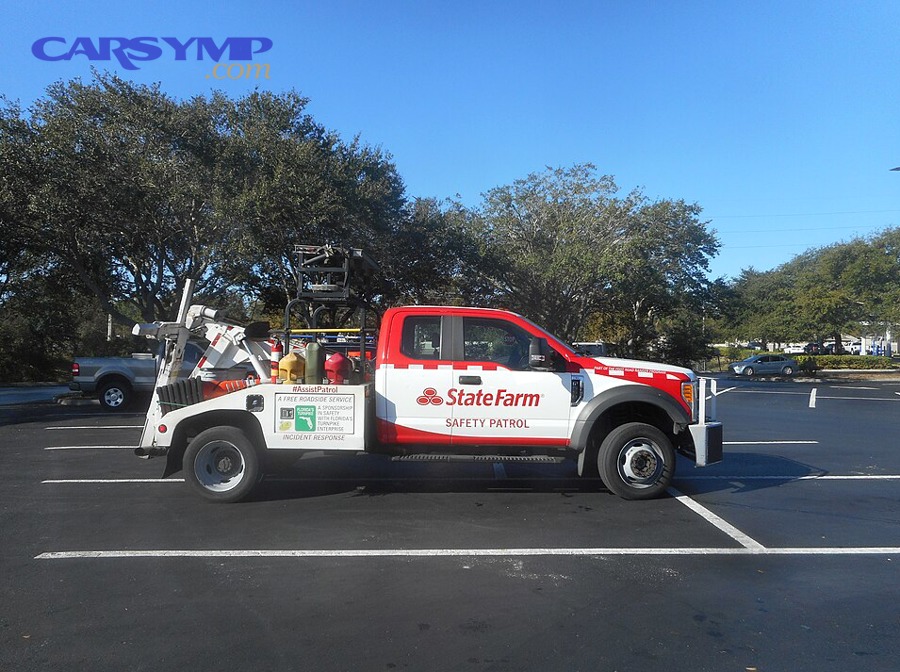
Roadside/tow estimate: when is it the right first call?
Roadside/tow is best when:
- It’s unsafe to drive (brake failure symptoms, overheating, oil pressure warning).
- The car is in a dangerous position.
- You need relocation to a shop before any real estimate is possible.
How do you get an emergency estimate fast in 10 minutes?
Use a 10-minute workflow—document → capture → scan → request line-items → set authorization—to get a quote range fast and a confirmed estimate as soon as diagnosis begins.
Then, follow these steps exactly, because each step reduces uncertainty that slows estimate turnaround.
How do you collect symptoms safely and consistently?
Start with safety, then clarity:
- Pull to a safe spot, hazards on, stay visible.
- Write a 3-line symptom summary:
- “What happened” (e.g., lost power on highway)
- “What I see” (temp gauge high, steam, smell)
- “Current state” (starts/doesn’t start, drivable/not)
Avoid guessing (“I think it’s the fuel pump”). Describe behavior instead.
How do you capture photos/videos that speed up quoting?
Capture:
- Dash lights (photo)
- Leak location (photo from distance + close-up)
- Sound (video: start/idle/rev if safe)
- Tire condition (photo at an angle + tread)
If it’s dark, use a flashlight and avoid crawling under the car.
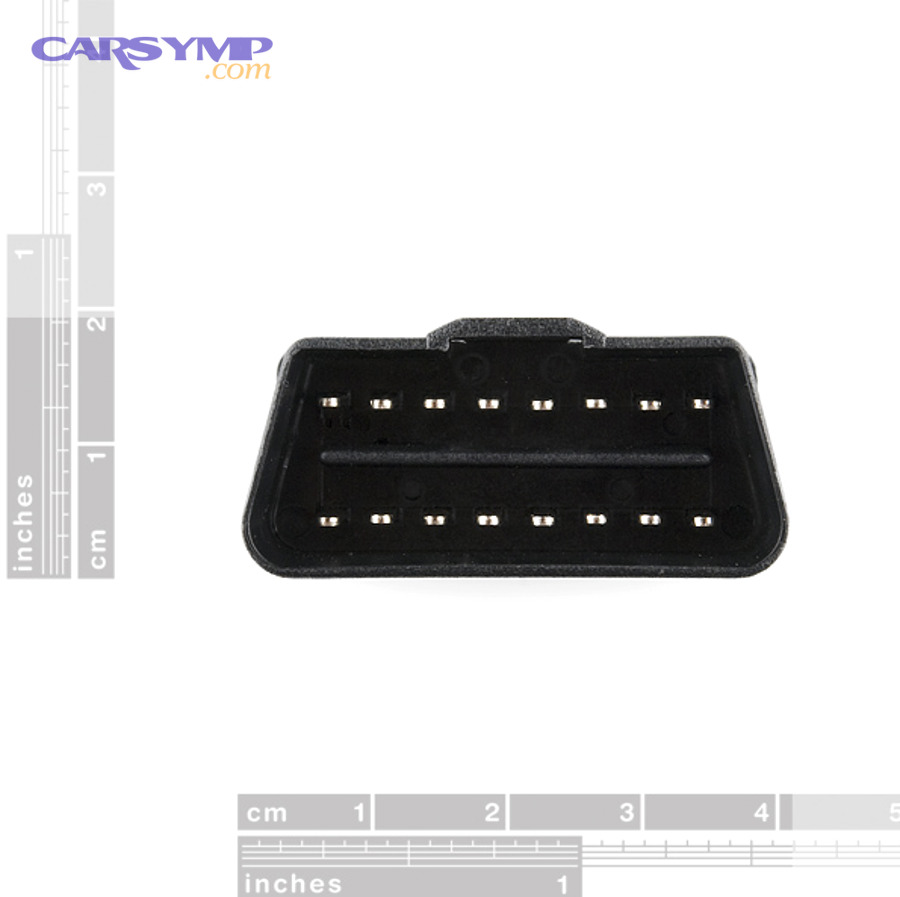
What OBD-II codes matter, and how do you share them?
Share:
- Code(s) (e.g., P0300)
- Freeze frame snapshot if your app shows it (RPM, coolant temp)
- Whether the code is “pending” or “confirmed”
Even if codes don’t identify the exact part, they can narrow labor time and common repair paths.
What questions should you ask for a line-item estimate?
Ask these in one message:
- “Can you provide a line-item estimate (labor hours, labor rate, parts, fees, tax)?”
- “What is your diagnostic fee, and is any of it applied to the repair?”
- “What is the soonest inspection time and expected completion window?”
- “Please don’t proceed beyond $___ without approval.”
If you’re searching emergency car repair near me, copy/paste the same request into 3–5 listings; consistent inputs produce comparable quotes.
What should an emergency repair estimate include (labor, parts, fees, and time)?
An emergency repair estimate should include labor rate + labor hours + parts details + fees + timeline + warranty terms, because these are the quote components that determine the real “out-the-door” price and how quickly you get your car back.

Next, treat the estimate like a checklist—if any line item is missing, the final bill can drift.
What labor details should be itemized?
Look for:
- Posted labor rate
- Estimated labor hours (and whether it’s a flat-rate guide or time-and-materials)
- Separate diagnostic time vs repair time
- Any minimum charges (common after-hours)
Fast quoting is easier when labor is stated clearly rather than “we’ll see.”
What parts details should be itemized?
You want:
- Part name + part number (or description)
- New vs remanufactured vs used
- OEM vs aftermarket (and brand if aftermarket)
- Parts warranty terms
If a quote says “parts: $___” with no detail, it’s not a real estimate.
What fees and add-ons should be disclosed?
Common lines:
- Shop supplies
- Disposal/environmental fees
- Hazmat fees (rare)
- Storage fees (if towed in after hours)
- Diagnostic fee
These are not always scams—but they must be stated.
What timeline and warranty terms should be included?
A good emergency estimate includes:
- Inspection start time
- Parts arrival expectation (same day / next day)
- Completion window
- Warranty length (parts and labor)
If the shop can’t give a timeline at all, ask for the next checkpoint: “When will you know more—30 minutes, 2 hours, end of day?”
How can you compare emergency estimates quickly without getting scammed?
You can compare emergency estimates quickly by standardizing inputs and scoring quotes on clarity, completeness, and risk, because scams thrive on vague language, open-ended authorization, and pressure tactics.

More specifically, use a short scorecard and scan for red flags before you approve any work.
The table below lists the most common “quote signals” you’ll see in emergencies and what each one typically means.
| Quote signal you see | What it usually means | What you should ask next |
|---|---|---|
| “Needs X part” with no test plan | Assumption-based diagnosis | “What test confirmed it?” |
| “We have to start work to know” | No authorization boundary | “Not-to-exceed amount?” |
| “Parts and labor: $___” only | Missing line items | “Break down labor hours and parts price.” |
| “If you don’t do it today…” | Pressure selling | “How long is the estimate valid?” |
| Big price range with no conditions | Unclear uncertainty | “What would move it to the low vs high end?” |
How can you spot red flags in pricing and language?
Red flags include:
- Refusing to provide labor hours or labor rate
- Pushing a large repair before confirming basics
- Won’t return old parts (where legal/possible)
- Won’t provide the diagnosis in writing
A fair shop can still be fast—speed does not require secrecy.
What is a fair diagnostic fee and authorization limit?
In emergencies, your leverage comes from boundaries:
- Approve diagnosis only first (“diagnose up to $___”)
- Approve repair only after line-items (“repair up to $___”)
This prevents the classic “we already did the work” surprise.
How should you handle “parts + labor” vs “all-in” quotes?
“All-in” is fine only if it includes:
- Tax estimate
- Fees
- Warranty
- Timeline
If it’s all-in but missing those, it’s a headline price, not a decision price.
Evidence sentence (if there is a source)
According to a study by Northwestern University from the Kellogg School of Management, in 2013, repair shops changed price quotes based on what callers signaled about expected prices, and signaling market knowledge reduced gender differences—supporting the strategy of asking for line-item clarity and setting approval limits. (kellogg.northwestern.edu)
When should you tow vs drive while waiting for an estimate?
Yes—you should choose towing over driving when safety or engine damage risk is high, because towing protects you from (1) loss of braking/steering, (2) overheating escalation, and (3) turning a small repair into catastrophic damage.

Next, decide using symptoms—not hope.
What symptoms mean “tow now”?
Tow now if you have:
- Brake pedal goes to the floor, grinding, or braking is unpredictable
- Temperature gauge pegged hot, steam, or coolant dumping fast
- Oil pressure warning light on
- Loud knocking, severe shaking, or burning smell + smoke
- Power loss that makes merging unsafe
If you’re unsure, tow. The cost of towing is often less than the cost of engine replacement.
What symptoms might allow short-distance driving?
Short-distance driving might be acceptable only when:
- The car drives normally and no critical warning lights are on
- No overheating trend is present
- Brakes feel normal
- You can avoid highways and stop-and-go traffic
Even then, keep the trip short and stop immediately if anything worsens.
How do weather and traffic change the decision?
Heat + traffic can turn minor issues into major ones:
- Cooling marginal? Traffic can push it into overheating.
- Weak battery/alternator? Stop-and-go can drain it fast.
- Brake concerns? Wet roads magnify stopping distance problems.
Evidence sentence (if there is a source)
According to a report by University of California, Berkeley from SafeTREC, in 2025, most fatal crashes involving parked or working vehicles occurred in urban areas (91% in 2023), reinforcing that stopping roadside while debating “drive vs tow” is a serious risk—move to safety and use towing when uncertain. (safetrec.berkeley.edu)
What are the fastest “stop-the-damage” actions while you arrange an emergency estimate?
The fastest damage-control actions are shut down escalating failures, because preventing heat, friction, and fluid loss buys you time to get a cleaner estimate and avoid compounding damage.
Next, use these quick-response actions for the most common urgent symptoms.
Overheating emergency steps
If the temperature climbs or you see steam:
- Turn off A/C; turn heater on full hot (it can pull heat from engine).
- Pull over safely as soon as possible.
- Shut the engine off if the gauge is near max or steam appears.
- Do not open the radiator cap hot.
- Check coolant level only after cooling; look for obvious hose leaks.
If overheating repeats, treat it as tow-worthy. Continuing to drive can warp components and multiply repair scope.
Brake failure warning signs and actions
If braking feels wrong:
- Pump the brakes gently (if safe) to see if pressure returns.
- Shift to lower gear to reduce speed (automatic: L/2/1; manual: downshift carefully).
- Use hazard lights; move to a safe stop area.
- Do not continue driving to “test it.”
A brake concern is rarely worth the risk. Tow to a shop.
No-start basics and battery safety
If the car won’t start:
- Note: click/no click, crank/no start, or silent.
- If safe, check battery terminals for looseness/corrosion.
- Try a jump start if you have cables and know the process.
- If it starts, don’t shut it off until you reach help (battery/charging may be failing).
This gives the shop a faster path to price battery vs alternator vs starter scenarios.
Evidence sentence (if there is a source)
According to a study by the University of Alabama in Huntsville from the Johnson Environmental & Energy Center, in 1982, analyses of diagnostic inspection and repair-cost datasets discussed substantial rates of unnecessary repairs, highlighting why stabilizing symptoms and requesting confirmation-based diagnosis helps prevent rushed, avoidable work. (onlinepubs.trb.org)
Contextual border: You now have everything needed to get a fast, line-item estimate and stay safe while the diagnosis happens. The next section expands your toolkit so future emergencies take even less time.
What tools and templates help you get estimates faster next time?
The best way to get faster estimates next time is to prepare a reusable request template + a small evidence kit, because the same information that speeds today’s quote will speed every future quote.
Next, set up these four items once and you’ll stop reinventing the process under stress.
What should be in an emergency estimate text template?
Create a note you can paste anywhere:
- Vehicle: [Year Make Model Trim], [Mileage]
- Location: [City/Area], parked safely / needs tow
- Problem: [1 sentence symptom]
- Warnings: [lights, gauge behavior]
- Proof: [photos/video link], [code screenshot if available]
- Request: “Please send a line-item estimate (labor rate, hours, parts, fees, tax estimate, timeline). Don’t proceed beyond $___ without approval.”
This format is short enough for after-hours calls and clear enough for fast quoting.
Which low-cost tools speed up triage and quoting?
Helpful, low-friction tools:
- A basic tire inflator and gauge (prevents “is it a flat?” confusion)
- A jump starter (avoids waiting on cables)
- A basic OBD-II reader (enough to share codes)
- A flashlight/headlamp for photos at night
Tools don’t replace diagnosis—they reduce uncertainty and delay.
What records should you keep to reduce quote time?
Keep:
- Last 2–3 service invoices (battery, brakes, cooling)
- Tire size (from door jamb or tire sidewall)
- Warranty info if you recently repaired the same system
When shops know what was replaced and when, they can quote without duplicating work.
How do after-hours options differ from 24/7?
After-hours often means:
- Drop-off now, diagnose tomorrow
- Higher towing/storage risk if policies are unclear
True 24/7 options may be faster—but confirm:
- Diagnostic start time
- Any surcharges
- Communication expectations (text updates, call approval)
If you’re comparing listings during a search for emergency help, prioritize the ones that answer those timeline questions clearly.