


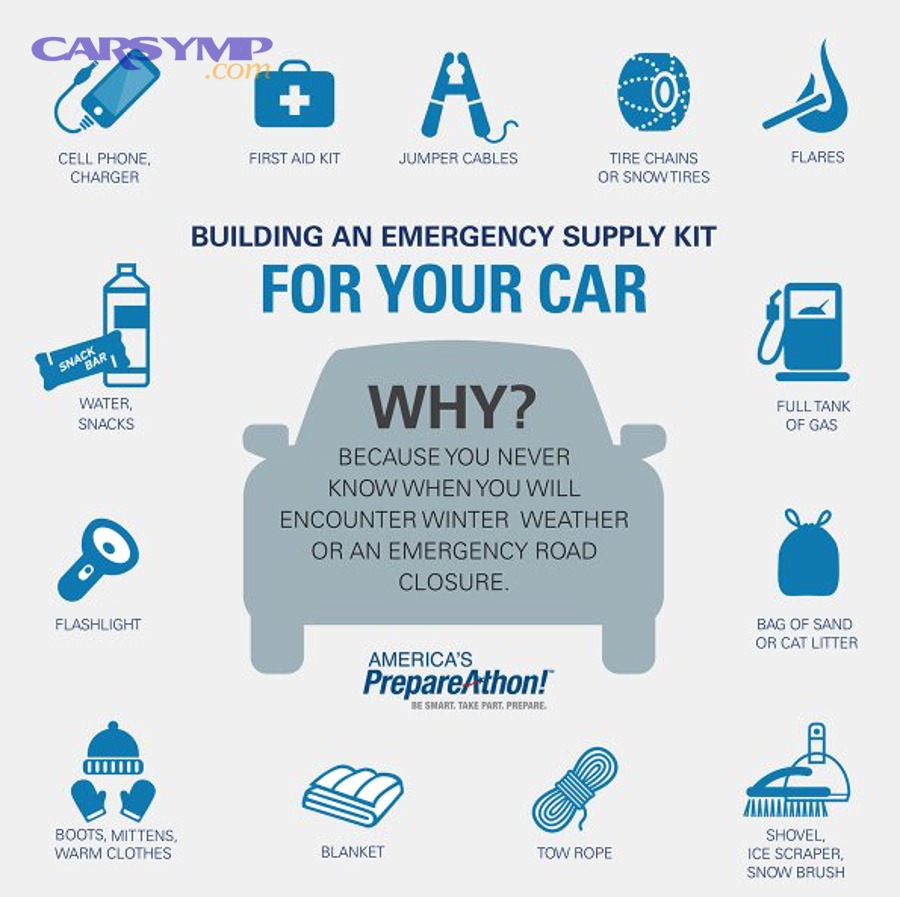
An emergency car kit is the small set of tools and supplies that helps you stay safe, visible, and in control when your vehicle can’t keep going—whether it’s a dead battery, a flat tire, extreme heat, or a winter breakdown. The smartest kits focus on the essentials first: visibility, power, tire help, basic first aid, warmth, and communication, because those are the needs that show up in real roadside scenarios. (ready.gov)
Next, you’ll get clarity on what counts as a “true” emergency car kit versus a random pile of trunk clutter, so you can pack with purpose instead of guessing.
Then, we’ll cover what to do if you already pay for roadside assistance—what the membership does well, what it can’t do instantly, and why a kit still matters when you’re waiting.
Introduce a new idea: once you have the essentials, the difference between “I have stuff in my trunk” and “I’m actually prepared” comes down to organization, seasonal upgrades, and a simple refresh routine.
What is an emergency car kit (roadside safety kit), and what problem does it solve?
An emergency car kit is a portable roadside safety kit—basic gear for visibility, minor repairs, warmth, and communication—designed to keep you safe and functional until you can drive again or get help. To better understand why it matters, start with the real problem it solves: breakdowns don’t only stop your car—they can also reduce your visibility, drain your phone, and expose you to weather and traffic risk. (ready.gov)
The problem your kit solves in one sentence
When you’re stuck, you need to be seen, stay warm, stay connected, and either fix the issue or wait safely—and that’s exactly what the kit is built for. (ready.gov)
What the kit is not
It’s not a mechanic’s shop in a box. It won’t replace proper maintenance, and it’s not meant for major engine repairs. Instead, it covers the common “bridge moments” between “something went wrong” and “I’m safe again.”
A quick definition you can use consistently
- Emergency car kit / roadside safety kit: car-specific essentials for breakdowns and minor roadside incidents
- Seasonal add-ons: extra items for winter, heat, storms, or long trips
- Refresh routine: the habit of checking batteries, water, and expiring medical supplies
Do you really need an emergency car kit if you have roadside assistance?
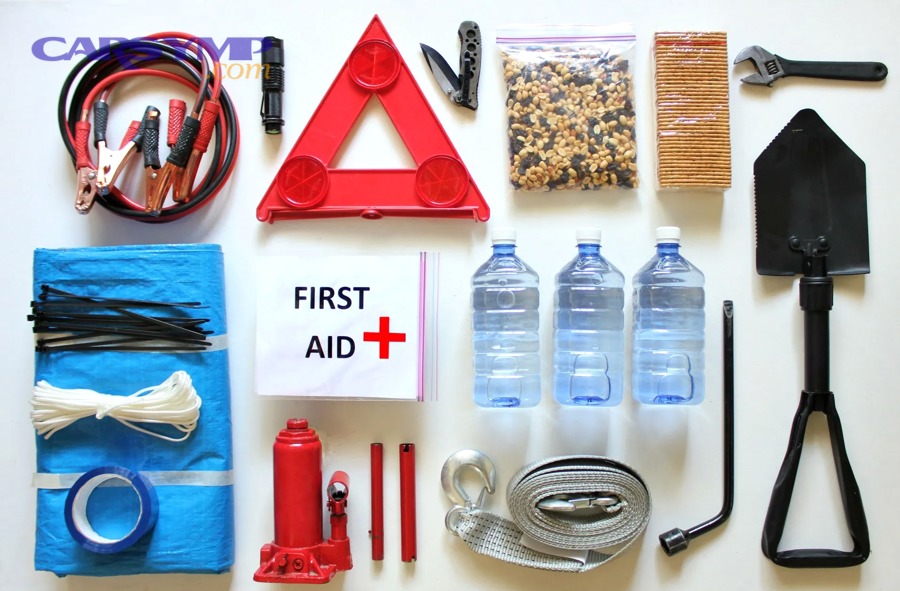
Yes—an emergency car kit is still worth keeping even with roadside assistance because (1) help takes time, (2) visibility and comfort are your job while waiting, and (3) some issues are faster to solve with your own tools than by waiting for dispatch. Next, consider how roadside calls actually feel in real life: you’re often stationary on a shoulder, low on phone battery, and trying to stay calm while cars pass close by. (aaa.com)
Reason 1: Roadside assistance is not instant
Even excellent services can’t teleport. If weather is bad, events are happening, or you’re in a low-coverage area, you may wait longer than you expect.
Reason 2: The membership can’t “do” visibility for you
Triangles, flares, a reflective vest, and a headlamp reduce your exposure to traffic risk while you set up a safe zone and communicate location.
Reason 3: Some fixes are genuinely faster with kit items
A dead battery, a low tire, or a loose terminal can sometimes be handled in minutes if you have the right basics—especially when you’re doing Emergency no-start troubleshooting on site and you want to rule out the simple problems first (dead key fob battery, loose terminal, blown accessory fuse, etc.) before calling for a tow.
How the kit complements your “help plan”
A practical strategy is: kit first for safety + basic checks, then decide whether you need a tow, a jump, or an emergency car repair near me search to find a shop that can handle your specific issue that day.
Where “Mobile mechanic for emergencies pros/cons” fits
Mobile mechanics can be great for convenience, but the tradeoffs (availability, pricing, and what they can safely do roadside) are exactly why your kit should cover the universal needs—visibility, warmth, communication, basic tire support—regardless of who eventually fixes the car.
What are the must-have emergency car kit essentials every driver should pack first?
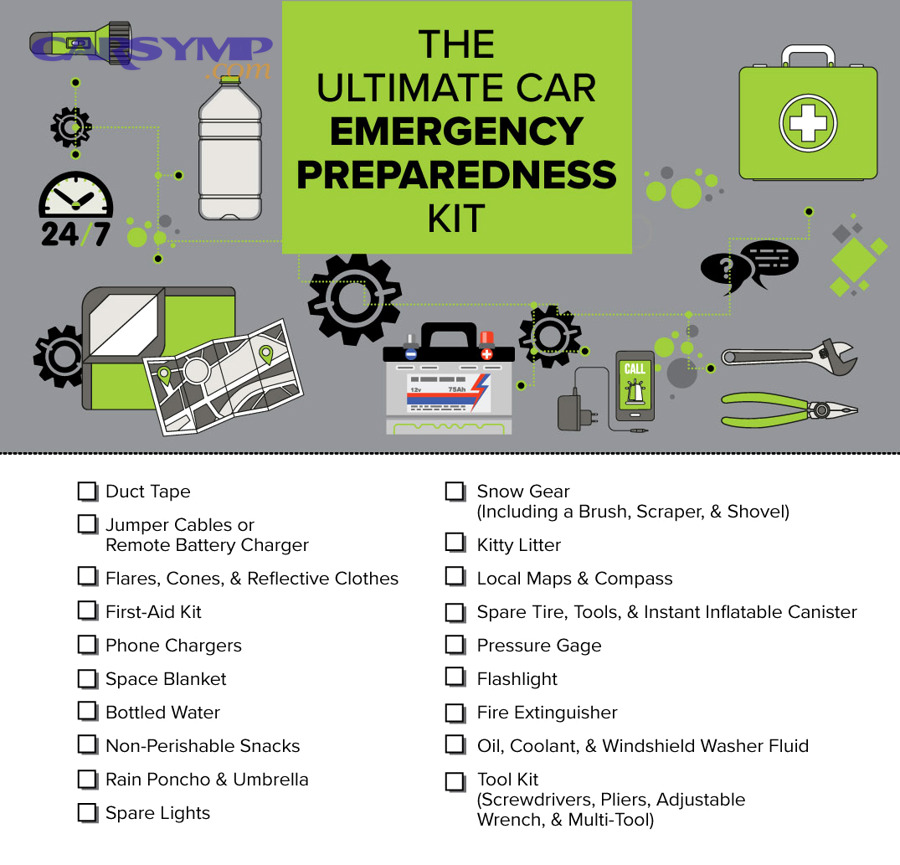
There are 4 main groups of emergency car kit essentials: A) visibility & signaling, B) battery & power, C) tire & mobility support, and D) basic first aid & personal safety, based on what most often determines whether you stay safe and get moving again. Next, we’ll build the kit in the order that matches real roadside risk: first prevent getting hit, then prevent being stranded longer, then prevent small injuries from becoming big problems. (ready.gov)
Before the details, here’s a quick “pack list map.” The table shows what each group does so you don’t overbuy duplicates.
| Essentials group | What it prevents | Typical items |
|---|---|---|
| Visibility & signaling | Being unseen near traffic | Reflective triangles/flares, reflective vest, headlamp |
| Battery & power | Dead phone / dead battery | Jumper cables or jump starter, car charger, spare batteries |
| Tire & mobility | Being stuck with a flat/low tire | Pressure gauge, inflator, sealant (optional), gloves |
| First aid & personal safety | Minor injuries worsening | First aid kit, nitrile gloves, basic meds |
Visibility & signaling: What helps you be seen before anything else?
Visibility essentials are triangles/flares + a reflective layer + a hands-free light, because they reduce traffic risk while you assess the situation. Specifically, you want to create a “visibility bubble” around your stopped vehicle so other drivers change lanes earlier.
Placement tip: Set triangles farther back on faster roads so drivers have time to react, and use a headlamp so your hands stay free.
Evidence: According to a study by Virginia Tech from the Virginia Tech Transportation Institute, in 2022, an enhanced hazard-light pattern prompted drivers to change lanes at distances up to 360 meters, giving more than 12 seconds of advance reaction time—showing how earlier detection can meaningfully increase safety margins. (prnewswire.com)
Battery & power: What keeps your phone and car alive?
Battery & power essentials are a safe jump method + a reliable phone charge option, because a dead battery and a dead phone often happen together in real roadside situations. More importantly, the goal isn’t just “start the car”—it’s “start the car without creating a new problem.”
Minimum pack list
- Jumper cables or a portable jump starter
- Car phone charger (12V + your phone cable)
- Spare batteries for your flashlight/headlamp
- Optional: compact battery pack for your phone
Safety note: If you use a jump starter, choose one with polarity protection and clear instructions; it reduces common connection mistakes. (midtronics.com)
Tire & mobility support: What helps you avoid being stranded by a flat?
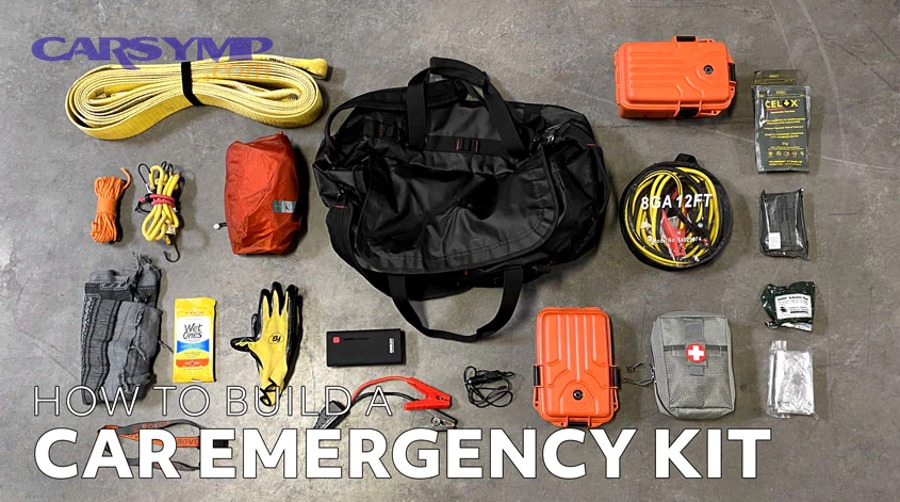
Tire essentials are a pressure gauge + a way to add air + the tools your car already expects, because low pressure and small punctures can turn into full “no-drive” situations. Next, decide whether your kit’s job is to “get you to safety” or “get you back on the road.”
Minimum pack list
- Tire pressure gauge
- Portable inflator (12V)
- Work gloves
- Your vehicle’s jack + lug wrench (confirm they’re present and usable)
Evidence: According to a study by Williams College from the Geosciences Department (GEOS 206), in 2010, increasing tire pressure by 10 psi improved fuel economy by about 3.3%, highlighting that correct tire pressure is not only efficient but also reduces stress on tires during long drives. (sustainability.williams.edu)
Basic first aid & personal safety: What helps with the “small stuff” that can escalate?
First aid essentials are a compact first aid kit + protective gloves, because minor cuts, burns, and exposure issues are common when you’re handling tools, glass, or hot engine components. Then, build it around likely roadside needs: bleeding control, basic wound cleaning, and pain/fever management.
A solid baseline list includes bandages, gauze, antiseptic wipes, tweezers, scissors, and nitrile gloves. (redcross.org)
How should you organize an emergency car kit so you can find things fast under stress?
The best way to organize an emergency car kit is to use a 2-zone setup—“reach fast” items up front and “fix items” in the trunk—so you can grab what you need in under 30 seconds without unpacking everything. Next, you’ll see how this organization reduces panic: the moment you stop safely, your hands automatically go to the same place every time. (aaa.com)
What should be within arm’s reach vs stored in the trunk?
Arm’s reach should hold communication and visibility, because those are time-sensitive at the roadside.
Keep within arm’s reach (glove box/center console)
- Phone charging cable + 12V adapter
- Small flashlight or headlamp
- Emergency contacts + insurance info (paper backup)
- Disposable gloves + basic wipes
Keep in trunk (a single labeled bin/bag)
- Triangles/flares + reflective vest
- Jumper cables or jump starter
- Inflator + pressure gauge
- First aid kit
- Blanket + water/snacks (as feasible)
How do you organize a kit for small cars vs SUVs/trucks?
Small cars need a space-efficient kit: soft-sided bag, compact inflator, and minimized duplicates. SUVs/trucks can add bulkier comfort and traction items: larger blanket, shovel, traction boards, and more water.
Practical rule: If it doesn’t fit in one grab-and-go container, it will become trunk clutter—and trunk clutter is what you can’t find when you’re stressed.
What upgrades should you add for winter, summer heat, and long road trips?
There are 3 seasonal upgrade sets—winter, extreme heat, and long-trip expansion—based on which environment increases your risk fastest: cold exposure, heat dehydration, or extended wait times. Next, treat seasonal upgrades like “modules” you swap in and out so your core kit stays simple and reliable. (ready.gov)
What should you add for winter driving emergencies?
Winter upgrades should prioritize warmth + traction + visibility, because cold and snow can turn a minor breakdown into a survival situation. (weather.gov)
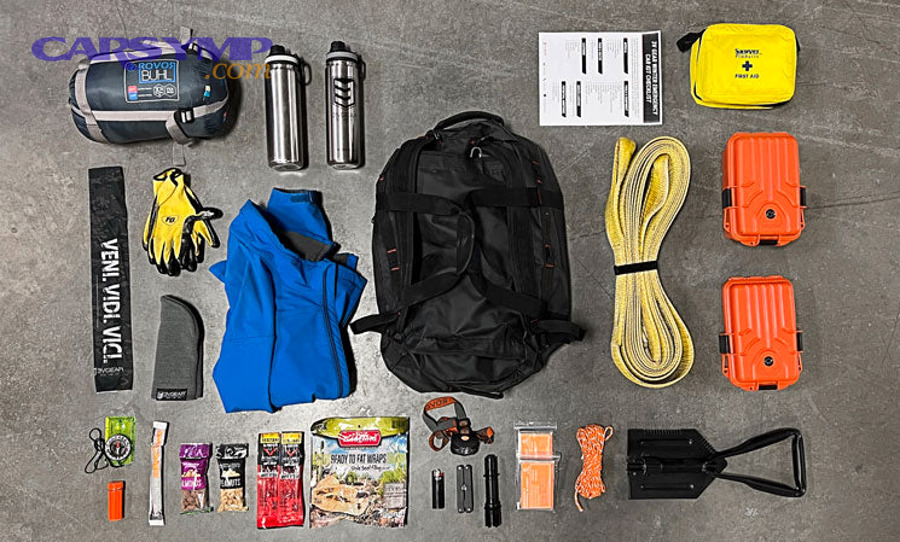
Winter module
- Ice scraper + snow brush
- Warm gloves/hat + extra socks
- Extra blanket or insulated wrap
- Traction aid (sand/kitty litter)
- Small shovel (collapsible)
- Hand warmers (optional)
What should you add for extreme heat and summer road trips?
Heat upgrades should prioritize hydration + shade + cooling, because heat stress can arrive before help does. Besides water, think “sun management”: a simple shade cloth or reflective windshield shade can reduce cabin heat while you wait.
Heat module
- Extra drinking water (rotate often)
- Electrolyte packets (optional)
- Sunshade or light tarp
- Cooling towel (optional)
- Extra phone power (battery bank)
What should you add if you drive with kids, seniors, or pets?
Family/pet upgrades prioritize comfort, medication continuity, and calm, because stress spikes faster with dependents. More specifically, you want to prevent “small discomfort” from becoming “everyone panics and you make rushed choices.”
Family & pet module
- Kid-friendly snacks (non-messy)
- Any critical meds (as appropriate and safely stored)
- Diapers/wipes if needed
- Pet water bowl + leash + small food portion
Which items are often recommended but can be unnecessary, unsafe, or redundant?
There are 2 main categories of “skip or rethink” items: A) items that increase risk when used incorrectly and B) items that duplicate a safer tool you already carry, based on safety and real-world usefulness. Next, use a simple filter before you buy: Will I realistically use this correctly on the shoulder of a busy road? (aaa.com)
Are road flares better than reflective triangles?
Flares can be useful in some conditions, but triangles often win for reusability and lower mishandling risk, especially if you’re not trained or you’re dealing with dry brush, fuel leaks, or high winds. However, triangles can be less visible in some low-visibility angles—so the safest approach is to choose one method you can deploy confidently, and pair it with reflective wear and good hazard-light habits.
Is tire sealant better than a plug kit or spare?
Sealant can be a “get-you-to-safety” tool, but it can also be messy, incompatible with some tire setups, and not ideal if the puncture is large or the sidewall is damaged. Meanwhile, a plug kit requires some confidence and may not be appropriate on a narrow shoulder. For many drivers, the most realistic “wins” are:
- Inflator + gauge (low effort, high usefulness)
- Know how to access your spare/jack if you have one
- Use sealant only if you understand the tradeoffs
How often should you check, replace, and refresh an emergency car kit?
You should refresh an emergency car kit on a simple monthly check + a seasonal swap, because batteries die, water expires in heat, and medical items age quietly in the background. Then, the goal becomes consistency: a kit you trust is a kit you maintain. (ready.gov)
What’s a 5-minute monthly checklist that actually works?
Use this fast routine:
- Check flashlight/headlamp power (replace or recharge)
- Confirm phone charger works
- Inspect first aid kit for missing items + expirations
- Look at water/snacks condition (rotate as needed)
- Confirm inflator runs and the gauge isn’t damaged
- Make sure triangles/flares are present and accessible
If you do only one thing, do this: move your kit container to the trunk opening and practice opening it once—because “I have it” is not the same as “I can grab it fast.”
How is an emergency car kit different from a roadside safety kit, a go-bag, and a bug-out bag?
An emergency car kit is best for roadside breakdowns, a roadside safety kit is often a synonym focused on visibility, a go-bag is for rapid evacuation, and a bug-out bag is a longer-duration survival loadout, based on how long you expect to be unsupported and where you’re going. Next, this comparison helps you stop overpacking: once you know the category, you buy fewer duplicates and choose tools that fit the scenario. (ready.gov)
Is “roadside safety kit” basically a synonym for “emergency car kit”?
In most everyday use, yes—people use them interchangeably, though “roadside safety kit” often emphasizes triangles, flares, and visibility gear. (ready.gov)
When does an emergency car kit become a go-bag?
It becomes a go-bag when you design it for leaving the car and traveling on foot—meaning water capacity, navigation, shelter, and multi-day supplies matter more than inflators and jumper cables. (ready.gov)
What changes for EVs and hybrids?
EV and hybrid drivers still need visibility, first aid, warmth, and phone power, but tire and power choices shift:
- Many EVs ship without a traditional spare
- A 12V issue can still happen, so safe jump methods and clear procedures matter
- Heat/cold planning becomes more important because cabin conditioning affects range
Rare but smart add-ons: when do they make sense?
These are niche, but useful in specific patterns:
- Window breaker/seatbelt cutter if you drive near water or in flood-prone areas
- Fire extinguisher if you drive long distances, tow, or carry flammables (use the correct type and learn basic use)
Quick recap: If you build around visibility, power, tire support, first aid, warmth, and organization, you’ll be prepared for the most common roadside emergencies without turning your trunk into a junk drawer. And when things do go wrong, your kit buys you time to decide: fix it safely, call assistance, or search for emergency car repair near me—without panic driving the decision. (ready.gov)