


When you need help right now, you can still avoid emergency auto repair scams by using a simple checklist: verify who’s touching your car, lock pricing in writing, set approval limits, and require proof before you pay. That process turns “panic buying” into controlled decision-making.
Next, you’ll learn how to recognize the most common scam patterns—like vague pricing, pressure tactics, and “we already did the work”—so you can stop a bad situation before it gets expensive.
Then, you’ll see how towing traps and fake roadside providers work differently from shop upsells, so you can counter each one with the right move at the right time.
Introduce a new idea: even after the repair is finished, your paperwork and payment choices can protect you just as much as your roadside decisions—so the article closes with a clean post-repair protection routine.
What counts as an “emergency auto repair scam”?
An emergency auto repair scam is a deceptive repair, towing, or roadside service situation that uses urgency to push unauthorized work, inflated pricing, or misrepresented problems—often before you can compare options or confirm What qualifies as emergency car repair. More importantly, the “emergency” isn’t what makes it a scam—the deception does, and you can spot it early if you know what to look for.
Is every overpriced emergency repair a scam?
No—an overpriced emergency repair is not automatically a scam, because after-hours labor, rush diagnostics, and limited parts availability can legitimately raise the price; it becomes a scam when (1) the provider hides or changes costs after you commit, (2) performs work you didn’t approve, or (3) misrepresents what your car truly needs. However, the fastest way to tell the difference is to look for transparency behaviors instead of guessing motives.
Here’s how to separate “expensive but real” from “scammy” in under a minute:
- Written pricing vs. verbal pricing: Legit providers put labor rate, parts, and fees in writing before starting. Scams stay vague until the bill.
- Approval control: Legit shops ask for approval when the scope changes. Scams do work first and say you “have to pay.”
- Proof culture: Legit providers can show the issue or explain tests. Scams rely on fear and jargon.
If you’re under pressure, remind yourself of a simple rule: a real emergency service can still explain itself clearly. A scam needs confusion to survive.
What are the fastest red flags that signal you should walk away?
There are 7 main red-flag types of emergency auto repair scams, based on the tactic used to remove your control: pressure, vagueness, identity mismatch, unauthorized work, proof refusal, payment coercion, and vehicle leverage. Next, you’ll see each red flag in plain language, so you can recognize it even when you’re stressed.
1) Pressure tactics (urgency weaponized)
A scam pushes you to decide before you can verify anything: “If you don’t do this now, your engine will die,” or “I’m already here, so you owe me.”
2) Vague pricing (numbers always “later”)
You hear “It depends” repeatedly, but they won’t provide a range, rate, or fee list. Emergency pricing can be higher, but it should still be describable.
3) Identity mismatch (who are you, really?)
The tow truck name doesn’t match the company you called, the phone number changes, or the driver can’t confirm dispatch details.
4) Unauthorized work (“we already did it”)
They claim the repair is complete without documented approval. In emergencies, this often appears as “diagnostic turns into repair.”
5) Proof refusal (“trust me”)
They won’t show the old part, the leak, the failed test, or any diagnostic reasoning—just a demand.
6) Payment coercion (cash now, no record)
They insist on cash only, large deposits before any written scope, or unusual payment methods under pressure.
7) Vehicle leverage (towing/storage trap)
They tow you somewhere you didn’t choose, add storage fees quickly, or won’t release the vehicle without paying surprise charges.
If you see two or more of these at once, treat it as a high-risk situation and switch to checklist mode immediately.
What’s the 5-minute checklist to avoid getting ripped off during emergency repairs?
There are 6 main checklist steps to avoid getting ripped off during emergency repairs, based on the control points you must keep: verify, document, cap, confirm, pay smart, and close out. To begin, the goal is not to become a car expert—it’s to force clarity while the provider is still motivated to earn your approval.
Here’s the checklist in the order that works best under stress:
- Verify the provider (identity + legitimacy)
- Get a written estimate fast (scope + price structure)
- Set an authorization cap (“no work above $___ without calling me”)
- Require proof before approval (show-me + test-me)
- Use protective payment methods (traceable, disputable)
- Collect close-out paperwork (itemized invoice + warranty)
The table below summarizes what you ask for and what you’re trying to prevent.
| Checklist step | What you ask for (simple phrase) | What it prevents |
|---|---|---|
| Verify | “What company dispatched you? What’s the address?” | Fake roadside help, identity swaps |
| Estimate | “Write the parts, labor, and fees—before work starts.” | Surprise charges, bait-and-switch |
| Cap | “Do not proceed above $___ without approval.” | Unauthorized expansion of scope |
| Proof | “Show me the issue and the test result.” | Fake diagnosis, unnecessary repairs |
| Payment | “I’ll pay by card after I get the invoice.” | Cash coercion, no recourse |
| Close-out | “Itemized invoice + warranty + old parts.” | Disputes, missing work evidence |
Can you verify a tow truck or roadside provider before they touch your car?
Yes—you can verify a tow truck or roadside provider before they touch your car, and doing so reduces risk because it blocks impersonators, prevents destination steering, and forces pricing disclosure while you still have leverage. Then, once you confirm who they are, you can safely move to the estimate step.
Use these fast checks (choose what fits your situation):
- Dispatch confirmation: Ask, “What’s the dispatch name and reference number?” Then call the dispatch line you used and confirm the driver is assigned.
- Company match: The truck markings, driver info, and phone number should align with the company you contacted.
- Destination control: State your destination first: “Tow to my chosen shop at [address].” If they resist, pause.
- Rate disclosure: Ask for the tow rate structure before hookup (hook-up fee, per-mile, after-hours, storage policy).
If a driver says, “I’m already here—sign now,” treat it as a red flag. A legitimate provider can still answer verification questions without turning hostile.
What should you ask for in a written estimate to prevent surprise charges?
A written estimate is a pre-work document that lists the repair scope, parts, labor, and fees—plus timing and approval rules—so you can prevent surprise charges caused by vague scope, hidden add-ons, and after-hours markups. Specifically, the estimate is your “price boundary,” so it must include the items scammers prefer to keep blurry.
Ask for these estimate elements in plain words:
- Repair description: What exactly will be done (not “fix issue,” but “replace radiator,” “replace battery,” “diagnose no-start”).
- Parts line items: Part name, brand/type if known, and whether it’s new, remanufactured, or used.
- Labor rate and hours: Hourly rate + estimated labor time (or flat rate).
- Fees list: Shop supplies, disposal/environmental fee, diagnostic fee, towing fee, after-hours fee, storage, taxes.
- Timeline: Estimated completion time and whether parts must be ordered.
- Approval rule: The cap that protects you: “No work above $___ without my approval.”
Here are two short scripts that work even when you’re calling an “emergency car repair near me” option and you’re unsure who’s trustworthy:
- “Please text or email a written estimate with parts, labor, and fees before you begin.”
- “If anything changes, you must call me and get approval first—no exceptions.”
Evidence: According to a study by Northwestern University from the Kellogg School of Management, in 2013, repair shops quoted higher prices to callers who sounded uninformed, while mentioning an expected price reduced or eliminated pricing differences—supporting why getting a clear estimate early protects you from opportunistic pricing.
What proof should you request before approving the repair?
There are 5 main proof types you should request before approving an emergency repair, based on how the problem can be confirmed: visual proof, physical part proof, test-result proof, scan-data proof, and explanation proof. More importantly, proof is not about mistrust—it’s about preventing expensive misunderstandings while the situation is still fixable.
1) Visual proof (show the issue)
Ask to see the leak, broken belt, corroded battery terminal, or damaged tire. A quick photo or video works if you’re not on-site.
2) Physical part proof (show the part)
If they say “this part failed,” ask to see the old part after replacement, or at least a photo before removal when possible.
3) Test-result proof (show the measurement)
For overheating: pressure test results. For battery/charging: voltage reading and alternator output test. For no-start: starter draw test or relay test.
4) Scan-data proof (show codes + interpretation)
Codes can guide diagnosis, but they are not the diagnosis by themselves. Ask: “What test confirms that this code means this part is bad?”
5) Explanation proof (tell me the logic)
Ask for a simple chain: “Symptom → test → result → recommended fix.” If they can’t do this, the risk rises fast.
If the provider refuses all proof requests, your best move is to stop authorization and seek a second opinion—even in an emergency.
Which emergency repair scams are most common: towing traps, fake roadside help, or repair upsells?
Towing traps win in vehicle leverage, fake roadside help is worst for identity deception, and repair upsells are most common for cost inflation, so your best defense is to match your counter-move to the scam category you’re facing. However, most drivers get hurt because they use the wrong defense—for example, arguing about a price when the real problem is that the vehicle is being held.
How do towing traps differ from repair-shop upsell scams?
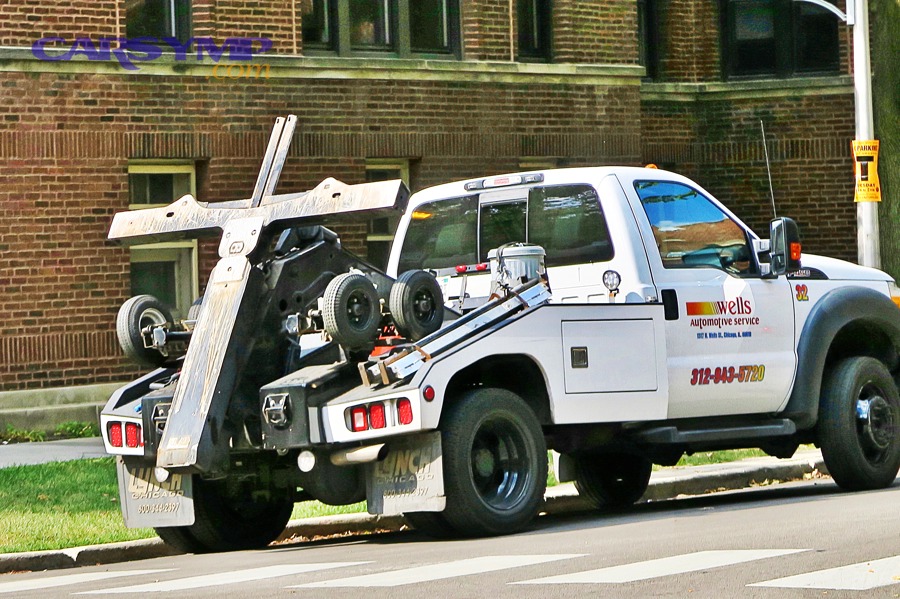
Towing traps win at control over your vehicle, while repair-shop upsell scams win at controlling information, so you counter towing traps by controlling destination and release terms, and you counter upsells by controlling approval and proof. Meanwhile, both types often add fees, but they add them for different reasons.
Towing trap pattern (vehicle leverage):
- You don’t choose the destination, or you’re pressured into “our yard.”
- Storage fees accumulate quickly.
- Release becomes conditional: “Pay first, then you can get it.”
Your counter-move:
- State destination clearly before hookup.
- Ask about storage policy and release terms.
- Keep the tow receipt and get rate details in writing if possible.
Upsell scam pattern (information leverage):
- They use fear (“your engine will fail”) and uncertainty (“it’s all connected”).
- They push bundles (“you need all these flushes today”).
- Proof is vague or refused.
Your counter-move:
- Ask for the written estimate and authorization cap.
- Require proof types (visual/test/scan + explanation).
- Approve only the minimum safe repair to get back on the road.
What are the most common “bait-and-switch” price tactics in emergencies?
There are 6 main bait-and-switch tactics in emergency repairs, based on when the price changes: lowball entry quote, fee stacking, scope creep, forced add-ons, “already done” billing, and after-hours ambiguity. In addition, these tactics show up across towing, roadside, and shops—so you’ll see the same patterns even with different providers.
1) Lowball entry quote
A cheap number gets you to agree, then the “real” price appears after the car is moved or disassembled.
2) Fee stacking
Hook-up fee + mileage + fuel surcharge + after-hours + admin + storage—without upfront disclosure.
3) Scope creep
A diagnostic turns into repairs, and repairs turn into “while we’re in there” replacements—without approval.
4) Forced add-ons
They claim a “mandatory” service (flush, filter, alignment) is required for the main fix.
5) “Already done” billing
They do work without approval and present a bill as a fact, not a proposal.
6) After-hours ambiguity
They use the vagueness of night/weekend service to justify markups without specifying what the markup is.
Evidence: According to a study by Northwestern University from the Kellogg School of Management, in 2013, callers who did not signal price knowledge were more likely to receive higher initial quotes, indicating why emergency situations—where drivers feel uninformed—are especially vulnerable to bait-and-switch pricing.
Should you use a mobile mechanic, a tow to a shop, or roadside assistance in an emergency?
A mobile mechanic wins for fast on-site fixes, towing to a shop is best for complex or unsafe problems, and roadside assistance is optimal for standardized help with lower impersonation risk, so the right choice depends on safety, diagnosis certainty, and how quickly you can verify the provider. Next, we’ll turn that into a practical decision framework you can follow even when you’re stressed.
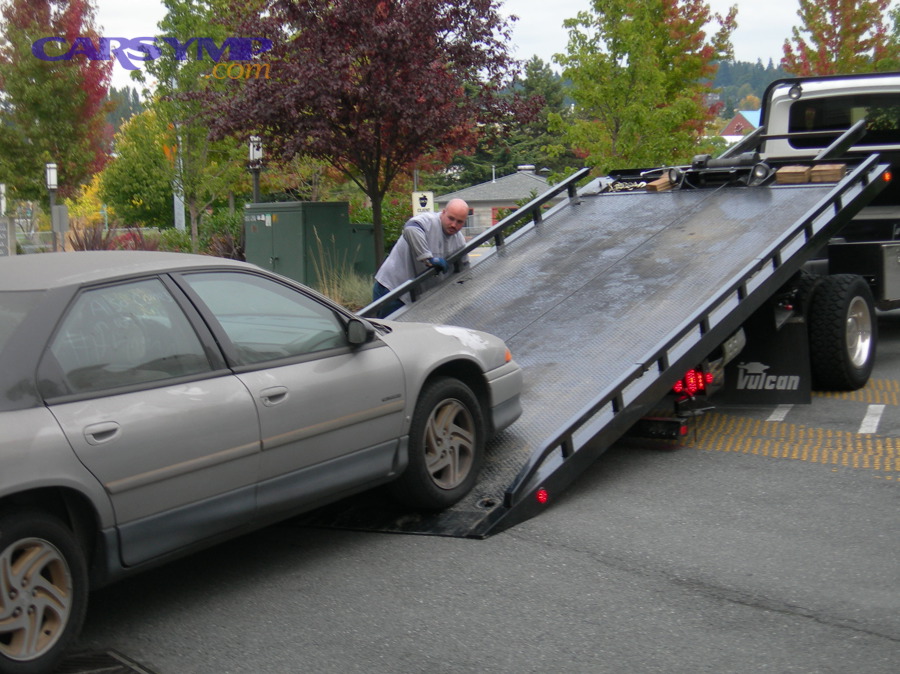
Before you decide, anchor yourself with one question: Is the car safe to operate or even attempt a roadside fix? If brakes, steering, fuel leaks, or severe overheating are involved, your safest move is to tow—because the cost of “trying anyway” can dwarf any repair bill.
Also, this is where the phrase “Mobile mechanic for emergencies pros/cons” actually matters: mobile help can be excellent, but it can also be easier for scammers to operate without a fixed business footprint. Your job is not to fear mobile mechanics—it’s to verify them and control the estimate.
Is roadside assistance always safer than calling a random tow number?
Yes—roadside assistance is usually safer than calling a random tow number, because it often uses vetted networks, provides a documented dispatch trail, and reduces identity spoofing; however, you still need verification steps because fake listings and impersonation can happen. Besides, “safer” does not mean “automatic”—it means “lower risk when you keep control.”
Use these safeguards with roadside programs:
- Confirm the dispatch reference and driver identity on arrival.
- Ask the driver to confirm the destination you choose.
- Request the rate structure if anything is out-of-network or “extra.”
If you’re in a scenario where you searched “emergency car repair near me” and the top result is an unfamiliar tow number, that’s exactly when roadside assistance can reduce risk—because it replaces unknown providers with a traceable process.
What criteria should decide “mobile fix now” vs “tow to shop”?
There are 5 main decision criteria for choosing “mobile fix now” vs “tow to shop,” based on what limits safe repairs: safety, complexity, proof, parts, and follow-up accountability. Especially in emergencies, you want the option that gives you the most control per minute.
1) Safety (non-negotiable)
Tow if you have brake/steering issues, fuel leaks, smoke, or repeated overheating. Mobile help is not worth it if the car might be unsafe to move afterward.
2) Complexity (can it be fixed roadside?)
Mobile wins for batteries, minor electrical issues, flat tires, some sensor swaps, and simple no-start causes. Tow wins for internal engine issues, major cooling failures, or jobs requiring lifts/special equipment.
3) Proof and diagnosis confidence
If the provider can’t explain “symptom → test → fix,” don’t authorize major work on-site. Towing to a reputable shop may provide better diagnostics.
4) Parts availability
If the fix requires specific parts not available immediately, towing can reduce downtime and prevent repeated service calls.
5) Accountability and warranty
Shops often provide clearer written warranties and paper trails. Mobile mechanics can also do this, but you should verify their warranty terms and invoicing practices.
This is also where Getting an emergency estimate fast becomes a real advantage: whichever option you choose, insist on written scope + price boundaries before anything happens.
Evidence: According to a study by Northwestern University from the Kellogg School of Management, in 2013, mentioning an expected price reduced differential quoting behaviors, which supports using a quick estimate request to prevent opportunistic pricing—especially when you must choose between mobile service and towing quickly.
What paperwork and payment steps protect you after the repair is done?
Post-repair protection is a set of paperwork and payment steps—itemized documentation, warranty clarity, and traceable payment—that reduces dispute risk, prevents “phantom work” billing, and proves what you approved if a charge is challenged later. In short, you’re closing the loop so a stressful emergency doesn’t become a long-term money problem.
Here’s the close-out routine that works across towing, roadside, mobile mechanics, and repair shops:
- Get an itemized invoice (not a single lump sum)
- Match the invoice to your estimate and approvals
- Confirm warranty terms in writing
- Request replaced parts when reasonable
- Pay with a traceable method and keep receipts
Should you pay cash for emergency repairs?
No—you generally should not pay cash for emergency repairs, because card payments create documentation, enable dispute options, and discourage inflated “cash-only” coercion; if cash is unavoidable, you need a detailed receipt, clear business identity, and line-item breakdown. More specifically, the goal is to avoid a situation where you cannot prove what you were promised.
If you must pay cash, reduce risk like this:
- Get a receipt with business name, address, phone, date, and VIN (or plate).
- Ensure it lists parts, labor, and fees separately.
- Photograph the invoice and any posted shop policies.
What should an itemized invoice include to reduce dispute risk?
An itemized invoice should include parts and labor line items, rates and hours, fees and taxes, and a clear statement of what work was performed—plus warranty terms—so you can verify you paid for authorized work and can challenge unexpected charges. Then, if something goes wrong later, you’ll have a clean record of the repair chain.
At minimum, look for:
- Parts: name, quantity, unit price, and whether new/reman/used when relevant
- Labor: hourly rate, hours billed, or flat-rate line description
- Fees: diagnostic, shop supplies, disposal, towing, storage, after-hours, taxes
- Approvals: reference to estimate/authorization, or notes on phone approvals
- Warranty: duration and what it covers (parts, labor, both, exclusions)
If the invoice is vague, ask for a revised version before paying. A legitimate provider may be busy, but they can still generate a proper invoice.
How can you prevent emergency repair scams before you break down?
There are 4 main prevention strategies to reduce emergency repair scam risk, based on what you can prepare in advance: pre-verify providers, pre-plan documentation, pre-build price awareness, and pre-set safety thresholds. To sum up, prevention is the opposite of panic—it’s creating structure before you need it.
What should you save in your phone to verify help fast during a breakdown?
There are 6 key items to save in your phone, based on how quickly they let you verify help:
- Roadside assistance number (from your insurer or membership)
- Preferred local shop (address + phone)
- Backup shop (second option)
- Trusted tow company (if you have one)
- Vehicle details note (VIN, plate, model, tire size, battery type if known)
- Verification script (copy/paste questions)
A simple verification script you can save as a note:
- “What company dispatched you?”
- “What’s your dispatch reference number?”
- “What are the hook-up, per-mile, and after-hours fees?”
- “I’m towing to this address—confirm.”
This makes verification possible even when you’re tired, cold, or stressed.
Which online signals help confirm a real repair business vs a fake listing?
There are 5 online legitimacy signals you can use, based on consistency across platforms: name/address match, phone stability, review pattern quality, web presence coherence, and policy transparency. Next, you’ll see the “pattern thinking” that helps you avoid fake listings without needing to become an investigator.
1) Name/address match
The business name and address should match across maps, website, and directories. Mismatches raise risk.
2) Phone stability
If the phone changes across listings, routes through strange intermediaries, or refuses to disclose the physical address, be cautious.
3) Review pattern quality
Look for reviews that mention specific services and timeframes, not just generic praise.
4) Web presence coherence
A real business typically has consistent branding, contact info, and service descriptions—not a thin page that funnels calls.
5) Policy transparency
Legit shops describe diagnostics fees, after-hours rates, storage policies, or authorization rules somewhere—either posted or available on request.
This doesn’t guarantee perfection, but it dramatically reduces the chance you’ll invite an impersonator to your car.
How can scan codes or “parts authenticity” be used to mislead you?
Scan codes and parts authenticity can be used to mislead you when someone treats a code as a guaranteed diagnosis, or sells a part without clarifying whether it is new, used, or remanufactured—because codes indicate symptoms, not certainty. In short, scammers can use technical complexity to create urgency and inflate the scope.
Protect yourself with two habits:
- Codes → tests → confirmation: Ask what test confirms the part is actually bad.
- Part type clarity: Ask, “Is that part new or remanufactured, and what warranty covers it?”
If the provider refuses to explain, it’s safer to pause authorization and seek a second opinion—especially if the repair cost is high.
When should you escalate: insurer, credit card dispute, consumer agency, or police report?
Your insurer is best for claim-related repair disputes, a credit card dispute is strongest for billing conflicts, a consumer agency fits pattern-based unfair practices, and a police report is for clear fraud or theft, so escalation depends on what happened and what evidence you have. Finally, the key is to act quickly while records are fresh.
Use this escalation logic:
- Insurer: If the issue is tied to an accident claim, towing coverage, or a network referral.
- Credit card dispute: If you were charged for unauthorized work or the amount differs from the approved estimate.
- Consumer agency/AG office: If the business pattern suggests deception and you have invoices, texts, estimates, and names.
- Police report: If the vehicle is being withheld unlawfully, documents are forged, or outright theft/fraud occurred.
Escalation works best when you have the basics: written estimate, approval trail, itemized invoice, and payment record—so the paperwork steps you took earlier become your strongest protection later.