


Rotor thickness minimum specs explained means you’re comparing your brake disc’s measured thickness to a manufacturer “discard limit” so you know whether it’s still safe to keep, machine, or must be replaced.
To do it right, you need to know where the spec is listed (often stamped on the rotor), what “MIN TH” actually refers to, and why measuring in the wrong spot can trick you into a bad decision.
Beyond the number itself, you also want context: how normal wear progresses, how heat capacity and cracking risk change as the disc gets thinner, and how to avoid false readings from rust lips, grooves, or uneven wear.
To begin, “Giới thiệu ý mới” matters here: once you understand the spec, every next brake decision becomes clearer—what to inspect, what to record, and when replacing becomes the only responsible option.
What do minimum rotor thickness specs actually mean?
Minimum rotor thickness is the manufacturer’s legal-and-safety discard limit: if the thinnest measured point is below that number, the rotor is no longer considered serviceable.
Next, the key is separating what the number protects from what symptoms you feel, because the spec is about capability, not comfort.
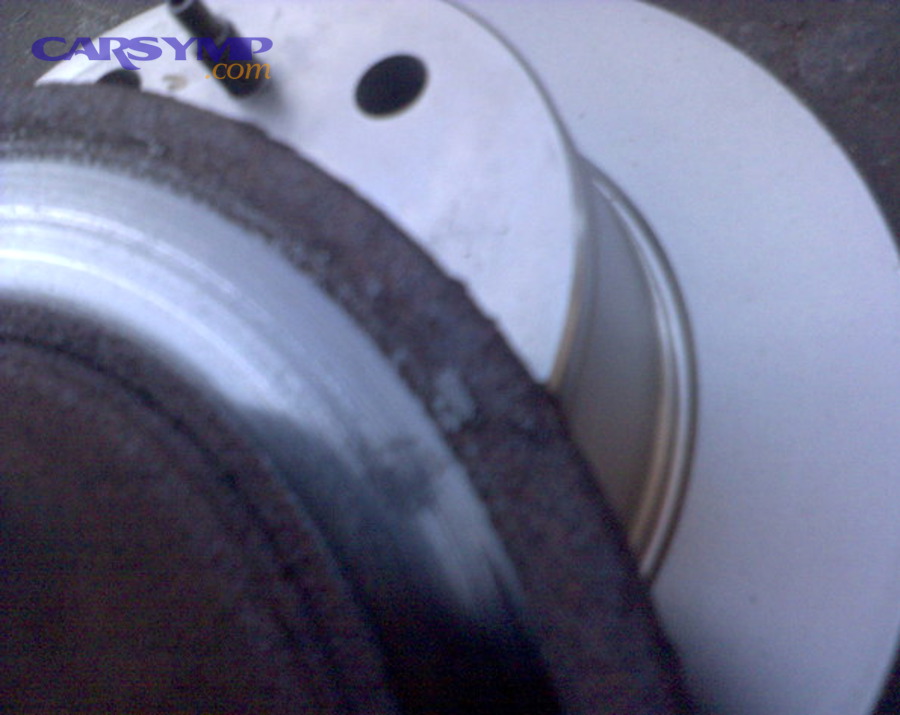
“Minimum thickness” is not a suggestion—it’s a boundary set to maintain braking performance under heat and stress. As a rotor wears, it loses mass. Less mass generally means less heat capacity, and the disc can climb temperature faster during repeated or heavy braking. Brembo explains that rotor thickness reduction is tied to higher temperatures and can contribute to fading and longer stopping distances when friction drops under heat.
To make the spec practical, treat it as a worst-point rule: you don’t average the rotor, you find the thinnest valid reading in the swept area. Brembo’s guidance is to measure in multiple places and use the lowest value as the reference for the entire disc, then compare it to the rotor’s “MIN TH” marking.
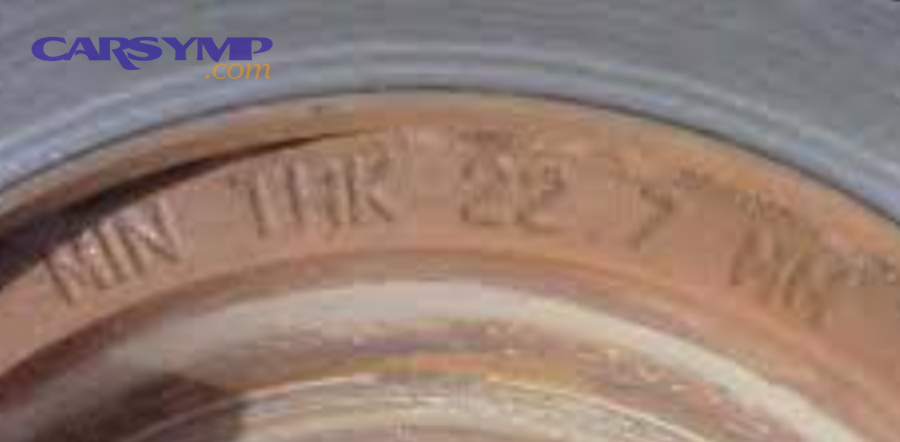
That wording matters because many rotors are stamped or etched with something like MIN TH = 22 mm (example only). If your lowest measurement is below that, replacement is required.
Why it’s a “serviceable vs discard” lexical pair: “Serviceable” means you still have enough thickness margin for heat, strength, and wear; “discard” means you’re outside the designed operating envelope. In real life, the discard limit also protects you from edge cases—towing, mountain descents, emergency stops—where rotors see extreme temperatures.
Theo nghiên cứu của University of Sfax từ Laboratory/Research Unit, vào 02/2024, việc giảm độ dày đĩa phanh làm tăng tốc độ tăng nhiệt và có thể làm đĩa “quá mỏng” nóng lên nhanh hơn, ảnh hưởng đến độ ổn định ma sát khi nhiệt độ cao.
Important nuance: Minimum thickness is about the rotor’s friction plates (the faces the pads clamp), not the hat section. It’s also not the same as runout or disc thickness variation, which are different measurements and different failure modes.
Where do you find the minimum thickness number on your car?
You find minimum thickness in two places: stamped/etched on the rotor itself or listed in the service manual (and sometimes on the vehicle’s repair data screens).
After that, the goal is to confirm the exact spec for your rotor design and axle—front and rear can differ.

Many manufacturers make this easy by etching the value onto the disc, labeled as MIN TH (minimum thickness). Brembo specifically notes that the measured value should be compared with the number etched on the rotor and indicated with “MIN TH,” followed by the value in millimeters.
If you can’t find it immediately, don’t assume it’s missing. Corrosion, brake dust, and road grime can hide markings—especially on the inboard face. Clean the rotor (without breathing dust), rotate it, and inspect the backside near the hat or outer area where manufacturers often stamp specs.
Also, don’t mix specs across brands. A service bulletin from GM emphasizes referencing the minimum thickness stamped on the backside of the rotor or the official service information, and warns against using other manufacturers’ rotor specifications.
Practical checklist for finding the spec:
- Rotor marking: Look for “MIN TH,” “MIN,” or “Discard” plus a number.
- Service info: Confirm by VIN-based service data if markings are unreadable.
- Axle-specific: Front and rear values often differ, and performance packages differ too.
- Unit clarity: Most markings are in millimeters; some documentation may show inches.
Theo nghiên cứu của Brembo từ Technical Support, vào thời điểm công bố hướng dẫn, nên đo ở ít nhất 4 vị trí và so sánh với “MIN TH”; nếu thấp hơn thì phải thay rotor.
Finally, remember the paired-axle logic: Brembo notes rotors should be replaced on both sides even if only one rotor of the pair is below the limit, because balanced braking and matched friction surfaces matter.
How do you measure rotor thickness accurately at home?
Use a brake micrometer (or accurate caliper), measure in multiple points within the pad-swept area, record the lowest reading, and compare it to the MIN TH value.
Below is the reliable method: it’s repeatable, it avoids common measurement traps, and it matches how service bulletins instruct technicians to decide.

Step-by-step (HOW-TO):
- Prep safely: Park level, chock wheels, lift and support with stands. Remove the wheel.
- Expose clean metal: Brush away loose rust and debris on the rotor face. Avoid inhaling dust.
- Choose the right zone: Measure where the pads actually contact (the swept area), not the outer rust lip.
- Measure at 4+ points: Rotate around the disc and measure at least four locations, then keep the lowest valid number.
- Record and compare: Compare the lowest measurement to MIN TH (stamped/etched or service data).
GM’s brake service procedure recommends measuring rotor thickness with a brake micrometer, taking multiple measurement points, and recording the lowest measurement to determine if refinishing would drop the rotor under minimum thickness.
Where to place the tool: Put the anvils of the micrometer on clean, flat rotor faces. Stay a few millimeters inward from the outer edge to avoid the rust ridge. If your rotor has a pronounced lip, measure just inside it, where the pad track is smoothest.
Common best practice: The “lowest-of-many” rule prevents you from missing localized thinning. Brembo’s guidance explicitly calls for multiple points and using the lowest value as the reference.
Video guide (visual technique):
When you’re doing this as part of brake rotor replacement planning, a clean measurement record (date, axle, lowest reading) helps you decide whether you’re buying rotors now or later—especially if the pads still have life left.
Theo nghiên cứu của General Motors Canadian Technical Centre từ Technical Centre/PHM research team, vào 2019, mô hình chẩn đoán có thể phát hiện biến thiên độ dày rotor từ 36 micrometers trở lên, và rotor mỏng dưới giới hạn có thể giảm khả năng tản nhiệt, dẫn tới méo nhiệt và rung phanh.
What happens if you drive below the minimum thickness?
Yes—driving below minimum thickness increases risk: less heat capacity, higher temperature spikes, greater chance of cracking/warping symptoms, and reduced safety margin under heavy braking.
After that, the real issue is not only “will it stop,” but “will it stop repeatedly and predictably.”

Three core reasons (BOOLEAN):
- Heat capacity drops: A thinner disc generally heats faster and can reach fade-inducing temperatures sooner.
- Structural margin shrinks: Thinner friction plates are more vulnerable to thermal stress, distortion, and cracking over time.
- Service options narrow: Once below MIN TH, machining is not permissible; replacement becomes the only defensible choice.
Brembo states plainly: if the measurement shows values below MIN TH, you must replace the rotor, and replacement should be done on both sides of the axle for balanced braking.
A MINI service bulletin similarly indicates that if a rotor thickness on an axle is at or below the minimum specification, the rotors should be replaced, while resurfacing is considered only when thickness is still above minimum and conditions allow.
What you might feel: Sometimes nothing—until a long downhill stop, a panic stop, or repeated braking brings heat to the limit. Other times, you may notice pedal pulsation, steering shake, noise, or uneven braking. But symptoms are not the rule; thickness is.
Theo nghiên cứu của University of Sfax từ research unit, vào 02/2024, giảm độ dày đĩa làm tăng “kinetics” tăng nhiệt, khiến đĩa mỏng nóng lên nhanh hơn và ảnh hưởng độ ổn định ma sát ở nhiệt độ cao—một cơ chế liên quan tới fade và khoảng cách phanh tăng.
How much thickness loss is normal, and what causes it?
Rotor thickness loss is normal wear, but the rate depends on driving style, pad compound, environment, and heat cycles; what matters is how close your lowest reading is to MIN TH over time.
Next, group the causes so you can tell “normal” from “accelerated.”

There are 4 common thickness-loss pathways:
- Friction wear (normal): Every stop shaves microscopic material from pad and rotor.
- Corrosion wear (environment-driven): Road salt and moisture create pitting and scaling that can remove usable thickness.
- Heat damage (duty-cycle): Repeated high-energy stops can accelerate cracking and surface breakdown that later gets machined away.
- Machining (service-driven): Resurfacing removes thickness by design; you must “budget” thickness for any cut.
To connect thickness to performance, Brembo notes that thinner rotors can run hotter under heavy use, contributing to fade behavior as temperatures rise.
Also, the GM service bulletin highlights that technicians must measure and verify minimum thickness before refinishing and record the lowest measurement—because service can remove enough material to cross the discard limit.
Tracking wear intelligently: If you measure today and you’re comfortably above MIN TH, you can re-measure after a pad interval (or sooner if you tow, drive mountains, or have aggressive pads). The most actionable metric is the gap-to-minimum: current lowest thickness minus MIN TH.
In planning terms, this is where the phrase Proper torque and bedding procedure belongs in your workflow: good installation and controlled bedding reduce uneven transfer layers and hotspots that can create localized wear patterns—patterns that later force extra machining or early replacement.
Theo nghiên cứu của General Motors Canadian Technical Centre từ PHM research team, vào 2019, biến thiên độ dày rotor (RTV/DTV) có thể gây “brake judder” và rung, và đo độ dày ở nhiều điểm là cách chẩn đoán khi người lái cảm nhận rung/dao động.
Can you machine a rotor and still stay within specs?
Yes—machining is acceptable only if the rotor’s thinnest measured point will remain above minimum thickness after the cut, and the surface condition actually requires it.
After that, the safest approach is to treat machining as “thickness you spend,” not a default step.
GM’s procedure is clear: measure first, reference the minimum thickness specification, and do not refinish if the process would take the rotor under the minimum thickness—then replacement is necessary.
Similarly, MINI’s bulletin describes resurfacing as an alternative when rotor thickness is still above minimum specification, while rotors at or below minimum must be replaced.
How to decide if machining is feasible:
- Measure the lowest point first: That’s your starting budget.
- Estimate material removal: Shops can often tell you typical removal per pass; heavy grooves cost more thickness to clean.
- Require a post-cut measurement: The final lowest thickness must remain above MIN TH.
Also note the “don’t machine just because” principle: the GM bulletin states that for routine worn pads only, if rotors are not damaged and measure within specification, do not refinish rotors.
In plain terms: machining is for correcting a problem (scoring, corrosion, surface defects), not for making you feel better. If you’re chasing a vibration complaint, you should verify thickness, thickness variation, and mounting cleanliness first before assuming a cut is the solution.
Theo nghiên cứu của University of Sfax từ research unit, vào 02/2024, đĩa mỏng hơn có xu hướng nóng lên nhanh hơn; vì vậy “cắt” thêm vật liệu khi gần giới hạn có thể làm giảm đáng kể dự trữ nhiệt trong các tình huống phanh nặng.
How do you decide between resurfacing and new rotors?
Resurface when thickness margin is healthy and damage is superficial; replace when you’re near MIN TH, corrosion/pitting is deep, cracking is present, or machining would cross the limit.
Next, compare the options by safety margin, durability, and total cost of doing the job twice.

Comparison framework (COMPARISON):
- Resurfacing is strong for: light scoring, minor surface issues, and rotors comfortably above MIN TH—especially when you want a fresh mating surface for new pads.
- Replacement is best for: rotors at/near minimum, severe corrosion, deep grooves, cracking, or repeated issues where a “fresh start” prevents repeat labor.
- Replacement is optimal for: saving time and avoiding rework when your thickness budget is small and machining would force early discard anyway.
Brembo emphasizes that if measured values are below MIN TH, you must replace the rotor, and importantly, rotors should be replaced on both sides of the axle even if only one is below the minimum wear level.
MINI’s bulletin adds a helpful middle ground: resurfacing can be appropriate when thickness remains above minimum and certain categorization conditions are met, while rotors at or below minimum must be replaced.
Decision shortcuts that protect you:
- Near MIN TH? Replace, because you have no future margin.
- Heavy rust pitting in pad track? Replace; machining may not fully clean pits without overspending thickness.
- Grooves you can catch with a fingernail? Often replacement unless thickness budget is generous.
- Cracks or heat checking that looks like a spider web? Replace—don’t gamble.
Use this phrase only in body context, not headings: brake rotor replacement becomes the better value when labor is the expensive part, because doing the same disassembly twice costs more than the rotor price difference.
Theo nghiên cứu của General Motors Canadian Technical Centre từ PHM research team, vào 2019, độ dày rotor được đo ở nhiều điểm để chẩn đoán khi có rung/dao động; vì vậy quyết định “cắt hay thay” nên bắt đầu từ đo và ghi lại điểm mỏng nhất.
What mistakes make thickness readings unreliable?
Thickness readings become unreliable when you measure the rust lip, measure a dirty surface, use too few points, clamp at an angle, or ignore localized thinning.
Next, fix the process—because one wrong measurement can force the wrong repair.

Top mistakes (GROUPING):
- Measuring the outer rust ridge: The lip is often thicker or irregular and does not represent the swept area.
- Measuring only once: You can miss a thin spot; Brembo recommends at least 4 points and using the lowest value.
- Measuring on debris: Rust flakes under the micrometer faces inflate readings.
- Angled tool contact: The anvils must sit flat; tilted contact underreads or overreads unpredictably.
- Ignoring taper: A rotor can be thicker on one side than the other; you need consistent placement and multiple points.
GM explicitly instructs multiple measure points and recording the lowest measurement to determine whether refinishing is allowed—because “one number” can hide the true minimum.
Also, if you’re troubleshooting vibrations, don’t confuse thickness with thickness variation. A PHM Society conference paper notes that rotor thickness variation contributes to brake judder and that measuring thickness at multiple points is part of diagnosing rotor faults.
Process correction that works: Measure at the same radius each time (same distance from the edge) and repeat the pattern (e.g., 12 o’clock, 3 o’clock, 6 o’clock, 9 o’clock). If a reading looks odd, clean again and re-check before you decide.
Here’s where Rusted rotors and stuck screws tips become practical: if you rush disassembly and gouge the rotor face, you can create a false “surface problem” that later pushes you into unnecessary machining.
Theo nghiên cứu của Brembo từ Technical Support, vào thời điểm công bố hướng dẫn, nên đo ở nhiều điểm và lấy giá trị thấp nhất làm chuẩn; vì vậy đo ít điểm hoặc đo sai vùng sẽ làm kết luận sai về việc rotor còn “within spec” hay không.
Contextual Border: From here, we move from the core thickness-spec workflow (macro context) into supporting micro context: related measurements, special rotor designs, and real-world install issues that influence thickness decisions.
Advanced context: what else should you check around minimum thickness?
After you confirm thickness, you should connect it to related checks—runout/DTV, special rotor designs, fastener torque habits, and corrosion removal—so you don’t “fix the number” but miss the real problem.
Next, use the questions below as a compact decision layer that protects your repair quality.

Is rotor thickness the same as runout or disc thickness variation?
No—thickness is an absolute “how much material remains,” while runout is lateral wobble and DTV is uneven thickness around the disc that can create torque variation and judder.
To connect them, remember: you can be above MIN TH and still have judder if thickness variation is present, and you can be perfectly smooth yet unsafe if you’re below minimum thickness.
Theo nghiên cứu của General Motors Canadian Technical Centre từ PHM research team, vào 2019, rotor thickness variation có thể gây brake judder và mô hình có thể phát hiện biến thiên từ 36 µm trở lên—vì vậy rung có thể xuất hiện dù rotor vẫn “đủ dày.”
Do drilled or slotted rotors change the minimum thickness rule?
No—the rule stays the same: compare your lowest valid measurement to the manufacturer’s minimum thickness spec for that rotor. The difference is that performance rotors may have different starting thickness and may show different surface wear patterns.
To stay safe, rely on the rotor’s own MIN TH marking or official service data, not a generic number from a different rotor style or brand.
How should lug tightening habits affect your thickness decision?
Uneven or excessive lug tightening can distort mounting, amplify vibration complaints, and make you misdiagnose a rotor as “bad” even when thickness is fine—so consistent torque practices matter after any brake work.
In workflow terms, this is where a Proper torque and bedding procedure mindset prevents rework: correct fastener torque keeps the assembly true, and controlled bedding reduces uneven pad transfer that can mimic rotor problems.
How do you handle seized rotor screws and heavy rust during inspection?
Corrosion can trap rotors to hubs and hide markings; the goal is to free parts without damaging friction surfaces or creating new runout from debris left behind.
Start by cleaning mating surfaces thoroughly, because service guidance emphasizes that corrosion and debris between hub/rotor/wheel can be critical—cleanliness supports accurate measurement and stable mounting.
Quick “replace now” signals that override borderline numbers
If you see cracks, severe pitting in the swept area, or you’re at/under the minimum thickness spec, replacement is the correct path—even if the rotor “looks okay” at a glance.
Brembo’s guidance is explicit: below MIN TH requires replacement, and replacement should be done on both sides of the axle.