


To make a safe call, you need to separate “no cold air” from “locked pulley that can shred the belt,” because the second one can quickly lead to overheating, loss of charging, and heavy steering.
After that, the goal is simple: reduce risk first, then choose the least-damaging way to get off the road and into a proper repair plan.
Giới thiệu ý mới: the sections below walk you from “what to do right now” to “how to prevent a repeat failure” without guessing.
Can you drive with a seized AC compressor right now?
Yes—but only if the serpentine belt is not being forced to drag a locked pulley, and only long enough to reach a safe stop, because the main danger is secondary failure (belt loss, overheating, dead battery, heavy steering). Next, you’ll verify which “seized” scenario you’re actually in before you move again.
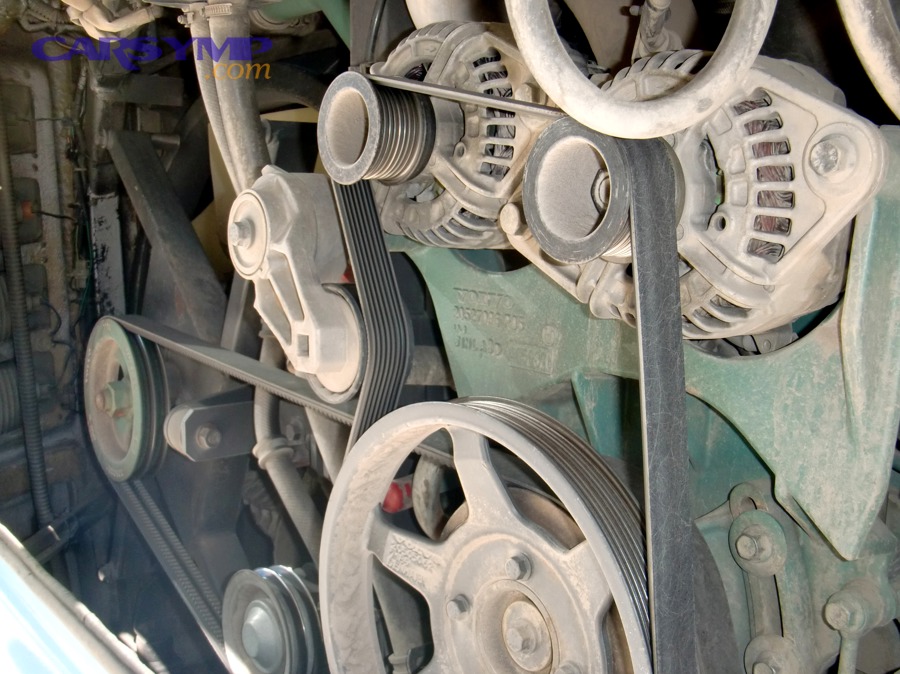
To be practical, treat this as a decision tree, not a debate. If the engine runs smoothly, the belt tracks straight, and there’s no burning rubber smell, you may be able to limp to a nearby shop. But if you hear a sudden loud squeal, see smoke, or notice the belt “walking” sideways, you’re no longer in a controlled situation—your belt is warning you before it fails.
Also remember: many cars use one belt to drive multiple accessories, including the alternator, power steering pump, and sometimes the water pump—so a belt event can turn into a drivability and engine-temperature event quickly.
To connect the dots: a seized compressor is rarely “just an A/C problem” once the belt is involved, which is why the next step is defining what “seized” really means on your vehicle.
What does a seized compressor mean in a car AC system?
A seized compressor means part of the compressor assembly stops rotating freely—either the internal pumping mechanism locks up or a related rotating component (clutch/pulley bearing) binds—creating drag that can overload the belt drive. Next, you’ll map which rotating part is actually stuck.
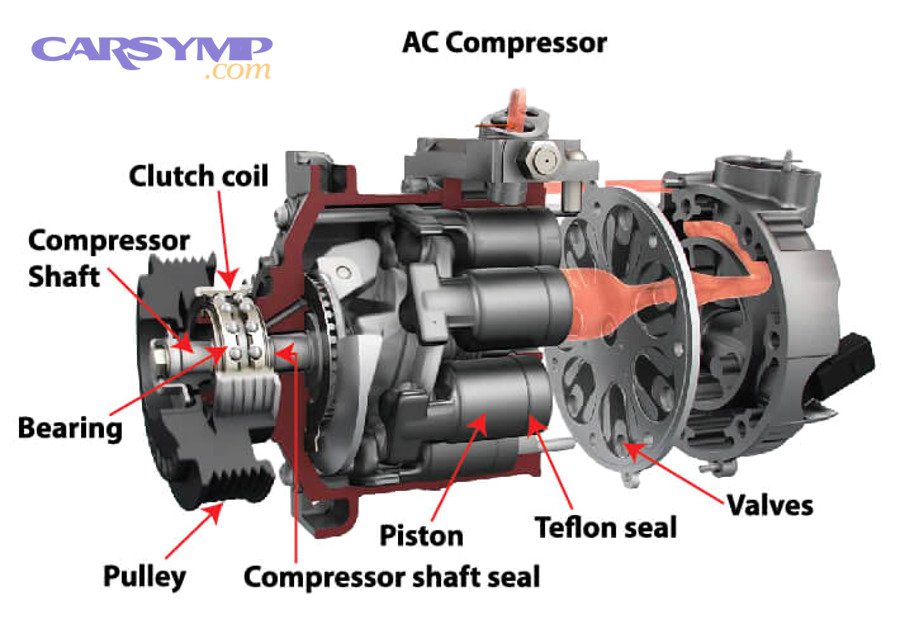
To make this concrete, a typical belt-driven compressor has two “rotating stories” at the front:
- The pulley bearing (spins anytime the engine runs, because the belt turns the pulley).
- The compressor shaft (spins only when the clutch engages on clutch-type systems).
That distinction matters because a vehicle can have a compressor that’s internally damaged but still “freewheels” until the clutch engages—while a bad pulley bearing can lock and cause trouble even with the A/C turned off.
Another key mechanism is moisture/contamination: when air and humidity enter a leaking system, acids and degraded oil can accelerate wear across moving parts, increasing the odds of internal damage and eventual lock-up.
To bridge to action: once you understand which part is dragging, you can predict what will fail first (belt, alternator charging, steering assist, or engine temperature).
What happens if the seized compressor locks the serpentine belt?
If a locked component stops the belt from moving, the belt can squeal, overheat, shred, or break—and when that happens you may lose charging and critical accessories, and the engine can overheat quickly on vehicles where the belt drives the water pump. Next, you’ll evaluate which accessories you’d lose on your car.
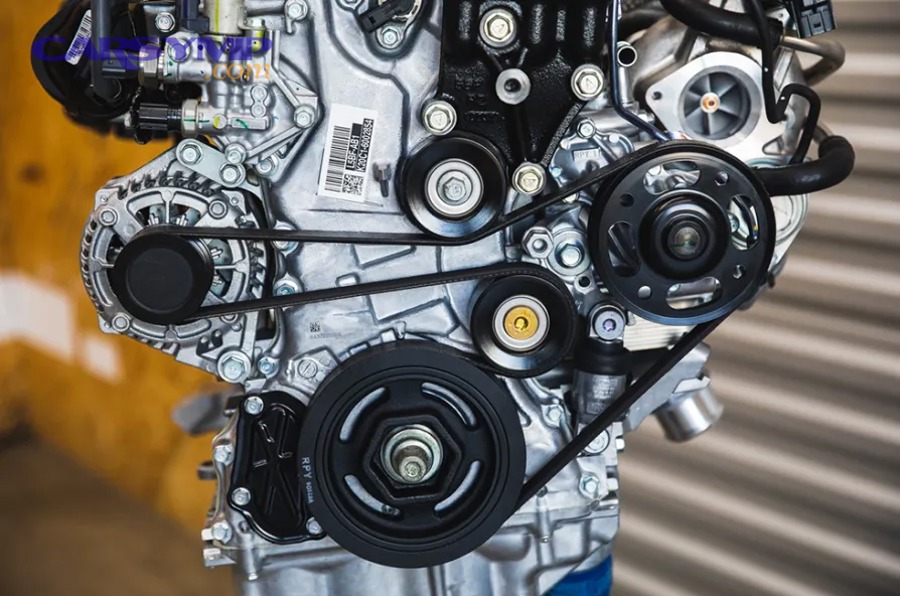
Here’s the real-world cascade most drivers don’t expect:
- Heat and friction build at the belt/pulley interface (squeal, smell, smoke).
- The belt glazing begins (reduced grip, slipping, faster wear).
- Belt damage accelerates (cord separation, missing ribs, fraying).
- Accessory loss follows (battery no longer charges, steering assist may drop, coolant circulation may drop on some layouts).
In plain terms: your car may “still drive” for a few minutes after the belt fails, but that doesn’t mean it’s safe or smart—battery voltage falls, steering effort can spike, and temperature can climb.
To make the risk visible, the next section will help you separate clutch-only problems from pulley-bearing lock-ups, because the “A/C off” trick only helps in one of those cases.
How can you tell if it’s the compressor, clutch, or pulley bearing?
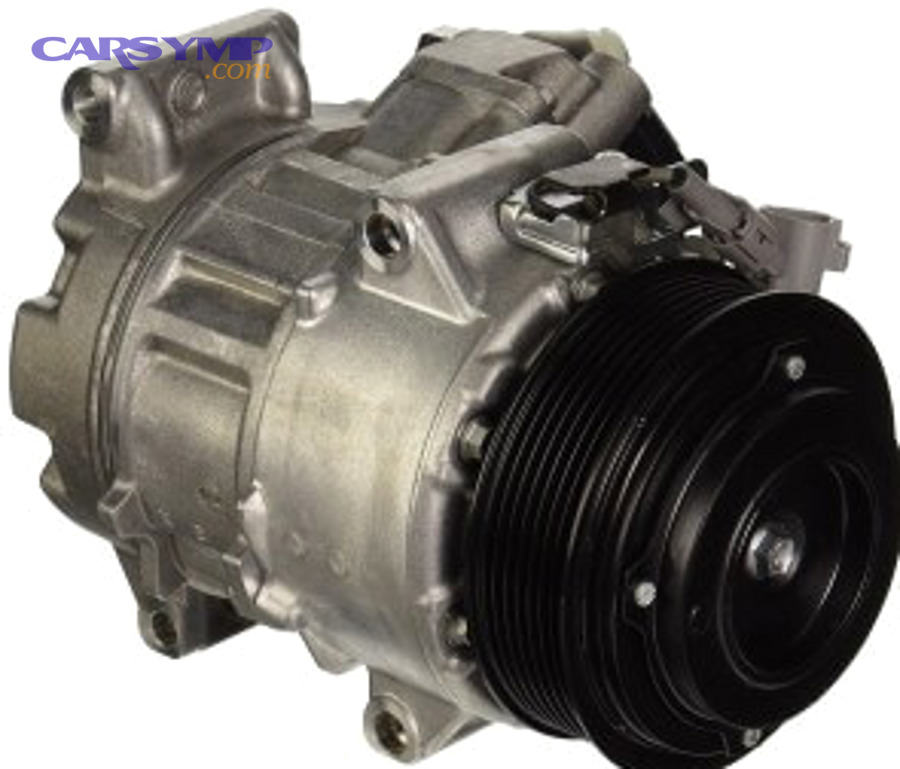
You can usually narrow it down by matching symptoms to when the noise/drag occurs: if trouble appears only when A/C is commanded on, suspect the clutch/compressor internals; if it happens all the time with the engine running, suspect the pulley bearing or belt path. Next, you’ll do quick checks that don’t require special tools.
What symptom timing tells you (A/C off vs A/C on)
If the squeal or grinding starts the moment you turn A/C on, the clutch is trying to drive a compressor that’s hard to turn, or the clutch itself is failing. Cụ thể hơn, if the system “clicks” and the engine load surges, then the belt chirps, that pattern points toward a driven-shaft problem rather than a freewheeling pulley.
What “all-the-time” noise suggests
If you hear grinding or chirping even with A/C off, the pulley bearing is a prime suspect, because the pulley spins anytime the engine spins. For flow: this is why “just don’t use A/C” is not a universal safety strategy—it depends on which part is seized.
What you can safely observe under the hood
With the engine off, look for belt dust, shredded ribs, or a belt that’s sitting off-center on a pulley. Then, with the engine running (hands and clothing well away), watch whether the belt tracks smoothly or oscillates. Tuy nhiên, if you see wobble, smoke, or the belt trying to climb a pulley edge, you should shut down immediately—continuing is how “a small bearing” becomes “a roadside belt failure.”
To keep the chain moving: once you’ve identified which pattern matches your car, you’ll know whether you should attempt a short drive, or stop and plan a tow.
What should you do immediately if the belt squeals, smokes, or snaps?
If you get squeal with burning smell, visible smoke, or belt fragments, the safest move is to pull over and shut the engine off as soon as you can do so safely, because continued running can turn a belt problem into overheating or loss of electrical power. Next, you’ll handle the “right now” checklist in the correct order.
Step 1: Reduce load and create a safe stop
Turn off A/C, turn off non-essential electrical loads, and head to the nearest safe shoulder or parking lot. Để bắt đầu, prioritize safety over “making it home,” because a belt failure can leave you stranded in a worse location.
Step 2: Check temperature and warning lights, then decide on restart
If the temperature needle rises rapidly, if the battery light comes on, or if steering becomes suddenly heavy, assume the belt or accessory drive is compromised and do not keep driving. Ngược lại, if everything is stable and you only had a brief chirp when the A/C engaged, you may be dealing with a clutch/compressor-load issue that can be managed short-term with A/C off (still with caution).
Step 3: Avoid prolonged roadside exposure
Roadside risk isn’t theoretical. Theo nghiên cứu của AAA Foundation for Traffic Safety từ Research Department, vào January 2024, their report documents roadside assistance provider fatalities over recent years, reinforcing why minimizing time on the shoulder matters.
To transition: once you’re safe, the next decision is whether driving without A/C is a reasonable temporary strategy—or whether towing is the only responsible option.
Is it safer to keep driving with A/C off, or to tow it?
Towing is safer whenever the pulley bearing may be locking, the belt shows damage, or you’re unsure—because “A/C off” only reduces risk when the seizure is in the driven compressor internals and the pulley still spins freely. Next, you’ll use a simple comparison to choose the lower-risk path.
Drive a short distance (only if these are true)
- No smoke, no burning rubber smell, and no visible belt fray.
- No battery light, no temperature rise, and steering feels normal.
- The noise/drag happens only when A/C is turned on, and stops when A/C is off.
Ví dụ, if the compressor loads up only when commanded on, you can reduce the clutch engagement events by keeping A/C off and avoiding “MAX A/C” requests that might auto-cycle the system.
Tow (or do not restart) if any red flag is present
- Noise continues with A/C off (bearing/pulley suspicion).
- Belt dust, shredded ribs, visible misalignment, or wobbling pulley.
- Temperature climbs, battery warning appears, or steering assist changes.
Hơn nữa, if the belt snaps once, even if you replace it, the underlying seized pulley can shred the new belt within minutes—so towing is often cheaper than repeating failures and risking an overheat event.
To keep momentum: if you must get home and towing isn’t available immediately, the next section explains safer “bypass” concepts—and their limits.
Can you bypass a seized compressor to get home?
Sometimes yes, but only through a correct belt reroute (shorter belt) or a proper bypass pulley kit for your vehicle; improvisation is risky because belt alignment and wrap angles matter. Next, you’ll see what bypassing actually changes—and what it does not.
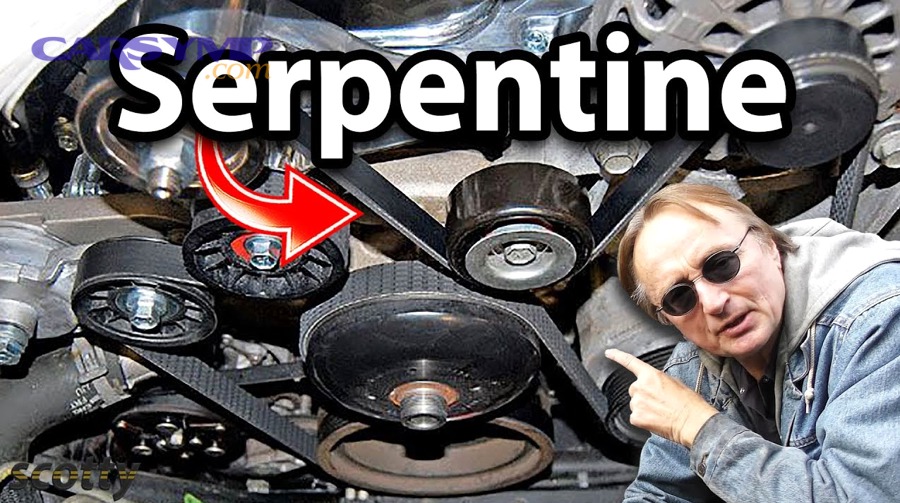
Belt bypass works because it removes the seized pulley from the belt’s path. Practically, that can mean:
- Using a shorter belt that routes around the compressor location (vehicle-specific).
- Installing a compressor bypass pulley (where available) so the belt still has proper routing and tension.
However, there are hard limits: if your vehicle’s belt routing uses the compressor pulley as a key wrap point for other pulleys, a random reroute can cause belt slip, noise, or premature failure. So the correct approach is “known routing for your engine,” not guesswork.
Here is one practical demonstration video showing the concept of using a shorter belt to bypass a seized compressor on certain setups:
To connect this back to safety: bypassing can be a valid temporary mobility fix, but it’s not a repair—your A/C stays disabled, and the underlying failure may have contaminated the system.
When is driving absolutely unsafe with a seized compressor?
It’s unsafe to drive when the belt is actively failing, when critical accessories are at risk of stopping, or when the compressor/pulley is locking unpredictably—because you can lose charging, steering assist, and temperature control without warning. Next, you’ll group the “hard stop” conditions so you don’t rationalize past them.
Hard-stop condition 1: Any sign of belt destruction
Smoke, a strong rubber smell, belt strands hanging, or sudden loud squeal means friction is high enough to destroy the belt. Tiếp theo, stopping immediately prevents a shredded belt from whipping into nearby wiring, hoses, or sensors.
Hard-stop condition 2: Rapid temperature increase
If the water pump is belt-driven on your vehicle, belt slip or break can cause the engine to overheat fast. Quan trọng hơn, overheating damage is often far more expensive than a tow.
Hard-stop condition 3: Electrical system instability
A battery light, dimming lights, or fluctuating gauges can indicate reduced alternator drive. In that case, even if the engine is still running, it may stall once voltage drops—and restarting may not be possible.
Hard-stop condition 4: Steering effort changes
On vehicles where steering assist depends on belt-driven pumps (or where electric assist is sensitive to low voltage), a belt event can make the car harder to control. This is not a “finish the trip” situation.
To transition: once you decide not to drive, the smartest next move is planning a repair that prevents repeat failure and avoids contaminating new parts.
What repair path prevents repeat failure?
The best repair path fixes the root cause (bearing vs internal seizure), restores correct lubrication and sealing, and addresses contamination risk—because swapping only one part can leave debris or acids that damage the next component. Next, you’ll align the repair scope with how the failure occurred.
If the system failed due to moisture/acid formation and internal wear, the “right” fix is typically a system-level plan, not a single bolt-on.
In many real repairs, technicians discuss AC compressor replacement as a package because the compressor is both a pump and a contamination generator when it fails. The cost varies widely by vehicle and labor access, so an AC compressor replacement cost breakdown should separate parts, refrigerant service, flushing, and labor—otherwise you can’t compare quotes meaningfully.
Beyond the compressor itself, it’s common to ask What parts to replace with compressor after a lock-up because seals, driers, and metering devices can be affected by debris or degraded oil. Also, if you experienced classic AC compressor failure symptoms (noise under load, intermittent cooling, clutch cycling), that history helps the shop choose between a clutch/pulley-focused repair and a full system cleanup.
Even if your immediate issue showed up as a “drive problem,” treat this as a reliability project. A quick pre-diagnosis note you can hand to the shop (a simple “Car Symp” list: when noise happens, whether A/C off changes it, any smoke/smell, any warning lights) speeds up correct diagnosis and reduces trial-and-error.
To bridge to the next layer: once the urgent “can I drive” question is resolved, it’s worth understanding the edge cases—especially the language confusion around seized vs clutch failure and the growing number of electric compressors.
Contextual border: Up to this point, the focus was immediate safety and drivetrain consequences. Next, we expand into terminology edge cases, hybrid/EV differences, and bypass options so you can communicate clearly and avoid the wrong fix.
Seized vs locked-up vs clutch failure: edge cases drivers miss
These terms get mixed together, but they describe different failure modes with different risks: a seized pulley bearing can be dangerous even with A/C off, while a locked compressor may only create drag when the clutch engages. Next, you’ll use four quick clarifiers to avoid misdiagnosis.
Seized pulley bearing vs seized internals
A pulley bearing failure is a “spins-all-the-time” problem; internal seizure is often a “spins-when-engaged” problem. So if A/C off doesn’t change the noise or drag, you’re likely dealing with the pulley side.
Belt-driven compressors vs electric compressors
Many hybrids and some modern vehicles use electric compressors, which changes the belt-risk story: you may lose cooling without risking a serpentine belt event. Conversely, on belt-driven systems, the belt remains the central risk pathway.
Bypass pulley kits vs shorter belt reroute
A bypass pulley kit preserves factory-like routing and tension where available, while a shorter belt reroute can work but must match your engine’s accessory layout. The main point: you’re managing belt geometry, not “tricking” the car.
Cabin heat and roadside safety while waiting
If you’re stuck without A/C, prioritize hydration, shade, and minimizing roadside exposure. A safe tow pickup location is often worth a short push (with hazards on) into a lot, rather than waiting on a narrow shoulder.
Frequently asked questions
These quick answers reinforce the key safety logic and help you communicate clearly with a shop. Next, use them to double-check your plan before you spend money or take risks.
If my A/C is off, does that guarantee the compressor can’t hurt the belt?
No. If the pulley bearing is failing or locking, it can still damage the belt because the pulley spins whenever the engine runs. A/C off mainly helps when the internal compressor drag occurs only during clutch engagement.
Can I just cut the belt and drive without it?
Usually not safely. On most vehicles, that belt drives the alternator and often other critical accessories; without it you’ll lose charging quickly and may overheat if the water pump is belt-driven.
Why did my belt squeal only when I turned the A/C on?
That pattern often indicates the clutch engaged and the compressor load spiked—either because the compressor is hard to turn or because the clutch is slipping. The squeal is the belt warning you about sudden drag.
Is it okay to replace only the clutch or pulley instead of the whole compressor?
Sometimes, if diagnosis confirms the internals are healthy and the issue is isolated to the clutch or pulley bearing. But if contamination or internal wear caused the failure, partial replacement can lead to repeat problems.
What’s the safest “limp home” strategy if I must move the car?
Keep A/C off, minimize electrical load, watch temperature and warning lights, and drive only to the nearest safe stop or shop—unless any belt damage or ongoing noise exists, in which case towing is the safer choice.