


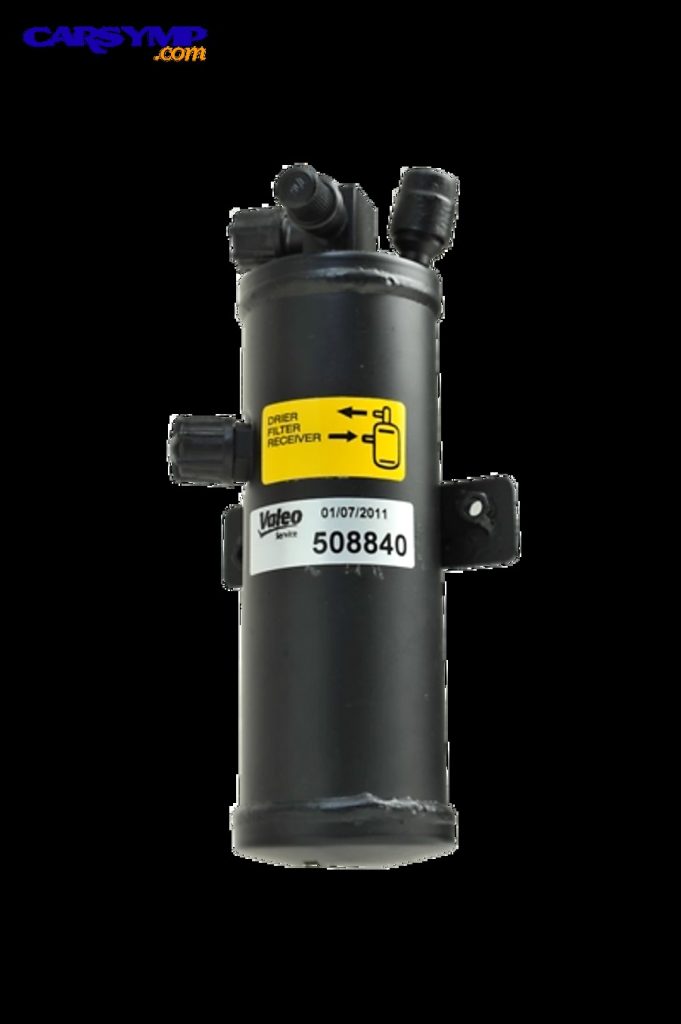
If you’re asking what parts to replace with compressor, the short answer is: replace the compressor and the parts that protect it from moisture, debris, and restriction—otherwise the new unit can fail fast.
To begin, most “comeback” failures happen because the system still contains water, acid, worn metal, or a hidden restriction—so the new compressor is forced to run hot, starved, or contaminated. That’s why items like the receiver drier (or accumulator) matter as much as the compressor itself.
Next, if your system uses a receiver drier and expansion valve, you’ll want to think in terms of: “Which components trap moisture and grit?” and “Which components can become clogged and create high pressure?”—because those are the two fastest paths to repeat failure.
Moreover, “replace everything” isn’t always necessary; what you replace depends on the failure mode, contamination level, and the type of condenser and metering device your vehicle uses. Giới thiệu ý mới: below is the practical parts list—and the logic behind it—so you spend money only where it prevents the next breakdown.
Do you always replace the receiver drier (or accumulator) with a compressor?
Yes—you should replace the receiver drier (or accumulator) whenever the system is opened, because its desiccant saturates quickly and its internal filter can trap debris that would otherwise hit the new compressor. To understand why, focus on moisture control first, then debris control.
Tiếp theo, once you see what the drier actually does, you’ll understand why skipping it is one of the most common causes of repeat A/C failures.
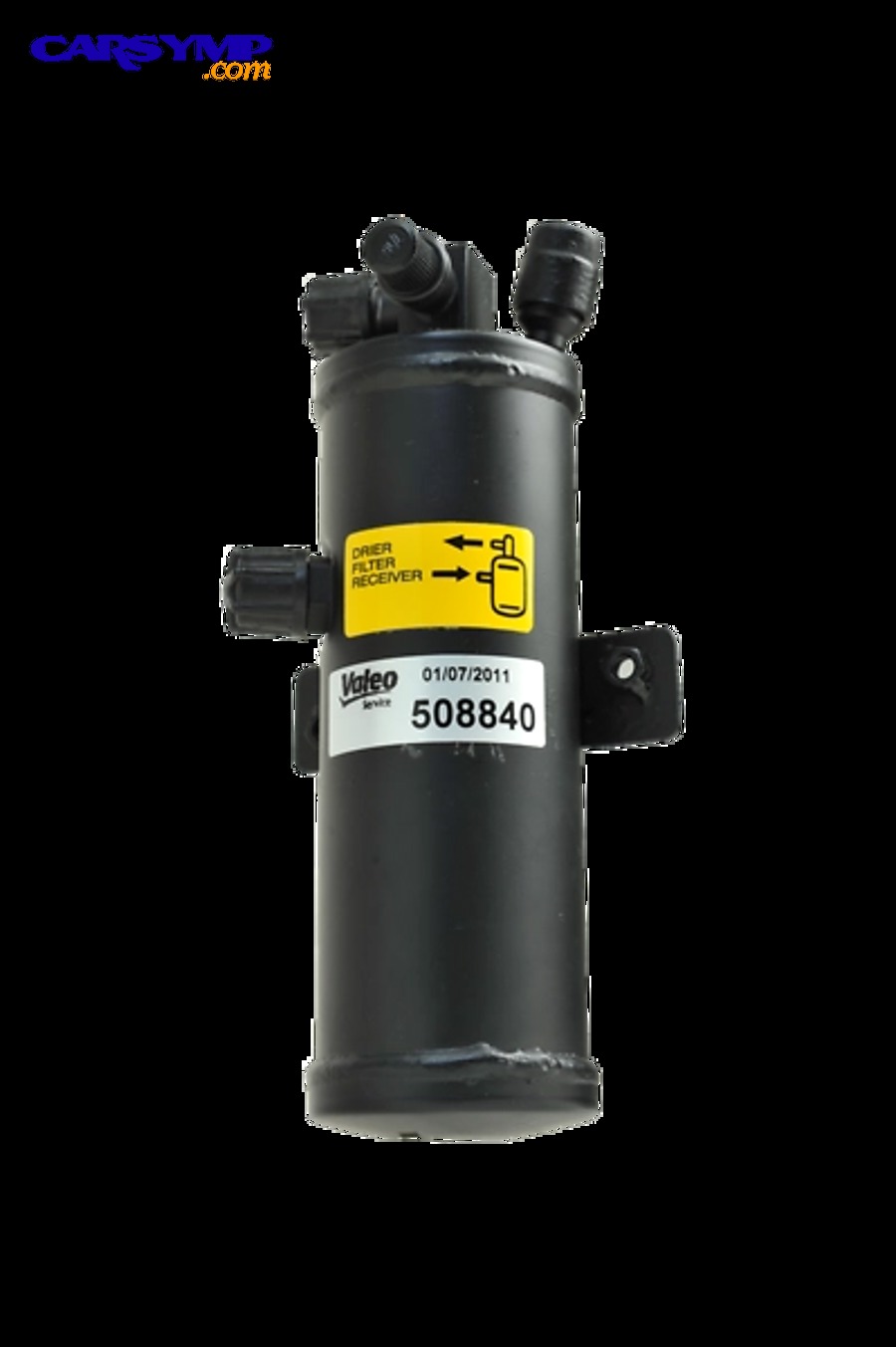
What is the receiver drier doing that protects your new compressor?
The receiver drier is a moisture-and-debris management canister on the high side that stores liquid refrigerant, filters particles, and holds desiccant to absorb humidity that would otherwise form acids and corrosion inside the system. Cụ thể, it’s your “chemical shield” against the air that sneaks in during service or leaks.
Để minh họa, MACS explains that receiver/driers contain desiccant to absorb moisture and should be replaced any time the system is opened, because the desiccant can become saturated rapidly when exposed to the atmosphere.
How often should a receiver drier be replaced in normal ownership?
As a preventive interval, many technical sources recommend periodic replacement, especially in humid climates or high-leak histories. For example, Valeo notes “Replace the receiver drier every 3 years” as a maintenance best practice.
Quan trọng hơn, even if you’re not on a calendar schedule, any time the system is opened (hose off, condenser replaced, compressor replaced), the drier/accumulator becomes a “one-and-done” part.
What changes if your system has an accumulator instead of a receiver drier?
If your vehicle uses an orifice tube, it typically uses an accumulator on the low side instead of a receiver drier on the high side. Either way, the rule is similar: replace the moisture trap component with the compressor, because it holds desiccant and can be restricted by debris.
Hơn nữa, accumulator replacement is extra important after a compressor failure because it’s one of the first places that degraded oil and particles collect.
Should you replace the expansion valve or orifice tube at the same time?
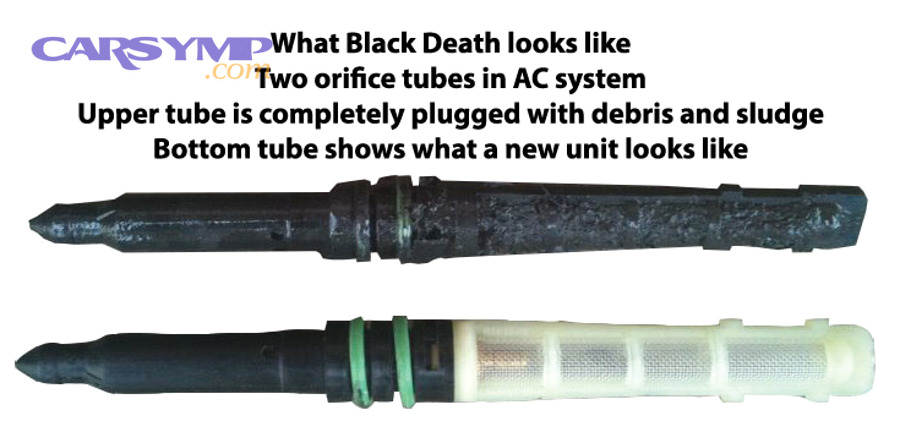
It depends—but if there was contamination, restriction symptoms, or compressor failure debris, you should replace the expansion valve (TXV) or orifice tube, because these small metering passages clog easily and can starve or flood the new compressor. Tuy nhiên, if the system was clean and failure was purely external (like a clutch issue), replacement may be optional.
Dưới đây, we’ll connect contamination, flow restriction, and the specific component that meters refrigerant—because that meter is where “invisible failures” hide.
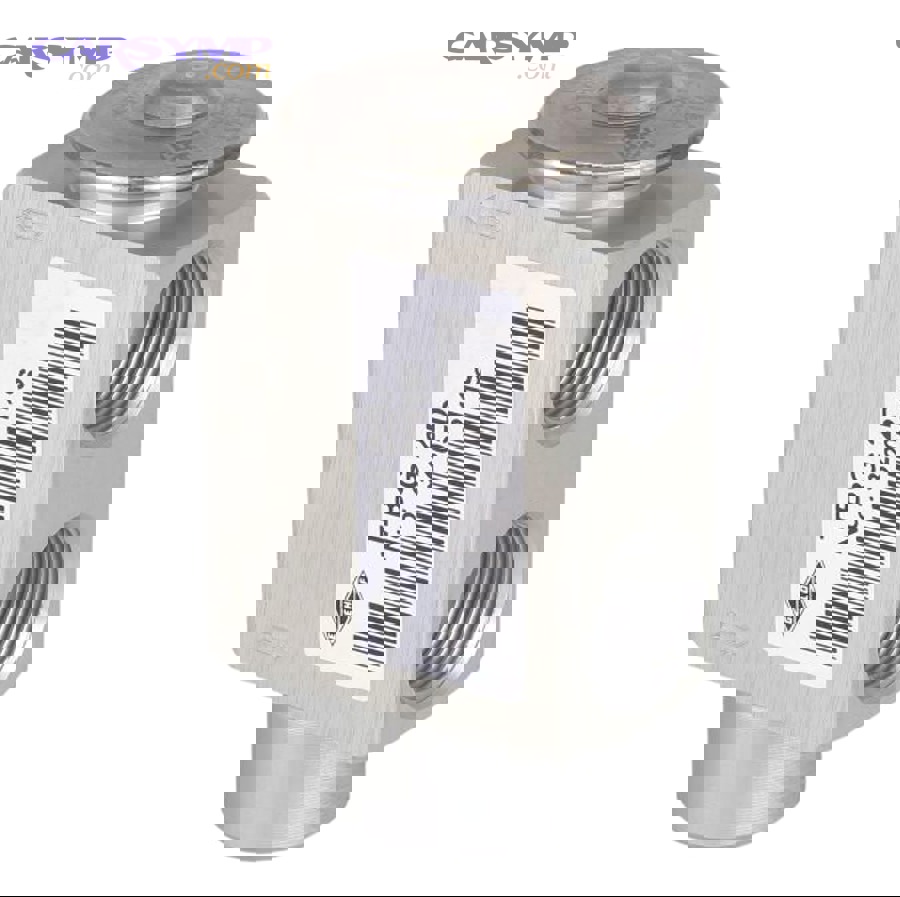
When is replacing the expansion valve the smart move (not just “extra”)?
Replace the expansion valve when you have: inconsistent cooling, freezing/icing behavior, abnormal pressures, or any sign of debris in the system. Cụ thể hơn, moisture can create ice at the expansion valve level and cause erratic valve function, and debris can clog the valve and create a high-pressure, low-flow condition that overheats the compressor.
The practical takeaway: if you found metal, sludge, or discolored oil, treat the expansion valve/orifice tube as “cheap insurance” against the next failure.
Can you flush an expansion valve or orifice tube instead of replacing it?
No—flushing is not a reliable substitute. Sanden explicitly warns: DO NOT flush the thermal expansion valve or orifice tube because residual flushing fluid can’t be removed and these parts restrict flushing flow through other components.
Đặc biệt, if you try to flush through a restriction, you can move contamination deeper into the evaporator or condenser, where it becomes harder to remove later.
What evidence-based reason ties moisture control to metering device decisions?
Moisture is not “just water”—it’s a corrosion and chemistry accelerator inside A/C. Theo nghiên cứu của SAE International từ SAE Technical Paper Library, vào 01/1958, paper “THE HAZARDS OF MOISTURE IN AUTOMOBILE AIR CONDITIONING” documented moisture as a hazard in automotive A/C systems.
So if the system was open, wet, or leaking for a long period, metering devices become higher risk because icing, corrosion byproducts, and debris tend to show up there first.
When must the condenser be replaced with the compressor?
You must replace the condenser when it’s internally restricted, contaminated beyond effective cleaning, or uses microchannel construction that traps fine debris—because the condenser becomes a debris reservoir that re-contaminates the new compressor. To start, look at the condenser type and the failure contamination level.
Bên cạnh đó, condenser decisions are where you can either save money safely—or create the most expensive repeat repair.
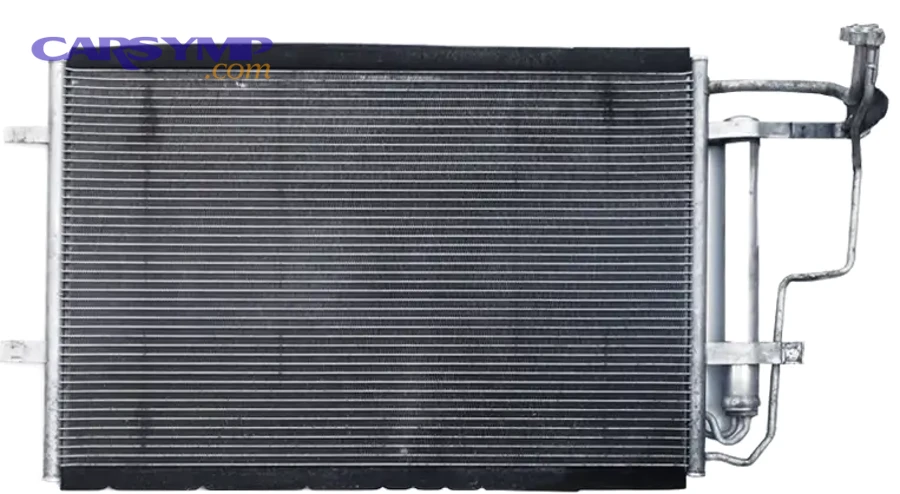
Which condenser designs are most likely to “hold onto” compressor debris?
Microchannel condensers have many tiny passages that improve heat transfer but are more prone to clogging by fine particles. Sanden notes that some condensers use micro-channels that can be clogged by particles generated by the compressor, sometimes allowing flushing, but in other cases requiring condenser replacement.
Ngược lại, older tube-and-fin condensers are generally more flushable, but they still require inspection to confirm debris is truly removed.
What symptoms point to an internally restricted condenser?
A restricted condenser often shows high high-side pressure, poor cooling at idle, and abnormally high discharge temperatures. Cụ thể, if airflow is normal but pressures are abnormal, internal restriction moves to the top of the suspect list.
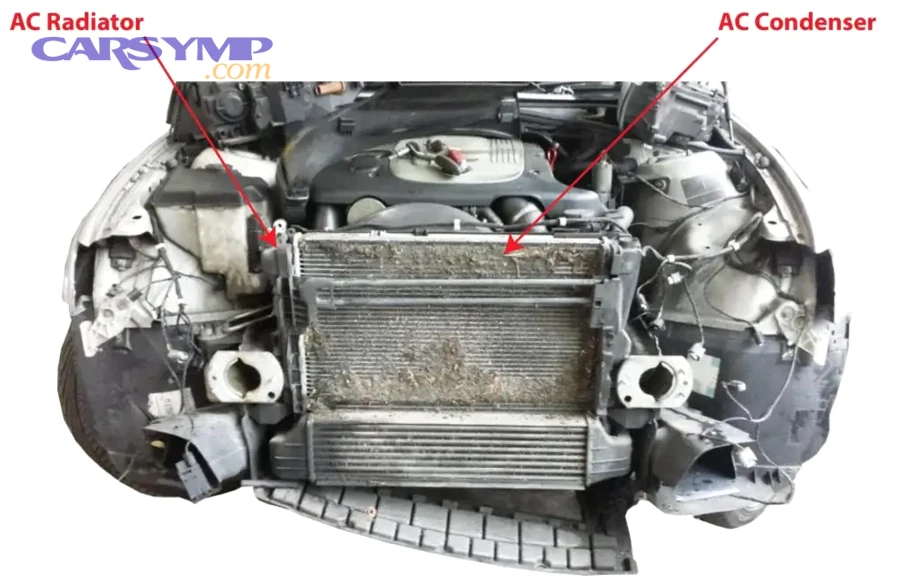
For location and airflow context, a condenser typically sits in front of the radiator and depends on clean airflow to reject heat.
How do you decide: flush the condenser or replace it?
Use this rule: if you had a catastrophic compressor failure (seizure, “black sludge,” metal), assume the condenser is contaminated unless proven otherwise by professional inspection or an approved flush outcome. Hơn nữa, when the cost of a new condenser is lower than the risk of repeat failure, replacement becomes the rational choice.
Which seals and “small parts” should be replaced every time?
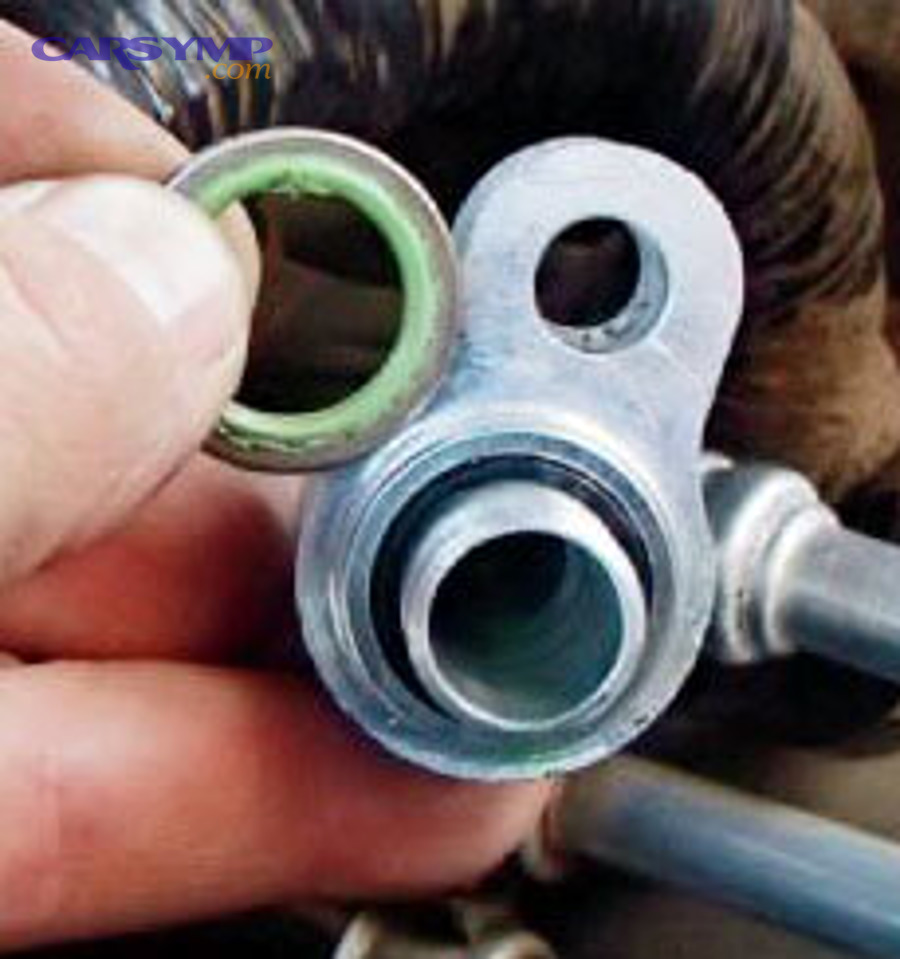
You should replace all disturbed sealing components—especially O-rings, sealing washers, and any gasketed joints you open—because aged seals shrink, harden, and leak after being disturbed, and leaks reintroduce moisture that damages compressors. Tiếp theo, treat seals as part of the compressor-protection system.
Why are O-rings non-negotiable during a compressor job?
Because A/C systems are extremely leak-sensitive: a tiny seep can gradually pull humid air into the system during off-cycles, which then drives acid formation and lubrication breakdown. Cụ thể, the moment you crack a fitting loose, you’ve disturbed the seal’s “set,” and reuse becomes a gamble.
In practice, use the correct material (often HNBR green O-rings for many modern systems) and lubricate lightly with the correct refrigerant oil before assembly—never with random grease.
What about compressor shaft seals or clutch-related seals?
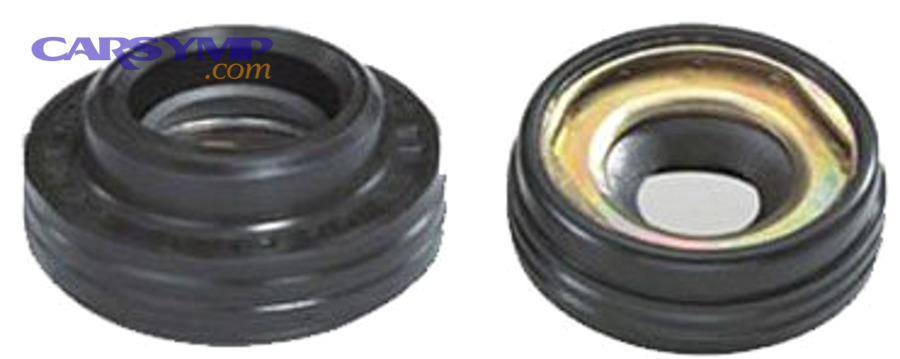
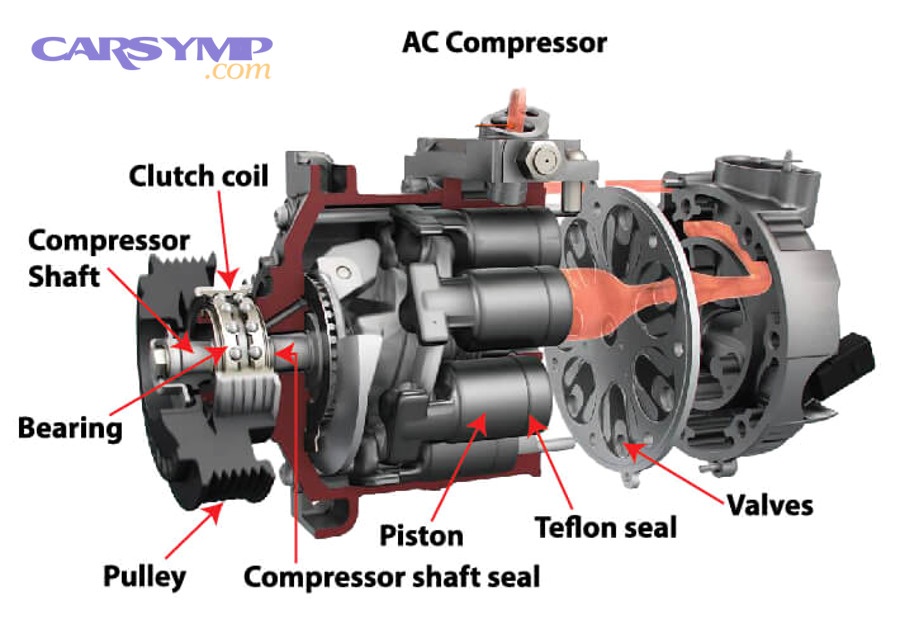
If you’re replacing the whole compressor, the shaft seal is included. But if you’re diagnosing leak patterns, be aware that compressor shaft seals are a common leak point; oil sling around the clutch area is a classic indicator.
Which “small parts” are easy to forget but cause big problems?
Do not overlook Schrader valves (service port cores), sealing caps, and sealing washers on banjo fittings. Hơn nữa, if your compressor includes an oil plug with an O-ring seat, ensure the O-ring is clean and not damaged when reinstalling.
What should you flush, and what should you never flush?
You should flush hoses, hard lines, and heat exchangers when contamination is present, but you should never flush parts that trap flushing fluid or restrict flow—because leftover solvent can destroy lubrication and create a repeat failure. Để bắt đầu, follow component-by-component rules rather than guessing.
Quan trọng hơn, flushing is only valuable when it’s done correctly with approved fluids and correct direction.
Which components are safe to flush?
Hoses, hard lines, and heat exchangers (condenser/evaporator) are generally flushable when design and contamination level allow. Sanden states: “Hoses, hard lines and heat exchangers can be flushed.”
So the “flushable category” is the open-flow tubing and exchanger category—where you can actually move solvent through and then remove it.
Which components should never be flushed (and why)?
Do not flush the compressor, receiver drier/accumulator, lines with mufflers, expansion valve, or orifice tube, because residual flushing fluid cannot be removed and these components restrict the flow of flushing agent.
Đặc biệt, the reason is not just “rule-following”—it’s physics: you can’t guarantee complete solvent removal from trapped-volume parts, and trapped solvent dilutes oil and attacks materials.
What kind of flushing fluid is considered “acceptable”?
Use A/C flushing fluids that meet recognized compatibility standards for refrigerant and oil. Sanden notes that flushing fluids should meet SAE J2670 to ensure compatibility with refrigerant, oil, and A/C materials.
The goal is simple: remove debris and contaminated oil without leaving behind chemicals that compromise seals, insulation, or lubricity.
Which parts list fits your failure mode: leak, noise, seizure, or debris?
There are three main parts-list paths: (1) clean replacement after an external issue, (2) moderate contamination with flushable debris, and (3) catastrophic contamination (“black death”) that pushes you toward replacing multiple components. Tiếp theo, match the parts to the failure—not the other way around.
Hãy cùng khám phá how to choose the smallest safe parts list that still protects the new compressor.
Case A: The system was clean, but the compressor was replaced for external reasons
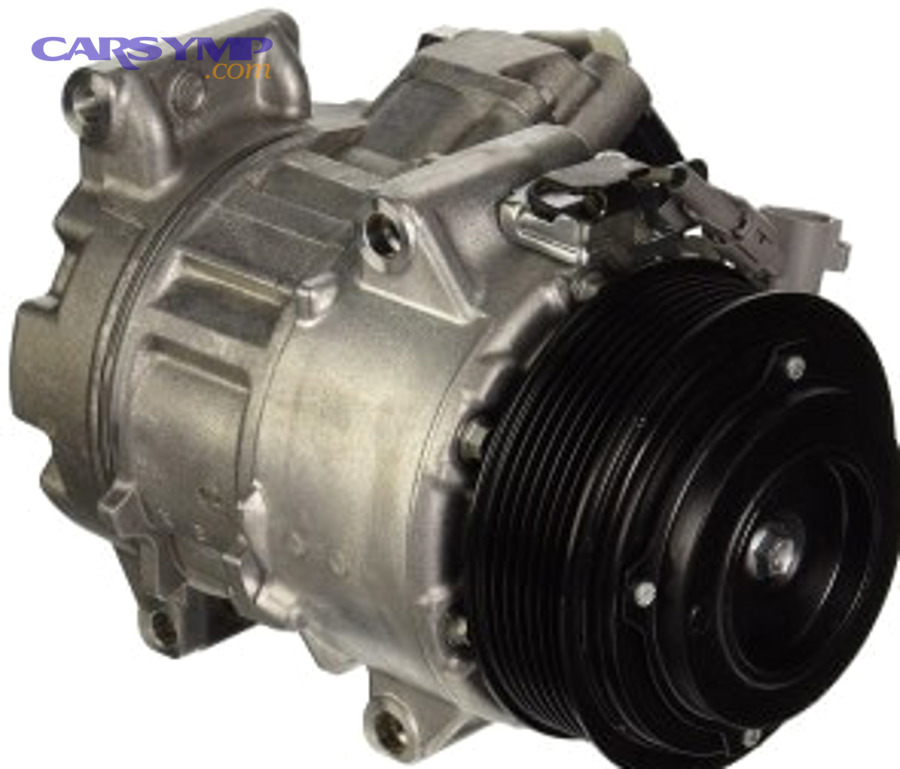
If the system was cooling normally and you’re replacing the compressor due to an external mounting issue, an electrical issue, or a non-catastrophic clutch problem, you may not need to replace the condenser and metering device. However, you should still replace the receiver drier/accumulator and seals because the system is being opened and exposed to humidity.
In this scenario, your “core list” is: compressor + receiver drier/accumulator + O-rings/seals + correct oil adjustments.
Case B: There is discolored oil or mild debris, but not catastrophic sludge
If you see gray discoloration, fine shimmer, or evidence of oil breakdown, plan for: a thorough flush of flushable lines and exchangers, replacement of receiver drier/accumulator, and a strong consideration for replacing the expansion valve/orifice tube. Tuy nhiên, if the condenser is microchannel, replacement becomes more likely because fine debris is hard to fully remove.
The aim is to stop the “debris loop” before it can sandblast the new compressor.
Case C: Catastrophic failure (“black death”) or compressor seizure debris
If you find black sludge, heavy metal particles, or a clogged orifice screen, treat the system as contaminated end-to-end. Rick’s Free Auto Repair Advice describes this severe debris/oil breakdown mixture as “Black Death,” where worn metal spreads throughout the A/C system and can require replacing multiple components.
In this case, your best-practice list often expands to: compressor + condenser (often) + receiver drier/accumulator + metering device + seals, plus aggressive flushing where allowed.
What about refrigerant oil: type, amount, and “hidden” contamination?
You must correct the oil type and quantity when replacing a compressor, because too little oil causes rapid wear and seizure while too much oil reduces cooling and can damage the compressor through poor lubrication dynamics. Tiếp theo, treat oil as a measured system component—not a guess.
Hơn nữa, the oil itself can carry contamination, so oil management and flushing logic must work together.
How do you set the correct oil amount when swapping compressors?
The practical method is: measure what comes out and put back what the system requires. Sanden advises measuring and recording oil extracted by the recovery machine, draining oil from the new compressor, then replacing oil into the new compressor in an amount equal to oil recovered from the old compressor and the machine.
This keeps system oil balance close to original, instead of “double-oiling” the system.
Why does moisture make oil decisions more important?
Because moisture plus refrigerant and oil can form acids that degrade lubrication and corrode metal. Sanden explains that when moisture is introduced, it may combine with refrigerant to form an acidic solution that can erode internal compressor components.
The implication: if the system was open to air, you’re not only replacing parts—you’re actively preventing acid chemistry.
What does research say about desiccant and long-term stability in modern systems?
The idea that “modern refrigerants make driers unnecessary” is not a safe DIY assumption. Theo nghiên cứu của SAE International từ SAE 2000 World Congress Technical Paper program, vào 03/2000, the paper “Effect of Desiccant on the Stability of Automotive Air Conditioning Systems” studied desiccant quantity and moisture behavior under laboratory aging and vehicle fleet tests.
So even if your system can dissolve more moisture, you still need a strategy to manage it—especially after service exposure.
Do you need to replace hoses, mufflers, or hard lines with the compressor?
No, not always—but you should replace any hose or line that’s leaking, internally degraded, or contains non-flushable restrictions, because those issues can reintroduce moisture or trap debris that kills the new compressor. Tiếp theo, separate “replace for leaks” from “flush for debris.”
Để hiểu rõ hơn, think in terms of flow and cleanliness: can you fully clean it, and can it hold pressure long-term?
When should you replace hoses instead of flushing them?
Replace hoses when they’re oil-soaked at crimps, cracked, visibly chafed, or when permeability/age has created repeated slow leaks. Hơn nữa, if a hose assembly contains an integrated muffler or internal restriction, it may be difficult or impossible to flush completely—making replacement the safer choice when contamination is present.
Sanden warns against flushing refrigerant lines with mufflers because residual flushing fluid cannot be removed and these parts restrict the flushing agent.
When are hard lines worth reusing?
Hard lines are usually reusable if they’re not corroded, kinked, or leaking, and if they can be flushed effectively when contamination exists. Cụ thể, a clean, undamaged aluminum line that flushes clear is typically fine.
But if you see internal corrosion flakes or repeated sealing failure at a joint, replacement prevents future leaks that would expose the system to humidity again.
What is the “minimum safe” replacement kit vs the “maximum protection” kit?
There are two practical kits: a minimum-safe kit for clean systems and a maximum-protection kit for contaminated or unknown-history systems. Tiếp theo, use kit thinking to avoid either under-repairing or overspending.
Minimum-safe kit (clean system, no debris evidence)
This kit typically includes: compressor, receiver drier/accumulator, correct O-rings for opened joints, and correct oil adjustments. The logic is simple: you’re protecting against service exposure moisture and preventing new leaks.
In real-world terms, this is the baseline for many warranty-compliant repairs because moisture control is non-optional.
Maximum-protection kit (contamination risk, unknown history, or failure debris)
This kit often includes: compressor, receiver drier/accumulator, expansion valve/orifice tube, condenser (especially microchannel), full seal/O-ring set, and flushing of hoses/lines/heat exchangers where allowed. Cụ thể, you’re removing the three killers: moisture, debris, and restriction.
It costs more up front, but it’s the kit that prevents the “twice labor” scenario.
Before the table below, note: this table helps you choose parts by failure mode, so you can match spending to risk instead of guessing.
| Failure / Situation | Replace with Compressor (Recommended) | Usually Flush (If Allowed) | Often Replace Instead of Flush |
|---|---|---|---|
| Clean system, external reason for compressor swap | Receiver drier/accumulator, O-rings/seals, service port cores if leaking | Not necessary unless contamination is found | Only leaking hoses/lines |
| Mild debris or discolored oil | Receiver drier/accumulator, consider expansion valve/orifice tube, full O-ring set | Hoses, hard lines, some heat exchangers | Microchannel condenser if flush outcome is uncertain |
| Seizure / heavy metal / “black sludge” | Receiver drier/accumulator, expansion valve/orifice tube, often condenser, seals | Hoses, hard lines, possibly evaporator depending on contamination | Condenser (often), restricted lines with mufflers, any component that won’t flush clean |
How do you validate the parts decision before you spend money?
You validate the decision by confirming contamination level, checking for restriction evidence, and identifying leak points—because the correct parts list depends on what’s actually inside the system, not what you hope is inside. Tiếp theo, use a repeatable checklist so you don’t miss the “one hidden cause” that ruins the new compressor.
What quick inspections give the most reliable clues?
Start with oil condition and debris checks: look for glittery oil, black sludge, burnt smell, or clogged screens. Cụ thể, inspecting the old compressor oil and any accessible screens is a high-signal test for whether you need the maximum-protection kit.
Then evaluate pressures and cooling behavior: abnormal high-side pressure and poor cooling can hint at restriction; cycling and icing can hint at moisture or metering issues.
What single mistake turns a good parts list into a bad outcome?
The most common mistake is replacing parts without removing the root cause—like leaving a restriction or moisture source in place. Theo nghiên cứu của SAE International từ Pre-1964 SAE Technical Papers, vào 01/1958, moisture hazards were highlighted as a critical A/C risk factor, reinforcing that “clean, dry” is not optional.
So even the best parts list can fail if the system remains wet or contaminated.
Common questions before you order parts
These quick answers help you avoid buying the wrong “extra parts” or skipping the one part that actually matters for compressor survival. Tiếp theo, use them as a final sanity check before checkout.
Is it okay to replace only the compressor if the A/C still has some cooling?
Sometimes—but only if you’ve confirmed the system is clean, dry, and not restricted. Ngược lại, if you have leaks or contamination, replacing only the compressor typically leads to repeat failure because the root cause remains.
Can a clogged receiver drier or expansion valve mimic a “bad compressor”?
Yes—restrictions can raise discharge pressure and reduce suction flow, which can look like poor compression. Cụ thể, a restricted metering device can starve the evaporator and force abnormal compressor operating conditions.
Do warranties really care about replacing the drier/accumulator?
Often, yes, because it’s a core protection component. MACS notes that most compressor warranties require receiver/drier replacement when the system is opened.
How to avoid repeat compressor failure after the parts are installed
You avoid repeat failure by ensuring the system is clean, dry, leak-free, and correctly oiled before running the new compressor under load. Tiếp theo, the job isn’t finished when the bolts are tight—the job is finished when pressures, temperatures, and stability checks pass.
What performance checks matter most on first start?
Watch high-side and low-side pressures, center vent temperature, and compressor cycling behavior. Cụ thể, a stable pressure relationship and predictable cycling indicate the metering device and condenser are doing their jobs.
Also verify there are no abnormal noises, and check for oil/refrigerant leaks at every disturbed joint after the first heat cycle.
What educational resource can help you visualize the process?
Below is a practical video walkthrough that helps you see the service flow and common pitfalls in real time.
In professional contexts, you’ll often hear about AC compressor replacement as a single job, but the real reliability comes from treating it as a contamination-control job plus a sealing job, not a single-part swap.
Similarly, discussions about AC compressor replacement labor time vary widely because the labor is driven by how much you must disassemble, how much contamination you must remove, and whether you’re replacing the condenser and metering device along the way.
If you’re unsure whether you need only a clutch or a full unit, a Compressor clutch vs full compressor diagnosis mindset is useful: identify whether the compressor internals are healthy, whether debris is present, and whether the system pressures make sense before buying parts.
And when contamination is confirmed, Flushing AC lines after compressor failure becomes a critical step—but only for the components that are actually safe to flush, using approved fluids and procedures.
Contextual border: Up to this point, you’ve built the core parts list and the decision logic for most vehicles. Next, we’ll cover edge cases that change the parts list—so you don’t get surprised by hybrid compressors, rear A/C circuits, or microchannel-specific constraints.
Edge cases that change the “replace with compressor” parts list
There are a few special cases where the correct parts list changes meaningfully—because the compressor design, circuit design, or contamination pathway differs from standard setups. Tiếp theo, use these edge cases to refine (not inflate) your parts list.
Hybrid or electric compressors: what extra caution changes the plan?
Electric compressors can be sensitive to certain solvents and contamination pathways. Sanden advises against using a solvent to flush an A/C system with an electric compressor because it can damage the copper coil coating.
So your edge-case rule: be stricter about flush chemistry, stricter about moisture control, and more willing to replace questionable components instead of experimenting.
Rear A/C systems: why does the parts and flushing approach change?
Rear circuits add long lines and extra metering devices that can trap debris. Sanden notes debris can be distributed throughout the entire A/C system and emphasizes flushing rear lines; it also describes methods to allow back-flushing and then installing a new expansion valve afterward.
That means your parts list may include additional seals and, in some vehicles, an additional metering device for the rear circuit.
Microchannel condenser systems: why is “replace” more common than “flush”?
Microchannels clog easily with fine particles, so “flush until clear” is harder to verify. Sanden highlights that micro-channels can be clogged by particles generated by the compressor, sometimes requiring condenser replacement.
In edge-case logic, if you can’t confidently prove cleanliness, replacement becomes the reliability move.
Moisture-heavy environments or repeated slow leaks: what shifts in your parts plan?
Repeated leaks mean repeated humidity exposure, which saturates desiccant and increases acid risk. MACS emphasizes rapid desiccant saturation after atmospheric exposure, reinforcing the “replace whenever opened” rule.
In these environments, you may move from “minimum-safe” to “maximum-protection” even without catastrophic debris, because moisture is the silent failure multiplier.