


Post-replacement vacuum and recharge steps are a precise how-to process: pull a stable deep vacuum, confirm the system holds, then recharge by the correct amount so cooling performance matches design—without moisture, air, or guesswork.
To help you do it confidently, this guide also explains evac and recharge setup choices (gauge manifold vs. vacuum-rated hoses, pump sizing, and why a micron gauge changes everything), so your results are repeatable instead of “it feels cold.”
You’ll also learn how to catch the most common post-install mistakes—misread gauges, poor service-port seals, and charge errors—before they turn into noisy operation, weak vent temps, or an early comeback leak.
Giới thiệu ý mới: Below are the step-by-step checks and decision points that make vacuum and recharge successful after any major AC service.
What are post-replacement vacuum and recharge steps, and why does “evac and recharge” matter?
Post-replacement vacuum and recharge steps are the how-to sequence used after opening an automotive AC system: evacuate to remove air/moisture, verify vacuum hold, then recharge to the correct spec so pressures and vent temps stabilize correctly.
To connect that definition to real outcomes, the key is understanding what vacuum actually fixes—and what it cannot fix—so you don’t chase cooling issues with repeated recharges.
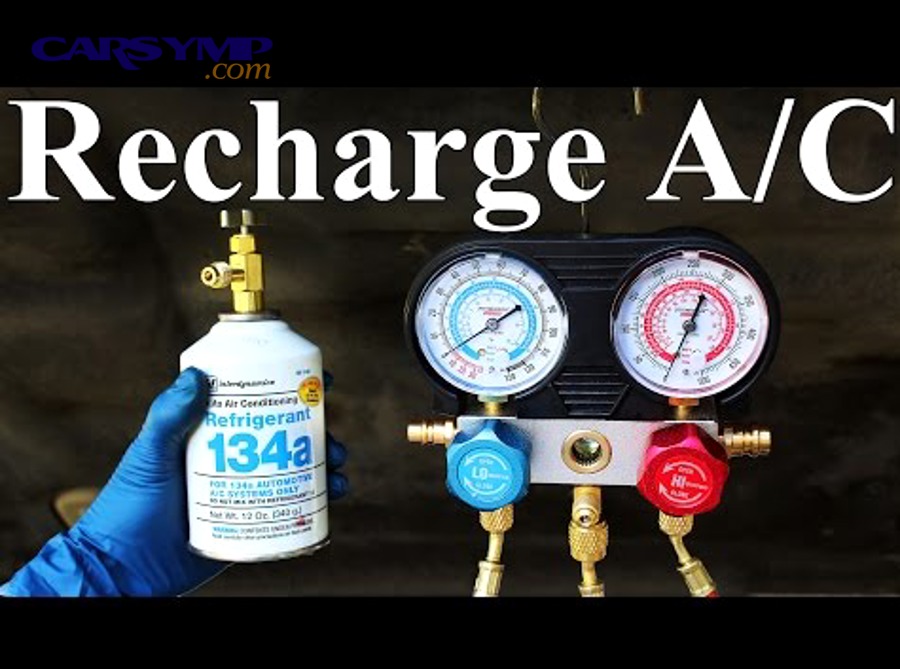
What vacuum removes (and what it doesn’t)
A proper evacuation boils off and removes moisture and non-condensable air, which otherwise reduce condenser efficiency and create unstable pressures. However, vacuum does not “prove” the system is leak-free under operating pressure—it only verifies sealing under vacuum conditions.
So the practical takeaway is: use vacuum to dry and de-air the system, then use a hold test to screen for obvious leaks, and finally validate under charge with stable readings and performance checks.
Why moisture is the silent performance killer
Moisture can freeze at the expansion device, causing intermittent cooling (cold-then-warm), and it can react with refrigerant/oil to form acids that damage internals over time. That’s why “it cools today” is not the same as “it will still cool next month.”
Next, you’ll set yourself up to remove moisture reliably by using the right tools and leak-prep habits before the pump ever turns on.
What tools and prep do you need before you start an evac and recharge?
You need a vacuum pump, a manifold gauge set (or service hoses), a method to measure charge by weight, and basic leak-prep items; done right, these tools prevent air contamination and over/undercharge problems from the first attempt.
To move from “tools list” to a reliable workflow, focus on vacuum integrity and accurate charging—the two pillars that decide whether the system behaves normally.

Minimum tools (functional) vs. best tools (diagnostic)
Functional minimum: vacuum pump, manifold gauges, and a refrigerant source with a scale. This lets you evacuate and charge, but it can still leave you guessing if the system has subtle moisture or micro-leaks.
Best practice: add a micron gauge (for true vacuum measurement) and a thermometer (for vent and ambient). These two tools turn vague gauge “feel” into measurable pass/fail criteria.
Prep checklist that prevents false readings
Before you connect anything, make sure service port Schrader cores are in good shape, caps are present (caps are seals), O-rings at opened joints are replaced, and all fittings are clean and correctly torqued. Also confirm the belt drive and electrical connectors are secure so you’re not diagnosing a mechanical/electrical miss as a refrigerant problem.
Next, you’ll connect equipment in a way that reduces air entry and avoids accidental refrigerant release during hose swaps.
Safety and legality essentials
Work in a ventilated area, wear eye protection and gloves, and keep refrigerant away from heat sources. Many regions restrict venting refrigerant; best practice is to recover refrigerant with proper equipment rather than releasing it. Treat AC service as both a performance task and a responsibility task.
How do you connect the gauge set and vacuum pump without introducing air?
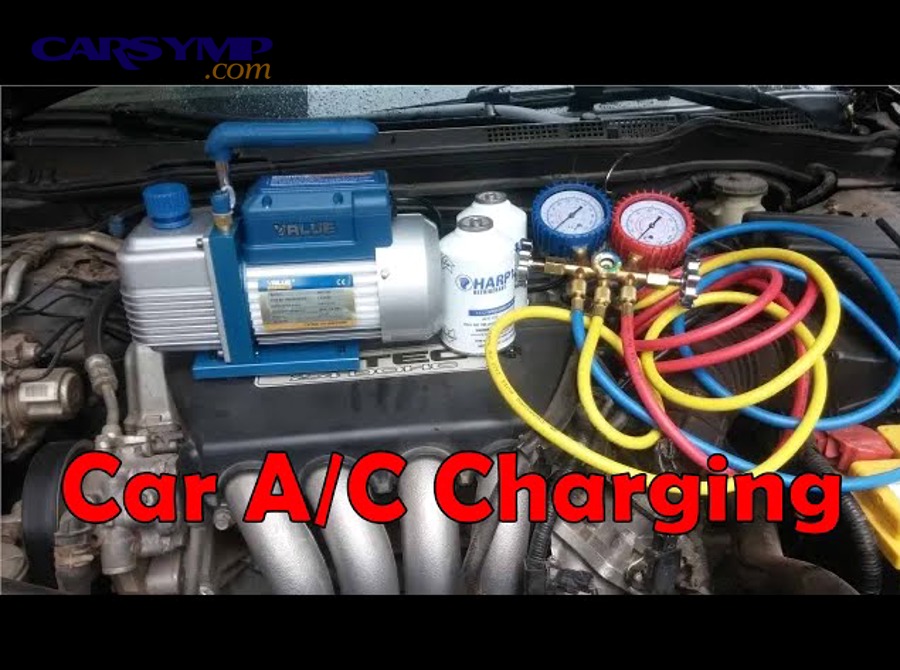
Connect the manifold to the low and high service ports, connect the center hose to the vacuum pump, then purge hoses strategically so you don’t trap air that later enters the system during evacuation and charging.
To make that connection step “clean,” you’ll use a simple sequence: tight fittings, correct valve positions, and short, deliberate purges at the right moments.
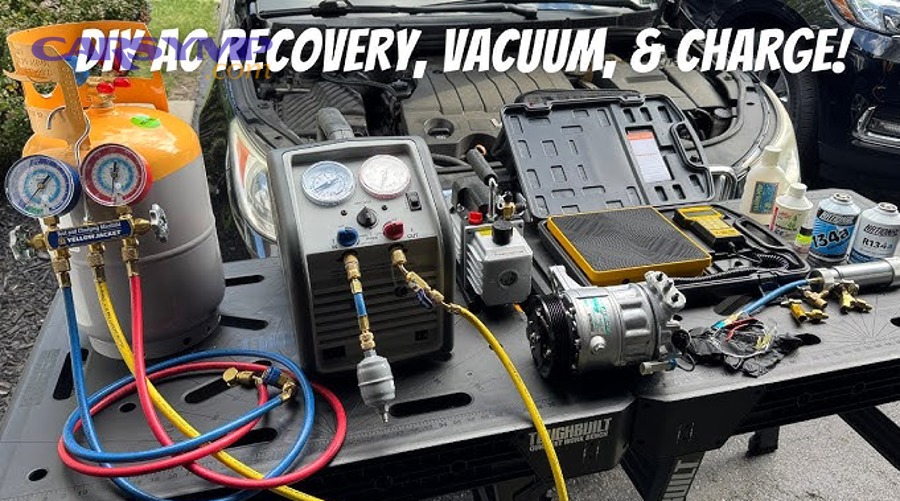
Correct valve positions (the most common beginner error)
Start with both manifold valves closed. Attach hoses to the correct ports, then only open valves when you’re ready to evacuate or charge. Accidentally opening the high-side valve while charging can spike pressures and create a safety risk, so build the habit of “valves closed unless performing a specific action.”
After that habit is set, you’ll minimize air intrusion by keeping hose changes minimal and timed, especially when switching from vacuum to refrigerant.
Hose purging: when and why
Purge the charging hose right before charging so air in the hose doesn’t become part of the system charge. Many techs do this by briefly cracking the connection at the manifold or the refrigerant source so refrigerant displaces air in the hose—done carefully to avoid unnecessary release.
Next, you’ll create a deep vacuum that removes moisture, and you’ll do it long enough that “vacuum achieved” also means “system dried.”
How long should you pull vacuum, and what is a “good” vacuum target?
Pull vacuum long enough to remove air and boil off moisture; a stable deep vacuum confirmed by a micron gauge is the most reliable target, while time alone depends on system size, pump strength, and how long the system was open.
To make this actionable, you’ll use a time guideline as a baseline, then rely on stability (not just the needle position) to decide when evacuation is truly complete.
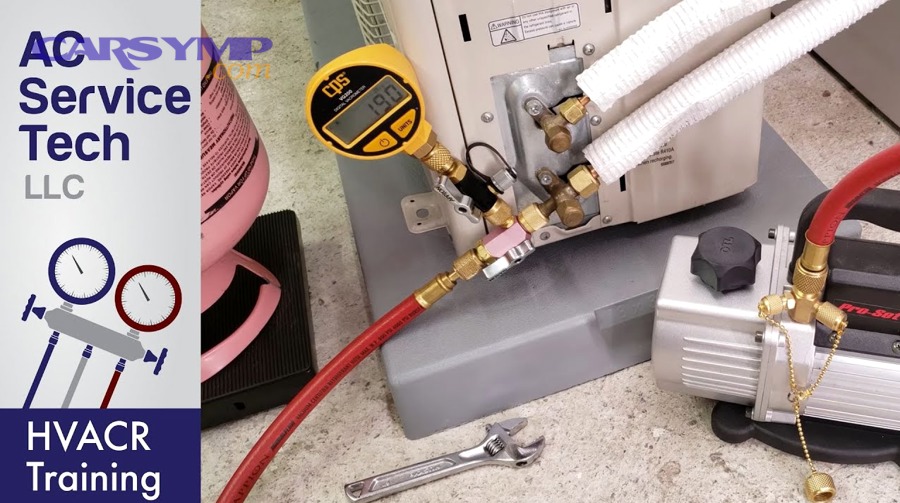
Practical time guidelines (baseline)
If the system was open briefly and conditions were dry, many DIYers run the pump for 30–45 minutes. If the system was open longer, or humidity is high, 45–90 minutes is a more conservative range. Bigger vehicles and larger systems often benefit from longer pull times.
However, time is only a starting point—because a leak can still let you “pull vacuum” temporarily, and moisture can still remain if you stop early.
Micron gauge targets (stability beats guessing)
A micron gauge measures absolute pressure in microns, revealing whether moisture is still boiling off or whether a leak is letting air back in. A strong, dry evacuation typically pulls down and stabilizes rather than bouncing upward after you isolate the pump.
Next, you’ll verify the work you just did by performing a vacuum hold test that separates “pump is strong” from “system is sealed.”
How do you perform a vacuum hold test to screen for leaks?
Perform a vacuum hold test by isolating the system from the pump, then watching whether vacuum remains stable for a set time; if the vacuum rises quickly, you likely have a leak, trapped air, or moisture still outgassing.
To keep the hold test meaningful, you’ll interpret the pattern of rise—not just whether it rises—because different patterns suggest different root causes.
This table helps you interpret common vacuum hold behaviors and what to check next.
| Hold Test Behavior | Likely Cause | Best Next Check |
|---|---|---|
| Vacuum rises fast within minutes | Significant leak, loose fitting, bad O-ring, faulty Schrader | Re-check fittings, replace O-rings, test service ports/caps |
| Vacuum rises slowly then plateaus | Moisture outgassing or minor seep | Evacuate longer; confirm with micron stability; inspect common joints |
| Vacuum holds steady for 15–30 minutes | Good vacuum seal under test conditions | Proceed to charge; validate under operating pressures afterward |
Why a “pass” is still only a screen
A vacuum hold test is valuable because it quickly catches obvious leaks, but it does not replicate the higher pressures the system sees while running. A system can hold under vacuum yet leak under pressure at a flare, a worn seal, or a hairline crack.
So after a successful hold, the next link in the chain is charging by weight and validating performance under normal operating conditions.
Fast troubleshooting if the hold test fails
Start with the easiest: tighten fittings to spec, verify the manifold valves aren’t bleeding, check hose O-rings, and confirm service-port cores and caps seal. If the system was open a long time, evacuate longer because moisture can mimic a slow leak by gradually raising pressure as it evaporates.
Next, you’ll move from “dry and sealed enough” to “charged correctly,” which is where many rework cycles begin if you don’t charge by weight.
How do you recharge the system correctly after evacuation?
Recharge correctly by adding refrigerant by specified weight (not pressure alone), using the low side for vapor charging unless procedures call for liquid with proper controls, and confirming stable pressures and vent temperature once the charge is in.
To make this step predictable, treat the factory charge spec as the target and your scale as the truth—because gauges are diagnostic tools, not accurate measuring cups.
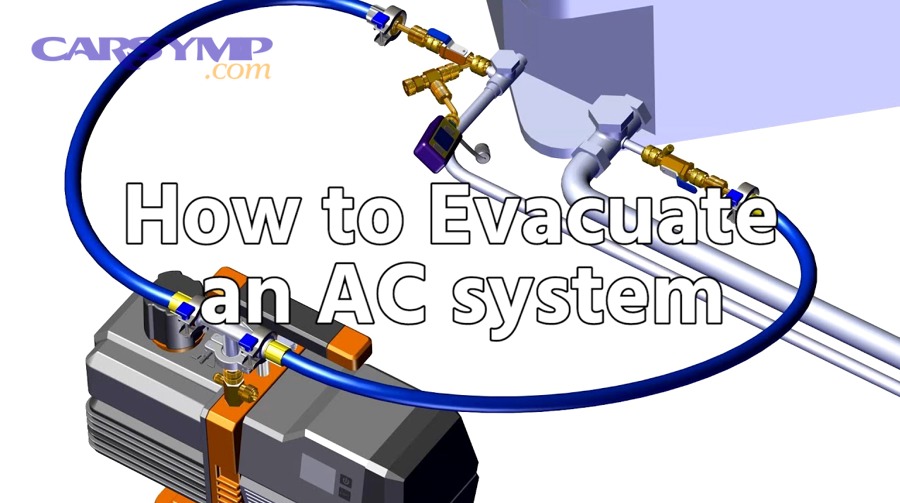
Charge by weight: the simplest path to “normal”
Modern systems are sensitive to charge level; a small undercharge can reduce cooling and oil return, while a small overcharge can raise head pressure and stress components. Charging by weight anchors the process to a known standard instead of a moving target influenced by ambient temperature and airflow.
Next, you’ll use gauge behavior and temperature checks as confirmation tools—so you catch airflow issues or sensor problems that can mimic low refrigerant.
What pressures can (and can’t) tell you during charging
Pressure readings vary with ambient temperature, fan performance, and engine speed. Gauges are best used to confirm that high-side pressures aren’t abnormally high and that low-side pressures aren’t abnormally low for the conditions—not to decide the exact amount of refrigerant.
So once you hit the specified weight, the next step is to verify system performance with repeatable checks that link charge level to real cabin comfort.
Confirming performance after recharge
With the system running, confirm condenser airflow (fans operating as expected), feel the lines for normal temperature change (high side warm/hot, low side cool), and measure vent temperature at a stable RPM. If vent temperature is unstable, consider moisture, airflow, blend door issues, or a restriction—not just “add more refrigerant.”
What post-service checks confirm the evac and recharge was successful?
Success is confirmed by stable pressures for the conditions, strong and consistent vent cooling, no abnormal noises, and no immediate signs of leakage at service ports and opened joints after the system heat-soaks and re-cycles.
To keep the confirmation step practical, you’ll check the system twice: once immediately after recharge, and again after a short drive or heat soak, because some issues only appear after pressure and temperature cycling.
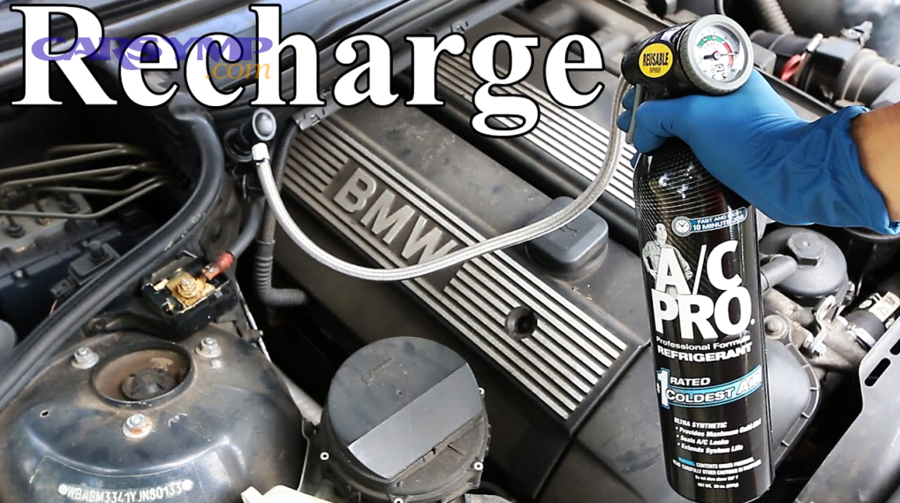
Immediate check: stabilize and observe
Let the AC run long enough to stabilize (not just a quick blast). Watch for short cycling, fluctuating gauge readings, or rapid frosting at the expansion device area. Also verify the condenser fan strategy: a weak fan can mimic an overcharge by driving high pressures.
Next, you’ll do a quick leak-awareness scan so you don’t “finish” the job only to return because of a loose cap or a seep at a fresh O-ring.
Quick leak-awareness scan (low effort, high value)
Inspect opened connections for oil residue, verify service-port caps are installed and snug, and listen for faint hiss at the ports. If you have access to leak detection dye from prior service, be cautious—dye is helpful, but it should support diagnosis rather than replace good assembly practices.
Next, you’ll learn the high-impact mistakes that cause repeat evacuations, and how to avoid them the first time.
What are the most common mistakes after vacuum and recharge, and how do you avoid them?
Yes, most comeback problems are preventable: the biggest mistakes are stopping the vacuum too soon, skipping a meaningful hold test, charging by pressure instead of weight, and ignoring airflow/fan issues that distort readings.
To fix the root pattern, you’ll pair each mistake with a simple prevention habit so the process becomes repeatable, not stressful.
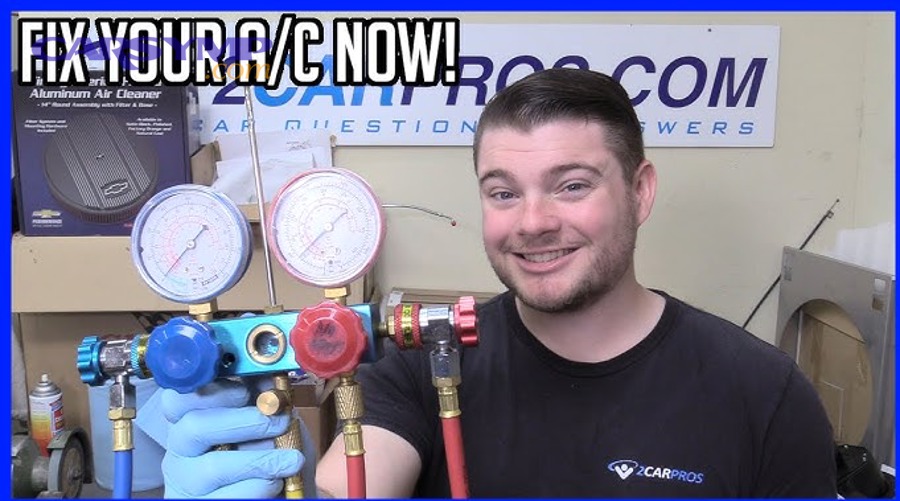
Mistake 1: “The gauge needle is low, so we’re done”
Many gauge sets don’t show true deep vacuum; they show a rough region that can look “good enough” while moisture remains. Prevention: pull longer when humidity is high, and if possible, use a micron gauge so “done” means stable dryness.
Next, avoid the second most common issue: assuming a quick hold test is the same as a reliable seal.
Mistake 2: Hold test too short (or done with the wrong valves)
If you don’t isolate correctly, you might only be testing your manifold’s sealing rather than the vehicle system. Prevention: isolate the system, watch stability, and interpret rise patterns (fast vs. slow). Then proceed to charging only after a reasonable hold duration.
Next, you’ll prevent the classic “cooling is weak—add more” cycle by treating weight as the charge decision-maker.
Mistake 3: Charging based on pressure alone
Pressure-only charging ignores how temperature and airflow change readings. Prevention: charge by factory-specified weight, then use pressures as confirmation and diagnostic indicators, not as the measurement method.
Next, you’ll see why airflow and heat rejection must be checked alongside charge, especially after major service.
Mistake 4: Ignoring condenser airflow and fan control
A weak fan, blocked condenser, or missing shroud can drive high-side pressure and reduce cooling, making you think the charge is wrong. Prevention: verify fans and airflow before and after charging, and re-check after a short road test.
What is the step-by-step “evac and recharge” procedure you can follow like a checklist?
The best procedure is a structured how-to checklist: verify assembly and seals, connect gauges and pump, evacuate long enough for dryness, hold-test for stability, then recharge by weight and validate performance under stable conditions.
To make it easy to follow, the checklist below uses a consistent order that reduces mistakes caused by switching hoses and second-guessing gauges.
Checklist: from “ready” to “validated”
- Assembly verification: confirm O-rings replaced where opened, fittings clean and torqued, service-port cores and caps in good condition.
- Connect: manifold to low/high service ports, center hose to vacuum pump. Keep valves closed until ready.
- Evacuate: start pump, open low and high valves to pull vacuum on the system; run long enough for dryness based on exposure time/humidity.
- Isolate and hold test: close manifold valves, shut pump, watch vacuum stability for a meaningful period and interpret rise pattern.
- Prepare to charge: connect refrigerant source and scale; purge charging hose carefully right before charging.
- Charge by weight: add the specified amount; start system and finish per recommended method for your setup.
- Validate: verify stable cooling, normal pressure behavior for conditions, and strong condenser airflow; re-check after heat soak or short drive.
Next, a short video can help you visualize the connections and sequence so the first attempt feels familiar instead of improvised.
Supplementary: Micron stability, component choices, and rare pitfalls (plus quick FAQ)
This section expands beyond the core checklist into micro-details—micron behavior, compressor type nuances, and decision trade-offs—so you can handle unusual cases without breaking the logical flow of the main process.
To keep it focused, each subtopic below targets a less obvious attribute that often explains “everything looked right, but performance is still wrong.”
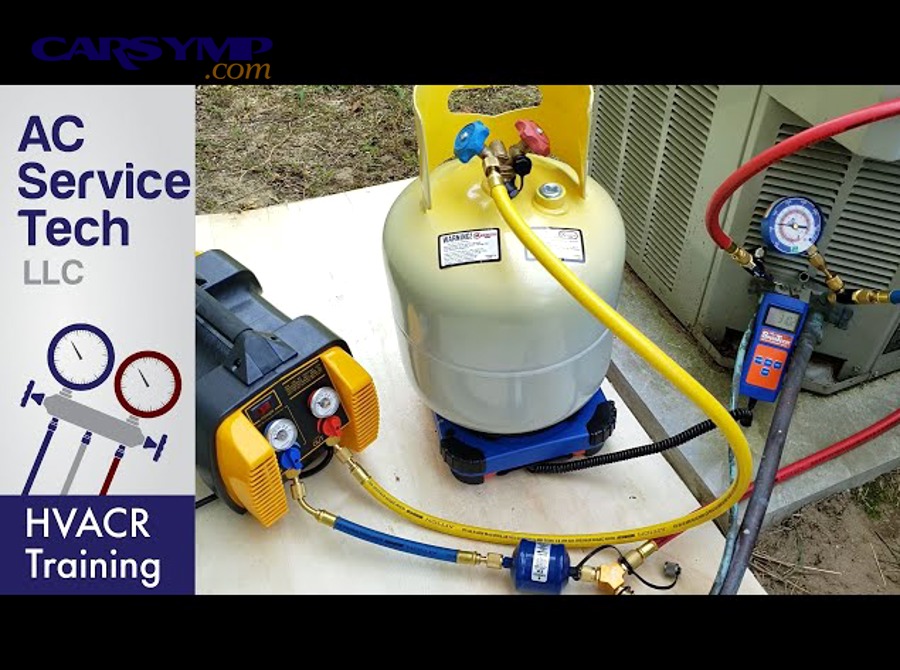
Why micron readings rise even when there’s no leak
A rising micron number after isolating the pump can be caused by moisture outgassing from oil, desiccant, and internal surfaces—especially if the system sat open. This rise often slows and plateaus; a true leak tends to rise faster and more continuously.
In practice, if you see a slow rise that stabilizes, extend evacuation time and consider whether the receiver/drier or accumulator should be renewed as part of “What parts to replace with compressor” decisions discussed by many service guides.
New build vs. reman nuance and why it affects evacuation expectations
Some systems behave differently after major service because internal oil amounts, desiccant condition, and component cleanliness vary. When evaluating “New vs reman compressor pros/cons,” remember that reman units may have different internal history; clean assembly, correct oil management, and thorough evacuation become even more important to prevent repeat issues.
This is also where careful documentation helps, especially if you’re tracking symptoms and outcomes across multiple vehicles or referencing diagnostic notes from resources like carsymp.com while comparing patterns.
Charge accuracy when ambient conditions are extreme
Extreme heat can push pressures higher; extreme cold can reduce them, making gauge readings misleading if you rely on “normal pressure charts.” Charging by weight protects you from chasing pressure targets that shift with temperature and airflow. After the charge is correct, use performance checks (vent temp, cycling behavior, fan operation) as your decision tools.
If the vehicle had an earlier AC compressor replacement or repeated service history, be extra attentive to condenser airflow and potential restrictions, because repeated failures can leave debris that changes system behavior.
Quick FAQ: the four questions that stop rework cycles
- “Can I skip the hold test if I pulled vacuum for a long time?” No—time helps dryness, but it doesn’t screen for obvious leaks. A brief hold test saves hours of rework.
- “Is vent temperature the only success metric?” No—vent temperature is important, but stable operation, normal cycling, and safe pressures matter just as much.
- “Why does cooling feel okay but performance fades later?” Moisture, micro-leaks, or airflow problems can show up after heat soak and cycling; re-check ports/caps and inspect opened joints for seep.
- “Do I always need special tools?” You can succeed with basics, but a scale (for charge by weight) and a micron gauge (for true evacuation verification) dramatically reduce guesswork.