



Cabin filter symptoms usually show up as musty smell from the vents, weak airflow, and a noticeable drop in cabin comfort—especially when you first turn on the fan or A/C. These signals are your HVAC system’s way of saying the intake path is restricted or the filter media is saturated.
Beyond odor and airflow, drivers often notice faster windshield fogging, more dust on interior surfaces, and irritated eyes or sneezing during commutes. Those “small” annoyances can be early warnings before bigger HVAC issues appear.
Because similar complaints can also come from a blower motor, a dirty evaporator, or a stuck recirculation door, the fastest win is learning what symptoms strongly point to the filter—and what symptoms do not.
Giới thiệu ý mới: the sections below break down the most reliable signs, why they happen, and how to confirm them with quick checks so you can fix the root cause instead of guessing.
What cabin filter symptoms most strongly indicate a clogged filter?
Yes—when musty smell and weak airflow appear together (especially on higher fan speeds), a clogged cabin filter is one of the most likely causes because it restricts intake air and traps moisture and debris. Next, you’ll want to map each symptom to the most probable “filter condition” so you can act quickly.
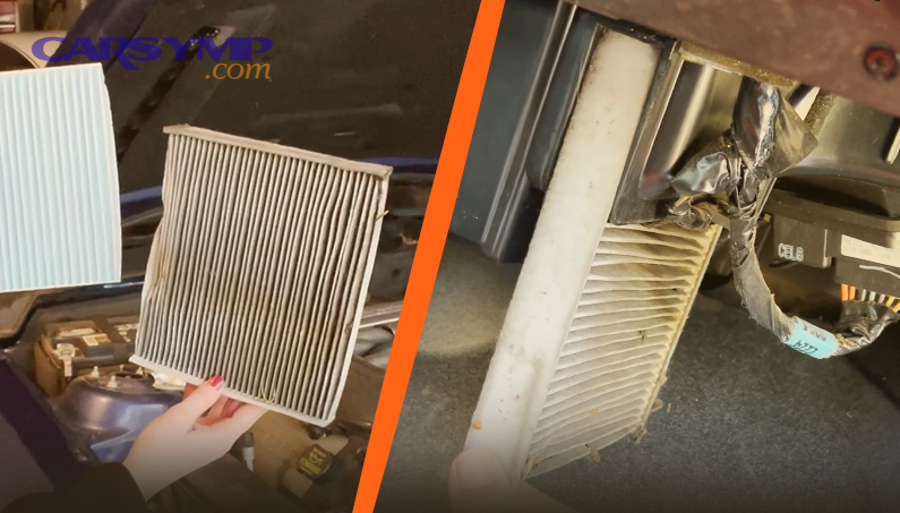
To make the diagnosis practical, focus on symptom patterns instead of a single complaint. A cabin filter is a simple part, but its failure patterns are surprisingly consistent because airflow and odor are physics problems: restriction, moisture, and contamination.
Below is a quick reference that connects common symptoms to the most likely filter state and what to do first.
| Symptom cluster | Most likely filter state | Best first action | Urgency |
|---|---|---|---|
| Weak airflow + fan sounds louder than usual | Media clogged with dust/leaves | Inspect filter for blockage; check intake area for debris | Medium |
| Musty smell at startup (A/C or heat) that fades | Filter holding moisture / biofilm starting | Inspect filter, check for dampness; inspect for wet carpet/leaks | Medium |
| Dusty cabin surfaces + visible particles from vents | Torn/bypassed filter or missing seal | Confirm correct filter size and gasket fit | Medium |
| Allergy flare-ups during driving | Saturated filter; low filtration left | Inspect filter; consider higher-efficiency option if compatible | Low–Medium |
| Fogging increases, defrost feels weaker | Restricted airflow through HVAC | Check filter first, then blower operation | Medium |
Some drivers expect a “check filter” dashboard alert, but most vehicles don’t monitor cabin filter restriction directly. Instead, the clue is how the airflow feels relative to the fan setting you selected.
To anchor this with real data on filtration impact, consider how much cabin filtration can change particulate exposure during real driving. “Theo nghiên cứu của Health Canada từ Water and Air Quality Bureau, vào 02/2023, cabin air filtration reduced PM2.5 by about 30% and black carbon by about 32% during commutes.”
Tóm lại, the strongest indicator is the combination: weak airflow you can feel plus odor you can smell. That pairing makes the filter the fastest, cheapest first check before you blame the A/C system.
Why does a dirty cabin filter create a musty smell from vents?
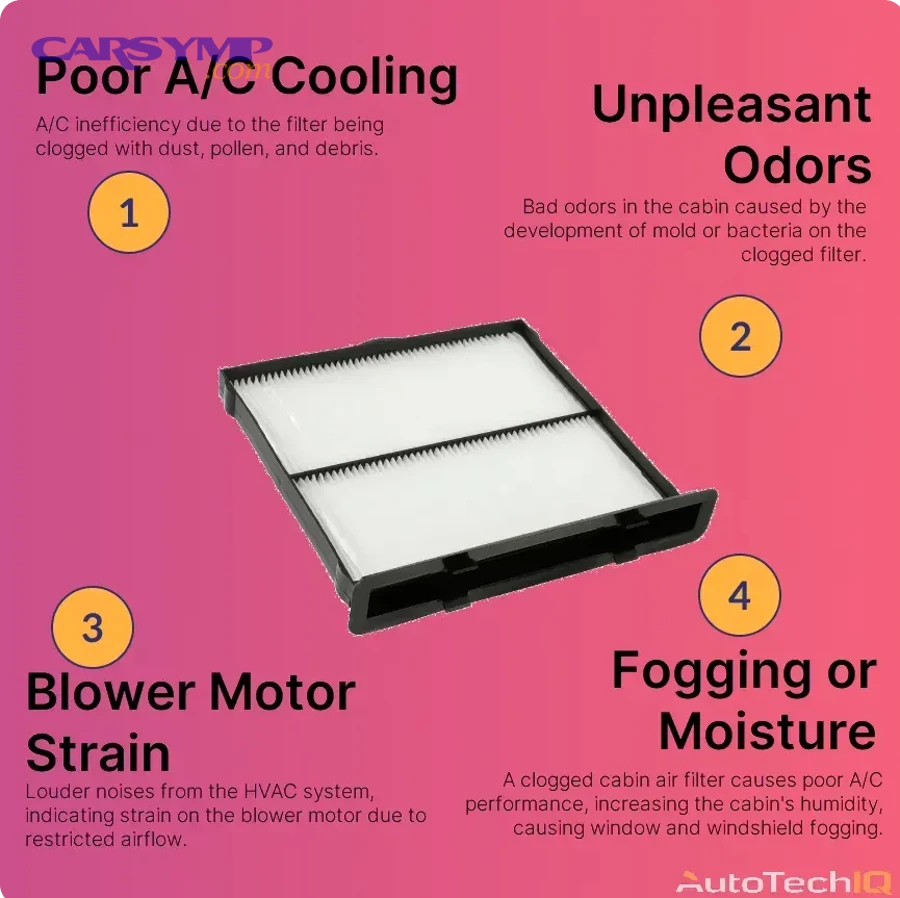
A musty smell happens because trapped organic debris (dust, pollen, leaves) can hold moisture, allowing microbes and odors to build up and then get pushed into the cabin when airflow starts. Next, it helps to separate “filter odor” from “evaporator odor” so you treat the right surface.
Is the smell strongest at startup or constant while driving?
If the odor is strongest in the first 10–60 seconds and then fades, that points to moisture and contamination near the intake path—often the filter surface—getting “flushed” by the first burst of airflow. After that, the system stabilizes and the smell may reduce.
However, if the odor stays strong for the entire drive, especially with A/C on, the evaporator core and condensate drainage become more suspicious. Still, checking the filter remains step one because it’s easy, and a saturated filter can worsen evaporator odor by reducing airflow and increasing dwell time for humidity.
What exactly makes the odor “musty”?
Musty odors are commonly associated with microbial volatile organic compounds produced when fungi and bacteria find moisture and food sources. Cabin filters can become a “collector” of that food source because they trap pollen, soot, and organic debris.
To ground this in measured cabin microbiology, look at what happens when filters are used too long. “Theo nghiên cứu của Warsaw University of Life Sciences (SGGW) từ Warsaw Institute of Environmental Engineering, vào 03/2024, a car with the longest-used filter showed fungi at 8369 CFU/m3 and bacteria at 16563 CFU/m3 inside the cabin, highlighting why timely filter replacement matters.”
Can water leaks make cabin filter odor worse?
Yes—wet carpets, a clogged cowl drain, or a poorly sealed windshield can keep humidity high around the HVAC intake and encourage repeated dampness at the filter. Bên cạnh đó, even a good filter can smell bad if it’s repeatedly soaked.
A quick clue is recurring fogged windows, damp floor mats, or a persistent humid feeling in the cabin even on dry days. If you fix the filter but ignore the moisture source, the odor often returns.
Như vậy, musty smell is not “mysterious”—it’s a predictable outcome of moisture plus trapped debris. Fixing it usually requires removing the contaminated surface (often the filter) and preventing moisture from returning.
How can a clogged cabin filter cause weak airflow and louder fan noise?
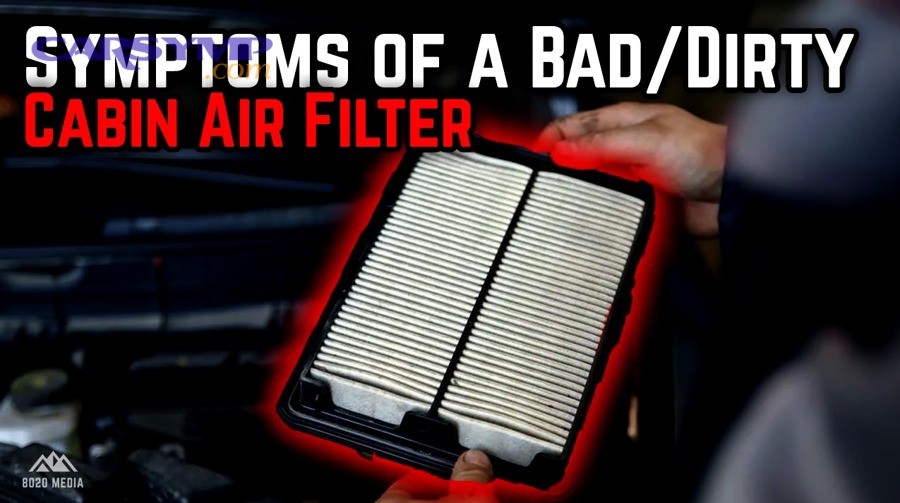
Weak airflow happens because the blower is trying to pull air through a restricted filter; the fan may spin fast, but less air makes it through, so the cabin feels under-ventilated and the blower can sound strained. Next, you’ll want to confirm whether the restriction is at the filter or elsewhere in the intake path.
Why does the fan sound louder even though airflow is weaker?
When restriction increases, the blower can create more turbulence and pressure difference across the filter. That turbulence can sound like a rushing or “hollow” noise behind the dash. Meanwhile, because the filter is the bottleneck, the vent output can feel weak, especially at idle.
Cụ thể, you might notice that switching from fan speed 2 to 4 makes the noise jump more than the airflow. That “noise up, airflow not up” mismatch is a classic restriction signal.
Why does defrost performance suffer?
Defrost depends on volume: moving enough dry (or dehumidified) air across the glass. If airflow is restricted, the windshield may clear slowly, and the side windows may keep hazing, especially with multiple passengers.
In addition, if you’re tempted to use recirculation all the time for comfort, remember it can change air quality dynamics. “Theo nghiên cứu của NIOSH (CDC) từ American Association for Aerosol Research abstract archive, vào 09/2013, modern cabin air filters were noted at roughly 40–60% efficiency for ultrafine particles, while recirculation mode can reduce in-cabin ultrafine particles by about 80–95% but may increase CO2 if used continuously.”
When is weak airflow not the cabin filter?
If airflow is weak from only one side (for example, driver vents weak but passenger vents strong), that often points to a blend door or duct issue rather than the filter. Ngược lại, if airflow is weak across all vents and all modes (face, floor, defrost), the filter is more likely.
Also, if the fan speed changes don’t change sound at all (no change between speed 1 and 4), the problem could be a blower resistor, control module, or the blower motor itself—not the filter.
Tổng kết lại, a clogged filter is the simplest, most common restriction point. If weak airflow is paired with an “effortful” blower sound, checking the filter early saves time and prevents misdiagnosis.
Do allergy flare-ups, sneezing, or headaches count as cabin filter symptoms?
Yes—if symptoms worsen mainly while driving and improve after leaving the vehicle, the cabin filter can be involved because a saturated filter may pass more irritants, and a contaminated filter can reintroduce allergens into the cabin air stream. Next, you’ll want to link the timing of symptoms to driving conditions like traffic, pollen season, and HVAC settings.

What symptom timing makes the filter more suspicious?
If your eyes itch or you sneeze within minutes of turning on the fan—especially with outside air mode—then the intake path and filter are prime suspects. For many people, the cabin becomes a “small room” where concentrations build quickly if filtration is poor or airflow is contaminated.
However, if symptoms only flare in specific neighborhoods or highways, outside pollution and roadway particles may be the main trigger. In those cases, the filter still matters, but your exposure is being driven by what’s outside.
What irritants can build up in the HVAC path?
Pollen, soot, brake dust, and organic debris can collect on the filter. If the filter is overloaded or poorly seated, some of that material can bypass and deposit further downstream. Over time, the HVAC box can become a reservoir of fine dust that gets disturbed whenever airflow changes.
To connect filtration to measurable exposure, consider real-world commuting data. “Theo nghiên cứu của Health Canada từ Environmental Health Science and Research Bureau, vào 02/2023, commuters experienced roughly one-third lower particulate exposure with cabin air filtration during drives compared with no filtration.”
What should you do if you’re allergy-prone?
Start by checking whether the filter is the correct type and correctly installed, because gaps around the frame can defeat even a high-quality filter. Then, consider your HVAC usage: outside air mode increases fresh-air exchange but also draws in outside allergens; recirculation can reduce incoming pollen but may raise humidity and CO2 if overused.
When you later plan maintenance, many owners treat cabin air filter replacement as a small comfort job, but for sensitive passengers it can be a meaningful control point. You’ll also hear owners talk about Allergies and air quality benefits when they switch to a better filter media—just make sure airflow remains acceptable for your vehicle’s blower design.
Như vậy, allergy-like symptoms can be cabin filter symptoms—especially when they correlate with HVAC operation—yet they should be interpreted with timing and environment so you don’t confuse “outside triggers” with “inside contamination.”
Can cabin filter symptoms be confused with A/C problems or a failing blower motor?
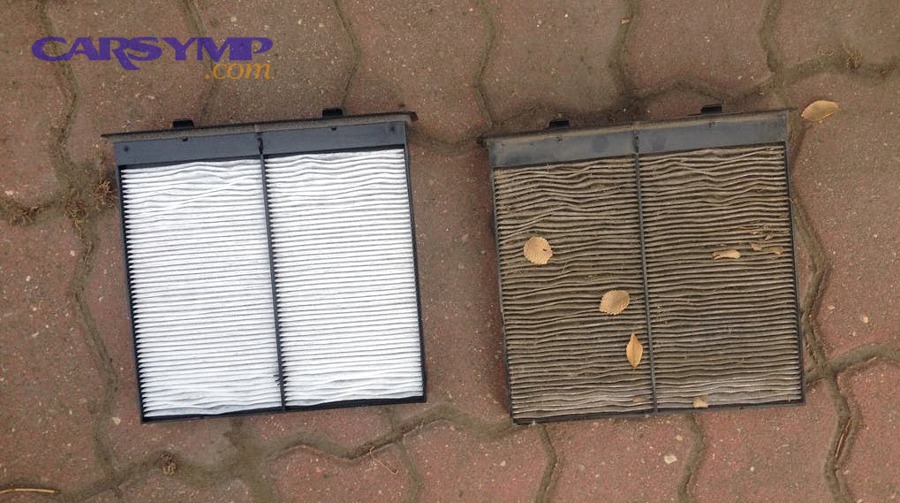
Yes—cabin filter restriction can mimic A/C weakness and even some blower issues because reduced airflow makes cooling feel poor and defrost slow, even if the refrigerant system is functioning. Next, use “what changes the symptom” tests to separate restriction from mechanical failure.
How to tell “poor cooling” from “poor airflow”
If the air at the vent is cold but barely moving, you likely have an airflow problem (often the filter). If the air is moving strongly but not getting cold, you may have a refrigerant, compressor, or blend-door temperature issue.
Ví dụ, place your hand near the vent: strong airflow with warm air points to A/C performance; weak airflow with cool air points to restriction.
How to separate filter restriction from blower motor problems
A failing blower motor may squeal, chirp, or intermittently stop, and the airflow may surge or cut out regardless of filter condition. A clogged filter typically causes consistent weakness that matches the fan setting and does not “cut out.”
Another clue is whether airflow improves when you remove the filter temporarily (only for a short test). If airflow jumps noticeably with the filter removed, the blower is likely capable and the filter was the bottleneck.
What about unusual smells—burning vs musty?
A burning smell suggests electrical issues, overheated resistors, or debris contacting hot surfaces, which is a different risk category than a musty smell. If you smell burning, stop using high fan speeds until the source is identified. Ngược lại, musty smell is far more typical of moisture plus contamination and is commonly improved by addressing the filter and upstream water management.
Tóm lại, cabin filter symptoms overlap with HVAC complaints because airflow is the “delivery system” for heating and cooling. Confirming airflow restriction early prevents unnecessary A/C diagnostics and parts replacement.
How do you confirm cabin filter symptoms with quick, no-special-tool checks?
The fastest confirmation is a three-step check: compare airflow across fan speeds, inspect the filter for blockage or dampness, and verify the intake area is clear; if airflow improves immediately after removing a dirty filter, you’ve validated the cause. Next, use a repeatable routine so you don’t miss obvious clues.
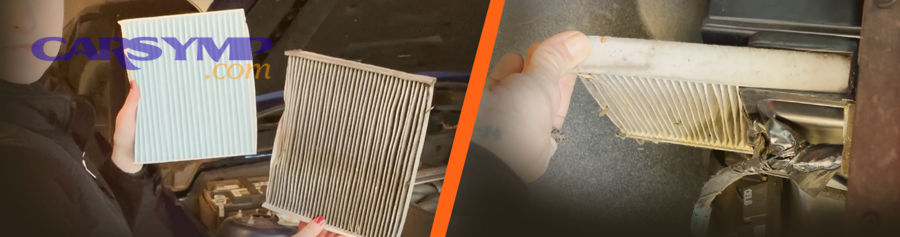
Step 1: Use a “fan-step” airflow test
With the engine running, set the system to fresh air (outside air) and turn the fan from speed 1 to speed 4. If the sound rises sharply but airflow at the vents does not increase proportionally, restriction is likely. Then switch to recirculation: if airflow increases slightly, that can also suggest restriction on the fresh-air intake path.
After that, repeat with defrost mode. Defrost is an airflow-intensive mode, so restriction often becomes more obvious there.
Step 2: Inspect the filter for three “tell-tale” conditions
Blockage: leaves, fuzz, and dust layered across the pleats. Dampness: a wet or clammy filter that can contribute to odor. Deformation: a collapsed filter that reduces open area. If you see any of these, your symptoms have a clear mechanical explanation.
Make sure the filter’s frame seals correctly in its slot. A slightly mis-seated filter can whistle, pass dust, and still restrict airflow.
Step 3: Check the cowl intake area for debris and drainage
Many vehicles pull HVAC air from the cowl area at the base of the windshield. If that area is packed with leaves or the drains are clogged, water can pool and repeatedly soak the filter. Clean debris and confirm water drains freely. Hơn nữa, this step reduces the chance the new filter becomes musty again.
If you prefer a visual walk-through, watching a model-agnostic demonstration helps you recognize what “normal” looks like across different cars, without relying on a specific brand tutorial.
To tie this back to measurable outcomes in traffic-heavy driving, consider vehicle studies that quantify in-cabin particle levels and mitigation strategies. “Theo nghiên cứu của University of California Los Angeles từ Department of Environmental Health Sciences, vào 03/2018, in-cabin particle ratios and concentrations changed significantly with ventilation settings and higher-efficiency cabin filters in Los Angeles taxi measurements.”
Tổng kết lại, confirming cabin filter symptoms is mostly about comparing “effort” (fan sound) to “result” (airflow), then validating with a quick visual inspection. This approach keeps your diagnosis fast and low-risk.
What happens if you ignore cabin filter symptoms for months?
Ignoring cabin filter symptoms can lead to persistent odors, higher allergen exposure, and more HVAC stress because the system must work harder to move air through a restriction, potentially accelerating wear on moving parts and increasing moisture-related contamination. Next, it’s useful to think in layers: comfort effects first, then performance effects, then long-term HVAC health.
Comfort and visibility risks
When airflow remains restricted, you may drive with foggy windows longer, especially in rain or with multiple passengers. Reduced defrost performance is not just annoying—it can reduce visibility and increase fatigue because you’re constantly managing climate settings.
Air quality and odor persistence
A saturated filter can become a recurring odor source. Even if you spray deodorizer into vents, the smell often returns because the contaminated media is still present. Over time, the HVAC box can accumulate more debris, increasing the chance that musty smell becomes persistent rather than intermittent.
Microbial measurements reinforce why “too long” is a real problem. “Theo nghiên cứu của Warsaw University of Life Sciences (SGGW) từ Warsaw Institute of Environmental Engineering, vào 03/2024, using a cabin filter for more than two years was associated with extreme microbiological contamination risk indicators inside the cabin in their tested vehicles.”
System workload and component stress
As restriction rises, the blower must overcome higher resistance to deliver the same cabin airflow, which can increase operating load. While vehicles vary, the principle is consistent: moving air through a clogged path requires more work. That’s why Preventing blower motor strain with clean filters is not just a slogan—it’s an engineering reality tied to pressure drop across the filter and turbulence in the HVAC housing.
Besides, ignoring symptoms can mask other issues. For example, if your evaporator drain is partially clogged, a dirty filter can make humidity problems worse, and you might blame the A/C when the real chain is “water management + restriction.”
Như vậy, the cost of waiting isn’t just smell or comfort; it’s the compounding effect of restricted airflow, increased moisture retention, and higher HVAC workload. Addressing the filter early is the simplest way to keep the whole system stable.
Cabin filter symptoms FAQs and edge cases
These quick answers cover common edge cases drivers ask about when symptoms don’t match the “classic” pattern. Next, use the question that best matches your situation to decide whether the filter is still the first check.
If I have weak airflow but no musty smell, is it still the filter?
Yes, it can be. Dry, dusty filters often restrict airflow without producing much odor. In that case, your clue is the mismatch between fan speed and vent output, plus dust or debris visible on the filter pleats after removal.
If the musty smell appears only when A/C is on, does that rule out the filter?
No. A/C creates condensate and lowers surface temperatures, which can amplify odor release from damp debris. It also points to moisture dynamics in the HVAC box. Check the filter first, then consider evaporator cleaning and drain inspection if odor persists.
How often should I check the filter if I drive in heavy traffic or dusty areas?
More often than the “average” schedule. Heavy traffic increases soot exposure, and dusty roads load the filter faster. A practical rule is to inspect at regular service intervals and sooner if airflow or odor changes. “Theo nghiên cứu của Health Canada từ Water and Air Quality Bureau, vào 02/2023, cabin filtration meaningfully reduced commuter particulate exposures during real drives, supporting the value of keeping the filter effective rather than overloaded.”
Can a new filter still give me symptoms?
Yes, if it’s installed backward, the seal doesn’t seat, or the intake area is wet and immediately soaks the media. Also, if your HVAC box or evaporator is already contaminated, replacing the filter helps but may not fully remove odor without cleaning the downstream surfaces.