


A check engine light that appears with a symptom is the car’s way of saying a monitored system crossed a threshold—so the fastest path to answers is matching what you feel, hear, or smell to the most likely system, then confirming with data.
Many drivers want to know whether the problem is minor, like an EVAP leak, or urgent, like an active misfire that can overheat the catalyst—so this guide prioritizes “severity first” decisions before deep diagnosis.
You’ll also learn how symptom clusters map to root causes—ignition, fuel, air metering, emissions, cooling, and mechanical—so you can avoid replacing parts blindly and instead test the most probable failure points.
To begin, we’ll sort symptoms into practical groups and show what to check first, then move from easy wins to deeper confirmation steps so you can act with confidence.
What does the check engine light mean when symptoms show up?
It means the ECU detected an out-of-range condition and logged a fault that often correlates with a specific symptom pattern, so you can narrow causes quickly by pairing the symptom with the most likely monitored system. Next, we’ll connect what you notice to the “why” behind it.
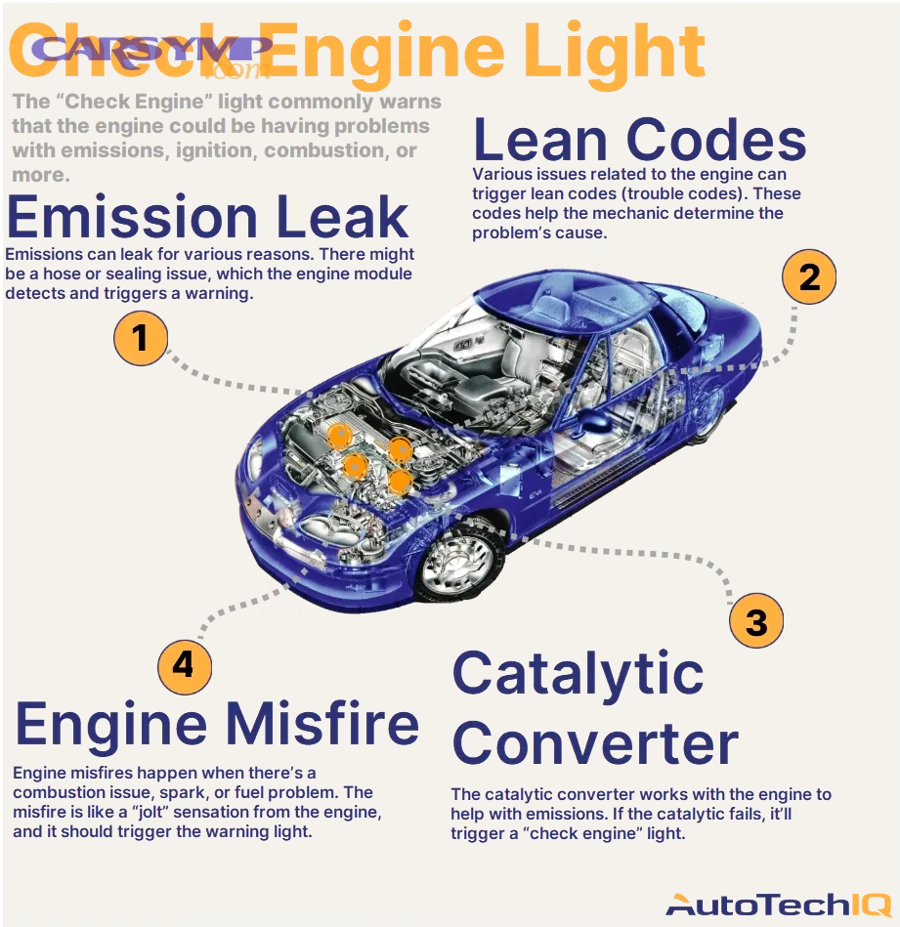
Why symptoms matter more than the light alone
Because the same light can represent hundreds of failures, the symptom is your first filter: a rough idle suggests combustion stability issues, a fuel smell suggests rich running or an EVAP problem, and a temperature spike points you toward cooling or head-gasket risk. To illustrate, a loose gas cap can set an EVAP code with almost no drivability change, while an ignition coil failure can create shaking, loss of power, and catalyst-threatening exhaust heat.
After you identify the symptom category, the next “hook” is to confirm whether the fault is active now or stored from earlier—because that changes how urgently you should drive and what you test first.
How the ECU decides to turn the light on
Modern vehicles use
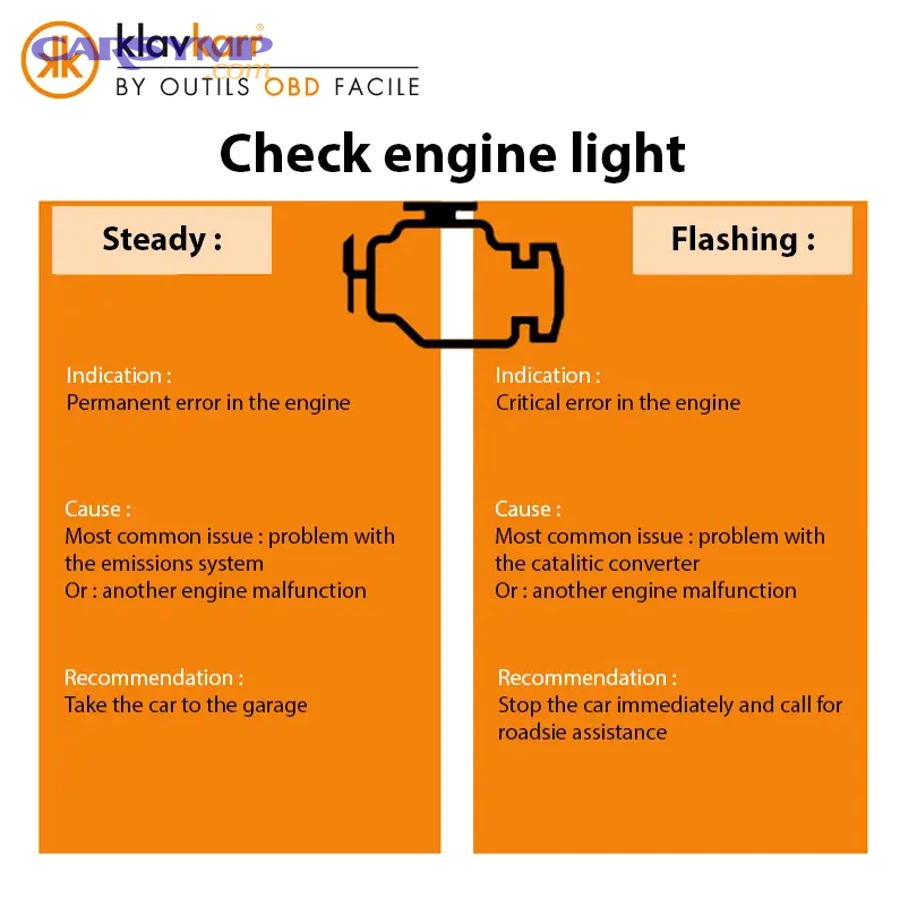
For urgency, pay attention to whether the light is steady or blinking: regulations describe a blinking MIL behavior during catalyst-damaging misfire events, emphasizing that misfire severity matters, not just the presence of a code.
What “symptom-first” diagnosis looks like in practice
Symptom-first diagnosis is a two-layer method: (1) match the symptom cluster to the most probable system, then (2) verify with a small set of tests that prove or disprove that system. This is the core of effective troubleshooting: you are not trying to guess the exact part at step one—you are trying to identify the right system and the right measurement.
After that, you’ll be ready to perform check engine light diagnosis steps that produce evidence—like freeze-frame data, fuel trims, and misfire counters—instead of swapping parts. (This phrase is intentionally placed in body text, not headings.)
Is it safe to drive with a check engine light based on symptoms?
Yes in some cases and no in others: it’s generally safer to drive briefly when symptoms are mild and stable, but it’s not safe when you have severe misfire, overheating, or sudden power loss because those can cause rapid damage. Next, we’ll translate symptoms into “drive, limit, or tow” decisions.
Drive now vs drive later: three severity tiers
Tier 1 (usually okay for short distance): steady light, normal power, no overheating, no strong fuel smell, no loud mechanical noise. Common matches include small EVAP leaks, a slow O2 sensor response, or a thermostat efficiency code. Still, “okay” doesn’t mean ignore—schedule a scan and fix to prevent worsened fuel economy and emissions issues.
Tier 2 (limit driving): steady light with noticeable drivability changes (hesitation, mild shaking, reduced power), or symptoms that worsen under load. Limit speed, avoid hard acceleration, and diagnose quickly because the underlying cause may stress the catalyst, turbo, or transmission.
Tier 3 (stop/tow): flashing light, hard misfire, coolant temperature climbing, loud knocking, heavy smoke, or limp mode with severe power loss. Regulations explicitly describe blinking behavior during catalyst-damaging misfire conditions, which is why towing can be cheaper than “just driving it home.”
Immediate action when the light is blinking
If your light is blinking, treat it as urgent: pull over when safe, reduce load, and avoid continuing to drive because severe misfire can dump unburned fuel into the exhaust and overheat the catalyst. This is the practical meaning behind Flashing check engine light emergency guidance—your goal is to prevent secondary damage, not merely to clear the light.
To connect the dots, notice how this urgency links to symptom clusters: if the car is shaking and the light is blinking, start with ignition/misfire causes before anything else.
A data-backed “why” for urgency
According to an analysis by the U.S. Environmental Protection Agency (EPA) Office of Transportation and Air Quality, in January 2007, OBD requirements and MIL behaviors are designed to alert drivers to malfunctions that increase emissions and may threaten aftertreatment durability, emphasizing rapid identification of high-impact faults.
Next, we’ll use symptoms to identify which high-impact fault family you’re most likely dealing with.
Which symptoms most often point to ignition or misfire problems?
Rough idle, shaking under load, stumbling on acceleration, and a “puttering” exhaust note most often point to a misfire family—spark, fuel delivery to a cylinder, compression, or air leaks—so start with ignition and basic cylinder health checks. Next, we’ll break misfire symptoms into sub-patterns that narrow the cause.
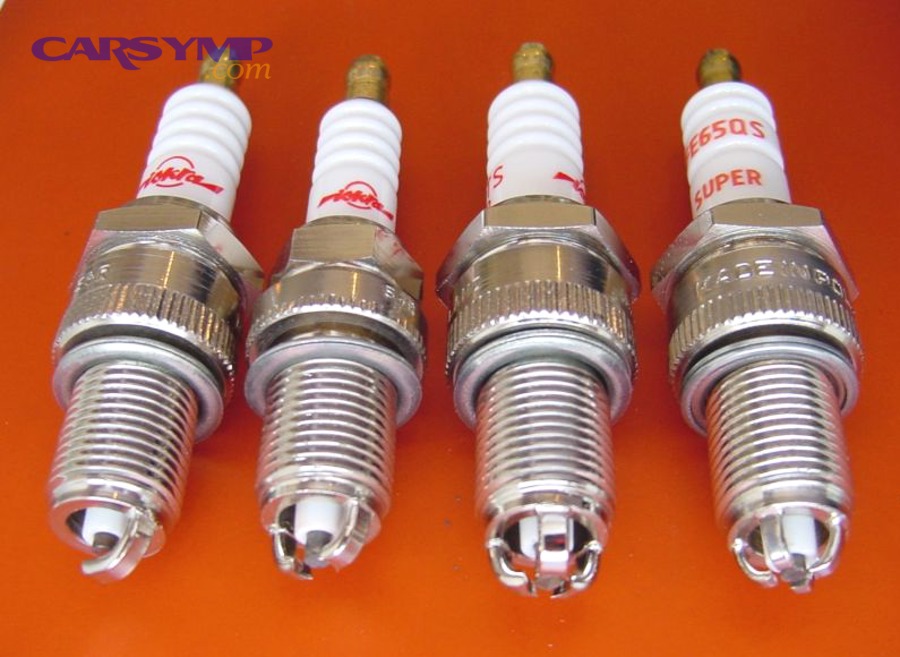
Symptom pattern: rough idle + shaking at stoplights
This pattern commonly aligns with ignition coil issues, worn spark plugs, vacuum leaks near one bank, or an injector imbalance at low pulse width. The best first checks are simple: inspect plug condition, look for oil in plug wells, listen for arcing, and review short-term fuel trim at idle vs 2500 rpm. If trims are high at idle and normalize off-idle, a vacuum leak becomes a top suspect.
After that, the “hook” is to distinguish random misfire from cylinder-specific misfire—because cylinder-specific points to coil/plug/injector/compression, while random misfire can indicate air/fuel control or EGR issues.
Symptom pattern: hesitation or bucking under acceleration
Under load, weak spark and marginal fuel pressure show up more clearly. If the hesitation is worse uphill or during passing, prioritize coil breakdown, plug gap, and fuel pressure/volume. A failing coil can misfire only under boost or high cylinder pressure, making the car feel fine at idle but terrible under load.
To continue the flow, the next step is to check for supporting signs: sulfur smell, catalyst heat, or a blinking MIL during the event, which raises urgency.
Symptom pattern: hard start + misfire for 30–90 seconds, then clears
This often suggests a cold-start fueling or ignition weakness: leaking injectors (flooding one cylinder), coolant temperature sensor bias, intake gasket leaks that shrink when warm, or a plug/coil that struggles when cold. Freeze-frame data is extremely useful here because it captures the conditions at the moment the code set.
According to research by Linköping University from the Department of Electrical Engineering, in November 2014, misfire detection performance can vary significantly with operating conditions such as speed, load, and cold-start transients, meaning the same underlying fault can look different depending on when it happens.
Next, we’ll shift from ignition to fuel-and-air metering symptoms, because many “misfire-like” complaints are actually mixture control issues.
Which symptoms suggest fuel delivery or air metering problems?
Poor fuel economy, black soot on the tailpipe, fuel smell, surging cruise, and hesitation that improves when you ease off the throttle often point to fuel/air metering issues like MAF/MAP errors, fuel pressure faults, or intake leaks. Next, we’ll map specific symptoms to the most probable subsystem.
Symptom pattern: fuel smell + rough running + dark smoke
This combination often indicates a rich condition: leaking injector, stuck-open purge valve, high fuel pressure, or incorrect sensor input (like a biased coolant temp sensor reporting “cold” all the time). Rich running can foul plugs, trigger misfire codes, and overheat the catalyst over time—so the misfire you feel might be a secondary effect, not the root cause.
To keep the diagnostic chain tight, confirm richness with live data: look for negative fuel trims (ECU removing fuel), high calculated load at idle, or O2 sensor signals that indicate persistent rich mixture.
Symptom pattern: surging at steady speed or light throttle
Surging often points to unstable fuel control: unmetered air, a contaminated MAF, weak fuel pump, or an upstream exhaust leak that fools the O2 sensor. If surging improves when you unplug the MAF (some cars revert to a default strategy), that’s a clue—though you should not treat it as a final diagnosis.
Next, cross-link this to EVAP behavior: a purge valve stuck open can act like a vacuum leak and cause lean idle and surging, especially after refueling.
Symptom pattern: stalling when stopping or after refueling
Stalling at stops can come from throttle body deposits, idle control issues, vacuum leaks, or torque converter problems—but if it happens right after refueling, suspect EVAP purge/vent faults or a saturated charcoal canister. The symptom “after refueling” is a rare but powerful attribute that sharply narrows likely causes.
To move forward efficiently, test the purge valve operation and review EVAP-related codes rather than chasing ignition parts first.
Which symptoms point to sensor or emissions faults when drivability feels normal?
If the car drives normally but the light is on, the cause is often emissions or sensor-related—EVAP leaks, catalyst efficiency, slow O2 response, or minor sensor rationality faults—so you should scan codes and check readiness rather than guessing parts. Next, we’ll prioritize the most common “normal drivability” scenarios.
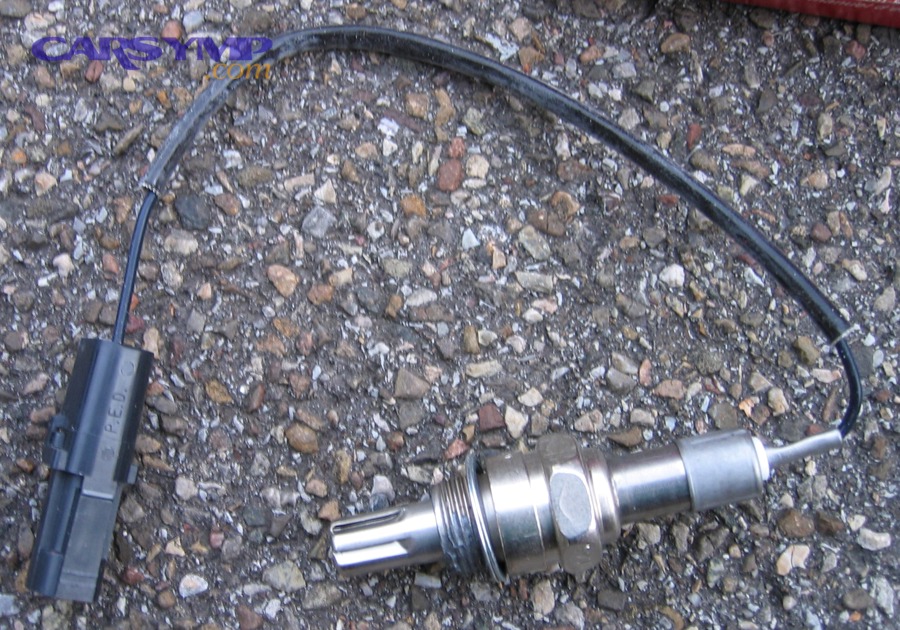
Symptom pattern: no drivability change + light after a cold snap or short trips
Short trips can prevent monitors from completing, and cold weather can stress EVAP sealing and sensor warm-up. An EVAP small leak code may appear because the system failed a self-test, not because the engine is running poorly. Your best first move is to confirm the basics: fuel cap seal, cap clicks, filler neck condition, and obvious cracked EVAP hoses.
Next, keep the “móc xích” intact by checking whether the code is pending or confirmed, and whether the monitor has run—because that explains why the light seems to “come and go.”
Symptom pattern: light appears after highway cruise
Some catalyst and O2 monitors run during steady cruise, so a code that sets after the highway may point toward catalyst efficiency (often P0420/P0430) or O2 sensor performance. However, catalyst efficiency codes can be triggered by upstream issues like misfires, exhaust leaks, or fuel trim problems—so avoid replacing the converter before verifying the upstream health.
To connect this to later steps, the right confirmation is to review fuel trims, misfire history, and O2 sensor switching behavior in live data.
Use codes as a map, not a verdict
An OBD2 codes list and what they mean can help you translate “P0xxx” into a system and monitor, but the code rarely proves the exact failed part. Treat the code as the ECU’s complaint category—then you test what would cause that complaint. This prevents the classic trap of replacing the sensor that noticed the problem rather than fixing what created it.
Next, we’ll address the most expensive scenario to mis-handle: overheating and mechanical risk signs that demand fast decisions.
Which symptoms suggest overheating or mechanical damage risk?
Rising coolant temperature, sweet coolant smell, persistent white smoke, loud knocking, or sudden severe power loss can indicate cooling failure or internal engine damage—so you must prioritize engine protection over code-reading convenience. Next, we’ll separate “cooling system first” from “combustion or mechanical” patterns.
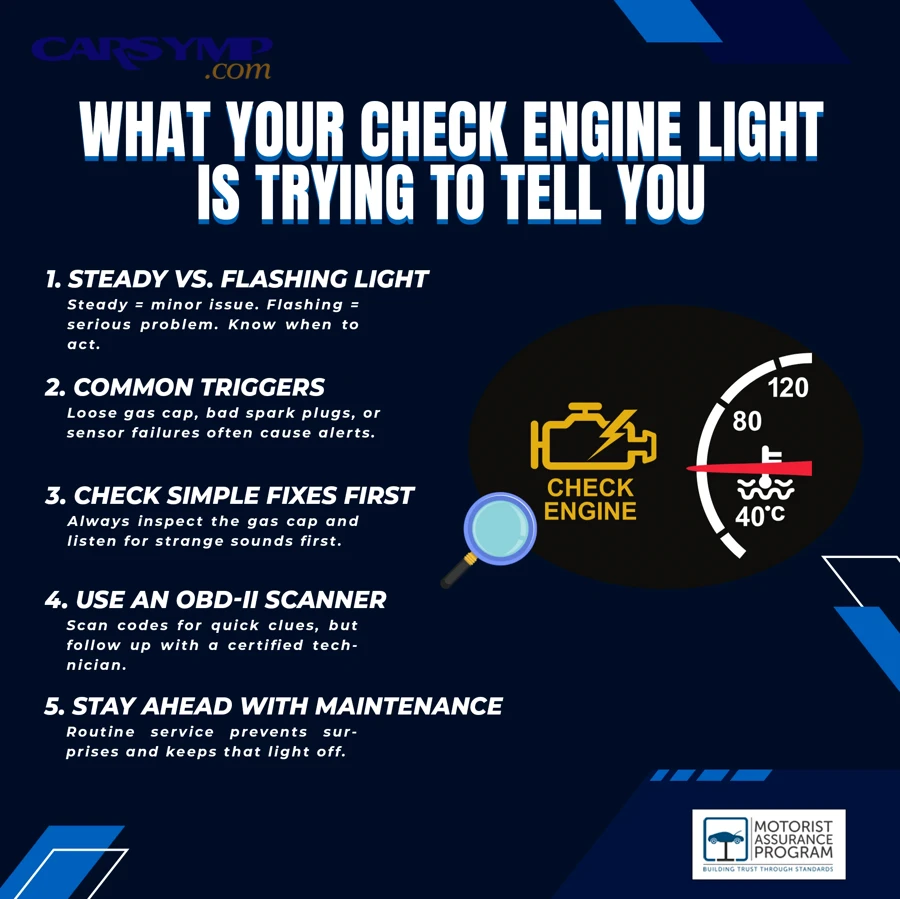
Symptom pattern: temperature climbs in traffic, improves at speed
This often points to airflow or low-speed cooling issues: radiator fan failure, fan control relay/module, clogged radiator fins, or low coolant. If the heater output suddenly turns cold while the gauge rises, that can suggest low coolant or air pockets. Stop and diagnose—continued overheating can warp heads and damage gaskets.
Next, link this to “why the light came on”: an overheating engine can trigger codes for thermostat performance, coolant temperature sensor plausibility, or misfires caused by heat soak.
Symptom pattern: temperature climbs at highway speed, not just in traffic
Highway overheating can point to restricted coolant flow, a partially clogged radiator, a weak water pump, or head gasket issues pushing combustion gas into the cooling system. Here, the symptom “highway overheating” is a unique attribute that changes your suspect list compared to “only at idle.”
To continue systematically, look for coolant loss, bubbles in the reservoir, oil contamination, and consistent overheating patterns rather than assuming a simple fan issue.
Symptom pattern: loud knock + flashing light or severe misfire
A loud knock suggests mechanical stress (bearing, detonation, severe pre-ignition), while a flashing MIL suggests catalyst-damaging misfire severity; together, they demand immediate load reduction and often towing. The regulation language around catalyst-damaging misfire blinking underscores why you should avoid “just limping it home.”
Next, we’ll put everything into a fast, evidence-based diagnostic workflow you can follow.
How can you diagnose the most common causes quickly and safely at home?
Use a structured workflow: read codes and freeze-frame, confirm severity, then test the most likely system with a few targeted checks—fuel trims, misfire data, vacuum leaks, ignition inspection, and basic sensor plausibility. Next, we’ll walk through the steps in the order that saves the most time and money.
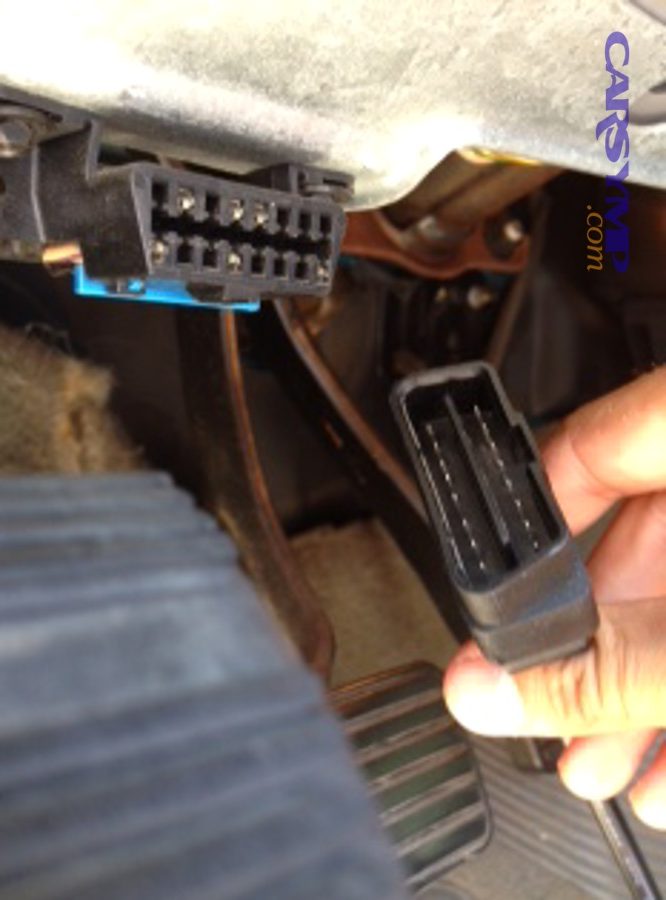
Step 1: Capture evidence before clearing anything
Start by scanning for codes (stored and pending) and saving freeze-frame data. Freeze-frame is a snapshot of engine conditions when the fault set—RPM, coolant temp, load, fuel trims, and sometimes speed—so it tells you whether the problem happened cold, hot, idle, cruise, or heavy load.
To maintain diagnostic flow, do not clear codes “to see if it comes back” until you’ve captured data—clearing erases the breadcrumb trail and can reset readiness monitors, delaying inspection readiness.
Step 2: Use live data to confirm the symptom story
Check
According to research by Linköping University from the Department of Electrical Engineering, in November 2014, misfire detection characteristics can depend on speed/load operating points, supporting the practical advice to review freeze-frame and reproduce conditions rather than relying on idle-only checks.
Step 3: Perform the “big three” physical checks
Air: inspect intake boots, PCV hoses, brake booster hose, and listen for hissing. A smoke test is ideal, but even careful hose inspection and carb-cleaner/spray tests (used cautiously) can reveal leaks.
Spark: inspect plugs for wear, oil fouling, and incorrect gap; swap coils between cylinders to see if misfire follows; check connectors and coil boots for carbon tracking.
Fuel: if symptoms match, confirm fuel pressure and volume, especially under load; look for injector imbalance if one cylinder is affected.
Next, tie your findings back to the code family so you don’t drift into unrelated systems.
A quick reference table to link symptoms to first checks
This table lists common symptom clusters, the most likely system family, and the first confirmation checks that reduce guesswork.
| Symptom cluster | Most likely cause family | First confirmation checks |
|---|---|---|
| Rough idle + shaking | Misfire/ignition, vacuum leak | Misfire counters, plug/coil inspection, trims idle vs 2500 |
| Hesitation under load | Weak spark, fuel pressure/volume | Load reproduction, fuel pressure under load, coil breakdown signs |
| Fuel smell + soot/black smoke | Rich mixture, purge stuck open | Negative trims, purge command, injector leak checks |
| No drivability change | EVAP/sensor/catalyst monitor | Read codes, readiness status, inspect cap/EVAP hoses |
| Temp rising / overheating | Cooling system, head gasket risk | Coolant level, fan operation, pressure test, combustion gas test |
One practical video walkthrough to reinforce the workflow
Watching a full scan-and-interpretation process can help you recognize patterns like fuel trim behavior and freeze-frame usage before you attempt the same steps on your car.
When should you stop driving immediately, even before scanning?
You should stop immediately when symptoms suggest fast damage—flashing MIL with shaking, overheating, loud mechanical knock, heavy smoke, or sudden severe loss of power—because protecting the engine and catalyst is more important than capturing more data. Next, we’ll give clear “stop now” triggers and safer next steps.
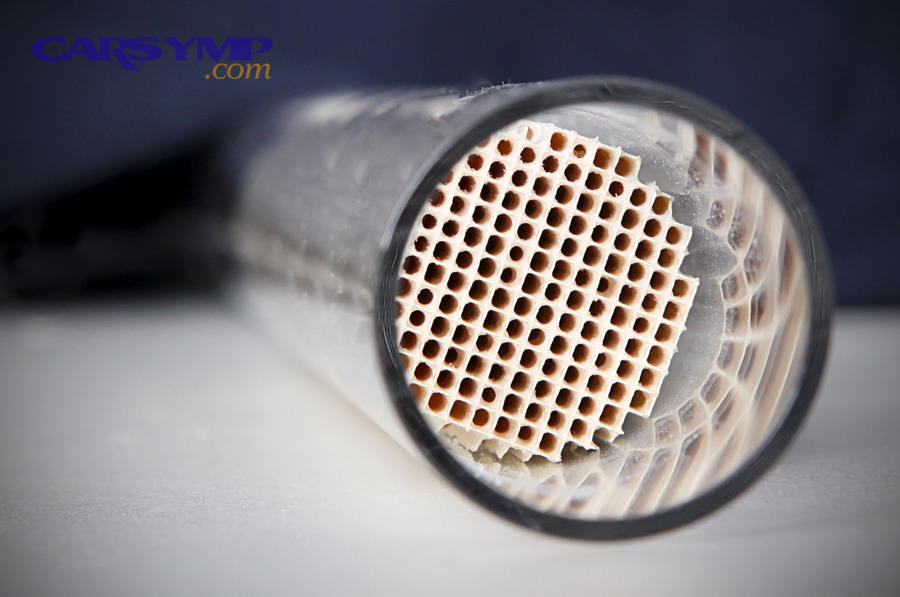
Stop-now triggers you should not rationalize away
Flashing MIL + misfire feel: stop and reduce risk of catalyst damage; regulations describe MIL blinking during catalyst-damaging misfire conditions, highlighting the urgency.
Overheating signs: temperature gauge rising, steam, coolant smell, heater blowing cold while gauge rises—shut down and diagnose cooling first.
Knock or clatter: stop to prevent bearing or piston damage, especially if it worsens with load.
Next, if you must move the car, do so only as needed to reach a safe location—low load, minimal throttle, and shortest distance.
What to do next after you stop
First, let the engine cool if overheating is involved; never open a hot pressurized cooling system. Second, check for obvious failures: loose hoses, coolant loss, belt issues, disconnected intake pipes, and electrical connectors on coils or sensors. Third, arrange a tow if symptoms were severe, especially with a flashing light or overheating.
To keep your diagnosis “clean,” once the car is safe, scan codes and record freeze-frame before starting repeated restarts that can change evidence.
Contextual Border: Up to this point, you’ve used symptom-first logic to identify the highest-probability cause family and take the safest action; next, we’ll expand into deeper, less obvious clues that help with intermittent or “hard to reproduce” check engine light cases.
Supplementary: Advanced clues for intermittent lights and rare causes
There are four advanced clues that can turn a confusing intermittent check engine light into a solvable case: freeze-frame context, readiness/monitor behavior, wiring/ground integrity, and pattern-based reproduction. Next, we’ll use these as “rare attributes” that sharpen your accuracy.
Freeze-frame is the “time machine” for intermittent problems
Intermittent problems feel random until you see the conditions: cold start, hot restart, steady cruise, decel fuel cut, or heavy load. If the freeze-frame shows high load and low RPM, suspect lugging/detonation risk or fuel delivery weakness; if it shows idle with high trims, suspect unmetered air; if it shows warm cruise, suspect catalyst/O2 monitoring.
Next, replicate those conditions deliberately rather than hoping the fault returns.
Readiness and monitor behavior explain why the light is “on today, gone tomorrow”
Some monitors do not run every trip, and clearing codes resets readiness. If you see a code that only appears after multiple drive cycles, it may be tied to a monitor that requires specific enabling conditions. This is especially true for EVAP and catalyst monitors, so plan your test drive to meet those conditions.
Next, treat readiness status as a clue—not just an inspection checkbox.
Wiring, grounds, and connector fit can mimic sensor failure
A slightly loose connector, corrosion, or a poor ground can create intermittent readings that trigger rationality codes. Before replacing a sensor, inspect the connector pins, tug-test the harness, and look for heat damage near the exhaust. If a code returns immediately after touching a harness section, you’ve found a rare but decisive root cause.
Next, combine harness inspection with live data “wiggle tests” to confirm the fault.
Pattern reproduction beats random parts replacement
If the issue happens only with A/C on, only after refueling, only in rain, or only at highway speed, those are unique attributes that shrink the cause list dramatically. Build a reproduction checklist (conditions, duration, load, temperature) and confirm with data each time so you can prove the fix.
Next, use your codes as a system map and your symptoms as the reality check—together they converge quickly.
FAQ
Can a loose gas cap really cause a check engine light without symptoms?
Yes; EVAP leak detection can set codes for small leaks or cap sealing issues even when the car drives normally, because EVAP faults are emissions-related rather than power-related. The best first step is to inspect the cap seal, tighten until it clicks, and re-check after a few drive cycles.
Should I clear the code to see if it comes back?
Not before recording evidence: clearing codes can erase freeze-frame data and reset readiness monitors, making diagnosis slower and sometimes masking an intermittent issue. Record codes, freeze-frame, and live data first, then clear only after you’ve made a targeted repair or completed a test plan.
Why does the light come on only after highway driving?
Because some monitors (like catalyst efficiency and certain O2 sensor tests) often run during steady cruise when enabling conditions are met. That pattern suggests you should inspect upstream exhaust leaks, fuel trims, and O2 sensor switching behavior before assuming the catalytic converter is bad.
If the light is flashing but the car still moves, can I drive it home?
It’s strongly discouraged: a flashing MIL is associated with catalyst-damaging misfire severity, and regulations describe blinking behavior during misfire events to warn drivers about potential aftertreatment damage.
Do I need a professional scan tool, or is a basic reader enough?
A basic reader can pull generic codes and sometimes freeze-frame, which is enough to identify the system family. However, a more capable scanner that shows live data, readiness, and misfire counters can dramatically reduce guesswork and prevent unnecessary parts replacement—especially for symptom-driven troubleshooting.