


If your cabin suddenly has no heat, a failing blend door actuator is one of the most common “heat is available but not delivered” problems, and you can usually confirm it with a short set of checks before buying parts or tearing into the dash.
You’ll also learn the symptom patterns that strongly point to the actuator—like clicking behind the dash, temperature stuck on full cold, or one-side-only heat in dual-zone systems—so you don’t confuse it with coolant or heater-core problems.
Next, this guide walks through practical testing, safe access, and repair decisions (recalibration vs replacement), with clear “what to do next” steps that match what car owners and DIYers actually face in the driveway.
Introduce a new idea: once you can separate “no heat because the engine isn’t supplying heat” from “no heat because the HVAC system isn’t blending heat,” the rest becomes a straightforward diagnosis-and-fix workflow.
Is a blend door actuator a common cause of “no heat” in the cabin?
Yes—blend door actuator no-heat issues are a common cause of cabin heat loss because the actuator can get stuck, strip gears, or lose calibration, which (1) blocks airflow from passing through the heater core, (2) locks temperature on full cold, and (3) creates inconsistent heat that feels random to the driver.
To better understand why this happens, start by treating “heater not working” as a routing problem: the engine may be producing heat, but the HVAC box may not be sending that heat into the vents.
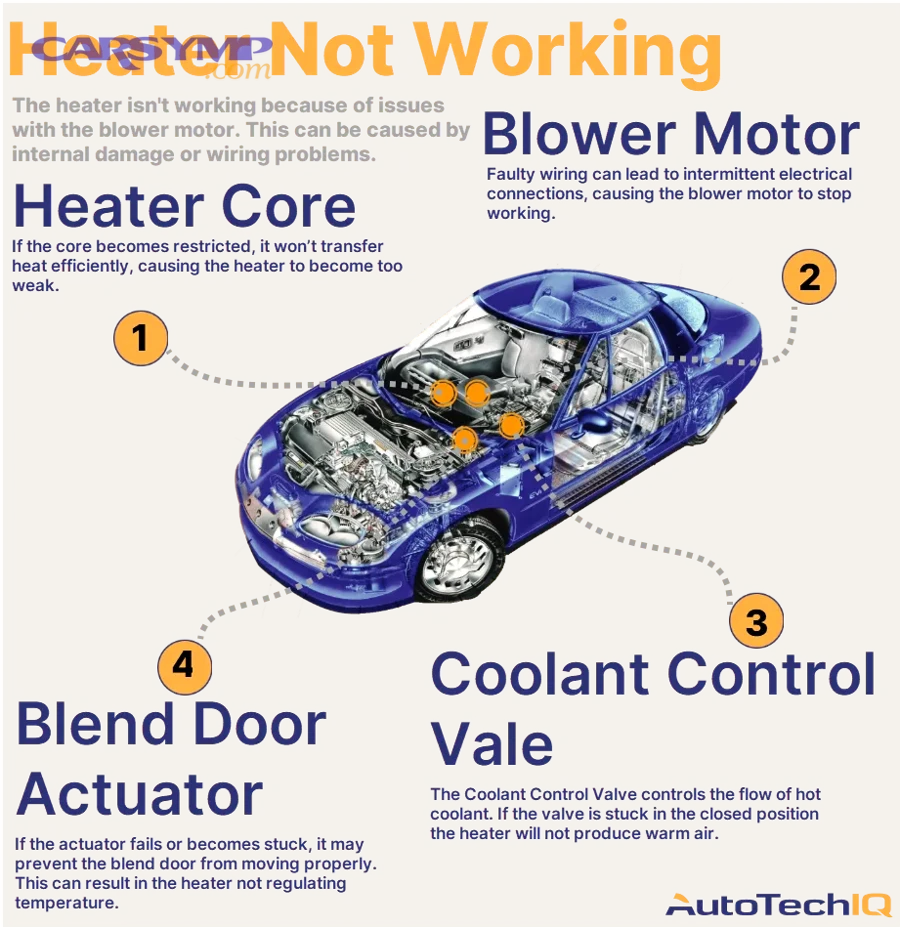
When a car produces heat normally, the heater core acts like a small radiator that transfers engine heat into the cabin air stream. The blend door is the flap that decides how much air goes through (hot) versus around (cool/ambient) that heater core. The blend door actuator—often called a heater door motor in casual repair language—moves that flap based on your temperature setting.
Here’s why the actuator becomes a frequent culprit:
- Mechanical wear: Small plastic gears can strip. The motor spins, the door doesn’t move, and you may hear clicking.
- Loss of position calibration: Many systems use feedback to “learn” door endpoints. Battery disconnects, low voltage events, or module glitches can make it forget.
- Heat and tight packaging: Actuators live near HVAC ducts and dash structure, often with awkward mounting angles that stress housings and connectors over time.
However, “common” does not mean “always.” A smart diagnosis rules out the basics quickly (coolant level, engine warm-up, heater hose temperatures) before assuming it’s the actuator.
Do you have hot air from vents at any time (idle vs driving)?
Yes, the idle-versus-driving pattern is one of the simplest clues you can use: if you sometimes get heat while driving but lose it at idle, you may be dealing with coolant flow, air pockets, or a partially restricted heater core—while a true actuator problem often stays wrong regardless of RPM.
Then, connect that pattern back to the door logic: an actuator that’s stuck on cold tends to be consistently cold because the door position doesn’t change with engine speed.
Use this quick interpretive grid:
- Heat improves at higher RPM: More coolant flow can push heat through a marginal heater core; also suggests low coolant or trapped air in some cases.
- Heat disappears when stopped: Can indicate insufficient coolant circulation, a weak water pump, or air in the cooling system.
- Heat doesn’t respond to RPM at all: More consistent with blend door/actuator, control signal, or a blocked air path.
What you should do next is pair this “pattern test” with a “temperature-setting test”: turn the temperature from full cold to full hot while listening and feeling for changes at the vents.
Are the heater hoses hot but the vents still blow cold?
Yes—hot heater hoses with cold vents is one of the strongest reasons to suspect blend door actuator no-heat issues because it implies (1) the engine is hot, (2) hot coolant is reaching the heater core area, and (3) the HVAC air stream still isn’t being directed through that heat source.
Next, treat this as a routing mismatch: heat exists in the system, but the cabin airflow is not being blended to pick it up.
A practical way to check without specialized tools:
- Warm the engine to normal operating temperature.
- With the heater set to HOT and the blower on medium, carefully feel both heater hoses near the firewall (avoid belts/fans).
- If both hoses feel hot (or at least similarly warm), coolant is likely circulating through the heater core.
- If the vents remain cold, suspect the blend door not moving, an actuator not responding, or a control/system command issue.
If one hose is hot and the other is much cooler, you may be looking at restricted heater core flow instead—something you’ll compare later in the dedicated comparison section.
What does a blend door actuator do (and why it can cause no heat)?
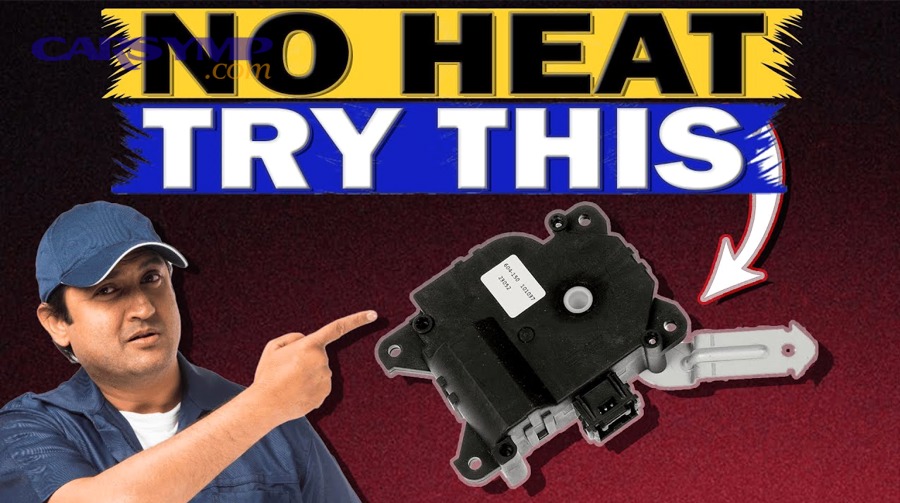
A blend door actuator is a small electric motor-and-gear device in the HVAC box that moves the temperature blend door—its standout feature is controlling the hot/cold air mix by positioning a flap that either routes air through the heater core or bypasses it.
Specifically, the “no heat” problem appears when the actuator can’t move the door to the hot position, or when it reports the wrong position and the system stops trying to move it.
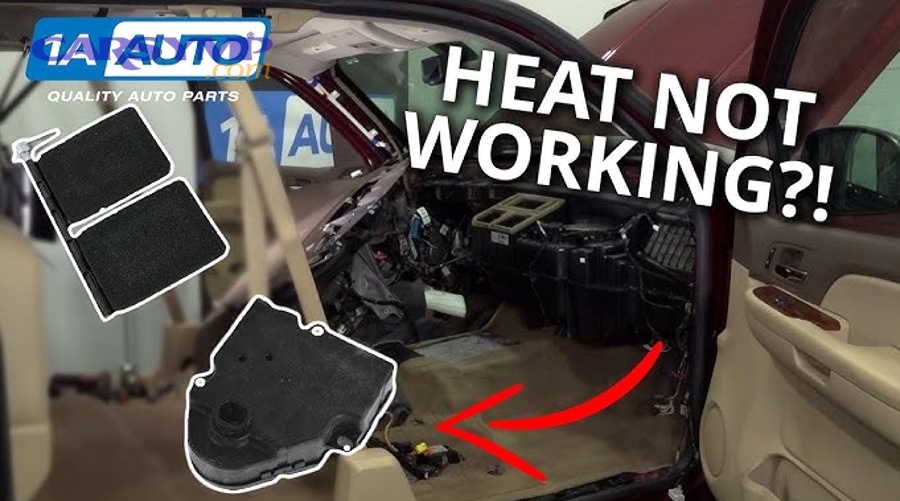
Think of your HVAC box as a controlled air tunnel:
- The blower pushes air through the box.
- The heater core sits in the path as a hot radiator-like element.
- The blend door decides whether air goes through that heater core (hot) or around it (cool).
- The actuator is the muscle moving the door based on your temperature knob or automatic climate request.
Modern actuators can include a position sensor (feedback) so the HVAC module knows where the door actually is. That feedback is helpful—but it also means a failing sensor can cause strange symptoms (door moves then stops, or “hunts” back and forth).
What is the “heater door motor” and is it the same as a blend door actuator?
The heater door motor is a common synonym for the blend door actuator, but the label can also be used loosely for other HVAC door actuators, so you should confirm whether the part controls temperature blending or airflow mode before you buy it.
Next, link the naming confusion to your symptom: “no heat” typically points to the temperature blend actuator, while “no air from defrost” points more to a mode door actuator.
In practice, you’ll see these names:
- Blend door actuator / temperature actuator / air-mix actuator: Controls hot vs cold mix.
- Mode door actuator: Controls where air comes out (defrost, dash vents, floor).
- Recirculation actuator: Chooses outside air vs cabin recirculation.
The “same” device format (small motor + plastic gears) is used for all three, which is why parts get mixed up in online shopping carts.
Which HVAC doors matter for “no heat”: blend door vs mode door vs recirculation door?
There are 3 main HVAC doors that influence what you feel at the vents—blend door, mode door, and recirculation door—based on the criterion of what they control: temperature, outlet direction, or air source.
Then, use that grouping to narrow diagnosis: true “no heat” is usually a blend door problem, but some mode-door failures can mimic it by sending air somewhere you don’t feel.
Here’s how each door affects “no heat” complaints:
- Blend door (temperature): If stuck cold, you’ll get cold air even when the engine is hot.
- Mode door (direction): If stuck on defrost or floor, you may think you have weak heat because it’s not coming out the vents you’re checking.
- Recirculation door (air source): Usually affects heating speed and cabin comfort, not absolute “no heat,” but it can make heat feel weak in very cold weather.
A quick “micro-check” that prevents wasted time: switch from dash vents to floor to defrost while leaving blower speed the same. If airflow direction changes normally but temperature doesn’t, your attention returns to the blend door/actuator system.
What are the most reliable symptoms of a bad blend door actuator?
There are 6 main symptom clusters of a bad blend door actuator—clicking noise, temperature stuck, delayed temperature change, one-side-only temperature, inconsistent cycling, and no response to controls—based on the criterion of how the HVAC output behaves when you command hot vs cold.
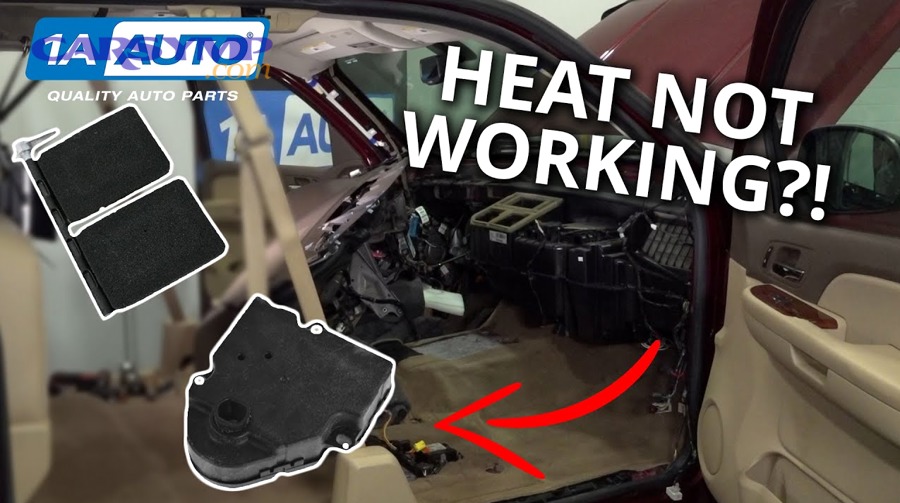
More importantly, recognizing the “high-confidence” symptoms keeps you from chasing unrelated Car Symp like weak blower airflow or a cabin air filter issue.
High-confidence symptoms (most predictive):
- Clicking/ticking behind the dash when changing temperature
- Temperature stuck on full cold or full hot
- Dual-zone split: driver cold / passenger hot (or the reverse)
- Temperature changes only at extremes (not gradual)
- Temperature changes briefly, then reverts
- No temperature change even though fan speed changes normally
Lower-confidence symptoms (can be other issues too):
- Musty smell (could be evaporator moisture)
- Fogging windows (can be coolant leak or humidity)
- Weak airflow (often blower motor, resistor, filter, or duct problems)
Does clicking/knocking behind the dash mean the actuator is stripped?
Yes, clicking or knocking behind the dash often indicates stripped actuator gears because (1) the motor keeps trying to move, (2) the gear teeth slip under load, and (3) the HVAC module repeatedly commands movement as it fails to reach the target position.
Next, connect the sound to the fix: if the gears are stripped, recalibration rarely restores normal movement, and replacement becomes the realistic solution.
How to “confirm the click” is truly actuator-related:
- Clicking begins when you change temperature or start the car.
- Clicking speeds up or slows down as you move the temperature setting.
- Clicking comes from the HVAC box area (center dash or passenger-side behind glove box), not the engine bay.
If the click is more of a single thump when you hit bumps, you might be hearing a loose duct or trim panel, not a gear skipping.
Can dual-zone “driver cold / passenger hot” indicate an actuator issue?
Yes, dual-zone temperature split is a classic sign of actuator trouble because (1) many dual-zone systems use separate blend doors/actuators per side, (2) one actuator can fail while the other works, and (3) the symptom stays consistent even after the engine is fully warm.
Then, use the split symptom as a diagnostic shortcut: if only one side is wrong, coolant-level issues become less likely and actuator/door faults become more likely.
What to test:
- Set both zones to the same temperature (full hot).
- Compare vent temperatures left vs right after 2–3 minutes.
- Switch both zones to full cold and compare again.
- If one side tracks commands while the other doesn’t, suspect the actuator (or a door linkage/shaft issue) on the incorrect side.
What symptoms look similar but usually aren’t the actuator?
Blend door actuator failure wins as the explanation when temperature commands don’t change vent temperature, but coolant-related issues are best for “engine not warming,” and a clogged heater core is optimal for “uneven heater hose temperatures,” based on the criterion of where heat is lost—control, production, or transfer.
However, the fastest way to avoid misdiagnosis is to compare symptom logic, not just outcomes like “cold air.”
Common look-alikes and how they differ:
- Low coolant / air pocket: Cabin heat may fluctuate; engine temperature may behave oddly; you may hear gurgling behind the dash; overheating risk can appear.
- Thermostat stuck open: Engine may take a long time to reach normal temperature; heat is weak overall, especially in cold weather.
- Heater core restriction: One heater hose hotter than the other; heat may improve at speed; vent temp can be lukewarm.
- HVAC control panel failures: Buttons/knobs don’t command changes; display glitches; intermittent response; may affect multiple functions (fan speed, mode, A/C).
This comparison sets you up for the next major section: confirming the actuator is truly the issue before you buy parts.
How do you confirm the blend door actuator is the real problem?
Confirming a blend door actuator problem is a step-by-step diagnostic method with 5 checks—engine heat baseline, heater hose temperature check, command-response test, actuator access/observation, and door freedom test—designed to pinpoint whether the door is not moving or the system is not commanding it.
Next, keep the hook chain tight: if the actuator can’t move the door, the cabin won’t heat even when the heater core is hot.
Use this “confirm-first” flow (fast to slow):
- Confirm the engine reaches normal temperature (don’t skip this).
- Confirm coolant level is safe/normal (a low level can mimic actuator problems).
- Check heater hoses (both warm suggests heat is available).
- Command hot/cold and listen (clicking or silence both matter).
- Access actuator if possible and observe movement (visual proof beats guesswork).
- Check door movement by hand (a stuck door can kill new actuators quickly).
What’s the fastest “no tools” test you can do from the driver’s seat?
There are 4 no-tools tests you can do from the seat—temperature sweep, mode sweep, fan sweep, and restart behavior—based on the criterion of whether the system responds to commands in a predictable way.
Then, use the outcomes to decide whether you’re dealing with mechanical actuator failure or HVAC control panel failures.
1) Temperature sweep test
- Start the car, set blower to medium, set temperature to full cold.
- Wait 15–30 seconds, then set to full hot.
- Expected: noticeable change at vents within 30–90 seconds on most vehicles once warm.
2) Mode sweep test
- Switch from dash vents → floor → defrost.
- Expected: airflow direction changes quickly and clearly.
3) Fan sweep test
- Increase and decrease blower speed.
- Expected: airflow strength changes smoothly.
4) Restart behavior
- Turn the car off, then on.
- Some failing actuators “reset” briefly, giving heat for a moment before drifting.
Interpretation:
- If mode and fan respond but temperature does not, blend door/actuator becomes a primary suspect.
- If nothing responds correctly, consider HVAC control panel failures or a power/ground issue.
How do you test actuator movement and blend door operation with basic tools?
Basic-tool testing means accessing the actuator area, watching or feeling for movement during a temperature command, and checking wiring integrity—its standout benefit is turning a “maybe” diagnosis into a visible yes/no answer without specialized scan tools.
Next, treat access as a strategy decision: some actuators are easy (glovebox area), while others are buried deeper and may change your DIY plan.
Tools that help:
- Trim removal tools
- Flashlight/headlamp
- Small ratchet and sockets (often 5.5mm, 7mm, 8mm) or Torx bits depending on vehicle
- Mirror tool (for hidden screws)
- Multimeter (optional but useful)
What to do:
- Locate the actuator: Many are behind the glovebox or near the center console sides. Service manual info is best, but careful visual inspection can work.
- Watch/feel movement: With the actuator still mounted, change the temperature setting and see if the actuator turns.
- Listen close: A clicking actuator often clicks more loudly with the glovebox removed.
- Check the connector: Unplug and inspect for corrosion or loose pins; reseat firmly.
- Check door freedom (only if actuator removed): gently rotate the door shaft/pivot to verify it moves smoothly from cold to hot.
If the actuator moves but the temperature doesn’t change, the door may be broken or disconnected—an important “rare-but-real” scenario you’ll revisit later.
Should you recalibrate/reset the HVAC actuator before replacing it?
Yes, you should recalibrate/reset before replacement because (1) many no-heat complaints come from lost endpoints rather than broken gears, (2) recalibration is low-risk and fast, and (3) it can reveal whether the actuator is physically capable of moving through its travel.
Then, treat recalibration as a diagnostic step: if calibration fails or clicking continues, you’ve gained confidence that replacement is justified.
Common reset approaches (vehicle-dependent):
- HVAC self-calibration sequence: Some vehicles have a button sequence (often involving recirc + defrost, or holding certain buttons) to initiate actuator relearn.
- Battery disconnect / power cycle: In some vehicles, disconnecting the battery briefly can trigger relearn on restart—but this can also create radio/security issues and should be done carefully.
- Scan tool actuator recalibration: The most precise method for vehicles that support it.
A practical DIY rule:
- If you hear gear skipping (clicking) or the actuator never moves, reset is unlikely to permanently fix it.
- If you have inconsistent behavior (sometimes works), recalibration is worth trying before you buy parts.
How do you replace a blend door actuator safely and correctly?
Replacing a blend door actuator is a practical method with 7 steps—power safety, access, connector release, fastener removal, door alignment check, actuator installation, and recalibration—designed to restore temperature control and prevent immediate repeat failure.
Next, keep the hook chain tight: the actuator is only as good as the door it moves, so you must confirm the door isn’t jammed before installing the new part.
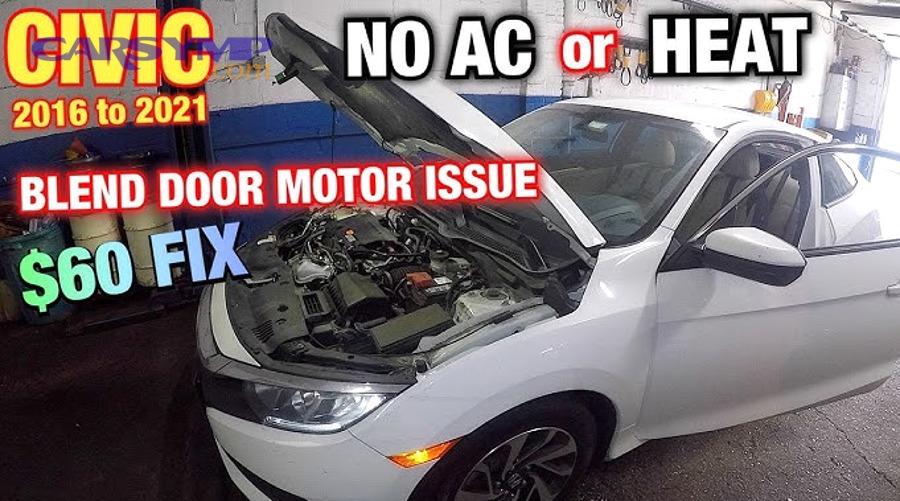
Step-by-step replacement (general approach)
- Safety first: Park, set the brake, and consider disconnecting the battery if you’re working near airbag wiring or major dash connectors.
- Gain access: Remove glovebox/trim panels as needed. Keep fasteners organized.
- Unplug the actuator connector: Release the lock tab gently; connectors can be brittle.
- Remove mounting screws: Usually 2–3 small screws in tight quarters; a small ratchet helps.
- Remove actuator: Pull straight off to avoid stripping the door shaft.
- Check door movement: Rotate the door pivot gently through its travel; it should move smoothly.
- Install new actuator aligned correctly: Do not force it; align splines/flat spots carefully.
- Recalibrate: Perform the vehicle’s relearn procedure if applicable.
- Verify operation: Confirm temperature change and absence of clicking.
One optional but helpful step: take a photo before removal so you can match orientation during installation.
What tools and prep steps reduce the risk of breaking trim or setting airbag faults?
There are 4 main prep categories—trim protection, fastener management, electrical safety, and workspace lighting—based on the criterion of what typically goes wrong during dash-area repairs.
More importantly, careful prep prevents “simple actuator replacement” from turning into a dashboard rattle or warning light problem.
Trim protection
- Use plastic trim tools instead of screwdrivers.
- Pull panels evenly to avoid snapping clips.
Fastener management
- Use a small tray or labeled bags.
- Note screw lengths; some are deceptively similar.
Electrical safety
- If you’ll be near yellow airbag connectors or major harnesses, disconnect the battery and wait a few minutes (vehicle guidelines vary).
- Avoid probing airbag connectors with a test light.
Workspace lighting
- A headlamp and a small mirror tool save time and reduce frustration.
This prep becomes even more important on vehicles where the actuator is mounted high on the HVAC case with limited line-of-sight.
How do you align the actuator to the door (so it doesn’t strip again)?
Actuator alignment means matching the actuator’s output gear position to the blend door shaft position before tightening screws—its standout purpose is preventing binding, avoiding forced installation, and ensuring the new actuator can travel smoothly from full cold to full hot.
Next, connect alignment to longevity: many “new actuator failed quickly” stories happen because the door was stiff or the actuator was forced onto the shaft.
Alignment best practices:
- Never force the actuator onto the shaft. If it doesn’t seat flush, the door position likely doesn’t match.
- Set the HVAC control to a known position (often full cold) before removal, if the actuator still works at all. This can help you match the door position.
- Manually position the door pivot (only when the actuator is off) so it matches the actuator’s gear orientation.
- Tighten screws evenly so the actuator housing seats flat.
If the door feels stiff or catches during manual movement, stop and investigate. Installing a new actuator against a sticky door can strip gears fast.
What should you verify after replacement to confirm the fix?
There are 5 verification checks—temperature sweep, dual-zone symmetry, mode consistency, noise absence, and real-world drive confirmation—based on the criterion of whether the HVAC system is stable across settings and conditions.
Then, use verification to avoid false wins: an actuator can appear fixed for a minute, then drift if calibration is wrong or the door binds under load.
1) Temperature sweep
- Full cold → full hot, then back.
- Look for smooth and repeatable changes.
2) Dual-zone symmetry (if equipped)
- Set both sides equal and compare vent temps.
3) Mode consistency
- Ensure defrost/floor/vent changes still work and don’t affect temperature unexpectedly.
4) Noise absence
- No clicking at startup or during adjustments.
5) Drive confirmation
- Confirm heat at idle and while driving, especially after a cold soak.
If the system still behaves oddly, do not immediately blame the new actuator—move to the comparison section and the supplementary troubleshooting section for deeper causes.
Blend door actuator vs heater core vs thermostat: what’s the difference in “no heat” symptoms?
The blend door actuator wins when vent temperature doesn’t follow your hot/cold command, the heater core is best blamed when heater hose temperatures are uneven and heat output is weak, and the thermostat is optimal to suspect when the engine struggles to reach normal temperature—based on the criterion of where the heat is being lost: control, transfer, or production.
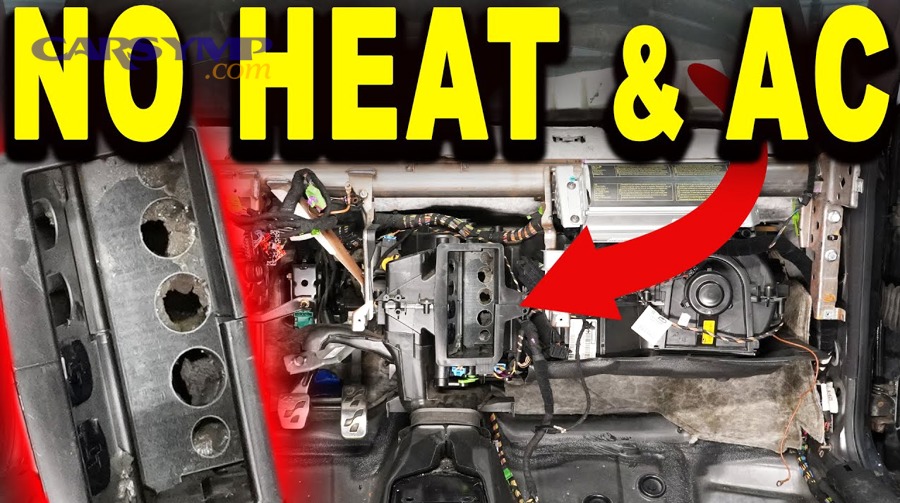
However, the most accurate approach is to compare “where the chain breaks” rather than guessing from a single symptom.
Here’s a practical comparison table (the goal is to help you choose the next test, not to overwhelm you):
| Symptom clue | Most likely area | Why it points there | Best next check |
|---|---|---|---|
| Temp knob does nothing; clicking behind dash | Blend door actuator | Door not moving or gears slipping | Listen + access actuator |
| Engine temp low for a long time | Thermostat (stuck open) | Engine not producing enough heat | Monitor warm-up time |
| One heater hose hot, one cooler | Heater core restriction | Heat not transferring through core | Compare hose temps |
| Heat sometimes returns after restart | Actuator calibration/control | Door position “relearn” or intermittent | Attempt recalibration |
| Multiple HVAC functions glitch (fan/mode/temp) | Controls/electrical | Command signals unreliable | Check for HVAC control panel failures |
Now, link the comparison back to your goal: if you can show the engine is hot and coolant is circulating, the HVAC system’s blend control becomes the main suspect.
When is “no heat” more likely low coolant or an air pocket than an actuator?
Low coolant wins as the explanation when heat output is inconsistent and the cooling system shows instability, while an actuator is best suspected when the cooling system is stable but temperature commands don’t change vent output—based on the criterion of system stability versus command responsiveness.
More specifically, a Low coolant causing no heat diagnosis focuses on coolant level, air bleeding, and risk management—not on HVAC door motors.
Signs that lean coolant/air-pocket:
- Coolant level in reservoir is low or keeps dropping.
- You hear sloshing/gurgling behind the dash when revving.
- Engine temperature gauge fluctuates unusually.
- Heat output changes with RPM (better when revved).
- Overheating appears under load.
What to do if you suspect low coolant:
- Do not keep driving aggressively—cooling issues can escalate.
- Top off only with the correct coolant mix if safe, and address leaks properly.
- Bleed air per vehicle procedure; trapped air can reduce heater core circulation.
In contrast, an actuator issue usually won’t change coolant level, and it typically won’t cause overheating by itself—though a driver might confuse the symptoms and chase the wrong fix.
When is a clogged heater core more likely than an actuator?
A clogged heater core is more likely when coolant flow through the heater core is restricted—often shown by uneven heater hose temperatures—while an actuator is more likely when both hoses are hot yet the cabin air stays cold, based on the criterion of heat-transfer capability versus airflow routing.
Then, connect that to your hands-on test: the heater hose check becomes your fastest fork in the road.
Clogged heater core clues:
- One heater hose hot, the other noticeably cooler.
- Heat is weak and never truly hot, even when commanded.
- Heat may improve when driving (more flow) and fade at idle.
- Coolant is dirty/rusty or maintenance history is unknown.
Actuator clues:
- Both hoses hot, vent air cold.
- Clicking from dash during temperature changes.
- Dual-zone split temperature.
- Temperature changes only sometimes, then stops.
This is also where you stay realistic: heater core service can be more involved than an actuator replacement, and many DIYers choose professional diagnosis if the evidence points strongly toward core restriction.
What if replacing the blend door actuator didn’t fix the no-heat problem?
If actuator replacement didn’t fix no heat, the problem is usually (1) a broken or jammed blend door, (2) a control-command issue such as HVAC control panel failures, or (3) a feedback/sensor problem that makes the system “think” the door moved when it didn’t.
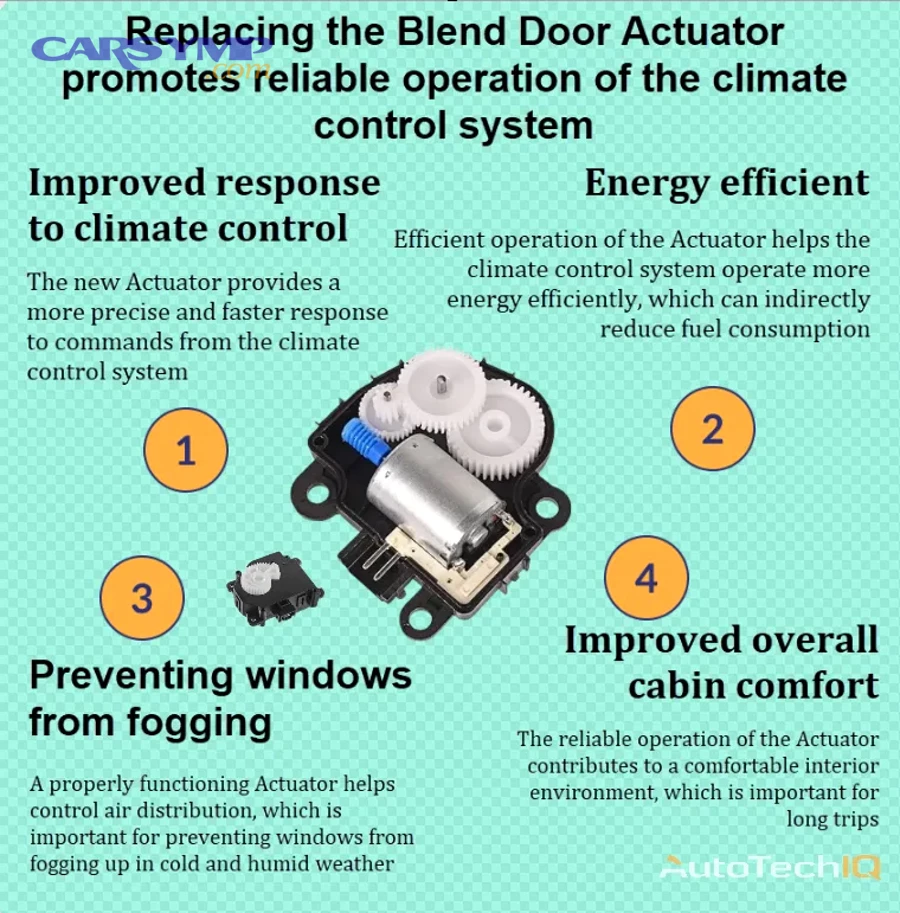
Next, treat this as a “proof over parts” moment: you already replaced the most common motor, so now you verify door mechanics and command signals.
This is where many DIYers get stuck because the symptom—cold air—has multiple roots. The key is to re-check the chain:
- Is the heater core hot?
- Is airflow actually being routed through it?
- Is the door physically intact?
- Is the system commanding the correct door position?
- Is the system receiving trustworthy feedback?
Could the blend door itself be broken (shaft/hinge/foam seal) even if the actuator is new?
Yes, the blend door can be broken even with a new actuator because (1) the door shaft can crack or disconnect, (2) the door can bind due to debris or warped housing, and (3) degraded foam seals can leak air around the heater core path, making heat feel weak even when the door moves.
Then, connect this back to your earlier “door freedom test”: a new actuator can’t solve a door that isn’t mechanically functional.
What to look for:
- The actuator output turns, but the door pivot doesn’t move (or moves loosely).
- The door feels stiff, catches, or won’t sweep smoothly by hand.
- You feel only lukewarm air despite proper coolant heat—especially if the foam that seals airflow paths has deteriorated.
A practical “DIY reality” note: door repair can range from simple (removing debris) to complex (HVAC box disassembly). That complexity is why verifying door movement before installing a new actuator is so important.
Can an HVAC control module or sensor make a good actuator behave like it’s failing?
Yes, control modules or sensors can make a healthy actuator look bad because (1) the module may not send a consistent command, (2) incorrect temperature sensor inputs can trigger wrong blend positions, and (3) voltage drops or poor grounds can interrupt actuator travel mid-sweep.
Moreover, this is where HVAC control panel failures become more than a phrase—they become a diagnostic category when multiple HVAC behaviors are unreliable.
Symptoms that suggest control/sensor involvement:
- Fan speed display changes but actual airflow doesn’t match (or vice versa).
- Temperature setting changes on screen but actuator movement is absent across multiple actuators.
- Problems affect multiple doors (blend + mode + recirc) or recur after battery events.
- Issues appear intermittently with bumps, indicating wiring/connector sensitivity.
What to do next:
- Confirm fuses related to HVAC and body control modules.
- Inspect HVAC connectors you touched during replacement for pin fitment.
- If possible, use a scan tool to view cabin temp sensor values and commanded door positions (a shop can do this quickly).
Are there diagnostic trouble codes (DTCs) for actuator position errors—and do they matter?
Actuator-related DTCs are fault codes stored by the HVAC module or body control system that indicate position mismatch, travel limits not learned, or feedback circuit problems—what makes them valuable is that they can confirm a command-versus-movement mismatch without guessing.
Next, use DTCs as a tie-breaker: when symptoms could be actuator, door, or control, codes can point to which circuit is failing.
Why they matter:
- A position sensor circuit code suggests the actuator may move but report wrong feedback.
- A “calibration not learned” style code suggests relearn/reset issues.
- A “stuck door” style code (if supported) suggests mechanical resistance.
Even without a scan tool, your earlier physical tests often reveal the same story. But if you’re stuck after replacement, pulling codes can save hours.
Should you choose OEM or aftermarket actuators to avoid repeat failure/noise?
OEM actuators win for fitment consistency and long-term noise control, aftermarket units are best for budget and quick availability, and premium aftermarket is optimal when you need a balance of warranty and quality—based on the criterion of risk tolerance versus access difficulty.
In short, the harder the actuator is to reach, the more “buy once, cry once” makes sense.
Decision tips:
- If access is easy (glovebox area), trying a reputable aftermarket may be reasonable.
- If access is difficult (deep in dash), OEM or high-quality aftermarket can reduce repeat labor.
- Read reviews specifically about gear noise and calibration behavior, not just “it fit.”
Finally, remember the hidden variable: if the blend door is stiff, any actuator—OEM or aftermarket—can fail early. Door freedom is still the foundation.
According to a study by University of Veterinary Medicine Vienna from the WG Environmental Health, Unit for Physiology and Biophysics, in 2016, cabin air temperature in vehicles can reach about 50% of its equilibrium change in roughly 30 minutes, underscoring how quickly HVAC conditions can shift and why short, structured tests are effective.