


Diagnostic fees are typically separate charges from replacement costs, though many service providers credit the diagnostic fee toward your final repair bill if you approve the work at their facility. The diagnostic fee covers the labor, specialized equipment, and expertise required to identify the root cause of your problem, while the replacement cost includes parts and installation labor. Understanding this distinction helps you evaluate whether you’re being charged fairly and when you should expect these fees to be waived or combined.
The amount you pay for diagnostics varies significantly based on the service provider and complexity of the problem. Automotive diagnostic fees typically range from $50 to $150 at independent shops and $100 to $200 at dealerships, while HVAC diagnostics cost between $75 and $150. These fees exist because modern vehicles and systems require sophisticated scan tools costing thousands of dollars and technicians with specialized training to interpret diagnostic trouble codes and perform pinpoint testing.
Knowing when diagnostic fees should be waived gives you negotiating power and helps you avoid unnecessary charges. Warranty coverage, customer loyalty programs, and industry best practices all influence whether you’ll pay this fee separately or see it credited toward your repair. Many customers feel frustrated when charged a diagnostic fee after approving expensive repairs, not realizing that some shops maintain separate billing while others roll diagnostics into the total cost.
Beyond understanding the fee structure, you need to know your alternatives and consumer rights. Free code reading at parts stores, DIY diagnosis, and second opinions all present options, though each comes with limitations and risks. To begin, let’s examine exactly what a diagnostic fee covers and why it exists as a distinct charge in the service industry.
What Is a Diagnostic Fee and What Does It Cover?
A diagnostic fee is the labor charge for identifying the root cause of a malfunction, covering technician time, specialized equipment usage, and expert analysis to pinpoint the exact problem before any repair work begins. This fee compensates service providers for the investigative process that determines which component has failed and why, distinguishing it from repair labor that fixes the identified issue.
To better understand the diagnostic fee’s purpose, consider what happens when you bring a vehicle to a shop with a check engine light. The technician connects a diagnostic scan tool to read trouble codes stored in the vehicle’s computer system. However, these codes don’t simply state “replace the oxygen sensor” or “fix the fuel pump.” Instead, they indicate that a fault exists somewhere within a circuit or system, requiring additional testing to locate the actual problem.
Professional diagnostic equipment represents a substantial investment for repair facilities. Advanced scan tools cost between $5,000 and $15,000, with annual software update subscriptions adding hundreds or thousands of dollars more. These tools provide capabilities far beyond basic code readers, including live data streaming, bidirectional controls, component activation tests, and manufacturer-specific diagnostics. The diagnostic fee helps recover these equipment costs while ensuring technicians receive compensation for their expertise.
Specifically, diagnostic fees cover several distinct elements that many customers don’t immediately recognize. First, they pay for the technician’s troubleshooting time, which can range from 15 minutes for straightforward issues to several hours for intermittent electrical problems. Second, they compensate for the use of specialized tools like multimeters, oscilloscopes, pressure testers, and manufacturer-specific diagnostic software. Third, they reward the technician’s training and experience in interpreting data and following diagnostic flowcharts to isolate faults efficiently.
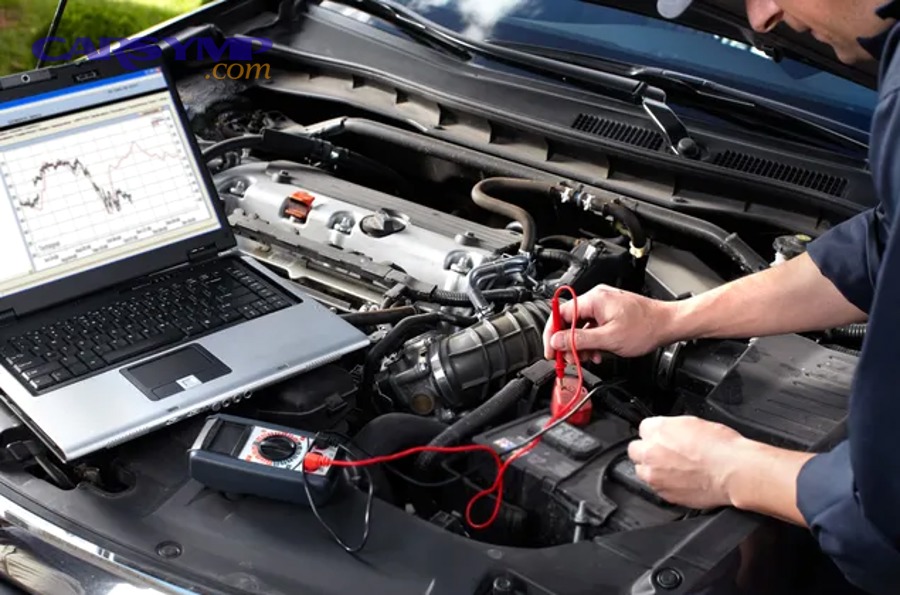
The diagnostic process involves systematic testing that goes well beyond simply plugging in a scanner. Technicians must verify sensor readings against factory specifications, check wiring continuity, measure voltage and resistance at multiple points, and sometimes perform component isolation tests. For example, diagnosing a code P0135 (oxygen sensor heater circuit malfunction) requires testing the sensor itself, inspecting the wiring harness for damage or corrosion, checking fuse integrity, and verifying proper voltage supply from the engine control module. This process takes considerably more time and skill than the five-minute code scan offered free at many parts stores.
Modern vehicles contain dozens of interconnected computer modules that communicate constantly, making diagnosis increasingly complex. A single symptom like rough idle might stem from vacuum leaks, fuel delivery issues, ignition problems, sensor failures, or software glitches. The diagnostic fee ensures that technicians can methodically eliminate possibilities rather than guessing and replacing parts randomly, which ultimately saves customers money by avoiding unnecessary component replacement.
HVAC systems present similar diagnostic challenges that justify separate fees. When an air conditioning system stops cooling, the problem could involve refrigerant leaks, compressor failure, electrical issues, thermostat malfunctions, or ductwork problems. HVAC technicians use refrigerant gauges, leak detectors, voltage testers, and system analyzers to pinpoint the exact cause. This equipment, combined with the technician’s HVAC certification and ongoing training, represents significant investment that diagnostic fees help offset.
According to industry data from the Automotive Service Association, diagnostic time accounts for approximately 25-30% of total repair time on modern vehicles, reflecting the increased complexity of automotive systems. Shops that don’t charge separate diagnostic fees must roll these costs into higher labor rates for all services, potentially making simple repairs more expensive for customers who don’t require complex diagnostics.
Is the Diagnostic Fee Separate from the Replacement Cost?
Yes, diagnostic fees are separate line items from replacement costs at most service facilities, though policies vary regarding whether the fee is credited toward your final bill if you approve the recommended repairs. The diagnostic charge compensates for identifying the problem, while the replacement cost covers parts and installation labor for fixing that problem.
However, understanding when these fees merge or remain separate requires knowledge of industry practices and individual shop policies. The relationship between diagnostic fees and repair costs depends on multiple factors including the type of service provider, warranty status, and whether you proceed with recommended repairs at the diagnosing facility.
When Is the Diagnostic Fee Waived or Credited Toward Repairs?
Warranty coverage represents the most common scenario where diagnostic fees are automatically waived. When a repair falls under manufacturer warranty, extended service plans, or recall programs, dealerships and authorized service centers typically absorb the diagnostic cost rather than charging it separately. This practice exists because warranty administrators reimburse facilities for diagnosis as part of the warranty claim process, meaning the shop receives payment for their diagnostic work from the manufacturer rather than the customer.
Many independent repair shops credit diagnostic fees toward your final bill when you approve repairs at their facility. This customer-friendly policy encourages people to proceed with recommended work rather than shopping around after diagnosis. For example, if a shop charges a $100 diagnostic fee and your total repair costs $450, you pay $450 total rather than $550 ($100 diagnostic plus $450 repair). The diagnostic work becomes part of the overall labor calculation, with the technician’s time allocated across both identifying and fixing the problem.
Customer loyalty programs and promotional periods sometimes include diagnostic fee waivers as membership benefits. HVAC companies frequently offer maintenance plans that include unlimited free diagnostic visits, understanding that regular customers will generate repair revenue over time. Similarly, some dealerships waive diagnostic fees for customers who purchased their vehicles from that location or who use the service department regularly for maintenance.
Certain service providers bundle diagnostics into flat-rate pricing structures that quote a single price for diagnosis and repair together. This approach simplifies billing and eliminates confusion about separate charges. When you call with a specific symptom, the shop might quote “$350 to diagnose and replace the alternator if that’s the problem” rather than separating these costs.

Geographic market conditions also influence diagnostic fee policies. In highly competitive markets where multiple shops vie for customers, many facilities credit diagnostic fees toward repairs to differentiate themselves from competitors. Conversely, in areas with limited service options, shops may feel less pressure to waive or credit these fees.
When Do You Pay the Diagnostic Fee Separately?
The most common situation requiring separate diagnostic fee payment occurs when customers decline recommended repairs and take their vehicles elsewhere. Service facilities universally maintain this policy because they’ve invested time and resources identifying the problem without receiving compensation through repair work. If a shop spends 90 minutes diagnosing your transmission issue and you choose not to proceed with their $2,800 repair estimate, you owe the diagnostic fee as payment for that investigative work.
Customers who request diagnosis only—planning to perform DIY repairs or purchase parts independently—always pay diagnostic fees separately. Some people specifically ask shops to identify problems so they can fix issues themselves or have friends/family help with repairs. While this approach can save money, it means paying the full diagnostic charge without any credit toward parts or labor.
No-fault-found scenarios present another situation where diagnostic fees apply without subsequent repair costs. When a shop investigates an intermittent problem that doesn’t manifest during testing, they’ve still invested diagnostic time even though no repair was needed. For example, if you bring a vehicle in for an occasional misfire that doesn’t occur during the shop’s diagnostic process, you pay for their troubleshooting time despite leaving without repairs.
Multiple system diagnostics where you approve only partial repairs also result in separate charges. Consider a scenario where diagnostic testing reveals both a failing alternator and worn brake pads, but you choose to address only the alternator immediately. Some shops charge separately for diagnosing the brake system since you didn’t proceed with that particular repair, though policies vary.
Price shopping after diagnosis frequently leads to separate diagnostic fee billing. When customers use one shop’s expertise to identify problems then seek cheaper repairs elsewhere, the diagnosing facility collects only their diagnostic fee. This practice, sometimes called “diagnostics shopping,” frustrates service providers who invest in expensive equipment and training yet lose repair revenue to competitors with lower labor rates.
State laws in some jurisdictions require written authorization before diagnostic work begins, explicitly stating that diagnostic fees apply regardless of whether repairs are performed. These consumer protection laws ensure customers understand the cost structure upfront, preventing disputes about unexpected charges. However, they also formalize the separation between diagnostic and repair billing.
According to repair industry standards documented by the Automotive Service Excellence (ASE) organization, diagnostic fees should be clearly disclosed before any work begins, with customers signing authorization forms that specify whether fees will be credited toward repairs or charged separately under different circumstances.
How Much Do Diagnostic Fees Cost Compared to Actual Repairs?
Diagnostic fees typically represent 10-30% of total repair costs for common automotive and HVAC issues, with fees ranging from $50-$200 while repairs span from $200 to several thousand dollars depending on the problem’s complexity. Understanding this relationship helps you evaluate whether diagnostic charges seem reasonable for your specific situation and service provider type.
To illustrate the cost comparison, consider common repair scenarios across different service categories. The relationship between diagnostic time and repair time varies dramatically based on problem complexity, sometimes resulting in diagnostic fees that approach or even exceed simple repair costs.
What Factors Affect Diagnostic Fee Pricing?
Shop type creates the most significant pricing variation for diagnostic services. Dealerships charge premium diagnostic fees ranging from $100 to $200 or more, reflecting their investment in manufacturer-specific diagnostic equipment, factory training for technicians, and access to proprietary technical service bulletins. These higher fees come with advantages including deep knowledge of specific makes and models, awareness of common failure patterns, and direct communication channels with manufacturer technical support.
Independent repair shops typically charge $75 to $150 for diagnostic services, positioning themselves as value alternatives to dealerships. Many independent facilities invest in professional-grade scan tools that work across multiple vehicle brands, though they may lack the manufacturer-specific capabilities that dealerships possess. Despite lower fees, skilled independent technicians often provide equally accurate diagnoses for common problems.
Mobile mechanics represent another pricing tier, generally charging $80 to $120 for on-site diagnostics. Their fees account for travel time and the convenience of coming to your location, though they may have limitations regarding available equipment compared to fully-equipped shops. Mobile diagnostics work well for basic issues but may require subsequent shop visits for complex problems needing specialized testing equipment.
Complexity of the system being diagnosed directly affects pricing structures. Simple mechanical systems like brakes or suspension typically involve lower diagnostic fees because problems often reveal themselves through visual inspection and basic testing. Conversely, electrical issues, intermittent problems, and network communication faults between multiple computer modules command higher diagnostic fees due to extensive testing requirements.
Geographic location creates substantial price variations reflecting local economic conditions and competition levels. Urban areas with high costs of living and numerous competing shops might see diagnostic fees ranging from $100-$175, while rural areas with fewer service options might charge $60-$100. Major metropolitan markets like New York, Los Angeles, and San Francisco typically command premium diagnostic rates compared to smaller cities and towns.
Emergency or after-hours service dramatically increases diagnostic costs, with premiums of 50-100% above standard rates. If your HVAC system fails on a weekend or your vehicle breaks down late at night requiring immediate diagnosis, expect to pay $150-$300 for diagnostic services that would cost $75-$150 during regular business hours. These premiums compensate technicians for sacrificing personal time and cover overhead costs of maintaining 24/7 availability.
Technician certification and specialization levels also influence diagnostic pricing. Shops employing master-certified technicians or specialists in particular systems (transmission, electrical, diesel) often charge higher diagnostic fees reflecting their advanced expertise. A transmission specialist might charge $150-$200 for diagnostics compared to $100 from a general repair shop, but the specialist’s experience often leads to faster, more accurate problem identification.
The diagnostic fee structure itself—flat rate versus hourly—affects total costs. Flat-rate diagnostic fees provide pricing certainty, charging a set amount regardless of actual time spent. Hourly diagnostic billing might start at $75 for the first hour with additional increments of $30-$40 per 15 minutes, potentially resulting in higher costs for difficult-to-diagnose problems but lower fees when issues are quickly identified.
Can Diagnostic Fees Exceed the Cost of the Actual Fix?
Yes, diagnostic fees can exceed repair costs when complex troubleshooting requires extensive time to locate a simple problem, such as spending two hours diagnosing an electrical short that takes 15 minutes to repair once found. This counterintuitive situation frustrates many customers who struggle to understand why identifying a problem costs more than fixing it.
Real-world examples illustrate this dynamic clearly. Consider an intermittent electrical issue where interior lights randomly turn on, draining the battery. The technician must monitor multiple circuits using specialized equipment, sometimes waiting for the fault to occur while conducting parasitic draw testing. This process might consume three hours at $125 per hour ($375 total) to discover a frayed wire behind the dashboard that requires only 20 minutes and $15 in materials to splice and repair ($50 total labor plus parts).
Electrical system diagnostics frequently present this scenario because problems often stem from damaged wiring, poor connections, or corrosion rather than component failures. Locating the exact point where a wire short-circuits within a vehicle’s extensive wiring harness demands methodical testing that can span hours. However, once identified, the repair involves cutting out the damaged section and installing a new wire segment—quick work for a skilled technician.
Intermittent problems represent the most challenging and time-consuming diagnostic cases. A vehicle might run perfectly during shop testing but exhibit problems intermittently on the road. Technicians may need to road test the vehicle multiple times, monitor live data over extended periods, or perform extensive component stress testing. These diagnostic marathons can accumulate several hours of labor before identifying a problem that ultimately requires a simple repair like replacing a faulty sensor connector.
Computer network communication issues between multiple vehicle modules exemplify complex diagnosis requiring minimal repair. When modules fail to communicate properly, the technician must test network circuits, check termination resistors, verify voltage levels, and sometimes disconnect modules individually to isolate the faulty component. This systematic troubleshooting might take three hours but result in discovering a corroded ground connection that takes ten minutes to clean and reconnect.
starter replacement cost comparisons further illustrate this principle. While replacing a starter motor typically costs $300-$600 including parts and labor (with the actual replacement taking 1-2 hours), diagnosing a no-start condition might require extensive testing. The technician must verify battery condition, test cables and connections, check the ignition switch, examine the neutral safety switch, and confirm starter circuit integrity before determining the starter has failed. This comprehensive diagnostic approach prevents replacing a good starter when the actual problem lies elsewhere.
alternator replacement cost scenarios show similar patterns. The replacement itself costs $400-$800 including parts and labor, with installation typically requiring 1-2 hours. However, diagnosing charging system problems involves testing battery health, measuring alternator output, checking belt condition and tension, examining wiring and grounds, and sometimes load-testing the electrical system. A thorough diagnosis might consume 1.5 hours of labor before concluding the alternator needs replacement.
The value proposition becomes clear when you consider the alternative: replacing parts based on guesswork. Shops that skip proper diagnostics and simply replace the most likely component often create “comeback” situations where customers return because the original problem persists. If a shop replaces a $400 alternator without diagnosing properly, only to discover the real problem was a $20 fusible link, the customer has wasted money on unnecessary parts while still needing additional repairs.
According to technical service data from carsymp.com, approximately 30-40% of automotive repairs involving electrical or electronic components require diagnostic time that exceeds actual repair time. This reflects the reality that modern vehicles contain thousands of feet of wiring, dozens of sensors, and multiple computer modules where faults can occur at countless connection points, yet repairs often involve addressing single failure points once identified.
What Are the Alternatives to Paying Diagnostic Fees?
Free code reading at parts stores, DIY diagnostics using personal scan tools, obtaining second opinions, and requesting specific repairs without diagnosis represent the main alternatives to paying professional diagnostic fees, though each option carries limitations and risks. Understanding these alternatives helps you make informed decisions about when professional diagnostics justify their cost versus when you can reasonably skip them.
Moreover, evaluating alternatives requires honest assessment of your mechanical knowledge, available tools, and risk tolerance. While avoiding diagnostic fees might save $75-$150 upfront, incorrect diagnosis can lead to spending hundreds or thousands on unnecessary parts and repairs that don’t solve the original problem.
What’s the Difference Between Free Code Reading and Professional Diagnosis?
Free code readers at auto parts stores provide basic diagnostic trouble codes (DTCs) from your vehicle’s onboard computer but cannot perform the comprehensive testing and analysis that professional diagnostics include. The code reader simply displays codes like “P0301 – Cylinder 1 Misfire Detected” without identifying why the misfire occurs or testing components to pinpoint the root cause.
Specifically, parts store scanners retrieve stored codes and display their generic definitions, a process taking just a few minutes. These basic OBD-II scanners, which retail for under $100, access only the powertrain control module in most cases, missing codes stored in other vehicle systems like ABS, airbag, transmission, or climate control modules. They show that a problem exists but provide minimal information about the underlying cause.
Professional diagnostic tools costing $5,000-$15,000 offer capabilities far beyond basic code reading. These advanced scan tools provide live data streaming showing real-time sensor values, bidirectional controls allowing technicians to activate components for testing, freeze frame data capturing operating conditions when codes set, and access to all vehicle modules including body control, chassis, and infotainment systems. More importantly, they include manufacturer-specific functions like transmission adaptation resets, throttle body relearning procedures, and module programming capabilities.
The interpretation gap represents the crucial difference between code reading and diagnosis. A code indicates where to look for a problem but rarely identifies the specific failed component. For example, code P0171 (System Too Lean Bank 1) might result from vacuum leaks, faulty mass airflow sensors, fuel pump weakness, injector problems, oxygen sensor issues, or even exhaust leaks. Professional diagnosis involves systematically testing each possibility using specialized tools and procedures.

Parts store employees performing free code reading typically lack the training to provide accurate diagnostic interpretation. While some enthusiastic staff members might offer suggestions, they’re usually following generic troubleshooting guides rather than performing actual diagnostic testing. Their primary goal involves selling parts, creating potential conflicts of interest where they recommend component replacement based on code descriptions rather than verified testing.
The risk of misdiagnosis escalates dramatically with code-only approaches. Automotive forums and social media groups overflow with stories of people who replaced oxygen sensors, mass airflow sensors, or catalytic converters based on parts store code readings only to discover the original problem persisted. These unnecessary part replacements waste money while delaying proper repairs.
Additional parts that affect cost become apparent only through professional diagnosis. A check engine light might reveal a failed catalytic converter ($1,200-$2,500 repair), but professional diagnostics would identify whether the converter failed due to engine misfires, oil consumption, or coolant contamination. Without addressing the underlying cause, the new converter will fail prematurely, requiring another expensive replacement.
Professional technicians also understand the difference between symptom codes and cause codes. Some DTCs point directly to failed components, while others simply report operating conditions outside normal parameters. Code P0420 (Catalyst System Efficiency Below Threshold) doesn’t necessarily mean the catalytic converter has failed—it might indicate oxygen sensor degradation, exhaust leaks, or fuel system issues affecting catalyst monitoring.
Should You Self-Diagnose Before Going to a Mechanic?
Self-diagnosis can save money on diagnostic fees if you possess mechanical knowledge and proper tools, but incorrect self-diagnosis often leads to wasting hundreds on wrong parts and delays in fixing the actual problem. The decision to self-diagnose depends on your skill level, available equipment, problem complexity, and willingness to accept risk.
The primary advantage of self-diagnosis involves saving the $75-$200 diagnostic fee when you correctly identify the problem. Mechanically-inclined individuals with quality scan tools, multimeters, and repair information can successfully diagnose many common issues. Simple problems like dead batteries, worn brake pads, or burned-out bulbs require minimal diagnostic expertise. Even moderately complex issues like reading codes for oxygen sensor faults or identifying misfires through spark plug inspection fall within many DIYers’ capabilities.
However, the disadvantages and risks multiply quickly for complex problems. Modern vehicles contain intricate systems where multiple components interact, making accurate diagnosis increasingly difficult without professional tools and training. Electrical issues, intermittent faults, and network communication problems often exceed DIY diagnostic capabilities. Spending hours troubleshooting without proper equipment or knowledge wastes time that could have been spent earning money to pay for professional service.
The “part replacement roulette” problem represents self-diagnosis gone wrong. Without proper testing to verify component failure, DIYers often replace parts based on internet research or forum suggestions. This shotgun approach might eventually solve the problem after replacing several parts, but typically costs more than paying for proper diagnosis upfront. For example, chasing a check engine light by replacing the oxygen sensor ($150), then the mass airflow sensor ($200), then discovering the actual problem was a $30 vacuum hose costs $350 in unnecessary parts plus wasted time.
Shops generally refuse to install customer-provided parts, eliminating one potential benefit of self-diagnosis. Most service facilities maintain policies against installing parts customers supply because they cannot warranty workmanship if the part fails or proves incorrect for the application. This means self-diagnosis only saves money if you also perform repairs yourself, requiring tools, knowledge, and workspace most people lack.
Warranty concerns present another self-diagnosis risk. Incorrect DIY repairs can void manufacturer warranties or extended service plans if you damage related components during attempted fixes. Professional diagnosis includes documentation that protects warranty claims, showing what failed and why. Self-diagnosis provides no such protection if manufacturers dispute warranty coverage.
OEM vs aftermarket vs reman cost comparison becomes relevant when self-diagnosing leads to parts purchasing decisions. Original Equipment Manufacturer (OEM) parts cost 30-50% more than aftermarket alternatives but include manufacturer warranties and guaranteed fitment. Remanufactured components offer middle-ground pricing at 20-30% below OEM costs with core exchange requirements. Without professional guidance, DIYers might choose inappropriate parts that fail quickly or don’t resolve problems, negating any cost savings.
The liability issue carries significant weight for major repairs. Professional shops carry insurance covering damage from incorrect diagnosis or faulty repairs. Self-diagnosis and repair leave you fully liable if something goes wrong. An incorrect diagnosis leading to engine damage from a misidentified problem could cost thousands in repairs you’ll pay entirely out-of-pocket.
Successful self-diagnosis requires honest self-assessment of your abilities. If you have mechanical training, diagnostic tools, and repair information subscriptions, tackling simpler problems makes economic sense. However, for complex issues involving safety systems, emissions controls, or expensive components, professional diagnosis provides valuable insurance against costly mistakes. Many experienced DIYers adopt a hybrid approach, performing initial troubleshooting to identify obvious problems while seeking professional diagnosis for anything unclear or complex.
How Do Diagnostic Fee Policies Differ Across Industries?
Automotive, HVAC, appliance repair, and other service industries apply diagnostic fees differently based on equipment complexity, regulatory requirements, and competitive market conditions, with automotive typically charging $75-$200, HVAC services $75-$150, and appliance repairs $50-$100. These variations reflect each industry’s unique business models, cost structures, and customer expectations.
The terminology itself differs across industries, influencing customer perceptions of diagnostic charges. Understanding these industry-specific approaches helps you recognize fair pricing and standard practices regardless of which service sector you’re dealing with.
Automotive Diagnostic Fees: Dealership vs. Independent Shops
Dealerships command premium diagnostic fees ranging from $100-$200 due to their specialized advantages including manufacturer-specific training, proprietary diagnostic software, and direct technical support access from automakers. Franchised dealers invest heavily in factory scan tools that cost $10,000-$20,000 per vehicle brand, with annual software subscriptions adding thousands more. These tools provide capabilities unavailable to independent shops, including module programming, security system relearning, and access to confidential technical service bulletins.
Moreover, dealership technicians receive ongoing factory training about specific models, common failure patterns, and recall campaigns. This specialized knowledge proves valuable when diagnosing problems unique to particular vehicle lines or addressing issues covered under warranty extensions. Dealerships also maintain direct communication with manufacturer technical assistance centers, allowing them to consult engineering teams about unusual problems.
Independent repair shops typically charge $75-$150 for diagnostics, positioning themselves as value alternatives while maintaining professional capabilities. Many independent facilities invest in professional-grade multi-brand scan tools from companies like Snap-on, Autel, or Bosch that work across different vehicle makes. While lacking some manufacturer-specific functions, these tools handle the vast majority of diagnostic situations competently.
The key differentiator at quality independent shops involves technician skill and experience rather than equipment limitations. Master technicians with decades of experience often diagnose problems more efficiently than newer dealership technicians, even with less expensive tools. Independent shops also tend to credit diagnostic fees toward repairs more frequently than dealerships, recognizing this practice builds customer loyalty.
Independent shops often excel at transparency regarding diagnostic fees and repair estimates. Without corporate pricing structures, they can negotiate fees more flexibly and frequently waive diagnostics for long-term customers. This flexibility creates competitive advantages in markets where multiple shops compete for business.
HVAC, Appliance, and Home Service Diagnostic Fees
HVAC companies prefer the term “diagnostic fee” over “service call fee” to communicate the value of their troubleshooting expertise, with charges typically ranging from $75-$150 for standard residential service. This terminology distinction helps customers understand they’re paying for skilled problem identification rather than just a technician’s presence at their home.
The HVAC diagnostic process involves sophisticated testing beyond simple visual inspection. Technicians use refrigerant gauges to measure system pressures, multimeters to verify electrical components, leak detectors to locate refrigerant losses, and airflow meters to assess duct system performance. Diagnosing why an air conditioning system isn’t cooling might require checking compressor operation, measuring superheat and subcooling, testing capacitors, verifying thermostat calibration, and inspecting for blocked airflow—a comprehensive process justifying diagnostic fees.
Many HVAC companies offer maintenance plans that include free diagnostic visits as membership benefits. These plans typically cost $150-$300 annually and include seasonal tune-ups plus unlimited service calls without trip charges or diagnostic fees. This business model encourages preventive maintenance while building long-term customer relationships, with companies recouping costs through repair work and higher customer retention.
Emergency or after-hours HVAC service commands premium diagnostic fees of $150-$300, reflecting the inconvenience of responding to calls during evenings, weekends, or holidays. Customers facing failed air conditioning during summer heat waves or heating system failures in winter often pay these premiums willingly for immediate service rather than waiting for regular business hours.
Appliance repair diagnostic fees generally range from $50-$100 for in-home service calls, covering the technician’s travel time and initial troubleshooting. Mobile appliance repair has evolved toward flat-rate pricing models where customers receive quotes for common repairs (washer not draining, dryer not heating, refrigerator not cooling) that bundle diagnostics and repairs into single prices. This approach simplifies decision-making and eliminates surprise charges.
Some appliance repair companies offer free diagnostics if customers approve repairs, while others charge fees regardless but apply them toward repair costs. The policy variation reflects different business models, with higher-volume operations offering free diagnostics to capture more repair jobs while smaller operations maintain separate diagnostic fees to ensure profitability on every service call.
Plumbing and electrical service typically uses “service call” terminology more than diagnostic fees, with charges of $75-$150 covering the initial visit and basic troubleshooting. These trades involve more straightforward problem identification than automotive or HVAC work in many cases—a leaking pipe’s location is often obvious, and electrical outlet failures usually require minimal diagnostic testing. However, complex issues like intermittent electrical shorts or hidden plumbing leaks justify separate diagnostic charges.
What Do State Laws Say About Diagnostic Fee Disclosure?
State consumer protection laws require written estimates and fee disclosure before diagnostic work begins in many jurisdictions, though specific requirements vary considerably across different states. These regulations protect consumers from surprise charges while ensuring transparency in the service transaction.
California’s Automotive Repair Act represents one of the most comprehensive consumer protection frameworks, requiring shops to provide written estimates before exceeding $100 in diagnostic work and obtain customer authorization for any work exceeding the original estimate by more than 10% or $50. The law also mandates that shops clearly disclose diagnostic fee policies before beginning any work, with violations subject to fines and potential license revocation.
Florida statutes require written estimates for repairs exceeding $100 and prohibit charging for diagnostic work beyond what was authorized in writing. Shops must inform customers whether diagnostic fees will be credited toward repairs or charged separately, with this disclosure documented on service authorization forms customers sign before work begins.
Texas law mandates that automotive repair facilities provide written estimates and obtain customer approval before diagnostic charges exceed a specified threshold. The state also requires conspicuous posting of labor rates and diagnostic fee policies where customers can see them when dropping off vehicles.
New York’s consumer protection regulations require repair facilities to provide written estimates and obtain authorization before diagnostic work begins, with specific disclosure requirements about fee structures. Shops violating these requirements face penalties ranging from fines to suspension of operating licenses.
Many states without specific automotive diagnostic fee regulations still apply general consumer protection laws prohibiting deceptive trade practices. These broader statutes require businesses to disclose material terms of transactions, including diagnostic fees, before providing services. Courts have ruled that failing to inform customers about diagnostic fees before performing work constitutes deceptive practice even absent specific automotive repair statutes.
What Are Your Rights If You’re Charged an Unexpected Diagnostic Fee?
You have the right to refuse payment for undisclosed diagnostic fees and can dispute charges through credit card chargebacks, state consumer protection agencies, or small claims court when shops fail to obtain your authorization before diagnostic work. Understanding these rights helps you avoid paying for services you didn’t approve.
Service authorization forms represent the key legal document governing diagnostic fee disputes. Before any work begins, reputable shops provide written estimates or authorization forms detailing what work will be performed and associated costs, including diagnostic fees. Your signature on this document constitutes legal agreement to the terms. If a shop begins diagnostic work without obtaining signed authorization, you have grounds to dispute any resulting charges.
When faced with unexpected diagnostic fees you didn’t authorize, first attempt direct resolution with the service provider. Speak with the service manager or owner, explaining that you weren’t informed about diagnostic charges before work began. Many businesses will waive fees rather than damage their reputation or face formal complaints. Document this conversation including the date, person you spoke with, and their response.
If direct negotiation fails, dispute the charge with your credit card company if you paid by card. Credit card networks allow chargebacks for services not rendered as agreed, and unauthorized diagnostic fees fall into this category. Provide your credit card company with documentation showing you weren’t informed about fees before work began. The burden then shifts to the merchant to prove they obtained proper authorization.
State consumer protection agencies provide another avenue for dispute resolution. Most states maintain automotive repair bureaus or consumer affairs divisions that investigate complaints about repair shops. Filing a complaint triggers an investigation, and findings of violations can result in shops refunding charges, facing fines, or receiving license sanctions. Even if your specific charge isn’t refunded, your complaint helps protect other consumers and encourages shops to follow proper procedures.
Small claims court offers a legal remedy for larger disputed amounts where other approaches fail. Most states allow small claims cases up to $5,000-$10,000 without requiring attorneys. If you have documentation showing the shop didn’t disclose diagnostic fees before work began, judges frequently rule in consumers’ favor. The shop must then either refund the charges or appeal to higher courts at greater expense than the disputed amount.
Before disputing charges, review any paperwork you signed when dropping off your vehicle or scheduling service. Even brief authorization forms often include diagnostic fee disclosures in fine print. If you signed such documents, legal recourse becomes much more difficult since you contractually agreed to the charges. This underscores the importance of reading authorization forms carefully before signing.
Understanding your negotiation position helps achieve resolution without formal disputes. Shops care deeply about online reviews and reputation, so mentioning plans to share your experience publicly often motivates resolution. However, be honest rather than threatening—explain that you feel the undisclosed fee was unfair and you’ll need to reflect this in reviews unless the situation can be resolved satisfactorily.
Prevention remains the best protection against unexpected diagnostic fees. Before authorizing any service, ask explicitly about diagnostic charges, whether they’re credited toward repairs, and under what circumstances they apply. Request written confirmation of the diagnostic fee policy, and don’t sign blank authorization forms or agreements with unclear terms. These simple precautions prevent most diagnostic fee disputes before they occur.
According to consumer protection data compiled by state attorneys general offices across multiple jurisdictions, undisclosed service fees including diagnostic charges represent one of the top ten automotive repair complaints annually. However, consumers who document fee disclosures and obtain written authorizations before services begin win dispute resolutions at rates exceeding 80% when charges weren’t properly disclosed.
Understanding diagnostic fees versus replacement costs empowers you to make informed service decisions and recognize fair pricing. These separate charges serve distinct purposes in the repair process, with diagnostic fees compensating for problem identification while replacement costs cover parts and labor to fix identified issues. While policies vary across service providers and industries, the fundamental principle remains consistent: proper diagnosis prevents costly misrepairs and ultimately saves money despite the upfront fee.
Your knowledge of when diagnostic fees should be waived, credited, or charged separately gives you negotiating power and helps you evaluate service provider transparency. Whether dealing with automotive repairs, HVAC service, or appliance fixes, asking about diagnostic fee policies before authorizing work protects you from unexpected charges while ensuring you receive the professional expertise modern complex systems require.