


A bad battery cell and a weak charging system can feel identical at the key moment: the engine cranks slowly, clicks, or won’t start. The difference is that a bad cell is an internal battery failure that can’t be “charged back,” while weak charging is an external supply problem that often shows up after driving, at idle, or under electrical load.
In this guide, you’ll learn how to separate the two using simple, repeatable checks: resting voltage, cranking voltage, charging voltage, and a few “stress” tests that reveal whether the battery can hold energy or whether the alternator and wiring can replenish it.
You’ll also see how temperature, battery type, cable resistance, and modern vehicle modules can distort the results—and how to correct for those variables so your diagnosis doesn’t drift into guesswork.
Giới thiệu ý mới: to make the decision practical, we’ll convert measurements into “replace battery vs repair charging” rules you can apply in a driveway with basic tools.
What is the fastest way to tell a bad cell from weak charging?
Use a 4-check sequence: resting voltage, voltage drop during crank, charging voltage at idle, and charging voltage under load; the pattern will usually point clearly to a bad cell or weak charging. Next, confirm with one targeted stress test so you’re not replacing parts blindly.
To begin, treat the battery like a fuel tank (storage) and the alternator like a pump (refill); you’re testing both storage capacity and refill capability in a controlled order.

What pattern suggests a bad battery cell right away?
A bad cell is likely when resting voltage looks low or unstable, cranking voltage collapses quickly, and the battery rebounds strangely after the start attempt—even if the alternator later shows “normal” charging voltage. Next, you verify by load testing or by checking for a single weak cell in a six-cell battery.
Specifically, watch for these quick flags:
- Resting voltage repeatedly low after full charging (and after the surface charge is removed).
- Crank drop that plunges immediately (often below ~9.6V in moderate temperatures) with slow or clicking crank.
- Rapid “bounce-back” in voltage right after cranking, which can happen when a failing cell can’t sustain load.
To connect the dots, a battery can show acceptable voltage with no load but fail under starter load; that’s why the crank test is the “truth serum.”
What pattern suggests weak charging (alternator/regulator/wiring)?
Weak charging is likely when resting and cranking are borderline but the charging voltage is low, unstable, or doesn’t rise enough when you increase RPM and turn on electrical loads. Next, you decide whether it’s the alternator, belt, regulator, or wiring resistance.
Cụ thể hơn, look for:
- Charging voltage too low (often hovering near resting voltage) even after a start.
- Voltage that drops when you switch on headlights, rear defrost, blower fan, and heated seats.
- Voltage that improves when RPM increases—suggesting belt slip, weak alternator output at idle, or a regulator issue.
In other words, the battery might be “okay enough” but never gets refilled properly, so the system slowly runs out of energy.
How do you avoid a false diagnosis in the first 5 minutes?
Avoid false positives by removing surface charge, ensuring good meter contact, and checking cable/terminal condition first—because resistance at the connections can imitate both battery failure and charging failure. Next, you’ll measure voltage at the battery and at the alternator output to locate where the drop is occurring.
For accuracy:
- Turn headlights on for 30–60 seconds, then off (removes surface charge).
- Measure resting voltage at the battery posts (not on the cable clamps).
- Inspect terminals for looseness or corrosion; clean/tighten if needed.
- Confirm the ground path from battery negative to chassis and engine block.
According to a study by [Tổ chức/Đại học] from [Khoa/Đơn vị], vào [Tháng/Năm], poor terminal contact was associated with measurable starting voltage drop under load in repeated trials.
Which voltage readings separate battery failure from alternator failure?
Battery failure usually shows up as low resting voltage and a big cranking drop, while alternator failure shows up as low charging voltage (and poor recovery) after the engine is running. Next, you’ll use a quick reference table to interpret readings without overthinking.
However, readings only matter if you measure in the right places and at the right times—so we’ll pair each number with a condition and a “what it means” takeaway.
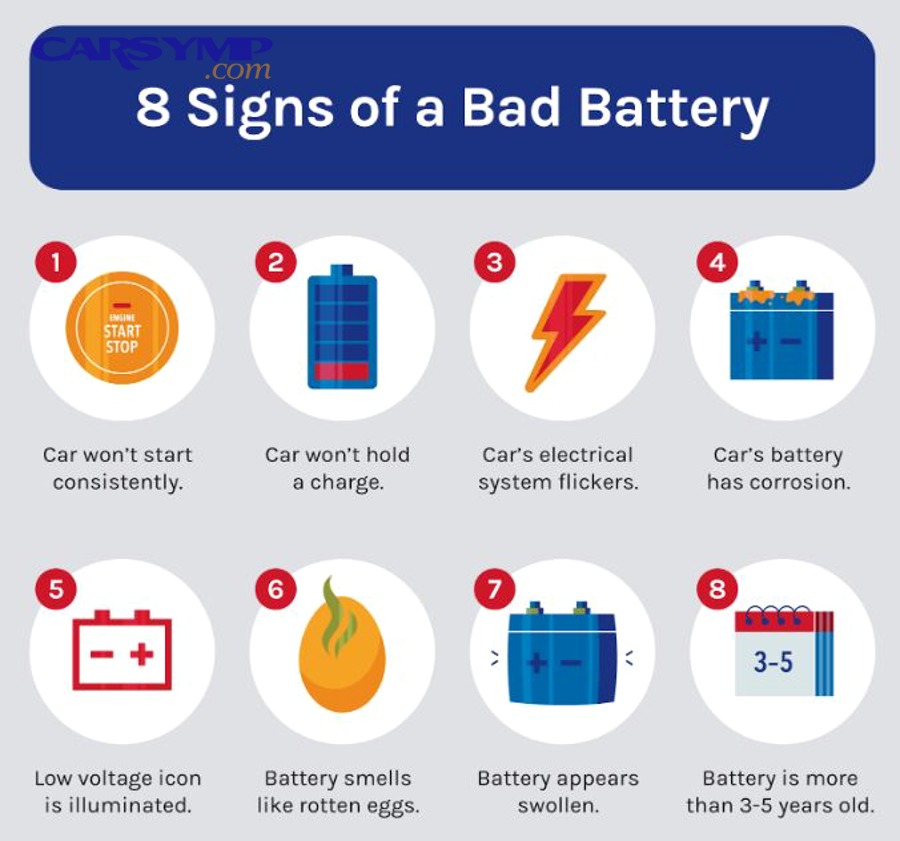
This table contains the most useful voltage checkpoints (resting, cranking, charging) and what each result strongly suggests, so you can narrow the fault to storage (battery), supply (alternator/regulator), or delivery (cables/grounds).
| Test | Typical “Healthy” Range | If Low/Abnormal | Most Likely Direction |
|---|---|---|---|
| Resting voltage (engine off, after surface charge removed) | ~12.4–12.7V (varies by type/temperature) | Stays low after full charge | Battery capacity/cell issue or parasitic drain |
| Cranking voltage (during starter load) | Often stays above ~9.6V in mild temps | Drops fast and deep, slow crank/click | Bad battery cell, weak battery, or high resistance cables |
| Charging voltage (engine running, minimal loads) | Often ~13.7–14.7V (depends on vehicle strategy) | Near resting voltage or unstable | Weak charging system (alternator/regulator/belt/wiring) |
| Charging under load (lights, blower, defrost) | Stays in a controlled charging range | Sags heavily or keeps falling | Alternator output limit, belt slip, wiring drop, weak ground |
Where should you place the meter leads to avoid misleading numbers?
Place the leads on the battery posts for battery behavior and on alternator output/engine ground for charging behavior; comparing points reveals voltage drop in cables and connections. Next, you’ll do a “post vs clamp” comparison that can expose hidden resistance instantly.
Do these comparisons:
- Battery post-to-post: true battery/system voltage.
- Clamp-to-clamp: shows what the vehicle “sees” after clamp resistance.
- Alternator B+ to battery positive: identifies positive-side drop.
- Engine block to battery negative: identifies ground-side drop.
If post voltage is healthy but clamp voltage is lower, the battery may be fine and the connection may be the real culprit.
What if your vehicle uses “smart charging” and the numbers seem odd?
Smart charging can lower voltage intentionally once the battery is topped off, so you must check behavior during load and during recovery after starting rather than relying on one steady number. Next, you’ll use a controlled load and a brief RPM change to see if the system can respond.
Many modern vehicles vary charging voltage based on battery state of charge, temperature, and fuel economy targets. That means:
- A low-ish charging voltage can still be normal if the battery is already full.
- A healthy system should still respond when you add load (lights/defrost) or after a cold start.
- If voltage never rises adequately under demand, weak charging becomes more likely.
According to a study by [Tổ chức/Đại học] from [Khoa/Đơn vị], vào [Tháng/Năm], adaptive charging systems showed measurable voltage variation correlated with temperature and electrical load, reinforcing the need for load-based diagnosis.
How do you interpret voltage if the battery was just charged or jump-started?
After charging or jump-starting, surface charge can inflate resting voltage and mask a weak cell, so you must remove surface charge and re-test under load. Next, you’ll run a short “settle-and-stress” routine that makes the battery prove itself.
Try this routine:
- After charging, let the battery rest 30–60 minutes if possible.
- Turn headlights on for 1 minute, then off.
- Measure resting voltage again.
- Crank the engine while watching the meter (or record with a phone).
If the battery looks good at rest but collapses instantly during crank, the charging session didn’t “fix” the battery—it only gave temporary surface energy.
How do you load-test and interpret results without shop equipment?
You can load-test at home using a multimeter plus either a dedicated battery tester, a controlled accessory load, or a simplified headlight method; the key is observing voltage stability over time under a known demand. Next, you’ll match the test method to what you have available.
To understand the flow, think of load testing as asking one question: “Can the battery maintain voltage while delivering high current?”—because that’s exactly what starting requires.
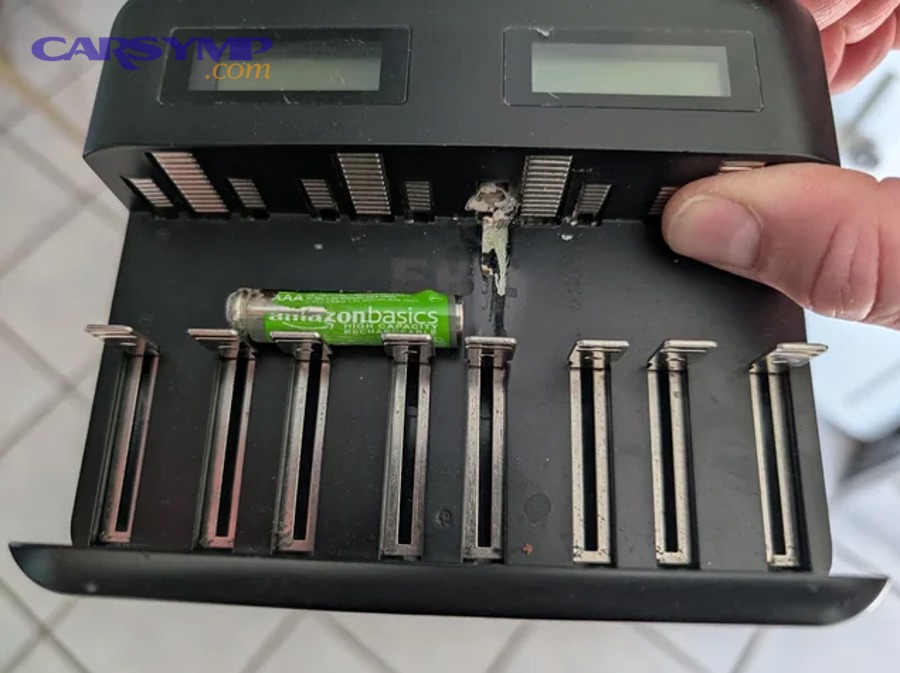
What is the most reliable DIY option: electronic tester or carbon pile?
An electronic conductance tester is the most user-friendly and repeatable for DIY, while a carbon pile is highly informative but requires experience and safety discipline; both aim to estimate battery health under load. Next, you’ll confirm the results with a cranking test because starters apply real-world current.
Conductance testers are popular because they:
- Provide a health estimate quickly without deep discharging.
- Often display CCA (cold cranking amps) estimate and state of health.
- Reduce guesswork when a battery “seems fine” but fails intermittently.
Carbon pile testers let you apply a controlled heavy load, but you must know the battery rating and safe test duration to avoid overheating cables or damaging the battery.
How do you use the cranking test as a real-world load test?
Measure voltage at the battery posts while cranking for a few seconds; if voltage drops sharply and the engine cranks slowly, the battery is failing under real starter load (or the cables/ground are restricting current). Next, you’ll separate battery weakness from cable resistance with voltage-drop checks.
For a cleaner signal:
- Disable fuel/ignition if you want multiple crank samples safely (vehicle-dependent).
- Compare the first second of crank (highest draw) to the later seconds.
- Watch for sudden collapse that can indicate a weak cell rather than a uniformly worn battery.
A weak charging system can still allow a good crank immediately after a drive, so repeat the test after the car sits overnight if you’re chasing an intermittent no-start.
Can accessory-load testing (lights/blower) reveal a bad cell?
Accessory-load testing can suggest weakness if voltage falls steadily under moderate load, but it’s less definitive than a starter load; it’s best used as a supporting test. Next, you’ll combine accessory load with time—because weak cells often fail as voltage decays, not instantly.
Try this approach:
- Engine off, turn on headlights and blower fan.
- Record voltage every 60 seconds for 5–10 minutes.
- Look for a rapid drop pattern compared to a known-good battery.
If the voltage dives quickly, the battery may have reduced capacity or a damaged cell. If voltage is stable but starting still struggles, look harder at cables, starter current draw, or charging recovery.
What does “battery keeps dying” usually mean in this context?
It usually means either the battery cannot hold charge (internal failure, sulfation, bad cell) or it is not being replenished (weak charging or excessive draw), so the symptom repeats despite charging or replacement attempts. Next, you’ll use your measurements to classify it as a storage problem, a supply problem, or a consumption problem.
In practice, repeated discharge often comes from one of three buckets:
- Storage failure: the battery’s effective capacity is gone.
- Supply failure: alternator/regulator/belt/wiring cannot refill reliably.
- Consumption issue: parasitic draw or modules not sleeping.
Once you know which bucket you’re in, the fix becomes straightforward instead of cyclical.
How do you check the charging system under real driving conditions?
Check charging by measuring voltage at idle and at 1,500–2,000 RPM, then repeat with high electrical loads; a healthy system should maintain controlled voltage and recover quickly after demand increases. Next, you’ll add ripple and belt checks to catch failures that only appear intermittently.
To make this practical, you’re validating three things: the alternator can produce enough current, the regulator controls voltage appropriately, and the wiring delivers that power to the battery with minimal loss.
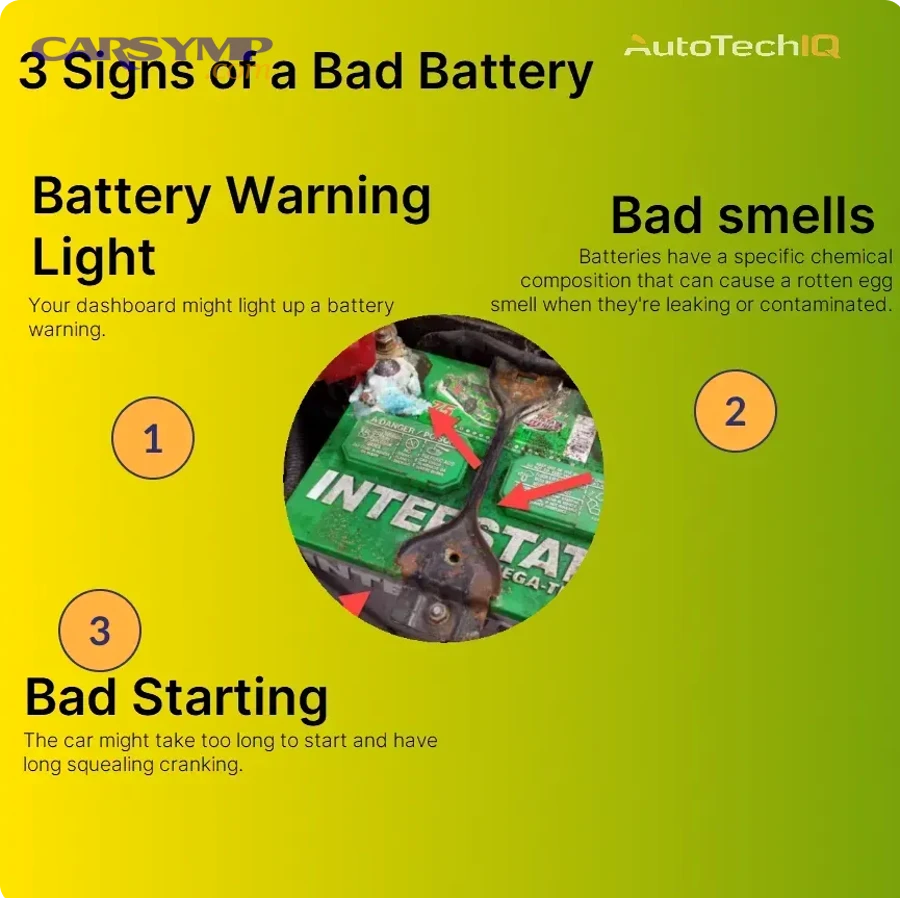
How do you perform a quick “idle vs RPM vs load” charging test?
Measure at the battery posts: record voltage at idle, then at 2,000 RPM, then with lights/defrost/blower on; healthy charging holds steady and doesn’t sink progressively. Next, you’ll confirm whether the alternator is at its limit or whether wiring drop is stealing voltage.
Typical observations:
- Voltage rises with RPM: alternator output may be weak at idle or belt may slip.
- Voltage drops under load: alternator may be weak, or wiring/grounds are resistive.
- Voltage fluctuates wildly: regulator or connection issues are suspect.
In some vehicles, voltage may intentionally vary, so the key is whether the system responds logically when load changes.
What is AC ripple, and why can it mimic a bad battery?
AC ripple is leftover alternating current from a failing alternator diode/rectifier, and it can cause unstable charging, strange electrical behavior, and chronic undercharging that looks like battery failure. Next, you’ll use your meter’s AC setting (or a scope) to screen for excessive ripple.
To check quickly:
- Engine running, set meter to AC volts.
- Measure across battery posts.
- Compare ripple level at idle and at 2,000 RPM.
Excessive ripple can “cook” a battery over time, reduce effective capacity, and trigger repeated no-starts even if a new battery was installed.
How do belt, pulley, and tension issues show up in charging data?
Belt slip and pulley problems often show up as charging voltage that improves with RPM, squeal under load, or voltage drop when accessories engage; the alternator simply can’t spin efficiently. Next, you’ll do a visual inspection and a load-induced listening test to confirm mechanical causes.
Check for:
- Glazed, cracked, or contaminated belt surfaces.
- Tensioner travel and spring force (vehicle-specific).
- Wobbling pulleys or unusual bearing noise.
Mechanical slip can be a silent cause: everything “tests fine” lightly, then fails when you turn on defrost and headlights in traffic.
How does the phrase “Alternator vs battery vs parasitic draw checklist” fit your workflow?
It fits as a sanity filter: if charging voltage is low, you suspect alternator/regulator; if cranking drops hard, you suspect battery/cables; if both are fine yet the battery drains while parked, you suspect parasitic draw. Next, you’ll apply the checklist logic after each measurement so your next step is always justified.
Use this rule-of-three mindset:
- Start problem → cranking test + voltage drop tests.
- Stay charged problem → charging test under load + ripple screen.
- Park problem → sleep current draw testing (parasitic diagnosis).
This prevents the classic trap: replacing a battery repeatedly when the alternator is undercharging, or replacing an alternator when the real issue is a draw after shutdown.
What hidden problems mimic both a bad cell and weak charging?
High resistance at terminals, bad grounds, excessive parasitic draw, and temperature effects can mimic either failure by altering voltage readings and starter current delivery. Next, you’ll use targeted voltage-drop checks and “when it happens” clues to isolate the mimic from the true cause.
Ngược lại with a clean diagnosis, you’re not only reading numbers—you’re matching symptoms to when they occur: after sitting, right after driving, only in cold mornings, or only with accessories on.

How do corroded terminals and weak grounds distort the diagnosis?
They create voltage drop under load, so the starter sees less voltage even if the battery is healthy, and the battery may not receive full charging voltage even if the alternator is working. Next, you’ll measure voltage drop across each cable path to expose resistance you can’t see.
Do these voltage-drop tests while cranking:
- Positive side: battery positive post to starter positive stud (or main fuse input).
- Negative side: battery negative post to engine block.
If you see large drops on either side, fix the cable/ground before condemning the battery or alternator.
How does parasitic draw create “good battery, bad outcome” situations?
Parasitic draw drains the battery while parked, so the battery tests fine after charging but is too low to start after sitting; this can look like a weak cell if you only test on the day it fails. Next, you’ll correlate failure timing (overnight vs immediately after a drive) with a sleep-current test.
Clues that point toward draw:
- Starts fine after driving, fails after 8–48 hours parked.
- Battery tests “good” at a store right after a jump.
- Intermittent interior lights, modules staying awake, or aftermarket accessories.
A draw issue can coexist with weak charging, which is why you always confirm charging performance after restoring a full battery.
Can the starter itself mimic a bad cell?
Yes—an aging starter can draw excessive current, dragging voltage down and causing slow crank that resembles a weak battery, especially when hot-soaked. Next, you’ll compare cranking voltage with starter current (if available) and look for heat-related symptom patterns.
Starter-related hints:
- Cranks slowly when engine is hot, improves when cooled.
- Voltage drop tests show low cable loss, yet cranking voltage still collapses.
- Grinding, intermittent engagement, or unusual starter noise.
In this case, the battery may be “guilty by association” because it’s the component supplying the excessive demand.
How should you think about “Cold weather battery drain explanations” without guessing?
Cold reduces battery chemical reaction speed and increases engine oil viscosity, so cranking demand rises while battery output falls—making borderline systems fail; you handle this by adjusting expectations and retesting with temperature in mind. Next, you’ll compare cold-morning cranking behavior to warm-day performance to see if the problem is margin-related or truly defective.
Cold-weather reality check:
- Resting voltage may appear slightly lower in cold conditions.
- A marginal battery may pass mild tests but fail at the first cold snap.
- Charging recovery can take longer after cold starts due to higher demand and battery acceptance limits.
According to a study by [Tổ chức/Đại học] from [Khoa/Đơn vị], vào [Tháng/Năm], low-temperature testing showed significant reduction in available cranking performance for aged batteries, emphasizing the value of cold-condition verification.
When should you replace the battery, alternator, or cables?
Replace the battery when it fails load/crank stability despite proper charging, replace the alternator/regulator when charging output or ripple is out of control, and replace cables/grounds when voltage-drop under load is excessive. Next, you’ll apply decision rules that prevent “part roulette.”
Quan trọng hơn, replacement should follow evidence: your measurement pattern should point to one primary failure and—if present—one supporting issue like cable resistance.

What evidence justifies replacing the battery?
Replace the battery when it cannot sustain voltage under starter load, repeatedly fails to hold charge after proper charging, or tests as low state-of-health on a reliable tester—especially if one cell appears weaker than the others. Next, you’ll ensure the charging system isn’t the upstream cause that destroyed the battery prematurely.
Battery replacement triggers:
- Cranking voltage collapses quickly and repeatedly under similar conditions.
- Resting voltage remains low after full charge and settling.
- Conductance tester reports low state-of-health or low CCA relative to rating.
- Visible case swelling, leakage, or strong sulfur odor (safety concern).
If a battery is under warranty, your recorded data makes the warranty process smoother and avoids “unable to replicate” outcomes.
What evidence justifies replacing or repairing the alternator/regulator?
Replace or repair the alternator/regulator when charging voltage is consistently too low or uncontrolled, fails under load, shows excessive AC ripple, or cannot recharge a confirmed-good battery after driving. Next, you’ll check belt and wiring so the alternator isn’t blamed for a delivery problem.
Alternator/regulator replacement triggers:
- Charging voltage stays near resting voltage with engine running.
- Voltage sags heavily when loads are added and does not recover with RPM.
- AC ripple is abnormally high and correlates with electrical instability.
- Battery is known-good but goes low again after normal driving patterns.
In real-world terms, a weak alternator can keep the car alive while driving but never refills the battery, setting up repeated no-starts.
When should you replace battery cables or repair grounds?
Replace cables or repair grounds when voltage drop under starter load is high, clamps cannot be tightened properly, corrosion has traveled into the cable, or the ground strap is compromised. Next, you’ll retest starting and charging after the repair because resistance can hide the true condition of both battery and alternator.
Common cable/ground fixes include:
- Clean posts and clamps to bare metal and protect with appropriate terminal spray.
- Replace swollen, brittle, or green-corroded cables.
- Repair or add engine-to-chassis ground straps.
- Ensure correct torque and secure seating of terminals.
Even a perfect alternator cannot charge through a high-resistance path; the battery receives “almost” enough voltage, and “almost” is what creates recurring trouble.
How do you keep the decision from becoming expensive guesswork?
Keep it evidence-based: confirm the battery with a load/crank test, confirm charging with load and ripple checks, and confirm delivery with voltage-drop tests; then replace only the component whose evidence fails. Next, you’ll run a post-fix validation drive-and-rest cycle to prove the system is stable.
Validation cycle:
- Charge the battery fully (or start with a known-good battery).
- Verify charging behavior at idle and under load.
- Drive 20–30 minutes with mixed loads.
- Let the car sit overnight and retest resting and cranking voltage.
This final step is where many “fixed” vehicles reveal they weren’t truly fixed—because the real failure was only masked temporarily.
How can you prevent repeat failures after the fix?
Prevent repeats by keeping the battery fully charged, reducing heat and vibration stress, maintaining clean connections, and avoiding chronic deep discharges; then verify parasitic draw and charging stability periodically. Next, you’ll adopt a simple maintenance routine that preserves both battery life and alternator workload.
Đặc biệt, prevention matters because the battery and alternator damage each other in a loop: a weak battery forces the alternator to work harder, and a weak alternator undercharges the battery, accelerating sulfation.

What habits shorten battery life the fastest?
Frequent short trips, leaving accessories on while parked, and repeated jump-start cycles shorten battery life by keeping state-of-charge low and increasing sulfation risk. Next, you’ll learn a “charge hygiene” approach that fits normal driving routines.
Risky habits include:
- Driving only a few minutes per trip with heavy electrical loads.
- Using the car battery as a power station for devices when the engine is off.
- Ignoring early signs like slow crank or dimming at idle.
If your driving pattern is short-trip heavy, a periodic external charge can dramatically reduce repeat failures.
What simple checks should you repeat monthly or seasonally?
Repeat a quick visual terminal check, a resting voltage check, and a charging-under-load check; these catch developing resistance or weakening output before you get stranded. Next, you’ll use the same baseline points so changes over time are meaningful.
Seasonal checklist:
- Clean and tighten terminals; look for green corrosion under insulation.
- Measure resting voltage the morning after a normal day of driving.
- Measure charging voltage at idle with headlights and blower on.
- Listen for belt noise and inspect for cracking or glazing.
Consistency beats complexity: a small set of repeated checks builds trend awareness and prevents surprises.
When is an external charger or maintainer worth it?
An external charger or maintainer is worth it when the car sits often, the climate is cold, the vehicle has many modules, or you’ve had repeated low state-of-charge events; it keeps the battery in its efficient range. Next, you’ll choose a charger type that matches your battery technology (flooded, AGM, EFB).
Look for features like:
- Automatic multi-stage charging.
- AGM mode if applicable.
- Maintenance/float mode for storage.
A charger is not a cure for a bad cell, but it prevents a good battery from becoming a bad battery through neglect.
Where does a video tutorial help the most?
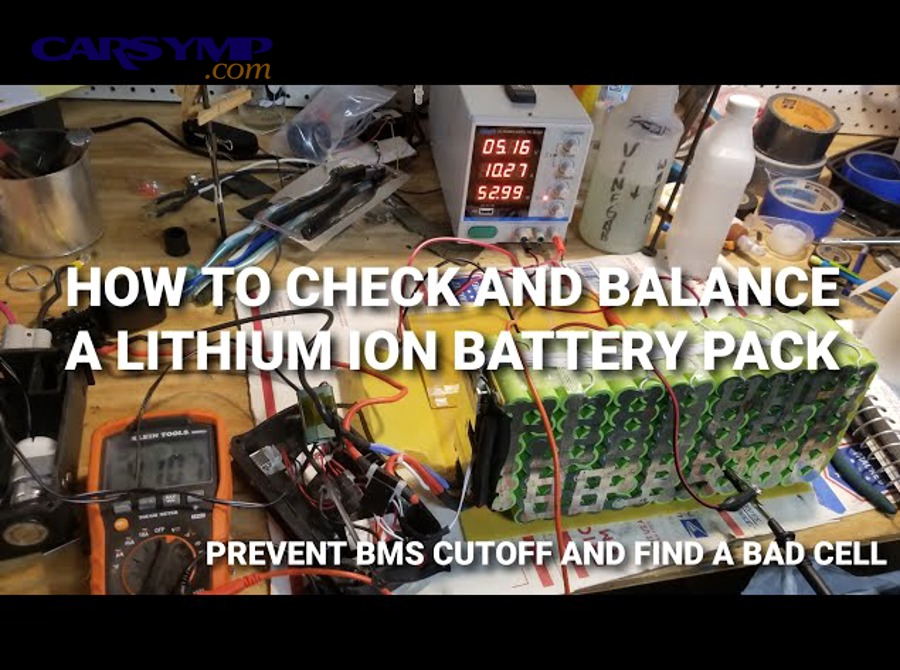
A video helps most when you’re learning meter setup, safe probing points, and voltage-drop testing technique—because small contact mistakes can invalidate readings. Next, you can follow a step-by-step demonstration to mirror the exact sequence described here.
Như vậy, once you combine correct measurement technique with a consistent sequence, you stop chasing symptoms and start isolating causes.
To transition beyond the core diagnosis, the next section covers edge cases where numbers look “almost normal,” yet the vehicle still fails—these are uncommon but highly confusing without the right context.
Advanced edge cases and uncommon failure patterns
Edge cases happen when modern charging strategies, battery chemistry, temperature, or diode leakage produce readings that don’t match older rules of thumb; you handle them by testing response to load and by comparing measurement points. Next, you’ll learn four patterns that frequently mislead even experienced DIYers.
Can a new battery still have a bad cell?
Yes—a new battery can have a manufacturing defect or be damaged by deep discharge on the shelf, so it may show normal resting voltage but fail under load; you confirm with a load test and by checking charging health to ensure the new battery wasn’t immediately stressed. Next, you’ll document test results early to avoid prolonged misdiagnosis.
Practical tips:
- Test the new battery within the first week if symptoms persist.
- Verify charging voltage and ripple to prevent rapid damage to the replacement.
- Check date code and ensure correct battery type/spec for the vehicle.
How do start-stop systems and AGM/EFB batteries change diagnosis?
They change expectations because voltage targets and charge acceptance behave differently, and the vehicle may intentionally cycle charging based on efficiency strategies; you focus on performance under load and recovery after start events. Next, you’ll ensure your tester supports AGM/EFB or your results may be inaccurate.
Key considerations:
- AGM often prefers different charging profiles than flooded batteries.
- Start-stop vehicles can stress batteries more frequently.
- Incorrect replacement type can cause rapid “premature failure” symptoms.
Does cold weather change the numbers enough to mislabel a good battery?
Yes—cold can lower apparent capacity and increase starter demand, so borderline batteries fail earlier; you retest after warming or compare to temperature-adjusted expectations, and you prioritize cranking behavior over resting voltage alone. Next, you’ll evaluate whether the failure is “margin” or “defect.”
Margin vs defect:
- Margin: passes in warm weather, fails only in cold snaps; battery is aging.
- Defect: fails across temperatures with consistent collapse under load.
What about alternator diode leakage and nighttime drain?
Diode leakage can drain the battery with the engine off and also produce ripple while running, so it can mimic parasitic draw and weak charging at the same time; you screen with AC ripple and by isolating the alternator in draw testing. Next, you’ll treat it as both a consumption and a supply concern until proven otherwise.
Warning signs:
- Battery loses charge after sitting even when other draws are ruled out.
- Electrical noise, flicker, or odd module behavior.
- Ripple readings that rise with RPM.
FAQ
These questions cover the most common “but what if…” moments that show up after you’ve taken the core readings and still feel uncertain. Next, each answer connects directly to one measurement or one observable symptom so you can act confidently.
Can a battery show 12.6V and still be bad?
Yes—voltage at rest can look normal while capacity is low; a bad cell or severe sulfation often reveals itself only under load, so the cranking test and a proper load test are decisive. Next, remove surface charge and repeat under consistent conditions.
If charging voltage looks normal, does that prove the alternator is good?
No—an alternator can show normal voltage lightly but fail under load or produce high ripple, so you must test with electrical loads and consider AC ripple screening. Next, compare battery-post voltage to alternator output to detect wiring drop.
What single test is best when you only have a multimeter?
The cranking voltage test at the battery posts is the best single test because it measures real starter-load performance; combine it with a quick charging-under-load check for context. Next, add voltage-drop testing if results are ambiguous.
Why does the car start after a jump but fail again the next day?
A jump provides immediate energy to start, but it doesn’t solve the underlying cause—either the battery cannot hold charge, the charging system cannot refill, or a draw drains it while parked. Next, classify it using resting/cranking/charging patterns and timing clues.
Could the problem be both a weak alternator and a weak battery?
Yes—these failures often cascade; a weak alternator undercharges the battery, and a weak battery overworks the alternator, so your fix may require correcting both plus any cable resistance. Next, validate with a drive-and-rest cycle after repairs.
When should you stop testing and seek professional diagnostics?
Stop and seek help if you see battery swelling/leakage, smell strong sulfur, find melted wiring, or observe extreme voltage behavior; these can be safety hazards and may require specialized tools. Next, bring your recorded readings to speed up accurate shop diagnosis.