


A failing ignition switch usually shows up as a repeatable pattern: the car won’t crank or won’t start, it starts and immediately dies, or electrical power cuts in and out in ways that don’t match a weak battery. If you can spot that pattern early, you can prevent surprise no-start moments and reduce the risk of a stall at the wrong time.
Next, this guide helps you separate “signs (symptoms)” that genuinely point to the ignition switch from look-alike problems that come from the battery, starter circuit, or charging system—because the fix depends on the correct culprit, not the loudest symptom.
Then, you’ll learn simple, safe checks you can do in your driveway to confirm ignition switch problems without dismantling your steering column or guessing—so you know whether you’re dealing with ignition switch failure or something else.
Introduce a new idea: once you can recognize the symptoms, compare the likely causes, and choose the right next step, you can decide whether it’s safe to drive, when to tow, and what replacement typically involves.
What does an ignition switch do in a car, and why does it fail?
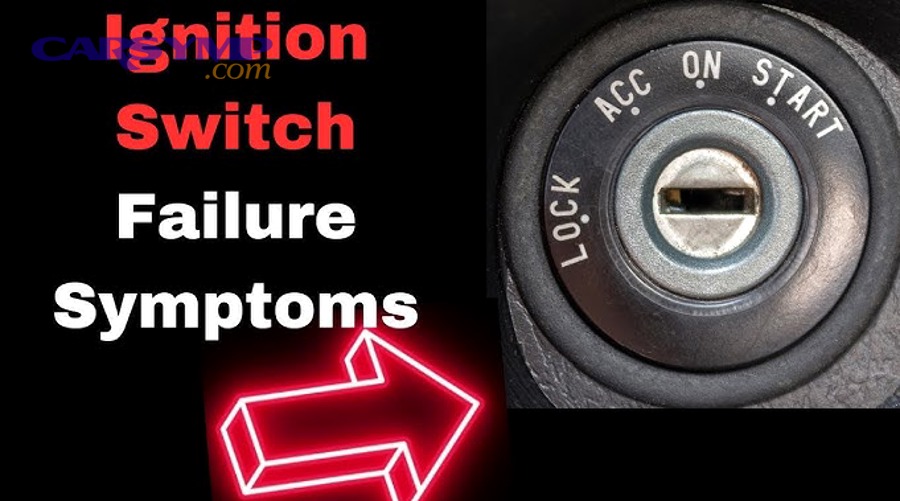
An ignition switch is the vehicle’s electrical “gate” that routes battery power to accessory, run, and start circuits so the engine can crank, run, and keep key systems powered.
To better understand why symptoms cluster the way they do, it helps to see how one worn contact or loose internal spring can interrupt power at exactly the wrong moment.
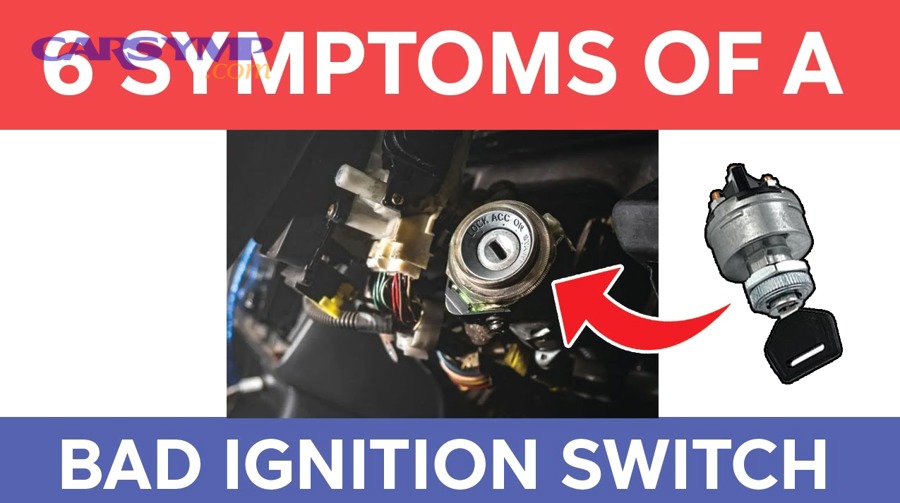
At a practical level, the ignition switch sits at the center of three outcomes drivers notice:
- Cranking outcome (START position): the signal path that energizes the starter relay/solenoid so the starter motor can turn the engine.
- Running outcome (ON/RUN position): the power feed that keeps engine management and ignition systems alive once the engine is running.
- Accessory outcome (ACC position): the power feed that runs items like radio, wipers, blower motor controls, power windows (varies by vehicle), and dash electronics.
When ignition switch failure begins, it often starts as high resistance or intermittent contact inside the switch. That matters because “intermittent” doesn’t feel like a clean break; it feels like:
- a car that starts fine one day and refuses the next,
- a car that dies when you hit a bump,
- or electrical accessories that flicker while the battery still tests “good.”
Why ignition switches commonly fail (in driver language)
Most real-world ignition switch problems trace back to one of these mechanical/electrical realities:
- Wear from repeated key cycles: Every start cycle is physical movement plus electrical load. Over time, internal contacts wear and lose consistent pressure.
- Heat and vibration: Heat expands materials and can worsen marginal connections; vibration can jostle a weak contact open for a split second.
- Heavy keychains and leverage on the cylinder: Extra weight can increase movement at the ignition area, sometimes making borderline parts show symptoms sooner.
- Aging connectors or wiring near the column: A switch can be fine, but a loose connector can mimic the same power dropouts.
If you keep this “power routing” idea in mind, the symptom list in the next section becomes much easier to interpret—because each symptom maps to a specific key position and circuit.
What are the most common warning signs (symptoms) of a bad ignition switch?
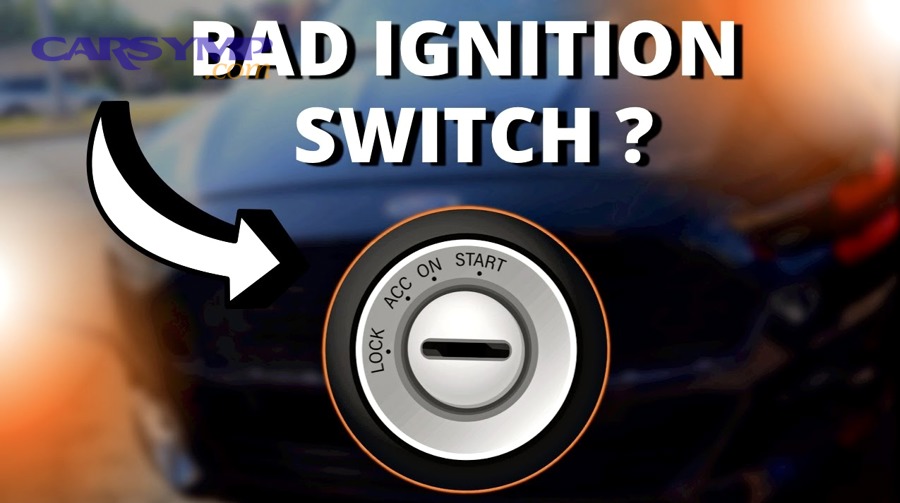
There are 4 main symptom groups of a bad ignition switch—no crank/no start, stalling, electrical/accessory power loss, and key/turn feel issues—based on which ignition-switch position (ACC/ON/START) fails under load.
Next, we’ll walk through each symptom group so you can match what you feel in the driver’s seat to what the switch is doing electrically.
Is “no crank/no start” a symptom of a failing ignition switch?
Yes—no crank/no start can be a symptom of a failing ignition switch because the switch may not send a clean START signal to the starter relay, it may drop voltage under load, and it may behave intermittently from heat or vibration.
More specifically, the key clue is inconsistency: you turn the key and nothing happens, then later it starts normally without any meaningful change in the battery.
Here’s what “ignition-switch no-crank” often looks like:
- You turn the key to START and get silence, or a single faint click, but the dash lights may still look normal.
- The starter works sometimes, especially if you try again or move the key slightly.
- The problem worsens over time, shifting from “rare” to “frequent.”
What to notice in the moment (quick observation checklist):
- Do dash lights stay bright when you try to crank?
- Do accessories cut out when you twist to START?
- Does the crank attempt change if you let the key spring back and try again?
These observations matter later when we compare Ignition switch vs starter relay issues.
Can a bad ignition switch cause stalling while driving or right after starting?
Yes—a bad ignition switch can cause stalling because it can cut power to engine-run circuits, it can momentarily interrupt the ignition/ECM feed over bumps, and it can drop the system from ON/RUN to an “off-like” state even while the vehicle is moving.
Moreover, stalling is the symptom that turns a nuisance into a safety issue, because the stall can reduce steering assist and change braking feel.
Two common stalling patterns tied to ignition switch problems:
- Start-then-stall (seconds after starting): The car fires, then dies as the key returns from START to RUN and the RUN circuit fails.
- Moving stall (while driving): The engine shuts off as if you turned the key off; sometimes the dash lights change suddenly or reset.
What drivers often report alongside stalling:
- The car restarts after coasting to a stop.
- The stall is more likely on rough roads.
- The dash lights may flicker or go dark briefly.
If you ever experience a moving stall, treat it as urgent—later we’ll cover when to stop driving and tow.
Do flickering dash lights or losing accessories (radio/windows) point to an ignition switch problem?
Yes—flickering dash lights or accessory dropouts can point to ignition switch problems because the switch feeds multiple interior electrical circuits, intermittent contact can reset electronics, and the symptom often appears in ACC or ON before it causes a full no-start.
In addition, accessory symptoms are often the earliest hint of ignition switch failure because they happen at lower load before the starter event.
Common accessory/electrical symptoms drivers notice:
- Radio or infotainment reboots when turning the key or hitting bumps.
- Dash cluster flickers or goes blank briefly.
- Blower or HVAC controls act erratically (especially if power to control modules drops).
- Power windows or wipers act inconsistent (vehicle-dependent).
A strong “switch” clue is when the symptom correlates with key position:
- Works in ACC but not in ON,
- works in ON but not in START,
- or changes when you slightly rotate/relax the key.
Is difficulty turning the key or the key getting stuck a symptom of a bad ignition switch?
Yes—difficulty turning the key or a key that feels stuck can be associated with ignition switch trouble because mechanical wear in the ignition area can overlap with electrical switch wear, the return spring behavior can degrade, and binding can prevent consistent key positioning between ACC/ON/START.
However, the most important distinction is this: a stuck key is often a lock-cylinder or steering-lock issue, while electrical symptoms are more purely ignition-switch related.
If you’re also searching for Key stuck in ignition causes, keep these high-probability causes in mind:
- Steering wheel tension locking the column (turn wheel slightly while turning key).
- Worn key or worn lock cylinder tumblers.
- Shifter interlock issues (automatic transmissions not fully in Park).
- Weak return spring that doesn’t cleanly return from START to RUN.
How to connect this back to ignition switch diagnosis:
- If your key feels sticky and you have electrical dropouts, you may have overlapping issues (lock cylinder + switch).
- If the key is sticky but the car runs and powers accessories consistently, the switch may be fine and the issue may be mechanical.
How can you tell if it’s the ignition switch vs the battery, starter, or alternator?
The ignition switch wins as the likely cause when symptoms are intermittent with normal battery strength, the starter command behaves inconsistently across key positions, and multiple electrical circuits drop out together; the battery, starter, and alternator each create more predictable patterns.
Next, we’ll compare these systems directly so you can avoid replacing the wrong part—especially when ignition switch failure mimics other starting faults.
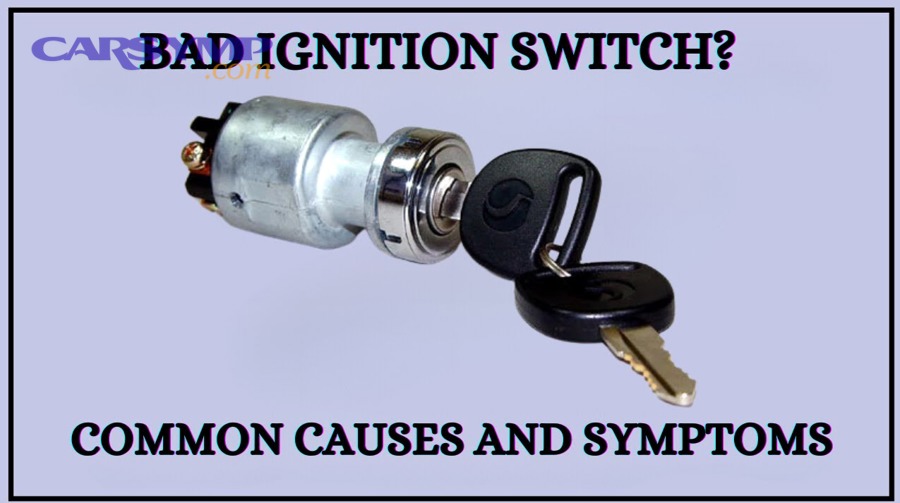
To make this comparison easier, the table below maps what you observe to what it most often means.
| What you observe | Ignition switch more likely | Battery more likely | Starter/relay more likely | Alternator more likely |
|---|---|---|---|---|
| Dash lights bright but no crank happens sometimes | ✅ | ❌ | ✅ | ❌ |
| Slow crank + lights dim noticeably | ❌ | ✅ | ❌/✅ | ❌ |
| Sudden stall + cluster resets | ✅ | ❌ | ❌ | ✅/❌ (usually gradual) |
| Accessories flicker when moving key slightly | ✅ | ❌ | ❌ | ❌ |
| Battery light on while driving + gradual dimming | ❌ | ❌ | ❌ | ✅ |
Ignition switch vs battery: how do symptoms differ (dim lights vs full power)?
Ignition switch issues usually present with normal-looking power until the moment the circuit drops, while a weak battery usually shows consistently weak power (dim lights, slow crank, repeated clicking).
Specifically, battery problems worsen with cold weather and repeated attempts, while ignition switch problems often feel “random” or correlated to key movement.
Strong battery pattern:
- slow crank every attempt,
- dim interior lights at crank,
- rapid relay clicking,
- jump-start temporarily helps.
Strong ignition switch pattern:
- full bright lights but no crank,
- accessories reset when key moves,
- start-then-die as key returns to RUN,
- problem changes with key position rather than temperature alone.
Ignition switch vs starter motor/relay: what’s the difference in “click” behavior?
Ignition switch problems often produce silence or inconsistent starter relay engagement, while starter relay/solenoid problems often produce a repeatable click without cranking under the same conditions.
Meanwhile, you can use the logic of the circuit: the ignition switch commands the starter relay, but the relay/solenoid must deliver current to the starter.
Ignition switch vs starter relay issues (what to listen for):
- Single click every time you try: more consistent with relay/solenoid/starter issues.
- Nothing happens, then later it cranks: more consistent with switch command inconsistency.
- Clicking changes when you move the key gently: suggests switch/column wiring sensitivity.
A helpful mental model:
If the relay never gets the “go” signal, you may hear nothing. If the relay gets the signal but can’t pass current, you often hear a click.
Ignition switch vs alternator: can electrical loss happen while driving in both cases?
Ignition switch problems can cause abrupt electrical loss while driving, whereas alternator failure usually causes progressive electrical decline as the battery discharges.
More importantly, alternator issues often show warning lights and a gradual cascade: dimming headlights, slow accessories, then stall—while ignition switch cutouts can be instant.
Alternator-leaning pattern:
- battery/charging warning light,
- dimming lights that worsen with load,
- the vehicle keeps running briefly on battery power,
- restart may be difficult after a short drive.
Ignition switch-leaning pattern:
- sudden shutoff,
- cluster flicker/reset,
- power returns when key position changes,
- restart possible shortly after.
Ignition switch vs ignition lock cylinder: which one causes key-turn problems?
Ignition lock cylinder problems usually win for mechanical key-turn issues, while ignition switch problems usually win for electrical symptom patterns once the key is already turning.
Especially, a key that won’t rotate is more often the cylinder/steering lock, while a key that rotates but produces inconsistent ACC/ON/START outcomes points more toward the electrical switch.
Practical takeaway:
- Key won’t turn at all: start by suspecting lock cylinder, steering lock, shifter interlock.
- Key turns but electrical behavior is inconsistent: suspect ignition switch, connector, or column wiring.
What quick checks can drivers do at home to confirm ignition switch symptoms?
You can confirm likely ignition switch problems with 3 safe checks—key-position behavior, repeatability under low load, and controlled symptom correlation to key movement—without bypassing circuits or disassembling the column.
Then, you can use your observations to decide whether you’re facing ignition switch failure or a different starting problem.
Does the “key position test” (ACC/ON/START) help confirm an ignition switch issue?
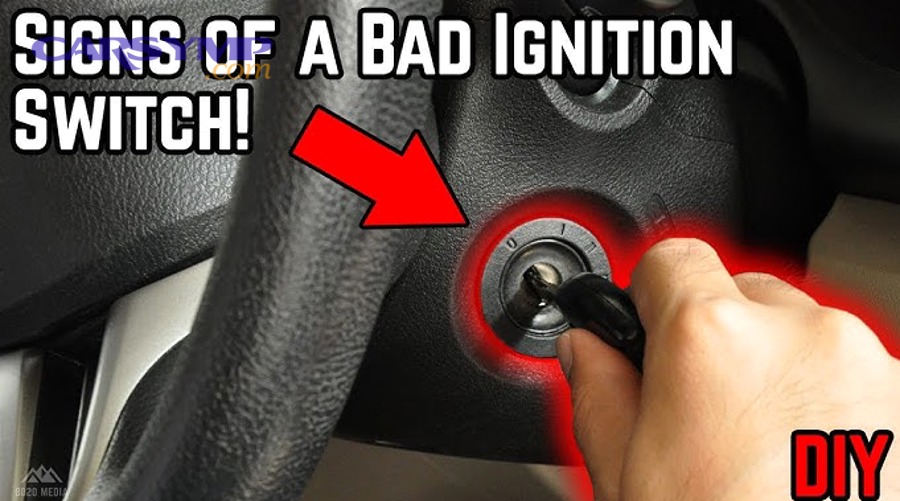
Yes—the key position test helps because a failing ignition switch often breaks consistency between ACC, ON, and START, it can power some circuits but not others, and it can fail during the transition from START back to RUN.
Specifically, you’re looking for position-specific failures, not just “it doesn’t start.”
How to do it (driver-safe version):
- ACC position: Note whether radio and accessory electronics power up normally.
- ON/RUN position: Note whether dash lights behave normally and stay stable for 30–60 seconds.
- START position: Attempt a start and observe whether accessories dip unusually, the cluster resets, or nothing happens.
What suggests ignition switch trouble:
- ACC works but ON is unstable,
- ON works but START doesn’t consistently command crank,
- starts in START but dies when key returns to RUN (start-then-stall).
Can “wiggling the key” change symptoms—and does that indicate the switch is failing?
Yes—if gentle key movement changes symptoms, it can indicate ignition switch failure because internal contacts may be marginal, vibration can open the circuit, and the problem can be sensitive to tiny changes in switch position.
However, do this only when parked, because you’re diagnosing—not “driving around” a power-cut problem.
A safe way to interpret this test:
- If a slight key movement makes accessories flicker, that suggests a sensitive connection in the ignition area.
- If the key physically binds or grinds, that suggests a mechanical cylinder issue.
- If nothing changes at all, it doesn’t rule the switch out—but it makes the symptom less position-sensitive.
Safety note:
If your car stalls while driving, do not attempt to “fix it” by moving the key. Treat stalling as a stop-and-diagnose issue.
Do you need an OBD2 scan tool to identify ignition switch-related stalling?
No—you don’t need an OBD2 scan tool to recognize ignition-switch stalling because the symptom is observable, the power drop can occur without leaving clean fault codes, and many switch failures are electrical supply interruptions rather than sensor failures.
Moreover, a scan tool can still help you confirm “supporting clues,” but it isn’t required for a high-confidence symptom read.
When a scan tool can help:
- You see low-voltage events or module resets.
- You want to confirm whether the stall is accompanied by recorded voltage-related codes.
- You suspect a security/immobilizer interaction (more on this later).
When it may not help much:
- The switch cuts power so abruptly that modules don’t log useful data.
- The symptom is purely intermittent and not captured during the scan.
Is it safe to drive with a bad ignition switch, and when is it urgent?
No—it’s not safe to keep driving with a bad ignition switch when symptoms include stalling, sudden electrical loss, or inconsistent steering/brake assist because the engine can shut off unexpectedly, safety systems can be affected during a power drop, and the failure can worsen without warning.
More importantly, safety decisions should be based on symptom severity, not convenience, so the next sections define “tow it” thresholds.
Should you stop driving immediately if the car stalls or loses power while moving?
Yes—you should stop driving immediately if the car stalls or loses power while moving because repeated stalls can remove power steering assist, braking feel can change, and the next stall may happen in a more dangerous location.
In addition, once a moving stall occurs, you’re no longer dealing with a simple inconvenience; you’re dealing with a predictable risk.
What to do if it happens:
- Signal, move to a safe shoulder or parking area.
- Turn on hazard lights.
- Avoid repeated restart attempts in traffic—prioritize safety and visibility.
- Arrange assistance if the symptom repeats.
What symptoms mean “tow it” vs “drive to a shop”?
There are 2 main categories—Tow it now and Drive cautiously to a shop—based on whether the failure can remove engine power while moving or strand you unpredictably.
Especially, if you’ve experienced an on-road stall, default to tow unless a professional confirms a different non-switch cause.
Tow it now symptoms:
- Stalling while driving (even once, if unexplained).
- Total electrical loss events (cluster goes dark/reset).
- Key returns inconsistently from START to RUN causing repeated start-then-die.
- You cannot reliably crank the engine and the failure is worsening.
Drive cautiously to a shop (only if stable and predictable):
- Intermittent no-crank that happens only at start-up, with no moving stalls.
- Accessory flicker that does not affect engine running—yet.
- You can reproduce the symptom in your driveway without safety risk.
Can a failing ignition switch drain the battery or cause repeated no-start episodes?
Yes—a failing ignition switch can contribute to battery drain or repeated no-start episodes because the switch can leave circuits powered when they should be off, intermittent contact can cause repeated failed start attempts, and some vehicles keep modules awake if the switch doesn’t cleanly transition to OFF.
Moreover, “it keeps killing the battery” can be a downstream effect of ignition switch failure—but it can also point to separate parasitic drain issues.
What makes it look like battery drain:
- You park the car and later it’s dead.
- You notice electronics behaving oddly after key-off.
- You hear relays or modules cycling when they shouldn’t.
If you suspect this overlap, the smartest path is to treat it as two questions:
1) Are you dealing with ignition switch problems causing unstable power states?
2) Are you also dealing with parasitic drain from another circuit?
Evidence (credible, specific): According to a case study by Queen’s University, in 2015, the General Motors recall context tied to a faulty ignition switch expanded to over 64 million vehicles worldwide, illustrating how serious a switch-related shutoff risk can become when it affects safety-critical operation.
What are the typical fixes for ignition switch problems, and what happens during replacement?
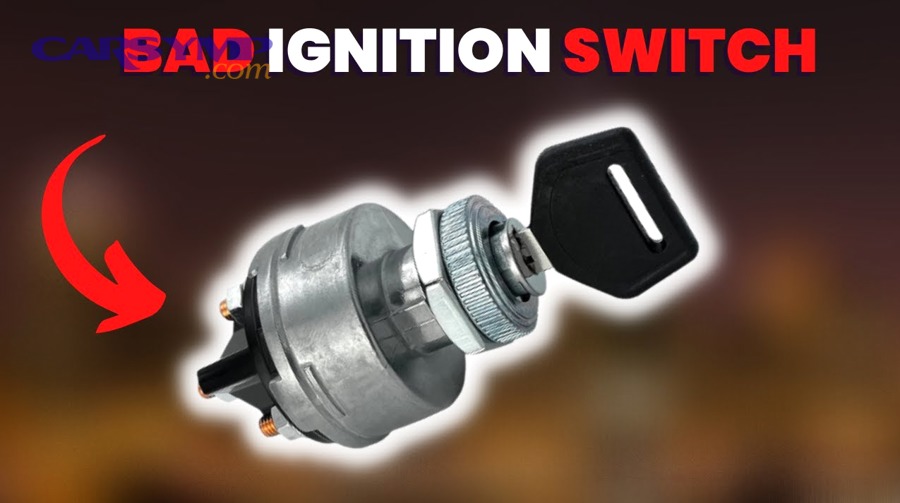
Ignition switch problems are typically fixed by replacing the ignition switch (or the combined switch/cylinder module), repairing a related connector/wiring fault, or addressing a lock-cylinder/shifter interlock issue—depending on which failure mode is confirmed.
Next, we’ll break down what replacement usually includes, what your mechanic is actually diagnosing, and how to think about an Ignition switch replacement cost estimate without guessing.
Is ignition switch replacement the usual fix, or can cleaning/adjustment solve it?
Ignition switch replacement is usually the fix because internal contacts and springs wear out, intermittent resistance is hard to “clean” reliably, and the symptom typically returns if the root wear remains.
However, a good diagnosis also checks the simplest mimic: loose connectors and damaged wiring near the steering column.
When replacement is most likely:
- Repeated no-crank with key-position sensitivity.
- Start-then-stall when the key returns to RUN.
- Accessory resets linked to key movement.
- Symptoms progressively worsening over weeks.
When a connector/wiring fix is possible:
- Symptoms began after column work or aftermarket electronics installation.
- The failure appears only when the column is tilted/moved.
- Visual inspection shows heat discoloration or loose terminal fit.
Ignition switch replacement cost estimate :
Cost varies widely by vehicle design because some cars use a simple electrical switch, while others integrate electronics, security components, or steering-lock modules. In general, your estimate depends on:
- part complexity (basic switch vs integrated module),
- access labor (easy dash access vs deep column disassembly),
- whether programming/security relearn is required.
A clean way to ask a shop for an accurate estimate:
- “Confirm whether it’s the electrical ignition switch, the lock cylinder, or column wiring—then quote parts, labor, and any programming separately.”
Do you need key/immobilizer programming after ignition switch replacement?
Yes—sometimes you need programming or a relearn after replacement because certain vehicles integrate the switch with anti-theft logic, some systems require key transponder registration, and push-button or module-based architectures may require initialization.
In short, “it depends” is real here, so the correct expectation is: ask whether your vehicle’s system uses an immobilizer that ties to the ignition assembly.
Signs programming/relearn may be involved:
- Security light stays on after repair.
- The car cranks but will not keep running (security intervention).
- Push-button start systems require module pairing.
If your mechanic mentions a “relearn,” that’s not automatically a red flag—it’s common for modern security systems and is part of doing the job correctly.
How do ignition switch symptoms differ in push-button start cars and security/immobilizer systems?
Ignition switch symptoms differ in push-button start and security/immobilizer systems because the “switch” function is often replaced by electronic modules, a no-start may be caused by authorization failure rather than contact wear, and warning lights/messages may be more informative than a traditional key cylinder’s feel.
Below, we expand beyond classic keyed ignitions to cover modern edge cases that can mimic ignition switch failure while requiring different fixes.
Can a security/immobilizer fault mimic a bad ignition switch “no-start” symptom?
Yes—an immobilizer fault can mimic a bad ignition switch no-start because it can prevent fuel/ignition authorization, it can cause start-then-die behavior, and it can produce a “no start” with normal battery and starter operation.
However, immobilizer-driven no-starts often show security indicators and tend to be more consistent than classic intermittent contact failures.
Clues that lean toward security/immobilizer rather than ignition switch failure:
- A security/key light stays on or flashes.
- The engine cranks normally but won’t run (or starts then immediately shuts down).
- The symptom correlates with key fob recognition or a weak fob battery.
- Spare key behavior differs (one key works, the other doesn’t).
Clues that lean back toward the ignition switch or power routing:
- Accessory power flickers with key movement.
- Dash resets like a power drop rather than a security lockout.
- Start command is inconsistent (sometimes no crank).
What “rare” signs point to wiring/connectors or aftermarket remote start—not the ignition switch?
There are 4 common “rare but real” signs that point away from the ignition switch and toward wiring/connectors or aftermarket electronics: symptoms began after an install, symptoms correlate with column movement, security behavior changes unexpectedly, and faults occur in clusters with unrelated electronics.
More specifically, the key is timing and correlation: what changed right before the problem began?
Rare-but-important clues:
- Recent remote start/alarm install: intermittent no-start, odd security light behavior, or inconsistent starter engagement.
- Column movement sensitivity: turning the wheel, tilting the column, or bumps trigger the issue.
- Connector heat damage: melted plastic smell, visible discoloration near harness connectors.
- Multiple unrelated electrical glitches: not just starting—also random module resets, intermittent accessories, and inconsistent dash behavior.
If any of these apply, diagnosis should include connector integrity and any spliced wiring before blaming the ignition switch.
What advanced tests do technicians use to confirm ignition switch failure?
Technicians confirm ignition switch failure using 3 advanced approaches—circuit voltage-drop testing under load, controlled signal verification at the starter relay command line, and module data correlation to confirm power-feed interruptions—so they can prove the switch is the source rather than a symptom.
To better understand what you’re paying for at a shop, here’s what those tests mean in plain English.
High-level technician methods (no DIY bypassing):
- Voltage-drop under load: They measure whether the switch is losing too much voltage when it should deliver power cleanly.
- Signal verification: They confirm whether the starter relay is receiving a proper start command every time.
- Power-feed correlation: They watch for evidence of power interruption events that match your stall/no-start complaint.
This is the “proof step” that turns a guess into a reliable repair—especially when ignition switch problems look like starter or battery issues.
Evidence (credible, specific): According to a case study by Queen’s University, in 2015, recall analysis of faulty ignition-switch behavior described how a switch-related shutdown can become a safety-critical defect when it interrupts vehicle operation in motion.