If your car won’t start, you can diagnose it faster by first separating no-crank (the engine does not rotate) from crank-no-start (the engine rotates but won’t fire) and then following a proof-based checklist that targets the battery, starter, relay, and switch in the right order.
Next, once you classify the symptom correctly, you can interpret the “small clues” that mislead most DIY drivers—like clicking noises, bright dash lights, or a jump start that “kind of works”—without skipping to the wrong conclusion.
Then, you can confirm the real cause using simple electrical tests, because a starting problem is often a voltage delivery problem rather than a “bad part,” and the right measurements prevent repeat failures and unnecessary spending.
Introduce a new idea: the goal of this guide is not to memorize theories, but to use a tight, repeatable workflow that cleanly separates starting-circuit problems from engine-running problems, so every check you do narrows the possibilities.
What does “no-crank” vs “crank-no-start” actually mean?
No-crank is a starting-circuit failure where the engine does not rotate at all, while crank-no-start is an engine-running failure where the starter turns the engine but combustion never begins.
To better understand why this matters, you need to treat these as two different diagnoses, because they use different evidence and lead to different repairs.

A no-crank condition means the starter motor is not turning the crankshaft. You may hear:
- Silence (no click, no crank)
- A single click (something engages, but the engine doesn’t spin)
- Rapid clicking (often power collapse under load, commonly battery/cable related)
A crank-no-start condition means the starter is doing its job: the engine rotates normally, but it will not “catch.” You may hear a steady “rr-rr-rr” cranking sound, but the engine never transitions into a smooth idle.
The most important reason to separate them is simple: no-crank points you to the battery, cables, grounds, starter relay, ignition switch, interlocks, and starter motor. Crank-no-start points you to spark, fuel delivery, air, timing signals, and engine condition.
What counts as a true “no-crank” condition—does clicking still count?
Yes—clicking can still be a true no-crank condition, because the click can occur even when the starter never spins the engine.
Specifically, clicking is the “hook” that often causes wrong decisions, because people hear a click and immediately buy a starter, even though the click can be produced by a relay, solenoid, or collapsing voltage.
Here’s how clicking fits into no-crank:
- Single click + no rotation: could be a starter solenoid engaging but not receiving enough current, a seized starter, high resistance in cables, or a failed starter motor.
- Rapid clicks + lights dimming: often voltage drops heavily under load, pointing to battery weakness, loose/corroded terminals, or poor grounds.
- Click from fuse/relay box: may indicate the relay coil is being commanded, but the power side of the circuit is not delivering current.
The key is your definition: if the engine does not rotate, it is still no-crank, regardless of clicks.
What are the fastest “first 10 seconds” checks to classify the problem?
There are 6 fast checks to classify no-crank vs crank-no-start: sound, engine movement, dash light behavior, headlight brightness, tach response, and fuel smell.
Next, these “first 10 seconds” checks prevent you from wasting time in the wrong branch of diagnosis.
Use this quick checklist:
- Listen for engine rotation:
- No rotation → no-crank
- Steady rotation → crank-no-start
- Watch dash lights during key START:
- Lights go very dim or reset → power collapse under load
- Turn headlights on and crank:
- Headlights drop hard → voltage drop/battery/cables
- Watch the tachometer (if equipped):
- No tach movement during cranking can hint at missing crank signal (not always visible on all cars)
- Smell near the tailpipe after several cranks:
- Strong fuel smell can suggest fuel delivery exists but ignition may not be firing (or engine is flooded)
- Try shifting to Neutral (automatic) or press clutch fully (manual):
- If it suddenly cranks, an interlock/neutral safety/clutch switch may be involved
These checks do not “diagnose the part” yet. They only classify the branch so your next tests are relevant.
Is it safe to keep trying to start the car right now?
No—it is not always safe to keep trying to start a car during a no-start event, because repeated attempts can overheat the starter, flood the engine, or worsen an electrical fault.
Then, once safety is handled, every attempt you make becomes useful evidence instead of random stress on components.
Here are three practical reasons to pause and assess:
- Starters and cables heat up fast: repeated cranking can overheat windings and high-current connections.
- Batteries collapse under repeated load: voltage can fall below thresholds needed for modules to operate correctly.
- Fuel can accumulate: crank-no-start attempts can flood the engine and make a fix harder to confirm.

If you are diagnosing, treat each crank attempt like a test:
- Keep attempts short (a few seconds)
- Wait between attempts
- Observe changes (sound, dash reset, clicking behavior)
Should you stop immediately if you smell burning or see smoke?
Yes—you should stop immediately if you smell burning or see smoke, because it can indicate shorting, overheating cables, or an electrical component failing under high current.
Moreover, the quickest “repair” in that moment is prevention: you protect the car and yourself before you collect more data.
Do this safely:
- Turn the key off and remove it.
- If safe and accessible, open the hood and look for smoke near the battery, fuse box, starter cable routing, or alternator area.
- If the smell is strong or smoke persists, stop cranking entirely and consider disconnecting the battery only if you can do so safely and you understand the risks (sparks, damaged terminals).
Common burning-smell causes during no-crank include:
- Loose battery terminal heating under load
- Corroded ground strap turning into a resistor
- Starter cable insulation damaged and arcing
- Stuck starter drawing current continuously (rare but urgent)
Can repeated cranking damage the starter or wiring?
Yes—repeated cranking can damage the starter and wiring because the starter draws very high current and generates heat faster than it can dissipate.
Especially, the “I’ll just try again” habit can turn a borderline cable, relay, or starter into a full failure.
What damage looks like:
- Starter becomes slower each attempt (thermal + voltage collapse)
- Cable ends feel hot
- Clicking becomes louder or changes pattern
- Dash electronics reset repeatedly (low voltage brownout)
A practical rule: if nothing changes after a few attempts, stop and switch to measurement. Diagnosis beats endurance.
How do you diagnose “no-crank” step-by-step without guessing parts?
You diagnose no-crank using a 5-stage checklist—battery health, connections/grounds, relay/fuse power path, start-signal control path, and starter/solenoid response—so each step proves or eliminates an entire category.

Below, this order matters because it moves from the most common and easiest-to-verify causes to the more component-specific failures.
Think of no-crank as one simple question: Is the starter receiving enough current and the correct command to spin the engine?
Here is the step-by-step workflow:
- Confirm it is truly no-crank (engine does not rotate)
- Check battery condition under load (not just “lights work”)
- Inspect and stress-test battery terminals, grounds, and cable integrity
- Determine whether the starter relay is being commanded and whether the power side is passing current
- Verify the starter solenoid receives the “start” signal, and whether the starter can turn with proper voltage
Is the battery actually the problem even if lights turn on?
Battery wins as the most common no-crank cause, while “lights turn on” is a weak indicator, because a battery can power accessories but collapse under starter load.
However, you can avoid the classic misdiagnosis by treating accessory power and cranking power as two different capabilities.
Why lights can mislead:
- Headlights and dash draw relatively low current compared to the starter.
- A battery with reduced cold cranking capability may still show 12V at rest.
- Voltage can collapse only when the starter demands current.
Practical observations that favor battery/cable issues:
- Rapid clicking
- Dash resets when turning the key to START
- Headlights dim dramatically during START
- Starts with a jump, but becomes worse again shortly after
A smarter battery mindset:
- “Battery voltage at rest” tells you little.
- “Battery voltage during crank demand” tells you much more.
Which connection points cause most no-crank issues: terminals, grounds, or the starter cable?
There are 3 main connection zones that cause most no-crank issues: battery terminals, chassis/engine grounds, and the high-current starter cable, based on where resistance commonly increases over time.
In addition, these failures often look like “bad starter” symptoms because the starter is the component that suffers when voltage delivery is poor.
The three zones:
- Battery terminals and posts
- Corrosion, loose clamps, damaged posts, hidden oxidation between clamp and post
- Ground path (battery negative → chassis → engine block)
- Loose ground bolts, corroded straps, painted/dirty contact surfaces
- Positive cable path (battery positive → fuse/mega fuse → starter)
- Internal cable corrosion, damaged insulation, loose connection at the starter
Quick DIY checks (without pretending they are “proof”):
- Physically try to move the battery terminals by hand (they should not rotate).
- Look for swelling, green/white corrosion, or heat discoloration.
- Find the engine ground strap and confirm it is intact and not frayed.
Why this matters for semantic diagnosis:
- Many “starter replacements” fail because the real issue is resistance in the circuit.
- This is where the phrase Ignition switch vs starter relay issues often gets discussed incorrectly—because the driver blames the “switch” when the system is actually losing voltage at the cables.
Is it the starter relay/fuse or the ignition switch “start” signal?
The starter relay wins when the control signal is present but the power side does not deliver, while the ignition switch is suspect when the start signal never reaches the relay/solenoid—especially with intermittent key-position behavior.
Meanwhile, you can narrow this without removing parts by listening, observing, and then measuring.
Here’s the clean separation:
- Relay side question: “Is the relay being commanded?”
- You may hear a click from the fuse/relay box.
- Ignition switch side question: “Is the START command being generated consistently?”
- Symptoms may include intermittent accessory power, key feels sloppy, or vehicle behaves differently when wiggling the key.
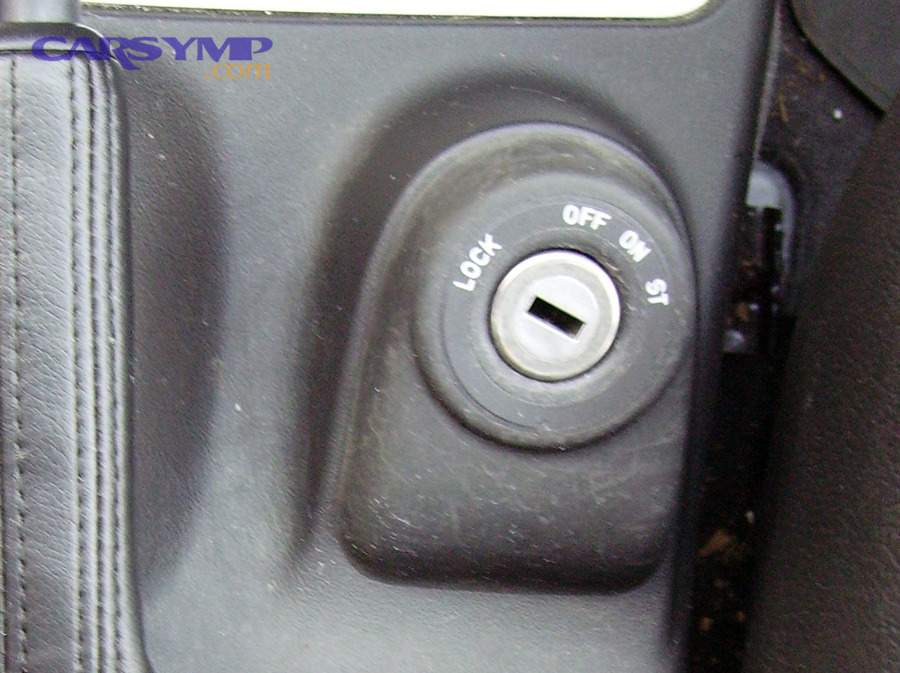
This is where ignition switch problems show up:
- Key must be held in a precise position to crank
- Intermittent no-crank that improves when steering wheel pressure changes (lock cylinder/ignition switch alignment)
- Accessories cut out unpredictably while turning the key
The relay/fuse side shows up as:
- Consistent click but no crank
- No voltage delivery to the starter even though the command exists
- Blown fuse/mega fuse or poor connection at high-current distribution points
Is the starter/solenoid bad—or is it a voltage drop problem?
Starter failure wins when proper voltage and current delivery exist but the starter cannot spin, while voltage drop problems are more likely when the starter clicks or turns slowly despite a “good” battery.
More importantly, this distinction prevents you from replacing a starter when the real culprit is wiring resistance.
What “bad starter” looks like with good voltage:
- Strong start signal present at solenoid
- Battery stays relatively stable under attempted crank
- High-current path is intact
- Starter does not spin or spins erratically
What “voltage drop” looks like:
- Battery measures decent at rest but collapses heavily during crank
- Terminal/cable/ground points get warm
- Starter acts weak, inconsistent, or just clicks
The proof comes in the next section: measurement. Guessing ends when you measure voltage under load.
What multimeter tests confirm the no-crank root cause?
There are 3 main multimeter tests that confirm no-crank causes: battery voltage under load, start-signal voltage at the solenoid, and voltage drop across the positive and ground paths during crank attempt.
Specifically, these tests convert “symptoms” into “evidence,” so you stop debating and start proving.

Before testing, set expectations:
- A multimeter cannot measure starter current draw directly without accessories, but it can show you whether voltage is being delivered.
- Your job is to catch what happens during the crank attempt.
What battery voltage readings indicate “good,” “weak,” or “dead” under crank load?
There are three practical battery voltage categories during a crank attempt: good (holds strong), weak (drops too far), and dead (collapses), based on whether the battery can maintain voltage under high demand.
Then, you use that behavior to decide whether to keep hunting in cables/relay/switch or correct power supply first.
Use these as real-world guidelines (not perfect laws):
- Good sign: Voltage stays relatively stable during attempted crank.
- Weak sign: Voltage drops sharply as soon as you try to crank.
- Dead/collapsing sign: Voltage plunges and modules reset, or meter reading becomes unstable.
How to do it:
- Place meter leads on battery posts (not on cable clamps if possible).
- Have a helper turn the key to START while you watch the meter.
- Record the lowest reading you see during the attempt.
Interpretation logic:
- If voltage collapses immediately, you likely have battery weakness or severe resistance at terminals.
- If voltage stays decent but there is still no crank, move to signal and voltage drop tests.
How do you test the starter trigger wire (S terminal) when the key is in START?
You test the starter trigger wire by measuring for voltage at the solenoid’s “S” terminal during the START command, and the presence or absence of voltage tells you whether the ignition switch/relay/interlocks are delivering the command.
Next, this is the cleanest way to resolve debates about Ignition switch vs starter relay issues because it tells you if the command reaches the starter.
How to do it safely (high-level):
- Locate the starter solenoid and the smaller trigger wire (often a spade connector or small stud).
- Put the meter’s black lead on a clean engine ground.
- Touch the red lead to the trigger terminal.
- Have a helper hold the key in START.
What the results mean:
- Voltage present at S terminal + no crank: suspect starter/solenoid, high resistance on main cable, or poor ground path.
- No voltage at S terminal during START: suspect relay control, interlocks, ignition switch problems, or security/start authorization.
Because access can be difficult, prioritize safety:
- Keep hands, tools, and leads away from belts/fans.
- Do not “bridge” terminals unless you understand the hazards.
How do you do a simple voltage drop test on the positive and ground sides?
You do a simple voltage drop test by measuring voltage across each side of the starting circuit during a crank attempt, and a high reading proves resistance that steals power from the starter.
Moreover, this test explains why cleaning or replacing a cable can “fix the starter” even when the starter itself was fine.
Positive-side voltage drop (battery positive to starter main terminal):
- Red lead on battery positive post
- Black lead on the starter’s main power terminal
- Attempt crank and note the reading
Ground-side voltage drop (battery negative to engine block/starter case):
- Red lead on starter case or engine block
- Black lead on battery negative post
- Attempt crank and note the reading
Interpretation:
- Low drop: the path is efficient
- High drop: resistance exists in that path (corrosion, loose connections, damaged cable, weak ground strap)
Why this is the “truth test”:
- Resistance is invisible until current flows.
- Voltage drop reveals resistance when the system is under load.
How do you diagnose “crank-no-start” step-by-step (ignition vs fuel vs air)?
You diagnose crank-no-start using a 4-part flow—spark, fuel, air, and timing/engine condition—so you can determine whether ignition, delivery, or engine fundamentals are preventing combustion.

In addition, the fastest wins come from confirming “spark yes/no” and “fuel delivery likely/unlikely” before chasing sensors.
The crank-no-start mindset:
- The starter is doing its job.
- The engine is rotating.
- Something prevents ignition and sustained combustion.
Is there spark—yes or no—and what does that tell you about ignition?
Yes/no spark is the fastest divider: spark present suggests ignition is functioning at a basic level, while no spark points strongly to ignition system faults, timing signals, or control authorization problems.
Then, once you know the spark status, you stop guessing about fuel first.
What “no spark” often points to:
- Failed ignition coil/coil pack module
- Failed crankshaft position sensor or missing crank signal (vehicle-dependent)
- Power supply issues to ignition system
- Security system interaction with ignition (start authorization inhibits spark or fuel on many vehicles)
What “spark present” suggests:
- Ignition may be sufficient for combustion (not always perfect, but present)
- Focus shifts to fuel pressure, injector control, air intake restrictions, or flooded engine
Safety note:
- Spark testing requires caution; do not create a fuel vapor ignition hazard.
Is fuel delivery the issue (pump, pressure, injectors) or is it ignition-related?
Fuel delivery wins when spark exists but combustion never begins, while ignition is more likely when there is no spark or the engine behaves like it is never firing at all.
However, you should treat fuel diagnosis as “pressure + delivery + control,” not just “I hear the pump.”
Fuel delivery clues:
- You hear a brief pump prime (not guaranteed on all vehicles)
- No fuel smell at tailpipe after repeated crank (not definitive but a clue)
- Starting fluid test changes behavior (use caution and follow safe practices)
Ignition-related clues:
- No spark
- Tach shows no response during cranking on some vehicles
- Sudden no-start after rain/wash (coil/ignition moisture issues in some setups)
When you suspect fuel:
- Think in layers: pump power, pump output, pressure regulation, injector pulse.
Is the engine getting RPM signal while cranking (possible crank sensor clue)?
Yes—if your scan tool shows 0 RPM while cranking (or the vehicle provides no cranking RPM data), it can indicate the engine control system may not be seeing a crank signal, which can prevent spark and fuel injection.
Especially, this is the “invisible blocker” that makes everything else look normal while nothing starts.
How DIYers check it:
- Watch tachometer movement (if the car displays it during crank)
- Use an OBD scanner that can show live data during cranking
Why it matters:
- Many ECUs need a valid crank signal to time spark and injector events.
- Without it, you can have perfect fuel in the tank and perfect battery voltage and still get no start.
Could it be air or mechanical (flooding, compression, timing) rather than ignition?
Air/mechanical issues become more likely when spark and fuel seem present but the engine still won’t catch, especially if cranking sounds unusually fast or uneven.
More importantly, this is where many “it should start” situations live—because the engine is rotating, but not compressing or not timed.
Air and mechanical categories to consider:
- Flooded engine: too much fuel; strong fuel smell; may need clear-flood procedure
- Restricted air intake: blocked intake, severe filter blockage (rare but possible)
- Low compression / timing issue: unusually fast cranking can suggest low compression (not always, but a clue)
If the cranking sound suddenly changed compared to normal, treat that as high-value evidence and escalate diagnosis.
Which symptoms map to the most likely causes?
There are 6 symptom patterns that map reliably to the most likely causes, based on whether voltage collapses, the control signal exists, and whether the engine rotates normally.
To illustrate the mapping clearly, the table below groups symptoms by what they usually prove or strongly suggest.
What this table contains: a symptom-to-likely-cause map that helps you choose the next test (not the next part to buy).
| Symptom pattern | Most likely category | Best next proof step |
|---|---|---|
| Rapid clicking + dash resets | Battery weak / terminal resistance | Battery voltage under crank + terminal inspection |
| Single click + no rotation | Solenoid engages but no spin OR high resistance | S-terminal voltage + voltage drop test |
| Silence + no relay click | Start command missing (switch/interlocks/security) | Check start-signal chain + fuses + scan for security state |
| Headlights dim hard in START | Power collapse under load | Battery test + cable/ground voltage drop |
| Cranks strong but never fires | Crank-no-start branch | Spark check + fuel pressure logic |
| Intermittent no-crank, key position sensitive | ignition switch problems / authorization | Verify start command consistency + relay control testing |
This mapping works because it follows a single principle: the symptom tells you whether the system is losing power, missing command, or missing combustion.
If it starts with a jump, is it always the battery?
No—jump starting does not always prove the battery is the only problem, because a jump can temporarily overcome resistance in connections or mask a failing cable/ground.
Besides, a jump pack can stabilize voltage enough for modules and relays to behave normally even when your system is marginal.
What a jump truly suggests:
- The car needed additional voltage/current support to crank.
- The original system could not deliver enough under load.
Possible root causes still include:
- Corroded terminals (jump clamps may bite into cleaner metal)
- Poor ground strap (jumping ground closer to engine can bypass resistance)
- Aging battery with low reserve capacity
- Alternator charging issues that left battery undercharged (a separate issue)
The correct response is not “replace battery immediately,” but “measure and prove.”
If there’s one click, is it always the starter?
No—one click is not always the starter, because one click can be the relay or solenoid reacting while the starter still lacks usable current due to resistance or low battery load capacity.
More importantly, a starter can appear dead when the circuit is starving it.
A single click can mean:
- Solenoid is trying to engage
- Relay is being commanded
- Voltage exists in the control circuit, but power delivery is insufficient
That is why the “S terminal voltage” test and voltage drop test are the proof tools, not the sound itself.
If it cranks fast but won’t start, what’s the most likely category?
There are 3 main categories for fast-cranking crank-no-start: ignition not firing, fuel not delivering correctly, or compression/timing problems, based on whether combustion events are happening at all.
In short, fast cranking is not a diagnosis, but it is a clue that pushes you to check fundamentals.
Fast cranking often appears when:
- Compression is reduced (mechanical/timing issue)
- Cylinders are washed down (flooding can reduce effective compression)
- Spark is absent and the engine never fires even once
Your best next steps:
- Confirm spark yes/no
- Confirm fuel delivery likelihood
- If both seem present, escalate to compression/timing evaluation
What is the recommended “minimal parts replacement” order after diagnosis?
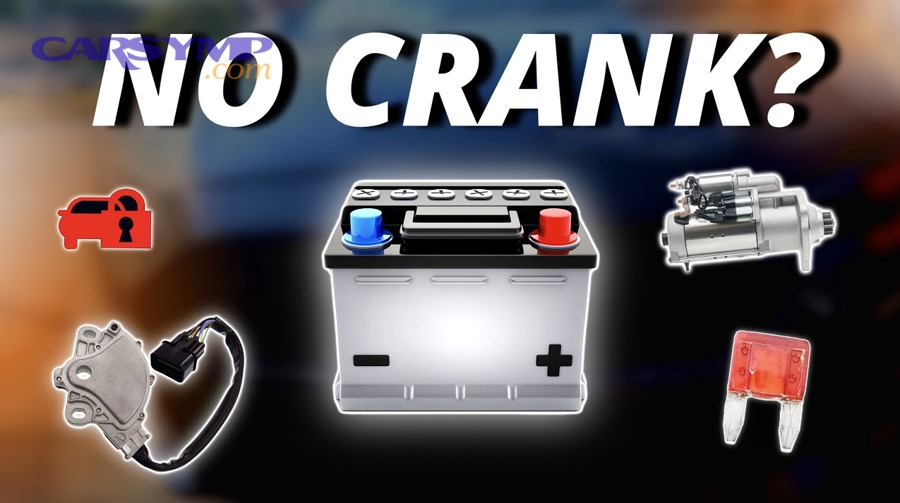
There are 5 recommended “minimal replacement” steps—clean/tighten, restore grounds, confirm battery health, confirm relay/switch command path, and replace the confirmed failed component—based on eliminating high-resistance faults before buying parts.
Thus, you reduce cost and prevent the common trap of replacing a starter that fails again because the real issue was voltage delivery.
The philosophy: Replace only what you can prove is failing.
This matters most in the starting system because small resistances produce huge effects under high current.
What should you clean or tighten before buying parts?
There are 4 connection tasks you should do before buying parts: clean battery posts and clamps, re-secure the main grounds, confirm the starter cable nut is tight, and inspect for damaged cables—because resistance failures are common, cheap to fix, and easy to miss.
Next, these steps often resolve “no-crank” complaints without replacing any major component.
A practical checklist:
- Remove and clean battery terminals (clamp and post contact surfaces)
- Check and clean chassis ground and engine block ground points
- Inspect the battery positive cable for stiffness, swelling, or damaged insulation
- At the starter, confirm the main terminal is tight and not heat-discolored
What “fixed” looks like:
- Clicking disappears
- Cranking speed improves
- Voltage drop readings improve
When should you stop DIY and get professional testing?
Yes—you should stop DIY and seek professional testing when access is unsafe, the vehicle uses complex start authorization systems, fuses repeatedly blow, or measurements point to control-module authorization issues rather than simple wiring faults.
Especially, modern vehicles can inhibit start through security logic that requires scan-tool interpretation.
Stop and escalate if:
- You cannot safely access the starter terminals
- You suspect security/start authorization but cannot verify status
- The problem is intermittent and heat-related and you lack tools to capture it
- There are multiple system codes and symptoms do not match simple power delivery problems
At that point, your best DIY value is the evidence you already collected: symptoms + voltage readings + where command is lost.
What uncommon conditions can mimic no-crank or crank-no-start ?
There are 4 uncommon but important mimics—security start inhibition, push-button authorization faults, heat-soak intermittent failures, and stop-start/hybrid system behavior—based on how modern vehicles separate “permission to start” from “ability to crank.”

Moreover, these mimics often create confusing patterns where everything looks fine, yet the engine will not crank or fire.
Can an immobilizer/security system cause a no-crank or crank-no-start?
Yes—an immobilizer or security system can cause no-crank or crank-no-start because it can block the start command, block fuel delivery, or block spark depending on vehicle design.
More importantly, this is the real-world meaning of Security system interaction with ignition: the ignition switch may physically turn, but authorization logic decides whether the engine is allowed to run.
How it presents:
- Cranks but immediately stalls (some systems allow brief start then cut)
- No crank and security light behavior changes
- Key/fob recognition issues become intermittent
Evidence (why security matters broadly):
According to a study by the University of Leeds from the School of Law, in 2025, analysis found theft of vehicles with electronic engine immobilizers declined about 80% relative to a matched control group.
This doesn’t “diagnose your car,” but it explains why modern vehicles rely heavily on immobilizer logic—because it is effective, and that effectiveness comes from start inhibition.
What changes in push-button start and smart key systems vs traditional ignition switches?
Push-button start systems win in convenience and security controls, while traditional key-start systems are simpler to trace, because push-button start adds authorization layers that can interrupt the start command even when the battery and starter are physically capable.
Meanwhile, DIY diagnosis must adapt by checking “permission inputs” before assuming parts are bad.
Common push-button start dependencies:
- Brake pedal switch input
- Smart key proximity detection
- Body control module authorization
- Battery voltage stability (modules can brown out and deny start)
What this means for diagnosis:
- A no-crank event can be a “logic no” rather than a hardware no.
- If your tests show power delivery is healthy but the command never reaches the starter, your focus shifts to start authorization inputs and control path.
Can heat-soak cause intermittent no-crank (hot-start failure)?
Yes—heat soak can cause intermittent no-crank because heat increases electrical resistance and can worsen marginal starter windings, solenoid operation, or relay behavior, especially after a drive when under-hood temperatures peak.
Especially, this is why some cars “start cold” but refuse to crank when hot.
What it looks like:
- Starts fine in the morning
- After errands, you get click/no crank
- After cooling down, it starts again
How to spot it without guessing:
- Capture voltage drop readings during the hot failure
- Compare with cold-start readings
- Note whether the S terminal signal remains present when hot
If command remains present but crank fails only when hot, the starter/solenoid becomes more suspect—yet you still confirm with voltage delivery evidence.
Can stop-start, hybrids, or IBS battery sensors change what “normal” cranking looks like?
Yes—stop-start systems, hybrids, and battery monitoring sensors can change what “normal” looks like because some vehicles use different starting strategies, enforce voltage thresholds, or use motor-generators that do not behave like classic starters.
In addition, these platforms can confuse DIY assumptions like “I should hear a starter.”
Key differences:
- Start may be inhibited to protect system state of charge
- Some hybrids may not “crank” the same way a traditional starter does
- Battery sensor logic can reduce available electrical power or trigger warnings that correlate with no-start events
In these cases, your workflow still works—but you may need vehicle-specific interpretation and scan-tool data.
Evidence (if any)
University of Leeds (School of Law), 2025: findings reported that theft of vehicles with electronic engine immobilizers declined about 80% relative to a matched control group, illustrating why immobilizer logic commonly blocks starting authorization in modern designs and can mimic ignition switch problems during diagnosis.