


If a jump-start doesn’t work, you should stop guessing and troubleshoot in a strict order: confirm safe, correct connections → allow a short “pre-charge” time → branch by what the car does (silence, clicks, slow crank, or cranks-but-won’t-start) so you can identify whether the battery, cables/grounds, starter circuit, or charging system is the real blocker.
The next thing most drivers need is a fast way to separate battery failure from starter failure using only symptoms you can observe at the key (or start button), because “it won’t start” can mean “no crank,” “weak crank,” or “cranks fine but won’t run”—and each one points to a different fix.
You also need the right jump-start method (especially grounding and clamp contact) because a perfectly good battery can still appear “dead” if clamps bite through corrosion poorly, or if the donor source is too weak to transfer meaningful current.
Introduce a new idea: once you’ve followed the core troubleshooting path, you can decide when to stop trying (for safety and to avoid damage) and what less-common issues—like immobilizer lockouts, start/stop battery monitoring, or fusible links—can mimic a failed jump-start.
Does a jump-start not working always mean the battery is bad?
No—when a jump-start (boost) doesn’t work, it does not always mean the battery is bad, because (1) clamp contact is often poor, (2) the donor source/jump pack may be too weak, and (3) the problem may be the starter circuit or a safety interlock—not the battery itself.
More importantly, a failed jump-start is a diagnostic signal, not a verdict, so you’ll get the right answer faster by proving the basics before blaming the battery.
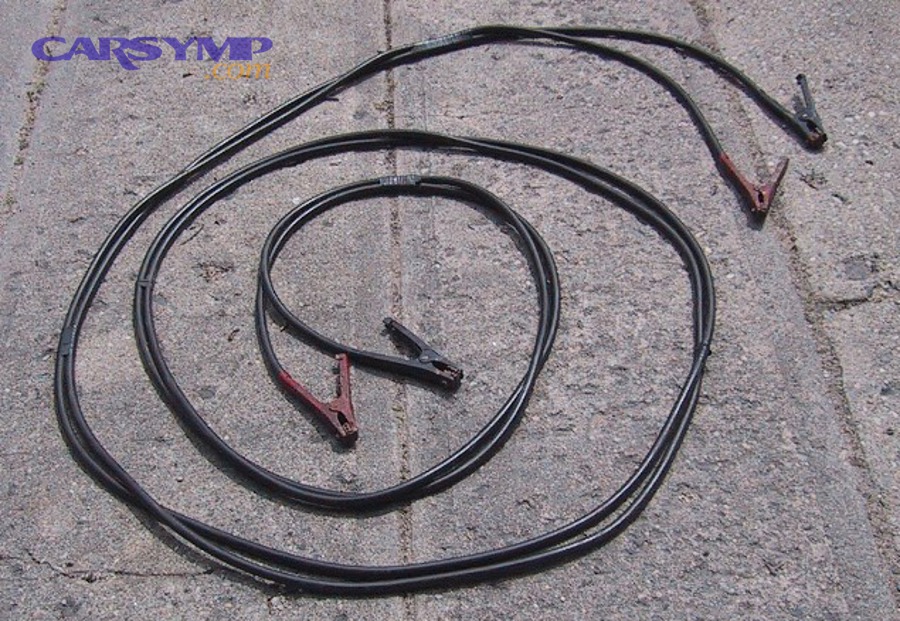
Is the donor car/battery or jump pack strong enough to actually transfer charge?
Yes, the donor source must be strong enough to transfer charge, or the jump-start will fail because (1) a weak donor can’t supply starter current, (2) thin/cheap cables waste power as heat, and (3) a deeply discharged battery may need minutes of pre-charge before it will crank.
Specifically, “strong enough” means both the donor’s electrical health and the setup’s ability to deliver current:
- Donor car approach: Run the donor vehicle so the alternator supports the system while you attempt the start (unless your vehicle manufacturer advises otherwise). A donor with its own weak battery can sag under load, giving you clicks or slow crank.
- Portable booster pack approach: A small pack can light the dash but still fail to crank because cranking is a high-current event. Treat Jump starting with a portable booster pack like a power delivery problem: ensure the pack is fully charged, use the “boost” mode if present (as instructed), and let it stabilize for a minute before cranking.
- Pre-charge matters: If your battery is extremely low, give it 5–10 minutes connected before cranking. That time isn’t superstition—it’s allowing voltage to climb enough for the starter circuit and vehicle computers to behave normally.
A practical rule: if you get rapid clicking or everything resets when you turn the key, the electrical system is collapsing under load, which often points to insufficient current delivery (source strength + connection quality), not instantly to a dead battery.
Are you clamping to the right points for a clean metal-to-metal connection?
Yes, correct clamping points and clean metal-to-metal contact are mandatory, because (1) corrosion adds resistance, (2) paint/oxide prevents current flow, and (3) poor contact creates heat and voltage drop that starves the starter.
Then, focus on contact quality like a technician would:
- Clamp bite: The jaws must bite hard onto clean metal. If you can rotate the clamp easily, it’s not biting.
- Positive terminal: Clamp directly to the battery’s positive post/terminal connection point—clean and solid.
- Negative/ground point: Prefer a solid engine block or chassis ground point away from the battery (as many safety guides recommend), not on a corroded negative post.
- Corrosion = resistance: White/green powder on terminals is not cosmetic; it’s a barrier that can make a jump “look” connected while acting electrically disconnected.

According to a safety alert by the University of Minnesota from University Health & Safety (2021), hydrogen gas can accumulate during battery charging in poorly ventilated areas and presents a fire/explosion hazard—one reason correct connection points and spark control matter. (hsrm.umn.edu)
What should you do first if a jump-start (boost) doesn’t work?
What you should do first is a “reset-and-retry” checklist—disconnect, inspect, reconnect correctly, pre-charge briefly, then attempt one controlled crank— because that method fixes the most common causes (bad contact, wrong sequence, weak source) while keeping you safe.
To better understand why this works, remember: a jump-start is not magic—it’s simply moving usable electrical current into the starting system, and anything that blocks current flow will create a no-start.

What is the safest “reset and retry” jump-start sequence?
The safest reset-and-retry sequence is a controlled reconnect using a correct order and an engine/chassis ground, with one goal: minimize sparks near the battery and maximize clamp contact.
Then use this repeatable sequence (a practical jump start guide you can follow under stress):
- Turn everything off in both vehicles (lights, HVAC, radio).
- Inspect the battery area for swelling, leaks, or cracks. If present, stop.
- Connect positive-to-positive first.
- Connect negative-to-ground last, using a clean engine block/chassis ground point on the disabled car (not right on the battery).
- Stabilize and pre-charge: wait 5–10 minutes if the dead battery was deeply discharged.
- Attempt one crank of up to ~5 seconds. If it fails, pause 30–60 seconds before trying again.
- Do not rapid-fire attempts. Repeated cranking heats cables and can worsen poor connections.
If it starts, keep the engine running and avoid shutting it off immediately until you’ve confirmed it can idle steadily.
What are the fastest visual checks that change the diagnosis?
There are 6 fastest visual checks that change your diagnosis: loose terminals, heavy corrosion, damaged cables, swollen battery case, blown main fuse/fusible link signs, and immobilizer warning behavior—because each one can stop a start attempt even when a donor source is present.
Next, do these checks in under two minutes:
- Terminal tightness: Can you twist the battery terminal by hand? If yes, you found a major issue.
- Corrosion level: Powdery buildup where clamps touch means your “connection” may be mostly insulation.
- Cable damage: Split insulation, broken strands near clamps, or cheap thin cables.
- Battery case swelling/leaking: Safety stop—do not jump.
- Main power path: Look for obvious signs near the battery fuse block (burn marks, melted plastic).
- Security/immobilizer indicator: If a security light flashes rapidly while cranking is inhibited, you may have an anti-theft lockout rather than a pure power issue.
Which “no-start” pattern do you have after the jump attempt?
There are 4 main no-start patterns after a jump attempt—no crank (silence), clicking, slow crank, and cranks-but-won’t-start—based on what the starter and engine do when you try to start.
Below, treat your symptom as the “map,” because each pattern narrows the cause faster than swapping parts.
Is it “no crank at all” (silence) after the jump?
No crank (silence) is a condition where turning the key/start button produces no starter movement or sound, often caused by (1) a broken power path (terminals, fuse link), (2) a starter control issue (relay/interlock), or (3) an immobilizer/safety interlock preventing crank.
Then run this sequence:
- Confirm dash behavior:
- If dash lights stay bright but nothing happens, suspect control/interlock (brake switch, neutral safety, clutch switch, start relay).
- If dash goes dead, suspect power path collapse (bad connection, dead battery, fusible link).
- Try neutral/park changes: Move to Neutral and try again; firmly press brake; for manuals, fully press clutch.
- Listen for relay clicks: A soft click from the fuse box can mean the start request is reaching the relay, but the starter isn’t engaging.
- Re-check ground clamp point: A poor ground often looks like silence.
If the vehicle is push-button start, keep the key fob close and try the manufacturer’s “fob to button” emergency start method (common on many vehicles) before assuming the battery is the cause.
Is it “rapid clicking” or “single click” after the jump?
Clicking is a starter-circuit symptom where the solenoid/relay engages but the starter can’t spin, typically due to (1) insufficient voltage/current under load, (2) high resistance in clamps/grounds, or (3) a failing starter/solenoid.
However, the type of click matters:
- Rapid clicking: usually the electrical system is dipping below operating voltage repeatedly—classic for weak delivery (bad clamps, weak donor, dead battery).
- Single click: can be a stuck/failed starter solenoid, bad starter motor, or a severe voltage drop event.
Do this next:
- Feel the cables carefully: Warm/hot clamps indicate high resistance (energy turning into heat).
- Upgrade the contact: Move clamps to cleaner metal; clamp harder; change the ground point.
- Let it pre-charge longer: If the dead battery is extremely low, give it time before concluding starter failure.
Is it “slow crank” even with the jump connected?
Slow crank is when the starter turns the engine sluggishly, and it usually means (1) too much resistance in cables/grounds, (2) a very weak battery that is “loading” the donor, or (3) a starter that’s drawing excessive current.
Next, treat slow crank as a voltage-drop problem:
- Connection first: Clean/tight terminals and a solid ground point fix slow crank more often than replacing parts.
- Cable quality: Thin jumper cables can’t deliver cranking current efficiently. Heavy-duty cables reduce drop.
- Cold weather factor: Batteries deliver less power in cold temperatures, so marginal setups fail more often.
A helpful technical anchor: SAE has a recommended practice describing maximum recommended voltage drop for starting motor circuits, emphasizing that excessive drop can prevent reliable cranking. (sae.org)
Does it crank normally but still won’t start?
Cranks-but-won’t-start means the starter spins the engine at a normal speed, but the engine doesn’t run, which points away from the jump process and toward (1) fuel delivery, (2) ignition/spark, or (3) anti-theft/immobilizer permission to run.
Then use this logic:
- If it cranks strong: the jump did its job for cranking power.
- If it tries to start then dies immediately: immobilizer issues become more likely (especially if a security light flashes).
- If you smell fuel or hear the fuel pump prime: you may be chasing ignition or sensor issues, not battery issues.
At this point, continuing to jump-start harder rarely helps; you need a different diagnostic path.
Is it the battery, the starter, or the alternator—how can you tell quickly?
The battery is most likely when symptoms improve with better connections, the starter is most likely when power is stable but cranking doesn’t happen, and the alternator is most likely when the car starts but won’t keep its charge afterward.
Meanwhile, you can reach a “good-enough” answer using three criteria: response to a proper jump, behavior under load, and what happens after it finally runs.

Battery vs starter: what symptoms separate them?
Battery issues win for “voltage collapses under load,” while starter issues dominate when “voltage seems stable but the starter won’t engage,” and you can separate them by observing consistency.
Then compare like this:
- Battery/connection pattern:
- rapid clicking
- dash lights dim heavily during crank
- improves when clamps are moved/cleaned
- improves after 5–10 minutes pre-charge
- Starter pattern:
- single solid click with no crank
- repeated attempts produce the same result even with a strong donor and excellent contact
- lights may stay relatively steady while the starter fails to spin (not always, but often)
If the starter is the suspect, repeated jump attempts won’t “push through” a mechanical/electrical failure inside the starter motor.
Battery vs alternator: what happens after you finally get it running?
Battery failure is likely when the car starts and stays running but struggles to restart later, while alternator failure is likely when the car starts but dies soon or repeatedly drains the battery after short drives.
However, use a practical checkpoint:
- If it starts and then quickly dies after disconnecting the jumper source: suspect charging system (alternator) or a severely depleted battery that can’t buffer the load.
- If it starts, runs fine, but the next morning is dead again: suspect battery health or parasitic drain; alternator is still possible, but pattern matters.
AAA reports that battery-related problems are a major share of roadside assistance calls (their maintenance guidance highlights battery failure as a leading contributor). (newsroom.aaa.com)
Cables/grounds vs components: how do you spot high resistance?
High resistance wins as the hidden cause when clamps heat up, symptoms change when you move connections, and the system shows “plenty of lights” but no cranking power, while component failure tends to be consistent regardless of clamp placement.
Specifically, suspect high resistance when you see:
- Hot clamps/cables after a short crank attempt
- Visible arcing at a clamp (poor bite)
- Intermittent starts when you wiggle the cable (carefully) or re-seat clamps
- Bright dash + no crank that changes when ground point changes
A key mental model: resistance converts useful electrical energy into heat, so the starter never receives what it needs.
What tests can a driver do (without tools) to confirm the next step?
There are 5 practical, no-tool tests a driver can do: clamp relocation, terminal tightness check, longer pre-charge attempt, symptom-based restart logic, and controlled accessory load check—based on whether the system can deliver current under load.

Besides reducing guesswork, these tests prevent wasted time and unsafe repeated cranking.
Can cleaning/tightening terminals fix a no-start after a jump?
Yes—cleaning and tightening terminals can fix a no-start after a jump, because (1) corrosion blocks current flow, (2) loose terminals create intermittent contact, and (3) improved contact reduces voltage drop so the starter can receive full power.
Moreover, do it safely:
- Turn the vehicle off and remove jewelry.
- Tighten terminals so they cannot rotate by hand.
- If corrosion is heavy, you may need proper tools and cleaning (or service) rather than scraping blindly roadside.
If your jump-start success depends on “the clamps being held just right,” you have a connection problem until proven otherwise.
Should you try a longer charge attempt before cranking again?
Yes—when the battery is deeply discharged, you should try a longer pre-charge before cranking again, because (1) voltage must rise enough for vehicle computers to allow a start, (2) the starter needs a stable supply, and (3) a brief pre-charge can turn a “click” into a crank.
Then apply this safely:
- Leave the donor connected for 5–10 minutes before the next attempt.
- If using a booster pack, keep it connected and stable; follow pack instructions.
- Limit crank attempts to avoid overheating cables and stressing the system.
If a longer pre-charge produces zero improvement across multiple correct setups, shift suspicion toward a failed battery cell, a control/interlock issue, or a starter problem.
When should you stop trying to jump-start and call for help?
Yes—you should stop trying and call for help when the situation becomes unsafe or clearly non-battery-related, because (1) damaged batteries can vent explosive gas, (2) repeated sparks/heat can escalate risk, and (3) continued cranking can damage wiring, starters, or electronics.

More importantly, knowing when to stop is part of a competent troubleshooting process—not “giving up.”
Is it unsafe to keep trying if the battery is swollen, leaking, or smells like sulfur?
Yes—it is unsafe to keep trying if the battery is swollen, leaking, or smells like sulfur, because (1) the battery may be internally damaged, (2) it may vent hydrogen/acid mist, and (3) a spark can ignite gases and cause an explosion.
Then do this immediately:
- Stop jump-start attempts.
- Keep your face and body away from the battery area.
- Call roadside assistance or a professional.
A safety-oriented investigation into automotive battery explosions emphasized multiple causal factors and the need for proper handling when explosions occur. (ijoh.tums.ac.ir)
What information should you tell roadside assistance or a mechanic to speed diagnosis?
There are 7 pieces of information you should provide: symptom pattern, dash behavior, sound type, what changed with clamp moves, battery age, recent electrical work, and whether it started then died—because these details point directly to battery, connection, starter, alternator, or immobilizer pathways.
Next, share this concise checklist:
- Pattern: silence / rapid clicking / single click / slow crank / cranks-but-won’t-start
- Dash behavior: dims heavily / stays bright / resets
- Any warnings: battery light, security/immobilizer indicator behavior
- What you tried: donor car running? pre-charge time? booster pack?
- Connection results: did moving clamps change anything?
- Battery details: age (approx.), recent replacements, corrosion level
- After start behavior: did it stall soon after, or did it run normally?
This reduces “diagnostic drift” and speeds the right fix.
What less-common issues can make a jump-start fail even when the battery seems fine?
There are 4 less-common categories that can make a jump-start fail even when the battery seems fine: immobilizer permission problems, start/stop battery monitoring and AGM-specific needs, blown fusible links/fuse blocks, and repeat-drain issues like parasitic draw or alternator diode faults—based on what blocks power or permission to start.

In addition, this is where you shift from macro troubleshooting to micro causes, because the basics (connections, source strength, symptom pattern) should already be proven.
Could an immobilizer or key fob issue prevent starting even with a jump (boost)?
Yes—an immobilizer or key fob issue can prevent starting even with a jump, because (1) the system may block fuel/ignition after crank, (2) it may block cranking entirely on some vehicles, and (3) low-voltage events can desync key recognition temporarily.
Then look for these cues:
- Security light behavior: flashing or staying on in a way your vehicle manual associates with immobilizer events.
- Cranks then stalls: classic “permission revoked” symptom.
- Push-button start: try the emergency fob procedure (often holding fob close to the button or a marked spot).
If immobilizer signs are strong, more jump attempts won’t solve it; you need key/fob verification or reprogramming support.
Do start/stop systems or AGM batteries change how you should jump-start?
Yes—start/stop systems and AGM/EFB batteries change jump-start expectations because they rely on higher cycling performance and battery monitoring, and some vehicles are sensitive to voltage drops and connection points due to battery management sensors.
Next, apply these practical adjustments:
- Use the correct jump points if the vehicle provides dedicated terminals (common in modern cars).
- Expect stricter behavior: even if it starts, the system may disable start/stop until the battery is properly recharged and tested.
- Don’t assume “it started once” means “battery is fine” with AGM; weak AGM batteries can behave inconsistently under load.
This is also where Preventing future dead battery situations starts: if you have start/stop, frequent short trips and accessory loads can keep the battery in partial charge, accelerating problems over time. (batteryuniversity.com)
Can a blown fusible link or battery terminal fuse block cause “no crank” after a jump?
Yes—a blown fusible link or battery terminal fuse block can cause no crank after a jump, because (1) it breaks the main power path, (2) it can isolate starter/ignition circuits, and (3) it often fails after incorrect connection or a surge event.
Then watch for these signs:
- Total loss of power to key systems despite a battery that shows surface voltage
- No response from starter relay even with solid jump power
- Burn smell or visible melting near the battery distribution/fuse block area
This is a “call for service” scenario because the fix is not a better jump—it’s restoring the protected power path.
Could a parasitic drain or alternator diode issue be why the car keeps dying?
Yes—parasitic drain or alternator diode issues can be why the car keeps dying, because (1) they consume battery power while parked, (2) they prevent the battery from recovering during normal driving, and (3) they create repeat failures that look like “bad battery” every time.
Then connect the pattern:
- Dead after sitting overnight repeatedly: parasitic drain rises on your suspect list.
- Dead after short trips repeatedly: charging recovery is insufficient; alternator and driving pattern both matter.
- Starts with a jump but won’t stay healthy: likely not solved by a single jump.
At this stage, a shop can test parasitic draw and alternator output quickly—saving you from swapping batteries unnecessarily.
Evidence (if any)

- AAA reported that in 2014 it responded to more than 29 million roadside assistance calls, with a large share involving common issues such as battery-related problems. (newsroom.aaa.com)
- According to a safety alert by the University of Minnesota from University Health & Safety (2021), hydrogen gas can accumulate during battery charging in poorly ventilated areas and create an explosion hazard—supporting the practice of minimizing sparks near batteries. (hsrm.umn.edu)
- SAE’s recommended practice on voltage drop for starting motor circuits underscores that excessive voltage drop can prevent proper starter operation, aligning with troubleshooting that prioritizes cable/ground resistance and clamp contact. (sae.org)