


Most coolant problems come from one simple mismatch: the coolant’s inhibitor chemistry doesn’t match the metals, seals, and service-life design of your cooling system. Coolant compatibility means the coolant and its additive package can coexist with what’s already in the system—without forming deposits, changing pH, depleting inhibitors too fast, or accelerating corrosion. This guide explains how to tell what you have, what you need, and what to do if you’ve already mixed types.
Coolant labels and colors often look like they’re telling you the truth, but they can be misleading across brands and years. That’s why you’ll learn the practical identifiers that matter most: the manufacturer specification (OEM spec), the coolant family (IAT/OAT/HOAT), and the service interval the engine was designed around.
You’ll also see when mixing is “technically possible” but still a bad idea, and when mixing is genuinely risky—like silicate-heavy formulas meeting certain organic-acid packages, or when unknown coolant history makes the system an inhibitor guessing game.
Introduce a new idea: once you understand compatibility, the rest becomes a simple workflow—identify what’s in the car, confirm the required spec, then decide whether you can top off safely or need a full change.
What does coolant compatibility mean, and why does it matter?
Coolant compatibility is the ability of a coolant’s base fluid and corrosion-inhibitor package to work with your engine’s metals, seals, and any remaining coolant in the system without causing deposits, corrosion, seal damage, or reduced heat transfer. Because compatibility determines whether your cooling system stays clean and protected, it directly affects overheating risk, water-pump life, radiator efficiency, and long-term engine reliability.
To connect the dots, the reason coolant exists is not just freeze/boil protection. The “real job” is corrosion control across multiple materials at once: aluminum, cast iron, solder, brass, steel, and various elastomers. A compatible coolant keeps protective films stable, controls pH, and prevents galvanic corrosion in mixed-metal systems.

What problems can happen when coolant is incompatible?
Incompatible coolant can cause visible and invisible failures, and the scary part is that many happen before your temperature gauge ever spikes.
- Deposit and gel formation (heat-transfer loss): Some additive packages can react and form sludge or gel-like deposits that reduce radiator and heater-core flow. Even thin deposits act like insulation, raising operating temperatures under load.
- Corrosion and pitting (especially aluminum): If inhibitors are wrong for the system, aluminum can pit, solder joints can degrade, and internal corrosion can accelerate.
- Seal and water-pump issues: Certain additive combinations can change lubricity or attack elastomers, increasing seepage at gaskets or shortening water-pump seal life.
- Shortened service life: Mixing often “averages down” inhibitor performance. You may not see immediate symptoms, but the coolant can become a high-maintenance fluid that needs early replacement.
Why is “compatible” more than just “same color”?
Color is marketing first and identification second. Two coolants can be the same color and have totally different inhibitor families, and two different colors can sometimes meet the same OEM performance spec.
What matters more than color:
- The coolant family (IAT, OAT, HOAT)
- The OEM specification (what the vehicle requires)
- The service interval design (2–3 years vs 5+ years, or mileage-based)
- The system materials (aluminum-heavy modern systems behave differently than older brass/copper designs)
Which parts of the cooling system are most sensitive to incompatibility?
Most incompatibility shows up first in the components with small passages or high heat flux:
- Radiator tubes and heater core (small passages clog first)
- Thermostat area (deposit and sticking)
- Water pump (seal, bearing load, and cavitation protection depend on inhibitor health)
- Cylinder head and head gasket fire ring area (hot spots + poor heat transfer = trouble)
What are IAT, OAT, and HOAT coolants?
There are 3 main types of engine coolant— IAT, OAT, and HOAT—based on the corrosion-inhibitor technology used to protect metals inside the cooling system. That inhibitor chemistry is what determines compatibility, service life, and the “mixing rules” that car owners actually need.
With that in mind, it helps to treat coolant like brake fluid or engine oil: the specification matters more than the color or the brand name.

Before the details, here’s a quick comparison table. It summarizes how each family typically behaves and why it exists (note: OEM specs can vary, so use this as a compatibility map—not a substitute for your owner’s manual).
Table context: The table below compares IAT, OAT, and HOAT coolant families by inhibitor basis, typical service life, strengths, and common mixing risks so you can understand compatibility at a glance.
| Coolant family | What the inhibitors are “built on” | Typical service life (general) | Common strengths | Common risks when mixed |
|---|---|---|---|---|
| IAT | Inorganic salts (often silicates/phosphates/borates, varies) | ~2–3 years | Fast protection for older mixed-metal systems | Can destabilize or shorten life of OAT; deposit risk if mixed poorly |
| OAT | Organic acid technology (carboxylates) | ~5 years+ | Long-life protection when system is clean and spec-matched | Mixing can reduce life; wrong combo can cause deposits or corrosion |
| HOAT/OAT hybrid | OAT base + selected inorganic boosters (varies by spec) | ~5 years+ | Balances fast aluminum protection + longer life | “Hybrid” types are not all the same—mixing hybrids can still be risky |
What is IAT coolant, and when is it usually used?
IAT (Inorganic Additive Technology) coolant is an older-style formula that protects by using inorganic inhibitors that form protective layers relatively quickly. It’s commonly associated with older vehicles and older radiator construction designs.
Key traits:
- Often designed for older systems with brass/copper radiators or older metallurgy
- Typically has shorter service intervals
- Good initial protection, but inhibitors can deplete faster, especially if water quality is poor
What is OAT coolant, and what makes it “long-life”?
OAT (Organic Acid Technology) coolant uses organic acids (carboxylates) to inhibit corrosion more selectively and often with longer stability. It typically performs best when the system is clean and the formula matches the OEM spec.
Key traits:
- Designed for modern aluminum-heavy systems
- Often marketed as extended life
- Can be less forgiving if contaminated or mixed with the wrong chemistry
- Includes variants such as Dex-style formulas and other OEM-specific OAT chemistries
You’ll also see the term HOAT/OAT in product descriptions because many “hybrid” formulas are essentially OAT-based with inorganic boosters.
What is HOAT coolant, and how is it different from pure OAT?
HOAT (Hybrid Organic Acid Technology) is a hybrid approach: it’s OAT at the core, but it adds select inorganic inhibitors to improve specific protection needs (often aluminum protection and cavitation control), depending on the OEM standard.
Key traits:
- Not a single universal chemistry—different manufacturers use different hybrids
- Often found in European or some North American OEM specs
- Frequently marketed as a “best of both worlds” option, but only when it matches the spec
Can you mix IAT, OAT, and HOAT coolants?
No—mixing IAT, OAT, and HOAT is not recommended in most cases because it can (1) reduce corrosion protection, (2) shorten coolant service life, and (3) create deposits or gel that restrict flow and heat transfer. Even when the engine doesn’t overheat immediately, the long-term risk usually outweighs the convenience.
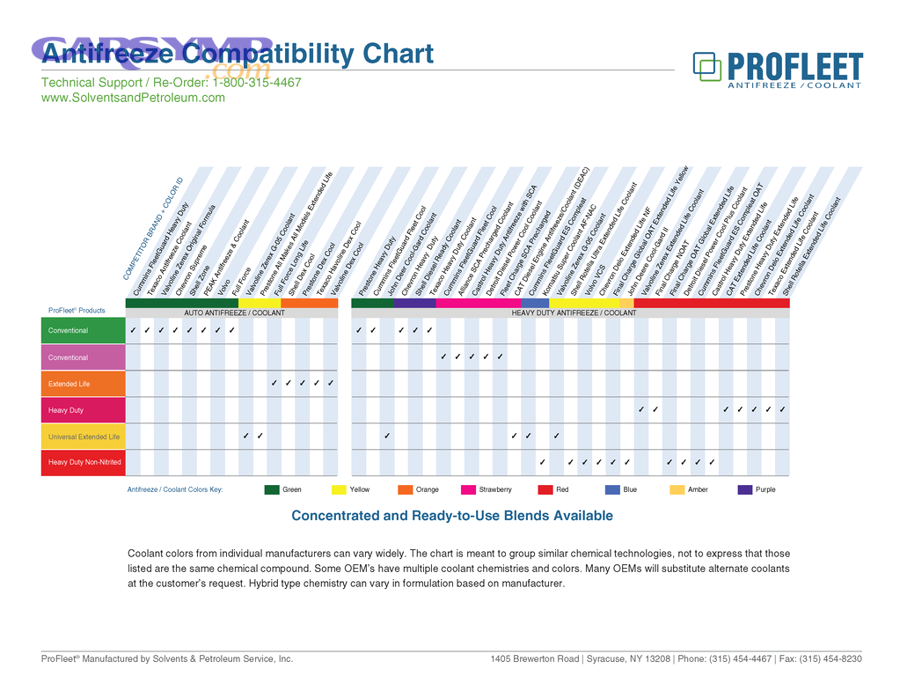
However, there are controlled exceptions—mainly when (a) the coolants are explicitly listed as mix-compatible by the manufacturer, or (b) you’re doing a short-term emergency top-off and plan to correct it quickly.
When is mixing coolant “safe enough” for an emergency top-off?
If you’re stranded and the coolant is low, the priority is preventing immediate overheating. In that case:
- Best emergency top-off: the same coolant spec already in the system
- Next best: distilled water (temporary dilution, but avoids chemistry conflict)
- Last resort: “universal” coolant only if it explicitly states compatibility with your required OEM spec and you still plan to correct it soon
Even when topping off with water, remember it changes freeze/boil protection. Treat it as temporary.
What are the most common incompatibility outcomes when mixing types?
Mixing doesn’t always create instant sludge, but these are the patterns mechanics see repeatedly:
- Inhibitor cancellation or imbalance: The resulting blend can protect “okay” for one metal while leaving another underprotected.
- pH drift and instability: Different additive systems buffer pH differently; the mixture can drift into a corrosion-friendly range over time.
- Precipitation and deposits: Some inhibitors form solids when mixed, especially if water hardness is high or the system is already contaminated.
- Shortened life: Even if everything looks normal, your “5-year coolant” may behave like a short-interval coolant.
Does “universal coolant” really mean universal compatibility?
“Universal” usually means the product aims to cover many OEM specs, not that it can safely mix with anything already in your car. The safest interpretation is:
- It may be a good replacement coolant after a complete exchange
- It is not automatically safe as a mixing partner with unknown coolant history
If you can’t confirm what’s inside the system, mixing “universal” into mystery coolant is still a gamble.
How do you identify the correct coolant for your car?
Identifying the correct coolant is a 4-step workflow: confirm the OEM specification, verify the coolant family (IAT/OAT/HOAT), check the concentration and base (EG vs PG), and validate what’s currently in the system before topping off or replacing. Done in the right order, it prevents guesswork.
Then, once you know what the car requires, you can decide whether you need a top-off, a partial drain and refill, or a full service.

What’s the fastest way to confirm your car’s required coolant spec?
Start with the sources that define the spec unambiguously:
- Owner’s manual: look for “coolant specification” and service interval
- Under-hood labels: some vehicles list the spec near the radiator support or coolant reservoir
- OEM parts catalog (if accessible): confirms the approved coolant part number/spec
Focus on the spec language (e.g., “use coolant meeting [OEM standard]”), not just color names.
Can coolant color help identify the type, or is it unreliable?
Color can be a clue, but it is unreliable as a decision-maker.
Use color only as a secondary signal:
- If it’s clearly the OEM fill color and the car is newer with known service history, it may help confirm.
- If the car has unknown history, color can be misleading because aftermarket coolants often copy popular colors.
If you must decide quickly, treat color as “a hint” and rely on spec confirmation for final selection.
How can you identify what’s currently in the system if the service history is unknown?
If you don’t know what’s in the system, you have three practical options:
- Professional coolant analysis (most accurate): some shops can test inhibitor type/pH and contamination.
- Coolant test strips (basic health check): helps identify pH and reserve alkalinity, but not perfect for family ID.
- Assume unknown = incompatible risk: if you can’t confirm it, don’t mix. Plan a complete change.
A “mystery coolant” situation is exactly where compatibility problems are born—because every top-off becomes another chemistry layer.
What should you do if you mixed incompatible coolant types?
If you mixed incompatible coolant types, the best fix is a full coolant exchange with 6 practical steps: stop overheating risk, assess contamination, perform a complete drain and refill, use a proper coolant flush when needed, refill with the correct spec at the right concentration, and verify there’s no trapped air. This restores predictable corrosion protection.

Next, you want to choose the least risky path based on what you see and how the vehicle behaves.
When do you need to drain and refill immediately vs monitor?
Drain and refill immediately if any of the following is true:
- The mixture looks muddy, gel-like, or contains floating debris
- The vehicle runs hotter than normal or heater performance becomes inconsistent
- You recently replaced a radiator, water pump, or thermostat and want to protect the new parts
- You don’t know what was mixed, or the system already had unknown coolant
Monitor cautiously (short-term) if:
- It was a tiny emergency top-off
- The coolant still looks clean and the car runs normally
- You can schedule correction soon
Even in the “monitor” case, treat it as temporary and plan a correction.
What is the correct “coolant flush” approach after mixing?
A coolant flush is most useful when the system shows deposits, contaminated coolant, or unknown history. The goal is to remove the mixed inhibitor soup so your replacement coolant can behave as designed.
A practical flush strategy:
- Cool engine completely (never open a hot pressurized system)
- Drain coolant from radiator drain and, if possible, engine block drains
- Fill with distilled water, run to operating temp with heater on
- Cool and drain again
- Repeat until drained water runs clear (usually 2–3 cycles; more if sludge is present)
- Refill with the correct coolant mix
If sludge is heavy, a shop may use a chemical cleaner—but those must be used carefully to avoid dislodging debris that blocks passages.
How to properly bleed air after flush (and why it matters)?
Trapped air can mimic coolant problems by causing hot spots, temperature spikes, and weak cabin heat. How to properly bleed air after flush depends on the vehicle, but the fundamentals are consistent:
- Use the correct fill point: some cars require filling at a bleed port or a specific high point
- Heater on full hot: opens the heater core circuit so air can purge
- Slow fill: prevents trapping large air pockets
- Bleed screws (if equipped): open until coolant flows without bubbles
- Warm-up cycles: allow thermostat to open and air to migrate to the reservoir
- Recheck level after cool-down: coolant contracts and may pull more from the reservoir
If your vehicle has a known bleed procedure (common in some European cars), follow the OEM method exactly.
According to a study by Covenant University from the Department of Chemical Engineering, in 2013, a 50/50 ethylene-glycol/water coolant sample showed a higher boiling point (110°C) than water (100°C) and a comparable specific heat capacity (4238 J/kg·K), supporting the idea that correct formulation helps resist boil-out and manage engine heat more effectively.
How do you choose the right replacement coolant and avoid compatibility mistakes?
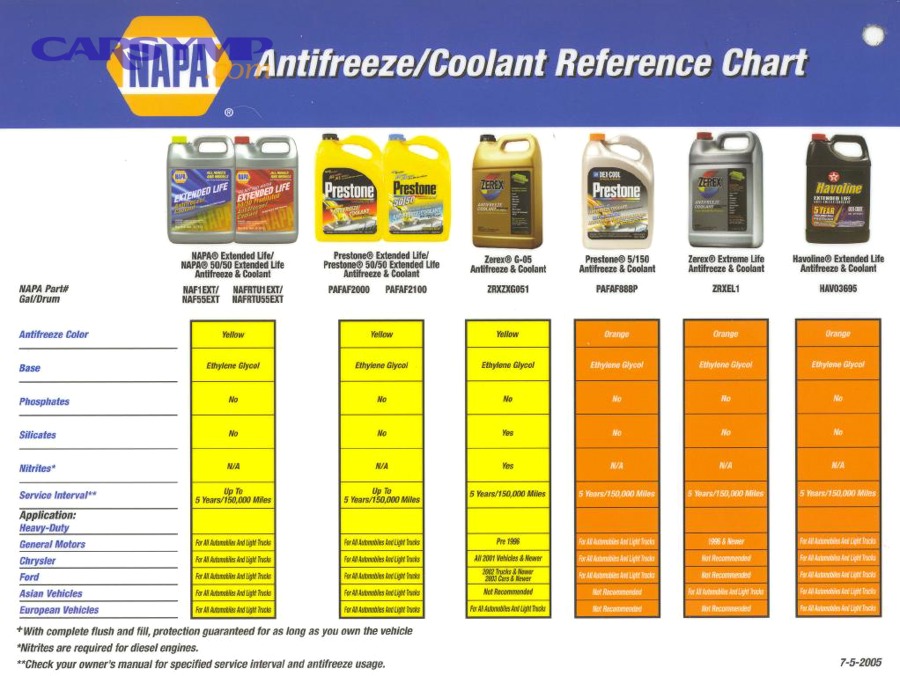
Choosing the right replacement coolant is a 5-factor decision: match the OEM specification, choose the correct inhibitor family (IAT/OAT/HOAT), set the right concentration with distilled water, confirm material compatibility for your system, and commit to the correct service interval. That combination prevents repeat mistakes.
Then, once you pick the right coolant, you keep it compatible by maintaining it like a system—not like a one-time purchase.
What matters most: OEM specification, coolant type, or brand?
The safest priority order is:
- OEM specification (non-negotiable)
- Correct coolant family (IAT/OAT/HOAT appropriate to that spec)
- Quality brand that clearly states compliance with the required spec
Brand matters most when it reflects consistent compliance testing and clear labeling. But the spec is still the “truth anchor.”
How do you choose the right concentration and water quality?
Concentration isn’t just freeze protection—it also affects corrosion protection and boiling margin.
Best practices:
- Use premixed coolant when you want to eliminate mixing error.
- If using concentrate, mix with distilled water (reduces mineral scale and deposit risk).
- Aim for the recommended ratio (often 50/50, sometimes different by climate or OEM design).
Avoid mixing with hard tap water in areas with mineral-heavy water, because minerals can react with inhibitors and form scale.
How does proper maintenance prevent overheating long-term?
A cooling system doesn’t usually fail from one dramatic moment—it fails from slow corrosion, deposit buildup, and neglected service intervals. Preventing overheating with proper coolant maintenance looks like this:
- Keep coolant at the correct level (low coolant creates air pockets and hot spots)
- Replace coolant on schedule (inhibitors deplete even if it “looks fine”)
- Fix small leaks early (oxygen ingress accelerates corrosion)
- Maintain radiator cap pressure integrity (pressure raises boiling margin)
- Keep the system clean so the coolant can transfer heat efficiently
If you want a simple rule: the more unknown the coolant history, the more valuable a complete exchange becomes.
What coolant edge cases can change compatibility decisions?
Coolant compatibility gets more complicated when you add real-world messiness: hard water, additive “boosters,” mixed-metal modifications, or modern thermal-management designs. In these edge cases, your best move is to reduce variables—match the spec, keep water quality high, and avoid additive stacking.
Does tap water hardness affect coolant compatibility and deposits?
Yes—hard water can push some coolant systems toward scale, deposit formation, and faster inhibitor depletion. Minerals like calcium and magnesium don’t just “sit there”; they can:
- Create scale on hot surfaces (reducing heat transfer)
- React with inhibitors and reduce protective reserve
- Increase the chance of deposits in the radiator and heater core
If your water is hard, distilled water becomes a compatibility tool, not a luxury.
Are aftermarket coolant additives or “stop leak” products compatible with OAT/HOAT?
Sometimes, but many are risky—especially with HOAT/OAT systems designed for long-life stability. Additives can:
- Change pH buffering
- Add solids that settle in small passages
- Interfere with inhibitor balance
If a vehicle requires an OAT or HOAT spec, treat extra additives as a last resort—not routine maintenance.
According to a study by KTH Royal Institute of Technology from the Division of Applied Thermodynamics and Refrigeration, in 2008, acceptable corrosion rates for carbon steel were reported at 50–200 ppm inhibitor levels (with similar performance at 25–150 ppm for certain orthophosphate cases), highlighting how inhibitor concentration and balance—not just “having coolant”—drives corrosion control.
Are “global” or “extended life” coolants always compatible with HOAT/OAT systems?
Not automatically. “Global” and “extended life” are marketing umbrellas that can contain different chemistries. A coolant can be extended-life and still not meet your OEM’s specific HOAT/OAT requirements.
Your safe filter:
- Look for explicit compliance with your required spec
- Prefer a full exchange over mixing when switching to a “global” formula
- Avoid “close enough” products unless the manufacturer confirms compatibility in writing
Do hybrids, modified cooling systems, or EV thermal loops change coolant choice?
They can. If you have:
- An engine swap, aftermarket radiator, or mixed-material plumbing
- A track-focused setup running higher temps
- A vehicle with complex thermal management (including some hybrids)
…then the “OEM spec” still matters, but you also need to confirm:
- Material compatibility (especially aluminum + aftermarket components)
- Seal compatibility
- Service interval under higher thermal stress
In modified systems, stable, spec-matched coolant and disciplined maintenance matter even more—because the cooling system is working harder and tolerates deposits less.