


A radiator fan repair cost estimate typically ranges from $100 to $1,600 or more, depending on whether you need a simple relay swap, a motor replacement, or a complete fan assembly replacement. On the low end, replacing a blown Fan fuse or faulty relay can cost around $100 to $150, while a full radiator fan assembly replacement averages $1,022 to $1,144 when you factor in both parts and professional labor. Understanding this wide price spread is essential before you approve any work at a repair shop.
The total cost breaks down into two core components: parts and labor. Parts alone can range from as little as $20 for a relay to over $600 for a complete fan motor, while labor typically adds $50 to $291 depending on the complexity of the job and your local shop rate. Several factors push costs higher or lower, including your vehicle’s make and model, whether the shop uses OEM or aftermarket components, and whether you need a single-fan or dual-fan assembly.
Beyond pricing, knowing the Radiator fan failure symptoms that signal trouble can save you from an expensive engine overheating event. When a radiator fan is not working, warning signs include rising engine temperature at idle, the AC blowing warm air, audible fan noise, and the dashboard temperature warning light illuminating. Catching these symptoms early often means a cheaper repair.
Next, this guide covers whether a DIY approach or professional service makes more financial sense, what additional repairs might follow a fan failure, and how preventive maintenance can help you avoid a costly radiator fan repair altogether. Below, every section provides the specific numbers, comparisons, and practical advice you need to make an informed decision.
What Is a Radiator Fan and Why Does It Need Repair?
A radiator fan is an engine-mounted cooling device — either electric or mechanical — that draws air through the radiator to prevent engine overheating when natural airflow is insufficient. It is one of the most critical parts in any vehicle’s cooling system, and its failure can lead to severe and expensive engine damage.
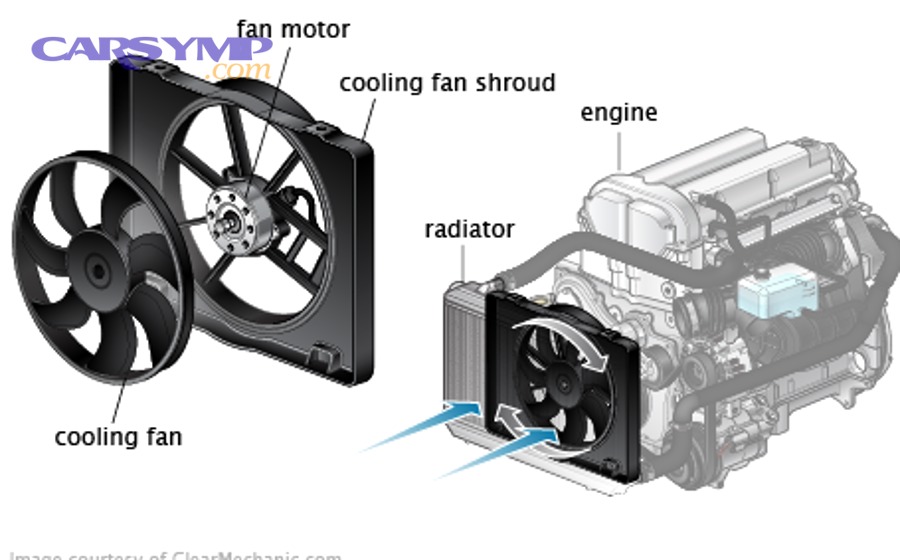
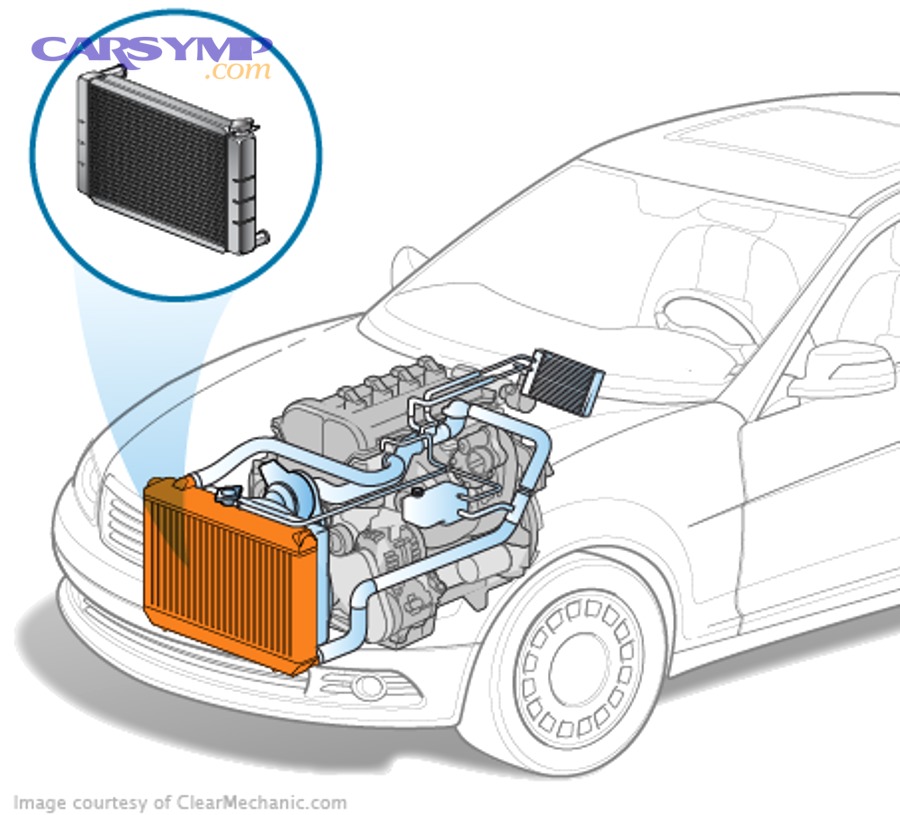
To better understand why this component demands timely attention, consider what happens during stop-and-go driving. When a vehicle is moving at highway speed, air naturally flows over the radiator and cools the engine coolant. However, at low speeds or when the car is idling in traffic, that natural airflow drops to nearly zero. The radiator fan compensates by actively pulling or pushing air through the radiator fins, keeping coolant temperatures within a safe operating range.
What Are the Main Components of a Radiator Fan Assembly?
There are six main components of a radiator fan assembly: the fan motor, fan blades, shroud, relay, fuse, and wiring harness. Each of these parts can fail independently, which is why a proper diagnosis is critical before approving a repair estimate.
The fan motor is the electric heart of the assembly. It converts electrical energy into rotational force that spins the blades. Over time, the motor’s internal brushes wear down or its bearings seize, causing the radiator fan to stop working entirely. The fan blades attach directly to the motor shaft and must remain balanced; a cracked or warped blade creates vibration and can damage the motor prematurely.
The shroud is the plastic housing that surrounds the blades and directs airflow efficiently through the radiator core. Without a properly fitted shroud, air bypasses the radiator, reducing cooling efficiency even when the fan is spinning. The relay acts as an electrical switch that receives a signal from the engine’s temperature sensors or the AC system and sends power to the fan motor. A failed fan relay is actually one of the most common and inexpensive causes of a radiator fan not working. The fan fuse protects the circuit from power surges, and the wiring harness connects all of these components electrically.
Specifically, when a mechanic diagnoses a cooling fan problem, they test each of these components in sequence — starting with the fuse and relay before moving to the motor itself — because replacing the entire assembly when only a $10 fuse has blown would be a costly mistake.
What Happens If You Don’t Repair a Failing Radiator Fan?
Yes, ignoring a failing radiator fan leads to serious and progressively expensive consequences, for at least three reasons: engine overheating, cascading system damage, and complete AC failure.
The most immediate risk is engine overheating. When the fan cannot pull air through the radiator, coolant temperatures climb rapidly — particularly in traffic or during hot weather. Modern engines are built with tight tolerances, and sustained overheating can warp cylinder heads, blow head gaskets, and even crack engine blocks. A head gasket replacement alone can cost $1,500 to $3,000, dwarfing the cost of the fan repair that could have prevented it.
In addition, a non-functional cooling fan causes the AC system to fail. The AC condenser sits directly in front of the radiator and relies on the same fan to dissipate heat. When the fan is not working with AC on, refrigerant pressures spike, the compressor cuts out for self-protection, and the cabin receives only warm air. Prolonged operation under these conditions can damage the AC compressor — another repair that runs $500 to $1,000 or more.
According to data published by RepairPal, the average radiator fan assembly replacement costs between $1,022 and $1,144, while engine damage resulting from prolonged overheating can exceed several thousand dollars. Acting quickly on fan failure symptoms is the most cost-effective decision a vehicle owner can make.
How Much Does Radiator Fan Repair Cost on Average?
Radiator fan repair cost averages between $100 and $1,600 or more, falling into three distinct tiers based on the specific component that has failed: relay or fuse repair (~$100–$150), motor replacement (~$200–$922), and full assembly replacement (~$1,022–$1,144).
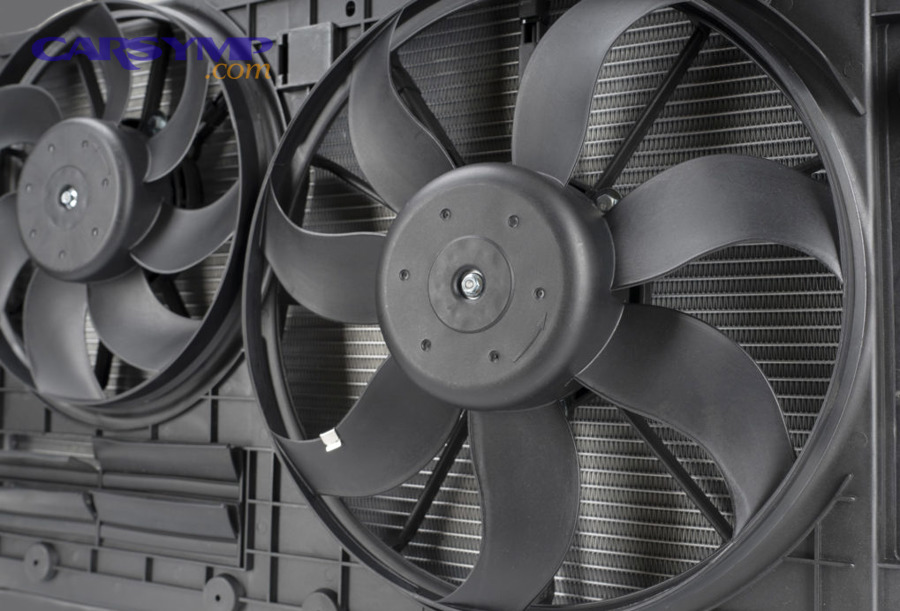
Let’s explore the specific numbers behind each cost tier. The table below summarizes the average cost range by repair type, giving you a quick reference before diving into the details.
| Repair Type | Parts Cost | Labor Cost | Total Estimate |
|---|---|---|---|
| Fan relay or fuse replacement | $10–$30 | $50–$120 | $100–$150 |
| Fan motor replacement | $200–$632 | $198–$291 | $400–$922 |
| Full fan assembly replacement | $465–$850 | $128–$291 | $592–$1,144 |
These ranges reflect national averages across multiple vehicle types. Your actual estimate will depend on your car’s make and model, your geographic location, and whether the shop uses OEM or aftermarket components.
What Is the Average Parts Cost for a Radiator Fan Replacement?
Parts cost for a radiator fan replacement ranges from $20 to $632 or more, depending on whether you need a relay, a standalone motor, or a complete fan assembly with shroud and electronics.
For example, a replacement fan relay typically costs between $10 and $30 — making it the least expensive component in the system. A standalone fan motor, which is the most commonly replaced part when the fan itself has failed, runs between $200 and $632 based on vehicle application. Economy vehicles like a Honda Civic or Toyota Corolla tend toward the lower end of that range, while European models push costs higher.
A complete fan assembly — which includes the motor, blades, shroud, and mounting hardware as a single pre-assembled unit — generally costs between $465 and $850. On certain luxury and performance vehicles, OEM assemblies can exceed $1,000 for parts alone. More specifically, RepairPal estimates place the parts cost for a full radiator fan assembly replacement between $611 and $850 across most popular vehicle models.
What Is the Average Labor Cost for Radiator Fan Repair?
Labor cost for radiator fan repair typically ranges from $50 to $291, depending on the complexity of the job and the shop’s hourly rate.
A simple relay or fan fuse replacement requires minimal labor — often 30 minutes to an hour — putting the labor portion at $50 to $120. Fan motor replacement is more involved, requiring removal of the fan assembly, disassembly to extract the old motor, and reassembly with the new unit. RepairPal estimates labor for a fan motor replacement at $198 to $291, reflecting approximately 1.5 to 2.5 hours of shop time.
Meanwhile, full assembly replacement can actually require less labor than a motor-only swap on certain vehicles, because the technician installs a complete pre-assembled unit rather than disassembling and rebuilding. However, on vehicles where the radiator must be partially drained and removed to access the fan, labor time increases. Most shops charge between $100 and $200 per hour, so a 2.2-hour job at a mid-range shop translates to roughly $220 to $440 in labor charges alone.
What Factors Influence the Total Radiator Fan Repair Cost?
There are five main factors that influence the total radiator fan repair cost: vehicle make and model, repair type, parts sourcing, geographic location, and shop type. Each of these variables can shift the final bill by hundreds of dollars.
To illustrate why estimates vary so widely, consider that the same symptom — a radiator fan not working at idle — could result in a $100 relay fix on one vehicle and a $1,600 assembly replacement on another. The following subsections break down the most impactful cost drivers.
Does Vehicle Make and Model Affect the Repair Price?
Yes, vehicle make and model significantly affect radiator fan repair price, for three primary reasons: parts cost variation, accessibility differences, and engineering complexity.
Economy vehicles such as a Toyota Camry or Honda Accord use standardized, widely available fan assemblies with straightforward mounting configurations. A Camry cooling fan assembly replacement, for instance, typically totals $380 to $570 including parts and labor. The parts themselves often cost $80 to $130, and the job takes roughly 2.2 hours.
On the other hand, luxury and European vehicles carry substantially higher price tags. An Audi A4 fan motor replacement is estimated at $1,514 to $1,637, driven by the cost of OEM parts and the added labor required to navigate a tightly packaged engine bay. Performance vehicles with dual-fan configurations or electronically controlled variable-speed fans also command premium pricing because the technology involved is more complex and the components are more expensive.
How Does the Type of Repair Change the Cost — Relay vs. Motor vs. Full Assembly?
A relay fix wins on cost at ~$100–$150, a motor replacement is mid-range at ~$400–$922, and a full assembly replacement is the most expensive at ~$592–$1,144.
However, the type of repair isn’t a matter of preference — it depends entirely on which component has actually failed. This is why a thorough diagnosis is the most important step in controlling your radiator fan repair cost. A failed fan relay is the most common and least expensive cause of a non-functional cooling fan. Replacing it involves swapping a small electrical component in the fuse box, which takes minutes and costs very little in parts.
When the motor itself has failed — confirmed by supplying direct power to the motor and observing no rotation — a motor replacement or full assembly replacement becomes necessary. On many modern vehicles, the motor is integrated into the assembly and cannot be purchased separately, forcing a complete assembly replacement even when only the motor is at fault. More importantly, asking your mechanic to specify the exact failed component on the estimate — relay versus motor versus assembly — protects you from paying for unnecessary work.
Is There a Cost Difference Between OEM and Aftermarket Parts?
Yes, OEM parts typically cost 30% to 60% more than aftermarket alternatives, but they offer guaranteed fitment and manufacturer-backed quality for three key reasons: precise engineering tolerances, warranty compatibility, and reliable long-term performance.
An OEM fan assembly for a mid-range sedan might cost $500 to $850, while a quality aftermarket equivalent from a reputable brand could run $200 to $450. The savings are substantial, but there are trade-offs. Aftermarket parts vary widely in quality — some perform comparably to OEM, while bargain-priced universal radiator fans may not mount correctly, may produce excessive vibration, or may have shorter service lives.
For example, RepairPal notes that universal cooling fans are available at lower prices but may not be reliable, recommending that vehicle owners purchase the fan made specifically for their vehicle. If you choose aftermarket, look for parts from established automotive brands with positive reviews and verify that the part number matches your vehicle’s specific application.
What Are the Symptoms of a Failing Radiator Fan?
There are five primary radiator fan failure symptoms: engine overheating at idle, AC blowing warm air, audible fan noise or vibration, the temperature warning light illuminating, and the fan visibly not spinning when it should be running.
Recognizing these signs early is critical because the difference between a $100 relay fix and a $3,000 engine repair often comes down to how quickly you respond. Below are the most common indicators that your cooling fan needs attention.
Can Engine Overheating Be a Sign of Radiator Fan Failure?
Yes, engine overheating — especially at idle or in slow traffic — is the single most reliable sign of radiator fan failure, for one fundamental reason: the fan is the only active cooling mechanism when the vehicle is not moving fast enough for natural airflow.
When you are driving at highway speed, air passes through the radiator grille and cools the engine coolant without any help from the fan. But the moment you slow down, stop at a red light, or sit in congested traffic, that airflow drops dramatically. If the radiator fan is not working, coolant temperature rises quickly. You will notice the temperature gauge climbing toward the red zone, and if the situation persists, the engine may begin to misfire, lose power, or trigger a dashboard warning.
Specifically, this symptom is most noticeable during summer months or in stop-and-go city driving, where the fan cycles on and off frequently. If your engine temperature remains stable at highway speeds but climbs when you slow down, the cooling fan should be the first component your mechanic investigates.
What Other Warning Signs Indicate a Bad Radiator Fan?
Besides overheating, there are four additional warning signs that indicate a bad radiator fan: unusual noise or vibration from the fan area, AC failure at low speeds, dashboard temperature warning lights, and the fan visibly not spinning.
A fan motor with worn bearings often produces a grinding, whirring, or clicking noise that originates from the front of the engine bay. This noise may be intermittent at first — occurring only when the fan kicks on — and progressively worsens as the bearings deteriorate further. If you hear this sound, the motor is likely nearing complete failure.
When the fan is not working with AC on, the AC condenser cannot shed heat effectively, causing the system to cycle off or blow warm air. This is a particularly telling symptom because the AC system commands the fan to run whenever the compressor is active, regardless of engine temperature. If the AC works fine at highway speed but fails in a parking lot, the fan is the probable culprit.
The dashboard temperature warning light is a late-stage indicator — by the time it illuminates, the engine is already at a dangerously high temperature. Finally, a simple visual inspection with the engine running and warm can confirm whether the fan blades are spinning. If the engine is at operating temperature, the AC is on, and the fan is stationary, you have confirmed a fan failure that requires immediate diagnosis of the fan fuse, relay, wiring, or motor.
Should You DIY or Hire a Mechanic for Radiator Fan Repair?
DIY wins on cost savings of $50 to $291 in labor, while hiring a professional mechanic is best for accurate diagnosis, complex vehicles, and situations where overheating has already occurred.
The right choice depends on your mechanical experience, the tools you have available, and the specific repair required. For a straightforward relay or fuse swap, even a novice can handle the job. For a full assembly replacement on a vehicle that requires radiator removal, professional service is the safer and more practical option.
How Much Can You Save by Replacing a Radiator Fan Yourself?
A DIY radiator fan replacement eliminates $50 to $291 in labor costs, which represents 15% to 40% of the total repair bill depending on the scope of work.
The most accessible DIY repair is replacing a blown fan fuse or a faulty relay. Both components are located in the vehicle’s fuse box, require no special tools, and can be swapped in under 30 minutes. The parts cost under $30, meaning the entire repair stays below $30 out of pocket — compared to $100 to $150 at a shop when you include the diagnostic fee.
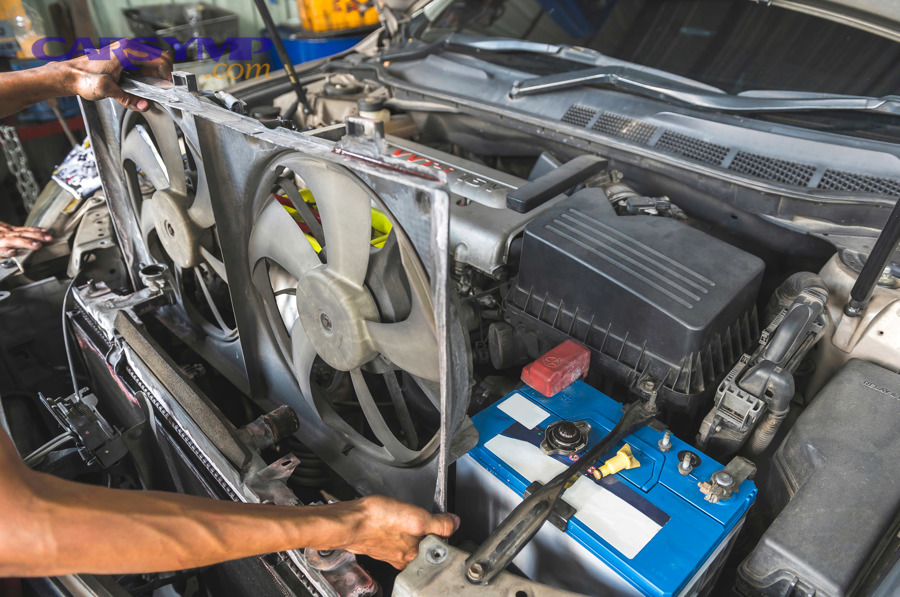
Replacing the fan assembly itself is a moderately difficult DIY project. On most vehicles, the process involves disconnecting the battery, unplugging the fan electrical connector, removing the mounting bolts or clips, and lifting the old assembly out. Installation is the reverse. The job typically takes 1 to 2 hours for someone with basic mechanical skills and standard hand tools. However, a DIY approach requires you to accurately diagnose the problem first, which means understanding basic electrical circuits — using a multimeter to test for power at the fan connector and verifying relay function.
When Should You Hire a Professional Mechanic Instead?
Yes, you should hire a professional mechanic when any of these three conditions apply: the diagnosis is uncertain, the vehicle requires radiator removal for fan access, or the engine has already overheated.
If the cooling fan is not spinning but you are unsure whether the problem is the fan fuse, relay, wiring, or motor, a professional diagnostic is worth the $80 to $150 fee. Misdiagnosing the issue and replacing the wrong component wastes both time and money. Experienced technicians follow a systematic process — checking fuses first, then relays, then wiring continuity, and finally the motor — to pinpoint the exact failure before quoting any parts.
On vehicles where the fan assembly sits between the radiator and the engine and cannot be removed without draining coolant and pulling the radiator forward, professional service is strongly recommended. This applies to many front-wheel-drive vehicles and compact engine bays. The risk of damaging coolant hoses, radiator fins, or electrical connectors during a cramped DIY attempt outweighs the labor savings.
Besides, if the engine has already overheated before the fan was repaired, a responsible shop will perform additional checks — coolant pressure testing, thermostat function verification, and a visual head gasket inspection — to ensure no secondary damage occurred. These diagnostics require specialized equipment that most home mechanics do not own.
What Else Should You Know Before Paying for Radiator Fan Repair?
Beyond the core cost estimate, there are four supplementary considerations that can affect your total spend and long-term vehicle health: mobile mechanic pricing, single versus dual-fan cost differences, potential add-on repairs after overheating, and preventive maintenance strategies.
These topics expand on the primary cost question and address secondary queries that commonly arise when vehicle owners research radiator fan repair.
Is a Mobile Mechanic Cheaper Than a Repair Shop for Fan Replacement?
A mobile mechanic often quotes $200 to $300 less than a traditional brick-and-mortar repair shop for radiator fan replacement, primarily because mobile services carry lower overhead costs — no building lease, no front desk staff, and no waiting room to maintain.
However, this cost advantage comes with trade-offs. Mobile mechanics may have limited diagnostic equipment compared to a fully equipped shop, which can be a disadvantage when the root cause of the fan failure is ambiguous. For straightforward replacements where the diagnosis is already confirmed, a mobile mechanic offers genuine savings and the added convenience of at-home or at-office service.
On the other hand, if the vehicle requires extensive disassembly, coolant system work, or post-repair testing on a dynamometer, a traditional shop with a full bay and lift is the better environment. When comparing quotes, ensure both the mobile service and the shop are itemizing parts, labor hours, labor rate, and diagnostic charges separately so you can make an apples-to-apples comparison.
What Is the Cost Difference Between Single-Fan and Dual-Fan Assembly Replacement?
A dual-fan assembly replacement costs 40% to 70% more than a single-fan replacement, driven by higher parts prices for the larger assembly and increased labor time for removal and installation.
A single-fan assembly for a typical sedan might cost $300 to $600 in parts, while a dual-fan assembly — common on vehicles with larger engines, towing packages, or performance cooling systems — can run $500 to $1,000 or more. The dual-fan shroud is wider, heavier, and often integrates additional mounting brackets and electronic connectors that add complexity to the job.
Labor time also increases because dual-fan assemblies are physically larger and may require removal of additional engine bay components — such as the air intake duct, coolant overflow tank, or upper radiator support — to gain clearance for extraction. If your vehicle has a dual-fan setup, expect the total repair bill to land in the upper range of published estimates.
What Additional Repairs Might Be Needed After Radiator Fan Failure?
If the engine overheated before the fan was repaired, additional diagnostic and repair costs can add $200 to $1,000 or more to the total bill, depending on the severity of the overheating event.
The most common add-on service is a cooling system pressure test, which verifies that no coolant leaks developed during the overheating episode. Overheating causes rubber hoses, gaskets, and seals to expand beyond their design limits, and even a brief period of extreme temperature can create a slow leak that worsens over time. A pressure test typically costs $50 to $100.
The thermostat may also require replacement if it was damaged by excessive heat. A stuck thermostat — either open or closed — disrupts the coolant flow pattern and can cause recurring overheating even after the fan is repaired. Thermostat replacement adds approximately $150 to $300 to the repair bill.
In the most severe cases, a head gasket inspection is warranted. Combustion gases leaking into the cooling system through a compromised head gasket cause persistent overheating, white exhaust smoke, and coolant contamination. Head gasket replacement is a major repair costing $1,500 to $3,000, reinforcing why prompt attention to radiator fan failure symptoms is so financially important.
How Can Regular Maintenance Prevent Costly Radiator Fan Repairs?
Regular preventive maintenance reduces the likelihood of unexpected radiator fan failure through four key practices: visual inspections, debris removal, electrical connection checks, and coolant system servicing.
Inspecting the fan blades and motor housing during routine oil changes or tire rotations takes only a few minutes but can reveal early signs of wear — cracked blades, oil seepage from the motor, or corroded electrical connectors. Catching these issues before complete failure means you can plan and budget for the repair rather than facing an emergency roadside situation.
Keeping the radiator and fan area free of debris — leaves, plastic bags, road grime — is equally important. A dirty radiator surface restricts airflow even when the fan is operating correctly, forcing the motor to work harder and shortening its lifespan. A simple garden hose rinse of the radiator front face during seasonal maintenance goes a long way.
For vehicles with mechanical fans driven by a belt, checking belt tension and condition prevents slippage that reduces fan speed. For electric fans, periodically verifying that wiring connections are tight and corrosion-free ensures reliable power delivery to the motor. Combining these habits with regular coolant flushes at manufacturer-recommended intervals — typically every 30,000 to 50,000 miles — keeps the entire cooling system operating efficiently and extends the service life of every component, including the radiator fan.