


If your car overheats after a repair, the right response is to stop guessing and run a structured cooling system checklist. Post-repair overheating usually points to one of three realities: the original cause was not fully fixed, the recent repair introduced a new problem, or air, coolant, or pressure is still not behaving normally inside the system.
The first layer of the problem is practical, not theoretical. Car owners need to know what to check first, what symptoms matter most, and how to separate a simple issue such as low coolant from a more serious issue such as failed circulation, fan control trouble, or combustion gas entering the cooling system.
The second layer is diagnostic. A vehicle can still overheat even after a new thermostat, radiator, or pump has been installed, because cooling system faults often overlap. One repair may solve one failure point while another weak component remains in place and continues to create heat, pressure loss, or poor coolant flow.
The third layer is decision-making. You need to know when home checks are enough, when a follow-up inspection is necessary, and when driving the car again becomes a risk. Introduce a new idea: the most reliable way to answer all of those questions is to work through the checklist in the same order a careful technician would.
What should you check first when a car overheats after a repair?
Start with five first checks: the gauge, warning lights, visible leaks, coolant level, and fan activity, because those checks reveal whether the engine is unsafe to drive, losing coolant, or failing to shed heat.
To better understand the issue, begin with observation before touching parts. A post-repair overheating event can mislead drivers because the repair itself creates confidence. In reality, the temperature pattern matters more than the repair invoice. If the gauge climbs rapidly, steam appears, or the heater suddenly blows cold air, you are dealing with an active cooling failure rather than a harmless fluctuation.
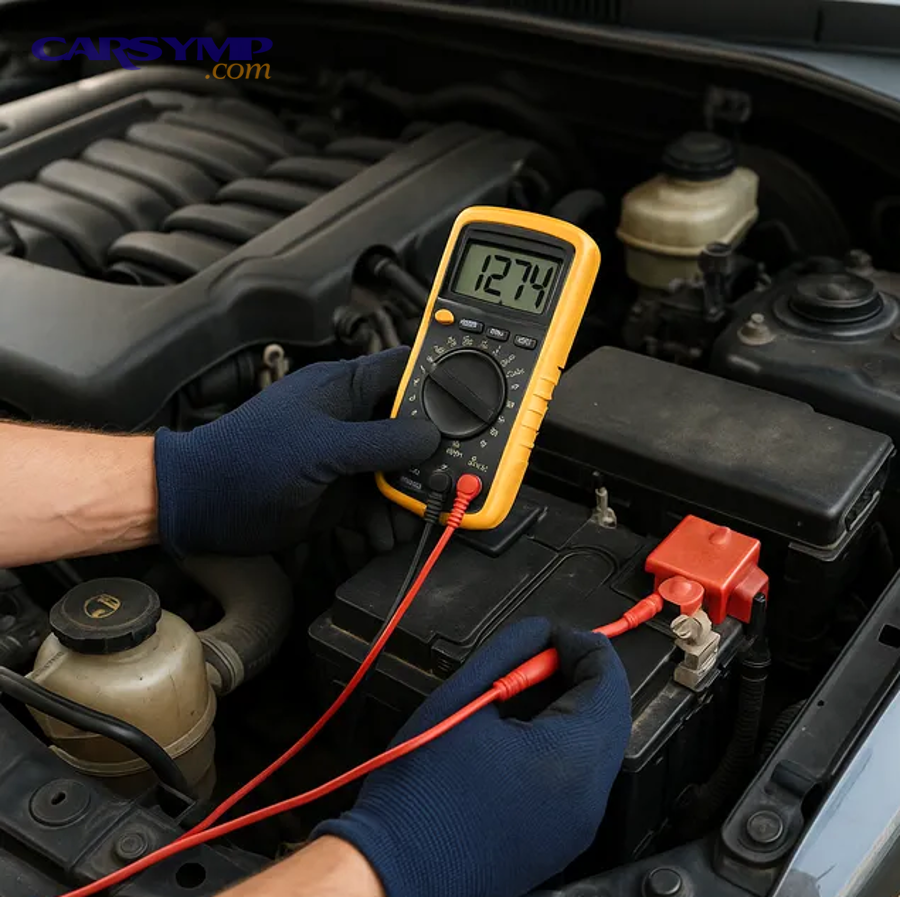
Is it safe to keep driving if the engine overheats after a repair?
No, it is not safe to keep driving when the engine overheats after a repair because high temperature can damage the head gasket, warp metal parts, and turn a small cooling problem into major engine damage.
Specifically, the issue becomes more dangerous after a recent repair because drivers often assume the new part will recover if they keep moving. That assumption is risky. If the temperature needle reaches the hot zone, if a temperature warning light appears, or if steam comes from the hood, the safe move is to pull over as soon as traffic conditions allow, shut the engine off, and let the system cool before checking anything under pressure. AAA advises drivers to pull over when the gauge reads hot or steam appears, and warns that removing a radiator cap before the engine cools can cause severe burns.
If you cannot pull over immediately, reduce engine load. Turn off the air conditioning and turn the heater on high only long enough to reach a safe stopping point. That tactic can remove some heat from the engine, but it is a short-term survival move, not a repair. It should never be treated as permission to continue normal driving.
A quick safety filter helps:
- Stop immediately if you see steam, smell hot coolant, or notice power loss.
- Do not open the cooling system when hot.
- Do not keep “testing” the repair by driving farther.
- Treat repeated overheating after any repair as unresolved until proven otherwise.
What is a post-repair overheating checklist?
A post-repair overheating checklist is a step-by-step inspection process used to confirm whether a repair restored normal cooling system operation, fluid level, circulation, pressure control, and temperature stability.
More specifically, the checklist exists because overheating is rarely just one symptom. It is a pattern made up of temperature behavior, coolant behavior, pressure behavior, airflow, and component response. A useful checklist moves from visible and low-risk checks to higher-skill diagnosis. That order helps you avoid replacing good parts, missing simple errors, or driving a car that is already telling you the repair did not solve the root cause.
At the owner level, the checklist should answer these questions in sequence:
- Is the engine truly overheating or is the gauge reading misleading?
- Is coolant low, leaking, or contaminated?
- Are the radiator fans working when they should?
- Is the system circulating coolant through the radiator and heater core?
- Did the recent repair create trapped air, a loose connection, or a sealing problem?
- Is the car showing signs of a deeper internal engine issue?
That structure matters because cooling systems are interconnected. The Car Care Council notes that cooling system failure is a leading cause of vehicle breakdowns and recommends checking coolant level frequently and replacing coolant according to the owner’s manual.
Which parts of the cooling system should be inspected after a repair?
There are nine main parts to inspect after a repair: coolant, reservoir, radiator, hoses, clamps, thermostat area, water pump area, drive belt system, and cooling fans, because those parts control level, pressure, circulation, and heat removal.
Next, inspect the system as a chain rather than as isolated pieces. A car can overheat even when one new component is working, because the cooling system only succeeds when all linked parts cooperate. If one clamp seeps, one hose collapses, one fan stays off, or one bleed step was skipped, the engine can still run hot.
Before diving into the part-by-part checks, remember one practical point. If the recent job involved a water pump replacement, do not inspect only the new pump housing. Inspect the gasket surface, nearby hoses, belt alignment, pulley wobble, and coolant refill result. Many post-repair overheating complaints come from what happened around the new part, not from the part itself.
What cooling system components most often cause overheating after repair?
There are seven common post-repair trouble groups: low coolant, trapped air, external leaks, thermostat faults, fan-control faults, circulation faults, and hose or belt issues.
For example, low coolant is still one of the most common reasons a repair appears to “fail.” A system that was not fully refilled, not fully bled, or not rechecked after a heat cycle can run normally at first and then overheat once an air pocket moves or the coolant level drops. Trapped air often shows up as intermittent spikes, poor cabin heat, gurgling noises, or sudden swings between normal and hot.
External leaks may appear at:
- hose ends
- clamp joints
- thermostat housing edges
- radiator seams
- the reservoir cap
- the water pump weep area
- drain plugs or bleed screws disturbed during service
Thermostat faults can come from a defective new thermostat, the wrong temperature rating, reversed installation on applicable designs, or a housing that does not seal correctly. Fan faults can come from an unplugged connector, failed relay, temperature sensor problem, or fan motor weakness that only appears at idle.
Circulation faults deserve special attention after pump-related work. A slipping belt, damaged impeller, loose pulley, or unresolved blockage in the radiator can all mimic one another. This is also where OEM vs aftermarket water pump quality can become relevant. A low-quality replacement pump may fit physically but perform differently in bearing durability, impeller design, or sealing consistency than a well-made OE-equivalent unit.
Which checks can car owners do at home and which need a mechanic?
Car owners can safely do visual checks, level checks, basic warm-up observation, and fan/heater monitoring at home, while pressure testing, combustion-gas testing, scan-tool diagnosis, and some circulation tests are better left to a mechanic.
However, the boundary matters. Home checks work well for confirming symptoms and finding obvious errors. Professional checks work best for proving root cause. That distinction saves time and money.
Checks most owners can do safely on a cold engine:
- inspect reservoir level and coolant condition
- look for wet spots, crusty residue, or coolant smell
- verify hose connections and clamp position
- watch the temperature gauge during warm-up
- listen for fans turning on
- compare cabin heater performance at idle and while driving
- inspect the belt for looseness, glazing, or obvious damage
Checks best left to a professional:
- cooling system pressure test
- pressure cap test
- dye leak tracing
- scan-tool fan command and temperature sensor reading
- combustion-gas or block test
- infrared temperature analysis across radiator sections
- deeper diagnosis after repeat overheating
ASE task outlines for cooling system service include pressure tests, coolant testing, radiator and heater core inspection, water pump inspection, and flush-and-refill procedures with the correct coolant. That supports a clear boundary: owners can observe, but proof-level testing belongs to the proper tools.
Can overheating continue even if a new part was installed correctly?
Yes, overheating can continue even when a new part was installed correctly because the original diagnosis may have been incomplete, a second failure may still exist, or the system may still contain air, contamination, or poor flow.
Then, reconnect that answer to the main problem: a fresh repair is not the same as a completed diagnosis. Cars overheat because the cooling system works as a network. Replacing one weak link does not guarantee the rest of the chain is strong enough to hold temperature.
This is why a car may still overheat after a new thermostat, radiator, hose set, or pump. A vehicle that needed a thermostat may also have a weak fan motor. A vehicle that got a new radiator may still have a damaged cap or combustion gases entering the coolant. A vehicle that just had water pump replacement work done may still have a partially clogged radiator or trapped air that was never bled out.
Does a new water pump, thermostat, or radiator guarantee the overheating problem is fixed?
No, a new water pump, thermostat, or radiator does not guarantee the problem is fixed because coolant flow, airflow, pressure retention, and engine condition must all be correct at the same time.
More specifically, the cooling system has four jobs: move coolant, hold pressure, release heat, and maintain correct temperature control. A new part may help only one of those jobs. A new radiator improves heat rejection, but it does not solve fan-control faults. A new thermostat improves temperature regulation, but it does not solve low coolant. A new pump improves circulation, but it does not solve a leaking cap, a cracked hose neck, or a head gasket problem.
This is also where owners underestimate the effect of fill procedure. After a repair, the system may need a careful bleed process and a follow-up level check after one or two heat cycles. If that step is incomplete, the car can seem fixed at pickup and overheat later in traffic.
When the repair involved contamination, rust, or old coolant residue, a Cooling system flush after pump replacement may also matter. If debris remains in the radiator, heater core, or passages, the new part works inside an unhealthy system. In that situation, the repair is mechanically correct but operationally incomplete.
What is the difference between an incorrect repair and an incomplete repair?
An incorrect repair means the recent work introduced or failed to correct a mechanical error, while an incomplete repair means one failed part was addressed but another root cause was left behind.
That difference changes how you inspect the car. An incorrect repair often creates immediate signs: coolant leak at a fresh connection, missing fan plug, misrouted belt, poor gasket seal, loose clamp, pinched hose, or trapped air due to improper bleeding. An incomplete repair usually creates persistent or recurring signs: the original overheating pattern returns, but without obvious fresh leakage or installation clues.
Examples of incorrect repair:
- thermostat housing not sealed properly
- fan connector left unplugged
- wrong coolant mixture used
- bleed procedure skipped
- hose clamp not tightened fully
- belt tension incorrect after reassembly
Examples of incomplete repair:
- thermostat replaced but radiator flow still restricted
- radiator replaced but fan relay still failing
- pump replaced but head gasket issue unresolved
- coolant topped off but cap unable to hold pressure
- one leaking hose replaced while another weak hose bursts later
That distinction is useful for owners because it directs the next step. Incorrect repair often justifies reinspection of the recent work first. Incomplete repair usually demands broader diagnosis beyond the repaired area.
What symptoms suggest the repair was done incorrectly?
The strongest signs of an incorrect repair are repeat coolant loss, sudden temperature spikes, poor cabin heat, visible leaks at freshly touched parts, fan inactivity, unusual noises, and overheating patterns that started immediately after service.
In addition, timing matters. If the car did not overheat this way before the repair, or if the symptom changed sharply right after service, suspect a post-repair issue before assuming a brand-new unrelated failure. That does not prove technician error, but it does justify careful inspection around the area that was disturbed.
Which post-repair signs point to trapped air, leaks, or wrong installation?
There are three useful symptom groups: trapped-air signs, leak signs, and wrong-installation signs, and each group points to a different next check.
First, trapped-air signs often include:
- temperature rising and falling instead of staying stable
- heater blowing cold or inconsistent air
- gurgling behind the dash or near the reservoir
- overheating soon after startup or after the thermostat first opens
- reservoir level changing sharply after cooldown
Those signs matter because air pockets interrupt circulation and sensor accuracy. They can also prevent a thermostat from seeing proper coolant temperature, which delays opening and causes false impressions.
Second, leak signs often include:
- sweet coolant smell after driving
- wet residue around hose ends or housing seams
- dried white, pink, orange, or green crust on connections
- coolant spots under the car after parking
- steadily falling reservoir level
Third, wrong-installation signs often include:
- overheating immediately after part replacement
- fan not operating after nearby work
- belt squeal or pulley wobble after front-engine service
- hose kink or collapsed section after reassembly
- no cabin heat after coolant service
- fresh seepage exactly where the recent repair occurred
These clues are especially important when owners consider DIY water pump replacement risks. A do-it-yourself job can succeed, but the risks increase when belt routing, torque specs, sealing surfaces, coolant bleeding, or part quality are handled casually. The most expensive mistakes are often not dramatic. They are small setup errors that only reveal themselves under heat and pressure.
Is fluctuating temperature after a repair normal or a warning sign?
Yes, brief mild fluctuation can be normal after a repair, but repeated spikes, large swings, loss of heater output, or any move into the hot range is a warning sign.
However, context decides the meaning. A small movement during the first warm-up can happen as coolant begins circulating and the thermostat opens. That is very different from a needle that surges high at idle, drops on the highway, then spikes again in traffic. Repeating swings usually point to trapped air, inconsistent fan response, low coolant, or circulation trouble.
Use this simple rule. Normal fluctuation is small, brief, and self-correcting. Warning fluctuation is repeated, growing, or tied to bad secondary symptoms such as steam, gurgling, or no heat from the vents.
AAA notes that the temperature indicator should normally stay near the middle of the gauge and that a spike to roughly the three-quarter mark or above signals current overheating rather than a harmless variation.
How do you verify that coolant is circulating properly after repair?
You verify coolant circulation by checking warm-up behavior, heater output, hose temperature change, fan cycling, and reservoir activity, because proper circulation creates a predictable temperature sequence instead of random spikes or dead spots.
To illustrate, think of circulation as the proof that the whole repair worked. A full reservoir alone does not prove flow. A new part alone does not prove flow. You need to watch the system move from cold start to operating temperature in a stable way.
What does proper coolant circulation look like during warm-up and idling?
Proper coolant circulation looks like a steady climb to normal temperature, increasing heater warmth, thermostat opening at the expected point, fan activation when needed, and stable gauge behavior afterward.
More specifically, begin with a completely cold engine. Start the car and let it idle. The gauge should rise gradually rather than jump. The cabin heater should begin producing warmer air as the engine warms. Once the thermostat opens, you may feel a temperature change across the radiator hoses, and on many vehicles the radiator fan will cycle on and off later as needed, especially at idle or after warm-up.
Signs that circulation is likely healthy:
- temperature reaches normal range without overshooting
- heater becomes consistently warm
- no violent bubbling into the reservoir
- fans cycle rather than stay dead
- no sudden spike when idling
- coolant level stabilizes after proper bleed and cooldown
Signs that circulation may be poor:
- upper hose gets very hot while lower hose stays cool too long
- heater stays weak even though the gauge climbs
- overflow bottle bubbles excessively
- temperature climbs fast at idle and drops only with speed
- repeated overheating returns after refill
If the recent repair included a pump, thermostat, or hose change, circulation checks are essential before blaming the new part. In many cases, the issue is not failed hardware but air remaining in the system or a blocked path that the new hardware cannot overcome.
How can you compare signs of trapped air, thermostat failure, and fan failure?
Trapped air usually causes erratic spikes and poor heater output, thermostat failure often causes abnormal warm-up or no proper opening behavior, and fan failure most often shows up as overheating at idle or in traffic.
Meanwhile, each fault has a recognizable pattern. Trapped air is often inconsistent. One drive feels fine, the next runs hot. The heater changes from warm to cool. The reservoir level changes after cooldown. Thermostat faults are usually more repeatable. A stuck-closed thermostat often leads to quick overheating with poor radiator flow. A stuck-open thermostat more often causes slow warm-up and weak heat, not classic severe overheating. Fan failure is strongly tied to vehicle speed. The car may run acceptably on the highway because airflow increases, then overheat in stop-and-go traffic because the fan is not pulling air through the radiator.
A simple comparison framework:
- Hot at idle, better while moving: suspect fan or airflow problem.
- Erratic spikes plus gurgling and weak heat: suspect trapped air.
- Rapid rise from cold and poor hose temperature progression: suspect thermostat or severe circulation issue.
- Persistent heat under all conditions with pressure buildup or coolant loss: suspect deeper system or engine problem.
ASE service guidance emphasizes testing coolant condition, checking pressure behavior, inspecting radiator and heater core, and evaluating water pump and thermostat function rather than assuming one symptom always equals one part.
When should you stop troubleshooting and get professional help?
You should stop troubleshooting when overheating repeats, coolant disappears without an obvious cause, the system builds abnormal pressure, the heater stops working, or the engine shows signs of internal damage.
More importantly, stop when the next step requires proof tools rather than observation. That point usually arrives sooner than owners expect. Repeated overheating is not a puzzle to “monitor for a few more days.” It is a warning that the engine is operating outside safe temperature control.
Which symptoms mean the engine may have a serious problem beyond the recent repair?
There are six major danger signs: repeated overheating, coolant contamination, white exhaust smoke, misfire, constant pressure buildup, and coolant loss with no visible external leak.
Specifically, these signs suggest the problem may extend beyond a simple hose, cap, or fan issue:
- reservoir or radiator smells like exhaust gas
- coolant appears oily or sludgy
- oil shows milky contamination
- upper hose goes rock-hard very quickly from excess pressure
- misfire appears with overheating
- white smoke continues from the exhaust after warm-up
- coolant keeps vanishing with no drips under the car
Those symptoms raise concern for internal leakage, such as combustion gases entering the cooling system or coolant entering cylinders. At that stage, continued DIY trial-and-error becomes expensive. Professional testing is the right next move.
Should you tow the car instead of driving it again?
Yes, you should tow the car instead of driving it again when overheating persists, steam appears, coolant loss continues, or the engine shows warning signs beyond a simple low-level correction.
Thus, use the tow decision as protection, not as defeat. A tow is cheaper than warped cylinder heads, a damaged gasket, or a seized engine. If the gauge hit hot recently, if the repair did not restore stable temperature, or if you had to keep adding coolant, assume the vehicle has not earned road trust yet.
AAA recommends pulling over, shutting the engine off, and seeking help rather than continuing to drive an overheated vehicle. The same guidance warns drivers to let the system cool fully before checking coolant or opening the cap.
Why does a car overheat only at idle, at highway speed, or under load after a repair?
A car overheats at idle, highway speed, or under load for different reasons because each condition stresses a different part of the cooling system: airflow at idle, circulation and heat rejection at speed, and total thermal demand under load.
Below, that pattern-based thinking expands the checklist into deeper diagnosis. This is where symptom context improves accuracy. Instead of asking only “Is it overheating?” ask “When exactly is it overheating?” The answer often narrows the fault faster than another random parts swap.
What does overheating at idle usually mean compared with overheating at highway speed?
Overheating at idle usually points to a fan or airflow issue, while overheating at highway speed more often points to circulation weakness, restriction, pressure loss, or an engine load-related problem.
At idle, the car depends heavily on electric fans because vehicle speed is not pushing much air through the radiator. If the fan fails to come on, airflow drops and heat stacks up quickly. At highway speed, natural airflow improves, so a vehicle that still overheats at speed may have poor coolant circulation, a partially blocked radiator, incorrect coolant mixture, pressure loss, or a deeper internal problem.
Under load, such as climbing grades, towing, or hard acceleration, the system must carry away more heat. Weaknesses that stay hidden in light driving often show up here first. That is why some cars seem “fixed” on short local drives but overheat again on the freeway.
Can the wrong coolant type or mixture cause overheating after a repair?
Yes, the wrong coolant type or mixture can contribute to overheating because coolant chemistry affects heat transfer, corrosion control, seal compatibility, and boiling protection.
In addition, wrong coolant can create slower problems that show up after a repair. Mixing incompatible types may lead to sludge, scaling, or reduced protection. Too much water weakens boil protection and corrosion resistance. Too much concentrate can also reduce ideal heat transfer performance. That is why refill quality matters just as much as refill quantity.
This is one more reason a Cooling system flush after pump replacement can be important when old coolant is rusty, contaminated, or mixed. A healthy new component installed into contaminated coolant is starting its life in poor conditions.
The Car Care Council advises replacing coolant according to the owner’s manual, and ASE cooling-system service references emphasize refilling with the recommended coolant and bleeding air as required.
What rare problems can mimic a failed repair even when the new part works?
There are four less common but important mimics: combustion gas intrusion, restricted radiator core, sensor or control logic faults, and load-specific engine problems.
For example, a head gasket leak can force hot gases into the cooling system, creating pressure spikes and pushing coolant out even when the radiator, thermostat, and pump are new. A partially restricted radiator can look fine from the outside but fail to reject heat evenly. A bad sensor or control module issue can delay fan activation or misreport temperature. Some vehicles also reveal overheating only under specific thermal loads, especially after partial repair strategies that fixed one obvious fault but not the deeper cause.
These rare causes matter most when:
- the obvious checks are normal
- new parts keep getting blamed
- overheating repeats in one driving condition only
- pressure behavior seems abnormal for the temperature
- the symptom changed but never disappeared
How does post-repair overheating compare with overheating before the repair?
Post-repair overheating is more suspicious than pre-repair overheating because the symptom should improve, stabilize, or disappear after correct service; if it changes pattern, timing, or severity, that change itself becomes diagnostic evidence.
To sum up, compare the old and new symptom carefully. If the vehicle used to overheat only in traffic but now overheats right after startup, the new pattern suggests a different or newly introduced issue. If it used to lose coolant slowly and now loses it rapidly at a fresh connection, suspect repair-area sealing. If it used to run hot under heavy load but now only spikes briefly and then settles, trapped air may be more likely than a totally failed part.
That comparison also helps you speak clearly with a mechanic. Instead of saying, “It’s still overheating,” you can say, “Before the repair it overheated at idle after twenty minutes, but now it spikes in ten minutes, the heater goes cold, and the reservoir level drops after cooldown.” That level of detail shortens diagnosis and reduces the chance of unnecessary replacement.
In short, the best post-repair overheating checklist does not treat the repair as proof of success. It treats the repair as the starting point for verification. Check safety first, then level, leaks, airflow, circulation, and symptom pattern. If the car still runs hot after those checks, stop driving and move from observation to professional diagnosis before a cooling problem turns into engine damage.