


Estimating a water pump replacement cost starts with a practical answer: most car owners pay a mid-to-high three-figure amount, but the final number depends more on labor access, vehicle design, and part choice than on the pump alone. In current public estimators, average totals commonly land around the upper hundreds, while easier jobs can stay lower and tightly packaged engines can climb well past the average. ([repairpal.com](https://repairpal.com/estimator/water-pump-replacement-cost?))
The next layer of search intent is understanding what drives that estimate. Labor often changes the bill more than expected because a simple external pump and a timing-belt-driven pump do not require the same amount of disassembly. That is why two cars with similar pump prices can produce very different invoices. ([kbb.com](https://www.kbb.com/water-pump-replacement/?))
Another major concern is comparison. Car owners usually want to know whether an independent shop is cheaper than a dealership, whether OEM parts justify the extra cost, and whether it makes financial sense to combine the job with timing belt service. Those comparison questions matter because labor overlap can turn a seemingly expensive bundled repair into the better value. ([consumeraffairs.com](https://www.consumeraffairs.com/automotive/water-pump-replacement-cost.html?))
Cost alone is not enough without urgency. A leaking or failing pump can turn a planned repair into an immediate one once coolant loss, noise, or overheating appear. Next, the main content breaks down average price, cost factors, labor, parts, repair options, urgency, and quote fairness in the same order a real owner would use to make a decision. ([static.nhtsa.gov](https://static.nhtsa.gov/odi/tsbs/2020/MC-10183188-9999.pdf?))
What is the average water pump replacement cost for car owners?
A water pump replacement cost for car owners usually falls in the upper hundreds, with many estimates clustering around roughly $400 to $1,100 depending on vehicle complexity, labor access, and part quality.
To better understand that estimate, it helps to separate the total into its basic components before looking at model-specific differences.
Is water pump replacement usually an expensive repair?
Yes, water pump replacement is usually a moderately expensive repair because labor can be substantial, coolant service is often required, and some engines place the pump behind other major components.
Specifically, the job stops being “just a part swap” once access becomes difficult. On an easy-to-reach engine, the pump may sit near the front of the motor and come off with limited disassembly. On a more complex engine, the technician may need to remove belts, pulleys, covers, mounts, or timing components before the old pump can even be reached. That extra access time is what makes one quote seem reasonable and another surprisingly high.
For car owners, the practical takeaway is simple: the water pump itself is only part of the cost story. A cheap part does not guarantee a cheap invoice, and a higher quote does not automatically mean overcharging. In many cases, the labor burden explains the spread. Kelley Blue Book notes that water pump replacement commonly runs about $400 to $800 depending on vehicle and difficulty, while RepairPal currently estimates an average total between $857 and $1,106 across vehicles. ([kbb.com](https://www.kbb.com/water-pump-replacement/?))
What does a water pump replacement cost estimate usually include?
A water pump replacement cost estimate usually includes the pump, sealing components, coolant, labor, and sometimes small shop charges, but it may not include every related cooling-system item.
More specifically, a complete estimate often lists:
- The replacement pump
- Gasket or O-ring seals
- Coolant refill or coolant service
- Labor time
- Possible shop supplies or disposal fees
- Taxes, depending on how the quote is presented
This distinction matters because an estimate, a quote, and a final invoice are not always identical. An online estimate is a range based on typical jobs. A shop quote is more specific to the vehicle in front of them. A final invoice can grow if the technician finds a leaking thermostat housing, worn belt, seized pulley, or contamination in the cooling system after teardown. That is why the most useful estimate is the one that clearly tells you what is included and what would trigger extra charges.
According to RepairPal, current averages exclude taxes, fees, location adjustments, and related repairs, which is exactly why two water pump replacement estimates can differ even when they appear to describe the same service. ([repairpal.com](https://repairpal.com/estimator/water-pump-replacement-cost?))
What factors affect a water pump replacement cost estimate?
The main factors that affect a water pump replacement cost estimate are labor access, vehicle design, part type, local labor rates, and whether related service is done at the same time.
However, those factors do not carry equal weight, so it helps to separate the biggest cost drivers from the smaller ones.
Which cost factors raise or lower the price the most?
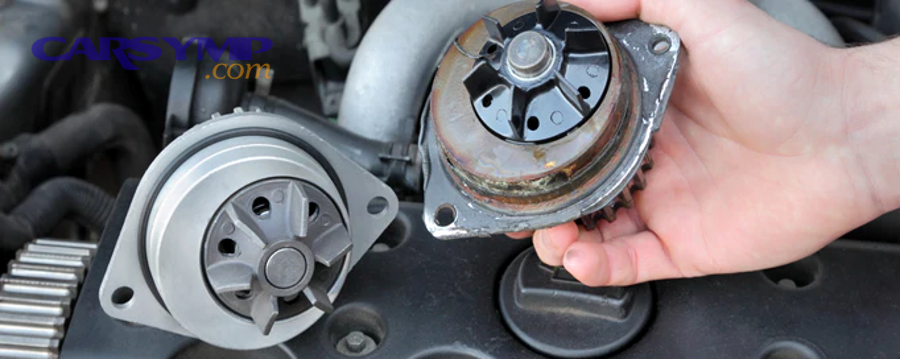
There are five main cost factors that raise or lower a water pump replacement price: engine accessibility, timing-belt integration, vehicle make and model, local labor rate, and part brand or quality level.
To illustrate, engine accessibility usually sits at the top of the list. If a technician can remove the pump quickly, labor stays relatively controlled. If the pump is buried near the timing system or behind multiple components, labor climbs fast. Vehicle make and model matter because some engines are designed for easier service than others. Local labor rate matters because an identical repair in a high-rate metro area can cost much more than the same work in a lower-rate market. Part choice matters because an OEM pump or a premium kit usually costs more than a basic aftermarket option.
A useful way to think about pricing is this: hard access multiplies labor, while better parts raise material cost. The biggest quote jumps usually come from labor, not from a small difference in the pump price itself.
Kelley Blue Book states that labor rises as more of the engine must be disassembled to access the pump, which supports why accessibility is one of the strongest drivers of estimate variation. ([kbb.com](https://www.kbb.com/water-pump-replacement/?))
How does labor cost compare with parts cost in a water pump replacement?
Labor wins in access-heavy jobs, parts can dominate in certain newer or specialized applications, and the total estimate depends on which side of that balance your vehicle falls on.
Meanwhile, standard passenger cars often show a fairly balanced split between parts and labor. RepairPal’s broad average currently places labor at roughly $358 to $525 and parts around $499 to $581, which suggests that many jobs live near a middle ground rather than being purely labor- or parts-driven. On some models, though, this shifts sharply. A Toyota Camry estimate shows a more balanced mid-range split, while a recent Chevrolet Silverado example shows much higher parts pricing. ([repairpal.com](https://repairpal.com/estimator/water-pump-replacement-cost?))
That comparison matters because owners often assume labor is always the largest line item. In reality, electric pumps, brand-specific assemblies, or trucks with more expensive pump units can move the cost center toward parts. By contrast, engines that require major disassembly can make labor the dominant expense. The only safe assumption is that the split is vehicle-dependent.
According to RepairPal’s current estimator, the national average water pump replacement range is $857 to $1,106, with labor and parts both contributing materially to the total. ([repairpal.com](https://repairpal.com/estimator/water-pump-replacement-cost?))
How much does labor cost for a water pump replacement?
Water pump replacement labor cost usually ranges from moderate to high because shops charge for access time, disassembly, installation, coolant handling, and final verification after the repair.
To better understand that labor number, you need to look at hours, not just dollars.
How many labor hours does water pump replacement usually take?
Water pump replacement labor time usually ranges from a few hours to much of a workday, depending on whether the pump is externally accessible or tied to deeper engine disassembly.
More specifically, an easier pump on the front of the engine may require only modest removal work. A buried pump can stretch labor significantly because the technician has to move surrounding components first, clean sealing surfaces carefully, refill and bleed coolant, and then verify operation. This is why the phrase Water pump replacement labor time belongs in every serious quote discussion: time is the variable that quietly shapes the estimate more than owners expect.
For the owner, that means a labor quote should not be judged by the hourly rate alone. A fair hourly rate multiplied by too many hours still creates an expensive repair, but those extra hours may reflect the vehicle’s engineering rather than padding by the shop.
Kelley Blue Book explicitly notes that the more engine disassembly required to reach the pump, the higher the labor cost, which aligns with why labor hours vary so widely between vehicles. ([kbb.com](https://www.kbb.com/water-pump-replacement/?))
Is labor higher when the water pump is driven by the timing belt?
Yes, labor is usually higher when the water pump is driven by the timing belt because the repair requires deeper access, more precise reassembly, and often a stronger recommendation to replace related timing components together.
Especially on timing-belt-driven engines, the pump is part of a larger service zone. Once a technician opens that area, the cost logic changes. Reusing an older timing belt after paying for the same teardown is often poor value. That is why many shops recommend replacing the belt, tensioner, idlers, and pump as a package when the manufacturer’s interval or condition supports it.
This does not mean every timing-belt water pump job is automatically extreme in cost, but it usually means the labor burden is less forgiving than on a simple accessory-belt-driven pump. The owner is paying not only for removal and installation, but also for precision setup and reduced risk of having to repeat the same teardown later.
Gates advises replacing timing-belt-driven water pumps during timing belt service, reflecting the labor overlap and the efficiency of bundled replacement. ([gatestechzone.com](https://www.gatestechzone.com/en/news/2019-03-importance-wp-change-interval?))
How do parts, pump type, and vehicle design change the estimate?
Parts, pump type, and vehicle design change the estimate by altering both the material price and the amount of work required to remove, fit, seal, and test the replacement assembly.
In addition, not every pump job involves the same hardware or the same risk profile.
What types of water pumps and related parts are commonly included in the job?
There are four main groups commonly involved in a water pump replacement: the pump itself, sealing parts, coolant-related materials, and adjacent service items that may be recommended during teardown.
For example, a straightforward job may include only the pump, gasket, and coolant. A more involved service may include O-rings, sealant specified by the manufacturer, a thermostat, a drive belt, a timing belt kit, pulleys, or fresh hardware. Some modern vehicles use electric coolant pumps or integrated assemblies that can cost more than a basic mechanical unit.
This grouping matters because car owners often compare one estimate against another without checking whether the same list of parts is being quoted. One shop may include coolant and new seals automatically; another may list them separately. One may recommend adjacent wear items; another may defer them.
A careful estimate should describe the exact parts included in the water pump replacement so the owner is comparing identical work rather than just scanning the final number. Repair guidance from public estimators and timing-service suppliers consistently shows that related components can materially change total cost. ([repairpal.com](https://repairpal.com/estimator/water-pump-replacement-cost?))
How does OEM compare with aftermarket water pump pricing?
OEM wins in direct brand match and fit confidence, aftermarket is often better for budget control, and premium aftermarket can be the most balanced choice for owners seeking value without defaulting to dealer pricing.
However, the right answer depends on the vehicle and the shop’s sourcing standard. OEM parts usually cost more, but they often appeal to owners who want original-spec branding or have vehicles where fit and long-term consistency matter more than savings. Aftermarket pumps can lower the estimate, sometimes meaningfully, but quality varies by brand and application. A cheap aftermarket pump can reduce the bill upfront while increasing the risk of repeat labor if durability or fitment is poor.
For most owners, the useful question is not “OEM or aftermarket?” in the abstract. The better question is: what brand is being installed, what warranty comes with it, and how much labor would be repeated if the part fails early? That cost-of-doing-it-twice logic is where premium parts often justify themselves.
Consumer pricing guides note that water pump replacement cost changes based on vehicle and repair venue, and that standalone pump service commonly sits around the $600 to $1,100 area for many vehicles, leaving part choice as one of the variables inside that range. ([consumeraffairs.com](https://www.consumeraffairs.com/automotive/water-pump-replacement-cost.html?))
How does water pump replacement cost compare by repair option?
An independent shop usually wins on lower price, a dealership can be best for brand-specific workflow or parts preference, and bundled timing-belt service is often optimal when the pump sits in the same labor zone.
To better understand those options, compare them by labor duplication, part sourcing, and long-term value rather than by headline price alone.
Is an independent shop usually cheaper than a dealership for water pump replacement?
Yes, an independent shop is usually cheaper than a dealership for water pump replacement because labor rates are often lower, parts sourcing can be more flexible, and overhead is typically reduced.
More importantly, “usually cheaper” does not mean “always better.” A dealership may still make sense when the car has a known platform-specific issue, when the owner wants OEM-only parts, or when warranty and service history matter. On the other hand, a skilled independent shop often delivers a better price-to-value ratio, especially on common models where the job is routine.
The best comparison is not dealer versus independent as a brand choice. It is whether the estimate clearly states labor hours, included parts, coolant service, warranty length, and any add-on items. That comparison exposes whether a lower quote is truly cheaper or just less complete.
ConsumerAffairs states that water pump replacement cost varies by vehicle and whether the work is done at an independent shop or dealership, reinforcing this as a legitimate price comparison factor. ([consumeraffairs.com](https://www.consumeraffairs.com/automotive/water-pump-replacement-cost.html?))
How does replacing only the water pump compare with replacing the timing belt and water pump together?
Replacing only the water pump wins when the belt service is not due, replacing both together is best when labor overlaps heavily, and bundled service is optimal when the timing system is already near its interval.
Then the financial logic becomes straightforward. If the water pump is timing-belt-driven and the belt is already close to its scheduled replacement window, doing only the pump can create duplicate labor later. That means the “cheaper” repair today may produce the higher lifetime cost. If the belt is still relatively new and in good standing, standalone water pump replacement may be reasonable. The value depends on timing interval, condition, and access overlap.
This is also where owners should watch for Signs of incorrect installation after a bundled job. Mis-timed drivability issues, persistent coolant leaks, belt noise, temperature fluctuations, or repeated coolant loss can indicate that the job needs review. The most useful post-service mindset is not paranoia, but structured verification.
Gates recommends replacing the water pump during timing belt service on applicable engines because the labor area overlaps, helping prevent premature repeat teardown. ([gatestechzone.com](https://www.gatestechzone.com/en/news/2019-03-importance-wp-change-interval?))
When is the repair worth doing immediately, and when can cost planning wait?
Water pump repair is worth doing immediately when leaks, overheating, or mechanical noise appear, while cost planning can wait only when the issue is not active and the vehicle shows no evidence of cooling-system failure.
Besides cost, the owner must weigh risk, because delay can turn a repair quote into an engine-damage event.
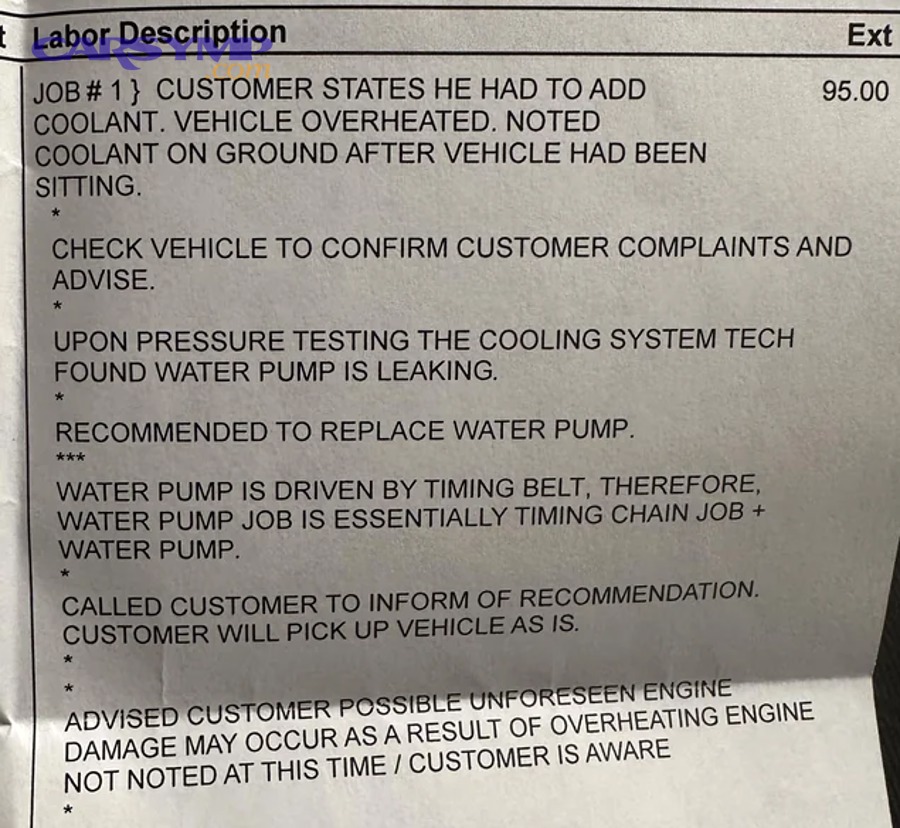
Can you delay a water pump replacement without risking higher costs?
No, you usually should not delay a needed water pump replacement because coolant loss, bearing failure, or poor circulation can trigger overheating and increase the chance of expensive secondary damage.
More specifically, a pump that is actively leaking or making noise is already telling you that the system is no longer stable. Once coolant drops below safe levels or flow becomes inconsistent, the engine can overheat. That overheating risk is what transforms a manageable repair into a much larger one involving gaskets, warped components, or complete engine stress.
Owners sometimes delay because the car still drives. That is a dangerous benchmark. A failing pump can continue working just enough to move the vehicle until load, temperature, or traffic conditions expose the weakness.
Service diagnostic material published through NHTSA’s document system instructs technicians to replace the water pump when active leakage is present, underscoring that a confirmed leak is not a cosmetic issue but a repair condition. ([static.nhtsa.gov](https://static.nhtsa.gov/odi/tsbs/2020/MC-10183188-9999.pdf?))
What signs suggest the estimate should move from “planned” to “urgent”?
There are five main signs that move a water pump estimate from planned to urgent: active coolant leak, repeated overheating, grinding or whining noise, coolant loss without explanation, and visible wobble or instability at the pump area.
To better understand urgency, use this quick Post-repair overheating check checklist and pre-repair symptom screen:
- Coolant level drops again after refill
- Temperature gauge climbs above normal
- Steam appears near the engine bay
- Sweet coolant smell persists
- New noise appears near the belt drive
- Heater output becomes inconsistent
- Drips appear under the front of the engine
- Warning lights or temperature alerts return
That same checklist also helps after service. If overheating returns after a recent pump job, review coolant bleed quality, thermostat operation, radiator fan behavior, hose sealing, and the possibility of installation error. Persistent leaks, unusual temperature swings, or noise shortly after repair are among the clearest Signs of incorrect installation or unresolved adjacent problems.
Kelley Blue Book describes leaks and failed bearings as common warning signs of water pump failure, and diagnostic guidance published via NHTSA’s document archive treats active pump leakage as a repair trigger. ([kbb.com](https://www.kbb.com/ford/explorer/2026/water-pump-replacement/?))
How can car owners tell whether a water pump replacement quote is fair?
A fair water pump replacement quote shows clear labor hours, named parts, coolant service, warranty terms, and a believable relationship between vehicle complexity and final price.
In short, quote fairness is easier to judge when you compare line items, not just totals.
What hidden costs can appear on a water pump replacement estimate?
Hidden costs on a water pump estimate commonly include coolant, thermostat recommendations, belts, pulleys, extra seals, diagnostic time, shop supplies, and taxes or disposal charges.
Specifically, these costs are not always abusive. Many of them are legitimate additions that appear only after inspection or teardown. The problem is not that they exist; the problem is when they appear without explanation. If the estimate does not say whether coolant refill is included or whether adjacent parts are optional, the owner cannot judge the quote accurately.
This is why a detailed estimate should identify what is required now, what is recommended while access is open, and what can wait. That structure prevents confusion between an overpriced quote and a complete quote.
RepairPal’s public estimator explicitly notes that its average ranges exclude taxes, fees, location effects, and related repairs, which mirrors the real-world reason hidden add-ons surprise owners at the counter. ([repairpal.com](https://repairpal.com/estimator/water-pump-replacement-cost?))
How can you compare two repair quotes for the same water pump job?
You can compare two water pump quotes in four steps: match the exact parts list, verify labor hours, confirm coolant and sealing work, and compare warranty coverage on both parts and labor.
For example, a lower quote may omit coolant replacement, use a cheaper unbranded pump, or exclude belts and seals that another shop includes. A higher quote may include premium parts and a stronger warranty, which can make it the better value even before you consider repeat labor risk.
A useful comparison table should answer these questions:
- Are both quotes for the same pump brand or quality level?
- Do both include coolant and seals?
- Are labor hours similar for the vehicle?
- Is a thermostat or belt included or merely recommended?
- What warranty applies to parts and labor?
- Is the quote based on active leak diagnosis or preventive replacement?
When those answers line up, the owner can compare price honestly. When they do not, the cheaper quote may simply be narrower work.
Is a high estimate always overpriced, or can it reflect a more complex engine layout?
No, a high estimate is not always overpriced because compact packaging, timing-system access, specialized pumps, and longer labor procedures can legitimately push the repair well above average.
However, the estimate still needs to prove its logic. A complex engine layout should show up as additional labor time, not as vague language. A premium pump should be named, not implied. A thorough quote explains why it is high. An inflated one only presents a number.
This is also where owners should resist comparing their car to a friend’s car or to a generic online number. Average pricing is helpful, but engine layout decides the real-world bill. One vehicle can have a straightforward external pump, while another requires major disassembly for what sounds like the same repair.
Kelley Blue Book and manufacturer-specific KBB estimate pages both emphasize that access difficulty changes water pump labor cost, which supports why some higher quotes are structurally justified. ([kbb.com](https://www.kbb.com/water-pump-replacement/?))
When does bundling other cooling system work save money overall?
Bundling related cooling-system work saves money overall when the same teardown exposes multiple aging parts, when timing-belt access overlaps with the pump, or when coolant service is already required.
More importantly, bundling should follow access logic, not sales pressure. Replacing a thermostat, belt, idlers, or seals can make strong financial sense if those parts are already exposed and near the end of their service life. It makes less sense when the added part has little labor overlap or no clear wear signal.
For car owners, the right question is: “What labor would I pay twice if I skip this now?” That question usually leads to smarter decisions than asking only whether the extra part increases today’s invoice.
According to Gates, replacing the water pump during timing belt service helps avoid premature repeat work, and public consumer guides likewise note that related repairs may influence the final water pump replacement estimate. ([gatestechzone.com](https://www.gatestechzone.com/en/news/2019-03-importance-wp-change-interval?))
In sum, the best water pump replacement estimate is not the lowest number on the page. It is the estimate that clearly explains the labor, parts, timing, urgency, and value of the repair for your specific vehicle.