


Most drivers want a direct answer first: water pump labor time usually falls in a broad range because the same repair can be simple on one engine and time-intensive on another. On many vehicles, the job lands around one to three hours when the pump is accessible, but tightly packaged engines or designs that tie the pump to major front-engine disassembly can push the job much higher.
The next question is why the estimate changes so much from one shop or one model to another. Labor time depends on pump location, engine orientation, belt layout, related cooling-system service, and whether the technician must remove timing components or other accessories before the pump can come out.
Readers also need to connect hours to money, because labor time matters most when it changes the final invoice. That is why this article links repair hours to shop labor rates, total bill structure, and the difference between a straightforward estimate and a quote inflated by overlapping services or unnecessary add-ons.
A final concern is judgment: car owners want to know whether a quoted number is fair for their vehicle and whether related maintenance should be bundled while access is already open. Introduce a new idea: the sections below move from defining labor time to evaluating real-world estimates, related services, and part-quality decisions with a practical owner-focused lens.
What Is Water Pump Replacement Labor Time?
water pump replacement labor time is the billed mechanic time assigned to removing and installing the pump, usually based on labor-guide standards, vehicle design, and the repair steps required to finish the job correctly.
To better understand the heading, it helps to separate labor time from everything else a customer experiences at the shop. Labor time is the core benchmark used to price the job, but it is not always the same as how long the car sits at the facility or how long the owner waits for pickup.
Is Water Pump Replacement Labor Time the Same as Total Time at the Shop?
No, water pump replacement labor time is not the same as total time at the shop, because labor guides measure wrench time while total turnaround also includes scheduling delays, cooling-system refill procedures, parts availability, and post-repair testing.
More specifically, a shop may quote 2.5 labor hours yet keep the vehicle for half a day or a full day. The technician still needs to confirm the leak source, drain coolant safely, remove surrounding parts, install the pump, refill the system with the correct coolant, bleed trapped air, and road-test the vehicle. If the parts counter is waiting on a gasket, a pulley, or a thermostat housing, calendar time expands even though billed labor time may stay the same.
This distinction matters because many drivers assume a short labor figure should equal immediate completion. In practice, modern cooling-system work often includes cleanup, inspection, and verification steps that protect the engine from overheating after the repair. That is why a fair estimate should separate labor hours from expected delivery time.
According to AAA, repair labor rates vary widely across the country, and that rate structure is applied to labor hours rather than to the total number of hours your vehicle remains at the shop.
How Do Repair Shops Define Labor Time for a Water Pump Job?
Repair shops define labor time for a water pump job as the standard or estimated number of hours needed to complete the replacement according to service procedures, labor guides, and the vehicle’s exact configuration.
Specifically, many shops use flat-rate logic. That means the estimate starts with a guide value for a given engine and repair, then adjusts when the vehicle has corrosion, prior modifications, broken fasteners, or overlapping operations that change access. A simple external pump on an older inline engine can have a much lower book time than a setup that hides the pump behind multiple brackets or inside a timing-service area.
The key point is consistency. Shops do not usually invent hours from scratch; they anchor the estimate to a labor source or internal guide, then apply shop rate, taxes, coolant, seals, and parts. For car owners reviewing a quote, that means the most useful question is not just “How much?” but “How many labor hours are included, and what procedures are bundled into them?”
According to Open Labor Project, labor times for the same repair vary by exact model and engine, with examples ranging from 1.1 hours on a BMW 318ti E36 to 2.5 hours on a 2007–2014 Cadillac Escalade 6.2L V8, illustrating why shops define time by configuration rather than by a generic part name.
How Many Hours Does Water Pump Replacement Usually Take?
Water pump replacement usually takes about one to three labor hours on easier layouts, while more complex designs can take significantly longer when access requires extensive front-engine or timing-component disassembly.
However, the useful answer is not a single number. Owners need a range that reflects real vehicle differences, because one water pump replacement can be a quick accessory-drive repair while another can resemble a major front-of-engine service. That is where labor categories become more helpful than one broad average.
Can Water Pump Replacement Take 1 to 2 Hours on Some Vehicles?
Yes, water pump replacement can take 1 to 2 hours on some vehicles because the pump may be externally mounted, easy to reach, and removable without opening timing components or stripping major accessories from the engine bay.
For example, labor databases show some vehicles near that lower band. Open Labor Project lists 1.1 hours for a BMW 318ti E36 water pump and 1.7 hours for a BMW 323i E46 water pump, while a Volkswagen T-Cross BR example is listed at 1.8 hours. These numbers support the idea that accessible layouts can produce relatively short quoted times.
Still, owners should be careful with the phrase “only one to two hours.” Short book time does not guarantee a tiny invoice. Shops still add coolant, gaskets or O-rings, diagnostic confirmation, and local labor rate, all of which shape the final number. A short-access pump can still cost meaningfully more in a higher-rate market.
According to RepairPal, average labor rates materially affect the final cost of a water pump repair, which is why a short labor time does not always translate into a cheap total bill.
What Are the Common Labor-Time Ranges for Easy, Moderate, and Complex Water Pump Jobs?
There are three practical labor-time groups for water pump replacement: easy jobs at roughly 1 to 2 hours, moderate jobs around 2 to 3.5 hours, and complex jobs that go beyond that when access or related components add substantial work.
To make that classification useful, the table below shows what those ranges usually represent for owners comparing estimates.
| Job category | Typical labor-time pattern | What usually causes it |
|---|---|---|
| Easy access | 1.0–2.0 hours | External pump, open engine bay, minimal bracket removal |
| Moderate access | 2.0–3.5 hours | Tighter packaging, more accessory removal, coolant service and bleeding |
| Complex access | 3.5+ hours | Timing-area disassembly, integrated layouts, seized hardware, bundled services |
That table reflects the way real labor data behaves. For example, Open Labor Project shows 2.3 hours for a 2018–2025 Volkswagen Tiguan MX water pump replacement, with a range up to 3.5 hours depending on conditions and technician experience, while the Cadillac Escalade example sits at 2.5 hours and the T-Cross BR at 1.8 hours. In other words, the common range depends less on the pump itself than on the architecture around it.
Some vehicles exceed the moderate band because the pump shares space with timing components or because technicians encounter extra resistance from corrosion, broken bolts, or cramped front-end packaging. On those vehicles, the labor line on a Water pump replacement cost estimate rises quickly even before you price the actual pump.
According to a community labor database, a 2018–2025 Volkswagen Tiguan MX water pump replacement has a standard time of 2.3 hours but can range from 1.7 to 3.5 hours depending on conditions and technician experience, showing why “typical” must always be treated as a band rather than a fixed promise.
What Factors Change Water Pump Replacement Labor Time?
Water pump replacement labor time changes because vehicle layout, pump location, engine packaging, related disassembly, and cooling-system service requirements all alter how much work the technician must perform before and after the pump swap.
Next, the most helpful way to understand these differences is to group them by access and procedure. That lets readers judge whether a quote reflects real complexity or whether it deserves a second opinion.
Which Vehicle and Engine Factors Make Water Pump Labor Time Longer?
There are five main factors that make water pump labor time longer: tighter engine packaging, timing-component access, additional accessory removal, cooling-system bleed requirements, and vehicle condition issues such as rust or seized fasteners.
First, engine orientation matters. A transverse engine often gives the technician less room along the side of the engine bay, which can slow removal of brackets, pulleys, and covers. Second, pump location matters. If the pump is buried near the timing cover or behind multiple accessories, labor climbs. Third, the cooling system itself matters. Some vehicles require careful bleeding procedures that add time after installation. Fourth, age and condition matter. Corrosion, previously stripped bolts, or non-factory sealant can turn a routine job into a slower one. Fifth, related recommendations matter; replacing the belt, thermostat, or hoses during the same visit can change how labor is allocated.
This is why two cars with the same symptom can get very different estimates. One may need only belt removal and a pump swap. The other may require front-end teardown, coolant-system cleanup, and additional parts to prevent a repeat leak. In practical terms, the “hours” on the estimate are a reflection of access, not just of the replacement part itself.
According to Gates, coolant contamination, mixed coolant chemistries, and deposits can affect water-pump condition and require a thorough cooling-system flush and refill with the correct manufacturer-recommended coolant, which adds procedural complexity beyond the pump alone.
Is a Timing-Belt-Driven Water Pump More Labor-Intensive Than an External Belt-Driven Pump?
Yes, a timing-belt-driven water pump is usually more labor-intensive than an external belt-driven pump because it often shares access with major timing components, requires more teardown, and is commonly serviced as part of a larger front-engine procedure.
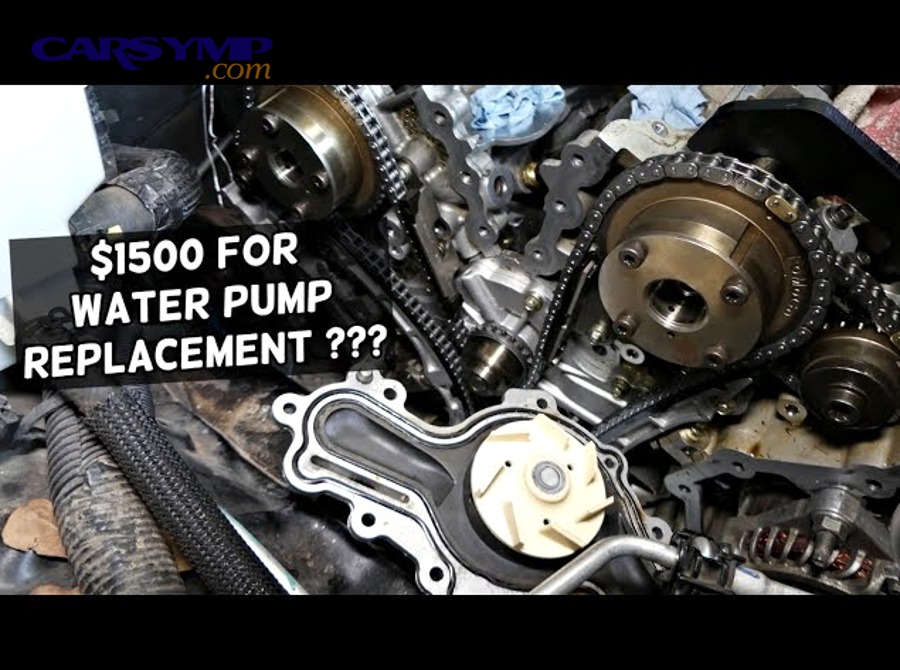
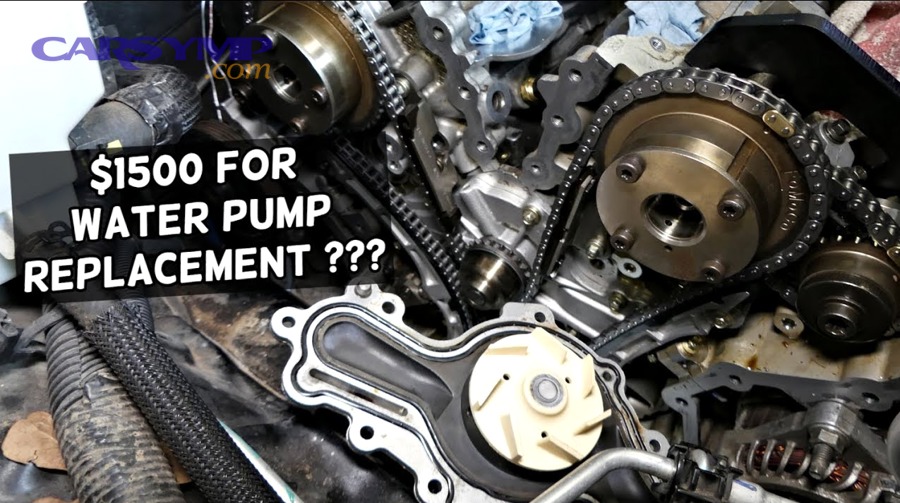
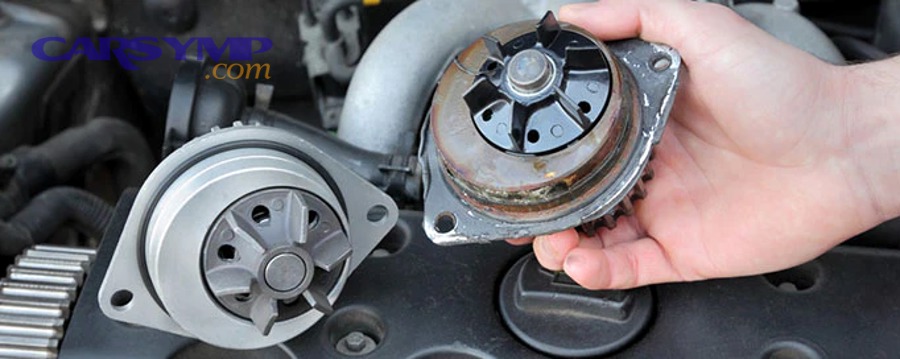
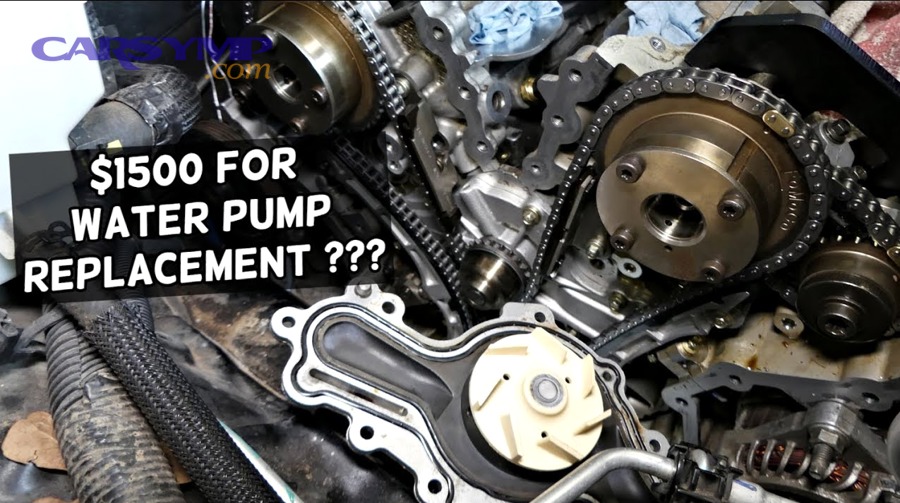
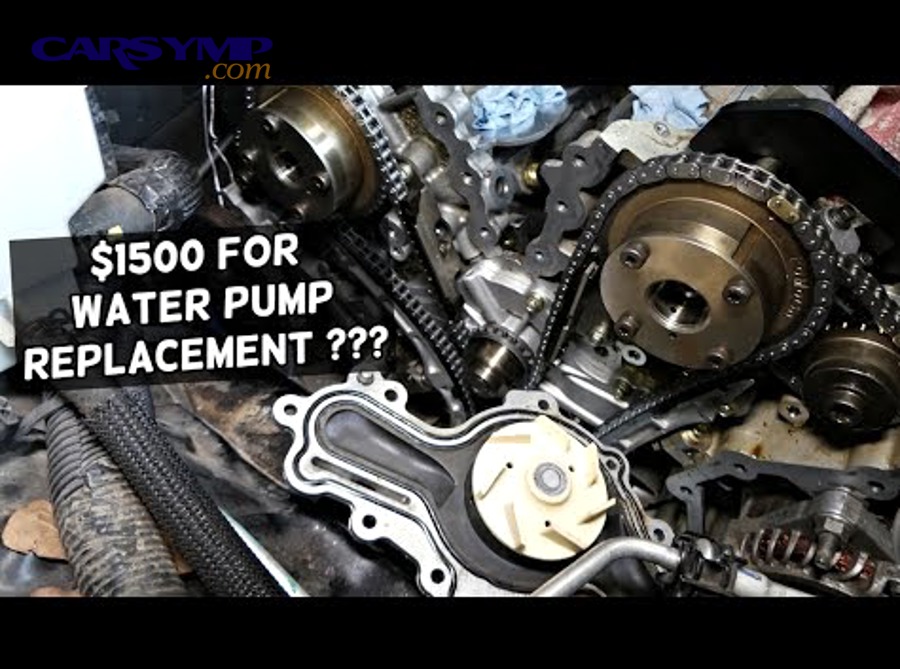
More specifically, an external belt-driven pump is often visible from the front or side of the engine once the serpentine belt and a few accessories are removed. By contrast, Timing belt/chain-driven water pump considerations change the job dramatically. When the pump sits behind timing covers or inside an area already occupied by the timing belt system, the technician may need to lock timing positions, remove protective covers, inspect pulleys and tensioners, and reassemble components in the correct sequence.
That is why many professionals recommend combining the pump with timing service when both items share the same labor path. The logic is not sales pressure by itself; it is labor efficiency. If the mechanic already opened the timing area, reusing old wear components can create false savings because the expensive access labor would have to be paid again later.
According to Gates, a leaking water pump can adversely affect the timing belt, and the company recommends replacing the water pump at scheduled belt change intervals on relevant applications, which supports the idea that timing-driven layouts carry higher labor stakes and stronger bundled-service logic.
How Does Water Pump Labor Time Compare with Total Replacement Cost?
Water pump labor time drives total replacement cost by setting the billable hours, while the remaining cost usually comes from the pump itself, coolant, seals, and any related components replaced during the same repair.
However, owners need a clearer cost picture than “parts plus labor.” The price structure changes with labor rate, vehicle type, and whether the repair includes extra cooling-system or timing-related work. That is why comparing the labor line to the parts line is the most useful way to read an estimate.
What Is the Difference Between Labor Cost and Parts Cost in a Water Pump Replacement?
Labor cost pays for diagnostic and installation work, while parts cost covers the pump, gasket or O-ring, coolant, and any related hardware; on some vehicles labor dominates, while on others parts take a larger share.
For example, RepairPal’s general estimate places total water pump replacement at $857 to $1,106, with labor at $358 to $525 and parts at $499 to $581. Yet that split is not universal. A Ford Explorer example shows labor at $748 to $1,098 with parts at $490 to $524, indicating a more labor-heavy repair. Meanwhile, a Ram 1500 example shows labor at $308 to $452 and parts around $819, indicating a more parts-heavy invoice.
This comparison helps owners interpret quotes without guessing. If the pump is inexpensive but the labor is high, the vehicle likely has difficult access. If the parts are high but the labor is moderate, the pump assembly or related components may simply cost more. Either way, the estimate becomes more understandable when the shop breaks out both categories clearly. This is the point where many readers start checking a Water pump replacement cost estimate on resources such as RepairPal, Open Labor Project, or even discussion-oriented sites like carsymp.com to see whether their quote is within a reasonable band.
According to RepairPal, water pump replacement cost structure varies substantially by vehicle, with labor representing about $358 to $525 in the general estimate but rising to as much as $1,098 in the Ford Explorer example, which shows how labor intensity can dominate the bill on some models.
Can Replacing Related Parts at the Same Time Reduce Future Labor Costs?
Yes, replacing related parts at the same time can reduce future labor costs because the technician already has access to the area, the cooling system is already open, and repeating disassembly later usually costs more than bundling smartly once.
Specifically, related parts may include the thermostat, serpentine belt, tensioner, hoses, coolant, or timing components depending on the engine layout. When the system is already drained and the front of the engine is already open, the incremental labor for some related items can be much lower than doing them as stand-alone jobs later. The classic example is pairing a timing-belt service with water pump replacement on designs where both operations share labor.
That does not mean every upsell is justified. Owners should ask which part shares the same access path and which added labor hours, if any, are truly incremental. A thermostat replacement that piggybacks on a pump job may make sense. An unrelated service that happens to be suggested during the same visit may not. The test is overlap: if the same disassembly is already paid for, bundling is often rational.
According to a service-manual-based response cited on JustAnswer, a Chevrolet Tahoe water pump replacement was specified at 1.8 hours and the thermostat at 0.7 hours, with the expert noting that the system drain overlap should reduce the logic of charging the full separate thermostat labor when the pump job is already underway.
How Can Car Owners Tell Whether a Water Pump Labor Quote Is Reasonable?
A water pump labor quote is reasonable when the hours match the vehicle’s access complexity, the estimate separates labor from parts clearly, and the shop can explain any related services that affect time or total cost.
To better judge the heading’s question, owners should stop looking at the grand total first and start reading the estimate line by line. The labor hours tell the story of the repair, while the parts and fluids explain why the invoice rises or stays moderate.
What Should You Check on a Water Pump Estimate Before Approving the Repair?
There are six main things to check on a water pump estimate before approving the repair: labor hours, hourly rate, parts brand, coolant and seal charges, bundled services, and warranty or comeback coverage.
Start with labor hours and ask how the shop arrived at them. Then check the hourly rate, because even a fair labor-time figure becomes expensive in high-rate markets. Next, identify the parts brand. This is where OEM vs aftermarket water pump quality becomes relevant. OEM parts may provide a stronger fit-and-specification argument, while some aftermarket pumps from companies with OE experience can still be suitable. After that, look at the fluids and seals line. A correct water pump replacement should not ignore fresh coolant, proper sealing materials, and bleeding procedures. Finally, ask which items are bundled and what warranty applies if the part leaks or fails early.
A good estimate should also describe the “why” behind the quote. If the pump is in a timing-service zone, the hours should reflect that. If the pump is external and easy to reach, the shop should be able to explain why the job still runs higher than normal. Clear explanation is often a better sign than the lowest number on the page.
According to AAA, labor rates can range from as low as $47 to as high as $215 per hour, so checking the hourly rate on the estimate is essential before deciding whether a water pump quote is actually overpriced.
Is a Higher Water Pump Labor Quote Always a Bad Sign?
No, a higher water pump labor quote is not always a bad sign, because the quote may reflect difficult access, higher local labor rates, more complete cooling-system service, or a better-quality parts package rather than overcharging.
For example, a shop that includes coolant flush steps, air bleeding, new seals, and a premium pump may quote more than a shop pricing the bare minimum. The difference can also come from vehicle architecture. RepairPal’s Ford Explorer example shows how one model can carry far higher labor than the general average because the design itself is more labor intensive. That does not automatically make the quote unfair; it may simply make the vehicle expensive to service.
At the same time, a high quote still deserves verification. Owners should compare the hours to a vehicle-specific labor reference, ask whether the estimate includes unrelated work, and check whether the recommended part is OEM or a reputable aftermarket option. In other words, a higher number is a prompt for better questions, not a reason for immediate rejection.
According to RepairPal, the average Ford Explorer water pump replacement carries labor of $748 to $1,098, much higher than the site’s general labor estimate of $358 to $525, which demonstrates that a quote can be high because the application is demanding rather than because the shop is being unreasonable.
What Related Repair Situations Can Change Water Pump Replacement Strategy?
Related repair situations can change water pump replacement strategy when overlapping access, special vehicle packaging, part-quality choices, or DIY limitations alter the smartest way to spend labor and prevent repeat work.

Besides the main estimate question, owners often want to know what else should be considered while the engine is already apart. That is where strategy matters more than the raw labor-hour number, because the best decision is not always the cheapest immediate invoice.
Should the Water Pump Be Replaced with the Timing Belt or Thermostat at the Same Time?
Yes, the water pump should often be replaced with the timing belt or thermostat when those parts share access, because doing them together reduces repeated labor, lowers future teardown cost, and aligns wear-related maintenance intervals more logically.
When the pump is timing-driven, combined service is especially rational. The technician is already inside the timing area, so replacing a worn pump later would repeat the same expensive access work. Thermostat decisions depend more on location and condition, but the same overlap logic applies when the cooling system is already drained and the related housing is accessible.
This bundled approach is not about adding parts blindly. It is about matching maintenance logic to labor reality. If access is shared, combined service usually protects the owner from paying twice for the same teardown. If access is unrelated, the part should be judged on its own condition rather than sold as a package automatically.
According to Gates, water pumps on timing-belt-driven applications are recommended for replacement at scheduled belt service intervals, which supports a combined strategy when those components share the same labor path.
How Does Water Pump Labor Time Differ on Hybrid, Turbocharged, or Luxury Vehicles?
Water pump labor time can differ on hybrid, turbocharged, or luxury vehicles because these vehicles often use tighter packaging, extra thermal-management components, and more complex service access than simpler naturally aspirated layouts.
For example, Open Labor Project lists a 2010–2012 Ford Fusion Hybrid water pump at 2.5 hours and a 2017–2020 Lincoln Continental 2.7L EcoBoost V6 water pump at 2.5 hours. Those numbers are not extreme on their own, but they show that newer and more specialized platforms still cluster in the moderate labor range even before unusual complications appear. Turbo plumbing, accessory density, underhood heat shielding, and tighter front-end clearances can all reduce working room.
Luxury-brand ownership also changes decision-making because the cost of rework is often higher. That makes part quality and procedure quality more important than chasing the lowest upfront estimate. On these vehicles, labor time is only half the decision; durability and fit matter just as much.
According to Open Labor Project, both the Ford Fusion Hybrid and Lincoln Continental 2.7L EcoBoost V6 list water pump labor at 2.5 hours in the referenced examples, illustrating that specialized platforms can still carry moderate book times even before market labor rates and brand-level parts pricing are added.
Why Can Two Shops Give Different Labor-Time Estimates for the Same Water Pump Job?
Two shops can give different labor-time estimates for the same water pump job because they may use different labor guides, apply different overlap assumptions, include different related procedures, or account differently for vehicle condition and risk.
One estimate may treat coolant refill and bleed as part of the main line, while another separates them. One shop may reduce labor overlap for a thermostat because the system is already drained, while another may price it more independently. One technician may anticipate broken hardware on an older vehicle and build time for that risk, while another may quote the clean book number and address complications later. All of those differences can produce estimates that look inconsistent even when both shops are acting in good faith.
The owner’s job is to normalize the comparison. Ask each shop for the labor hours, the hourly rate, the included procedures, and the part brand. Once those are visible, estimate differences usually become easier to explain.
According to Open Labor Project, even a single vehicle entry may show a standard time plus a range, such as 2.3 hours with a 1.7 to 3.5 hour spread for the Volkswagen Tiguan MX example, which supports the idea that reasonable estimates can differ before any shop-specific policies are added.
Is DIY Water Pump Replacement Faster or Cheaper Than Professional Service?
No, DIY water pump replacement is usually cheaper in direct labor dollars but not faster for most owners, because professionals have the tools, procedures, and experience to complete the job more efficiently and reduce rework risk.
A skilled home mechanic can certainly save labor money, especially on an accessible external pump. But the job still requires coolant handling, proper sealing, torque discipline, correct bleeding, and sometimes timing-system knowledge. On harder applications, a mistake can create leaks, overheating, or timing-related engine damage that wipes out the initial savings. That is why DIY makes more sense on simple layouts than on timing-driven or densely packaged engines.
This is also where part selection matters. A home mechanic who buys the cheapest pump may save money once and lose it later if the part fails early. Choosing between OEM vs aftermarket water pump quality should focus on fit, seal quality, and the reputation of the maker rather than just the lowest listed price. Dayco advises choosing OE-specified pumps or aftermarket pumps from companies with OE experience, while OEM-focused dealers emphasize application-specific fit and materials.
According to Dayco, choosing an aftermarket water pump from a company with OE experience is important for proper quality and design, while OEM-oriented dealer sources emphasize model-specific fit and material quality, showing that part quality can be just as important as labor savings in a DIY decision.
In short, the smartest way to estimate water pump repair hours is to match the quote to the vehicle layout, the access path, and the scope of related work. For car owners, that makes labor time a decision tool, not just a number on an invoice.