


A tire care checklist is a practical, repeatable way to confirm your tires are safe, efficient, and predictable before and during everyday driving. It focuses on the few high-impact items that most often trigger handling problems, blowouts, and unexpected wear.
To keep your checklist useful, you’ll prioritize tire pressure checks that match your vehicle’s door-jamb specification, plus quick visual scanning that catches early damage before it becomes a roadside issue.
Next, you’ll verify tread condition with simple at-home methods and learn how to interpret wear patterns so you can connect what you see to the likely cause (inflation, alignment, or driving style).
After that, you’ll schedule rotation with a clear rhythm and pattern so wear stays even across all four tires; To introduce a new idea, we’ll also cover how your tire type, season, and load change the checklist so it stays accurate year-round.
What should a tire care checklist include before you drive?
It should include a fast walk-around, a pressure spot-check, a tread scan, and a damage check so you can catch the most common safety risks in under five minutes. Next, you’ll turn those checks into a simple routine you actually repeat.

1) Do a 360° walk-around to catch obvious hazards
Start by walking around the vehicle once and looking for anything that’s “new since yesterday.” To be specific, you’re hunting for a tire that looks lower than the others, a fresh object in the tread, a shiny wet patch that hints at a slow leak, or a sidewall that looks scuffed or bubbled.
Because tires visually change in subtle ways, use a consistent order: front-left, rear-left, rear-right, front-right. Then, glance at the ground near each tire; if you see a small dark spot where the tire meets the pavement, it may be a leak worth confirming with a pressure check.
2) Confirm inflation is within a safe range (not “looks fine”)
Even if a tire doesn’t look flat, it can still be meaningfully underinflated, especially after a cold night or a long highway run. For example, “looks okay” is not the same as “meets spec.” So your checklist should always include either a quick gauge check or at least a weekly gauge routine if you can’t do it daily.
As a quick rule: follow the vehicle placard (door jamb) for normal driving, and only deviate for special cases like heavy loads or manufacturer guidance. If you’re unsure, keep it simple—spec is your default.
3) Add a tread-and-damage scan that takes seconds
A checklist works best when it’s short, so your scan should focus on three areas: tread surface, sidewall, and valve stem/cap. In practice, you’re looking for embedded debris, uneven wear, and visible cracking or bulging.
This is also where a basic car maintenance checklist overlaps with tire care: tires are the only contact patch with the road, so small issues quickly become big handling changes.
4) Keep one “note” habit to make patterns visible
Finally, add a single note habit: record the date, odometer, and any odd finding (like “front-right shoulder wear” or “slow leak weekly”). Then you can connect symptoms to causes over time instead of guessing.
If you want a simple format for your glovebox or phone, treat it like a Printable maintenance checklist for drivers: short lines, checkboxes, and a tiny notes field so it stays usable, not overwhelming.
How do you check tire pressure correctly and choose the right PSI?
Check pressure when tires are cold, compare it to the vehicle placard, and adjust in small steps so you reach the recommended PSI without overshooting. Next, you’ll add two habits—timing and consistency—that make pressure checks reliable.
Use the vehicle placard as your default source
Many drivers mistakenly inflate to the number printed on the tire sidewall. However, that number is typically a maximum rating for the tire, not the recommended operating pressure for your specific vehicle. Instead, use the door-jamb placard (or owner’s manual) because it accounts for vehicle weight distribution, suspension tuning, and intended use.
To connect the dots, think of the placard as “the vehicle’s target,” and the sidewall as “the tire’s capability.” That distinction helps you avoid chronic overinflation that can reduce comfort and create uneven center wear.
Measure when cold, and repeat the same way each time
Cold means the vehicle has been parked for a few hours and hasn’t just been driven at speed. Specifically, heat from driving raises pressure, so a warm reading can mislead you into underinflating. If you must check after driving, note it and avoid making aggressive corrections.
For consistency, press the gauge firmly onto the valve stem until the hiss stops and the reading stabilizes. Then repeat once if the reading seems odd; small technique differences can cause small deviations.
Adjust in small steps and re-check to avoid overshooting
Inflate or deflate in small steps, then re-check so you land on the target rather than swinging past it. In other words, treat PSI like a dial, not a switch. Overinflation and underinflation both reduce the tire’s ability to behave predictably, just in different ways.
Beyond that, don’t ignore a persistent mismatch between tires. If one tire repeatedly loses pressure faster than the others, that pattern matters more than a one-time low reading.
Know when “pressure is correct” still isn’t enough
Correct PSI doesn’t fix mechanical issues like alignment problems, wheel imbalance, or internal tire damage. So if pressure is stable but you feel pulling, vibration, or new road noise, your checklist should push you to inspect tread patterns and schedule a closer look.
That’s the real value of a checklist: it separates “needs air” from “needs diagnosis” so you don’t keep inflating a tire that has a leak or structural weakness.
How can you measure tread depth at home and interpret wear indicators?
You can measure tread depth at home with a simple coin test or a tread depth gauge, then confirm replacement timing by checking wear bars and seasonal traction needs. Next, you’ll learn how tread wear patterns reveal the root cause of uneven wear.
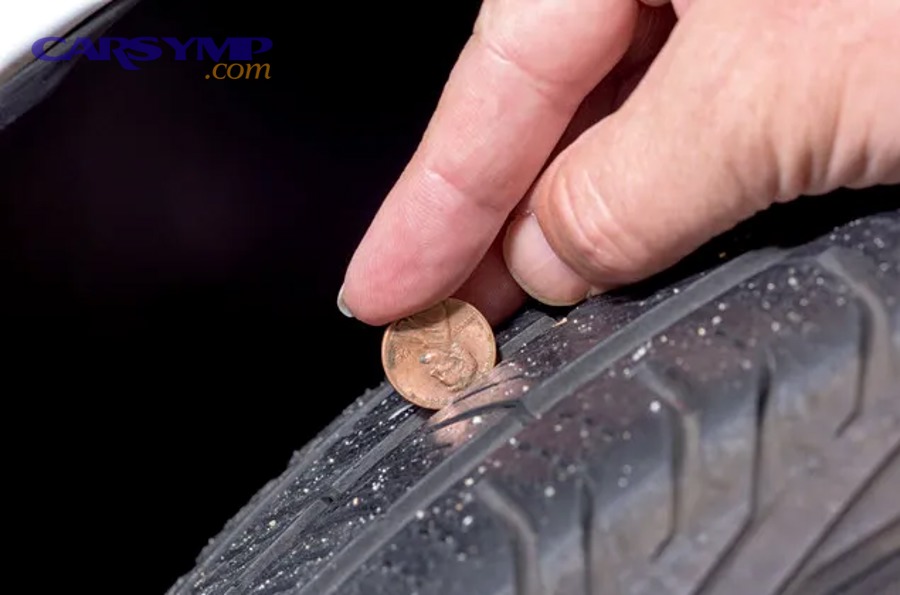
Use a quick coin test for a fast safety snapshot
A coin test is not a laboratory measurement, but it’s a fast way to detect “getting too low” tread. To be more specific, insert the coin into multiple grooves across the tire, not just one spot, because tread often wears unevenly from alignment, rotation timing, or driving habits.
Do this on at least three zones—inner, center, outer—so you can compare. If the inner or outer edge is significantly lower than the rest, that points to a mechanical or inflation-related cause, not “normal wear.”
Use a tread depth gauge when you want precision
If you want repeatable numbers, a tread depth gauge is the simplest upgrade. It helps you track wear rate over time, which is especially useful if you’re trying to decide whether you can safely finish a season or a long trip before replacement.

Check wear bars because they’re the built-in “replace me” signal
Wear bars are raised sections within the grooves that become flush with the tread surface when the tire is worn down. In practical terms, when you can see those bars level with the surrounding tread, your tire is at a point where wet traction and braking margins are significantly reduced.

Use a simple table to connect tread depth to decisions
This table contains common tread-depth decision points and what they help you decide, so you can translate “a number” into a driving action.
| Tread condition | What it usually means | What to do next |
|---|---|---|
| Even tread, strong grooves | Normal wear; good contact and water evacuation | Keep monitoring monthly; rotate on schedule |
| Edges wearing faster than center | Often underinflation or aggressive cornering | Verify pressure routine; inspect suspension/alignment if persistent |
| Center wearing faster than edges | Often overinflation relative to actual load | Re-check placard PSI; confirm gauge accuracy |
| One shoulder wearing quickly | Likely alignment or worn steering/suspension parts | Schedule alignment inspection; rotate sooner if safe |
| Wear bars nearly flush | End-of-life traction margin, especially in rain | Plan replacement; avoid pushing long trips in bad weather |
When and how should you do tire rotation to prevent uneven wear?
Rotate tires on a consistent interval and use the correct rotation pattern for your drivetrain and tire type so wear evens out across all four corners. Next, you’ll connect rotation timing to what your tread is telling you.
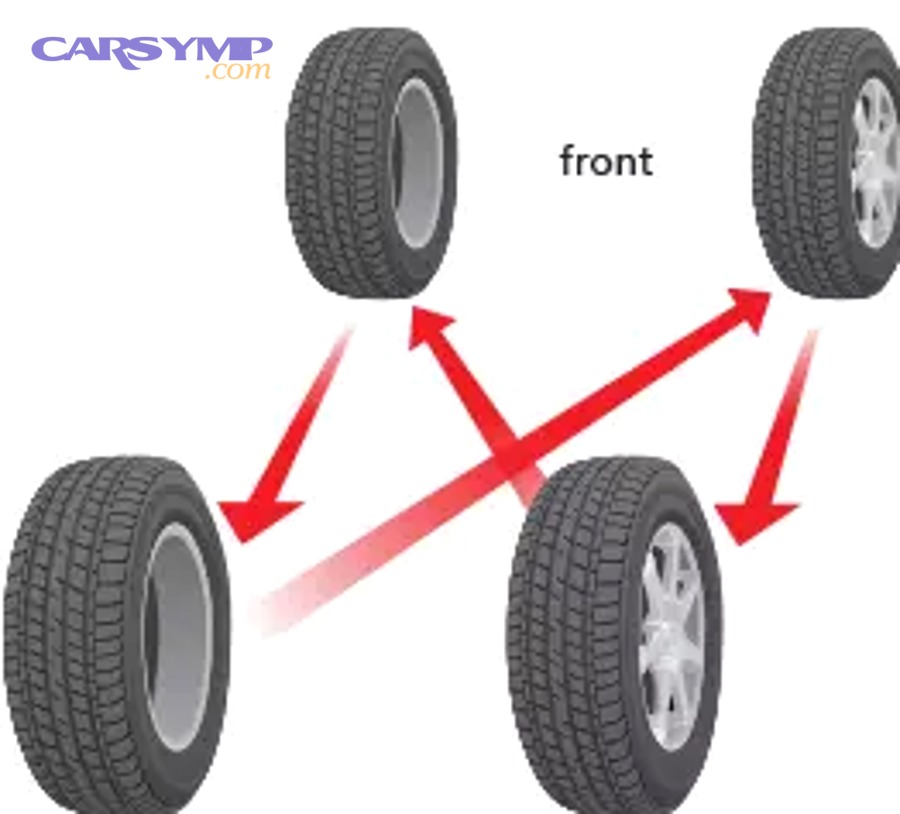
Pick an interval you will actually follow
Most drivers do best with a simple routine: rotate with regular service milestones, then check tread patterns to confirm it’s working. For example, tying rotation to “every other oil change” is often easier than remembering a specific mileage number, as long as it remains consistent.
However, your tires may ask for rotation sooner if you see fast front wear, feathering, or noticeable changes in road noise. That’s why your checklist should include a tread scan—tread is your feedback loop.
Match the rotation pattern to tire design
Not all tires can be rotated the same way. Directional tires must stay oriented correctly, and staggered setups may have limited options. So before you swap corners, confirm whether your tires are directional (arrow on sidewall) or have different sizes front vs rear.

Make rotation safer with one “re-check” step
After rotating, re-check pressure on all four tires because PSI can drift between corners over time, and a swap may reveal mismatches you didn’t notice. In addition, re-torque lug nuts to the manufacturer’s specification if wheels were removed; safe rotation is not just “moving tires around.”
For a visual walkthrough that helps you remember the patterns, this short video can reinforce the steps.
What warning signs mean you should stop driving and get service immediately?
Yes—there are clear warning signs that require immediate attention, including bulges, severe cracking, fast pressure loss, or a puncture near the sidewall, because they can lead to sudden failure. Next, you’ll learn how to classify the risk so you act quickly without panicking.
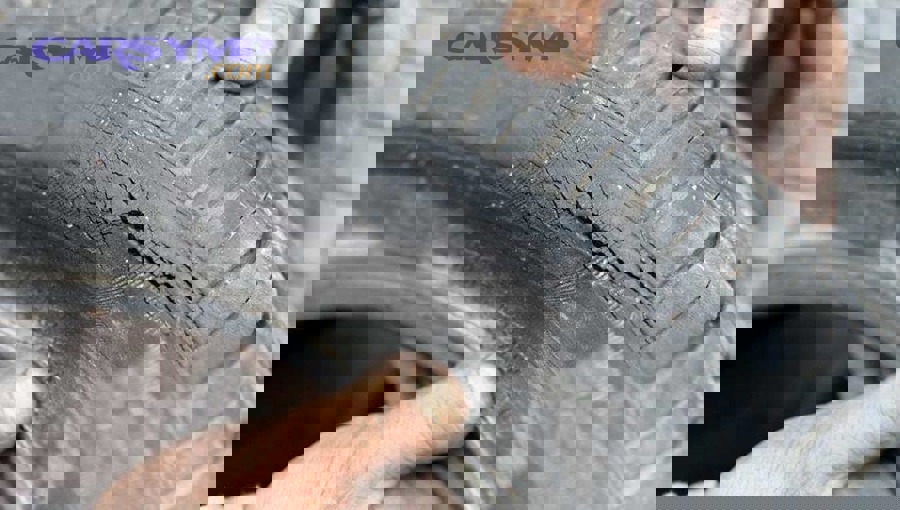
1) Bulges or bubbles (especially on the sidewall)
A bulge is a structural warning, not a cosmetic one. In most cases, it indicates internal damage to the tire’s cords or belts, which can fail suddenly under heat and load. Therefore, treat a bulge as “replace soonest,” and avoid high speeds until it’s addressed.

2) Deep cracks, dry rot, or exposed cords
Surface aging can start as small hairline cracks, but deeper cracks signal weakened rubber and reduced structural integrity. If you can see cords, or if cracks look wide and spreading, that tire is no longer a “monitor” situation—it’s a replacement situation.
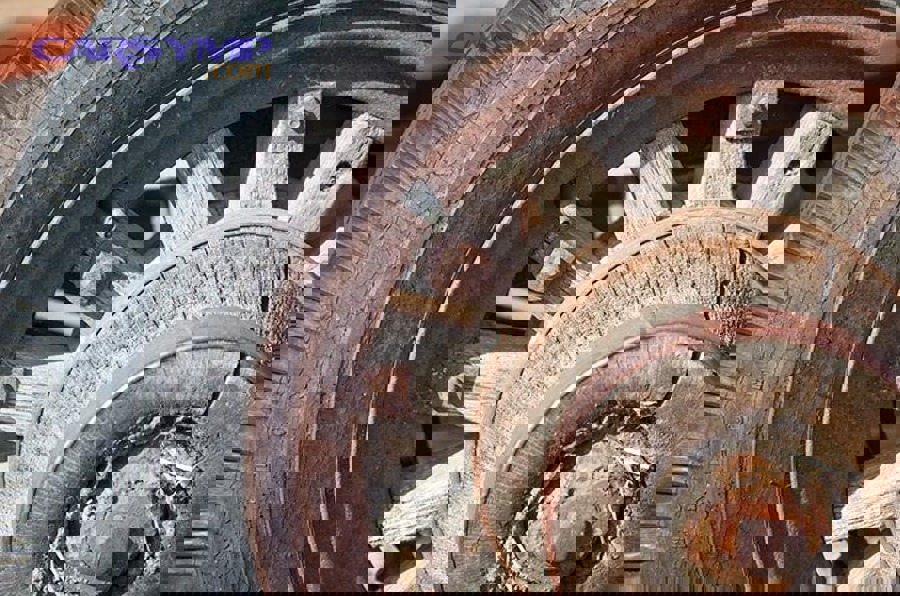
3) Punctures, embedded objects, or rapid air loss
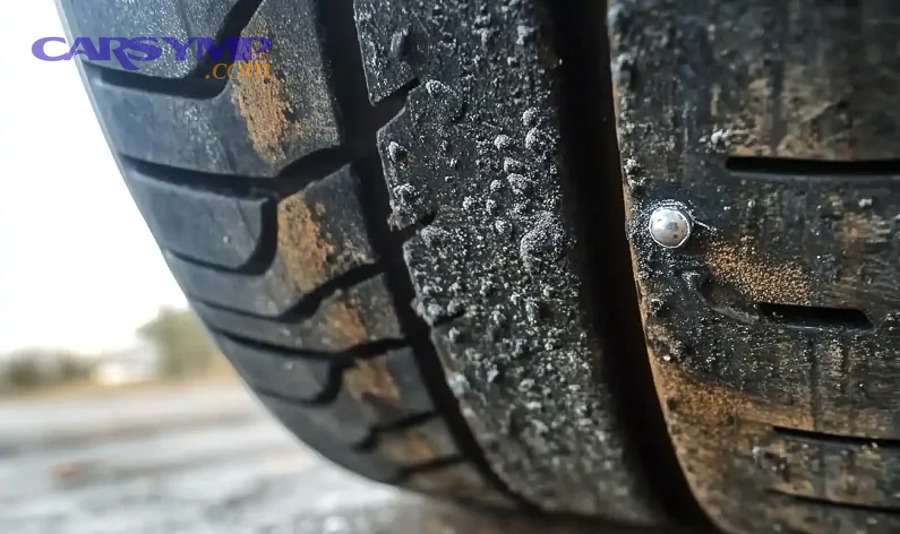
If a nail or screw is embedded, don’t pull it out immediately unless you’re prepared to manage a fast leak. Instead, confirm pressure, note how quickly it drops, and get a repair assessment. Remember that punctures near the sidewall or shoulder are often not safely repairable.
4) Vibration, pulling, or sudden steering changes
Strong vibration, a vehicle that pulls, or a steering wheel that suddenly feels “off” can indicate imbalance, alignment shifts, or even a tire separation in progress. In other words, if the driving feel changes abruptly, treat it as a diagnostic cue, not something to ignore until later.
These are the kinds of Warning signs that need immediate service because they don’t just affect comfort—they affect how the car responds in emergency braking and cornering.
How do you extend tire life across seasons, loads, and mileage?
Extend tire life by keeping pressure stable, rotating consistently, maintaining alignment/balance, and adapting driving and storage habits to heat, cold, and load changes. Next, you’ll connect the checklist to long-term planning so tires age more evenly and predictably.
Keep pressure stable as temperatures shift
Temperature swings can change how a tire behaves, so pressure checks matter more when seasons change. A practical approach is to check PSI more frequently during cold snaps and heat waves, then return to your normal weekly or biweekly rhythm once conditions stabilize.
Also, don’t forget the spare if you rely on it; a neglected spare is often underinflated when you actually need it.
Align and balance when symptoms appear (not only when replacing tires)
Rotation evens out wear, but it can’t compensate for a misaligned vehicle. If you see one shoulder wearing faster, or the car pulls on a straight road, alignment becomes the priority. Similarly, if you feel vibration that changes with speed, balancing (or a damaged tire/wheel) may be the root cause.
To illustrate, think of it like this: rotation is a wear-management tool, while alignment and balance are wear-prevention tools.
Drive and load the vehicle in ways tires can tolerate
Hard cornering, abrupt braking, frequent pothole impacts, and chronic overloading all accelerate wear and increase the odds of internal damage. If you regularly carry heavy cargo, confirm your manufacturer guidance for pressure adjustments and stay within load ratings.
This is also where planning helps: treat your tire checks as part of a broader maintenance rhythm, similar to a Mileage-based service intervals guide, so the timing stays consistent even when life gets busy.
Store tires and vehicles to reduce aging
Tires age even when you don’t drive much. If a vehicle sits for long periods, move it occasionally to prevent flat spotting, keep it out of harsh sun when possible, and avoid storage near ozone-generating equipment. If you store a set of tires, keep them clean, cool, and dry, and avoid stacking them in ways that deform the sidewalls.
If you want a deeper symptom-by-symptom explanation of tire-related handling complaints, you can also cross-reference educational resources like carsymp.com while still relying on a qualified shop for final diagnosis.
Contextual Border: Up to this point, you’ve built a repeatable checklist and learned how pressure, tread, and rotation interact. Next, we’ll expand beyond the “same for everyone” basics and adjust the checklist based on tire category, vehicle type, and real-world driving conditions.
How do tire type and driving conditions change the checklist?
They change it because different tire categories and vehicle loads prioritize different failure risks, so the checklist must shift focus to what is most likely to wear, overheat, or lose traction for your setup. Next, you’ll apply a few simple rules that adapt your checks without making the routine longer.
All-season vs winter vs performance tires (hyponym differences)
All-season tires aim for balanced behavior, winter tires prioritize cold-weather grip, and performance tires often trade longevity for handling. Consequently, winter tires deserve extra attention to tread depth before and during the cold season, while performance tires benefit from more frequent pressure checks and rotation planning if your setup allows it.
New vs worn tires (antonym that changes your risk level)
New tires usually hide small issues because they feel stable and quiet, while worn tires amplify small problems like alignment drift or pressure loss. So as tires age, your checklist should include more frequent tread checks and a stricter threshold for acting on cracks, bulges, or unusual wear.
Run-flat vs standard tires (rare attribute with practical consequences)
Run-flats can allow limited driving after a loss of pressure, but they still require correct pressure and careful inspection. In practice, you should treat a run-flat event as “inspect immediately” because internal heat damage can occur even if the tire appears intact.
EVs and heavy vehicles (unique wear accelerators)
Heavier vehicles and high-torque EVs can accelerate wear, especially if pressures drift low or rotations are delayed. Therefore, your checklist should emphasize pressure stability and early detection of shoulder wear, because those factors often show up sooner on heavier or higher-torque setups.
FAQ
These quick answers cover the most common checklist questions drivers ask after they start monitoring pressure, tread, and rotation consistently. Next, you can use them to remove uncertainty and keep your routine simple.
How often should I check tire pressure if I drive daily?
A quick weekly gauge check is a strong baseline for most daily drivers, with extra checks during major temperature swings or before long highway trips. If one tire consistently drops faster, check more often until the leak source is resolved.
Is uneven tread always an alignment problem?
No. Uneven tread can come from incorrect pressure, delayed rotation, worn suspension parts, aggressive driving, or a true alignment issue. The practical approach is to confirm pressure first, then assess wear location (center vs edges vs one shoulder) and act accordingly.
Can I rotate tires myself safely?
Yes, if you have proper lifting equipment, a stable surface, correct jack points, and you can torque lug nuts to specification. If any of those are uncertain, a shop rotation is often the safer choice.
What’s the simplest “minimum” tire care checklist if I’m busy?
Do three things: check pressure weekly, scan tread and sidewalls monthly, and rotate on a consistent interval you can remember. If anything changes suddenly—pulling, vibration, fast pressure loss—treat that as a priority inspection trigger.