


Battery replacement cost vs DIY cost usually comes down to two buckets: you’re paying for parts only when you do it yourself, or you’re paying for parts plus labor, convenience, and liability when a shop installs it.
Beyond the sticker price, real-world cost includes fitment mistakes, hidden fees, and modern-vehicle requirements like battery monitoring resets, hard-to-access locations, and start-stop battery types.
To make a fair comparison, you need to total the “complete bill”: the battery itself, any shop labor or mobile service, fees like core charges, and the value of your time—then weigh that against risk and warranty coverage.
Tiếp theo, we’ll break down typical price ranges, what DIY truly costs, and exactly when paying a professional is the smarter “cheaper” choice.
How much does a professional battery replacement usually cost?
Professional replacement typically costs more upfront because it bundles the battery, installation labor, and a convenience layer (testing, disposal, warranty handling) into one price.
To begin, think of the shop price as “parts + risk transfer,” where you’re paying not only for time but also for correct fitment and a comeback-free install.
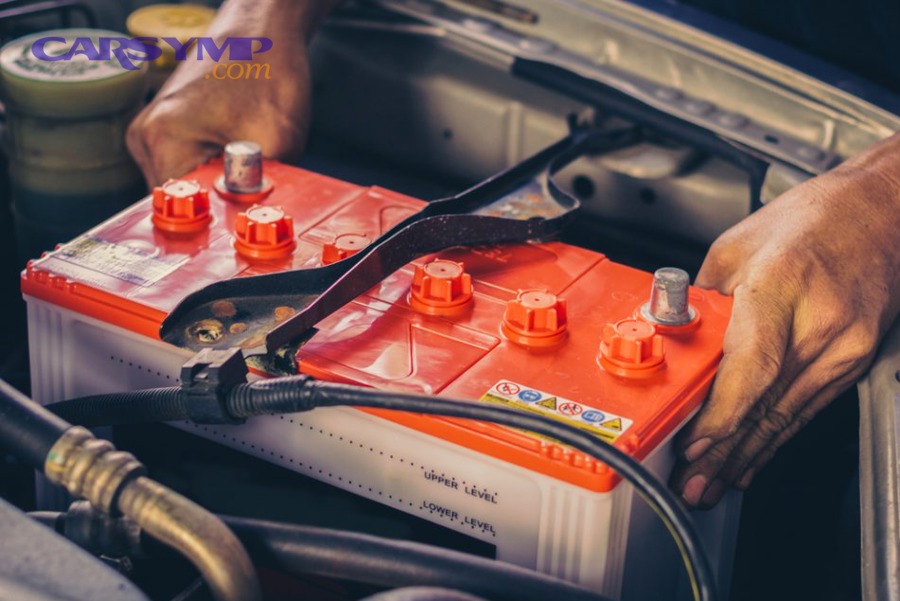
Typical price ranges you’ll see in the real world
Most drivers see installed prices cluster in a mid-range band for conventional 12-volt batteries, but the top end rises quickly when the battery is AGM, tucked under a seat, or requires electronic registration.
However, the key is not the average—it’s what pushes your specific vehicle above average: battery chemistry, location, and whether the car needs post-install steps.
In practical terms, you’re paying for (1) the battery itself, (2) install time, and (3) test/verification steps like charging-system checks.
According to Fleetio’s aggregated fleet data reported by Automotive Fleet, in June 2025, average service costs rose to about $105.87 per service event—an indicator that labor and shop overhead continue to trend upward even for routine work.
What “labor” really covers when you pay a shop
Labor isn’t just “remove and replace”—it often includes verifying charging voltage, checking for parasitic drain clues, cleaning terminals, securing the hold-down correctly, and confirming the car restarts reliably.
In the same way, a shop’s quote often quietly includes the headache insurance: if the battery is wrong, leaks, arrives dead, or triggers a warning light, they solve it—not you.
That said, some installs are genuinely fast: top-post batteries in an open engine bay may take minutes, which is why labor varies widely by vehicle design.
Hidden shop-side line items to watch for
Some invoices include environmental fees, shop supplies, diagnostic time, or an extra charge for “battery programming.” These may be reasonable, but you should see them clearly explained.
In particular, battery registration/coding (when required) can turn a simple replacement into a multi-step procedure—especially on vehicles with smart charging systems.
So, the smartest way to compare costs is to ask for an “out-the-door” number that includes every fee and any required electronic steps.
What does DIY battery replacement really cost?
DIY replacement is usually cheaper in cash terms because you mainly pay for the battery and possibly a few tools, but you take on all responsibility for fit, safety, and any post-install issues.
Next, you’ll want to total DIY cost as “battery + tools + time + risk,” because the last two categories are where DIY can stop being a bargain.

Parts cost: the battery is the main expense
A standard flooded lead-acid battery can be the budget option, while AGM batteries (common in start-stop and higher electrical-load vehicles) tend to cost more. The “right” choice is determined by your vehicle’s specification—not just price.
To avoid paying twice, match the correct group size, terminal orientation, and required technology (flooded vs AGM vs EFB). A cheaper battery that doesn’t meet spec can cause repeated failures or warning lights.
When you change car battery at home, buying the correct battery the first time is the single biggest lever that keeps DIY truly low-cost.
Tooling cost: often small, but not always zero
Many cars require only basic hand tools, gloves, and eye protection. If you already own these, DIY cost drops sharply.
However, some vehicles need special bits, extensions, trim tools to access a battery under a seat or in the trunk, or a memory-preservation method if your vehicle is sensitive to power loss.
For modern cars with advanced electronics, the “cheap” DIY can become “time-expensive” if access is complicated or if the car requires post-install resets.
Time and risk: the cost most people forget to price
Time is not just the install—it’s also the shopping, fitment confirmation, possible returns, terminal cleaning, and post-install troubleshooting if something doesn’t go smoothly.
Safety also matters: improper handling can lead to sparks, damaged terminals, or short circuits. The cost of one mistake can exceed the labor you tried to avoid.
According to Clarios’ lab and fleet tests reported in April 2021, AGM batteries showed significantly stronger cycling performance than EFB in start-stop conditions—evidence that “cheaper” can be more expensive if it forces premature replacement.
Which option saves more: shop install or DIY?
DIY usually saves more when the battery is easy to access and your vehicle doesn’t need electronic registration, while professional service often wins when access is difficult or post-install steps are required.
However, the best savings choice is the one that avoids a second replacement, a tow, or an electrical issue caused by an incorrect install.

A simple way to compare: “complete total cost”
To compare fairly, add up every item: battery price, any core charge not refunded, any tools you must buy, your time value, and the chance of needing extra help.
In the same way, add up the shop option as the full invoice: parts, labor, fees, taxes, and any programming or diagnostic steps included.
This comparison works because it removes guesswork and forces you to count what actually leaves your wallet (or your schedule).
This table summarizes common cost components and how they typically differ between DIY and a professional install, so you can compare line-by-line instead of guessing.
| Cost Component | DIY Typical Outcome | Shop/Mobile Typical Outcome |
|---|---|---|
| Battery price | You pay retail price | Included in quote (may be marked up) |
| Labor | $0 cash, but time required | Included as labor line item |
| Tools/supplies | Sometimes needed | Usually included |
| Core charge | You must return old battery to recover it | Often handled automatically |
| Programming/registration | May require scanner or shop help | May be included or added as a fee |
| Warranty handling | You manage claims/returns | Shop may handle replacement process |
When DIY savings are “real” (and not risky)
DIY savings are strongest when the battery sits in the open engine bay, uses standard terminals, and your car doesn’t throw battery-management faults after power loss.
To illustrate, if you can remove the hold-down easily, clean the terminals properly, and secure the battery firmly, you’ve avoided the most common DIY failure points.
In this scenario, you’re mostly paying only for parts, making the cost difference meaningful and repeatable over time.
When professional service is the cheaper outcome
Professional service often becomes cheaper overall when the battery is hard to reach, the vehicle needs coding/registration, or you can’t afford downtime.
In particular, if a no-start situation would force towing, missed work, or emergency help, the labor fee becomes small compared with the total cost of disruption.
According to a AAA mobile battery service listing (member pricing varies by region), mobile installation can bundle testing, delivery, and disposal—turning a would-be multi-trip DIY into a single appointment-style fix.
Why do some cars cost much more to replace a battery?
Some vehicles cost more because the battery is not a simple “under-hood box” anymore; it may be AGM, hidden under seats or in the trunk, and integrated into a battery management system that expects registration after replacement.
Next, treat “high cost” as a signal that your vehicle is paying for complexity: location, electronics, and the battery type required by design.

Battery type: flooded vs EFB vs AGM changes the price
Start-stop and high electrical load vehicles commonly specify EFB or AGM. Choosing a cheaper flooded battery can lead to short life, repeated warning messages, or poor performance in high-demand conditions.
In the same way, AGM batteries are built to handle deeper cycling and faster recharge needs, which is why they typically carry a higher price tag.
According to Clarios testing reported in April 2021, AGM delivered stronger cycling results than EFB in start-stop duty—supporting why manufacturers specify AGM even when it costs more upfront.
Battery location: access time is billable time
A battery under a seat, behind trim panels, or buried in a trunk compartment can turn a 10-minute job into a 60-minute job.
However, the labor doesn’t just add minutes—it adds a higher chance of broken clips, missed reassembly steps, or loose connections if rushed.
This is where professional experience matters most: correct access and reassembly can prevent rattles, airbag-related concerns, and electrical connector damage.
Electronics: registration, coding, and “smart charging” expectations
Many modern vehicles monitor battery condition and charging strategy. When you install a new battery, the vehicle may need to be informed so it can charge correctly and stop reporting an “aged battery” profile.
In other words, even if the car starts, the long-term cost can rise if charging logic is wrong—because it may shorten battery life or trigger annoying faults.
So, the expensive part is often not the physical swap—it’s the post-install correctness that protects the battery you just paid for.
How can you estimate your total battery bill before buying?
You can estimate the total bill accurately by confirming the exact battery specification, then adding access difficulty, installation method, fees, and any required post-install electronic steps.
To begin, the goal is simple: price the complete outcome, not just the battery on a shelf.
Step 1: Match the battery specification first
Start with the owner’s manual or a trusted fitment tool to confirm group size, required CCA, and whether the vehicle specifies AGM or EFB.
For a fair cost comparison, only compare options that meet the same specification; otherwise you’re comparing different products with different lifespan expectations.
When you match spec first, you reduce the biggest DIY risk: buying a battery that “fits” but isn’t correct for the car’s charging and cycling needs.
Step 2: Add access difficulty as a “time multiplier”
If your battery is buried, assume extra time and either price your own time (DIY) or expect higher labor (shop).
In the same way, check whether the job requires removing seats, trim, or air ducts; each step adds time, and time is money in both DIY and professional scenarios.
It’s also a reliability factor: difficult access increases the odds of a loose clamp or a poor terminal connection if rushed.
Step 3: Add fees and refundable costs (especially core charges)
Core charges are refundable deposits meant to ensure the old battery returns for recycling. If you forget to return the old unit, you’ve just increased your DIY cost.
Similarly, some regions add environmental fees; these may be small, but they belong in your “out-the-door” estimate.
According to Battery Council International’s recycling information, in 2025, lead batteries in the U.S. are recycled at extremely high rates in established networks—one reason core-charge systems exist to keep batteries out of landfills.
How do you reduce cost without sacrificing reliability?
You reduce cost safely by choosing the correct battery technology, preventing premature failure with clean connections, and avoiding mistakes that trigger a second replacement or a no-start event.
Next, focus on “cost per year,” because a cheaper battery that dies early is not actually cheaper.

Prioritize “correct spec” over “lowest price”
Correct spec prevents two expensive problems: early battery failure and charging-system mismatch. This matters most for start-stop cars and vehicles with heavy accessory loads.
In the same way, ensure the battery’s warranty terms match how you use the car. A longer warranty can be valuable if your vehicle is sensitive to weak batteries.
According to Clarios’ April 2021 report on start-stop performance, higher cycling capability can reduce warranty claims and improve consumer satisfaction—another way “correct technology” becomes the cheapest path.
Keep terminals and grounds healthy to protect the new battery
Corrosion and loose terminals cause voltage drop, hard starts, and charging problems that mimic a bad battery. Cleaning and protecting connections can extend battery life.
To illustrate, a perfectly good battery can behave “dead” if the terminal connection is poor; that leads to unnecessary replacement and wasted money.
So, whether you choose DIY or a shop, insist on clean, tight connections and a properly secured hold-down to reduce vibration damage.
Use free testing and avoid replacing the wrong part
Many drivers buy a battery when the true issue is a failing alternator or a parasitic drain. Testing prevents that expensive misdiagnosis.
In the same way, a battery can test “okay” but still fail under load; proper testing looks at voltage and load performance, not just a quick glance.
According to the Haynes-authored guidance reposted in April 2018 on Pomona Swap Meet’s blog, a healthy resting battery voltage is typically around 12.6V, and lower values can indicate a state-of-charge or health issue that deserves deeper testing.
This video walkthrough can help you visualize the steps, tools, and common mistakes before you commit to DIY or a paid install.
Contextual Border: Up to this point, the focus was cost comparison and decision logic (shop vs DIY). Beyond this line, we shift into micro-level “after the swap” details that can quietly change your final cost—especially if something goes wrong or you skip a critical step.
Extra considerations that can change the “true” cost after installation
The real final cost is determined after the swap: preserving settings, handling the old battery correctly, and knowing how to respond if the car behaves oddly afterward.
Tiếp theo, these micro-steps help you avoid hidden costs like lost time, extra diagnostic visits, or paying twice for the same repair.
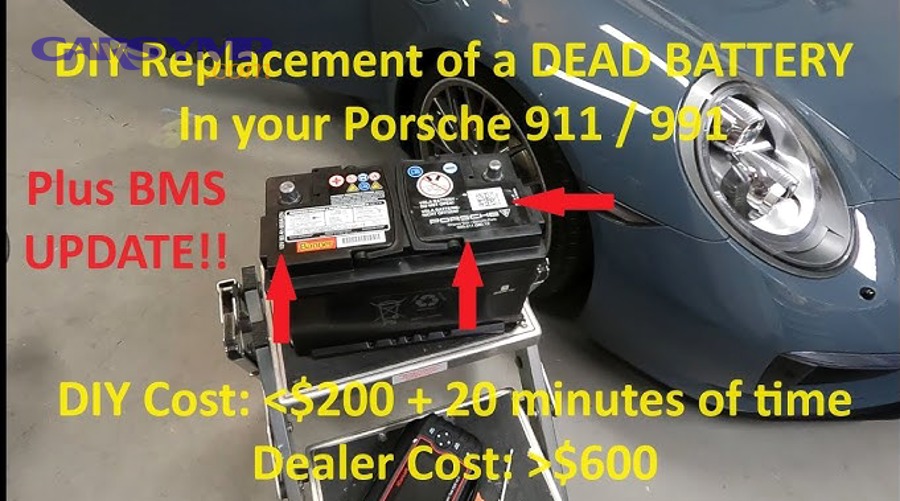
Protect settings and electronics if your car is sensitive to power loss
Memory saver use and when it’s needed depends on your vehicle: some cars tolerate power loss fine, while others may lose radio presets, window calibrations, or module learned values.
In practical terms, a memory saver can be a low-cost prevention tool when losing power would create a time-consuming re-learn process—or when you want to minimize the chance of nuisance warning lights after reconnection.
However, use it correctly and safely: you’re trying to preserve low-current memory circuits, not power high loads, and you must still follow safe terminal-disconnect practices to avoid sparks.
According to many modern service procedures discussed in recent how-to guidance, the value of a memory saver is not “magic”; it’s simple continuity that prevents extra steps that can turn a cheap DIY into a longer troubleshooting session.
Handle the old battery the right way so you don’t lose money
Recycling old battery properly isn’t only environmental—it’s financial. If your purchase included a core charge, returning the old battery is how you get that deposit back.
In the same way, keeping batteries out of landfills supports the closed-loop system that makes lead-acid recycling one of the most successful recycling stories in automotive maintenance.
According to Battery Council International’s Battery Facts & Applications content, in 2025, spent lead batteries in the U.S. are recycled at very high rates in established networks, keeping large volumes of material out of landfills and returning it into new battery production.
So, build this into your plan: keep the old battery upright, transport it safely, and return it promptly to recover your core and avoid additional fees.
Know what to do if the car won’t start or acts weird afterward
What to do if car won’t start after replacement is usually about basics first: terminal tightness, correct polarity, proper ground connection, and ensuring the battery is fully charged—not about buying another battery immediately.
However, there are a few high-impact checks that prevent wasted money: confirm the clamps are fully seated, inspect for corrosion between clamp and post, verify the hold-down isn’t twisting the battery, and ensure no fuses or connectors were disturbed during access.
If the engine cranks slowly, the new battery may be undercharged or the cables may be high-resistance; if there is no crank, re-check the negative ground path and any battery-mounted fuse links.
According to widely taught diagnostic basics, a voltage number alone doesn’t guarantee health—poor connections can drop voltage under load and mimic a dead battery, which is why connection quality is often the cheapest fix.
Quick FAQ that helps prevent cost surprises
Q: Is a dealership always more expensive than DIY or an independent shop?
A: Not always, but dealerships often have higher labor rates and more frequent battery registration steps; independents may be cheaper for the same spec, while DIY is lowest cash cost when access is easy.
Q: Why did my “cheap battery” fail quickly?
A: The most common causes are wrong battery technology for the vehicle, chronic undercharging, parasitic drain, or poor terminal connections—any of which can shorten life and erase your savings.
Q: Can I just install any battery that fits the tray?
A: Fit is only one attribute; correct group size, CCA, and required technology (especially for start-stop systems) are what protect lifespan and prevent charging-system conflicts.
Q: What’s the fastest safe way to keep DIY cheap?
A: Buy the correct spec, test the charging system, clean/protect terminals, return the old battery for the core refund, and verify the car restarts and accessories behave normally after you change car battery.