


Jacking and safety for oil changes is about lifting your vehicle in a controlled, redundant way so it cannot roll, slip, or drop while you’re underneath it. The safest baseline is simple: lift on a solid surface, support the vehicle with rated stands or ramps, and add backup measures so a single failure can’t become a crush hazard.
Beyond the basic lift, most people struggle with two things: finding correct lift points and keeping the vehicle stable while you work. The difference between a calm oil change and a dangerous one is usually a few small choices—wheel chocks, stand placement, and a stability check before you slide under.
Another common worry is whether ramps are safer than jack stands, and when a floor jack is the right tool. You can do an oil change safely with either method, but each has tradeoffs based on ground conditions, vehicle height, and access to the drain plug and filter.
To connect everything into a reliable workflow, “Giới thiệu ý mới”: below is a step-by-step safety system—from prep, to lifting, to supporting, to lowering—built specifically for oil-change clearance and undercar access.
Do you really need to lift the car for an oil change?
Not always: you need to lift the car for an oil change only if ground clearance is insufficient for safe access, correct tool swing, and stable drain-pan placement, or if your filter location requires underbody reach. After deciding, the next step is choosing the lifting method that preserves stability and access.
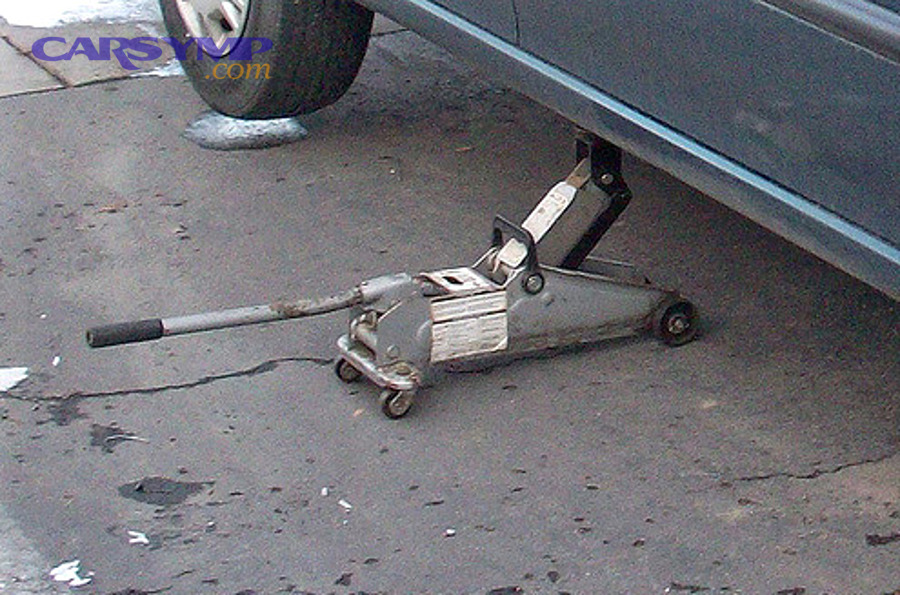
Cụ thể, many vehicles with higher clearance let you reach the drain plug and filter without lifting, but “enough room” is not just about squeezing in—it’s about working without twisting your wrists near hot surfaces, avoiding rushed movements, and keeping the vehicle from shifting while you apply torque.
To judge clearance quickly, check three conditions: (1) you can slide under without compressing your chest or neck; (2) you can align your socket and breaker bar straight on the drain plug; (3) you can remove and reinstall the filter without scraping your forearms against exhaust or sharp heat shields.
However, if you must lift for access, do it in a way that prevents the most common failure modes: rolling, stand tip-over, and jack slippage. Theo nghiên cứu của NHTSA’s National Center for Statistics and Analysis (NCSA) từ Research & Development, vào September 1998, họ ước tính 4,822 ca chấn thương liên quan “jack failures” trong giai đoạn November 1994–October 1995, với phần lớn do xe trượt/rơi khỏi kích.
Để bắt đầu, treat “lift or no lift” as a safety decision, not a convenience decision—and if you lift, commit to full redundancy (stands/ramps + chocks + stability test).
What is the safest surface and setup before you jack the vehicle?
The safest setup is a level, hard surface (concrete is ideal), with the vehicle immobilized by parking brake, gear selection, and wheel chocks, plus a clear working zone free of slope, loose gravel, and soft asphalt. Next, you verify tools and lifting points so nothing slips when weight transfers.
Cụ thể, surface matters because floor jacks roll slightly as the suspension arcs and the vehicle rises; that rolling motion is normal, but it requires a firm floor. On soft asphalt (especially hot weather), jack wheels can dig in, causing the jack to “walk” or tilt, which is a quiet path to instability.
Do a pre-lift “triangle check”:
- Vehicle control: transmission in Park (automatic) or in gear (manual), parking brake set, engine off, keys out of ignition.
- Ground control: level surface, no loose debris, enough space to exit if anything shifts.
- Tool control: jack and stands rated, undamaged, and sized so you’re not maxing out height.
To reduce roll risk, chock the wheels that stay on the ground. Use two chocks per wheel when possible (front and back) so movement is blocked in both directions. If you’re lifting the front, chock both rear wheels; if lifting the rear, chock both front wheels.
Theo nghiên cứu của California Fatality Assessment and Control Evaluation Program (CA/FACE) thuộc California Department of Health Services, vào 1999/08, báo cáo FACE mô tả một thợ giảm chấn tử vong khi phương tiện rơi khỏi giá đỡ và nhấn mạnh việc chèn bánh (chock) cho các bánh còn tiếp xúc mặt sàn.
Tiếp theo, confirm you have a stable “exit lane” (space to slide out) and that your drain pan, tools, and new oil are positioned so you won’t bump the jack or stands while reaching.
Which is safer for oil changes: ramps or jack stands?
Ramps are often safer for simple front-end oil-change access because the vehicle’s weight stays on its tires, while jack stands offer more flexibility and wheel removal; the best choice depends on access needs, ground conditions, and your ability to control roll and placement. Next, compare them by stability, clearance, and failure modes.

Để minh họa rõ ràng, bảng này chứa so sánh nhanh giữa ramps và jack stands để bạn chọn đúng theo tình huống và mức độ rủi ro.
| Method | Best for | Main risk | How to reduce risk |
|---|---|---|---|
| Ramps | Front-only oil changes; fast setup | Driving off-center; ramp slide | Use level concrete, straight approach, chock rear wheels, spotter if new |
| Jack + stands | More clearance; wheel removal; uneven access | Bad lift points; stand tip; jack slip | Correct lift points, stands under solid structure, lower gently, stability test |
| Lift | Maximum access (shop setting) | Improper lift arm placement | Follow manufacturer lift points and equalize arm contact |
Ramps shine when your oil drain plug and filter are accessible from the front and you don’t need wheels off. Because the tires remain loaded, the “single-point support” risk of a jack is reduced. However, ramps introduce a different risk: misalignment while driving up, or over-shooting the ramp stop.
Jack stands are the more universal method, but they demand correct lift-point knowledge and calm lowering technique. A common mistake is “lifting high first” and then hunting for stand locations under a car that is already wobbling on the jack. Instead, pre-plan stand positions before the first pump of the handle.
Theo nghiên cứu của NHTSA, vào May 28, 2020, họ phát hành cảnh báo về đợt thu hồi hơn 1.7 triệu bộ jack stands có nguy cơ sập dưới tải, cho thấy chất lượng giá đỡ và việc dùng đúng thiết bị là yếu tố an toàn cốt lõi.
Hơn nữa, choose the method that keeps you from improvising. If ramps give you enough access for your specific car, they can be the simplest safe option; if not, stands are fine—when used with redundancy.
Where are the correct jacking points, and why do they matter?
Correct jacking points are manufacturer-approved reinforced areas designed to accept concentrated load without bending or slipping; they matter because wrong points can crush metal, shift suddenly, or damage critical components, turning a stable lift into a sudden drop. Next, learn the common safe zones and the “never lift here” list.
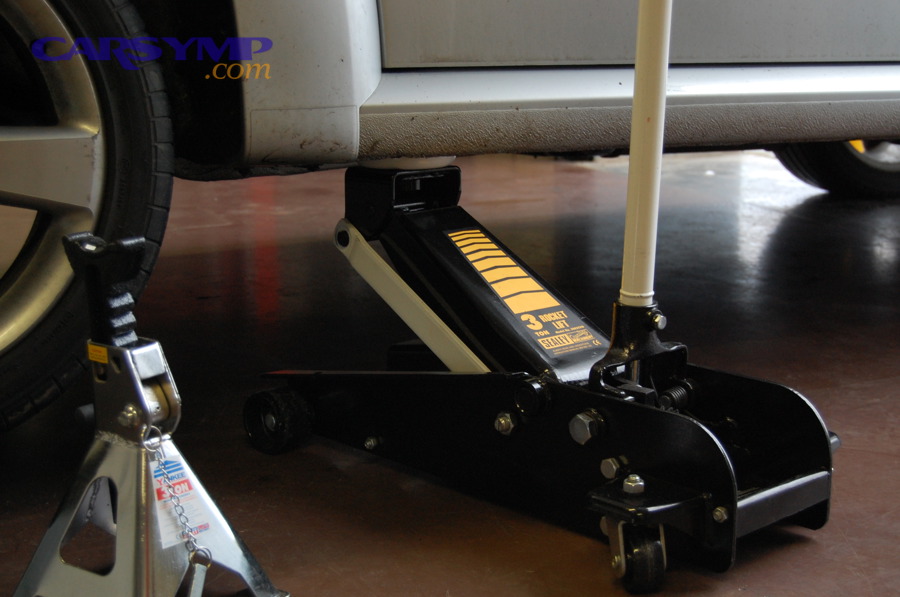
Definition-wise, think of lift points as “load paths”: the car’s weight must travel through a strong structure (frame rail, subframe, reinforced pinch weld area, axle/differential where appropriate) into the jack or stand saddle. If you place the jack under thin sheet metal, plastic aero panels, or a sloped control arm surface that isn’t meant for lifting, the load path becomes unstable.
Common safe jacking/support areas (always verify with your owner’s manual):
- Reinforced pinch weld points near the rocker panels (often marked by small notches or arrows).
- Front subframe crossmember or central lift pad (many FWD cars have this).
- Frame rails on body-on-frame trucks/SUVs.
- Rear differential housing (for some RWD solid axle setups), with stands under axle tubes or specified support points.
Common avoid zones:
- Oil pan, transmission pan, plastic splash shields.
- Exhaust pipes, catalytic converters, thin floor sections.
- Suspension arms not intended as lift pads (unless manual specifies).
Theo nghiên cứu của CA/FACE (NIOSH/CDC stacks), vào 1999/08, báo cáo nêu rõ một yếu tố nguy cơ là đặt jack stands lên các phần không cố định hoặc không phù hợp, làm tăng khả năng phương tiện trượt khỏi điểm tựa.
Quan trọng hơn, your lift point decision also determines stand placement. A stable lift is a system: the jack raises at one point, but the stands must sit under points that will not shift as the suspension relaxes and the vehicle settles.
How do you lift the front end safely with a floor jack?
Safely lifting the front end uses a centered lift point, controlled pumping, and immediate transfer to jack stands so the jack is never the only support; the key is keeping the jack’s wheels free to roll as the car rises. Next, follow a repeatable sequence that prevents sideways loading.
Dưới đây is a practical front-lift sequence for most passenger cars:
- Immobilize: chock rear wheels, set parking brake, confirm Park/gear.
- Locate front center lift point: often the subframe crossmember; confirm in manual.
- Align jack: saddle centered; handle angled so you can pump without leaning under the bumper.
- Lift gradually: pump smoothly; pause every few inches to confirm the saddle remains centered.
- Place stands: under left/right reinforced support points (pinch weld or frame/subframe points).
- Lower onto stands: open release valve slowly; let the car settle evenly.
The most important detail is the “jack roll allowance.” As you lift, the suspension geometry changes and the jack may need to roll slightly inward; if something blocks the jack wheels, the jack can tilt, and the saddle can walk off the point.
Theo nghiên cứu của NHTSA’s NCSA, vào September 1998, phần lớn ca chấn thương liên quan “jack failures” đến từ xe/jack trượt hoặc rơi khỏi kích, nên thao tác nâng từ từ và giữ đúng tâm tải là nguyên tắc then chốt.
Ngoài ra, once the stands take the load, leave the floor jack lightly touching the lift point (not lifting) if it doesn’t interfere—this adds a passive backup without becoming your primary support.
How do you lift the rear safely, and what changes compared to the front?
Safely lifting the rear depends on drivetrain layout: many vehicles lift at a rear differential or rear subframe point, then support on axle tubes or reinforced body points; the main change is you must prevent front wheel roll more aggressively. Next, choose rear lift points based on whether the suspension is solid axle or independent.
Cụ thể, rear lifts often feel less intuitive because the jack handle angle and underbody shapes vary. Use these guidelines:
- Solid rear axle (many trucks/older RWD): jack under the differential pumpkin (if safe on your model), then place stands under axle tubes near the wheels.
- Independent rear suspension: jack under a specified rear crossmember/subframe pad, then place stands under reinforced rear points (pinch weld areas or subframe pads).
Before lifting, chock the front wheels (both sides, both directions if possible). This is crucial because when the rear lifts, the front becomes the “anchor,” and any slope or loose surface can allow slow creeping.
Theo nghiên cứu của CA/FACE (CDC/NIOSH), vào 1999/08, báo cáo điều tra nhấn mạnh việc chèn bánh cho các bánh còn tiếp xúc mặt sàn để giảm nguy cơ bị nghiền do phương tiện dịch chuyển.
Trong khi đó, when lowering the rear onto stands, go slower than you think you need to. Rear settling can shift slightly as bushings load; a controlled, inch-by-inch descent helps the stands seat cleanly.
How should jack stands be positioned for maximum stability?
Jack stands should be positioned as a wide, symmetric base under rigid, flat contact points so the load is vertical and the saddles cannot “kick out”; maximum stability comes from correct height matching and careful lowering until both stands share weight evenly. Next, treat stand placement like building a stable tripod, not just “putting something under there.”
To place stands with confidence, use these rules:
- Use stands in pairs on the same axle end; never rely on one stand for an under-car oil change.
- Match heights before lowering so one stand doesn’t take all the weight first.
- Keep the base flat—no stacking on bricks, loose wood scraps, or sloped surfaces.
- Place the saddle on a point that won’t shift as suspension droops (avoid rounded arms unless specified).
One of the most overlooked stability boosters is width. If you can place stands a bit wider (still on correct points), you reduce side-to-side rocking. For pinch weld support, many DIYers use a slotted rubber pad adapter so the seam sits in a groove rather than on a flat steel saddle.
Theo nghiên cứu của NHTSA, vào May 2020, cảnh báo thu hồi jack stands nhấn mạnh nguy cơ “collapse under load,” vì vậy hãy ưu tiên giá đỡ có cơ chế khóa rõ ràng (ratchet + pin lock nếu có) và mua từ nguồn đáng tin.
Quan trọng hơn, after lowering onto stands, do a stability test: push firmly on the fender or bumper from the side. The vehicle should feel “dead stable,” not springy or shifting. If it moves, raise it back up and correct the problem—no exceptions.
What redundancy checks keep you safe before going underneath?
The safest redundancy checks are a three-layer system: primary support (stands or ramps), secondary backup (spare tire under frame or lightly-contacting jack), and motion prevention (chocks and parking brake), followed by a physical stability test. Next, convert that system into a quick checklist you repeat every time.
Dưới đây is the “60-second under-car safety loop”:
- Support: stands locked and seated, or ramps fully engaged with tires centered.
- Immobilize: chocks tight, parking brake set, transmission secured.
- Backup: place a removed wheel/tire under a strong frame/subframe area (not under the oil pan) if space allows.
- Test: push-shake test from two directions.
- Clear: confirm no tools, drain pan, or body parts can contact the stands while you work.
The backup tire trick is not a substitute for stands; it’s a last-resort gap filler that can prevent full crush in a worst case. If you don’t have space, keep the jack lightly touching as a secondary, but never lifting.
Theo nghiên cứu của NHTSA’s NCSA, vào September 1998, khoảng 74% ca chấn thương ước tính liên quan jack failures xảy ra khi người bị xe đập/trúng lúc xe rơi khỏi kích, cho thấy kiểm tra “ổn định trước khi chui vào” là điểm sinh tử.
Đặc biệt, keep your body out of the “drop zone” until you’ve completed the full loop. That means: no reaching under “just to place the drain pan” if the stands aren’t locked and tested yet.
How do you prevent the most common mistakes that cause slips or collapses?
You prevent slips or collapses by eliminating sideways load, ensuring the jack can roll, using correct lift points, and avoiding rushed lowering; most dangerous incidents come from small improvisations like lifting on a sloped edge or skipping chocks. Next, map the common mistakes to simple preventions you can apply immediately.
Common mistake → safer replacement:
- “The ground is close enough” → Use level concrete; if not available, do not lift, or use a professional lift location.
- Lifting on thin metal/plastic → Use manual-specified reinforced points only.
- Using the jack alone → Always transfer load to stands/ramps before going under.
- Stacking blocks/bricks → Use rated stands of appropriate height; never build unstable towers.
- High lift without plan → Pre-place stands and plan the sequence before you pump.
Another frequent cause is misreading “rated capacity.” Jack and stand ratings assume correct use on a stable surface with load centered. Also remember that rating is not a license to use worn or recalled equipment.
Theo nghiên cứu của NHTSA, vào May 2020, cảnh báo người dùng dừng ngay việc sử dụng một số jack stands bị thu hồi do nguy cơ sập dưới tải, nhắc rằng “đúng thao tác” vẫn cần “đúng thiết bị.”
Bên cạnh đó, avoid working when you’re rushed or distracted. Most oil-change lifting mistakes happen at the beginning (setup) or at the end (lowering), when people mentally “check out.”
How do you lower the vehicle safely after the oil change?
Safe lowering is the reverse of lifting: clear tools, raise slightly to unload the stands, remove stands carefully, then lower slowly with controlled release so the car settles without rocking or shifting. Next, use a deliberate “hands clear” sequence to avoid pinch points and stand kick-out.
Dưới đây is a reliable lowering sequence:
- Clear the zone: drain pan removed, tools accounted for, nothing under the tires.
- Raise slightly: lift just enough to free the stands (a small pump or two).
- Remove stands: pull stands away from underbody; keep fingers away from pinch areas.
- Lower slowly: turn release valve gradually; stop if the car shifts.
- Remove chocks last: only after all wheels are on the ground.
Do not “dump” the car down fast. Quick lowering can cause a sudden suspension settle that may twist the jack saddle or roll the jack unexpectedly. Smooth, steady lowering keeps the load path vertical.
Theo nghiên cứu của NHTSA’s NCSA, vào September 1998, một phần đáng kể sự cố liên quan jack failures có yếu tố xe/jack dịch chuyển; thao tác hạ từ từ giúp giảm dịch chuyển đột ngột khi tải chuyển lại xuống bánh xe.
Tóm lại, finish the job with the same attention you used to start it—because the final steps are when complacency tends to appear.
What safety equipment and habits should you always use for oil-change lifting?
You should always use rated lifting equipment, wheel chocks, eye protection, and a stable-lighting setup, plus habits like pre-planning lift points and doing a push test; these reduce both crush hazards and secondary injuries like burns and slips. Next, build a consistent “every time” kit so you never improvise.
Recommended minimum kit:
- Support: quality ramps or a floor jack + a matched pair of jack stands.
- Immobilize: wheel chocks (at least two; ideally four).
- Visibility: headlamp or underhood light; avoid balancing a lamp where you could knock it into the jack.
- PPE: safety glasses (hot oil splash), gloves, and closed-toe shoes.
- Control: a torque wrench or at least a calibrated feel for drain plug snugness to prevent over-torquing while under the car.
Habit upgrades that matter:
- Pre-lift rehearsal: identify lift points and stand points before raising.
- One direction at a time: keep your body outside the fall zone until stability is verified.
- No distractions: avoid music/headphones at high volume; you want to hear creaks or shifts.
Theo nghiên cứu của CA/FACE (NIOSH/CDC), vào 1999/08, các khuyến nghị phòng ngừa bao gồm dùng thiết bị đã được kiểm định/xếp hạng và huấn luyện thao tác đúng, nhấn mạnh “kỷ luật quy trình” quan trọng như bản thân thiết bị.
Để hiểu rõ hơn, the goal is not perfection; it’s repeatability. A repeatable lifting routine is safer than a “clever” one-off setup.
Contextual Border
Advanced lifting scenarios and rare hazards for oil-change access
Advanced hazards appear when clearance is low, structure is compromised by rust, or the vehicle has sensitive underbody components; in these cases, the safest move is to avoid improvisation and either use ramps designed for low cars or follow manufacturer lift procedures precisely. Next, use the scenarios below to choose safer alternatives before you lift.
What if your car is too low for your floor jack to fit?
If your car is too low, use low-profile ramps or a low-profile jack, or create a controlled “approach rise” by driving onto thin, stable boards designed for load—never stacked scraps—so the jack can reach the lift point. Next, prioritize stability over extra height.
Cụ thể, low cars often tempt people to lift on incorrect points (like control arms) just because they are reachable. Instead, use a tool that fits the job: low-profile jack + correct center point + stands at reinforced points.
Theo nghiên cứu của NHTSA’s NCSA, vào September 1998, nhiều sự cố liên quan đến xe/jack trượt khỏi vị trí; việc “cố đặt cho vừa” trên điểm nâng không chuẩn làm tăng nguy cơ trượt.
Hơn nữa, consider ramps if your oil-change access is front-only and you don’t need wheels off; this often eliminates the “jack doesn’t fit” problem entirely.
How do rusted pinch welds and damaged rocker areas change stand placement?
Rust or damage can weaken pinch welds, so you should shift support to stronger structural points like subframe mounts or frame rails (if available) and use wider contact saddles or adapters to avoid crushing; the goal is a rigid, non-deforming contact. Next, inspect before you trust.
Look for flaking metal, softness when pressed, or previous crushing. If the metal is compromised, it can fold under load, letting the stand slip. Use the manual to locate alternative points—often subframe or suspension mounting regions that are structurally robust.
Theo nghiên cứu của CA/FACE (NIOSH/CDC), vào 1999/08, khuyến nghị tránh đặt jack stands lên các phần không cố định hoặc không an toàn—rỉ sét nặng có thể biến một điểm “có vẻ ổn” thành điểm không an toàn khi chịu tải.
Quan trọng hơn, when in doubt, ramps on a stable surface can be safer than stands on questionable body seams for a basic oil change.
What’s different for EVs and hybrids with underbody battery packs?
EVs and many hybrids require extra care because underbody panels and battery enclosures must not be contacted by jack saddles or stands; you should use only OEM-specified lift points and keep tools away from high-voltage areas. Next, treat the owner’s manual lift diagram as mandatory.
Cụ thể, many EVs have flat undertrays that hide critical structures. Jacking “where it looks flat” can mean contacting a battery shield, cooling lines, or composite panels not designed for point load. Use the manual’s lift pads—often reinforced points near the rocker area, clearly marked for lift arms.
Theo nghiên cứu của NHTSA, vào May 2020, cảnh báo về jack stands cho thấy khi thiết bị hoặc điểm tựa không phù hợp, hậu quả có thể nghiêm trọng; với EV/hybrid, sai điểm nâng còn có thể gây hư hại tốn kém ngoài rủi ro an toàn.
Đặc biệt, if you’re unsure of lift points on an EV, do not guess—use ramps (if compatible) or have the service done on a professional lift.
Can you use the scissor jack that came with the car for an oil change?
You generally should not use an emergency scissor jack as primary support for an oil change because it’s designed for short-term wheel changes, not stable underbody work; if you must lift, transfer immediately to rated jack stands on a stable surface. Next, choose the tool designed for sustained support.
Scissor jacks can be narrow, sensitive to slope, and more vulnerable to side loads while you apply torque to drain plugs. For oil changes, a floor jack provides smoother control and better stability, while stands or ramps provide safer sustained support.
Theo nghiên cứu của NHTSA’s NCSA, vào September 1998, dữ liệu về “jack failures” cho thấy xe rơi do jack dịch chuyển hoặc mất áp/lỗi cơ khí; vì vậy công cụ “tạm thời” không phù hợp cho công việc cần thời gian ở dưới gầm.
Tổng kết lại, reserve the scissor jack for roadside tire events, not routine undercar maintenance.
FAQ: Jacking and safety for oil changes
How high should you lift the car for an oil change?
You should lift only as high as needed to reach the drain plug and filter with controlled tool angles and safe body clearance; higher lifts increase instability and make it easier to misplace stands. Next, aim for “comfortable reach,” not maximum height.
As a practical rule, if you can slide in, turn a wrench straight, and place the drain pan without contorting, you’re high enough. Add more height only if your filter access demands it.
Theo nghiên cứu của NHTSA’s NCSA, vào September 1998, phần lớn chấn thương liên quan rơi trượt xảy ra khi xe đang được nâng; giảm “độ nâng không cần thiết” là một cách giảm rủi ro trực tiếp.
Ngoài ra, keep stands at a moderate height range rather than near their maximum extension to improve stability.
Should you leave the floor jack in place after the car is on stands?
Yes, you can leave the floor jack lightly touching as a secondary backup if it doesn’t interfere, but it must not be the primary support; the stands (or ramps) must carry the load. Next, verify the stands are locked and seated before using any backup approach.
This backup is useful because it provides one more barrier against a complete drop. However, never count it as a stand replacement—hydraulic components can leak down over time.
Theo nghiên cứu của NHTSA’s NCSA, vào September 1998, có nhóm sự cố liên quan jack mất áp/lỗi giữ tải; vì vậy “để jack làm chính” là không an toàn, còn “để jack làm phụ” có thể hợp lý nếu stands đã chịu tải.
Đặc biệt, if the jack blocks your escape route or makes you work around it awkwardly, remove it and use another backup (like a wheel under a strong point).
Are ramps safe on wet concrete or in a garage with dust?
Ramps can be safe only if the contact surfaces have sufficient friction and the ramp design resists sliding; wetness, dust, or oily floors increase slide risk, so you should clean the area and use chocks and a straight approach. Next, treat traction as a required condition, not a “nice to have.”
If your garage floor is slick, clean it, dry it, and consider using ramps with rubber feet or textured bases. Always chock the opposite axle, and drive up slowly with a spotter if you’re not confident.
Theo nghiên cứu của NHTSA’s NCSA, vào September 1998, phần lớn ca chấn thương liên quan đến trượt/rơi, nên kiểm soát ma sát bề mặt là một yếu tố nền tảng để giảm trượt ngay từ đầu.
Tóm lại, if you can’t ensure traction, choose another method or location.
What quick rule tells you it’s not safe to lift today?
If you can’t get a level, hard surface and correct lift points—or you feel forced to improvise with unstable blocks, questionable rust, or uncertain equipment—then it’s not safe to lift today. Next, switch to a safer alternative like ramps on a better surface or a professional service bay.
That rule protects you from the trap of “just this once.” Most serious lifting incidents are preceded by a moment where the setup felt slightly wrong but the person proceeded anyway.
Theo nghiên cứu của NHTSA, vào May 2020, cảnh báo thu hồi jack stands nhấn mạnh việc dừng sử dụng ngay khi có nguy cơ thiết bị không an toàn; áp dụng tư duy tương tự cho hoàn cảnh nâng xe sẽ giúp bạn tránh quyết định rủi ro.
Như vậy, a safe oil change starts with the courage to stop if the setup isn’t right.
As you work through this process, keep the flow simple and consistent. If you’re also planning to change engine oil at home, this lifting routine becomes the foundation for every step that follows, because access and stability determine how calmly you can drain, replace the filter, and re-check for leaks. In the same spirit, your choice of oil can follow a separate decision path—an Oil type and viscosity guide helps you match climate and engine design without guesswork. Finally, if you prefer a fully repeatable workflow, a DIY oil change step-by-step routine pairs perfectly with the safety loop above, because it reduces rushed movements that often cause lifting mistakes.