


A P0420 or P0430 code is best diagnosed with a root-cause checklist—not a parts cannon—because the ECM sets these codes when catalyst monitoring data suggests the converter isn’t storing/using oxygen effectively, even when the real problem is upstream. (tomorrowstechnician.com)
Most people encounter these codes when a check-engine light threatens an inspection deadline, so you’ll also learn what the codes mean, what “bank” refers to, and why the upstream and downstream O2 signals matter in the first place. (carparts.com)
Then we’ll move from theory to scan-tool reality: what live data patterns point toward a worn converter, what patterns point toward sensor problems, and what quick checks rule out exhaust leaks and fuel/misfire issues that can make a good converter look bad. (tomorrowstechnician.com)
Introduce a new idea: once you’ve confirmed the fix, you’ll also see how to verify readiness monitors for inspection and how to avoid repeat failures that lead to an expensive “emissions test failure fix” loop.
What do P0420 and P0430 mean (and what is “catalyst efficiency below threshold”)?
P0420 and P0430 are OBD-II trouble codes that mean the ECM’s catalyst monitor thinks the catalytic converter is no longer reducing emissions efficiently—typically because downstream oxygen sensor behavior looks too similar to upstream behavior under test conditions. (tomorrowstechnician.com)
Specifically, this matters because the catalyst monitor is not “looking inside” the converter; it’s comparing signals and doing math on sensor inputs, so the diagnosis must start with how the monitor makes its decision, not with buying a converter. (tomorrowstechnician.com)
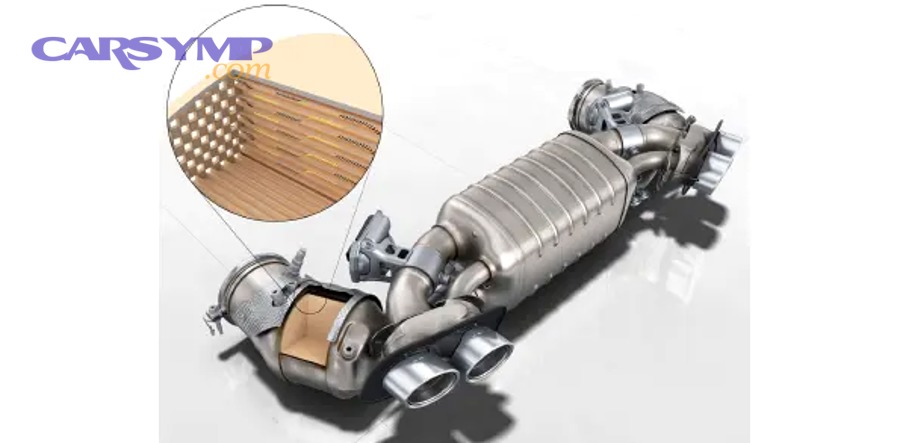
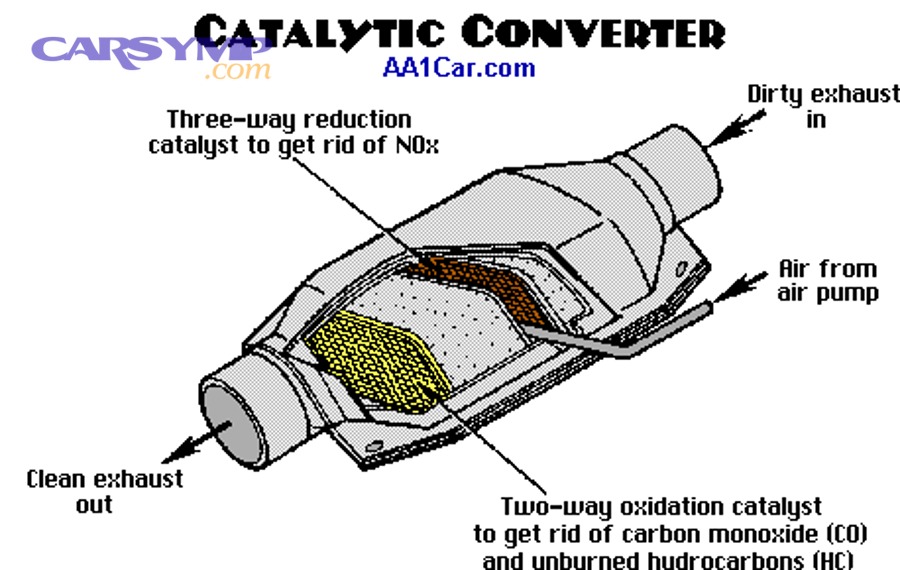
A converter that’s losing oxygen storage capacity will often allow more exhaust oxygen swings to pass through—making the downstream sensor switch more like the upstream sensor. That is the logic behind “efficiency below threshold,” but the cause of that pattern can be the converter, the sensors, an exhaust leak, or an upstream fueling/misfire problem. (tomorrowstechnician.com)
Does P0420 always mean the catalytic converter is bad?
No—P0420 does not always mean the catalytic converter is bad, because (1) small exhaust leaks can pull oxygen into the pipe and distort downstream readings, (2) oxygen sensors can be slow or biased and report misleading data, and (3) misfires or rich/lean fueling can overwhelm the catalyst and trigger “low efficiency” even when the converter itself isn’t the original failure. (tomorrowstechnician.com)
Next, the practical move is to treat P0420/P0430 as a system diagnosis: confirm there are no misfire/fuel-control codes you’re ignoring, verify the exhaust is sealed, and then evaluate upstream vs downstream signals under conditions similar to the freeze-frame that set the code. That sequence is what prevents the common DIY trap: replacing the converter and having the code return.
What’s the difference between P0420 and P0430?
P0420 is “catalyst efficiency below threshold” on Bank 1, while P0430 is the same issue on Bank 2—so the difference is location, not meaning. (obdeleven.com)
Then, “bank” matters mainly on V-style engines: Bank 1 is the side of the engine that contains cylinder #1, and Bank 2 is the opposite side. Inline engines generally only have Bank 1. If you don’t know your banks, a repair manual diagram or scan-tool PID labeling can save you from chasing the wrong side.
What symptoms should you expect with a catalyst efficiency code?
There are four common symptom clusters with catalyst efficiency codes: (1) a check-engine light with otherwise normal driving, (2) an emissions or inspection failure, (3) occasional fuel economy changes, and (4) in some cases, odor/heat symptoms if the converter is stressed or partially restricted. (carparts.com)
In addition, note the key diagnostic clue: many vehicles drive “fine” with P0420/P0430, which is why people delay diagnosis—until inspection time forces a decision. That is also why you need a checklist that distinguishes efficiency from restriction (a partially clogged converter can create power loss, but many P0420 cases are not clogged).
Is it safe to drive with P0420/P0430 and what should you fix first?
Yes, it’s often safe to drive briefly with P0420/P0430, but you should fix it soon because (1) it can cause inspection failure, (2) the underlying cause (misfire/rich running) can damage the converter rapidly, and (3) a deteriorating converter can sometimes break apart or become restricted and create expensive secondary problems. (carparts.com)
Next, “safe to drive” depends on what else is happening: if you also have misfire codes, flashing CEL behavior, overheating, rotten-egg smell, severe power loss, or rattling from the converter shell, treat it as urgent. Otherwise, you can usually drive while you gather scan-tool data and parts—but don’t ignore it for months.
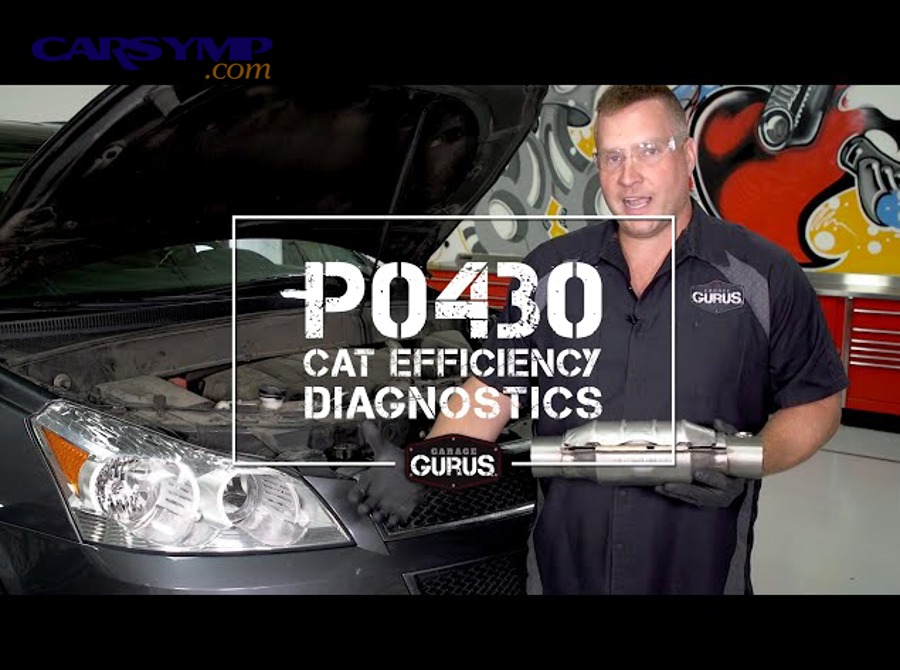
The best “fix first” rule is simple: solve anything that can damage a converter before you replace a converter. Misfires and rich fueling dump unburned fuel into the exhaust, where it can oxidize inside the converter and create extreme heat. That’s the path to melted substrate and repeat P0420 after you “fixed” it. (tirereview.com)
Should you diagnose other codes before chasing P0420/P0430?
Yes—you should diagnose other codes first because (1) misfire/fuel-trim codes can be the cause of the catalyst code, (2) oxygen sensor heater or circuit codes make catalyst monitoring unreliable, and (3) clearing P0420 without fixing upstream issues often results in an immediate return once the monitor runs again. (tomorrowstechnician.com)
Then, use a priority order: safety/drivability issues first (misfire/overheat), sensor circuit integrity second (O2 heater/circuit), exhaust integrity third (leaks), and only then catalyst efficiency confirmation testing.
Which conditions can destroy a catalytic converter quickly?
There are three fast catalyst-killers: (1) repeated misfires that send unburned fuel into the converter, (2) persistently rich operation (injector leak, fuel pressure issues, biased sensors), and (3) coolant or oil burning that coats or contaminates catalyst surfaces. (researchgate.net)
In addition, short trips can worsen outcomes because the converter spends more time below optimal temperature while fuel control is less stable—so small issues can become chronic. The point isn’t to scare you; it’s to stop you from replacing a converter on a car that’s still misfiring.
When does P0420/P0430 indicate a clogged converter vs an efficiency issue?
A catalytic converter is usually restricted/clogged when you have power loss under load, inability to rev, excessive heat upstream of the converter, or abnormal exhaust backpressure, while P0420/P0430 is often an efficiency issue when the car drives normally but the downstream O2 signal behavior looks “too active.” (tomorrowstechnician.com)
Meanwhile, the two can overlap: a converter can be both worn (efficiency low) and partially melted (restriction). That’s why your checklist should include at least one confirmation test for restriction if you have power symptoms.
What tools and data do you need to diagnose P0420/P0430 like a checklist?
You can diagnose P0420/P0430 effectively with (1) a scan tool that shows live data, (2) a way to detect exhaust leaks, and (3) a repeatable drive condition to reproduce the catalyst monitor test—because the code is fundamentally a data-driven comparison of signals. (tomorrowstechnician.com)
Next, think in two layers: minimum viable diagnosis (enough to make a correct decision) and confidence boosters (Mode $06, temperature tests) that reduce the risk of an expensive wrong call.
At the minimum level, you need freeze-frame data (to know when it happened), upstream/downstream O2 or lambda data (to see the relationship), fuel trims (to spot rich/lean trends), and misfire data if available. If your scan tool can graph O2 signals, even better—patterns are easier to interpret as waveforms than as changing numbers.
What scan-tool features matter most for catalyst code diagnosis?
The most useful scan-tool features are live-data graphing, access to upstream and downstream O2/lambda sensor PIDs, fuel trims (STFT/LTFT), misfire counters or Mode $06 data, and the ability to show readiness monitors and monitor completion status. (tomorrowstechnician.com)
Then, don’t get distracted by dozens of PIDs: for catalyst work, you’re trying to answer one question—does downstream behavior indicate poor oxygen storage capacity, or is something else making it look that way?
What freeze-frame data should you record before clearing the code?
Record (1) RPM and engine load, (2) coolant temperature, (3) vehicle speed, (4) short- and long-term fuel trims, (5) upstream and downstream sensor status (if shown), and (6) time since start—because these tell you the enabling conditions the monitor used to judge efficiency. (tomorrowstechnician.com)
Next, write those down or screenshot them. The fastest way to waste an afternoon is to clear codes, lose freeze-frame, and then guess at drive conditions while waiting for the catalyst monitor to rerun.
Do you need Mode $06 for diagnosing catalyst efficiency codes?
No—you don’t need Mode $06, but it helps because (1) it can show how close the catalyst monitor is to failing even before a code sets, (2) it provides standardized test results that can increase confidence, and (3) it helps compare Bank 1 and Bank 2 performance on V engines. (tomorrowstechnician.com)
More importantly, Mode $06 is a “confirming” tool, not a first step. You still must rule out exhaust leaks and upstream issues first, because Mode $06 can fail for the same reasons the code fails—bad inputs create bad conclusions.
Evidence: According to a study by Stanford University, in 2017, researchers described estimating three-way catalyst aging by analyzing the differential response of upstream and downstream lambda sensors, showing how signal relationships can be used to infer catalyst condition. (pangea.stanford.edu)
How do you rule out exhaust leaks before blaming the converter?
You rule out exhaust leaks by checking for oxygen intrusion before and near the converter because even a small leak can skew downstream sensor readings, making a healthy converter look inefficient on the catalyst monitor. (obdeleven.com)
Next, treat leak checks as “cheap certainty”: a gasket or cracked flex pipe can mimic converter failure, and leak repair costs are usually far lower than a catalytic converter replacement.
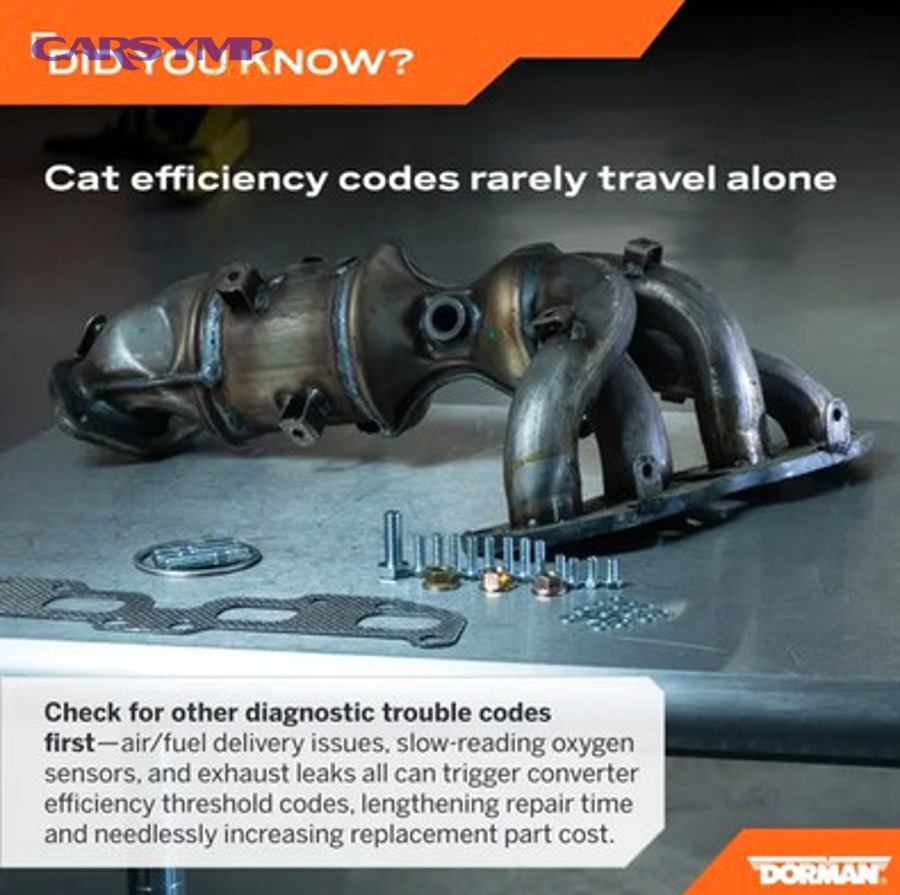
Start with a cold inspection (listen/feel for puffs, look for soot trails), then do a warm inspection (noise changes), and ideally confirm with a smoke test. If you don’t have a smoke machine, you can still find many leaks with careful visual inspection of flanges, springs/bolts, and flex sections.
Can a small exhaust leak trigger P0420/P0430?
Yes—a small exhaust leak can trigger P0420/P0430 because (1) it can pull fresh oxygen into the pipe during pressure pulses, (2) it changes the oxygen content the downstream sensor reads, and (3) it interferes with the ECM’s assumption that changes in oxygen signals reflect catalyst oxygen storage rather than outside air. (tomorrowstechnician.com)
Then, pay special attention to leaks after the upstream sensor but before or near the downstream sensor, because that’s the zone where oxygen intrusion most directly corrupts the “upstream vs downstream” comparison.
Where should you check first for leaks on a P0420/P0430 vehicle?
Check (1) exhaust manifold and manifold gaskets, (2) flex pipe cracks, (3) flange gaskets and spring-bolt connections, and (4) welds and the O2 sensor bung area near the converter—because these are high-heat, high-vibration points that commonly leak. (obdeleven.com)
Next, remember the “soot map” trick: black carbon trails on joints often reveal where gases are escaping, even if the leak is quiet.
Smoke test vs soapy water vs listening: which leak test works best?
A smoke test wins for reliability, listening is fastest for obvious leaks, and soapy water is useful only in limited scenarios (mostly accessible joints and lower-pressure areas) because exhaust leaks don’t behave like pressurized air leaks. (tomorrowstechnician.com)
More specifically, if you’re serious about avoiding misdiagnosis, borrow or rent a smoke machine. The catalyst code is expensive enough that one good leak test often pays for itself.
How do you tell “O2 sensor problem” vs “converter efficiency problem” using live data?
You tell “O2 sensor problem” vs “converter efficiency problem” by comparing upstream switching behavior to downstream stability, because a healthy converter dampens oxygen fluctuations while a worn converter allows downstream signals to resemble upstream patterns—assuming the exhaust is sealed and the sensors are functioning. (tomorrowstechnician.com)
Next, this is the heart of O2 sensor issues vs converter diagnosis: you’re not hunting a magic voltage number; you’re interpreting relationships, response speed, and consistency under repeatable conditions.
To keep it simple, aim for a steady cruise when the engine is fully warm and in closed loop. Watch the upstream sensor (Sensor 1) switch rapidly as fuel control adjusts. Watch the downstream sensor (Sensor 2) for a slower, steadier trend if the converter is storing oxygen properly.
What should upstream (Sensor 1) and downstream (Sensor 2) signals look like when the converter is healthy?
With a healthy converter, the upstream sensor generally switches rapidly as the ECM trims fuel, while the downstream sensor should be comparatively steady or slow-changing because the converter buffers oxygen swings through oxygen storage and release. (tomorrowstechnician.com)
Then, don’t over-interpret minor downstream movement. The key is whether downstream “tracks” upstream closely over time. A little motion is normal; sustained mirroring is the warning sign.
What live-data pattern suggests the catalytic converter is worn out?
A worn converter is suggested when the downstream sensor begins to switch frequently and visually mirror the upstream waveform, because that implies reduced oxygen storage capacity and reduced ability to smooth the exhaust oxygen fluctuations the monitor expects to see dampened. (pangea.stanford.edu)
More specifically, a converter that is losing oxygen storage may show downstream “activity” that increases during steady cruise and during monitor-enabling conditions. That’s often when the code sets—because the monitor has enough stable data to call the pattern a failure.
Evidence: According to a study by Stanford University, in 2017, researchers used upstream and downstream lambda sensor response differences as a basis for estimating catalyst aging, reinforcing that sensor-to-sensor relationships are tightly linked to catalyst condition. (pangea.stanford.edu)
How can you test whether the rear O2 sensor is lying (slow, biased, heater issue)?
You can test whether the rear O2 sensor is misleading by checking (1) for heater/circuit codes and wiring damage, (2) whether the sensor responds smoothly and plausibly to changes in operating condition, and (3) whether the signal is stuck high/low or unnaturally noisy compared with expected behavior for your sensor type. (tomorrowstechnician.com)
Then, use a common-sense sanity check: if the rear sensor shows wildly active switching but your exhaust is sealed and your engine is stable (fuel trims normal, no misfires), that activity may point to real catalyst inefficiency. But if you have unstable fuel control, leaks, or sensor circuit issues, the rear sensor can’t be trusted to “judge” the converter.
What engine conditions can cause “false” catalyst efficiency codes and how do you check them?
False—or more accurately, misattributed—catalyst efficiency codes happen when engine or exhaust conditions make downstream oxygen data look like a bad converter, so you check fuel trims, misfire indicators, and signs of oil/coolant burning before condemning the catalyst. (tomorrowstechnician.com)
Next, think of the converter as the last domino. If the upstream dominos (spark, fuel, air, sealing) are wobbling, the converter and sensors report chaos, and the catalyst monitor can’t separate “bad converter” from “bad inputs.”
Start with trims: large positive trims suggest the engine is adding fuel to compensate for lean conditions (vacuum leak, MAF issue), while large negative trims suggest rich conditions (leaking injectors, high fuel pressure). Either direction can change exhaust oxygen behavior and stress catalyst efficiency under the monitor.
Do fuel trims help diagnose P0420/P0430?
Yes—fuel trims help diagnose P0420/P0430 because (1) they reveal persistent rich/lean corrections that alter exhaust oxygen patterns, (2) they point to upstream problems that can overwhelm or damage the catalyst, and (3) they help you predict whether replacing a converter will be a temporary bandage or a lasting fix. (tomorrowstechnician.com)
Then, interpret trims under the same conditions the code set (use freeze-frame as your guide). A car that looks “okay” at idle may run rich at cruise. That mismatch is exactly how you end up with confusing catalyst codes.
Which upstream problems should be fixed before replacing a converter?
Fix (1) misfires (spark plugs, coils, injectors), (2) vacuum leaks and unmetered air, (3) fuel delivery problems, (4) biased airflow or temperature sensors, and (5) oil/coolant consumption issues before replacing a converter—because these are common root causes of both catalyst stress and misleading monitor data. (tirereview.com)
More importantly, if you replace a converter while a misfire is still present, you’re essentially installing a new part into a failure environment. That’s why repeat P0420 after converter replacement is so common.
How do misfires and rich running damage the catalyst and trigger P0420/P0430?
Misfires and rich running damage the catalyst by sending unburned fuel into the exhaust where it can oxidize inside the converter, creating excessive heat that melts or degrades the substrate and reduces oxygen storage capacity, which then shows up as “low efficiency” on the monitor. (researchgate.net)
Then, connect the dots to diagnosis: if you see P0420 plus any history of misfires, don’t start with “cat vs O2” at all—start with “what is causing misfire or rich operation,” because that is likely the actual source of the catalyst monitor failure.
What is the step-by-step diagnostic decision tree for P0420/P0430 (DIY checklist)?
The best diagnostic decision tree is: scan and prioritize codes → capture freeze-frame → verify exhaust sealing → evaluate sensor signals and trims → run confirmation tests → repair root cause → verify monitor readiness, because this sequence eliminates the most common false positives before you make the expensive replacement decision. (tomorrowstechnician.com)
Next, treat the process like a checklist you can stop and resume. Catalyst codes often take time to reproduce, and a structured approach prevents you from “forgetting what you already proved” and looping back to Step 1.
Before the checklist, here’s quick context for the table below: it summarizes common observations (symptoms + data patterns) and the most likely direction to investigate first. It does not replace the checklist—think of it as a map legend.
| What you observe | What it often suggests | What to check first |
|---|---|---|
| Downstream O2 mirrors upstream during steady cruise | Reduced oxygen storage capacity or oxygen intrusion | Exhaust leak check, then live-data review |
| Fuel trims strongly negative (rich) + P0420 | Rich running stressing the catalyst | Injectors, fuel pressure, sensor bias |
| Misfire history + P0420 | Catalyst overheating/damage risk | Fix misfire before anything else |
| No drivability issues, no other codes, sealed exhaust | Higher chance converter is worn | Confirmation tests (Mode $06, temp/backpressure) |
What is the fastest “no-parts” checklist to run first?
There are five no-parts steps: (1) check for other codes and prioritize misfire/fuel codes, (2) record freeze-frame, (3) inspect exhaust for leaks and soot trails, (4) confirm closed-loop operation and review fuel trims, and (5) graph upstream vs downstream signals during warm steady cruise to see whether the downstream is mirroring. (tomorrowstechnician.com)
Then, if any step fails (misfire present, trims extreme, leak found), stop and fix that issue first. Your goal is to create a stable test environment for the catalyst monitor logic.
What confirmatory tests can validate a failing catalytic converter before you replace it?
There are four common confirmatory tests: (1) Mode $06 catalyst test results if your tool supports it, (2) temperature comparison across the converter under controlled conditions, (3) backpressure testing if restriction is suspected, and (4) controlled enrichment/leaning tests (where appropriate) to observe whether the converter buffers oxygen changes. (tomorrowstechnician.com)
More specifically, confirmation tests are most valuable when your live-data interpretation is borderline—downstream is “kind of active,” but you still suspect leaks, sensor lag, or unstable fueling. A good confirmation step reduces the chance you replace an expensive part on a hunch.
When should you replace the catalytic converter vs replace an O2 sensor?
The converter is the better replacement choice when (1) exhaust is sealed, (2) fuel trims and misfire data show stable engine operation, and (3) downstream behavior repeatedly mirrors upstream under monitor-like conditions, while the O2 sensor is the better replacement choice when (1) you have sensor heater/circuit faults, (2) the signal is stuck/implausible/slow regardless of operating changes, or (3) wiring/connectors show clear damage or corrosion. (tomorrowstechnician.com)
Then, avoid the “cheap sensor first” reflex if your data strongly points to catalyst inefficiency. A worn converter doesn’t become healthy because you installed a new downstream sensor; the monitor will simply detect the same oxygen-storage weakness again.
After you fix the cause, how do you verify the repair and prevent P0420/P0430 from coming back?
You verify the repair by confirming stable trims and sensor signals, clearing codes only after the root cause is fixed, and driving until the catalyst monitor and readiness monitors complete—because inspection readiness is about monitor completion, not just a cleared check-engine light. (tomorrowstechnician.com)
Next, prevention is mostly about protecting the converter from the same stress that caused the failure: misfires, rich operation, and contamination. If you installed a converter, this step is especially important because many “new cat, code returned” stories are actually “old misfire, new converter.”
A practical verification plan looks like this: clear codes, drive under mixed conditions (idle, steady cruise, decel), and watch readiness. If the catalyst monitor completes and the code does not return, you’ve solved the system problem—not just erased the symptom.
Will clearing the code “fix” P0420/P0430 temporarily?
Yes—clearing the code can “fix” P0420/P0430 temporarily because (1) it resets the monitor’s stored failure, (2) the catalyst monitor may not rerun immediately, and (3) the MIL can stay off until the monitor completes again and detects the same failing pattern. (tomorrowstechnician.com)
Then, don’t use clearing as a diagnosis method. Use it as a verification step after repair, otherwise you’ll lose freeze-frame data and slow down your troubleshooting.
How do you set readiness monitors after a repair without guessing?
Readiness monitors set when the car completes specific enabling conditions—typically including a cold start, warm-up to operating temperature, closed-loop operation, and steady cruise/decel segments—so you set them by driving a complete mixed cycle and watching monitor status on your scan tool instead of guessing mileage. (tomorrowstechnician.com)
More specifically, your scan tool is the truth source: if it says “catalyst: not ready,” you keep driving and keep conditions stable; if it says “ready,” you stop chasing ghosts and focus on whether any codes returned.
What habits and maintenance prevent repeat catalyst efficiency failures?
There are three prevention habits: (1) fix misfires immediately and never drive long-term with a flashing MIL, (2) keep fuel control stable by addressing vacuum leaks and sensor issues quickly, and (3) reduce contamination risk by addressing oil/coolant burning early and using correct parts (spark plugs, correct fuel). (tirereview.com)
Evidence: According to a study by Auburn University and Stanford University, in 2021, researchers described three-way catalysts as key devices installed downstream of engines to mitigate pollutants, underscoring why stable upstream control is essential for sustained catalyst performance. (par.nsf.gov)
What edge cases can cause intermittent or confusing P0420/P0430 results (and what do they mean)?
Intermittent P0420/P0430 results often come from edge cases—like threshold sensitivity, aftermarket converter quality, tiny leaks, or monitor enabling conditions—so you interpret “comes and goes” as a clue about testing conditions, not proof the problem disappeared. (pangea.stanford.edu)
Next, this is where many people waste money: they replace parts during a “good week,” the light stays off briefly, and then returns as soon as the catalyst monitor runs under the right conditions.
A useful mindset is to separate “data changed” from “system fixed.” Ambient temperature, trip length, load, and fuel control stability can all change how the monitor evaluates the converter—so your goal is repeatable testing. Also, don’t confuse catalyst codes with other emissions failures: EVAP leak codes can also fail inspection, and they often start with simple sealing issues.
Can ECU updates, TSBs, or calibration thresholds affect catalyst efficiency codes?
Yes—updates and calibration thresholds can affect catalyst efficiency codes because (1) monitor sensitivity can change, (2) enabling conditions or pass/fail thresholds can be adjusted, and (3) some vehicles have known patterns where software updates reduce false fails or improve monitor accuracy. (pangea.stanford.edu)
Then, this doesn’t mean “update fixes a bad converter.” It means you should check whether your vehicle has known calibration-related nuisance failures before you assume every P0420 is purely mechanical.
Do aftermarket catalytic converters commonly trigger repeat P0420/P0430—and why?
Yes—aftermarket converters can trigger repeat P0420/P0430 because (1) catalyst loading and design may not match the vehicle’s original monitor expectations, (2) some units have lower oxygen storage capacity out of the box, and (3) fitment issues can create small leaks that poison the test. (tomorrowstechnician.com)
More importantly, this is why “the cheapest converter” often becomes the most expensive choice. If you must replace, match emissions certification requirements and choose a reputable unit that aligns with your vehicle’s monitoring strategy.
Why can a rear O2 sensor spacer/non-fouler “mask” P0420 and why is it a bad long-term strategy?
A spacer can sometimes “mask” P0420 by reducing the downstream sensor’s exposure to rapid exhaust changes, but it’s a bad long-term strategy because (1) it doesn’t fix the underlying emissions performance, (2) results are inconsistent, and (3) tampering with emissions monitoring can be illegal and can still fail inspections. (tomorrowstechnician.com)
Then, the better path is always diagnosis: if the converter is fine, fix the cause of the false reading; if the converter is worn, replace it for a real emissions solution rather than hiding the symptom.
Why does P0420 sometimes appear after highway driving but not city driving?
P0420 can appear after highway driving because (1) the catalyst monitor often runs under stable, steady conditions, (2) sustained temperature and closed-loop control make the sensor comparison more reliable, and (3) long steady cruise provides the consistent data window the ECM needs to judge efficiency and decide it’s below threshold. (tomorrowstechnician.com)
Finally, don’t ignore other emissions basics when you’re chasing inspection readiness: EVAP issues can independently fail you, and a loose gas cap is a classic cause of EVAP leak codes. If you’re also handling EVAP concerns, include Gas cap test and replacement guidance in your plan: tighten until it clicks, inspect the seal for cracks, and replace the cap if the seal is damaged—then verify EVAP readiness with the scan tool. (carparts.com)