


An exhaust leak is usually easy to spot once you know what to listen and look for—because the system “tells on itself” through sound, odor, and small performance changes. If your car suddenly has a loud exhaust, a sharp ticking when cold, or a strange smell near the cabin or engine bay, you’re likely dealing with a leak somewhere between the exhaust manifold and tailpipe.
Next, you’ll want to know whether it’s safe to keep driving, because the risk isn’t only noise—leaks can raise cabin exposure to exhaust gases, damage nearby parts, and trigger false oxygen-sensor readings that affect drivability.
Then, it helps to understand where leaks happen most (manifold gasket, flex joint, flanges, muffler seams) and what causes them (heat cycling, rust, impact, loose hardware), so you don’t “fix the sound” while the real failure keeps spreading.
Introduce a new idea: once you can recognize the symptoms and pinpoint the likely location, you can choose the right repair approach—whether that’s a short-term patch to get home or a proper repair that won’t come back in two weeks.
What are exhaust leak symptoms (signs) you can notice right away?
There are 7 main exhaust leak symptoms—loud exhaust, ticking/puttering noise, exhaust smell, soot marks, vibration, reduced power/MPG, and check-engine codes—based on what the leak does to sound, pressure, and gas flow.
To better understand what you’re hearing and smelling, start with the “fast tells” that don’t require tools.
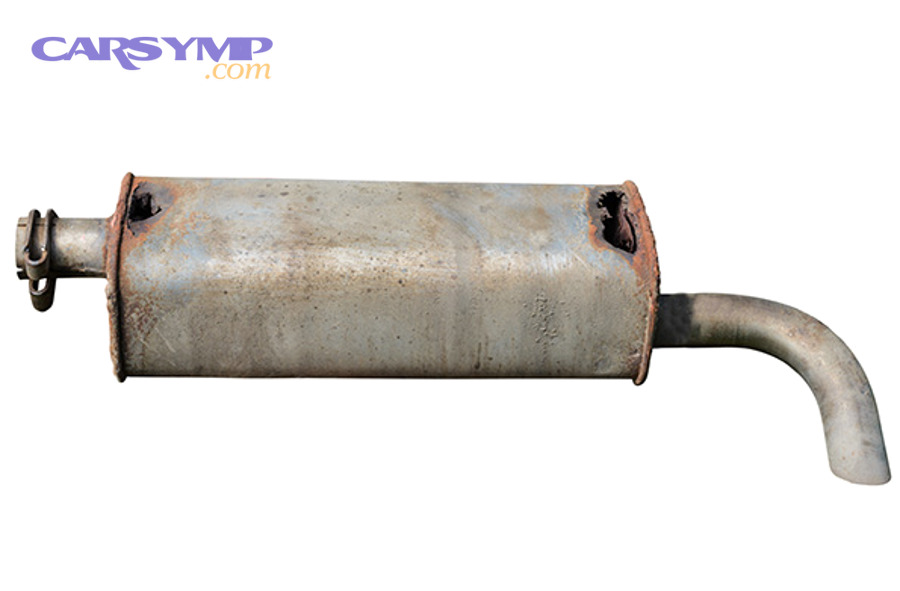
Loud exhaust and a sharper “raspy” tone
A leak makes your exhaust system act like it has an extra opening, so noise escapes before it reaches the muffler. That’s why a “normal” rumble can turn into a loud exhaust with a raspier, harsher note—especially when you accelerate.
Common sound patterns that point to a leak:
- Cold start gets louder, then slightly quiets as metal expands (typical manifold or gasket leak).
- Acceleration gets noticeably louder (leak under load).
- Sound comes from the engine bay, not the rear of the car (upstream leak).
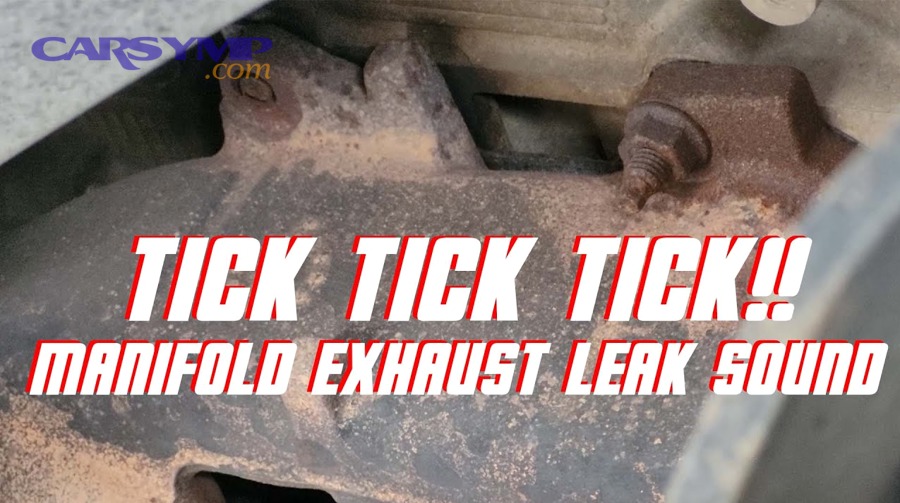
Ticking noise near the engine, especially when cold
A classic manifold-area leak sounds like a fast “tick-tick-tick” that tracks engine RPM. It often shows up strongest at cold start because the metal is contracted and the gap is bigger; as the exhaust manifold heats up, it can temporarily “seal” a little.
Exhaust smell—outside and sometimes inside the cabin
If you notice a smell like raw exhaust or burning fumes near the hood or around the front doors when stopped, treat it seriously. Upstream leaks can push gases into the engine bay, and airflow can carry those gases toward the HVAC intake.
Red flags:
- Smell gets worse at idle in traffic or at stoplights
- Smell appears with heater/defrost on
- Headache, dizziness, nausea—stop driving and ventilate immediately
Sooty deposits or black streaks near a joint
Exhaust carries carbon and moisture. Where a leak exists, you often see:
- Black soot “spray” patterns on a flange or gasket edge
- Dry, powdery black buildup on nearby heat shields
- Staining around a crack or seam
Vibrations, rattles, or a “buzz” at certain RPM
Leaks can create a high-frequency buzz when escaping gas excites thin metal. Heat shields, loose hangers, and cracked flex sections can all amplify this.
Reduced power, sluggish acceleration, or worse MPG
A leak changes exhaust backpressure and can alter oxygen sensor readings—especially if the leak is upstream of a sensor. That can cause:
- Hesitation
- Richer fueling (worse fuel economy)
- Turbo lag (on turbo engines, leaks upstream can reduce spool)
Check engine light and O2-related codes
Leaks before sensors can introduce extra oxygen and confuse fuel trims. It’s common to see oxygen-sensor or mixture-related codes even when the sensors are fine—the leak is the real “measurement error.”
Is it safe to drive with an exhaust leak?
No—driving with exhaust leak symptoms is not truly safe because leaks can raise exposure to harmful gases, damage nearby components from heat, and cause engine-control errors that affect drivability.
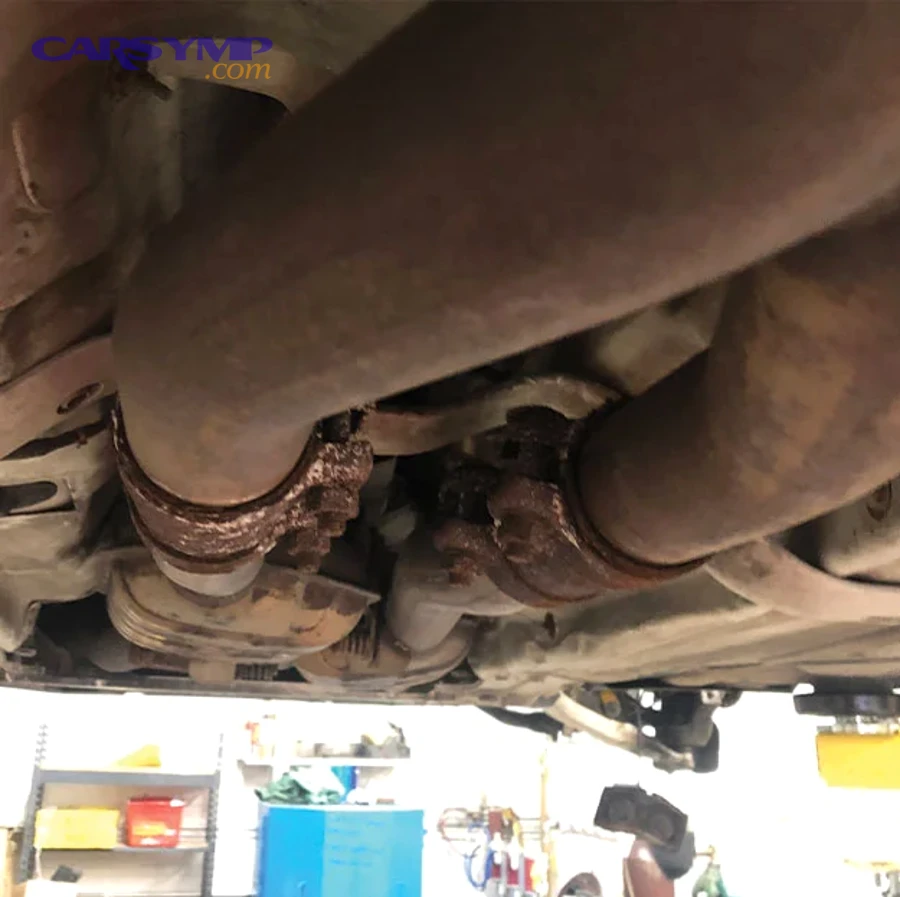
More importantly, the longer you drive, the more likely a small leak becomes a broken flange, cracked pipe, or melted wiring.
Reason 1: Cabin air risk (especially with upstream leaks)
Exhaust contains carbon monoxide (CO), which you can’t rely on smell to detect. If exhaust gases enter the HVAC intake or seep into the cabin due to pressure changes, you may not notice until you feel unwell.
According to a study by University of Auckland from the Department of Civil and Environmental Engineering, in 2018, an isolated in-cabin carbon monoxide peak of 170 ppm was observed under real commuting conditions, showing how quickly cabin exposure can spike when conditions align. (mdpi.com)
Reason 2: Heat damage to parts that were never meant to be “exhaust-facing”
A leak near the manifold or downpipe can torch:
- wiring insulation and sensor connectors
- plastic covers and hoses
- CV boots, steering rack boots (depending on layout)
- underbody sound insulation
Reason 3: Poor running, misfires, or catalyst stress
If the ECU is chasing incorrect oxygen readings, it may run too rich. That can overheat the catalytic converter and shorten its life.
When it’s “less risky” (still not ideal):
- small leak near the rear muffler area
- no smell in cabin, no symptoms beyond noise
- you’re driving a short distance to get a proper repair
When to stop driving now:
- smell in cabin, headaches/dizziness
- loud ticking near manifold + noticeable fumes
- hanging exhaust, scraping, or severe rattling
What causes an exhaust leak in the first place?
There are 5 main causes of exhaust leaks—rust corrosion, heat cycling fatigue, impact damage, gasket failure, and loose/missing hardware—based on how exhaust parts expand/contract and how moisture attacks metal.
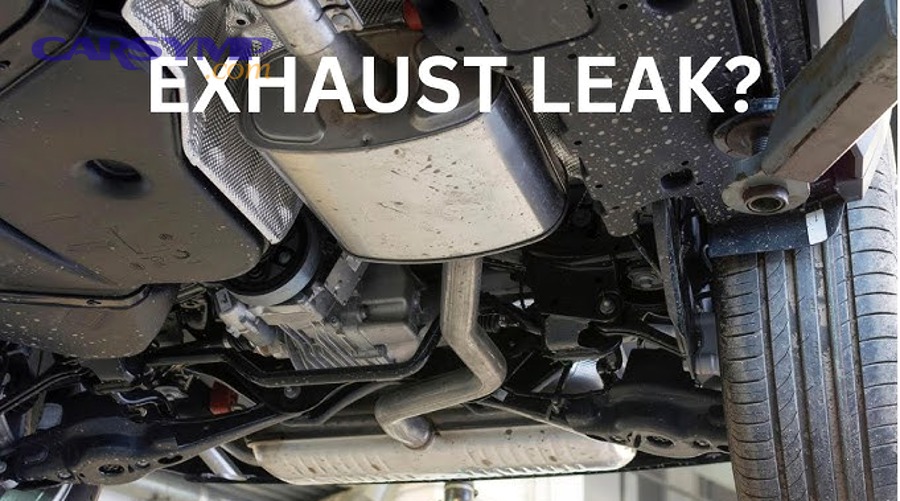
So, instead of thinking “my exhaust got loud,” think “what changed the seal or broke the metal?”
Rust and corrosion from moisture + road salt
Exhaust systems collect condensation internally, especially with short trips. Combine that with salty roads and you get:
- thin pipe walls
- seam rot on mufflers
- flange corrosion that prevents sealing
Heat cycling that loosens fasteners and cracks metal
Every drive is a heat cycle. Over time:
- studs stretch and relax
- flanges warp
- manifolds develop hairline cracks
Failed gaskets at joints that move
Gaskets fail when:
- bolts loosen
- mating surfaces warp
- gasket material ages and blows out under pressure
Impact damage (curbs, speed bumps, debris)
A small dent near a joint can stress a weld or flange. Even if the pipe doesn’t look “broken,” the impact can create a gap that later grows.
Improper previous repair
Misaligned sections, incorrect gasket selection, or over-tightening can cause:
- warped flanges
- crushed gaskets
- broken studs
- repeat leaks in the same spot
Where can exhaust leaks happen on a car exhaust system?
There are 6 common exhaust leak locations—exhaust manifold, manifold gasket, downpipe/flanges, flex joint, catalytic converter connections, and muffler/tailpipe seams—based on where heat, vibration, and corrosion are highest.
Next, use location to predict symptoms: front leaks often smell and tick, while rear leaks are mostly noise.
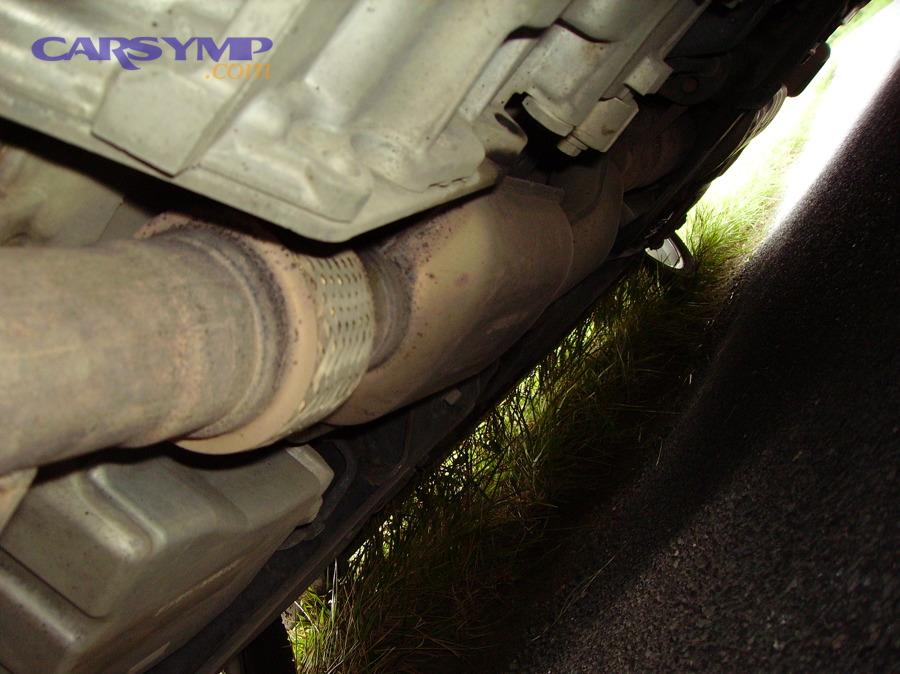
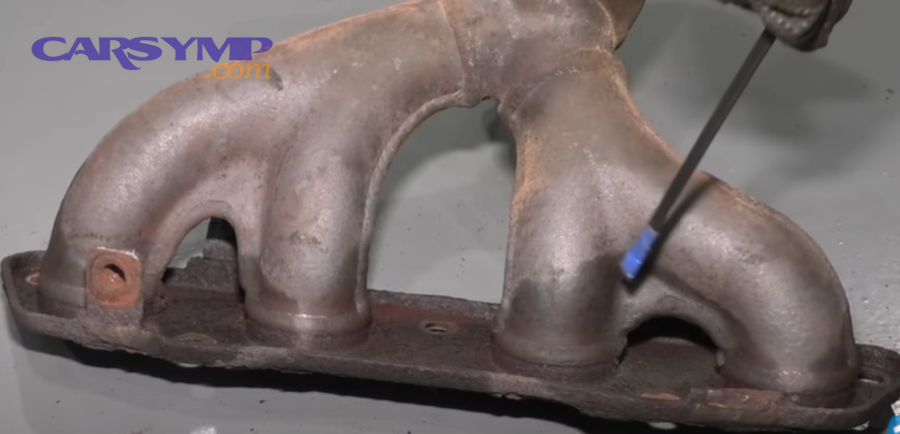
Exhaust manifold and manifold-to-head sealing area
- Typical sign: ticking when cold, soot near gasket line
- Typical cause: warped flange, cracked manifold, failed gasket
Downpipe connections and flange joints
- Typical sign: loud under load, “puffing” sound
- Typical cause: rusted flange lips, missing bolts, blown donut gasket
Flex joint (braided section)
- Typical sign: loud raspy tone, buzzing, vibration
- Typical cause: braid tear, internal bellows crack, stress from bad engine mounts
Catalytic converter inlet/outlet connections
- Typical sign: rattle + leak noise, sometimes a smell
- Typical cause: broken welds, cracked housings, failed gaskets at clamps/flanges
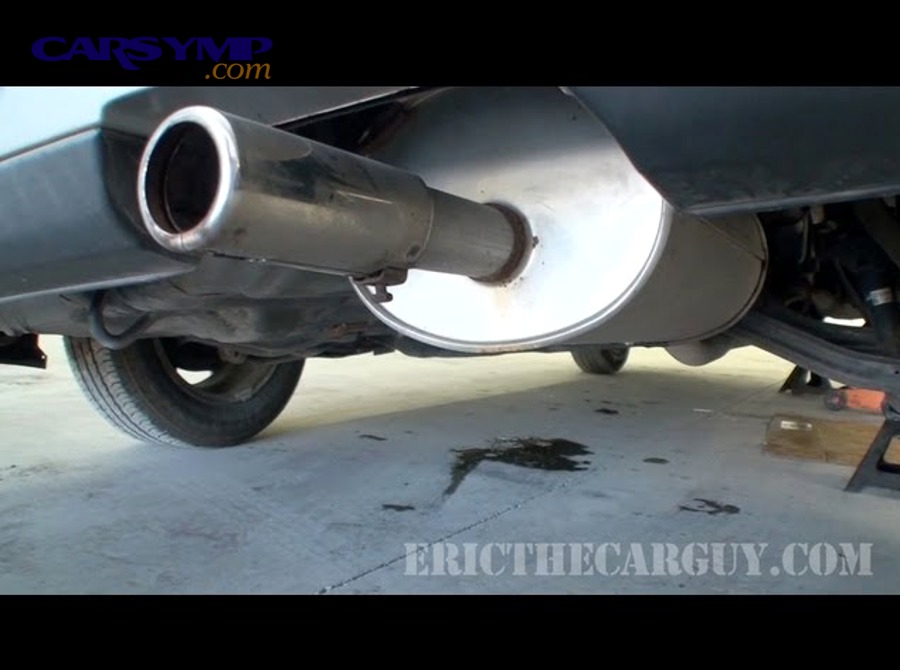
Muffler seams and pipe-to-muffler welds
- Typical sign: louder from rear, sometimes a “booming” note
- Typical cause: seam rot and internal condensation
Tailpipe and hangers causing stress fractures
- Typical sign: noise near rear bumper, visible rust holes
- Typical cause: broken hangers making the system sag and crack at joints
How can you locate an exhaust leak accurately at home?
The best approach is a step-by-step inspection using sound, soot, and safe pressure testing to pinpoint the leak location without guessing.
Specifically, Exhaust leak location detection methods work best when you combine listening with visual confirmation—because noise alone can echo and mislead you.
Step 1: Cold-start listening test (safe distance)
- Start the engine cold
- Listen near the engine bay (don’t touch hot parts)
- Track whether ticking fades as it warms
If the noise is strongest up front and calms down, you’re likely near the manifold/gasket area.
Step 2: Visual inspection for soot trails and broken hardware
With the engine off:
- Look for black soot around flanges and gasket edges
- Check for missing bolts, snapped studs, broken hangers
- Inspect heat shields that may be masking a crack
Step 3: “Hand feel” test—only if you can do it safely
With extreme caution (and avoiding moving parts):
- Feel for puffs of gas near suspected joints
- Never place your hand near belts/fans
- Never do this on a fully hot system
Step 4: Soapy water + light pressure test (DIY-friendly)
A reliable method is to:
- Let the exhaust cool
- Introduce gentle airflow into the tailpipe (many people use a shop vac on blow mode with a rag seal)
- Spray soapy water on joints
Bubbles = leak. This avoids guesswork and helps you identify the exact seam or gasket.
Step 5: Smoke test for hard-to-see leaks
A smoke machine is the fastest way to “make the leak visible,” especially around flex joints and hidden flange backsides.
Step 6: Confirm sensor-area leaks by checking trims/codes
If you have a scan tool:
- Look for fuel trims trending rich/lean
- Note O2 sensor switching behavior
- Correlate with where leaks are likely (before sensors = more likely to skew readings)

How do you fix an exhaust leak, and when should you go to a shop?
A proper fix is repairing the failing part and restoring a sealed joint—usually through gasket replacement, flange repair, welding, or section replacement—so the leak doesn’t return.
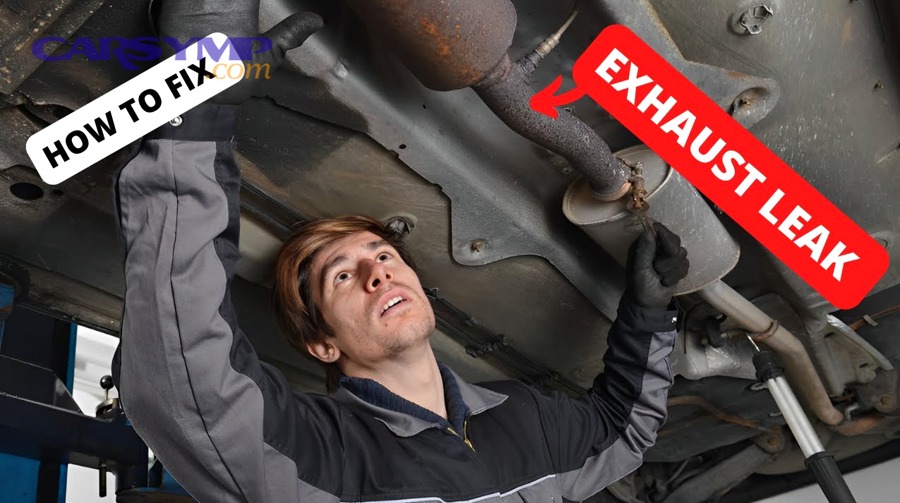
Then, you choose between Temporary fixes vs proper repairs based on location, heat level, and how long you need the solution to last.
Temporary fixes that can get you home (not a long-term strategy)
Temporary sealers work best on small leaks downstream where temperatures are lower. Examples include:
- exhaust putty/paste on a pinhole or small seam
- wrap/band clamps for minor pipe splits
- temporary clamps at a slipping sleeve joint
When temporary fixes fail fast:
- manifold-area leaks (too hot, too much expansion)
- cracked flanges (movement breaks the seal again)
- flex joint tears (constant motion)
Proper exhaust leak repair options (what lasts)
A real exhaust leak repair usually falls into one of these:
- Replace a gasket (manifold gasket, donut gasket, flange gasket)
- Replace a damaged section (pipe segment, flex section, resonator, muffler)
- Weld a crack (only if the remaining metal is healthy)
- Replace hardware (studs, springs, bolts) and resurface flanges if needed
Exhaust gasket replacement basics
Gasket repairs succeed when the surfaces and clamping force are right:
- Clean mating surfaces thoroughly
- Check for warped flanges (straightedge helps)
- Replace stretched hardware when needed
- Torque in sequence (especially manifold fasteners)
- Recheck after a few heat cycles if the design allows it
If you only replace the gasket but leave warped flanges or broken studs, the “new gasket” becomes a disposable bandage.
When to go to a shop immediately
Go professional if:
- studs are snapped flush in the head
- manifold or downpipe is cracked
- leak is near the cabin with strong smell
- you need welding or flange fabrication
- the exhaust is sagging, misaligned, or contacting the body
How much does exhaust leak repair cost, and what affects price?
Exhaust leak repair cost depends on location, labor access, rust severity, and whether parts are welded or bolted, so the same “leak” can range from a quick gasket job to major fabrication.
Next, use a simple breakdown to estimate cost realistically before you approve work.
Here’s a quick table showing common leak fixes and what usually drives the final bill (parts vs labor vs corrosion risk):
| Leak Fix Type | Typical What’s Replaced | Why Cost Varies Most |
|---|---|---|
| Manifold gasket / hardware | gasket + studs/nuts | seized studs, access, heat shields |
| Donut/flange gasket | gasket + bolts/springs | rusted flanges, alignment |
| Flex section repair | flex section + welding | weld quality, pipe condition |
| Muffler replacement | muffler + clamps/hangers | rusted pipes, hanger brackets |
| Pipe section replacement | mid-pipe/tailpipe | custom bends vs direct-fit |
Cost drivers that matter most:
- Upstream leaks cost more because they’re harder to reach and hotter
- Rust increases labor because bolts snap and flanges crumble
- “One part” jobs become “system” jobs when adjacent sections are too thin to clamp or weld
- Noise-only rear leaks are often cheaper than front leaks that involve studs and gaskets
A helpful rule of thumb: if a shop mentions “fabrication,” “seized hardware,” or “flange rebuild,” you’re paying for time and skill more than parts.
What’s the difference between an exhaust leak, intake leak, and engine knock?
An exhaust leak is best identified by ticking/raspy noise plus soot or smell, an intake leak is best identified by idle/trim problems and hissing, and engine knock is best identified by a deep metallic ping/knock under load that changes with timing and fuel quality.
In addition, this comparison helps you avoid fixing the wrong system—because these sounds can overlap in the driver’s seat.
Exhaust leak vs intake leak (sound and symptoms)
Exhaust leak:
- ticking or puffing that follows RPM
- loud exhaust, sometimes smell
- soot marks near joints
Intake/vacuum leak:
- hissing/whistling
- rough idle, high idle, lean codes
- changes when spraying around intake hoses (with safe methods)
Exhaust leak vs engine knock (risk and tone)
Engine knock:
- sharper metallic ping (pre-ignition/detonation) or deeper knock (bearing-related)
- often worse under load and may lessen if you lift off throttle
- may correlate with oil pressure, fuel octane, or timing changes
If the noise is loudest near the exhaust path, changes with heat, and comes with smell or soot, treat it as an exhaust leak first. If the sound is internal, metallic, and load-dependent without smell/soot, investigate knock before you keep driving.
If you want, paste your car’s year/make/model + where the sound seems to come from (engine bay vs underbody vs rear) and whether you notice smell in the cabin, and I’ll help you narrow the most likely leak location and the most sensible repair path.