


A leaking exhaust flex pipe is fixable, and the “best” solution depends on where the leak is, how severe it is, and how long you need the repair to last—from short-term sealing to a proper welded replacement.
Next, you’ll learn what the flex pipe actually does (and why it fails), so you can stop guessing and start making the right call for your vehicle and budget.
Then, you’ll get a practical symptom-and-diagnosis checklist that helps you confirm the leak and avoid confusing it with other exhaust faults.
Introduce a new idea: once you’ve confirmed the leak, the real win is choosing between Temporary fixes vs proper repairs—and matching the replacement option to your driving needs.
What is an exhaust flex pipe, and why do cars need it?
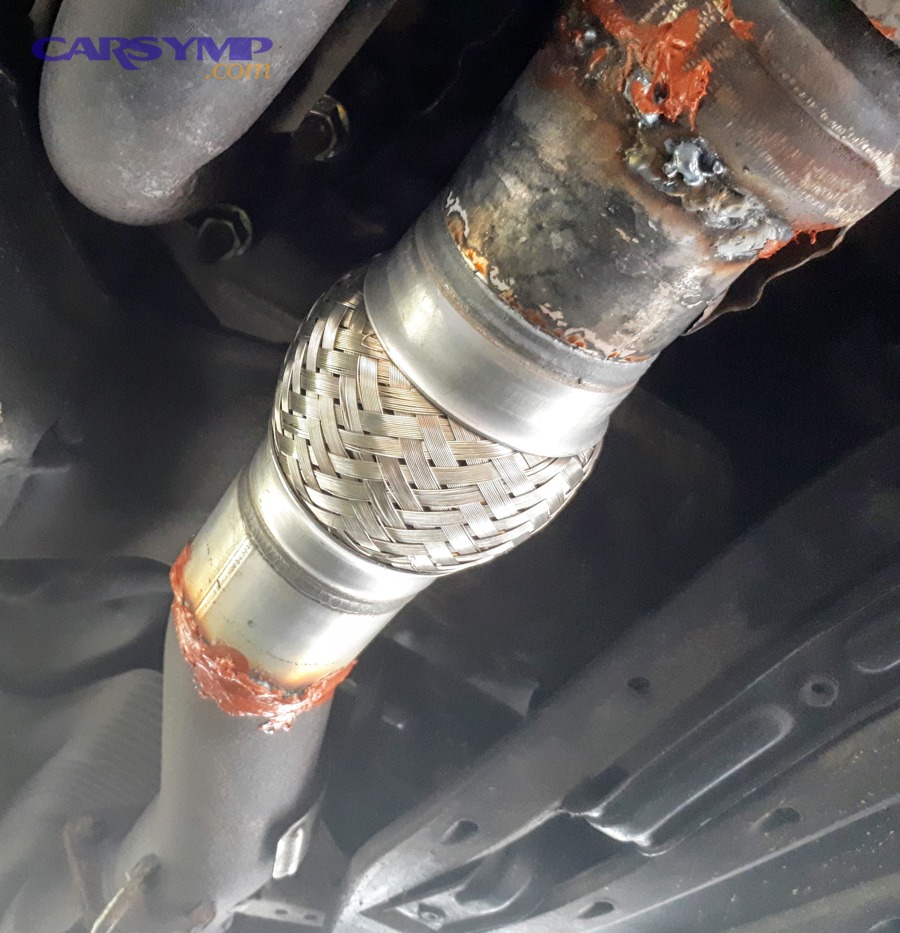
An exhaust flex pipe is a braided, flexible exhaust tube section that absorbs engine movement and vibration, protecting rigid exhaust piping from cracking while keeping exhaust gases flowing smoothly toward the catalytic converter and muffler.
To better understand why leaks happen so often here, it helps to see what the flex pipe looks like and where it lives in the system.

What is the flex pipe made of, and how is it constructed?
Most flex pipes are built like a “sandwich” designed to flex without collapsing:
- Outer braid (stainless steel): The woven layer you see. It provides strength and abrasion resistance.
- Inner liner (smooth or interlocked): Keeps exhaust flow stable and reduces turbulence; an interlocked liner usually tolerates heat and vibration better under load.
- End collars/stubs: The sections that get welded or clamped into the existing exhaust tubing.
Because the braid is not airtight by itself, the inner liner does a lot of sealing work. When the liner splits or the collars crack at the weld, you get a leak.
Where is the flex pipe located on most vehicles?
On many front-wheel-drive cars, the flex pipe is installed:
- Near the engine/downpipe area where the engine rocks most
- Often upstream of the catalytic converter (critical because leaks here can affect sensor readings)
- In a spot exposed to road spray, salt, and heat cycling
A quick mental model: the flex pipe is “the hinge” between a moving engine and a mostly fixed exhaust system.
What job does the flex pipe do in the exhaust system?
The flex pipe exists to prevent expensive damage elsewhere by doing three jobs:
- Vibration isolation: Reduces stress transmitted to welds and flanges.
- Movement compensation: Handles engine torque twist and drivetrain motion.
- Crack prevention: Protects rigid pipes and components from fatigue failure.
If the flex pipe wasn’t there, you’d often see cracked pipes, blown gaskets, and broken hangers much sooner.
Evidence (if any): According to a study by SAE International, in 2005, researchers highlighted that even small exhaust leaks can meaningfully alter exhaust system measurements—illustrating how sensitive exhaust flow conditions are to leak paths and pressure changes. (sae.org)
Is a flex pipe leak dangerous to drive with?
Yes—driving with an exhaust flex pipe leak is dangerous because it can let carbon monoxide reach the cabin, overheat nearby components, and trigger fuel-control errors that increase emissions and strain the catalytic converter.
More importantly, the risk level changes based on where the leak is and whether exhaust can migrate into the passenger area—so you need a simple way to judge urgency.
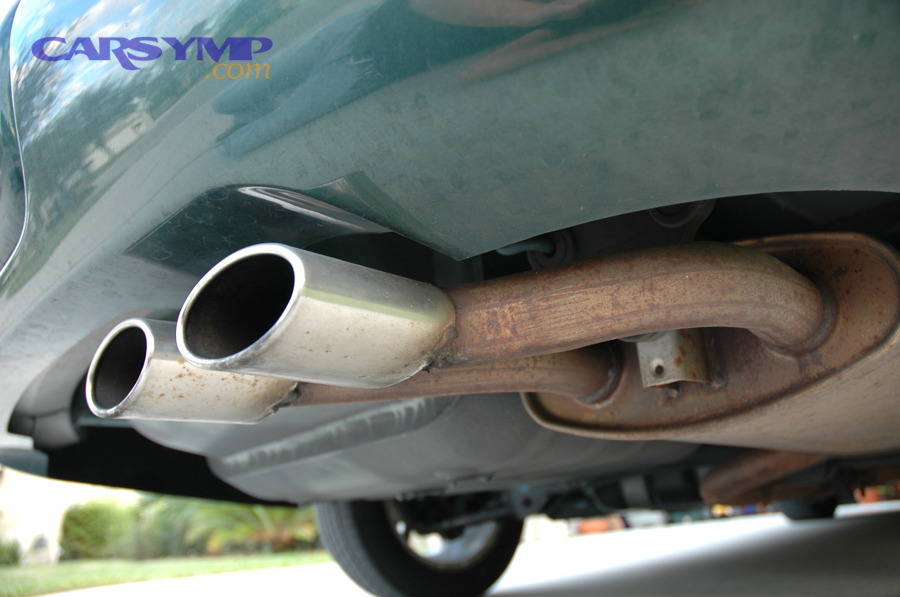
Can a flex pipe leak cause carbon monoxide exposure inside the cabin?
It can, especially when the leak is near the front of the car and air paths pull fumes toward the firewall, HVAC intake, or floor openings.
Situations that raise risk:
- Idling or slow traffic (less airflow to push gases away)
- Windows up + HVAC on (pressure differences can draw fumes)
- Rust holes in the floor, missing grommets, or worn door seals
- Leaks near the engine bay where gases can swirl and re-enter air intakes
A practical rule: if you ever smell exhaust inside, treat it as urgent—don’t “wait and see.”
Evidence (if any): According to a study by Hong Kong Baptist University from the Department of Biology, in 2018, researchers measured in-cabin gases across dozens of vehicles and emphasized that enclosed vehicle cabins can expose occupants to pollutant buildup under certain usage conditions—supporting why exhaust intrusion should be taken seriously. (pmc.ncbi.nlm.nih.gov)
Will a flex pipe leak damage other exhaust parts if ignored?
Yes, and the most common “collateral damage” patterns look like this:
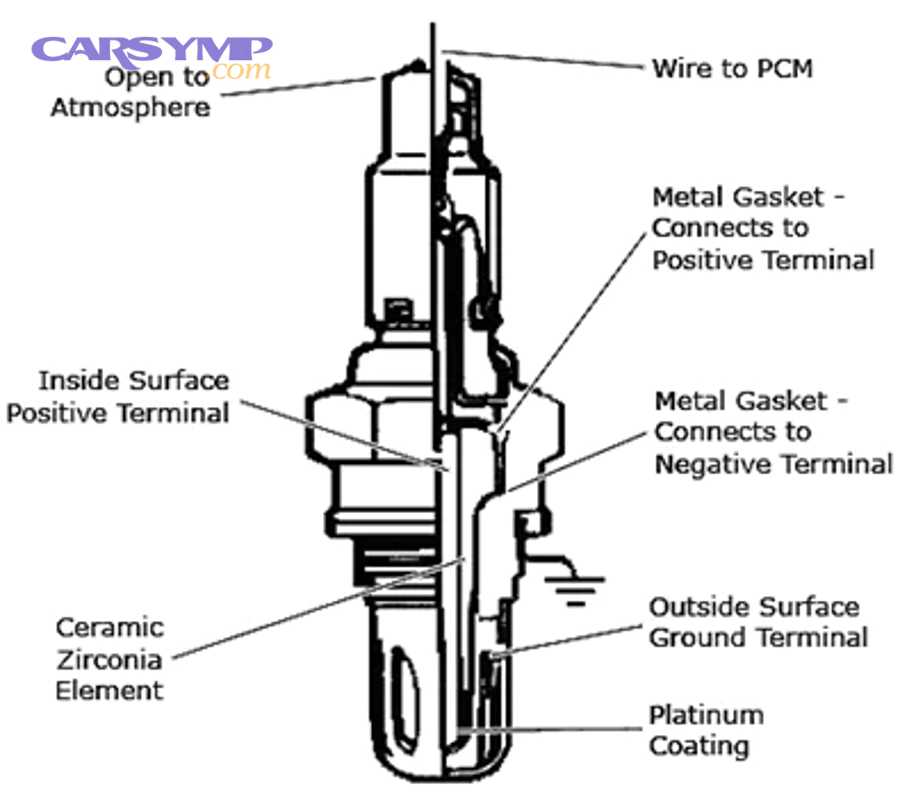
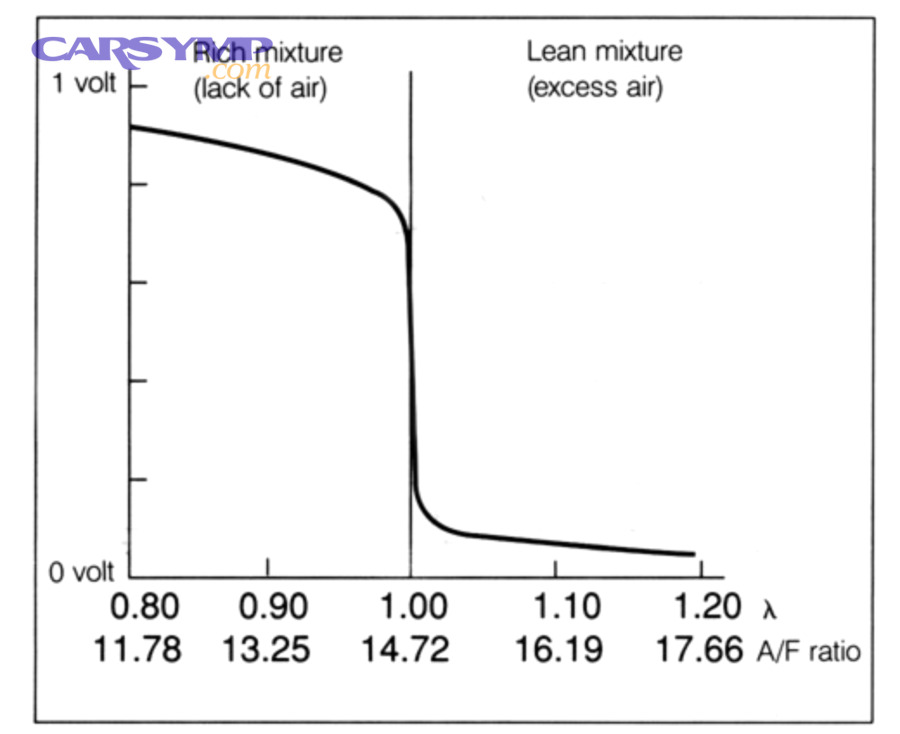
- O2 sensor confusion (upstream leaks): Outside air can be pulled into the exhaust stream, contributing to false lean readings in closed-loop fueling.
- Catalytic converter stress: If fueling compensations run richer than needed, the converter can run hotter over time.
- Burned nearby components: Hot exhaust jets can damage CV boots, wiring insulation, plastic splash shields, and heat shields.
- Broken hangers and cracks: More vibration + misalignment often accelerates failures downstream.
Is it illegal or inspection-failing to drive with a flex pipe leak?
In many places, it can be an inspection failure if it causes:
- Excessive noise
- Visible exhaust leakage
- Emissions system faults / check engine light readiness problems
Even when the law isn’t the immediate worry, the leak can still become a practical problem fast—noise, fumes, and worsening damage.
What are the symptoms of a leaking exhaust flex pipe?
There are five main symptom groups of an exhaust flex pipe leak: noise changes, odor clues, visible leak evidence, drivability/MPG changes, and diagnostic trouble codes, based on how escaping gas affects sound, airflow, and sensor feedback.
Specifically, combining symptoms is the quickest way to confirm the issue before you spend money on parts.
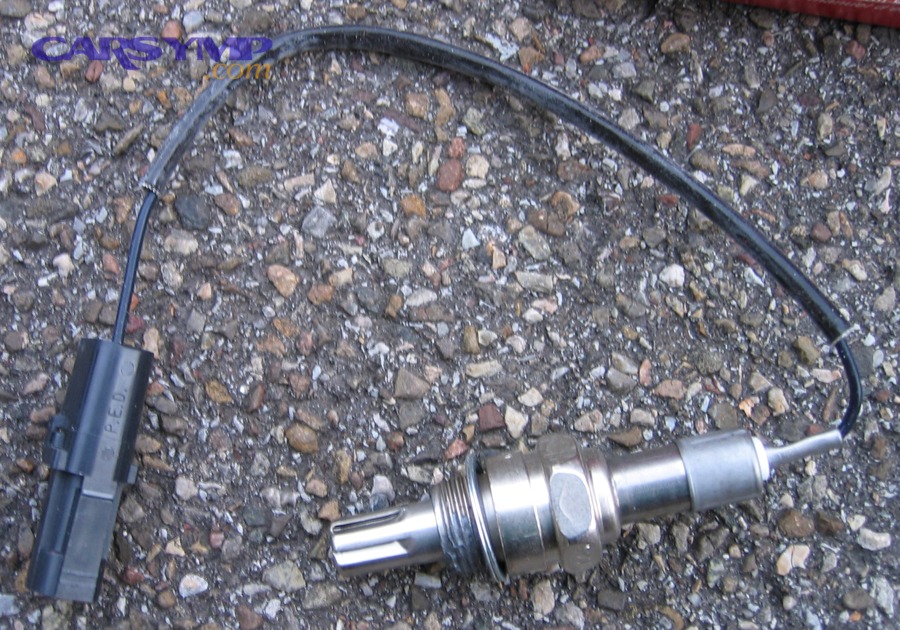
What does a flex pipe leak sound like?
Common sound signatures include:
- Ticking on cold start (metal expands as it warms)
- Hiss or puffing under throttle
- Louder-than-normal exhaust that seems to come from the front/middle of the car
- Rattle if heat shields or broken braid strands contact nearby parts
Tip: a flex pipe leak often sounds “closer to you” than a muffler leak—more harsh and metallic.
What does a flex pipe leak smell like, and when is it strongest?
Odor clues can be very consistent:
- Exhaust smell near the front wheels or hood area after a drive
- Stronger smell at idle, in stop-and-go traffic, or when parked after driving
- If you smell it inside the cabin, that’s a red flag (don’t ignore)
What are the best “Exhaust leak location detection methods” for flex pipe leaks?
The most reliable Exhaust leak location detection methods are simple and safe when done correctly:
- Visual inspection: Look for black soot trails, frayed braid, cracks at the collars, and wet-looking carbon deposits.
- Cold-start listening test: Stand outside near the front and midsection; listen for ticking/hissing before the system heats up.
- Soapy water test (low-risk): With the car safely raised and cool enough, spray soapy water on suspected areas and look for bubbling when a helper starts the engine.
- Smoke test (best for pinpointing): A shop can introduce smoke into the exhaust and watch where it escapes.
Avoid stuffing rags into the tailpipe or doing aggressive “block the exhaust” tricks—backpressure can damage components.
Can a flex pipe leak cause a check engine light or bad MPG?
Yes—especially if the leak is upstream of sensors. You might see:
- Lean-related fuel trim behavior
- Catalyst efficiency codes if oxygen is drawn into the exhaust stream and the rear sensor “sees” extra oxygen
- Noticeable MPG drop if the engine over-corrects fueling (varies by vehicle and leak size)
Evidence (if any): According to a study by the University of Auckland from the Department of Civil and Environmental Engineering, in 2018, researchers demonstrated that ventilation settings meaningfully change in-vehicle exposure to carbon monoxide—showing why any exhaust leak that can reach the cabin becomes more serious under certain airflow conditions. (researchgate.net)
Should you repair or replace a leaking flex pipe?
Repair wins for tiny, short-term sealing needs, replacement is best for structural damage or braid/liner failure, and replacing the entire front pipe/downpipe assembly is optimal when corrosion, flanges, or fitment issues make a single-section repair unreliable.
However, making the right choice requires separating Temporary fixes vs proper repairs so you don’t pay twice.
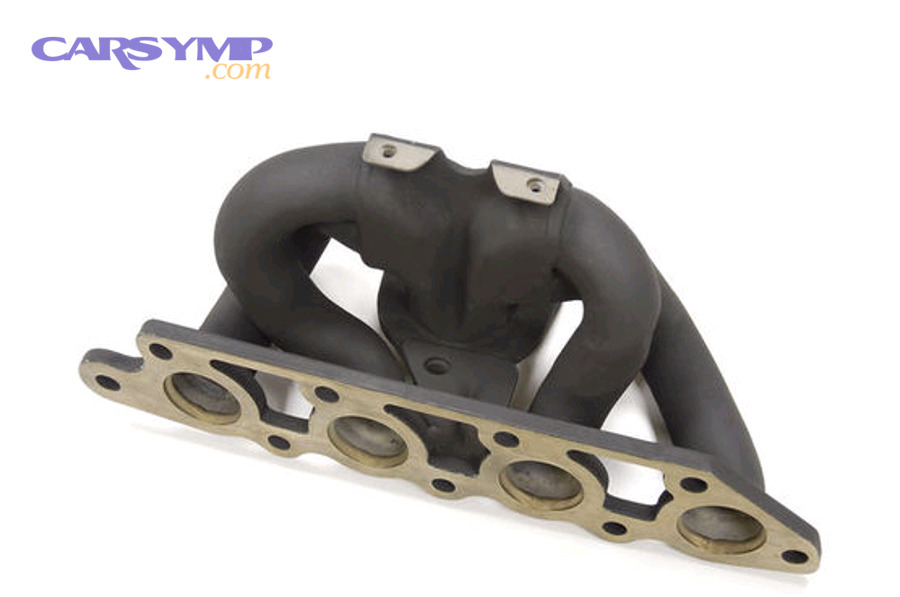
When is a temporary repair reasonable (and when is it a bad idea)?
A temporary patch can be reasonable if:
- The leak is very small
- You need a short window to pass a work week or reach a shop
- The flex pipe structure is still mostly intact (no major fraying, separation, or missing liner)
Common temporary approaches (short lifespan):
- High-temp exhaust tape/wrap (often fails quickly on flex sections)
- Exhaust putty/paste (may crack under flexing)
- Clamp-on patch sleeves (works only if the pipe is solid and straight enough)
When temporary repair is a bad idea:
- The braid is frayed or unraveling
- The flex section has a split liner or visible holes
- The leak is close to wiring, boots, or the cabin intake path
- You have a strong exhaust smell in the car
When should you replace the flex pipe instead of patching it?
Replace the flex pipe when:
- The leak is at the end collars/welds and continues expanding
- The braid is damaged and the inner liner is compromised
- The pipe is rust-thinned (patching won’t hold)
- A previous patch already failed once (common on flex sections)
This is the point where “cheap now” becomes “expensive later.”
What does “exhaust leak repair” realistically cost vs replacement?
Costs vary by vehicle and region, but the cost logic is consistent:
- Patch/temporary seal: Lowest cost, lowest durability
- Weld-in universal flex pipe: Moderate cost, often strong value
- Direct-fit/OEM-style assembly: Higher parts cost, fastest correct fit
- Custom fabrication: Can be higher, but solves weird routing or repeated failures
If you plan to keep the car, replacement usually wins on total cost of ownership.
Evidence (if any): According to a study by the Federal University of Technology (Akure) from the Department of Mechanical Engineering, in 2013, researchers reported that fuel consumption increased as exhaust leak diameter increased—supporting why “living with a leak” can have ongoing operating costs beyond noise and smell. (researchgate.net)
What replacement options exist for a bad flex pipe?
There are five main replacement options for a bad flex pipe: OEM/direct-fit sections, universal weld-in flex pipes, clamp-on flex couplers, complete front pipe/downpipe replacement, and custom exhaust fabrication, based on how they attach and how closely they match factory geometry.
Next, a clear comparison helps you pick the option that fits your budget, tools, and durability expectations.
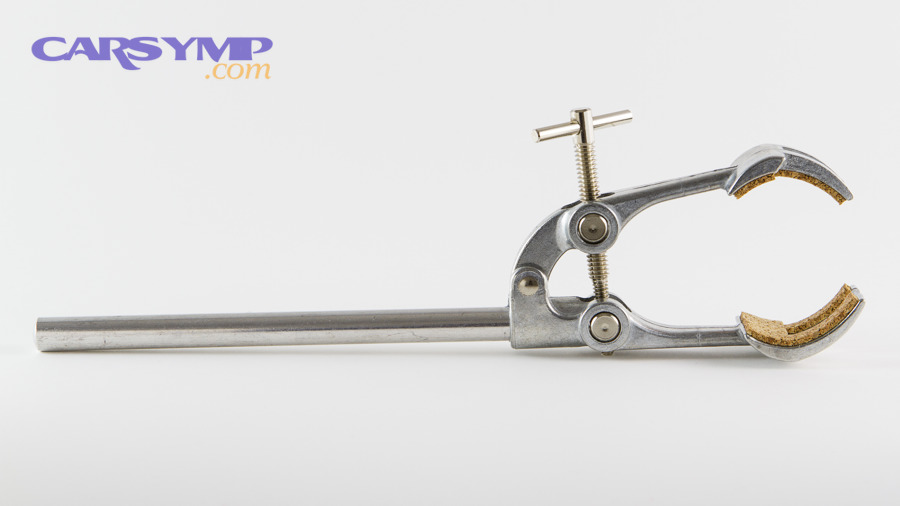
Option 1: OEM or direct-fit flex pipe assemblies (bolt-on / correct bends)
Best when:
- You want factory-like fit and fewer surprises
- Your assembly includes flanges, hangers, and the correct routing
- You have emissions components (like sensors) integrated into the pipe section
Tradeoff: Usually higher part price, but lower risk of leaks from poor alignment.
Option 2: Universal weld-in flex pipe (most common “shop fix”)
Best when:
- The rest of the exhaust pipe is solid
- You can weld (or your muffler shop can)
- You want durable sealing and good longevity
Tradeoff: Requires correct measurement and good welding technique.
Option 3: Clamp-on flex couplers (limited use cases)
Best when:
- You cannot weld and the pipe sections are straight and strong enough
- You need a mid-term solution
Tradeoff: Higher risk of small leaks, loosening, or fitment issues on uneven/old pipes; often not ideal for high-vibration engine movement zones.
Option 4: Replace the entire front pipe/downpipe section
Best when:
- Corrosion is widespread
- Flanges are warped
- Multiple leaks exist (flex + flange + gasket issues)
- Prior repairs keep failing due to alignment
Tradeoff: More expensive parts, but you reset the whole “problem zone.”
Option 5: Custom fabrication (for repeated failures or nonstandard setups)
Best when:
- Modified exhaust routing
- Tight clearances
- Performance builds that need specific materials or joints
Tradeoff: Quality depends heavily on shop skill.
Here’s a quick table that summarizes what each option typically optimizes for (durability, cost, and fitment):
| Replacement option | Best for | Durability (typical) | Fitment risk | Notes |
|---|---|---|---|---|
| OEM/direct-fit assembly | Fast, correct repair | High | Low | Often includes flanges/hangers |
| Universal weld-in flex | Strong value | High | Medium | Depends on measurements & weld quality |
| Clamp-on coupler | No-weld situations | Low–Medium | Medium–High | Can loosen/leak over time |
| Full front pipe/downpipe | Rust + multiple leaks | High | Low | Higher parts cost, fewer repeat repairs |
| Custom fabrication | Special cases/mods | Medium–High | Medium | Depends on shop and materials |
Evidence (if any): According to a study by the Federal University of Technology (Akure) from the Department of Mechanical Engineering, in 2013, researchers concluded that exhaust leaks can reduce performance and increase fuel consumption—reinforcing why a durable fix often pays back over time. (researchgate.net)
How do you choose the right size and type of flex pipe?
Choosing the right flex pipe takes four steps—measure diameter correctly, match length and movement range, pick the right liner/braid design, and confirm heat/clearance—so the replacement seals properly and survives engine vibration instead of cracking early.
More specifically, the biggest mistakes are measuring the wrong diameter and buying a flex section that can’t handle the motion of your drivetrain.
Step 1: How do you measure the pipe diameter correctly (ID vs OD)?
You must know whether the flex pipe is meant to:
- Slip over the outside of the existing pipe, or
- Slip inside the existing pipe
Basic measurement rules:
- If it slips over your pipe: measure your pipe outside diameter (OD).
- If it slips inside your pipe: measure your pipe inside diameter (ID) (less common on exhaust repairs).
A caliper is ideal, but even a tape measure can work if you measure circumference and convert to diameter.
Step 2: How do you choose the correct flex length?
Flex length should be long enough to absorb movement without “over-bending,” but not so long that it hits nearby parts.
Consider:
- The original flex section length
- Clearance to heat shields, subframe, and steering components
- Engine movement range (especially on worn mounts)
Step 3: Which flex pipe design lasts longer (braided-only vs interlocked liner)?
In general:
- Interlocked liner flex pipes often handle heat and turbulence better and can improve durability under load.
- Braided-only designs may be cheaper but can be noisier and may fail sooner depending on quality.
If your car sees frequent short trips, rough roads, or lots of vibration, durability tends to matter more than saving a small amount on the part.
Step 4: What materials and features should you prioritize?
Look for:
- Stainless steel braid (corrosion resistance)
- Strong end collars
- A liner that suits your heat/load
- Correct orientation and space for expansion
A quick sanity check: if the part looks “light duty” compared to what came off the car, it probably won’t last.
Can you replace a flex pipe yourself or should you use a muffler shop?
DIY wins if you have safe lifting, accurate measuring, and welding/cutting capability, a muffler shop is best for fast leak-free welding and fitment correction, and full assembly replacement is optimal when corrosion and flange issues make precise alignment the deciding factor.
Meanwhile, the decision isn’t only about money—it’s about whether you can produce a leak-free joint that survives heat cycles.
What tools and skills do you need for DIY flex pipe replacement?
DIY is realistic when you have:
- Safe lift access (jack stands or ramps on solid ground)
- Eye/hand protection, gloves, and hearing protection
- A way to cut pipe cleanly (sawzall/cutoff wheel)
- Ideally a welder for the best seal
DIY pitfalls:
- Measuring wrong diameter/length
- Cutting too much pipe and losing alignment
- Creating stress that cracks welds later
If you can’t weld, clamp solutions can work in limited cases—but they’re more likely to leak on older, pitted exhaust pipes.
When is a muffler shop the smarter choice?
A muffler shop usually wins when:
- You want a proper weld-in solution quickly
- Pipes are rusty and need fitment correction
- Hangers need rework to remove stress from the new flex section
Shops also tend to catch issues DIYers miss—like misaligned exhaust hangers that “pull” on the flex pipe until it fails again.
What should you ask a shop to do to prevent repeat flex pipe failures?
Ask about:
- Engine mount condition (excess movement kills flex sections)
- Hanger alignment (reduces stress)
- Using the right liner type for your application
- Checking upstream leaks and flange sealing
This is also where Exhaust gasket replacement basics matter: if a flange gasket upstream is leaking, replacing only the flex pipe may not eliminate the hiss/tick you’re chasing.
Contextual Border: At this point, you can fix the leak and choose the right replacement option. Next, we’ll expand beyond the flex pipe itself into the secondary problems a leak can trigger—so you can prevent comebacks and protect related components.
What secondary issues can an exhaust flex pipe leak trigger, and how do you prevent them?
A flex pipe leak can trigger secondary issues like oxygen-sensor misreads, catalytic-converter efficiency codes, heat damage to nearby components, and repeated gasket failures, and you prevent them by correcting alignment, sealing flanges, and eliminating the root cause of excess movement.
Besides stopping the noise, this is how you stop the “repair loop” where the leak returns every few months.
Can a flex pipe leak mimic other problems (like bad O2 sensors)?
Yes—and this is a classic misdiagnosis pattern. A leak upstream of the sensor can change what the sensor “sees,” which can look like:
- A failing O2 sensor
- A fueling issue
- A catalytic converter problem
Before replacing sensors, confirm the exhaust is sealed.
How do you prevent repeated flex pipe failures?
Most repeat failures come from stress, not bad luck. Prevention checklist:
- Check engine mounts: Excess engine movement constantly flexes the joint.
- Inspect hangers: Broken or stretched hangers force the flex pipe to carry weight.
- Avoid rigid “patch bricks”: Some hard patches crack quickly because the joint must flex.
- Use quality parts: Especially liners and collars—cheap flex pipes fail early.
What heat-related damage should you inspect after a leak?
Because exhaust jets are extremely hot, inspect:
- CV boots and steering rack boots
- Wiring looms and sensor harnesses
- Plastic undertrays and splash shields
- Heat shields (loose shields can rattle and cut into the braid)
What’s the smartest post-repair validation step?
After the repair:
- Listen on cold start for ticking
- Check for any exhaust smell near the front
- Scan for pending codes and verify fuel trims stabilize
- Recheck clamps/weld areas after a few heat cycles
If you do those, you turn a one-time fix into a lasting fix—rather than another round of “why is it loud again?”