


Modern engines don’t “guess” fuel delivery—they continuously correct it, and the clearest correction signal you can read is fuel trim. When a vacuum/intake leak (unmetered air) or an upstream exhaust leak shows up, it can trick oxygen sensors into reporting “lean,” and the ECU responds by adding fuel through STFT and LTFT.
Then, the key diagnostic job becomes pattern recognition. You can often separate a vacuum leak from other causes by watching where trims move: at idle, during a steady 2500 rpm hold, or under load. Those patterns tell you whether the leak is diluting incoming air (intake side) or diluting the exhaust sample the O2 sensor sees (exhaust side).
However, intake leaks and upstream exhaust leaks can both create the same headline symptom—positive fuel trims. That means you need a consistent method that compares O2 behavior, STFT/LTFT behavior, and bank-to-bank behavior, so you don’t replace sensors when the real issue is a gasket, hose, or cracked pipe.
Introduce a new idea: once you understand what O2 sensors and fuel trims are really measuring, the “false lean” problem becomes predictable, testable, and fixable—without parts cannon diagnosis.
What do O2 sensor readings and fuel trims actually measure in closed-loop operation?
O2 sensor readings and fuel trims measure how far the ECU must correct fueling to keep combustion near the target air-fuel ratio in closed loop, using oxygen feedback from the exhaust stream.
To better understand why leaks distort these numbers, you first need to separate what the sensor reports from what the engine is actually doing.

In closed loop, the ECU watches the upstream O2 (or A/F) sensor and nudges injector pulse width to keep emissions and drivability in a stable window. That nudging is displayed as fuel trim:
- STFT (Short-Term Fuel Trim) is the ECU’s fast, moment-to-moment correction. It moves quickly because it’s chasing what the sensor sees right now.
- LTFT (Long-Term Fuel Trim) is the ECU’s learned correction. It moves slowly because it represents a trend the ECU sees repeatedly and decides to “store” as a baseline adjustment.
The important takeaway is simple: fuel trims are not the problem—they are the ECU’s reaction to a problem. So when trims are high positive, the ECU is trying to add fuel because it believes the mixture is lean (or the exhaust sample looks lean). When trims are negative, it’s pulling fuel because it believes the mixture is rich.
What is the difference between STFT and LTFT, and what counts as “normal”?
STFT is the live correction, LTFT is the learned correction, and “normal” generally means both are hovering near zero with small, stable adjustments rather than large, persistent corrections.
Specifically, the difference matters because leaks often show up first in STFT and then migrate into LTFT if the ECU keeps seeing the same lean signal over time.
A practical way to think about it:
- STFT tells you what’s happening now (sensor-driven correction).
- LTFT tells you what’s been happening repeatedly (pattern-driven correction).
If your STFT swings but LTFT stays near baseline, you may be seeing a temporary condition, a transient, or a mode change. If LTFT is strongly positive, the ECU has been adding fuel for a while—often because of unmetered air, a measured-air error, or false lean feedback.
Industry diagnostic guides commonly describe “normal” trims as small corrections around zero under steady conditions. For example, Innova’s fuel trim overview notes typical hover ranges for STFT and LTFT under normal operation.
When do fuel trims stop being reliable (open-loop, WOT, decel fuel cut)?
Fuel trims stop being reliable anytime the ECU is not using oxygen feedback as the main control signal—most commonly during open-loop warm-up, wide-open throttle, and deceleration fuel cut.
Next, because leaks are easiest to catch with repeatable data, you want to keep your diagnosis inside stable closed-loop windows before you draw conclusions.
In open loop, the ECU is fueling off programmed tables and sensor models, not oxygen feedback. Many vehicles start in open loop after a cold start until the O2 sensor reaches operating temperature. In WOT, many ECUs command enrichment for power and engine protection and may reduce reliance on feedback. In decel fuel cut, the ECU can shut injectors off, and oxygen content in the exhaust spikes—so O2 readings are not telling you “combustion is lean,” they’re telling you “fuel is cut.”
If you’re unsure whether the ECU is relying on oxygen feedback, check your scan tool for loop status and stabilize the test (warm engine, steady rpm hold, steady cruise) before interpreting trims. (fcd.eu)
Can a leak really create a “false lean” O2 signal and raise fuel trims?
Yes—leaks can create a false lean O2 signal and raise fuel trims because they either add unmetered oxygen to the combustion air (intake/vacuum leaks) or add outside oxygen to the exhaust sample the sensor reads (upstream exhaust leaks).
Then, once you understand the two mechanisms, you can stop treating “lean” as a single diagnosis and start treating it as a branching decision.
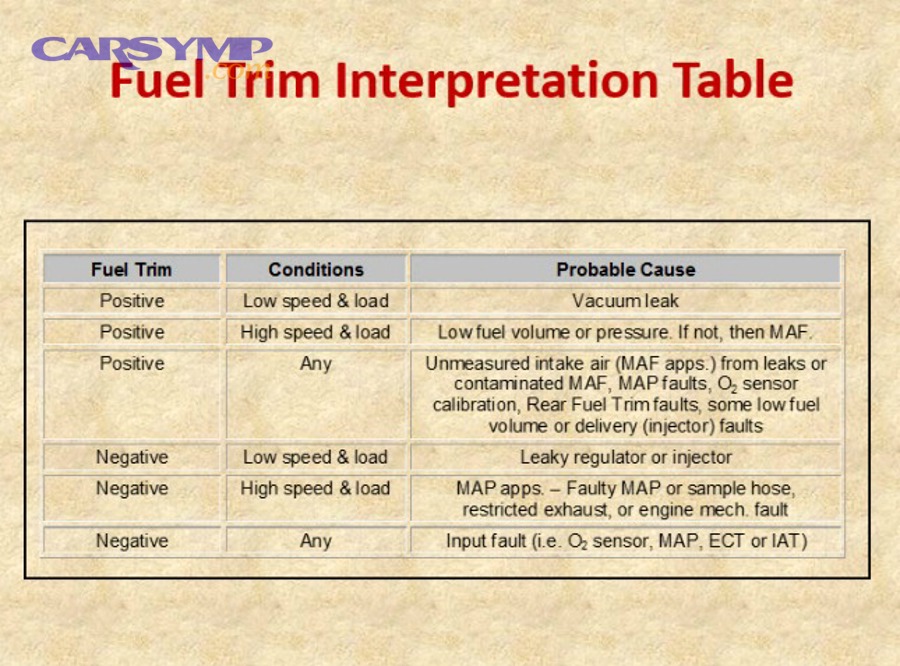
The phrase “false lean” is important. It means the sensor reports oxygen levels that make the ECU believe the mixture is lean—even when the root cause isn’t “not enough fuel.” The ECU doesn’t know you have a crack in the exhaust or an unmetered air path; it only knows what the oxygen feedback suggests.
How does an intake/vacuum leak change O2 readings and fuel trims step-by-step?
An intake/vacuum leak raises trims because it adds air that the ECU did not measure, so the ECU injects fuel for less air than the engine actually ingests, combustion runs lean, and the O2 sensor reports excess oxygen.
Specifically, the chain reaction looks like this:
- Air bypasses measurement (typically downstream of the MAF, or through a leak path the MAP model doesn’t account for).
- Cylinder gets more oxygen than expected for the commanded fuel amount.
- Combustion trends lean, leaving more oxygen in the exhaust.
- Upstream O2/A/F sensor reports lean (or reports a condition that drives lean correction).
- ECU adds fuel via STFT to correct.
- If persistent, ECU learns it into LTFT.
This is why vacuum leaks often show the strongest effect at idle: the leaked airflow can be a large percentage of total airflow when the throttle is nearly closed. At higher airflow (higher rpm/load), the same leak becomes a smaller percentage of total intake flow, so trims can improve.
How does an upstream exhaust leak change O2 readings and fuel trims step-by-step?
An upstream exhaust leak raises trims because it allows outside air to enter the exhaust stream near the sensor, increasing oxygen content in the sample, so the sensor reports a lean condition and the ECU adds fuel even if combustion isn’t truly lean.
More specifically, this mechanism often depends on pressure pulses in the exhaust:
- Exhaust pulses create alternating pressure in the pipe/manifold.
- During low-pressure phases, fresh outside air can be pulled into the leak.
- The upstream sensor “sees” extra oxygen in the exhaust sample.
- The sensor reports “lean,” and STFT adds fuel.
- If it repeats in the same operating region, LTFT rises.
Automotive diagnostic references describe this as outside air being drawn into leaks upstream (or even near) the sensor, leading the system to interpret it as lean and sometimes causing the engine to actually run rich after correction. (motor.com)
Which leak type is most likely based on where trims change: idle, cruise, or under load?
There are two main leak-pattern types you can spot with fuel trims—idle-dominant (typical vacuum/intake leak) and load/cruise-dominant (often exhaust leak or other airflow/fuel delivery issues)—based on when STFT/LTFT rise and how they respond to rpm/load changes.
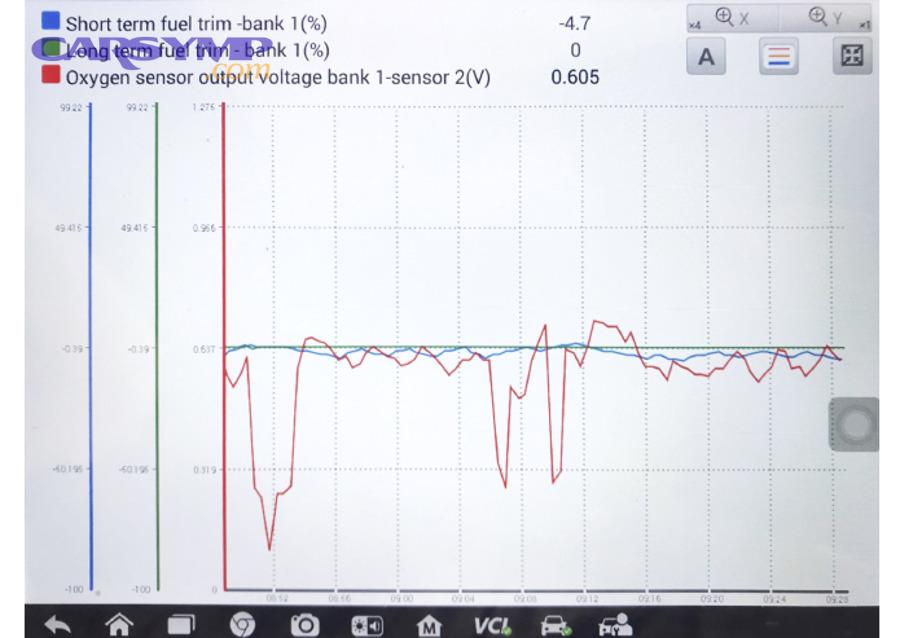
However, you must make the comparison in stable closed-loop conditions, or the pattern can lie to you.
A practical “pattern map” is easier to use than guessing. The table below summarizes what you’re looking for when you repeat the same tests the same way (warm engine, stable loop status, same rpm hold).
| Test condition (closed loop) | Intake/vacuum leak tendency | Upstream exhaust leak tendency |
|---|---|---|
| Idle (in park/neutral) | Often highest positive trims | Can be positive, but less consistently “idle-only” |
| Steady 2500 rpm hold | Trims often improve vs idle | May stay elevated or change less predictably |
| Steady cruise under light load | May be mild if leak is small | Can show persistent false lean depending on leak location/pulses |
| Bank-to-bank comparison | One bank high suggests localized intake leak | One bank high suggests localized exhaust leak upstream of that sensor |
Use the table as a starting point—not a verdict. The next two sub-questions lock the pattern down.
If trims are high at idle but improve as RPM/load increases, is that a vacuum leak?
Yes—high trims at idle that improve as RPM/load increases strongly suggest a vacuum/intake leak because the same leak airflow becomes a smaller fraction of total airflow as engine flow increases.
Next, you can validate the pattern with a repeatable “rev-rise” test: note total trims at idle, hold 2500 rpm steady, and watch whether the correction drops meaningfully.
A long-standing diagnostic rule of thumb used in professional training material is that if fuel correction decreases significantly at 2500 rpm versus idle, a vacuum leak is likely—because unmetered air has less proportional impact at higher airflow. (motor.com)
To make this test more trustworthy:
- Keep RPM steady, not blipping.
- Keep electrical loads consistent (A/C, headlights).
- Wait a few seconds for STFT to stabilize, then observe totals.
If you see the classic “high at idle, better at 2500,” don’t stop at “vacuum leak.” Move to where it’s leaking and whether it’s one bank or both.
If trims rise more during cruise/load than at idle, could it be an exhaust leak or something else?
Yes—if trims rise more during cruise/load than idle, it could be an upstream exhaust leak, but it can also point to measured-air errors (MAF bias), EVAP purge issues, or fuel delivery limitations, so you need one more discriminator.
Moreover, this is where the phrase “Manifold leak vs pipe leak diagnosis” becomes practical: if the leak is at the manifold (close to the sensor), it is more likely to contaminate the sensor sample quickly; if it’s farther down the pipe, the effect can weaken or become intermittent.
A quick discriminator is bank behavior:
- If both banks trend similarly positive under cruise/load, suspect a shared cause (common intake duct leak, MAF bias, shared fuel supply issue).
- If one bank is notably worse, suspect something localized (one bank intake leak, one bank exhaust manifold crack, one bank pre-sensor gasket leak).
Another discriminator is your ears and nose at cold start: manifold cracks and gasket leaks are often loudest cold, and can become quieter as metal expands—while trims may drift accordingly.
How can you compare vacuum/intake leaks vs upstream exhaust leaks using live data?
Vacuum/intake leaks show the strongest trim distortion when unmetered air is a large percentage of airflow (often idle), while upstream exhaust leaks distort the oxygen sample the sensor sees (often varying with pressure pulses and leak location), so comparing O2 behavior plus trim behavior across conditions is the cleanest separation method.
To illustrate the difference, you need to watch correlation: does O2 behavior match a true combustion change, or does it look like sample contamination?

The diagnostic mindset here is “two channels, one story”:
- Channel 1: O2/A/F sensor behavior (switching, stability, response)
- Channel 2: Fuel trims
If those two channels tell a coherent story across idle, 2500 hold, and light cruise, you can separate leak type without guessing.
What O2 waveform behaviors suggest “real lean combustion” vs “oxygen entering the exhaust”?
Real lean combustion tends to produce O2 behavior that tracks load and fueling changes predictably, while oxygen entering the exhaust can produce “lean” indications that don’t match expected fueling events and may be exaggerated during exhaust pressure oscillations.
However, scan tools vary: some show a simplified “lean/rich” parameter, and some show voltage (narrowband) or lambda/current (wideband).
Practical cues you can use without a lab scope:
- If enrichment events make the sensor respond appropriately, the sensor is likely functional, and the system is reacting to what it sees.
- If the sensor reports lean but trims are already adding fuel heavily, the ECU believes it and is trying to correct—so the question becomes whether the signal is truthful.
- If the “lean” tendency appears with conditions that favor air being pulled into the exhaust (certain rpm bands, cold start, decel transitions), suspect an upstream exhaust leak.
Automotive tuning education sources commonly emphasize that in closed loop, the ECU relies heavily on upstream oxygen feedback for final fueling correction, especially in idle and part-throttle regions where trims are learned. (trmtuning.com)
How do Bank 1 vs Bank 2 trims help pinpoint leak location on V engines?
Bank-to-bank trims can pinpoint leak location because each bank has its own upstream sensor and fuel correction, so a localized intake leak or exhaust leak upstream of one sensor usually drives that bank’s trims higher than the other.
In addition, bank comparison reduces guesswork because it turns “lean” into a directional clue.
Use a simple logic tree:
- Bank 1 high, Bank 2 normal: Look for a leak source unique to Bank 1 (intake runner gasket on that side, PCV port feeding that side, exhaust manifold crack on that side).
- Bank 2 high, Bank 1 normal: Same logic for the other side.
- Both banks similarly high: Look for a shared cause (common intake boot after MAF, shared vacuum distribution, MAF bias, low fuel pressure affecting both).
If you find “one bank only,” your physical inspection becomes faster and cheaper, because you’re no longer searching the entire engine.
What are the most common leak locations that affect O2 readings and trims?
There are two main leak-location groups that affect O2 readings and trims—intake-side unmetered air leaks and exhaust-side upstream leaks—and each group has repeatable “most common” failure points you can check first.
More importantly, the location often tells you whether the fix is a hose/gasket job or a true exhaust leak repair involving manifold hardware or pipe welding.
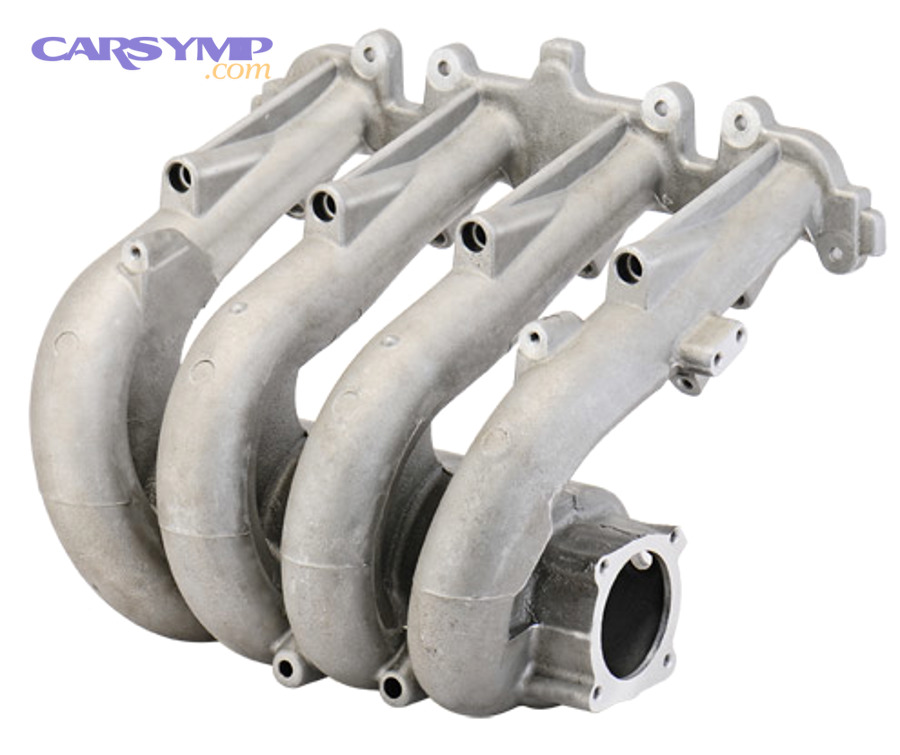
The fastest way to win here is to check high-probability points before exotic theories. Most leak-driven trim problems come from simple rubber, simple gaskets, or simple cracks.
Which intake-side leak points create the biggest trim shift at idle?
The biggest idle trim shifts usually come from intake-side leaks that bypass metering and feed directly into manifold vacuum—especially PCV system faults, brake booster leaks, intake manifold gasket leaks, and disconnected/split vacuum hoses.
Specifically, prioritize these:
- PCV hose/valve and PCV ports: A stuck-open PCV valve or split hose is a direct unmetered air path.
- Brake booster and check valve: Large diaphragm leaks can create major idle corrections.
- Intake manifold gasket: Often shows stronger symptoms cold; can affect one bank more than the other.
- EVAP purge valve stuck open: Can act like a vacuum leak at idle (and can add fuel vapor as a second effect).
A useful physical clue is idle quality: big vacuum leaks often cause unstable idle, high idle, or hunting, but small leaks may only show up as elevated trims and a lean code.
Which exhaust-side leak points matter most (and when does location not matter)?
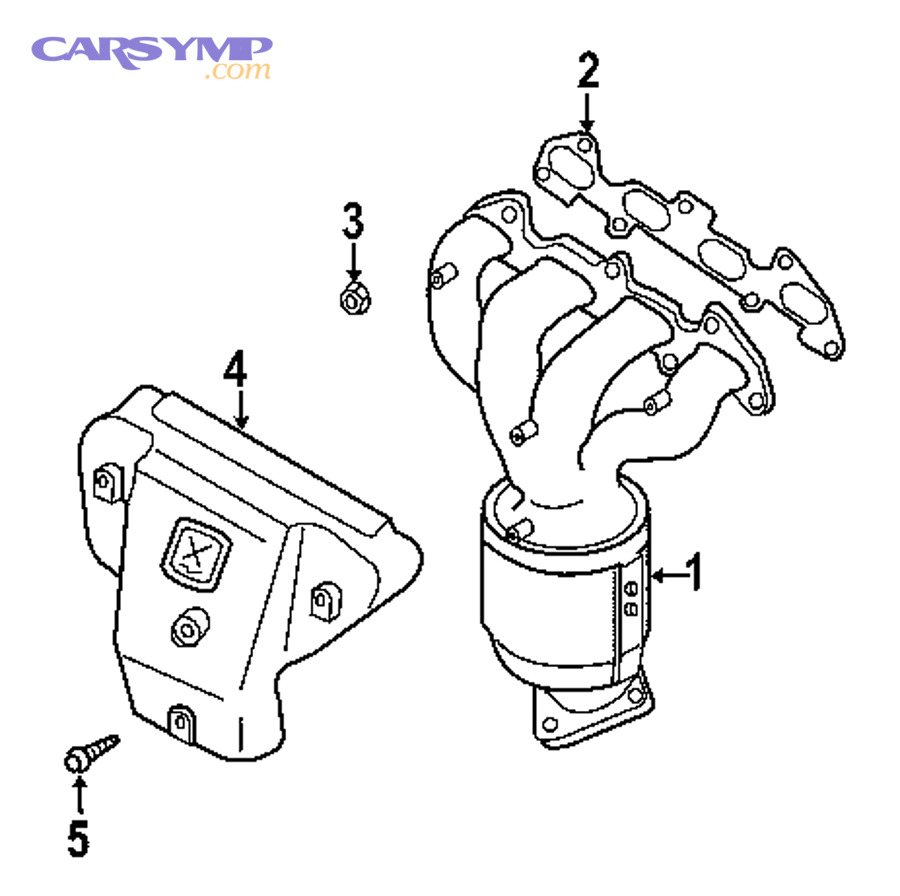
Exhaust-side leaks matter most when they are upstream of the upstream O2/A/F sensor, because that’s where the sensor samples for fueling control; leaks downstream of that sensor usually matter less for trims but can still affect noise, smell, and sometimes downstream monitoring.
Meanwhile, the phrase “Manifold leak vs pipe leak diagnosis” matters because:
- A manifold crack or manifold gasket leak is very close to the sensor and tends to contaminate the sensor sample quickly.
- A pipe leak farther away may have weaker effects on the sensor sample, depending on distance, flow, and pulsation.
To keep this practical, focus on these upstream locations:
- Exhaust manifold gasket (hot, high stress, common failure point)
- Manifold cracks (especially on high-mileage or heat-cycled engines)
- Front pipe / flex joint leaks (can be upstream on many layouts)
- Collector leaks on headers
If you confirm an upstream exhaust leak and you’re planning the fix, that’s when an Exhaust leak repair cost estimate becomes part of the diagnostic workflow—because manifold hardware can turn a simple leak into a labor-heavy job if studs snap or access is tight.
What is a safe, repeatable test sequence to confirm a leak before replacing parts?
A safe, repeatable leak confirmation method is a 5-step process—stabilize closed loop, capture baseline trims, run an idle vs 2500 rpm comparison, perform a targeted physical leak test, and re-check trims after correction—so you can prove the leak before buying sensors.
Next, the goal is to keep your test conditions consistent so the data can’t trick you.
Here’s the repeatable sequence:
- Warm the engine fully and confirm closed loop.
- Record baseline: STFT, LTFT, RPM, load, and bank split.
- Run a steady 2500 rpm hold and compare total trims to idle.
- Confirm physically (smoke test, listening, visual soot, etc.).
- Repair and re-test under the same conditions.
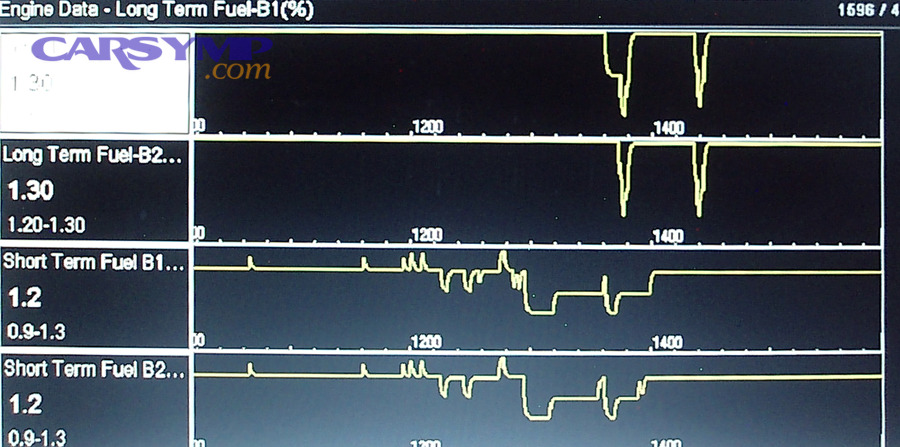
If your scan tool supports it, graph STFT and O2/A/F while holding steady rpm; the picture is often clearer than raw numbers.
Which tests confirm an intake leak most reliably (smoke test vs spray test vs data-only)?
Smoke testing is usually the most reliable intake leak confirmation, spray tests can be effective but carry safety risks, and data-only testing is best for narrowing the search before you put hands on the engine.
Then, you choose the tool based on risk and access.
1) Smoke test (best confirmation, safest when done correctly)
- Introduce smoke into the intake tract (often through a service port) with the engine off.
- Watch for smoke escaping at hoses, gaskets, throttle body seals, injector o-rings, or manifold seams.
- Advantage: It shows where the leak is, not just that a leak exists.
2) Spray enrichment tests (effective but higher risk)
- Spraying flammable cleaner around suspected areas while the engine idles can create RPM or STFT changes if the engine ingests the vapor.
- Risks: Fire hazard, damage to plastics, false positives due to turbulence. Use extreme caution and avoid hot exhaust surfaces.
3) Data-only confirmation (fast triage)
- Idle vs 2500 test: vacuum leak patterns often improve at higher airflow.
- Bank split: localized intake leaks usually create one-bank bias.
Use data-only to decide where to aim the smoke first. That’s how you go fast without guessing.
Which tests confirm an upstream exhaust leak most reliably?
The most reliable upstream exhaust leak confirmation is a combination of cold-start inspection, soot/trace evidence near joints, controlled backpressure checks (done carefully), and smoke testing the exhaust—because upstream leaks can be audible, visible, and measurable.
Moreover, this is where your repair planning matters: manifold leaks and pipe leaks are not the same job.
Use these options:
1) Cold-start listen and feel (simple, often effective)
- Start cold and listen near the manifold area for ticking.
- Feel for puffs near joints (use caution—hot surfaces come quickly).
- Some leaks quiet as metal expands, so cold-start is key.
2) Visual soot tracking
- Look for black soot lines near manifold gaskets, flange joints, flex pipes, or weld seams.
3) Exhaust smoke test
- Introduce smoke into the exhaust (engine off) and watch for smoke escaping upstream.
4) Careful tailpipe restriction test (use caution)
- Brief, gentle restriction can make leaks easier to hear/spot.
- Don’t create dangerous backpressure; avoid extended restriction.
If your goal is Manifold leak vs pipe leak diagnosis, prioritize confirming leak location relative to the upstream sensor—because that determines whether the leak can truly drive trims or is mostly a noise/emissions issue.
How do you avoid misdiagnosing a leak as a bad O2 sensor, MAF, or fuel pump?
You avoid misdiagnosis by treating fuel trims as a symptom, validating sensor function with response checks, and using operating-condition patterns (idle vs 2500 vs load) to separate unmetered air, exhaust sample contamination, measured-air errors, and true fuel delivery problems.
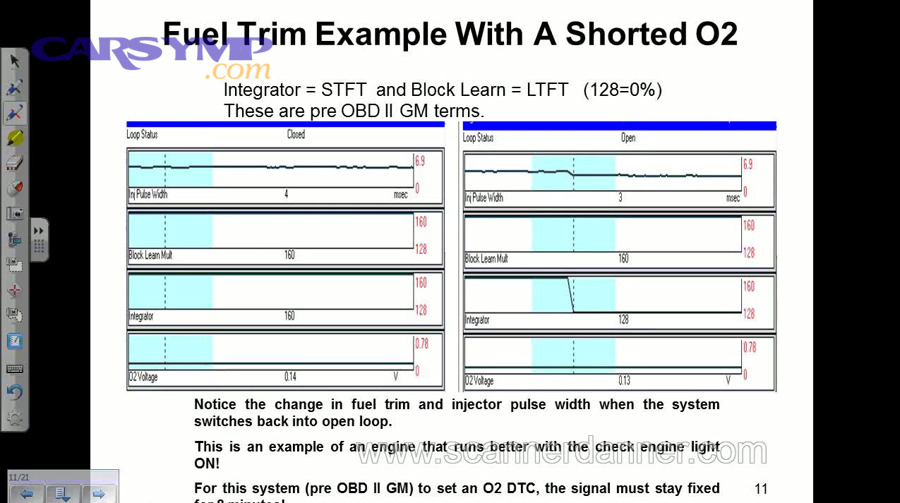
Especially with lean codes, the temptation is to replace the O2 sensor because it “says lean,” but the ECU is reporting what it sees—not why it’s happening.
A clean anti-misdiagnosis checklist looks like this:
- Confirm closed loop before you interpret trims.
- Check for obvious unmetered air paths (boots, hoses, PCV).
- Compare banks (localized vs shared).
- Confirm physically (smoke/soot/listen).
- Only then decide if a sensor or fuel supply test is warranted.
If trims are high, does that automatically mean the O2 sensor is faulty?
No—high trims do not automatically mean the O2 sensor is faulty because trims are the ECU’s correction response, and a healthy sensor can report a real lean condition or a false lean condition caused by leaks upstream of the sensor.
Next, you can do quick checks that separate “sensor failure” from “sensor reporting something believable.”
Try these sanity checks:
- Response test: If you briefly add a controlled enrichment source (professionally and safely) and the sensor responds as expected, the sensor is likely alive.
- Cross-check with trims: If STFT is maxed positive and the sensor still indicates lean continuously, ask whether the engine is actually lean or the exhaust sample is compromised.
- Check for exhaust leaks upstream: Outside air pulled into the exhaust can be misread as lean and can make the engine run rich after correction. (motor.com)
If you do suspect the sensor, confirm wiring, heater operation, and whether the sensor is switching/responding appropriately in closed loop before replacement.
What quick comparisons rule out fuel delivery problems when chasing leak-like trim patterns?
Fuel delivery problems usually get worse with load, while classic vacuum leaks often look worst at idle and improve as airflow increases—so comparing trim behavior at idle, 2500 rpm, and under controlled load is the fastest way to rule in/out fuel supply.
In addition, you can compare “does it go lean when demand rises?” because that’s where weak pumps, clogged filters, or failing regulators show themselves.
Use these comparisons:
- Idle vs 2500 hold: Vacuum leak pattern often improves at 2500; fuel supply issues often don’t.
- Light cruise vs moderate acceleration: Fuel starvation shows most when injector demand rises.
- Both banks together: Fuel supply problems typically affect both banks similarly (unless you have bank-specific fueling hardware issues).
If you confirm the issue is not fuel delivery and you’ve proven an upstream leak, you can move to planning the exhaust leak repair, including whether you’re dealing with a manifold gasket/stud job or a pipe/flex repair job—and that’s where an Exhaust leak repair cost estimate becomes realistic instead of speculative.
What rare conditions can mimic leak-driven O2 and fuel trim patterns ?
There are four common “look-alikes” that can mimic leak-driven trims—misfires, secondary air injection, turbo/boost leaks, and fuel composition shifts—and you tell them apart by checking correlation with misfire counters, cold-start strategies, load-specific behavior, and long-term adaptation patterns.
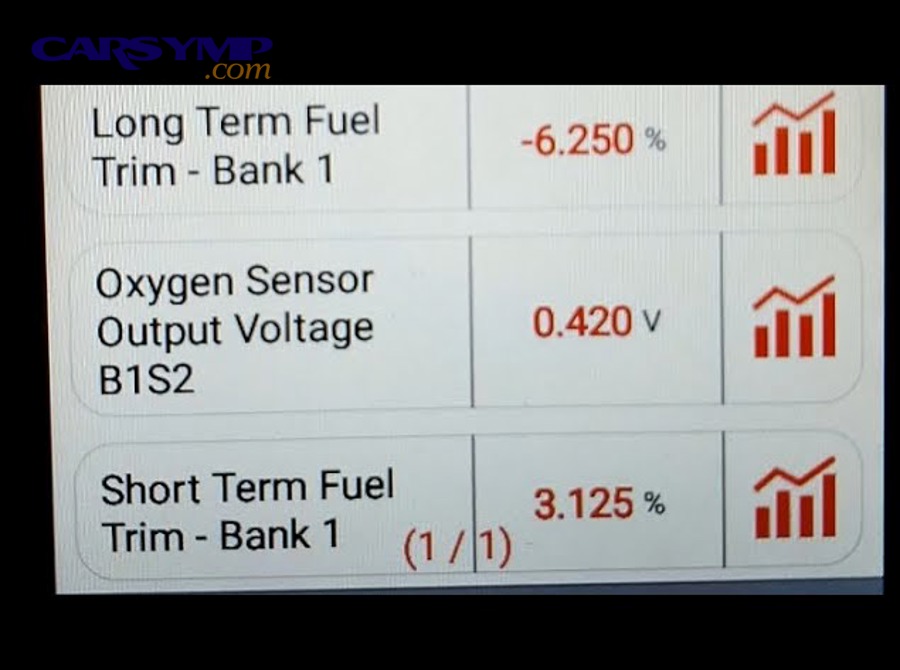
To sum up the main content: leaks are common, but your scan data can be fooled by edge cases unless you actively rule them out.
Here’s the deeper point: oxygen in the exhaust does not always mean “lean combustion.” Sometimes it means “unburned oxygen made it through,” “air was injected,” or “air entered the exhaust after combustion.”
Can a misfire create a false-lean O2 reading and high trims even without a leak?
Yes—a misfire can create a false-lean O2 reading and high trims because oxygen that should have been consumed during combustion passes through into the exhaust, making the sensor report excess oxygen.
Next, the separation method is correlation: misfire events should correlate with roughness, misfire counters, and sometimes a particular cylinder or bank.
Practical steps:
- Check scan data for misfire counts (Mode $06 can help on many platforms).
- Watch whether trims spike during the rough event.
- Look for supporting clues (spark plug condition, coil performance, injector balance).
If you fix the misfire, the “lean” indication often disappears without touching intake or exhaust leaks.
Does secondary air injection (SAI) cause temporary false-lean readings on cold start?
Yes—secondary air injection can cause temporary false-lean readings because it injects fresh air into the exhaust stream during cold start, increasing oxygen content at the sensor and pushing the system to report lean even when fueling is normal for warm-up strategy.
Then, the fix is not to “fix the lean”—the fix is to avoid diagnosing trims during that strategy window.
How to handle it:
- Identify if the vehicle uses SAI.
- Don’t judge trims until the system is fully warm and stable in closed loop.
- If you suspect SAI faults, look for related codes and verify pump/valve operation separately.
How do turbo/boost leaks change trim patterns compared with classic vacuum leaks?
Turbo/boost leaks often show the opposite pattern of classic vacuum leaks: vacuum leaks look worst at idle/low load, while boost leaks show up most under load when the system is pressurized and airflow demand rises.
Meanwhile, this is where “where does it leak” matters: a boost leak can be post-MAF and cause rich/lean confusion depending on architecture.
General pattern cues:
- Boost leak: trims may go positive under acceleration; power drops; boost target vs actual diverges.
- Vacuum leak: trims high at idle, often improve at steady higher rpm.
If your vehicle is boosted, always consider whether the “leak” is in the pressurized tract rather than a classic manifold vacuum source.
Can ethanol content or fuel quality shift trims enough to look like a small leak?
Yes—ethanol content changes or fuel quality shifts can move LTFT because the ECU adapts to maintain lambda, and that adaptation can resemble a small persistent correction even when no leak exists.
In short, the key clue is stability across time: fuel composition shifts tend to change slowly and affect broad operating ranges rather than creating sharp idle-only patterns.
What to do:
- If the vehicle supports it, check ethanol content PID (where available).
- Look at LTFT trend over days, not minutes.
- If trims changed right after refueling, consider fuel composition before tearing into gaskets.
Evidence (why tiny biases matter): According to a study by University of Michigan from the Electrical Engineering and Computer Science Department, in 2005, oxygen-sensor measurement bias can be on the order of thousandths of lambda and can meaningfully shift closed-loop control, with reported bias magnitudes varying roughly within the “parts per thousand” range. (grizzle.robotics.umich.edu)