


Exhaust leaks are dangerous because they can create carbon monoxide (CO) exposure inside or near the vehicle, and CO can harm you before you realize what’s happening. The safest assumption is simple: if exhaust is leaking anywhere before it exits the tailpipe normally, treat it as a real safety issue—not just a noise problem.
Next, you’ll want to know what “counts” as an exhaust leak, why it can turn into a cabin-air problem, and which situations raise the risk (like leaks near the firewall, idling, or using recirculation). That context helps you decide whether you can move the car at all—or if you should stop and tow it.
Then, you need practical ways to spot a leak early: in-cabin symptoms, under-hood signs, and scan-tool clues. This matters because smell and sound can mislead you, and some leaks are “quiet” while still causing harmful exposure.
Introduce a new idea: once you can recognize the risk, you can act fast—reduce exposure immediately, get an accurate diagnosis, and plan an exhaust leak repair that fixes the cause (not a temporary patch).
Is an exhaust leak dangerous to drive with, even for short trips?
Yes—driving with an exhaust leak is dangerous, even for short trips, because it can cause CO exposure, because the risk increases during idling/slow traffic, and because you can’t reliably detect the danger by smell or noise alone. More importantly, “just five minutes” often becomes 20 minutes of traffic, warm-up idling, or stoplights—exactly the conditions that amplify exposure.
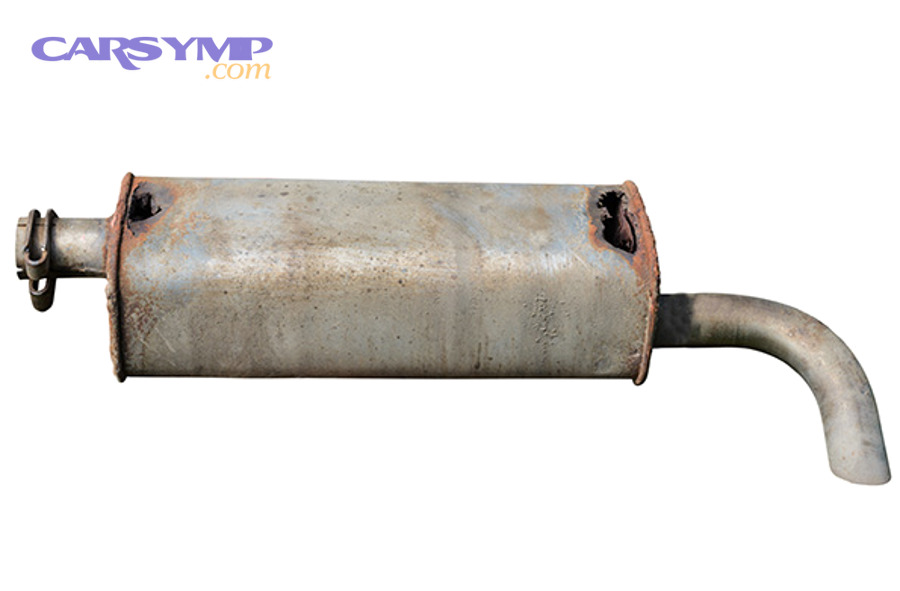
When “a small leak” is still a big safety problem
A leak is “small” only in sound level, not necessarily in health impact. CO can accumulate when:
- You’re idling (warming up, drive-thru, school pickup lines).
- You’re in stop-and-go traffic with low airflow under the car.
- The leak is upstream (closer to the engine), where pressure pulses can push gases out more aggressively.
- The leak is near entry paths (firewall seams, floor grommets, HVAC intake zones).
Even if the cabin doesn’t fill with exhaust, repeated low-level exposure can still make drivers drowsy, headachy, or slow to react—exactly what you don’t want behind the wheel.
Who is at highest risk: kids, pregnant passengers, people with heart/lung disease
Some people are more vulnerable to the oxygen-deprivation effects of CO:
- Children (smaller bodies, faster breathing rates)
- Pregnant passengers (fetal oxygen delivery is sensitive)
- People with asthma/COPD, anemia, or cardiovascular disease
- Anyone who already feels ill, fatigued, or dehydrated (symptoms can be harder to interpret)
Medical references describe common CO toxicity symptoms such as headache, nausea, dizziness, fatigue, and vomiting, with confusion and other signs possible as severity increases. (ncbi.nlm.nih.gov)
Why noise and smell are unreliable safety indicators
Relying on “I’d smell it” is risky for three reasons:
- CO itself is odorless, so smell only tells you about other exhaust compounds, not CO.
- Some leaks are outside your awareness (underbody leaks, seepage while moving).
- Your nose adapts, and symptoms can feel like a flu-like illness—especially during winter or long drives.
A CDC public health report highlights that automobile exhaust in confined or poorly vented spaces is a common CO source and notes symptoms like headache, dizziness, sleepiness, nausea, vomiting, unconsciousness, and death with higher/prolonged exposures. (cdc.gov)
What exactly is an exhaust leak and why does it create carbon monoxide risk?
An exhaust leak is an unintended opening in the exhaust system that lets combustion gases escape before they exit the tailpipe, usually caused by corrosion, failed gaskets, cracked components, or broken joints—and it creates carbon monoxide risk when those gases can collect near the cabin or be drawn into the HVAC airflow. To better understand the danger, it helps to picture where the exhaust travels and how airflow around a moving car can pull gases into places you didn’t expect.
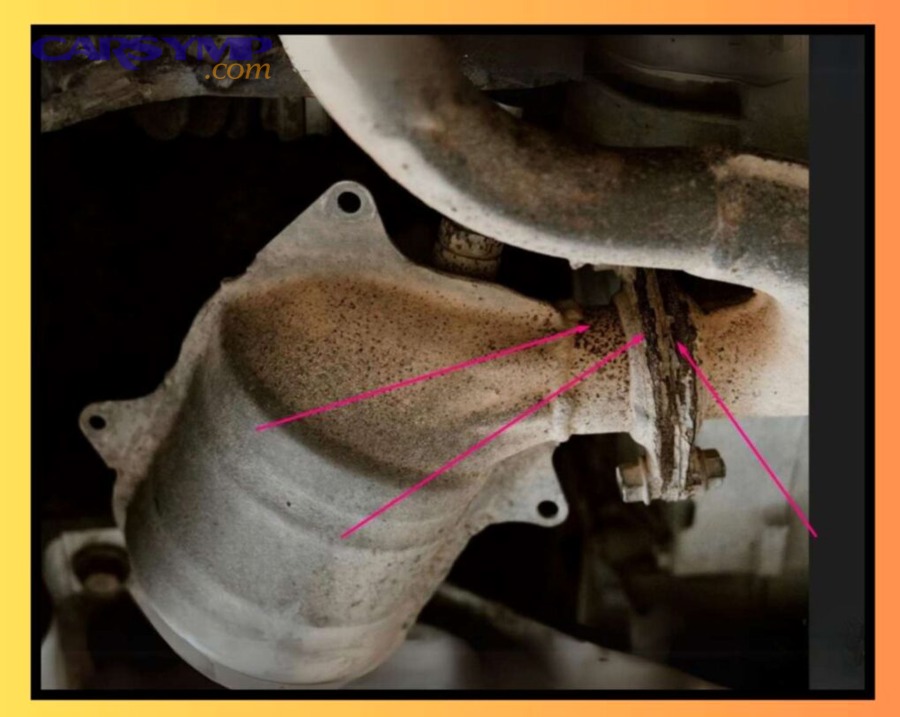
Exhaust system basics: where gases travel and why pressure matters
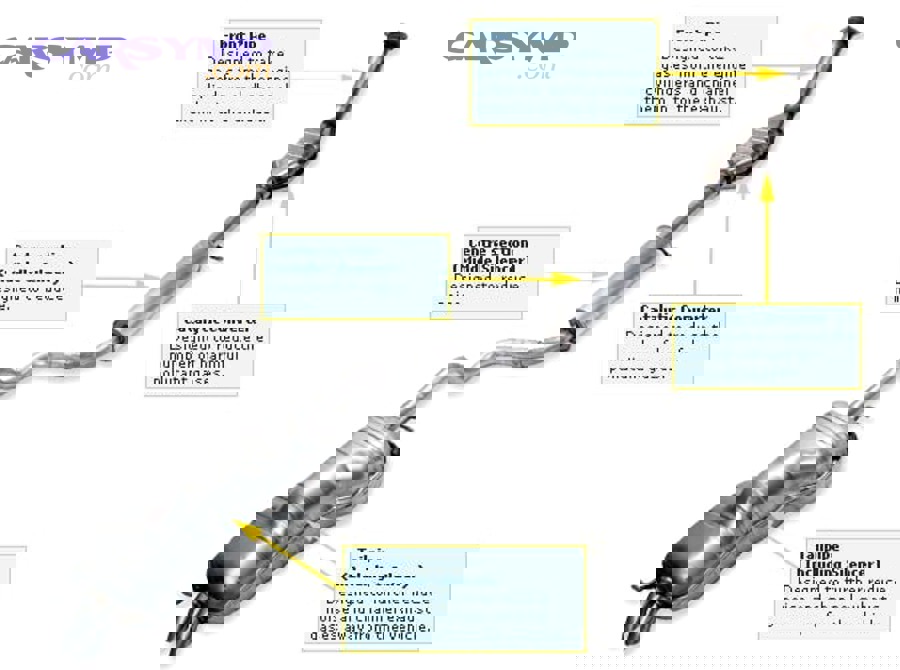
Your engine produces exhaust pulses that travel through:
- Exhaust ports → exhaust manifold (or headers)
- Manifold gasket sealing surface
- Downpipe / flex joint
- Catalytic converter(s)
- Resonator / muffler
- Tailpipe exit
Leaks near the engine see strong pressure pulses and high heat. That’s why manifold cracks and gasket failures often produce a “ticking” noise and soot marks—and why they can push gases into the engine bay area near firewall penetrations.
How CO gets into the cabin: airflow, HVAC intake, underbody low-pressure zones
Cabin intrusion usually isn’t “exhaust pipes connected to your vents.” It’s about pressure and airflow:
- The HVAC system can pull outside air from a cowl intake area near the windshield.
- Underbody airflow can create low-pressure zones that draw gases upward.
- Leaks near the firewall, floor, or rear hatch/trunk seals can allow gases to enter through small gaps, missing plugs, torn boots, or compromised weatherstripping.
This is why the same leak can feel “fine” at highway speed but become a problem during idling or slow traffic, when gases linger around the vehicle longer.
CO exposure vs other exhaust gases: what you can and can’t detect
CO is the biggest safety concern because:
- It binds to hemoglobin far more strongly than oxygen, reducing oxygen delivery to tissues.
- Early symptoms are nonspecific and easy to ignore.
The CDC notes CO is odorless and emphasizes prevention techniques like not operating gasoline engines in confined spaces and ensuring adequate ventilation. (cdc.gov)
What are the most common signs of an exhaust leak?
There are 3 main groups of exhaust leak signs: in-cabin symptoms, mechanical/visual clues, and scan-tool/check-engine clues—based on where the leak is and how much gas escapes. Specifically, you want to combine symptom clues with physical evidence, because any single sign can be misleading.
In-cabin clues: headache, nausea, drowsiness, eye irritation, exhaust odor
Treat these as a safety signal—especially if they:
- Start soon after driving
- Improve when you get fresh air
- Happen more during idling or slow speeds
- Occur for multiple occupants at once
Common CO-related symptoms described in medical references include headache, nausea, dizziness/vertigo, drowsiness/fatigue, and vomiting, with confusion and other signs possible in more severe cases. (ncbi.nlm.nih.gov)
Practical “driver pattern” clues:
- You feel fine at home, but develop symptoms during commutes.
- Passengers complain of headaches in the same trip.
- Symptoms worsen when using heat or recirculate (not always, but it’s a clue worth noting).
Outside-the-cabin clues: ticking, soot marks, louder exhaust, performance changes
Common physical signs include:
- Ticking from the engine bay (often manifold/gasket leaks), especially cold start
- Sooty black marks around a flange, gasket line, or crack
- A louder, harsher exhaust note (sometimes a “puffing” sound)
- Smell of exhaust near the hood or under the car
If you safely inspect (engine cool, good ventilation), look for:
- Burnt edges on heat shields
- Melted plastic nearby (serious heat leakage)
- Loose bolts at manifold or flange joints
Check-engine and scan clues: lean codes, O2 sensor behavior, fuel trims
Some exhaust leaks can trigger diagnostic trouble codes and driveability issues. Here’s the key concept:
How leaks affect O2 readings and fuel trims depends on where the leak is relative to the upstream oxygen sensor. If fresh air is pulled into the exhaust stream before the sensor, the sensor can “think” the engine is running lean, and the ECU may add fuel (raising fuel trims). Aftermarket EFI guidance explains that exhaust leaks can cause false lean signals and incorrect fueling corrections in closed loop.
Scan-tool clues you might see:
- Positive STFT/LTFT trends (ECU adding fuel) at idle or light load
- Lean codes like P0171/P0174 (not always caused by exhaust leaks, but possible)
- O2 sensor switching that looks “off” compared to normal operation
- A mismatch between expected AFR behavior and measured oxygen content
This is why you shouldn’t jump straight to “bad O2 sensor” without checking for upstream leaks.
Where do exhaust leaks happen most often, and how does location change the risk?
There are 3 common leak zones—upstream (manifold/gaskets/flex), mid-system (flanges/catalyst joints), and downstream (muffler/tailpipe)—and the location changes the risk because upstream and cabin-adjacent leaks are more likely to contribute to CO exposure, while downstream leaks more often create noise and emissions issues. However, any leak can become a safety risk if it allows exhaust to collect where the cabin can draw it in.
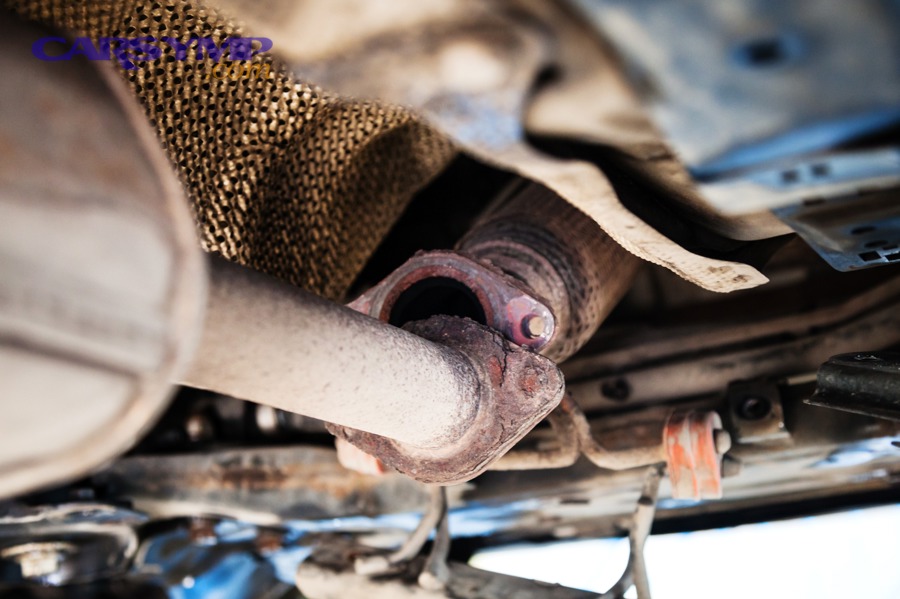
Upstream leaks (manifold, gasket, flex joint) vs downstream leaks (muffler, tailpipe)
Upstream leaks tend to be:
- Hotter and higher pressure
- More likely to affect O2 readings and fuel trims
- More likely to leak into the engine bay near the firewall
Downstream leaks tend to be:
- Louder (depending on size)
- More associated with rust perforation and hanger failures
- More likely to be noticed by sound, but not always
From a safety standpoint, upstream leaks are often treated as more urgent because they can combine health risk + drivability impact.
Leaks near the firewall and floor: why they raise cabin intrusion risk
Leaks near:
- The firewall
- The front floor pan
- Steering column boots / wiring pass-throughs
- Missing grommets or body plugs
…can create a shorter path for gases to enter. If the cabin has any pressure imbalance (fan running, windows cracked in certain patterns, rear hatch seal issues), intrusion becomes more likely.
Leaks after the catalytic converter: safety vs emissions and noise impacts
Leaks after the catalytic converter can still be risky (you can still have CO), but the biggest day-to-day impact is often:
- Noise complaints
- Failing inspections (depending on jurisdiction and leak location)
- Exhaust smell around the vehicle at stops
- Potential underbody heat issues if the flow is altered
A useful mental model: risk rises as the leak gets closer to (1) the engine and (2) cabin entry points.
When is it unsafe to drive, and what should you do right now?
It’s unsafe to drive if you have exhaust-in-cabin symptoms, if the leak is near the engine/firewall area, or if you can’t prevent exposure with ventilation—because continued driving can worsen CO exposure, impair your reaction time, and escalate from mild symptoms to a medical emergency. In addition, the actions you take immediately can reduce risk while you arrange a proper repair.
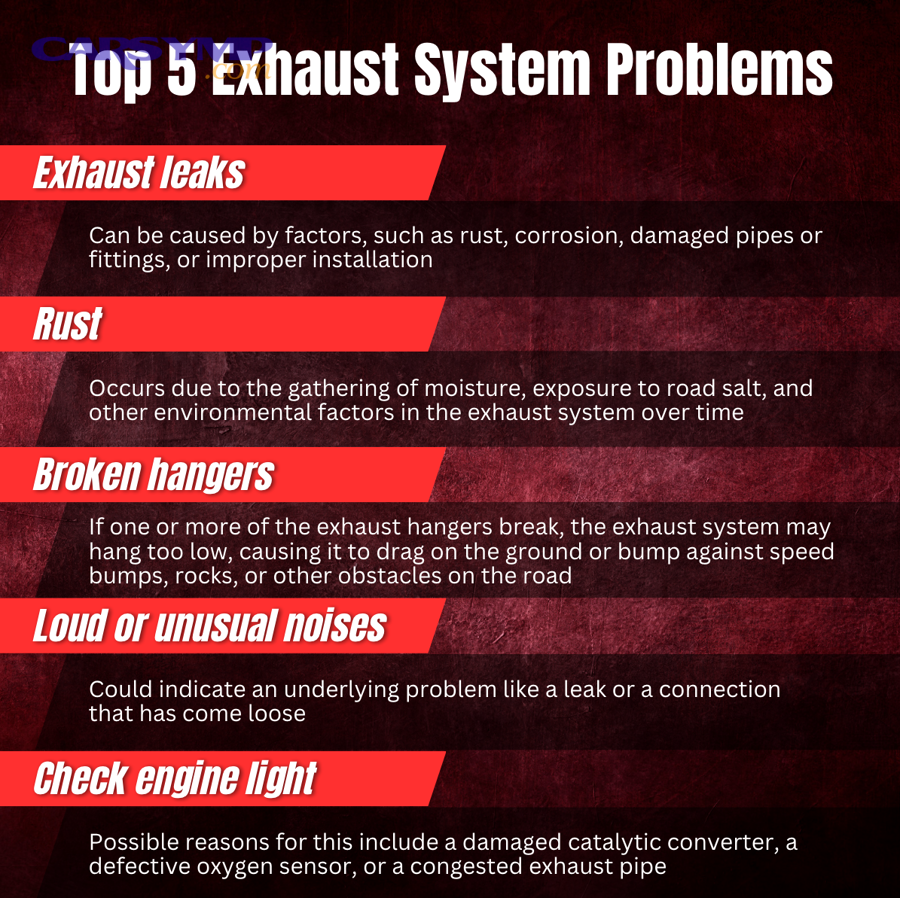
Red-flag symptoms that mean “stop driving now”
Stop driving and get fresh air if you notice:
- Headache + nausea + dizziness (especially together)
- Unusual drowsiness or confusion
- Symptoms that improve quickly once outside the car
- Multiple occupants feeling sick at the same time
If anyone has severe symptoms (confusion, fainting, chest pain, shortness of breath), treat it as an emergency and seek medical care. CO poisoning guidance emphasizes that symptoms can be nonspecific and that exposure can be dangerous without obvious warning signs. (cdc.gov)
Immediate steps: ventilation settings, windows, route choice, when to call for a tow
If you must move the car a very short distance for safety (for example, off a roadway), prioritize reducing exposure:
- Turn off recirculate and use fresh air (outside air) mode
- Open windows to increase airflow (even partially)
- Avoid idling; keep the trip as short as possible
- Do not sit parked with the engine running
Call for a tow if:
- Symptoms appear quickly
- The leak is loud/ticking near the engine bay
- You smell exhaust strongly inside
- You suspect a manifold crack, missing gasket, or broken flange near the front of the car
Research on in-cabin CO shows ventilation choices matter and that spikes can occur in real driving conditions—one study observed an isolated peak event reaching 170 ppm in a “new air” setting when following closely behind a visibly emitting vehicle. (mdpi.com)
Do-not-do list: idling, sealed garage, DIY patching mistakes
Avoid these common “accidental exposure multipliers”:
- Do not idle in a garage, even with the door open (CO can still accumulate)
- Don’t test-drive to “see if it goes away” after symptoms start
- Don’t patch with tape/putty near hot components as a long-term fix
- Don’t assume the leak is “not bad” because it’s quiet
The CDC repeatedly emphasizes that gasoline engine exhaust in confined spaces is a common CO hazard and highlights prevention through ventilation and avoiding engine operation in enclosed areas. (cdc.gov)
How do mechanics confirm an exhaust leak and what fixes are typical?
Mechanics confirm an exhaust leak by combining a physical inspection with leak-revealing tests (smoke testing or block-off/pressure methods) and scan data when needed, then fix it by replacing failed gaskets/components or repairing pipe joints—because the real goal is sealing the system under operating temperature and load. Next, the key is understanding what you’re paying for: diagnosis time, access difficulty, and the actual failed part.
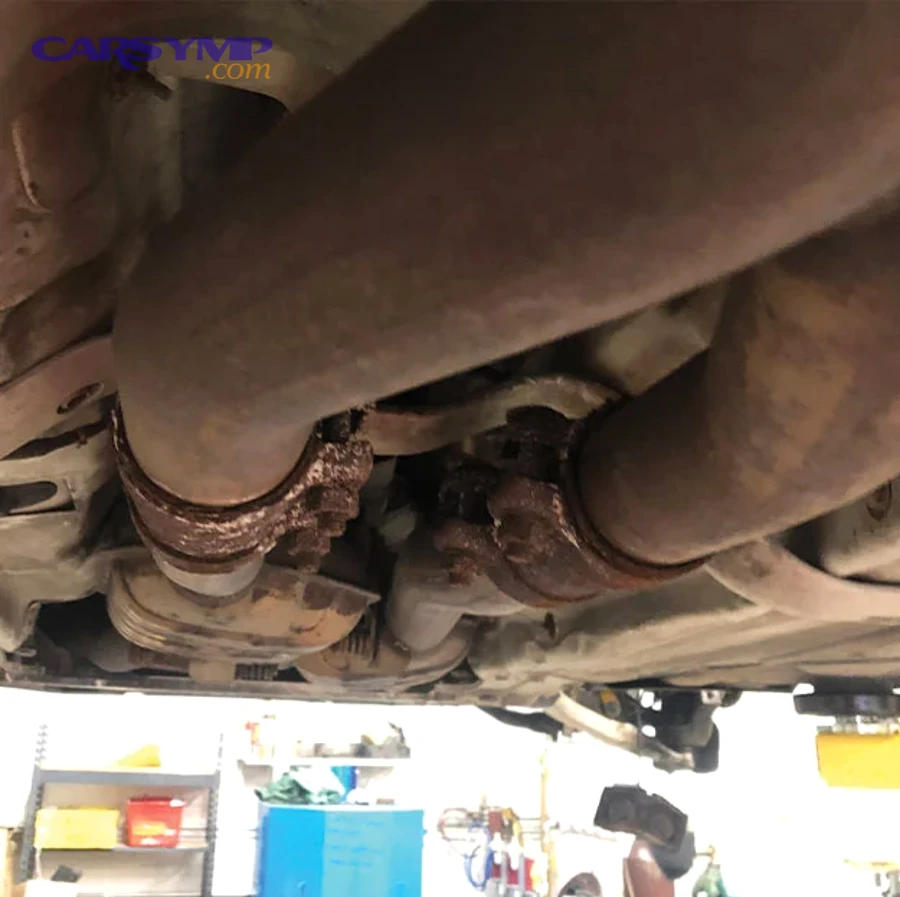
How pros diagnose: smoke test, block-off test, stethoscope, scan data
Typical shop workflow:
- Cold start listen test (ticking/puffing is easiest to hear when cold)
- Visual inspection for soot, burn marks, loose flanges, broken hangers
- Smoke test to force visible smoke out through leak points
- Block-off/pressure test (temporarily restricting flow to make leaks audible/obvious)
- If drivability complaints exist: review fuel trims, O2 sensor activity, and related codes
RepairPal’s diagnostic description notes that technicians inspect for signs like black marks and may smoke test or plug the exhaust to make leaks more apparent. (repairpal.com)
Common exhaust leak repair options: gasket, manifold, flex pipe, weld, clamp
Common fixes depend on location:
- Exhaust manifold gasket replacement (often with new studs/fasteners)
- Manifold replacement if cracked/warped
- Flex pipe replacement (usually not truly “repairable” if torn)
- Flange gasket replacement + resurfacing if needed
- Muffler/tailpipe section replacement for rust-through
- Welding patches in specific cases (more common at exhaust specialty shops)
A good repair focuses on:
- Proper sealing surfaces (clean, flat, correct gasket)
- Correct torque procedures
- Replacing hardware that is heat-cycled and brittle
Exhaust leak repair cost estimate: what drives price and typical ranges
An Exhaust leak repair cost estimate depends on three big variables:
- Where the leak is (manifold area often costs more due to access/heat shields)
- Rust level and broken fasteners (labor time can increase dramatically)
- Parts type (OEM vs aftermarket, one-piece exhaust sections vs modular)
Here’s a quick cost table to set expectations (ranges vary by vehicle and region). This table summarizes example national average ranges for common exhaust-related repairs so you can compare “gasket vs component replacement” scenarios.
| Repair scenario | What it usually includes | Typical cost range (parts + labor) |
|---|---|---|
| Exhaust manifold gasket replacement | Remove manifold, replace gasket, often replace hardware | $386–$551 (repairpal.com) |
| Exhaust manifold replacement | Replace manifold assembly (crack/warp) | $1,430–$1,639 (repairpal.com) |
| Muffler replacement | Replace muffler section (rust/noise) | $1,077–$1,143 (repairpal.com) |
| Exhaust pipe replacement | Replace a pipe section (damage/rust) | $1,234–$1,292 (repairpal.com) |
Evidence: According to a study by Harvard University from the School of Public Health, in 1978, researchers found that in over 80% of sampled hours in certain indoor ice rinks, inadequate venting of gasoline exhaust led to CO levels exceeding the national air-quality standard—showing how quickly exhaust in a confined/poorly vented environment can become unsafe. (cdc.gov)
Contextual border: Once the leak is correctly diagnosed and repaired, the next priority shifts from “fix the hazard” to “reduce future risk and prevent recurrence,” so you’re not back in the same situation a month later.
How can you reduce exposure risk and prevent exhaust leaks from coming back?
You can reduce risk and prevent repeat leaks by using ventilation strategies that lower CO exposure, maintaining sealing and support components that fail first, and verifying repairs with both a leak check and scan data—because prevention is cheaper than repeated exhaust leak repair. In addition, a few simple habits can cut risk immediately while you schedule service.
Ventilation habits that reduce CO exposure on the road
These habits reduce exposure risk in common real-world scenarios:
- Avoid extended idling (warm up by driving gently instead)
- In traffic, consider fresh air mode and crack windows when safe
- If you smell exhaust or feel symptoms: get fresh air immediately and end the trip
Field research shows in-vehicle CO varies by conditions and ventilation settings; one long-term study found large reductions in average in-vehicle CO over decades as emissions standards improved, but it also confirms that exposure still exists in real traffic environments. (pubmed.ncbi.nlm.nih.gov)
Preventive maintenance: inspections, heat shields, hangers, rust prevention
Prevent recurrence by focusing on failure points:
- Inspect exhaust hangers and mounts (movement stresses joints)
- Address rust early (surface rust becomes perforation)
- Replace missing heat shields (they protect nearby components and reduce heat damage)
- Fix misfires promptly (raw fuel can overheat and damage exhaust components)
A practical schedule:
- Quick visual check at oil changes
- Underbody inspection before winter (salt accelerates corrosion)
- Listen for cold-start ticking (early manifold gasket leaks are easiest to catch)
When to add a CO alarm in the vehicle and how to use it
If you frequently drive:
- Older vehicles
- Work vans/trucks with long idle times
- Vehicles with prior exhaust repairs or known rust
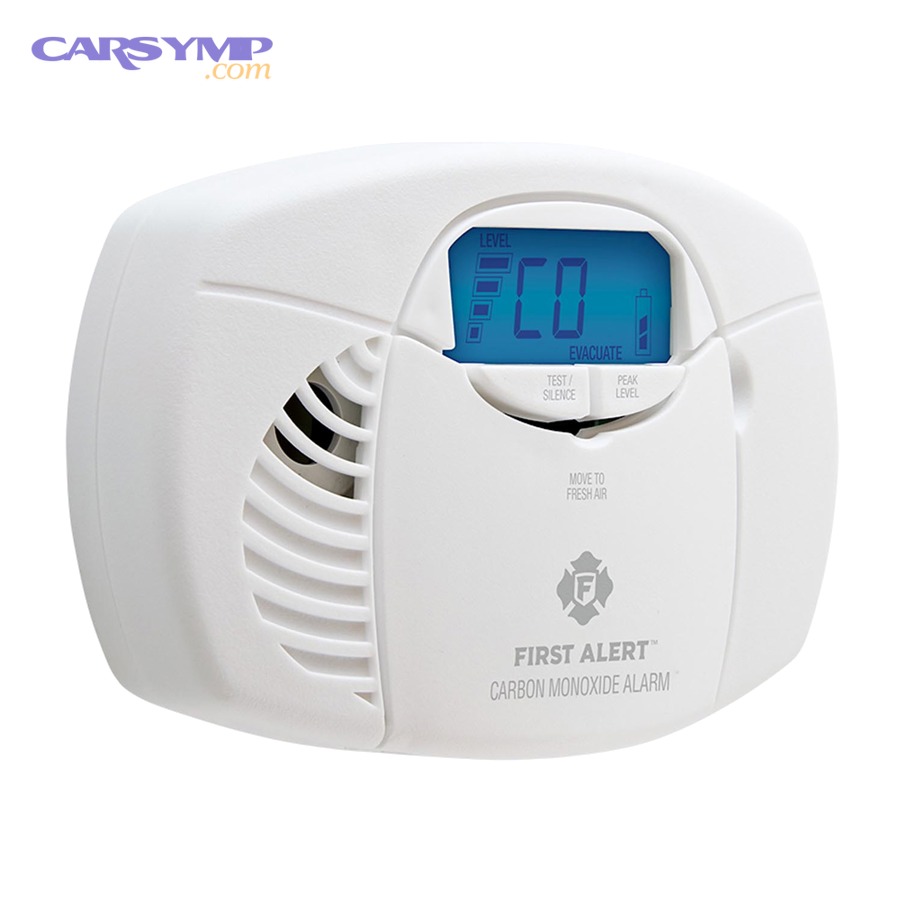
…a portable CO alarm can provide an extra warning layer. It’s not a substitute for repair, but it can help you notice a developing issue before symptoms appear—especially because CO is not reliably detectable by smell.
After-repair verification checklist: test drive, scan fuel trims, recheck for soot
After the shop completes the fix, verify the result:
- No exhaust smell in cabin during a controlled test drive
- No visible soot at repaired joints
- No cold-start ticking
- Fuel trims normalize if they were previously skewed by a leak (especially upstream)
If your original issue included fueling problems, revisit the diagnostic concept: How leaks affect O2 readings and fuel trims is most relevant for leaks before the upstream O2 sensor, where false oxygen signals can push the ECU to add fuel.