


If you’re trying to figure out whether you have an exhaust manifold leak or an exhaust pipe leak, the fastest accurate approach is to compare where the sound and soot originate, then confirm with a simple test sequence (visual + sound + scan data). The “right” diagnosis is the one that leads you to the correct fix without replacing the wrong parts.
Next, you’ll learn the most reliable Exhaust leak symptoms that separate manifold leaks from pipe leaks, including when the noise is loudest, what smells are common, and how soot patterns form around different joints and flanges.
Then, you’ll get a practical, repeatable set of checks—some you can do in the driveway—to confirm the leak location and avoid confusing it with valve noise, belt squeal, or intake leaks that mimic exhaust issues.
Introduce a new idea: once you know where the leak actually is, you can choose the correct exhaust leak repair path and predict the likely Exhaust leak repair cost estimate based on whether you’re dealing with a gasket, a crack, a flex section, or corrosion at a flange.
What’s the difference between an exhaust manifold leak and an exhaust pipe leak?
An exhaust manifold leak happens at the engine’s exhaust outlet area (manifold, gasket, studs, or cracks), while an exhaust pipe leak happens downstream (pipe joints, flex pipe, flange gasket, welds, or rust holes), and each location changes the sound, soot pattern, and sensor impact in predictable ways.
To better understand why that difference matters, focus on what the exhaust system is doing at each point: the manifold is handling high heat and pressure pulses right at the ports, while the pipes are managing flow, flex, and corrosion further away.
Where the leak “lives” in the system
- Manifold area (upstream, hottest zone):
- Exhaust manifold itself (cracks—common on some engines)
- Manifold-to-head gasket leak
- Broken/loose studs or warped manifold flange
- Collector gasket right after the manifold (on some setups)
- Pipe area (downstream, cooler but exposed):
- Flex pipe braid/liner failure
- Flange gasket leak (donut gasket / flat gasket)
- Rust-through in pipe or muffler section
- Poor weld, clamp leak, or slipped joint
How the sound typically differs
- Manifold leak sound: sharp “tick-tick-tick” or tapping, often loudest on cold start and during light throttle.
- Pipe leak sound: deeper “puff,” “chuff,” or “roar,” often louder under load, sometimes with a metallic rattle if a heat shield is involved.
How the leak changes what the engine “sees”
- Upstream of sensors (especially upstream O2/A/F sensor) can distort mixture feedback and fuel trims.
- Downstream of upstream sensors usually won’t change trims much, but can still create noise, odor, and cabin fume risk.

Which symptoms point to a manifold leak vs a pipe leak?
Yes—you can usually separate a manifold leak from a pipe leak using sound timing, smell location, and soot patterns, as long as you check at least three symptoms instead of relying on only one clue.
More specifically, treat Exhaust leak symptoms like a “bundle”: the correct location is the one that matches the most clues at the same time.
Manifold-leak symptom bundle (most common pattern)
- Cold-start ticking that fades as it warms up
- Metal expands as it heats, which can partially seal a small gap.
- Soot at the cylinder-head/manifold seam or at the manifold runners
- Look for black streaks near the gasket line.
- Strong exhaust smell in the engine bay
- Especially noticeable with the hood open after a cold start.
- Possible clicking under light throttle near the firewall side
- Manifolds often sit close to the cabin bulkhead; leaks can “sound like” they’re inside the dash.
- Potential fuel trim weirdness when leak is upstream of O2/A-F sensor
- A false-lean signal can push trims positive (ECU adds fuel).
Pipe-leak symptom bundle (most common pattern)
- Deeper exhaust note / “roar” that gets louder with load
- A hole in a pipe acts like an extra outlet.
- Chuffing or puffing near the middle of the car
- Flex pipe and flange leaks often “pulse.”
- Smell at the side of the car or near doors/windows at idle
- Airflow around the vehicle can carry fumes toward the cabin.
- Visible condensation “spitting” on cold days near a joint
- Water vapor in exhaust can make leak points obvious.
- Rattles from heat shields, loose hangers, or cracked flex braid
- A pipe leak often coexists with vibration-related noises.
This table summarizes the most dependable differences people can verify without special tools.
| Clue | Manifold leak tends to… | Pipe leak tends to… |
|---|---|---|
| Sound character | Tick/tap (sharp) | Puff/roar (deeper) |
| When loudest | Cold start, light throttle | Under load, acceleration |
| Where smell is strongest | Engine bay | Mid-car, near joints, sometimes cabin |
| Soot pattern | At head/manifold seam | At flanges, flex, rust holes |
| Sensor/fuel trim effect | More likely if upstream of sensor | Less likely unless before sensor |
If ambient air gets pulled into the exhaust stream ahead of the sensor, the sensor can interpret that as extra oxygen and report a leaner condition than reality—so the ECU adds fuel. That’s the practical reason How leaks affect O2 readings and fuel trims matters, even if the car still “drives okay.” A dyno-based demonstration showed exhaust leaks can skew wideband readings dramatically at idle/cruise, which is exactly where closed-loop control is active.
How can you pinpoint the leak location fast without special tools?
You can pinpoint a manifold vs pipe leak fast by following a 5-step sequence (cold-start listen → visual soot check → hand/cloth “pulse” check safely → water mist test → quick scan of trims), which narrows the location before you spend money.
Next, run the steps in order because each step makes the next one more precise instead of random.
Step 1: Do a cold-start “sound sweep” (30–60 seconds)
- Start the engine cold and listen from outside, then at each front wheel well.
- A manifold leak often ticks faster with RPM and is clearest right after start.
- A pipe leak may be less sharp and may get louder as you lightly raise RPM.
Tip: Use a cardboard tube (or a length of hose held to your ear, not connected to anything) as a “poor man’s stethoscope” to localize the sound direction.
Step 2: Look for soot trails and heat discoloration
- With the engine off and cool:
- Check the manifold-to-head seam for soot streaks.
- Follow the exhaust path to the first joints:
- Collector area
- Flex pipe
- Flanges and gaskets
- Soot is one of the most honest clues because it forms where gas escapes.

Step 3: Use the “rag over tailpipe” backpressure trick (carefully)
- With the engine idling, briefly cover the tailpipe with a rag (do not fully seal it for long).
- If there’s a significant leak, you may hear hissing or feel pulses at the leak point.
Safety notes
- Keep hands away from hot components.
- Don’t do this long enough to stall the engine or overheat components.
Step 4: Use a light water mist to reveal puffs (cooler areas only)
- Lightly mist suspected pipe joints (not the manifold itself when hot).
- A leak can create visible disturbance or “spitting” where the gas escapes.
Step 5: Quick scan tool read (even a basic code reader helps)
- Read:
- Short-term fuel trim (STFT)
- Long-term fuel trim (LTFT)
- Any O2/A/F sensor codes or catalyst efficiency codes
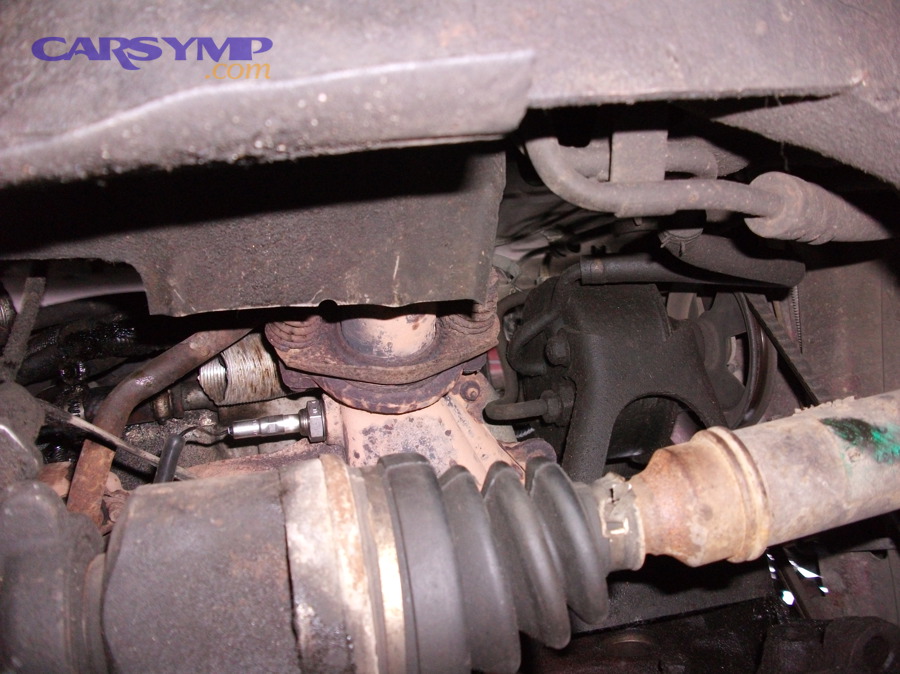
- A leak before the upstream sensor can lead to positive trims at idle/cruise, because the ECU thinks it’s lean and adds fuel.
Which tests confirm the diagnosis (smoke, soapy water, scan data)?
The most reliable confirmation uses two tests that agree: one that shows the leak physically (smoke/soapy water/visual) and one that confirms system impact (scan data or sound/backpressure), because either test alone can mislead you.
Then, pick the best test for the suspected location—manifold and pipes behave differently under heat and pressure.
Smoke test (best overall for small leaks)
- Introduce smoke into the exhaust system (via a smoke machine or a controlled method at a shop).
- Watch for smoke escaping at:
- Manifold gasket seams
- Collector flanges
- Flex pipe braid
- Rust pinholes
- Smoke finds leaks you can’t hear.
Why this works: smoke highlights leak paths even when the sound is masked by injectors, lifters, or belt noise.
Soapy water test (best for accessible pipe joints)
- Works best on cooler sections and exposed joints.
- Apply soapy water to:
- Flange gasket areas
- Clamped slip joints
- Weld seams
- Look for bubbling where gas escapes.
Scan data test (best for “sensor-impact” diagnosis)
Use scan data to validate How leaks affect O2 readings and fuel trims in real driving conditions:
- Watch STFT at:
- Idle
- 2,000 RPM in park/neutral
- Steady cruise
- Interpretation shortcuts:
- Trims high at idle but normalize at higher RPM → often intake vacuum leak (not exhaust)
- Trims high at idle and cruise, O2 switching odd → possible upstream exhaust leak or fueling issue
- No trim change but loud noise/odor → likely downstream leak
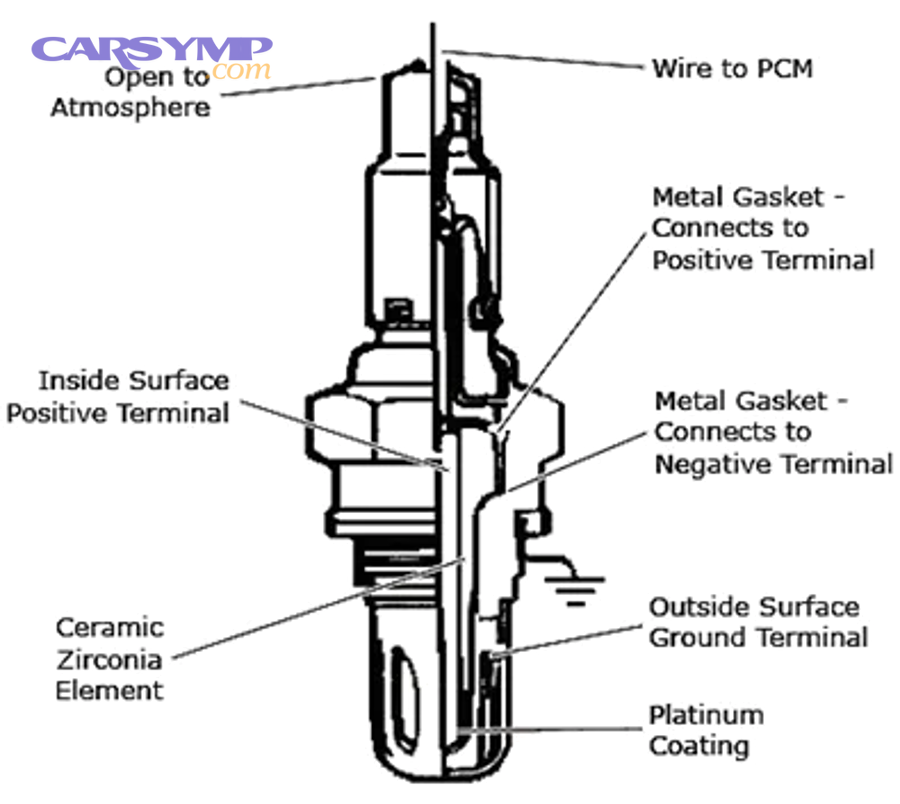
A practical demo showed that when ambient air enters through an exhaust leak, wideband/O2 readings can skew lean (especially at idle/cruise), and that can cause a fuel-injected ECU to add fuel incorrectly in closed loop.
According to a study by the University of California, Riverside (Center for Environmental Research and Technology) and University of California, Los Angeles (Environmental Health Sciences Department), in 2006, measured small exhaust-system leaks in a test vehicle were around 50 ml/min, representing less than 0.01% of exhaust flow at idle, illustrating how leak size can be tiny yet still relevant for localized exposure or sensor effects.
Once you know where it leaks, what’s the right exhaust leak repair approach and cost estimate?
The right fix is to match the repair method to the leak type—gasket replacement for sealing failures, welding/replacing for cracks or rust holes, and component replacement for failed flex sections—because “patching” the wrong failure mode often makes the leak return.
More importantly, this is where people waste money: they repair a pipe leak when the manifold gasket is the real culprit (or vice versa), then assume the car has multiple problems.
Repair paths for exhaust manifold leaks (what usually works)
- Manifold gasket replacement
- Common when:
- gasket burns out
- fasteners loosen
- flange warps slightly
- Watch-outs:
- broken studs
- limited access (can raise labor time)
- Common when:
- Stud/bolt replacement + re-torque
- Necessary if:
- a stud snapped
- threads are damaged
- Best practice:
- replace hardware as a set when corrosion is severe
- Necessary if:
- Manifold crack repair or replacement
- Cast manifolds can crack from heat cycling.
- Welding may be possible in some cases, but replacement is often more durable.
Repair paths for exhaust pipe leaks (what usually works)
- Flange gasket / donut gasket replacement
- Great for leaks at:
- collector connection
- mid-pipe joints
- Great for leaks at:
- Flex pipe replacement
- If the braid is frayed or the liner is torn, patches rarely last.
- Weld repair vs section replacement
- Small localized rust holes: weld-in patch can work
- Large corrosion areas: replace the section to stop repeat failures
When exhaust leak repair should NOT be delayed
- If you smell exhaust in the cabin
- If you have headaches/dizziness after driving
- If the leak is near the firewall or cabin intake
- If the leak is upstream of sensors and the ECU is adding fuel (you can foul catalysts over time)
Exhaust leak repair cost estimate (realistic ranges)
- Exhaust manifold gasket replacement: average $386–$551
- Exhaust manifold replacement: average $1,430–$1,639
- Exhaust pipe replacement: average $1,234–$1,292
How to interpret those numbers
- Manifold gasket jobs can jump in price when:
- studs break
- rust forces extra labor
- access requires removing additional components
- Pipe replacement averages can look high because some “pipe” quotes include multiple sections, sensors, or integrated parts depending on the platform.
According to a study by the Federal University of Technology, Akure (Nigeria), in 2015, experimental testing with different leak diameters (5–20 mm) showed the fuel consumption rate increased as leak diameter increased, reinforcing that leaks can influence engine operation and efficiency—especially when they interfere with oxygen-sensor feedback.
Contextual Border: At this point, you have enough to diagnose most real-world manifold vs pipe leaks and pick the correct repair. Next, the article expands into edge cases that often create wrong diagnoses, plus advanced shortcuts that help when the leak is intermittent.
What advanced methods and edge cases can mislead manifold vs pipe leak diagnosis?
There are 4 common edge-case categories—sound lookalikes, airflow-driven false readings, intermittent heat-cycle leaks, and multiple small leaks—and each can make a manifold leak look like a pipe leak (or the opposite) unless you check systematically.
Next, use these as “misdiagnosis filters” when your results don’t line up.
Edge case 1: Valve train ticking vs manifold ticking
- Lifter/injector ticking can sound like a manifold leak.
- Quick separators:
- Manifold leak often changes with load and shows soot.
- Injector ticks are rhythmic and usually don’t change much with temperature sealing.
To begin, do the cold-start sweep and confirm with soot/visual evidence before concluding.
Edge case 2: The leak is present, but trims don’t change
- This happens when:
- The leak is downstream of the upstream sensor
- The car is running open loop due to another fault
- The leak is small and the sensor “sees” mostly exhaust flow at higher RPM
Specifically, small exhaust leaks can skew idle/cruise readings more than WOT, because exhaust velocity at higher load can purge ambient intrusion and reduce measurement distortion.
Edge case 3: Flex pipe leaks that “move” with engine torque
- A flex leak can:
- quiet down at idle
- roar during acceleration
- disappear when you lift
- That pattern often fools people into thinking it’s “near the engine” (manifold), when it’s actually mid-pipe flex.
More importantly, watch the flex section while someone blips the throttle (from a safe distance) and look for soot and vibration.
Edge case 4: Multiple small leaks across the system
- This is more common on older vehicles:
- a small manifold seep
- a flange gasket leak
- a rusty seam farther back
- Best move: a smoke test is the fastest way to reveal “all leak points” at once, then prioritize repairs:
- cabin/health risks first
- upstream sensor-impact leaks next
- noise-only downstream leaks last
Edge case 5: Cabin smell that isn’t the exhaust leak you think it is
- Sometimes people blame a pipe leak, but the smell is:
- oil dripping onto a hot manifold
- a small coolant seep burning off
- a rich condition from fueling issues
- Best move: confirm the odor source with location—engine bay burn-off smells different than tailpipe/exhaust gas, and the soot pattern usually tells the truth.