


resonator replacement labor time typically ranges from 1 to 3 hours at professional shops, with total costs averaging $130 to $460 including parts and labor. Professional mechanics can complete straightforward installations in 15 minutes to 1 hour, while complex jobs involving rusted exhaust systems or difficult vehicle access may extend to 2-3 hours. Understanding these time frames helps car owners budget appropriately and identify fair pricing when seeking quotes from exhaust shops.
Labor costs for resonator replacement vary significantly based on shop type and location. Independent muffler shops typically charge $60 to $100 for labor, while chain shops like Meineke or Midas may charge $80 to $150. Performance and specialty shops often command premium rates of $150 to $400 or more, though this higher cost usually reflects specialized expertise and equipment. The resonator part itself costs between $50 and $250 depending on quality and vehicle application.
Several critical factors influence both installation time and overall expenses. Vehicle type plays a substantial role, as luxury cars and models with limited exhaust system access require more labor hours. Rust and corrosion present the most common time-extending challenge, particularly in regions where road salt is used heavily during winter months. Additional components like gaskets, mounting bolts, and exhaust hangers can add $20 to $60 to the total bill, while custom welding work increases both time and cost.
Car owners face an important decision between DIY installation and professional service. DIY resonator replacement can save $60 to $150 in labor costs but typically requires 3 to 5 hours or more for inexperienced individuals, plus access to specialized tools including welding equipment, cutting tools, and vehicle lifts or jack stands. Next, we’ll examine each aspect of resonator replacement timing and costs to help you make an informed decision.
How Long Does Resonator Replacement Take?
Resonator replacement takes 1 to 3 hours at professional exhaust shops, though straightforward jobs may be completed in as little as 15 minutes while severely rusted systems can require 3 to 5 hours or more.
The actual installation time depends heavily on your vehicle’s condition and the shop’s equipment capabilities. To better understand these variations, let’s examine the specific timeframes for both professional and DIY installations.
What is the Typical Labor Time at a Professional Shop?
Professional muffler shops complete most resonator replacements in 1 to 1.5 hours under normal conditions. Shops equipped with hydraulic lifts, pneumatic cutting tools, and professional welding equipment work efficiently through the standard process of lifting the vehicle, cutting out the old resonator, welding or clamping in the new unit, and testing for exhaust leaks.
Straightforward installations on newer vehicles with minimal rust take as little as 15 to 30 minutes. These quick jobs typically involve vehicles from southern or western states where road salt doesn’t corrode exhaust components. The mechanic simply unbolts or cuts the damaged resonator, slides the replacement into position, secures it with clamps or welds the connections, and verifies proper fitment.
Complex installations involving rusted exhaust systems extend labor time to 2 to 3 hours or longer. Mechanics must use cutting torches to remove corroded bolts, grind away rust from mounting points, and sometimes fabricate custom pipe sections when rust has damaged surrounding exhaust components. Vehicles with limited ground clearance or exhaust systems positioned near heat shields, fuel lines, or brake components require extra care and precision, adding 30 minutes to 1 hour to the job.
How Long Does DIY Resonator Replacement Take?
DIY resonator replacement typically requires 3 to 5 hours for individuals with basic mechanical experience, though first-time installers often spend 6 to 8 hours completing the job. The extended timeframe reflects the challenges of working without professional equipment, troubleshooting unexpected complications, and learning proper welding or clamping techniques.
Home mechanics must allocate significant time for preparation and safety procedures. Safely lifting and securing the vehicle takes 30 to 45 minutes using floor jacks and jack stands, compared to 5 minutes on a professional hydraulic lift. Rust removal and bolt extraction consume another 1 to 2 hours when dealing with corroded components, as DIY enthusiasts typically lack the pneumatic impact tools and cutting torches that professionals use.
The actual resonator installation and connection process takes 1 to 2 hours for experienced DIYers. Achieving proper alignment between exhaust sections, securing clamps or completing quality welds, and ensuring leak-free connections requires patience and multiple test-fits. First-time installers should add another 1 to 3 hours to account for learning curves, correcting mistakes, and making multiple trips to auto parts stores for forgotten supplies or replacement components.
Common obstacles that extend DIY timeframes include frozen bolts requiring penetrating oil and overnight soaking, discovering additional rust damage that necessitates replacement of exhaust hangers or adjacent pipe sections, and improper tool selection forcing mid-project equipment purchases. Preventing exhaust rust on resonators through regular undercoating in salt-belt regions can significantly reduce future installation time by keeping components accessible and removable.
What is the Average Cost of Resonator Replacement Labor?
The average cost of resonator replacement labor ranges from $60 to $150 at most shops, with independent muffler specialists charging $60 to $100, chain shops charging $80 to $150, and performance shops commanding $150 to $400 or more for specialized work.
Understanding these pricing tiers helps car owners select the most appropriate service option for their vehicle and budget. Specifically, the type of shop you choose directly impacts not just the labor rate but also the quality of workmanship, warranty coverage, and overall customer experience.
What Do Independent Muffler Shops Charge for Labor?
Independent muffler shops typically charge $60 to $100 for resonator replacement labor, representing the most cost-effective professional option for straightforward installations. These locally-owned businesses maintain lower overhead costs compared to franchise operations, allowing them to pass savings to customers while still delivering quality workmanship.
Real customer experiences from automotive forums consistently report labor charges in this range. One BMW owner reported paying $60 for resonator welding at a local independent shop, while a Honda Civic owner paid $80 for complete resonator pipe replacement including labor. A Dodge Charger owner had mid-muffler delete work completed for just $60 at a neighborhood exhaust specialist.
Independent shops build their reputations on word-of-mouth referrals and repeat business, incentivizing quality work at fair prices. Many operate for decades in the same location, employing experienced technicians who specialize exclusively in exhaust system work. This specialization often results in faster, more efficient installations compared to general repair shops that handle exhaust work as just one of many services.
The primary advantage of independent muffler shops extends beyond competitive pricing. These businesses typically offer more flexible service options, including the ability to work with customer-supplied parts, accommodate same-day appointments, and negotiate pricing for multiple exhaust repairs. However, car owners should verify that the shop provides warranties on both parts and labor, as coverage varies significantly among independent operators.
How Much Do Chain Shops (Meineke, Midas, Monroe) Charge?
Chain exhaust shops like Meineke, Midas, and Monroe charge $80 to $150 for resonator replacement labor, positioning themselves in the mid-range pricing tier between independent shops and premium performance specialists.
These franchise operations maintain standardized pricing structures across locations, though regional variations occur based on local labor rates and cost of living. A Honda Civic owner reported receiving a $423 total bill from Meineke for resonator pipe replacement, with $95 allocated to labor, $214 for the part, and additional charges for gaskets, spring bolt kits, and shop supplies. Another customer at a chain shop paid $100 for labor on a straightforward resonator installation without complications.
Chain shops offer several advantages that justify their higher labor rates compared to independents. National warranties typically cover workmanship for 12 months or 12,000 miles, providing peace of mind for customers who travel frequently or relocate. Franchises also maintain consistent quality standards through corporate training programs and standardized repair procedures, reducing variability in service quality between locations.
The convenience factor contributes to chain shop pricing. Most franchises accept appointments through online booking systems, offer extended evening and weekend hours, and provide free estimates before beginning work. Many also participate in promotional programs offering percentage discounts or seasonal specials on exhaust work, potentially bringing final costs closer to independent shop levels.
However, chain shops face criticism for occasionally recommending unnecessary services or quoting inflated prices for parts. The same Meineke customer mentioned above noted that the $214 resonator pipe seemed excessive when aftermarket parts retail for $50 to $150. Car owners should request itemized estimates and compare part prices against retail options before authorizing chain shop repairs.
What Do Performance/Specialty Shops Charge?
Performance and specialty exhaust shops charge $150 to $400 or more for resonator replacement labor, reflecting their expertise in high-end vehicles, custom fabrication capabilities, and premium service standards.
These higher rates apply primarily to specialized work that requires advanced skills beyond basic resonator swapping. A Honda Civic Type R owner reported receiving quotes exceeding $400 from performance shops for welding a Vibrant resonator into a Remus aftermarket exhaust system, with one highly-rated shop quoting nearly $1,000 for the same job. The substantial cost difference reflects the precision required when modifying premium aftermarket exhaust components compared to replacing worn-out factory parts.
Performance shops justify premium pricing through several value propositions. Technicians typically possess specialized training in TIG welding, custom exhaust fabrication, and tuning exhaust systems for optimal sound and performance. Shops maintain professional-grade equipment including mandrel benders for creating smooth pipe bends, dyno testing facilities for performance verification, and computerized alignment tools ensuring precise fitment.
The customer base for performance shops differs significantly from general repair facilities. Enthusiasts upgrading exhaust systems on sports cars, luxury vehicles, or modified imports willingly pay premium rates for guaranteed quality and specialized knowledge. These shops also provide detailed consultations on Choosing aftermarket resonators for sound characteristics, explaining how different resonator designs, sizes, and internal configurations affect exhaust tone, drone levels, and performance.
Budget-conscious car owners should reserve performance shop services for specialized situations requiring custom fabrication or exotic vehicle expertise. Standard resonator replacements on everyday vehicles rarely justify $300+ labor charges, as the work itself remains mechanically identical whether performed on a Toyota Camry or a Porsche 911.
What Factors Affect Resonator Replacement Labor Time and Cost?
Three primary factors affect resonator replacement labor time and cost: vehicle type and accessibility, rust and corrosion severity, and additional parts requirements, with rust-related complications representing the single most common reason for extended labor hours and unexpected expenses.
Understanding these variables helps car owners anticipate potential complications and budget appropriately. For example, vehicles in northern climates face higher replacement costs due to salt-induced corrosion, while luxury vehicles command premium labor rates regardless of condition.
Does Vehicle Type Impact Labor Time?
Vehicle type significantly impacts resonator replacement labor time, with compact cars and trucks offering easier exhaust access requiring 1 to 1.5 hours, while luxury vehicles, sports cars, and SUVs with complex underbody designs often requiring 2 to 3 hours or more.
Ground clearance represents the most obvious accessibility factor. Pickup trucks and full-size SUVs provide ample workspace beneath the vehicle, allowing mechanics to access exhaust components without removing heat shields, skid plates, or other underbody protection. These vehicles typically fall on the shorter end of the labor time spectrum, with straightforward installations completed in 60 to 90 minutes.
Low-profile sports cars and performance sedans present the opposite challenge. Limited ground clearance forces mechanics to work in confined spaces, carefully maneuvering tools around suspension components, exhaust routing, and chassis bracing. A Chevrolet Impala owner reported that resonator access proved extremely difficult due to tight quarters where GM positioned the front exhaust hanger, requiring creative use of small-diameter cutting wheels to access mounting bolts.
Luxury vehicles command additional labor time due to complex exhaust routing and premium component integration. BMW, Mercedes-Benz, and Audi models often incorporate active exhaust valves, multiple resonators, and sophisticated heat shielding that must be carefully removed and reinstalled. European vehicles also frequently use specialized fasteners requiring specific tools, adding time when shops lack the proper equipment.
Mid-size sedans like Honda Accords, Toyota Camrys, and Nissan Altimas occupy the middle ground, typically requiring 1.5 to 2 hours for resonator replacement. These mainstream vehicles balance reasonable ground clearance with moderately complex exhaust routing, making them neither particularly easy nor challenging for professional mechanics.
How Does Rust and Corrosion Affect Installation Time?
Rust and corrosion extend resonator replacement time by 1 to 3 additional hours, transforming straightforward bolt-removal jobs into cutting, grinding, and fabrication projects that require torches, penetrating oils, and sometimes custom pipe work.
Geographic location directly correlates with corrosion severity and resulting labor complications. Vehicles in northern states where road departments apply salt during winter months face extreme exhaust corrosion, with 10-year-old vehicles commonly requiring complete exhaust system replacements rather than simple resonator swaps. One Buick LaCrosse owner noted that 12 years of salt exposure caused severe resonator deterioration, while a 2010 Chevrolet Impala owner spent 3 hours on a DIY replacement specifically because rust required cutting off completely frozen front mounting bolts.
Penetrating oil and heat application add 30 minutes to 1 hour to standard labor time. Mechanics spray corroded bolts with products like PB Blaster or Liquid Wrench, then wait 15 to 30 minutes before attempting removal. Stubborn bolts require repeated applications over several hours or overnight soaking, extending multi-day service timelines. Oxy-acetylene torches or MAPP gas heating loosens rust-locked threads, but requires careful application to avoid damaging nearby components like brake lines, fuel lines, or wiring harnesses.
Severely corroded exhaust systems require cutting rather than unbolting, adding significant labor time. Mechanics use reciprocating saws, angle grinders with cutting wheels, or plasma cutters to remove damaged sections, then must carefully measure, cut, and fit replacement pipe sections. Custom fabrication work easily adds 1 to 2 hours to the job, plus material costs for additional piping, clamps, and welding consumables.
Preventing exhaust rust on resonators through annual undercoating applications and regular washing of undercarriage components during winter months substantially reduces future replacement costs. Vehicles garaged during salt season or relocated to southern climates after several northern winters show dramatically lower corrosion rates, translating directly to faster, less expensive resonator replacements when eventually needed.
What Additional Parts and Costs Should You Expect?
Additional parts for resonator replacement typically cost $20 to $60, including exhaust gaskets ($5 to $20 each), mounting bolts and spring kits ($10 to $20 each), rubber hangers ($5 to $15 each), and shop supplies fees ($10 to $25).
Exhaust gaskets create essential seals between pipe sections and prevent exhaust leaks that cause noise, reduce performance, and trigger check engine lights. Most resonator installations require one or two gaskets depending on the connection type, with donut gaskets for flange connections costing $10 to $20 and flat gaskets for slip-fit joints running $5 to $10. Using new gaskets rather than reusing compressed original gaskets ensures leak-free operation and avoids warranty claims.
Mounting hardware deteriorates from heat cycling and corrosion exposure, making replacement advisable during resonator installation. Spring bolt kits, which use tension springs to accommodate exhaust expansion and contraction, cost $10 to $20 per set. Standard flange bolts and nuts run $5 to $15 depending on whether stainless steel or mild steel hardware is specified. Some shops automatically include new hardware in quoted prices, while others itemize these components separately.
Rubber exhaust hangers support the exhaust system weight and isolate vibration from the vehicle chassis. These components age and crack over time, with replacement recommended every 5 to 7 years or whenever visible deterioration appears. New hangers cost $5 to $15 each, with most vehicles requiring 2 to 4 hangers in the resonator section. Replacing worn hangers during resonator installation prevents future exhaust sagging and misalignment.
Shop supplies fees cover miscellaneous consumables including welding wire, cutting wheels, shop towels, penetrating oil, and waste disposal costs. Most shops charge flat fees of $10 to $25 or apply percentage-based charges of 5% to 10% of parts and labor totals. While these fees seem minor, they accumulate across multiple line items on final invoices. Car owners should review itemized estimates and question unusually high supplies charges that exceed industry norms.
Should You DIY or Hire a Professional for Resonator Replacement?
You should hire a professional for resonator replacement if you lack welding equipment, exhaust fabrication experience, or proper vehicle lifting capability, as professional installation costs only $60 to $150 in labor while delivering guaranteed quality and 1 to 3 hour completion times.
However, mechanically inclined car owners with appropriate tools can successfully complete DIY resonator replacement and save labor costs. The decision ultimately depends on your skill level, available equipment, and time constraints.
What are the Pros and Cons of DIY Resonator Replacement?
DIY resonator replacement saves $60 to $150 in labor costs but requires specialized tools worth $200 to $1,000, takes 3 to 8 hours depending on experience level, and carries risks of improper installation causing exhaust leaks or failed emissions inspections.
The primary financial advantage of DIY work lies in eliminating hourly shop rates. Car owners who already own welding equipment, cutting tools, and vehicle lifts or quality jack stands essentially perform the work for free beyond parts costs. Even purchasing a basic MIG welder for $150 to $300 pays for itself after two or three exhaust repairs, assuming the owner possesses welding skills or willingness to learn.
Required tools for proper DIY resonator replacement include floor jacks rated for vehicle weight ($50 to $150), jack stands rated for vehicle weight ($40 to $100 per pair), reciprocating saw or angle grinder with metal cutting wheels ($50 to $150), MIG or stick welder for permanent connections ($150 to $500), exhaust clamps for non-welded installations ($10 to $30), penetrating oil for rusted bolts ($5 to $10), and safety equipment including gloves, safety glasses, and respirator ($30 to $60).
Time investment represents the most significant DIY disadvantage. First-time installers typically require 6 to 8 hours spread across multiple days, as complications like seized bolts, improper measurements, or alignment difficulties necessitate problem-solving and potential parts store trips. Experienced home mechanics reduce this to 3 to 5 hours, though still substantially longer than professional 1 to 3 hour completion times.
Quality concerns also factor into the DIY decision. Amateur welding often produces weaker joints compared to professional work, potentially causing premature failure or exhaust leaks. Improper alignment between pipe sections creates stress points that crack over time, while incorrect clamp installation allows sections to separate during operation. Professional shops warranty their workmanship for 12 months typically, providing recourse if installation quality issues emerge.

What are the Benefits of Professional Installation?
Professional resonator installation delivers expert welding quality, proper exhaust alignment, warranty coverage on both parts and labor, and completion within 1 to 3 hours using specialized equipment worth thousands of dollars.
Welding quality represents the most critical professional advantage. Certified technicians create strong, leak-free joints using proper welding techniques, appropriate filler materials, and controlled heat application that doesn’t damage surrounding components. Professional MIG welders cost $500 to $2,000 and require skill to operate correctly, while TIG welders used for stainless steel and aluminum exhaust components run $1,000 to $5,000. These investments make economic sense only for professional shops performing dozens of exhaust repairs monthly.
Proper alignment ensures long-term exhaust system integrity and prevents premature component failure. Professionals use alignment bars, jigs, and measurement tools to position resonators at correct angles and maintain proper spacing from underbody components. Misaligned exhaust systems develop stress cracks at connection points, create vibration that damages hangers and mounts, and may contact suspension components or chassis during operation.
Warranty coverage provides financial protection against installation defects and component failures. Most shops warranty labor for 12 months or 12,000 miles, covering reinstallation if welds crack or connections leak during the warranty period. Shops installing resonators they supply typically also warranty the resonator itself against manufacturing defects, though warranty terms vary between budget and premium replacement parts.
Time efficiency matters significantly for car owners needing vehicles for daily transportation. Professionals complete straightforward resonator replacements in 1 to 1.5 hours, allowing same-day or next-day service in most cases. Complex jobs requiring rust remediation or custom fabrication extend to 2 to 3 hours but still finish within single appointments, whereas DIY projects often span multiple days as parts are ordered, problems are diagnosed, and solutions are researched.
Professional installation also ensures proper disposal of old resonators containing precious metals and environmental contaminants. Reputable shops participate in recycling programs that recover platinum, palladium, and rhodium from catalytic converters and resonators, while properly disposing of residual materials according to environmental regulations. DIY installers must research local disposal options and often pay fees at recycling centers or scrap yards.
What is a Fair Price for Resonator Replacement in 2025?
A fair price for resonator replacement in 2025 ranges from $130 to $460 total, including $50 to $250 for the resonator part, $60 to $150 for labor at independent or chain shops, and $20 to $60 for additional parts like gaskets and hardware.
Understanding typical pricing helps car owners identify reasonable quotes and avoid overpaying. More importantly, recognizing the factors that justify higher prices versus warning signs of price gouging enables informed decision-making when comparing estimates from multiple shops.
What is the Total Cost Breakdown (Parts + Labor)?
The total cost breakdown for resonator replacement consists of the resonator part ($50 to $250), professional labor ($60 to $150 at independent shops or $80 to $150 at chains), gaskets ($10 to $40 for one or two units), mounting hardware ($10 to $40 for bolts and spring kits), and shop supplies ($10 to $25), totaling $130 to $460 for typical installations.
Budget resonator replacements using economy aftermarket parts and independent shop labor cost approximately $130 to $200 total. These installations work well for older vehicles nearing end-of-life where longevity matters less than immediate functionality. Economy resonators from brands like Walker or Bosal retail for $50 to $100, with $60 to $100 labor and minimal additional parts bringing totals to the lower end of the spectrum.
Mid-range replacements using quality aftermarket parts from reputable manufacturers cost $250 to $350 total. These represent the sweet spot for most car owners, balancing quality and longevity with reasonable pricing. Mid-tier resonators from Magnaflow, Flowmaster, or Vibrant Performance retail for $100 to $200, paired with $80 to $120 labor at chain shops and standard additional parts costs.
Premium replacements using OEM (original equipment manufacturer) parts or high-end aftermarket brands at performance shops cost $350 to $460 or more. OEM resonators ensure exact fitment and sound characteristics matching factory specifications, important for luxury vehicles or when maintaining resale value. Premium aftermarket options like stainless steel construction provide superior corrosion resistance and longer service life in harsh climates.
Here’s a typical cost breakdown table for resonator replacement at different price points:
| Cost Category | Budget Install | Mid-Range Install | Premium Install |
|---|---|---|---|
| Resonator Part | $50-$100 | $100-$200 | $200-$250 |
| Labor | $60-$100 | $80-$120 | $100-$150 |
| Gaskets | $10-$20 | $15-$25 | $20-$30 |
| Hardware | $10-$15 | $15-$20 | $20-$25 |
| Shop Supplies | $10-$15 | $15-$20 | $20-$25 |
| Total | $130-$200 | $250-$350 | $350-$460 |
This table illustrates how different component quality levels and shop choices affect final costs. Car owners should select appropriate quality tiers based on vehicle age, expected ownership duration, and climate conditions affecting exhaust longevity.
How Can You Identify Overpricing or Price Gouging?
You can identify overpricing or price gouging by watching for quotes exceeding $500 for straightforward resonator replacement, parts markup over 100% above retail prices, labor charges exceeding 3 hours for standard installations, or shops refusing to provide itemized estimates breaking down all costs.
Excessive total quotes represent the most obvious warning sign. A Honda Civic owner reported receiving a $423 bill from Meineke for resonator pipe replacement, with a $214 resonator part charge when similar components retail for $50 to $150. Another customer received an initial $250 to $300 quote that inexplicably jumped to $700 once work began, demonstrating blatant mid-service price inflation.
Parts markup analysis reveals unreasonable pricing practices. Shops typically mark up parts 30% to 80% above wholesale costs to cover inventory, ordering, and handling expenses. Markups exceeding 100% suggest profit-taking rather than necessary business expenses. Car owners should research retail prices for their specific resonator before accepting shop quotes, using resources like RockAuto, AutoZone, or manufacturer websites for baseline pricing.
Labor hour inflation occurs when shops quote 2 to 3 hours for jobs requiring only 1 to 1.5 hours. While complex rust remediation legitimately extends labor time, standard resonator replacement on vehicles less than 10 years old rarely justifies 3+ hour labor charges. Shops billing at $100 to $150 per hour transform 3-hour quotes into $300 to $450 labor charges alone, approaching total replacement costs that should include parts and additional materials.
Refusing itemized estimates indicates shops attempting to obscure excessive charges within bundled pricing. Reputable businesses provide detailed breakdowns showing resonator cost, labor hours and rate, specific additional parts needed, and shop supplies charges. This transparency allows customers to question individual line items and understand exactly what they’re purchasing. Shops claiming “we only give total prices” typically employ this tactic to hide inflated margins on parts or labor.
Getting multiple quotes remains the most effective strategy for identifying fair pricing. Contact three to five shops requesting detailed written estimates for resonator replacement on your specific vehicle make, model, and year. Compare not just total costs but individual component pricing, labor hours quoted, and warranty terms offered. Significant variation between estimates indicates potential overpricing at the high end or concerning quality compromises at the low end.
Choosing aftermarket resonators for sound characteristics rather than simply accepting shop-recommended parts also helps control costs. Research resonator brands offering the sound level and tone you prefer, then request quotes for installing your supplied part versus shop-provided options. This approach reveals markup percentages and may save $50 to $150 on the resonator itself, though some shops charge slightly higher labor rates when customers supply parts.
What are the Signs You Need Resonator Replacement?
The main signs you need resonator replacement include excessive exhaust noise during acceleration, noticeable droning or vibration from the exhaust system, visible rust holes or cracks in the resonator body, and exhaust smell or fumes entering the cabin due to leaks.
Recognizing these symptoms early prevents more expensive repairs and ensures safe vehicle operation. Specifically, exhaust leaks create carbon monoxide risks, while damaged resonators cause engine performance issues if backpressure problems develop.
What Does a Failing Resonator Sound Like?
A failing resonator produces loud droning noise particularly noticeable at highway speeds, rattling or vibrating sounds from loose internal baffles, and significantly louder exhaust tone compared to normal operation, especially during cold starts and acceleration.
The characteristic droning sound occurs when resonator internal chambers deteriorate, eliminating their sound-dampening function. This drone typically manifests in the 2,000 to 3,000 RPM range where engine harmonics create particularly annoying vibrations. One Buick LaCrosse owner described the sound as “droning/vibrating noise in the exhaust” that became “particularly noticeable on cold starts,” while a BMW owner noted their car “starting to sound a bit like a motor cycle” after resonator failure.
Rattling indicates internal baffle separation or perforation. Resonators contain perforated tubes and sound-absorbing chambers that redirect and cancel specific exhaust frequencies. When rust or impact damage breaks these internal components, metal pieces rattle against the resonator shell during engine operation. This rattling intensifies with engine speed and may disappear at certain RPMs as loose parts temporarily wedge in different positions.
Volume increase represents the most obvious symptom of resonator failure. Functioning resonators reduce exhaust noise by 10 to 15 decibels across specific frequency ranges, with total exhaust system reduction approaching 30 to 40 decibels when all components work properly. A failed resonator eliminates this reduction in its frequency range, creating substantially louder exhaust note that attracts attention and potentially violates local noise ordinances.
Comparing failed resonator sound to normal muffler failure helps diagnosis. Muffler failures typically create deep, throaty exhaust notes with less high-frequency noise, as mufflers primarily address low-frequency rumble. Resonator failures produce sharper, more piercing tones with pronounced drone at specific RPM ranges, as resonators target mid-to-high frequency harmonics that cause cabin vibration and driver fatigue during extended highway driving.
How Do You Inspect a Resonator for Damage?
You inspect a resonator for damage by performing a visual examination for rust, holes, or cracks in the resonator body, checking connection points for exhaust leak evidence, physically tapping the resonator to detect loose internal components, and running the engine while feeling for exhaust escaping from damaged areas.
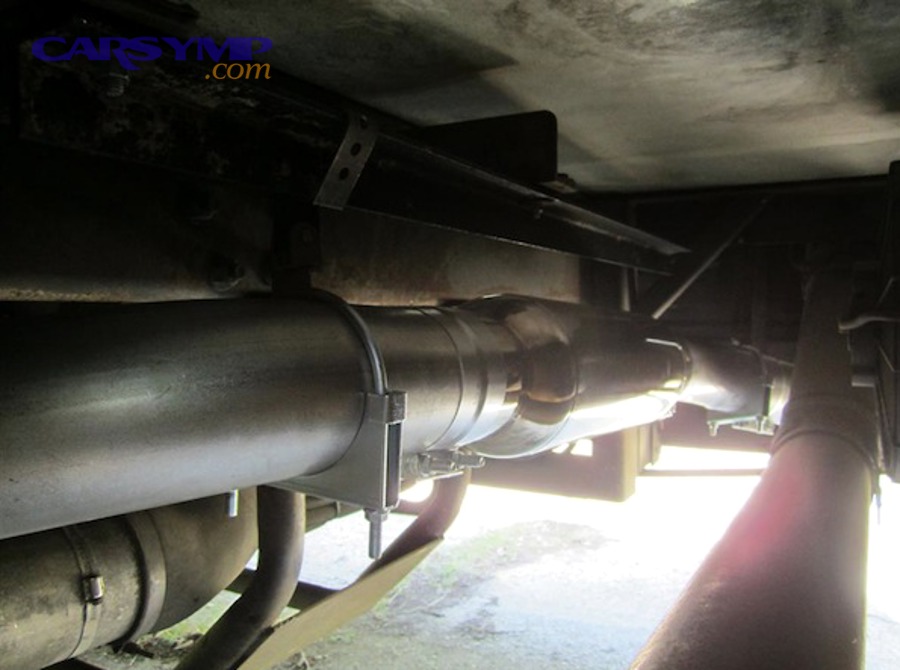
Visual inspection represents the first diagnostic step. Position yourself safely beneath the vehicle using proper jack stands or a lift, then examine the resonator’s outer shell for rust perforation, impact damage, or visible cracks. Surface rust appears normal on older vehicles, but holes penetrating completely through the metal, rust scaling that flakes away in large sections, or visible light showing through the resonator body indicate replacement necessity. Pay particular attention to seam welds where the resonator shell connects, as these areas experience high thermal stress and often fail first.
Connection point examination reveals exhaust leaks even when the resonator body remains intact. Inspect flanges, clamps, and slip-fit joints connecting the resonator to adjacent exhaust sections. Black carbon deposits, visible exhaust staining, or white/gray powder accumulation indicate active exhaust leaks requiring repair. Some leaks develop at gasket interfaces and don’t require resonator replacement, just new gaskets and proper torquing of flange bolts or tightening of band clamps.
Physical tapping tests detect internal component failure. Use a rubber mallet or your fist to tap the resonator shell while listening for rattling or loose parts moving inside. Healthy resonators produce solid, dull thuds without additional noise. Damaged units rattle as separated baffles or perforated tubes shift position. This test works best on cold exhaust systems, as thermal expansion when hot may temporarily silence loose components.
Running engine inspection confirms active leaks suspected during visual examination. Start the vehicle and carefully place your hand near potential leak points while the engine idles, feeling for exhaust gas escaping. Use extreme caution to avoid burns from hot exhaust components. Alternatively, have an assistant rev the engine to 2,000-3,000 RPM while you listen for hissing or whistling sounds indicating pressurized exhaust escaping through small holes or cracks. Never perform this test in enclosed spaces due to carbon monoxide risks.
Can You Drive with a Bad Resonator?
You can drive with a bad resonator as the vehicle remains mechanically functional, but you should replace it promptly due to excessive noise violations, potential carbon monoxide exposure from exhaust leaks, and possible catalytic converter damage if backpressure issues develop.
Safety considerations depend on leak location and severity. Resonators positioned far from the passenger cabin pose minimal carbon monoxide risk, as exhaust gases disperse before reaching air intake vents. However, leaks in resonators near the firewall or under passenger compartments may allow toxic gases to enter the cabin through ventilation systems or floor seam gaps. Carbon monoxide causes headaches, dizziness, and nausea at low concentrations, with potentially fatal consequences at high exposure levels.
Legal consequences vary by jurisdiction. Most states and municipalities enforce noise ordinance laws limiting vehicle exhaust volume to 95 to 99 decibels measured at 50 feet. Failed resonators frequently push exhaust noise above these thresholds, subjecting drivers to traffic citations and fines ranging from $50 to $500 depending on location. Some jurisdictions also require annual emissions or safety inspections that specifically check for exhaust system integrity, causing inspection failure until repairs are completed.
Performance and fuel economy impacts remain minimal in most cases. Resonators don’t significantly restrict exhaust flow or create backpressure affecting engine operation, so their failure rarely causes power loss or efficiency reduction. However, severe resonator damage accompanied by exhaust system collapse or blockage may create backpressure that reduces performance and triggers check engine lights. Additionally, loud exhaust noise itself causes driver fatigue during extended trips, making highway driving less comfortable.
Catalytic converter risk increases when resonator failure accompanies broader exhaust deterioration. If rust or impact damage affects resonator mounting points, the unsupported exhaust system may sag and stress catalytic converter connections. Catalytic converters cost $500 to $2,500 to replace, far exceeding resonator replacement expenses. Addressing resonator failure promptly prevents cascading damage to more expensive components.
What is the Difference Between Resonator Replacement and Resonator Delete?
Resonator replacement maintains factory exhaust configuration and sound level for $130 to $460 total cost, while resonator delete removes the resonator entirely and replaces it with straight pipe for $60 to $150, creating louder, more aggressive exhaust tone with potential drone issues.
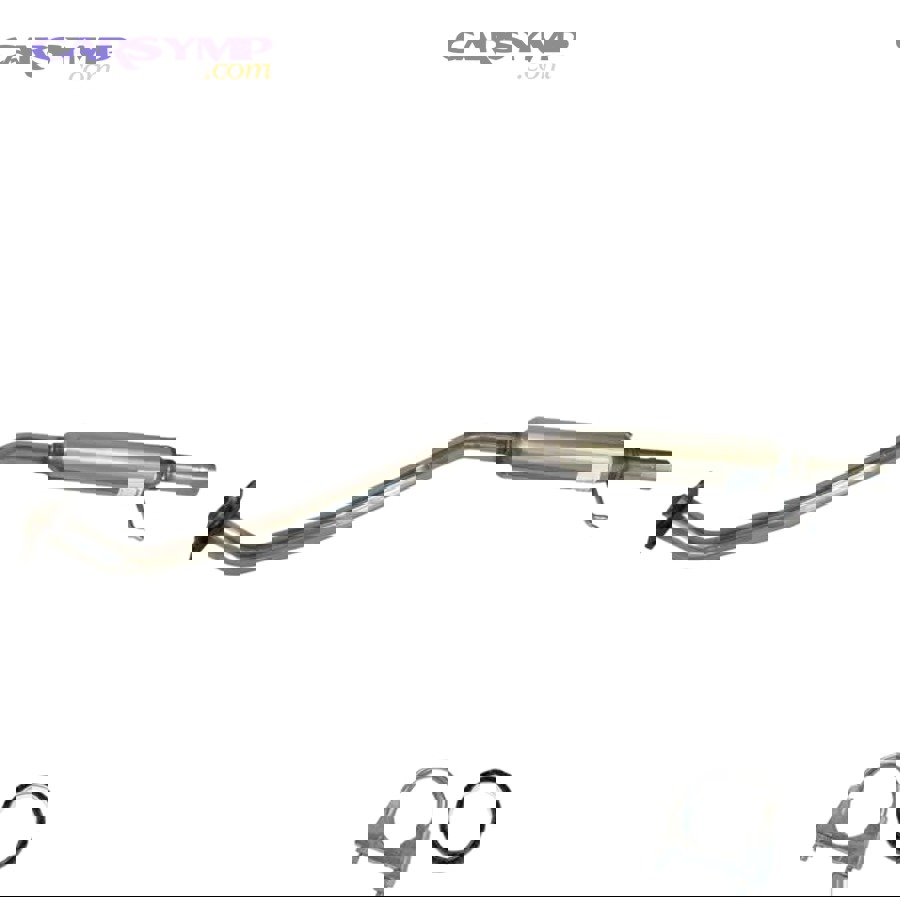
The fundamental distinction lies in intended outcome and legal compliance. Replacement restores original equipment functionality, while deletion intentionally modifies exhaust characteristics for performance or aesthetic preferences.
Resonator delete involves cutting out the resonator and welding or clamping straight pipe sections in its place. This modification takes less time than replacement since no resonator installation is required, typically 30 to 60 minutes at most shops. Labor costs range from $60 to $100 for the cutting and welding work, plus $10 to $30 for pipe sections and clamps if not welding. Total costs rarely exceed $150, making deletion appealing to budget-conscious enthusiasts.
Sound characteristics change dramatically with resonator deletion. Factory exhaust systems use resonators to eliminate specific frequency drones that create cabin noise and vibration during highway cruising. Removing the resonator increases exhaust volume by 5 to 10 decibels and introduces pronounced drone in the 2,000 to 3,500 RPM range. Some drivers enjoy the more aggressive sound, while others find extended highway driving fatiguing due to constant drone noise.
Legal and inspection implications differ substantially between replacement and deletion. All 50 states require vehicles to maintain emissions control equipment as originally equipped, with resonators sometimes classified as emissions components. Removing resonators may cause emissions inspection failure in states requiring visual checks of exhaust system integrity. Additionally, increased noise from resonator deletes frequently violates local noise ordinances, subjecting owners to citations.
Performance effects remain minimal for both options. Resonators create negligible backpressure and flow restriction, so their removal rarely produces measurable horsepower or torque gains. Some enthusiasts claim 1 to 3 horsepower improvements from resonator deletes, but dyno testing typically shows no significant difference. True performance gains require comprehensive exhaust upgrades including high-flow catalytic converters, larger diameter piping, and optimized muffler selection.
Choosing between replacement and deletion depends on priorities. Owners seeking to restore factory sound levels, maintain resale value, ensure inspection compliance, and preserve long-term exhaust system integrity should replace failed resonators with equivalent parts. Enthusiasts prioritizing aggressive sound, accepting potential drone issues, and willing to address legal/inspection concerns may prefer resonator deletion as a cost-effective modification.
This comprehensive guide to resonator replacement labor time and costs provides car owners with the knowledge needed to make informed decisions about exhaust repairs. Understanding typical timeframes of 1 to 3 hours for professional installation and costs ranging from $130 to $460 helps you budget appropriately and identify fair pricing when seeking quotes. Whether you choose DIY installation to save labor costs or professional service for guaranteed quality, recognizing the factors that affect both time and expenses ensures you receive appropriate value for your investment while maintaining safe, legal vehicle operation.