


STEP 1 — Title & outline analysis
1.1 Title analysis
- Main keyword (focus): Rear main seal leak vs transmission fluid
- Predicate (main action): Diagnose / Differentiate
- Relations Lexical used: Comparison (vs) + Hyponym (engine oil vs ATF as subtypes of “fluid leak”)
1.2 Search intent type from the outline
- Primary type: Comparison (rear main seal leak vs transmission fluid leak)
- Secondary types included: Definition (what is RMS leak / ATF leak), How-to (confirm at home), Boolean (can you drive), Grouping (common leak sources by symptoms/location)
1.3 Intent breakdown (mapped to outline order)
- Primary intent: Identify whether the fluid at the bell housing is engine oil (rear main seal) or transmission fluid (ATF), and what that means for repair.
- Secondary intent 1: Understand what a rear main seal leak is and why it shows up at the bell housing.
- Secondary intent 2: Understand what an ATF leak is and how it can reach the bell housing area.
- Secondary intent 3: Confirm the leak source at home and assess if it’s safe to drive.
1.4 Outline → answering formulas
- H2 #1: Comparison/Grouping → “X vs Y” visual + smell + feel + location checklist
- H2 #2: Definition → “Rear main seal leak is…”
- H2 #3: Definition → “ATF leak is…”
- H2 #4: How-to → steps + expected outcome (including dye method)
- H2 #5: Boolean → Yes/No + 3+ reasons + safety thresholds
- H2 #6: Grouping/Comparison → typical repair scope + what gets replaced together
- H2 #7 (Supplementary): How-to/Grouping → prevention + rare/unique factors
You’re looking at the same scary symptom either way—fluid dripping from the transmission bell housing—but the fix can range from “external reseal” to “transmission out.” The fastest way to stop guessing is to treat it as a comparison problem: What fluid is it, where is it actually coming from, and what pattern does it follow?
Next, you’ll use a practical “fluid ID” workflow—color, smell, feel, and level checks—plus a clean-and-recheck strategy that prevents misdiagnosis (the #1 reason people replace the wrong gasket first).
Then, you’ll learn why rear main seals and ATF leaks can both show up at the bell housing, even when the leak started somewhere else, and what symptoms are actually reliable.
Introduce a new idea: once you confirm the source, you can decide whether it’s safe to drive short-term, and you can plan repairs in a way that prevents repeat leaks.
Is the leak at the bell housing engine oil or transmission fluid (ATF)?
Engine oil wins on “burnt-oil smell + brown/black staining,” ATF is best identified by “red/pink tint + oily-sweet odor,” and gear oil (less common) is unmistakable for its strong sulfur smell—so the correct diagnosis starts by identifying the fluid before blaming the rear main seal.
Next, the key is to separate where it drips (bell housing) from where it starts (often higher up).

What does engine oil look and smell like when it’s leaking at the bell housing?
- Color: fresh oil is amber; used oil is brown to black.
- Smell: more “burnt” or “exhausty,” especially if it hits hot components before dripping.
- Feel: slippery, but used oil can feel thinner and leave darker stains.
Why this matters: a true rear main seal leak often leaves a dark, wet stripe at the bottom of the bell housing or inspection cover—but only after you confirm it’s actually engine oil.
What does ATF look and smell like when it’s leaking near the bell housing?
- Color: many ATFs are red/pink when fresh, shifting to reddish-brown as they age (some modern fluids can look yellow/amber).
- Smell: often slightly sweet/chemical, and burnt if overheated.
- Feel: typically very slick and thin.
Important hook: a front pump seal or torque converter area leak can fling ATF inside the bell housing, making it look like it “comes from everywhere.”

What patterns and drip locations are most diagnostic?
A bell housing drip is a “collection point,” so you diagnose by pattern + upstream evidence:
- Drips mostly after parking overnight: more consistent with gravity-fed seepage from higher surfaces.
- Drips mostly with engine running / right after driving: more consistent with pressurized leaks (many transmission leaks fall here).
- Spray pattern or splatter inside bell housing: often suggests rotating component fling (converter/front pump area).
Quick “spot-check” table you can use in 60 seconds
This table summarizes what you’re comparing and why it matters.
| Clue | More like engine oil (rear main seal possible) | More like ATF (trans leak possible) |
|---|---|---|
| Typical fresh color | Amber | Red/pink (varies by fluid) |
| Aged color | Dark brown/black | Reddish-brown |
| Smell | Burnt oil / exhausty | Sweet/chemical or burnt ATF |
| Where you’ll see it first | Back of engine / oil pan rail above bell housing | Cooler lines/pan area or bell housing splash |
| Level check that moves | Engine oil dipstick | Transmission level method/dipstick |
Don’t skip this: Oil filter and drain plug leak diagnosis before you blame the rear main seal
Rear main seal leaks are famous, but many “rear leaks” are actually oil migrating backward:
- Oil filter housing / oil cooler seals
- Valve cover leaks dripping onto the back of the block
- Oil pan gasket corners
- Drain plug or crush washer seepage (fresh oil change = prime suspect)
These can create an oil leak under car that looks rearward because airflow pushes oil back while driving.
Evidence: A practical reason leaks are often misdiagnosed is that fluid commonly runs down to the lowest point and “frames” the pan as the source even when it began higher.
What is a rear main seal leak and why does it drip from the bell housing?
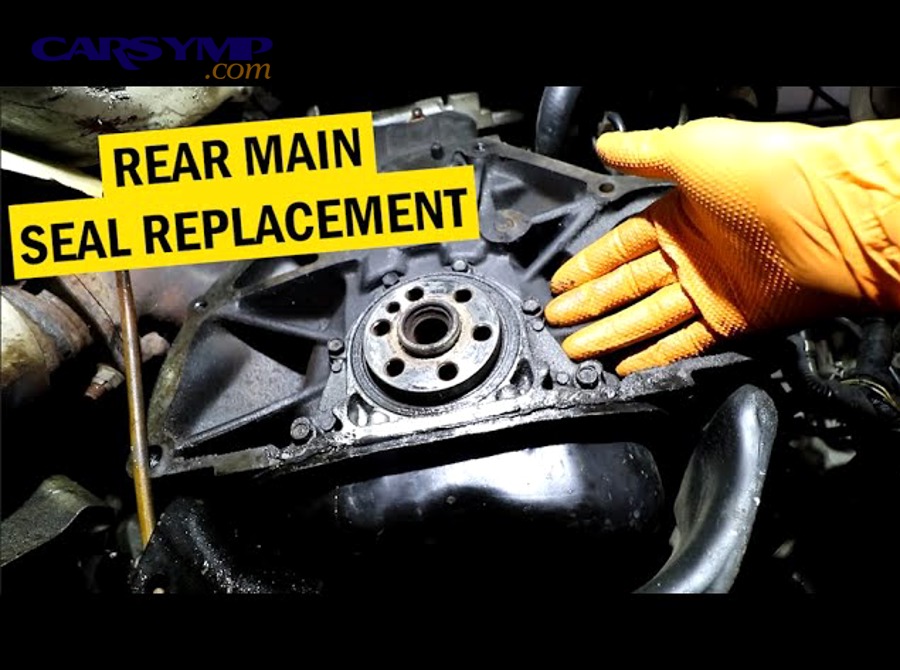
A rear main seal leak is an engine oil leak from the seal around the crankshaft’s rear exit point; it originates at the engine-to-transmission mating area and commonly drips from the bell housing because gravity pulls oil to the lowest edge of that joint.
To better understand why it shows up there, you need to picture the seal’s job: it keeps pressurized oil inside the crankcase while the crankshaft spins.

Why the rear main seal fails (most common reasons)
Rear main seals typically leak due to one (or several) of these root causes:
- Age + heat cycling: elastomer hardens and loses sealing tension.
- Crankshaft surface wear: grooves form where the seal rides.
- Installation issues: seal lip damage, misalignment, wrong depth.
- Excess crankcase pressure: pushes oil past seals when the PCV system can’t vent blow-by effectively.
What symptoms are most specific to a rear main seal leak?
- Oil appears at the bottom of the bell housing after cleaning and rechecking.
- Oil is engine oil by ID (color/smell/level drop).
- The upper rear of the engine block is dry, suggesting oil isn’t coming from above.
What symptoms are not specific (common traps)
- “It’s dripping from the bell housing, so it must be rear main.”
- “The pan is wet, so it’s the pan gasket.”
Evidence: According to a thesis project between Politecnico di Torino and the University of Windsor, in 2014, crankcase ventilation behavior and crankcase pressure control were modeled as a key engine subsystem, supporting the practical reality that crankcase pressure management influences sealing performance.
What is an ATF (transmission fluid) leak and how does it reach the bell housing area?
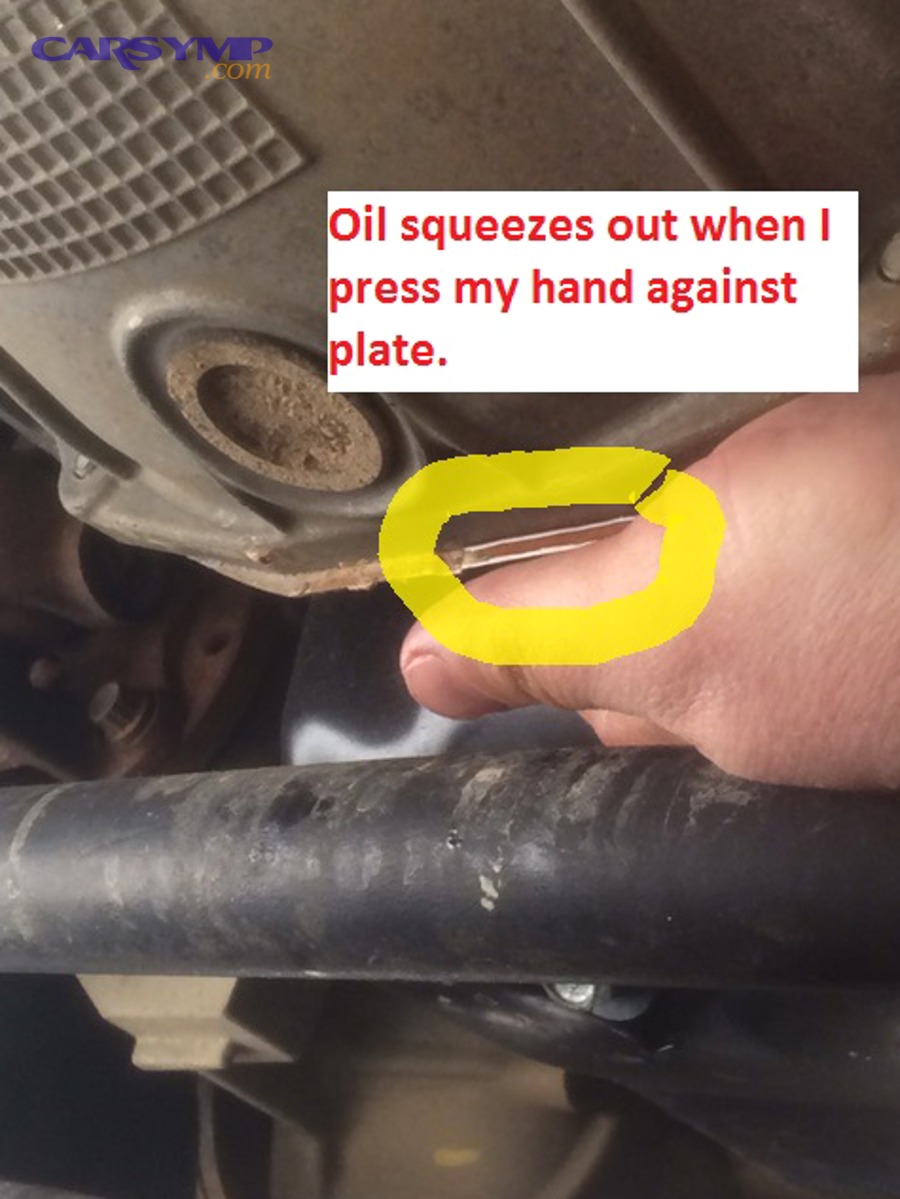
An ATF leak is a transmission fluid escape from a seal, gasket, line, or housing; it can reach the bell housing because the torque converter/front pump area sits inside that housing, and pressurized fluid can fling or drain to the lowest bell-housing opening.
Meanwhile, many external transmission leaks also travel, making the bell housing look guilty when it’s only the drip point.
Which transmission leaks most often mimic a rear main seal?
Common “RMS look-alikes” include:
- Front pump seal / torque converter hub seal (classic bell housing leak)
- Transmission input shaft seal (varies by design)
- Cooler line leaks that drip and get blown rearward
- Pan gasket leaks that spread along the case
Why ATF leaks can look like they start “higher than they do”
- ATF can mist/splash from rotating parts.
- It can run along case ribs and seams, then drip at the lowest edge.
- Some leaks show only after long sits because fluid level changes inside the unit after shutdown.
What driving symptoms hint more toward an ATF leak than an engine oil leak?
- Delayed engagement, slipping, harsh shifts
- Whining from pump starvation
- Overheating behavior under load
Evidence: According to a study involving Széchenyi István University partners, in 2023, changes related to transmission oil condition were measurable in operating behavior, reinforcing that transmission fluid condition/quantity is tightly tied to transmission function.
How can you confirm rear main seal vs ATF leak at home without guessing?
Use a clean-and-trace workflow in 5 steps—clean, baseline the fluid levels, run-and-inspect, add fluorescent dye if needed, and recheck the exact first-wet point—so you can confirm rear main seal vs ATF leak without relying on drip location alone.
Specifically, you’re trying to catch the leak at its origin, not at the bottom edge where everything ends up.

Step 1: Clean the area like you mean it
- Degrease the back of the engine, oil pan rail, and bell housing exterior.
- If safe and accessible, remove the small inspection cover (some vehicles have one) to look for splatter inside.
Step 2: Baseline your levels before the test drive
- Check engine oil on the dipstick (note level and color).
- Check ATF using your vehicle’s correct method.
- Place a clean cardboard sheet under the car overnight.
Step 3: Run-and-inspect sequence (short drive, then immediate look)
- Idle 5 minutes → inspect
- Drive 10–15 minutes → inspect immediately
- Park 30 minutes → inspect again
Step 4: Use a UV dye test when the leak is hard to see
This is the UV dye test for oil leak tracing approach:
- Add the correct dye to the suspected system (engine oil dye vs ATF dye).
- Drive for the recommended time.
- Scan with a UV light and glasses to find the first fluorescent source point.
Step 5: Common leak spots by location under car checklist
- Front of engine: crank seal, timing cover, oil filter housing
- Mid-engine / pan rail: oil pan gasket, drain plug area
- Bell housing area: rear main seal (engine oil) or front pump/torque converter seal (ATF)
- Transmission pan / sides: pan gasket, cooler line fittings, sensors
- Axle areas (FWD/AWD): axle seals
A simple decision table after you do the above
This table helps you decide what your results mean.
| Your observation after cleaning | Most likely conclusion |
|---|---|
| Inside bell housing shows oil spray + fluid ID = ATF | Converter/front pump/input seal leak likely |
| Rear of block is dry, but bottom bell housing edge gets wet with engine oil | Rear main seal more likely |
| Highest wet point is above bell housing seam | Leak is migrating downward (not true RMS yet) |
| UV dye first appears at oil filter housing or pan corner | External engine leak masquerading as “rear leak” |
Evidence: According to a technical report featuring the University of Michigan Solar Car Team, in 2011, fluorescent oil dye and UV lighting were used to improve visibility of oil patterns, supporting the practical value of dye + UV for visual tracing tasks.
Can you drive with oil or ATF leaking at the bell housing?
No—you should not drive with an active bell-housing fluid leak if the level is dropping, the leak is spraying, or you have warning lights, because (1) low engine oil risks rapid bearing damage, (2) low ATF risks transmission slip/overheat, and (3) leaks often worsen quickly once seals start to fail.
Moreover, the decision is less about “distance” and more about rate of loss + safety symptoms.
When it might be conditionally possible to drive a very short distance
- Fluid levels are in the safe range after topping to spec
- Leak is a slow seep, not an active drip stream
- No warning lights, no slipping, no burning smell, no smoke
- You can recheck levels immediately after arriving
Three reasons driving is risky (even if it “seems fine”)
- A leak rate can accelerate suddenly
- Engine oil loss can become catastrophic fast
- Transmission fluid loss is a functional failure risk
Practical “stop now” triggers
- Oil pressure warning / “Stop engine”
- Transmission overheat warning
- Puddle forming quickly
- Smoke from underbody
- Shifting suddenly changes (flare, slip, delayed engagement)
Evidence: According to a study authored through Széchenyi István University partners, in 2023, transmission operating behavior changed measurably with oil condition, reinforcing why maintaining proper ATF condition/quantity is critical to avoid functional degradation.
Rear main seal vs transmission leak: what does repair typically involve and what gets replaced together?
Rear main seal repair wins on “engine-side seal replacement once the transmission is removed,” transmission leak repair is best for “front pump/converter seal or case reseal,” and the optimal plan is to replace adjacent wear items together because labor overlap is the real cost driver.
In addition, you’ll save money long-term by bundling “while-you’re-in-there” items that share the same access.
What gets replaced in a typical rear main seal repair?
- Rear main seal (and sometimes a seal housing or gasket)
- Inspection of crank flange sealing surface
- Reseal of nearby joints if wet (pan corners, rear cover if applicable)
Common “do it together” items (depending on drivetrain)
- Clutch kit (manual) or torque converter seal inspection (auto)
- Pilot bearing / release bearing (manual)
- Flexplate/flywheel inspection (cracks, runout)
- PCV system service if crankcase pressure is suspected (prevents repeat leaks)
What gets replaced in a typical bell-housing ATF leak repair?
- Front pump seal / torque converter hub seal
- Input seal (design-specific)
- Pump bushing (if wear caused seal failure)
- Converter hub inspection (scoring kills new seals)
Cost logic: why diagnosis matters more than the part price
- Transmission removal
- Exhaust or subframe work (varies by vehicle)
- AWD transfer case components (some platforms)
A realistic bundling checklist (helps prevent repeat leaks)
- If rear main seal is leaking: check/replace PCV components and verify crankcase ventilation
- If ATF leak is confirmed: inspect cooler lines and fittings (common secondary leaks)
- If oil seems rearward but source is unknown: complete upstream checks first (filter housing, valve covers, pan corners)
Evidence: According to the University of Windsor / Politecnico di Torino thesis context, in 2014, crankcase ventilation design parameters were treated as a system-level engineering concern, supporting why ventilation issues can contribute to sealing problems and why addressing them can reduce recurrence.
How can you prevent future under-car fluid leaks after diagnosis and repair?
Preventing future leaks works best with a 4-part plan: correct fluid service, crankcase ventilation health, torque-and-seal discipline during service, and periodic inspection—because most repeat leaks come from pressure/heat cycling, degraded seals, or installation mistakes rather than “bad luck.”
Next, you’ll expand beyond diagnosis into long-term reliability.

What maintenance habits reduce repeat rear leaks?
- Keep oil changes consistent and use correct viscosity (reduces abnormal pressure/flow behavior).
- Service the PCV system on schedule (helps prevent crankcase pressure spikes).
- Fix minor seepage early so it doesn’t wash out rubber or contaminate clutch components.
What habits reduce repeat transmission leaks?
- Use correct ATF spec and avoid overfill/underfill procedures.
- Recheck for seepage after any work involving cooler lines or radiators.
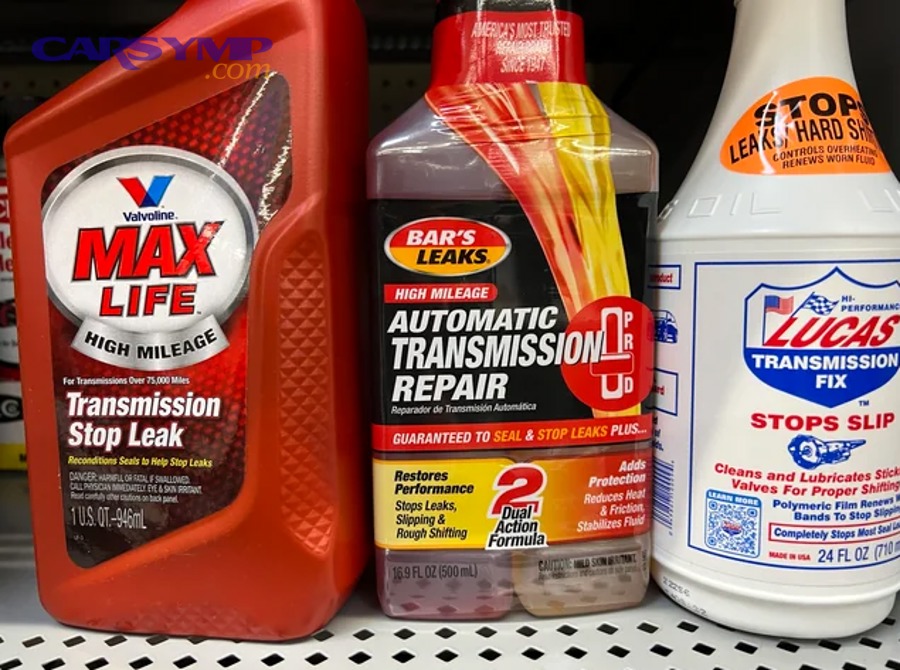
- Avoid stop-leak additives; they can swell seals unpredictably and create larger issues.
A simple monthly inspection routine (fast but effective)
- Check driveway spots and correlate by position.
- Recheck engine oil level and ATF condition/level method.
- Look for wetness at seams and fittings, not just the drip point.
When to keep UV dye in your toolkit (rare but high-value)
If your car is older or you’ve had repeat seepage, a dye approach can shorten future diagnosis time because it exposes the first wet point quickly—especially when airflow spreads fluid and creates a misleading oil leak under car pattern.
Evidence: According to a study associated with the Technical University of Munich, in 2019/2020, fluorescent dye mixed into lubricant enabled visualization and separation of oil-film signals via optical filtering, demonstrating why fluorescence-based tracing is effective for identifying oil presence and pathways.