


If you want a realistic oil pan gasket replacement price range, you can estimate it by combining (1) labor hours and shop rate, (2) parts and fluids, and (3) taxes and shop fees—because labor access, not the gasket itself, usually drives the total. (repairpal.com)
Next, the fastest way to avoid underestimating is to understand what a complete estimate should include (oil, filter, sealing materials, cleaning supplies, and any access-related labor) so you are not comparing mismatched quotes. (repairpal.com)
Then, you can narrow your own number by identifying the biggest price drivers on your vehicle—like whether the job requires removing an exhaust section or lowering a subframe—and by using a quick calculation formula to build a low/likely/high range.
Introduce a new idea: once you have a range, you can sanity-check a shop quote with a fairness checklist (itemization, scope, leak confirmation, and warranty), and you can use Post-repair leak check steps to protect the value of what you paid.
What is an “oil pan gasket replacement” cost estimate (and what does it include)?
An oil pan gasket replacement cost estimate is an itemized projection of total repair price (labor + parts + fluids + fees) for resealing the oil pan-to-engine joint, usually based on expected labor hours and common consumables for your vehicle.
Next, to make that estimate accurate and comparable across shops, you need to know exactly what belongs on the invoice—and what commonly gets left out until the end.
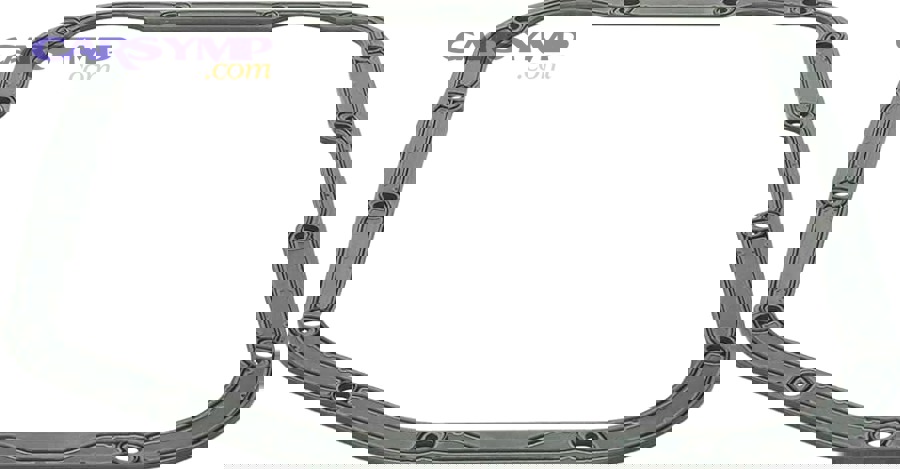
Does the estimate usually include oil and filter, or is that separate?
Yes—an oil pan gasket replacement estimate usually includes engine oil and an oil filter, because the shop must drain oil to remove the pan and then refill the engine safely after sealing.
Then, because some quotes separate “oil service” as a distinct line item, you should confirm the scope before comparing prices.
Here’s why oil and filter are commonly included (and why it matters to your total):
- Oil must be drained to remove the pan. When the oil pan comes off, the oil is no longer contained, so draining is not optional for a clean, controlled repair.
- Fresh oil protects the new seal. Clean oil with the correct viscosity helps the engine build stable oil pressure without carrying sludge into the newly cleaned sealing surfaces.
- The filter is a low-cost add-on while access is open. Many shops treat the service like an oil change because the labor overlap is high and the incremental cost is small compared with reopening the job.
Practical checklist to confirm on the estimate:
- “Engine oil: quantity and spec” (e.g., 0W-20, 5W-30)
- “Oil filter”
- “Drain plug gasket/washer” (or confirmation it is reusable on your model)
If a quote doesn’t include oil and filter, it’s not automatically wrong—but it is incomplete for comparison. You should add that expected cost back in before judging fairness.
What parts and shop supplies should appear on a proper itemized estimate?
There are 6 main groups of items that should appear on an oil pan gasket replacement estimate, based on what is physically required to seal and verify the repair: sealing parts, fluids, hardware, cleaning supplies, labor operations, and fees/taxes.
Moreover, seeing these items in writing helps you spot scope mismatches—like a quote that is really an “oil pan reseal” with extra labor steps.
A properly itemized estimate commonly includes:
1) Sealing components
- Pre-formed oil pan gasket (rubber/cork/composite), or
- RTV/gasket maker (if the design uses sealant instead of a traditional gasket) — this ties directly to RTV vs gasket type differences you should understand before approving the work.
2) Fluids and filters
- Engine oil (correct quantity and viscosity)
- Oil filter
- Optional: engine flush is not usually required and should be justified if included
3) Hardware and “small parts”
- Drain plug washer/gasket (if applicable)
- One-time-use fasteners (some vehicles specify single-use bolts; the shop should note this if it applies)
4) Shop supplies / consumables
- Brake cleaner or solvent
- Plastic scraper/razor blades (or equivalent safe tools)
- Shop towels, absorbent pads
- Sealant applicators/nozzles (when RTV is used)
5) Labor operations (should be described, not just a number)
- Remove undertray/skid plate (if applicable)
- Drain oil
- Remove oil pan (may include moving exhaust/crossmember)
- Clean sealing surfaces
- Install gasket/RTV and torque pan bolts to spec
- Refill oil and verify no leaks
6) Fees and taxes
- Environmental disposal fees (for oil)
- Shop fees
- Taxes (varies by region)
Why this matters for Car Symptoms: many oil leaks drip and travel, so a vague estimate that doesn’t mention cleaning or verification can lead to “fixed the wrong seal” outcomes later.
How much does oil pan gasket replacement typically cost for car owners?
There are two widely cited “typical” cost ranges for oil pan gasket replacement—around $553–$759 (RepairPal) and $933–$1,037 (KBB)—because totals swing heavily by vehicle design, labor time, and local labor rates. (repairpal.com)
Then, to make those numbers useful for you, you should treat them as reference points and translate them into a low/likely/high range using your vehicle’s access difficulty.
A helpful way to interpret the “typical cost” is to split it into parts and labor. RepairPal’s national estimate, for example, shows labor as the larger share and parts as a smaller share. (repairpal.com)
To make the range more actionable, the table below summarizes what a car owner is usually paying for (labor) versus what they are buying (parts/fluids). The numbers are intentionally shown as ranges so you can plug them into your own calculation later.
Table context: This table shows common cost components (parts/fluids vs labor) and how they shape total estimates.
| Cost component | What it covers | Typical range behavior |
|---|---|---|
| Sealing parts (gasket or RTV) | The sealing method between oil pan and engine | Often modest relative to labor; can rise if special gasket kits are needed |
| Fluids & filter | Oil refill and oil filter | Usually predictable and easy to compare |
| Labor | Access, removal, cleaning, installation, verification | Biggest variable; depends on how much must be moved/removed |
| Fees & taxes | Disposal fees, shop fees, local tax | Smaller, but can change comparisons if omitted |
What’s the typical total price range for sedans/crossovers vs trucks/SUVs?
There are 2 broad “vehicle-class buckets” for oil pan gasket replacement pricing: (A) sedans/crossovers with straightforward access, and (B) trucks/SUVs (or any vehicle with underbody protection/exhaust/crossmember complexity) where access adds labor hours.
Especially, your estimate changes less with “vehicle type” and more with “underbody access reality”—but class is a useful first-pass grouping.
Bucket A: Many sedans and crossovers (often lower-to-mid range)
- Often fewer underbody obstacles
- Undertrays may exist but are usually lightweight and quick to remove
- Labor may stay closer to the low/typical band if the pan drops without major interference
Bucket B: Many trucks/SUVs (often mid-to-high range)
- Skid plates, heavy shields, off-road armor can add time
- Exhaust routing or crossmembers can block pan removal
- 4WD/AWD configurations may add components that limit clearance
Important nuance: Some trucks are easy, and some sedans are hard. The “bucket” helps you start, but the factors in the next section decide your final number.
What is the usual parts cost vs labor cost split (and why is labor often the bigger number)?
The split is usually labor-heavy because the gasket is not expensive compared with the time required to access and reseal the oil pan correctly; RepairPal’s estimate reflects this by listing labor as the majority of the range. (repairpal.com)
However, the reason labor dominates is not just “time”—it’s precision time.
Why labor is often the larger share:
- Access time: removing shields, braces, or exhaust sections takes careful steps and safe lifting/support.
- Surface prep time: proper cleaning is slow because mistakes cause leaks later.
- Torque and sequencing: oil pan bolts often require an even pattern and correct torque to avoid warping the pan rail.
- Cure/setting requirements: some sealants require a specific procedure, which can add “non-wrench time” the shop still must account for.
This is the key buyer insight: you are paying for a clean, flat, properly sealed interface that must hold oil under heat, vibration, and pressure—not for the gasket material alone.
Which factors change the oil pan gasket replacement price the most?
There are 5 main cost drivers that change an oil pan gasket replacement estimate the most: access difficulty, required removals, drivetrain layout (AWD/4WD), corrosion/previous repairs, and sealing method requirements.
More importantly, once you identify which of these apply to your car, you can predict whether you’re in the low, typical, or high end of the price range.
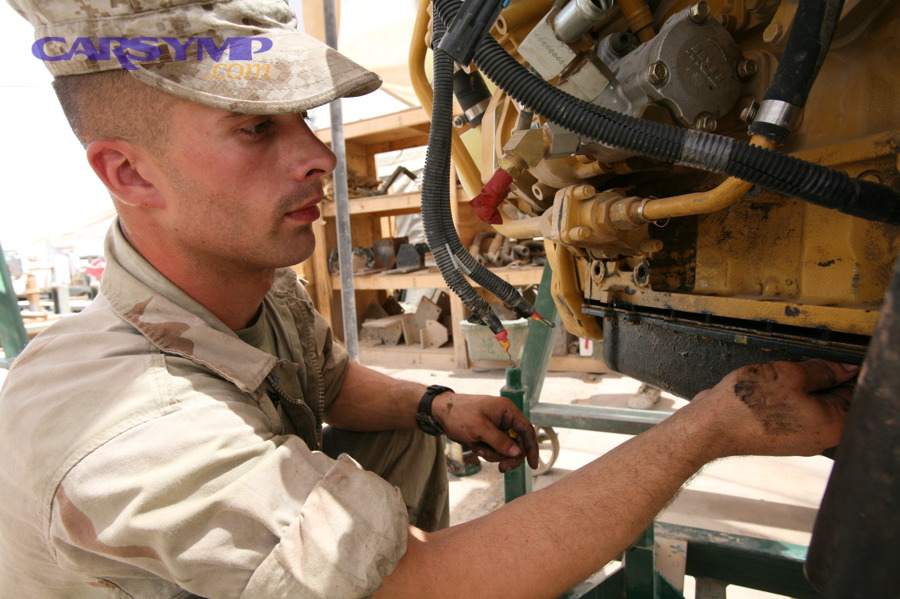
Does your vehicle layout make this a low-labor or high-labor job?
Yes—your vehicle layout can make oil pan gasket replacement either a low-labor or high-labor job, because clearance and component overlap determine how many extra steps are required before the pan can drop.
Then, to classify your situation quickly, think in terms of a simple decision: “Does anything physically block the oil pan from coming out?”
Low-labor signs (often cheaper)
- The pan is accessible with the vehicle raised safely
- Minimal undertray removal
- No crossmember/subframe interference
- Exhaust routing does not cross under the pan
High-labor signs (often more expensive)
- A crossmember or subframe sits directly under the pan
- Exhaust pipes or catalytic components block pan bolts
- Steering rack or engine mounts limit clearance
- AWD/4WD packaging reduces space
Car Symptoms tie-in: if oil is dripping near the center of the car, it still may not be the pan—oil can travel backward with airflow. That’s why layout-based labor decisions should also be paired with leak confirmation (covered later).
What removal steps commonly add labor hours (and cost) during oil pan removal?
There are 6 common “time adders” during oil pan removal, based on what must move to create clearance: shields, exhaust sections, crossmembers/subframe, steering components, engine support steps, and cleanup of previous sealant.
Specifically, each added step increases labor hours and raises the estimate more than parts ever will.
Common removal steps that increase labor:
- Undertray/skid plate removal (fast on some cars, slow on heavily armored setups)
- Exhaust section loosening/removal (rusted fasteners can add significant time)
- Crossmember or subframe lowering (precision alignment and safe support required)
- Steering rack loosening (varies by model; alignment considerations may apply)
- Engine support or mount loosening (some designs require lifting/supporting the engine slightly)
- Old RTV cleanup (if the last repair was sloppy, cleanup time increases dramatically)
This is where DIY risks and when to avoid becomes relevant: if your vehicle requires subframe lowering or engine support, DIY is not “impossible,” but the risk of unsafe lifting, mis-torque, or misalignment rises quickly.
How do shop labor rates and location affect the final estimate?
Shop labor rates and location affect your estimate because the same labor-hour job multiplies differently when hourly rates vary, and some regions carry higher overhead and taxes that appear as fees.
Moreover, this is why two people with the same car can receive very different totals, even if the parts list is identical.
How to adjust your expectations:
- Labor rate × hours is the core math. If your market’s labor rate is 25% higher, your total often rises noticeably even if parts are unchanged.
- Urban vs rural pricing differences can show up in both labor rate and shop fees.
- Dealer vs independent pricing can differ due to labor rate, parts sourcing, and included warranty terms.
A practical way to handle this: compare quotes only after you confirm they include the same scope (oil/filter, sealing method, cleanup, verification).
How can you calculate a realistic oil pan gasket replacement cost estimate for your car?
You can calculate a realistic oil pan gasket replacement cost estimate by using a simple formula—(labor hours × shop rate) + parts/fluids + fees/tax—and by building a low/likely/high range based on access difficulty. (repairpal.com)
To better understand why this works, treat your estimate like a range forecast rather than a single number, because labor hours are the most uncertain input.
What’s the quick formula to estimate total cost (parts + labor + fees)?
The quick formula is: Total estimate = (Labor hours × Labor rate) + (Parts + Fluids) + (Fees + Tax), and you should run it three times—low, likely, high—to get a range that matches real-world quotes.
Then, because labor is the swing factor, you’ll get the most accuracy by adjusting labor hours—not obsessing over the gasket price.
Range method (simple and effective)
- Low estimate: easy access hours + normal fluids + minimal fees
- Likely estimate: mid access hours + normal fluids + typical fees
- High estimate: difficult access hours + extra removals + higher fees/tax
Example (illustrative math):
- Labor: 4 hours × $140/hr = $560
- Parts/fluids: $120
- Fees/tax: $60
- Estimated total: $740
Notice how this aligns with the idea that labor often dominates totals, as reflected in widely cited estimator breakdowns. (repairpal.com)
What labor hours should you assume if you don’t know your exact model?
There are 3 practical labor-hour tiers you can assume for oil pan gasket replacement—easy, moderate, and complex—based on access and required removals.
For example, this tiering is the fastest way to match your DIY research, your shop’s quote, and your own expectations without pretending every car is the same.
Tier 1: Easy access (often lower-to-mid estimate)
- Assumption: ~2–4 labor hours
- Typical situation: pan drops without major component removal
Tier 2: Moderate access (often mid estimate)
- Assumption: ~4–6 labor hours
- Typical situation: undertrays + some brackets or partial exhaust loosening
Tier 3: Complex access (often high estimate)
- Assumption: ~6–10+ labor hours
- Typical situation: subframe/crossmember interference, steering rack involvement, heavy corrosion, or extensive old sealant cleanup
DIY risks and when to avoid (quick rule): Avoid DIY if the job requires subframe lowering, engine support, or significant exhaust disassembly unless you have proper equipment, torque specs, and experience. The risk isn’t only “can you do it,” but “can you do it safely and seal it correctly the first time.”
Can you use online estimators and quotes to cross-check your number?
Yes—you can use online estimators and multiple quotes to cross-check your range, as long as you compare matching scope and understand that national averages may not reflect your local labor rate. (repairpal.com)
However, you should treat these tools as “reality anchors,” not perfect answers.
How to cross-check correctly:
- Match the service: oil pan gasket replacement vs oil pan replacement vs other leak repairs
- Confirm inclusion: oil/filter, sealing material, cleanup, verification
- Compare labor hours, not just total price
- Ask what access steps are included (exhaust, crossmember, subframe)
When your numbers disagree:
- If the quote is higher, check whether the shop is including additional necessary removals or related repairs.
- If the quote is lower, verify they are not skipping surface prep or post-repair checks.
Is your oil pan gasket quote fair—and what should you verify before approving the repair?
Yes, a quote can be fair even if it looks high, as long as it clearly matches the correct repair scope and includes itemized labor steps, proper sealing method, and verification—because complexity and access can legitimately raise labor time.
In addition, the fastest way to judge fairness is to compare what the shop is doing, not just the final number.
Is it a red flag if the shop won’t itemize labor hours and parts?
Yes—it’s a red flag if the shop won’t itemize labor hours and parts, because you lose the ability to confirm scope, compare quotes, and understand why the estimate sits in the low or high end of the range.
However, some shops use flat-rate systems, so the goal is not perfection—it’s clarity.
Three reasons itemization matters:
- It confirms the repair scope. You can see whether it’s a gasket replacement, a reseal, or something bigger.
- It reveals access-related labor. “Exhaust removal” or “crossmember drop” explains higher totals.
- It protects you from mismatched comparisons. A “cheap” quote may omit oil/filter, cleaning, or verification.
What to ask for (simple and direct):
- Labor hours (or flat-rate time)
- Parts list including sealing method
- Confirmation of oil/filter inclusion
- Warranty terms
What should be compared between quotes to avoid paying for the wrong scope?
You should compare 4 scope elements between quotes: the exact repair target, the sealing method, included fluids/consumables, and verification/warranty—because mismatched scope is the #1 reason prices look inconsistent.
Meanwhile, using the same comparison template makes it easier to decide without guesswork.
Comparison checklist
- Target: oil pan gasket vs oil pan replacement vs “reseal”
- Sealing method: gasket vs RTV (ties to RTV vs gasket type differences)
- Included items: oil/filter, drain plug washer, shop supplies
- Verification: post-repair check, cleaning, road test, re-inspection, warranty
A common mistake: comparing a quote that includes extra removal steps (legitimate) with a quote that quietly assumes easy access (optimistic). You only see the difference when labor steps are named.
Do you need leak confirmation before paying for an oil pan gasket replacement?
Yes—you should confirm the leak source before paying for oil pan gasket replacement, because oil can originate higher (valve cover, filter housing) and run down, creating misleading Car Symptoms like puddles near the pan.
Next, confirmation protects you from replacing a seal that was never the problem.
Simple leak confirmation steps a shop should be willing to do:
- Clean the area and recheck after running the engine
- Inspect the oil filter and drain plug area
- Look for oil tracks above the pan rail
- Use dye testing if the leak is slow or hard to see
Post-repair leak check steps (what you want to see)
- Visual inspection with engine running at operating temp
- Check after a short road test
- Verify oil level after refill and after the test drive
- Look for fresh seepage at the pan rail, not old residue
Why do some oil pan gasket jobs cost “surprisingly high,” and how can you avoid overpaying?
There are 4 common reasons oil pan gasket replacement can become “surprisingly high”: complex access, reseal versus replacement scope, sealing method time requirements, and fixing the wrong leak first.
More importantly, understanding these reasons lets you evaluate a quote logically—so you pay for real work, not confusion.
Is RTV sealant cheaper than a pre-formed gasket (and when does it increase labor cost instead)?
RTV wins on material cost, a pre-formed gasket is best for predictable installation, and a “cured-in-place” approach is optimal when the engine design expects sealant—because labor time depends on surface prep quality and correct bead application, not just what the tube costs. (saemobilus.sae.org)
However, the phrase “RTV is cheaper” can be misleading for car owners, because sealant can increase labor time when prep is difficult.
How RTV can increase labor cost:
- Surface prep must be perfect. Old RTV removal is slow and mistakes cause leaks.
- Bead control matters. Too much RTV can squeeze inward; too little can leak.
- Procedure discipline matters. Some designs require specific cure or “skin” times.
Evidence (durability relevance): According to a study by Oakland University (authors listed among the research team) from engineering research in materials/sealing, in 2020, a test system for RTV gasket material durability evaluated seal performance under fretting movement and elevated temperature conditions—highlighting why correct sealing method and preparation matter for long-term seal integrity. (researchgate.net)
When does “oil pan gasket replacement” actually mean oil pan reseal or oil pan replacement?
Oil pan gasket replacement becomes oil pan reseal or oil pan replacement when the engine design uses sealant instead of a separate gasket, or when the pan is damaged/warped/corroded enough that resealing alone won’t hold.
Then, since estimates can label these differently, you should verify what the shop is physically doing.
Common scenarios:
- Reseal (sealant-based designs): the “gasket” is a bead of RTV applied to the pan rail
- Replacement (damaged pan): dented pan, rust-through, stripped threads, cracked flange
- Expanded scope: if related seals must be moved or resealed to reach the pan
How to spot it on an estimate:
- If parts list shows “RTV” but no gasket part number, it’s likely a reseal.
- If parts list includes an entire oil pan, it’s replacement.
- If labor notes include “subframe drop” or “steering rack,” it’s likely access-driven complexity.
What related leaks are commonly mistaken for an oil pan gasket ?
There are 5 common leak sources that are mistaken for an oil pan gasket leak, based on how oil travels downward and backward under airflow: valve cover gasket, oil filter housing, oil pressure sensor area, timing cover, and rear main seal area.
Specifically, misdiagnosis can inflate costs because you pay labor for the wrong repair and then still need the correct one.
High-level “location logic” for Car Symptoms:
- Oil higher on the engine often ends up dripping at the lowest edge, making the pan look guilty.
- Oil on the underside can be blown backward, creating a drip far from the source.
What to do to avoid overpaying:
- Ask for leak confirmation steps (clean, run, recheck)
- Request photos of the active leak at the source
- Consider dye testing for slow leaks
How to clean sealing surfaces properly to prevent repeat leaks (and repeat labor charges)?
Properly cleaning sealing surfaces means removing old gasket material/RTV without gouging the metal, degreasing until oil-free, and ensuring the pan rail and engine mating surface are flat and dry before sealing—because contamination causes repeat leaks.
Thus, surface prep is the “hidden work” you are really paying for in oil pan gasket replacement.
Best-practice surface prep principles:
- Use plastic scrapers or appropriate tools to avoid scratching aluminum
- Remove all old RTV evenly; don’t leave raised ridges
- Degrease thoroughly and let surfaces dry fully
- Follow the correct torque sequence and torque spec
- Apply sealant exactly where required (corners, joints) and not everywhere
Post-repair leak check steps that protect your investment:
- Inspect immediately after warm-up
- Reinspect after a short drive
- Check oil level after the first heat cycle
- Watch for fresh seepage lines, not old residue
Evidence (if any)
- Repair cost benchmarks: RepairPal lists an average oil pan gasket replacement cost range and breaks out labor vs parts. (repairpal.com)
- Alternate benchmark: Kelley Blue Book lists an average oil pan gasket replacement cost range with local estimator framing. (kbb.com)
- RTV durability context: A 2020 SAE technical paper describes a lab test system to evaluate RTV seal durability under fretting movement and elevated temperatures, supporting why correct sealing method and prep discipline matter. (saemobilus.sae.org)