


A stripped (damaged) drain plug thread is fixable in many cases, and the “best” repair is the one that restores clamping force and sealing without cutting crooked threads or leaving metal debris behind. This guide shows you how to identify the real failure (threads vs washer/seat), choose a repair path, and end up with a drain plug that tightens correctly and stops leaking.
Next, you’ll learn how to pick between the common options—thread chasing, an oversized/self-tapping plug, a wire insert (Helicoil), or a solid insert (Time-Sert-style)—based on how much thread is left, whether the pan is aluminum or steel, and how permanent you need the repair to be.
Then, we’ll walk through a practical, DIY-safe process to install your chosen repair correctly: keeping the tap square, controlling chips, using the right sealing approach, and verifying the fix after the first heat cycle so you don’t discover the leak on your driveway later.
Introduce a new idea: once the primary repair is solved, we’ll cover rare edge cases that mimic “stripped threads,” including sealing-surface damage and thread-pitch mismatches that cause repeat leaks even after a “repair.”
What does it mean when a drain plug is “stripped,” “damaged,” or “cross-threaded”?
A drain plug is “stripped” when the oil pan’s internal threads can no longer hold tightening force, “damaged” when the threads or sealing surfaces are deformed enough to leak, and “cross-threaded” when the plug was started at an angle and cut a new, incorrect path through the original threads.
More specifically, the label matters because each failure points to a different repair: some need a simple thread chase, while others need an insert or oil pan replacement.
Most DIY frustration happens when people assume the threads are the problem—but the real leak is from the sealing washer, the plug seat, or a hairline crack. Thread damage also varies in severity: light galling may still tighten; partial thread loss may “feel tight” but loosens after a heat cycle; complete thread loss spins forever.
Before you buy a kit, do two quick reality checks:
- Can the plug ever reach a firm stop? If it never “comes up” and just turns, threads are likely gone.
- Does it leak only after an oil change? If yes, suspect washer/seat/torque technique first.
Is it stripped threads, a damaged sealing washer, or a cracked oil pan?
A leaking drain area is most often a sealing problem, not a “mystery oil leak,” and you can separate the causes by where the oil first appears and how the plug behaves during tightening.
However, you need a clean baseline to diagnose correctly.
Start by cleaning the area with brake cleaner (or a degreaser) and wiping it dry. Then run the engine for a few minutes and inspect with a flashlight.
Clues it’s the washer/seat (not the threads):
- The plug tightens normally and feels solid, but there’s still a seep at the rim.
- The washer is reused, cracked, flattened, or the wrong type (crush washer vs rubber vs bonded seal).
- Oil forms a ring around the plug head and creeps outward.
Clues it’s stripped or failing threads:
- The plug won’t torque and keeps turning.
- The plug backs out easily even after “tightening.”
- You see metal shavings on the plug threads.
Clues it’s the oil pan (crack or seat damage):
- Oil appears from a line on the pan casting, not the plug center.
- The sealing face looks gouged or cupped.
- The plug area stays wet even with a new washer and correct torque.
If the sealing surface is the culprit, the “repair” may be cleaning and restoring the mating face—or in severe cases, moving to a more permanent fix like a new pan (often bundled with oil pan gasket replacement if the pan must come off).
What are the clear signs your oil pan threads are failing right now?
There are 5 main signs your oil pan drain threads are failing: (1) spinning without tightening, (2) inconsistent “catch,” (3) repeated seep after a new washer, (4) visible metal transfer or shavings, and (5) plug feels tight but won’t hold torque after a heat cycle.
To illustrate, each sign maps to a predictable mechanical failure.
- Spins without tightening: thread engagement is gone or almost gone.
- Catches, then slips: partial thread loss—often the first few threads are damaged.
- Leaks even with a new washer: either the seat is damaged or the threads aren’t clamping consistently.
- Metal flakes on plug: galling (common in aluminum pans with steel plugs).
- “Tight” then loose later: damaged threads relax under vibration/heat.
If you’re seeing signs #1 or #2, it’s time to stop “one more snug turn.” Every extra turn can enlarge the hole and eliminate your best repair choices.
Can you drive with a stripped drain plug or leaking oil pan threads?
Yes—but only in limited cases, because a drain-plug leak can range from a slow seep to rapid oil loss, and your engine survives on oil pressure and volume. The safest approach depends on (1) leak rate, (2) ability to maintain oil level, and (3) whether the plug can physically stay seated.
Besides, “Can I drive?” is really a risk question: the goal is to avoid running low, overheating, or losing the plug entirely.
If the plug won’t tighten at all, treat it as a no-drive situation. If it seeps slowly and the plug is stable, you may be able to move the car short distances—only if you monitor oil level carefully.
Is a slow seep “safe enough” temporarily if you monitor oil level?
Yes, a slow seep can be temporarily manageable if the drain plug remains stable, the leak rate is small, and you check the oil level frequently—because engines tolerate minor seepage far better than sudden loss.
More importantly, you need to set strict boundaries so “temporary” doesn’t become “ignored.”
Use this temporary-only checklist:
- Confirm it’s a seep, not a drip: wipe clean, idle 5 minutes, confirm no steady drops.
- Top off oil to the full mark and keep a quart in the car.
- Check level at every stop until repaired (especially after a heat cycle).
- Avoid highways and long drives where a failure becomes catastrophic quickly.
- Park on cardboard so you can see if the leak worsens.
A key warning: if you’re relying on a temporary fix, you should also plan for the repair logistics—tools, kit, time, and whether you might need an Oil pan gasket replacement cost estimate if you end up replacing the pan.
When is it an immediate stop-and-tow situation?
There are 4 immediate stop-and-tow scenarios for stripped drain plugs: (1) the plug won’t tighten and can fall out, (2) active dripping/streaming, (3) oil pressure warning light or knocking, and (4) oil dumping onto hot exhaust components.
To better understand, each scenario is about losing oil faster than you can control.
Stop driving immediately if:
- The plug can be turned by hand and doesn’t hold position.
- You see drops forming continuously (not just a damp film).
- You smell burning oil or see smoke under the car.
- The oil pressure light comes on (even briefly).
At that point, the “best repair method” question becomes secondary to preventing engine damage. Fix the threads first, then change the oil.
Which repair option should you choose for stripped oil pan threads?
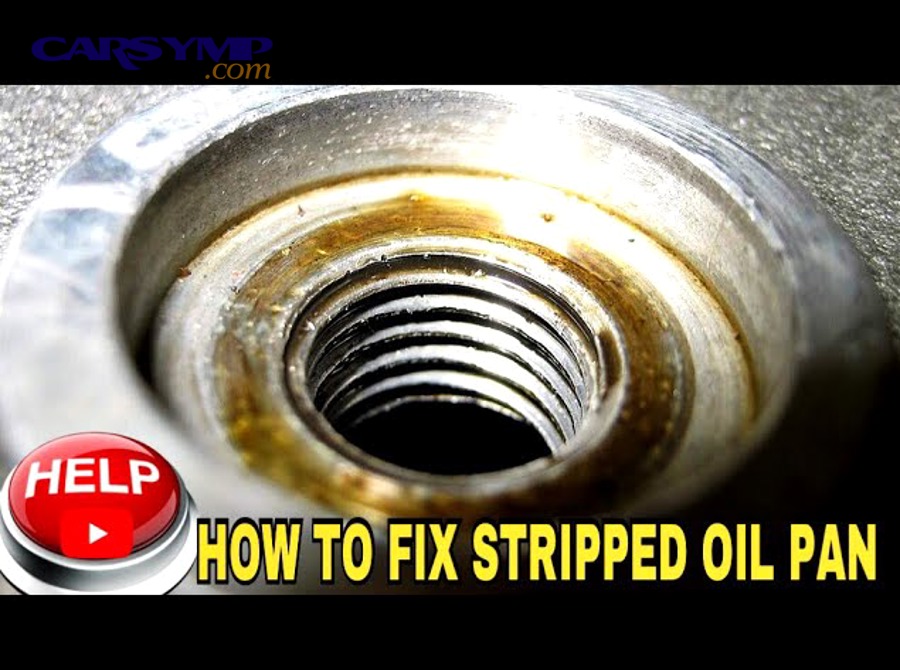
There are 5 main repair options for stripped oil pan threads: (1) new washer + correct torque, (2) thread chasing/re-threading for minor damage, (3) oversized/self-tapping drain plug, (4) thread insert (Helicoil or Time-Sert-style), and (5) oil pan replacement—chosen based on damage severity, pan material, and how permanent you need the fix to be.
However, the fastest fix is not always the best fix, especially if it compromises future oil changes.
A simple rule helps:
- Minor damage → chase/restore threads.
- Moderate damage → insert (best long-term).
- Severe damage or seat crack → replace the pan.
AutoZone’s DIY guidance reflects this same ladder: try less invasive thread restoration for minimal damage, and escalate when needed. (Source domain: autozone.com)
Should you try a new washer and proper torque first?
Yes, you should try a new washer and correct torque first when the plug still tightens normally, because many “thread problems” are actually sealing problems, and washers are designed to deform once to seal.
Next, correct technique prevents you from accidentally turning a sealing issue into stripped threads.
Do it the right way:
- Replace the washer every oil change if it’s a crush-style washer.
- Clean the plug head and the pan seat so the washer sits flat.
- Hand-thread the plug fully before using a wrench.
- Torque to the vehicle spec (not “as tight as possible”).
If the plug tightens smoothly and you stop the leak, you avoided drilling, tapping, and the risk of contamination.
When does an oversized or self-tapping drain plug make sense—and when does it backfire?
The oversized/self-tapping plug wins in speed, a thread insert is best for serviceability, and pan replacement is optimal for structural certainty when the seat or casting is compromised.
Meanwhile, the oversized plug can backfire when it cuts crooked, removes too much material, or leaves you with no upgrade path.
Oversized/self-tapping can make sense when:
- The damage is moderate and you need a quick repair.
- The hole still has enough material for a larger thread.
- You accept it may be a “one step closer” to a full insert.
It backfires when:
- You can’t keep the tool perfectly square (crooked thread path leaks).
- The pan is thin or the drain boss is shallow.
- The original thread size is already near the casting limit.
- You need a truly long-term solution for repeated oil changes.
NAPA’s thread-repair guidance emphasizes matching the tool to the original thread size and carefully threading by hand to avoid making damage worse. (Source domain: knowhow.napaonline.com)
What’s the difference between Helicoil (wire insert) and Time-Sert-style (solid insert) for oil pans?
Helicoil wins in minimal hole enlargement, Time-Sert-style solid inserts are best for rigidity and seat stability, and an oversized plug is optimal for speed when you accept tradeoffs.
More specifically, both inserts can restore stronger threads than damaged aluminum, but they differ in how they lock in and how they behave after many heat cycles.
Helicoil (wire insert):
- Uses a special tap (STI) and a stainless coil that becomes the new internal thread.
- Often needs less material removal than a solid bushing insert.
- Can be excellent when space is tight and you can install cleanly.
Time-Sert-style (solid insert):
- Uses a solid bushing insert that becomes a new, rigid threaded sleeve.
- Often feels more “OEM-like” during future oil changes.
- Commonly favored when repeated service is expected and you want a more permanent feel.
For a broader engineering perspective, NASA’s Fastener Design Manual notes wire thread inserts are popular for repair because they require less hole enlargement, while solid bushing inserts are preferred when space permits. (Source domain: ntrs.nasa.gov)
When is replacing the oil pan the most reliable fix?
Yes, replacing the oil pan is the most reliable fix when the sealing seat is damaged, the casting is cracked, or the drain boss has been enlarged beyond safe insert installation—because no insert can fix a pan that can’t seal flat or hold structure.
In addition, pan replacement can become the “cleaner” option when access is good and labor is reasonable.
Replace the pan when:
- The drain hole is egg-shaped or massively oversized.
- The sealing face is gouged/cupped and won’t seal even with correct washers.
- A prior repair failed and there’s not enough material left for a proper insert.
- The pan is leaking elsewhere (rusted steel pan, impact damage).
Pan replacement may overlap with oil pan gasket replacement, and that’s where planning matters: you may need a parts list, gasket sealer guidance, and a realistic Oil pan gasket replacement cost estimate depending on the vehicle’s subframe and access constraints.
How do you repair stripped drain plug threads step-by-step without creating leaks?
A safe DIY repair is a methodical process with 7 steps—diagnose, choose method, prepare, align, cut/install, clean, and verify—because thread repairs fail most often from crooked alignment, poor chip control, or a dirty sealing surface.
To begin, you’re trying to restore two things at once: thread engagement (tightening) and sealing (no leak).
Here’s the high-level workflow:
- Confirm the leak source (threads vs seat/washer vs crack).
- Choose repair method (chase, oversize, Helicoil, solid insert, replace pan).
- Drain oil and gain safe access.
- Prep the hole and protect the engine from chips.
- Tap/cut/install perfectly square.
- Clean aggressively and ensure sealing surfaces are correct.
- Refill, inspect, heat-cycle, and re-check.
How do you prep the area so the repair seals and doesn’t contaminate the engine with shavings?
Prep is the most important step because it prevents metal chips from circulating and ensures the new threads can clamp the washer evenly.
Specifically, good prep controls debris, improves alignment, and reduces the chance of a “repair” that still leaks.
Do this before cutting any threads:
- Drain the oil fully and remove the old plug.
- Clean the drain boss area so you can see what you’re doing.
- Choose chip-control strategy:
- Pack grease on the tap to capture chips (common DIY method).
- Use a vacuum near the cutting area while tapping.
- Plan a short flush oil fill after repair (optional but helpful on severe damage).
Then do the sealing work that most people skip. This is where How to clean sealing surfaces properly matters: clean the plug seat on the pan until it’s free of old washer residue, grit, and oil film, because a washer seals best against a clean, flat surface.
How do you tap straight and confirm thread engagement depth before final assembly?
Yes, you can tap straight in a home garage if you stabilize the tool, start perfectly square, and cut slowly—because the tap will follow the first few turns, and those first threads determine whether the plug seals later.
However, you must treat “square alignment” as non-negotiable.
Practical alignment tactics:
- Use a tap guide if your kit includes one (many do).
- If no guide: brace your forearms, sight the tap from two angles (front/back and left/right), and start with gentle pressure.
- Cut in short increments: ½ turn forward, then back slightly to break chips.
Confirm engagement depth like this:
- Thread the new plug in by hand and ensure it engages smoothly for multiple turns.
- Make sure the plug reaches a firm stop without wobble.
- Inspect the plug threads afterward—consistent contact indicates consistent new threads.
If it feels “tight” immediately or binds early, stop. That’s a major clue of crooked cut or pitch mismatch.
What post-repair checks confirm the fix worked before you trust it long-term?
There are 4 post-repair checks that confirm success: (1) dry idle inspection, (2) hot inspection after a heat cycle, (3) stable torque feel at the next service interval, and (4) no progressive wetness around the plug over several days.
In short, you’re proving the repair holds under temperature and vibration.
Use this verification routine:
- Refill oil, start engine, idle 3–5 minutes, inspect with a light.
- Shut down, wait 5–10 minutes, inspect again for a forming ring.
- Drive a short loop, then recheck while warm (careful—hot parts).
- Check again the next morning on a clean surface/cardboard.
If you see a persistent ring of oil but the plug is solid, shift your focus to the sealing face and washer selection—not “tighter.”
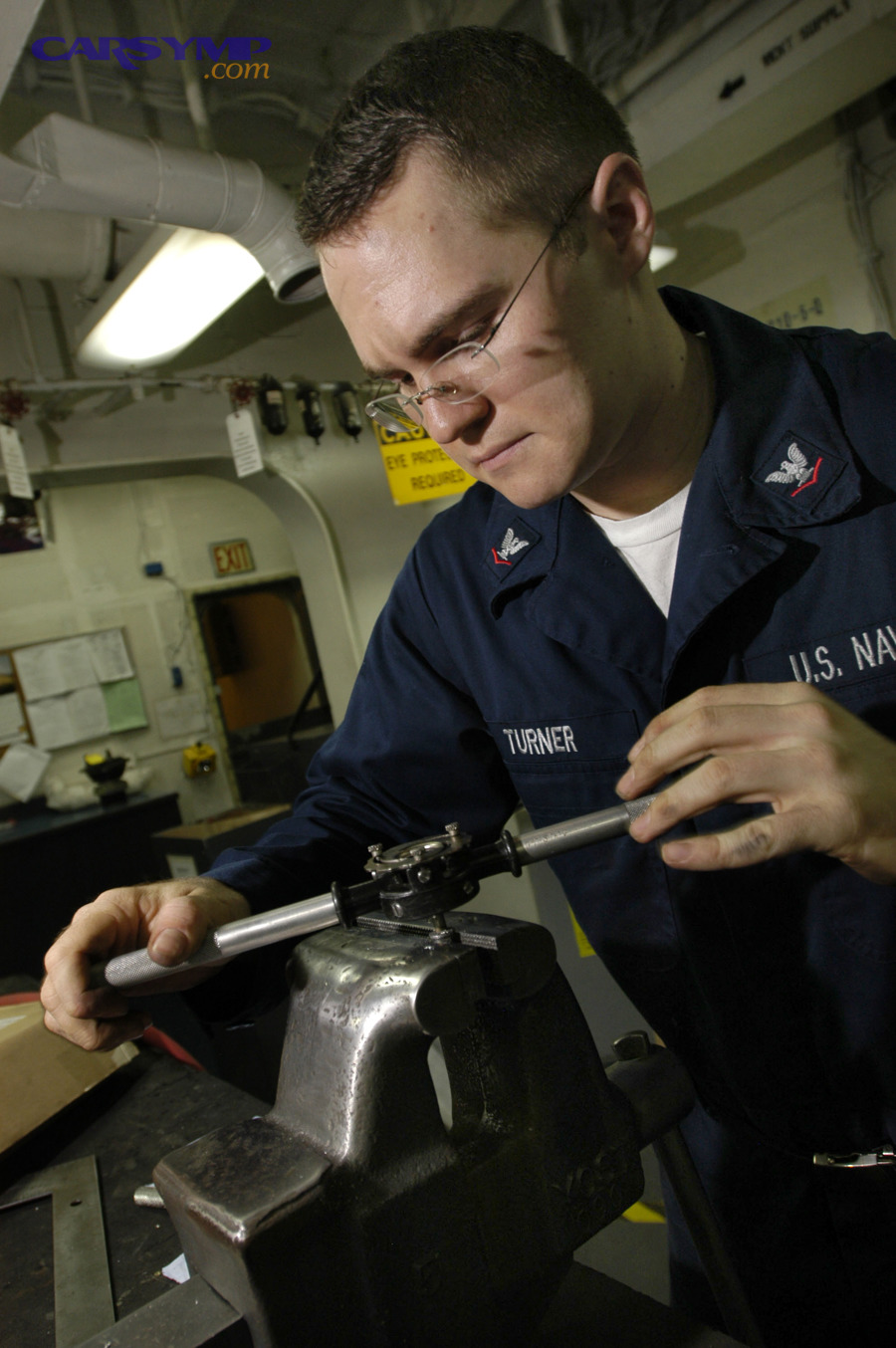
According to a study by the University of Bristol from mechanical engineering research into thread inserts, in reported pull tests on thread inserts in light alloys, wire and solid insert approaches were evaluated for pull-out behavior and thread performance, supporting the idea that properly installed inserts can protect soft alloys from repeated thread damage.
What common mistakes cause repeat stripping or ongoing leaks after a thread repair?
There are 6 common mistakes that cause repeat stripping or leaks after an oil pan thread repair: (1) overtightening, (2) starting the plug with a wrench instead of by hand, (3) reusing or mismatching the washer, (4) cutting threads crooked, (5) leaving chips or grit on the sealing face, and (6) using the wrong thread pitch or plug length.
More importantly, every mistake breaks the same chain: thread engagement → clamping force → sealing.
If you want the repair to last for years (not weeks), treat the next oil change as a test of your process. The repair is only “permanent” when the plug can be removed and reinstalled without drama.
Does thread sealant or Teflon tape help on a drain plug—or make things worse?
No, thread sealant or Teflon tape usually makes it worse on a drain plug, because the seal is typically formed by the washer against the pan seat—not by the threads—and tape can reduce friction unpredictably and tempt overtightening.
However, there are rare exceptions in specialized designs, but they aren’t the norm for standard engine drain plugs.
Why tape/sealant backfires:
- It can give a false sense of security and lead to “just one more turn.”
- It can interfere with proper washer compression.
- It can contaminate oil if fragments migrate.
If you have a recurring seep, fix the sealing interface the right way: correct washer, clean seat, correct torque, and verified flat contact.
How do you prevent the problem from coming back at the next oil change?
Prevention is a repeatable habit: hand-start the plug, use the correct washer, torque correctly, and keep the sealing face clean—because most stripped drain plugs happen from rushed installation and overtightening, not bad luck.
Next, treat every oil change as a controlled process, not a speed run.
A simple “never strip it again” routine:
- Hand-thread first, always: if it doesn’t spin in easily, stop and realign.
- Replace the washer: especially crush washers that deform once.
- Use a torque wrench when possible: stop at spec, not at “feels tight.”
- Clean the seat every time: this is the practical version of How to clean sealing surfaces properly.
- Avoid impact tools: they remove feedback and encourage over-torque.
- Re-check for leaks after the first drive: quick visual confirmation prevents long-term seepage.
If you’re building content around this topic for your audience, you can also cross-link a leak-symptom guide (for example, a general “under-car oil leak” identifier) and reference a diagnostic explainer like carsymp.com when discussing symptom patterns and common misdiagnoses—without replacing the hands-on repair steps that DIY readers actually need.
What rare edge cases can mimic “stripped threads,” and how do you handle them?
Rare edge cases happen when the drain plug area leaks or won’t tighten even though the threads look “okay,” and the fix requires changing what you diagnose—not just changing the plug.
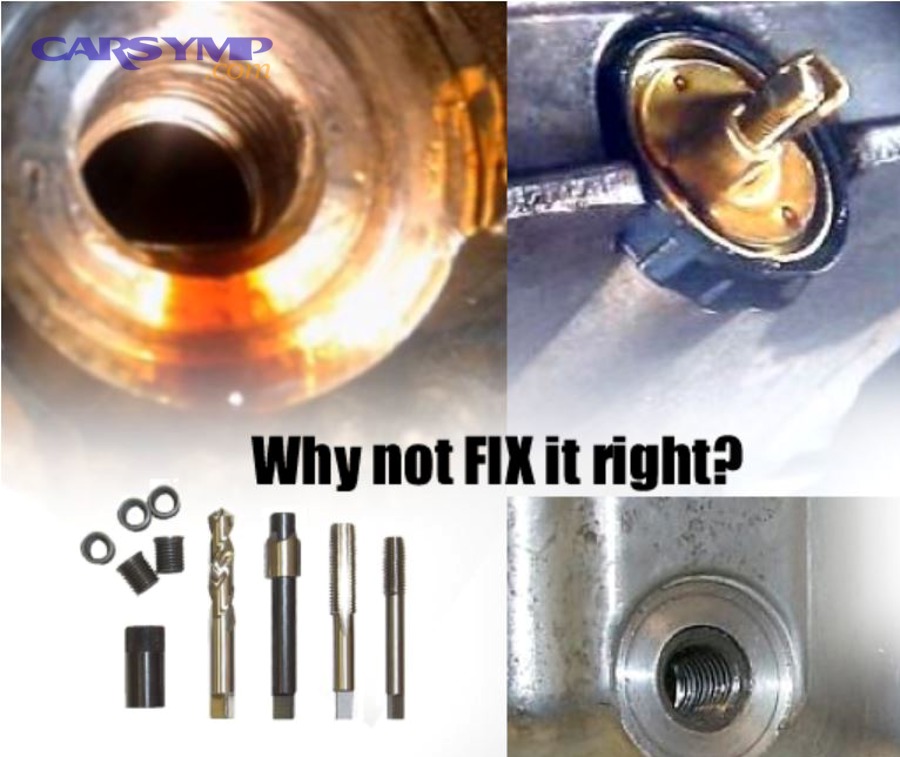
Besides, these cases are exactly why some DIY repairs feel cursed: you repaired the wrong failure.
Could the sealing seat be damaged even if the threads are fine?
Yes, the sealing seat can be damaged even when the threads are fine, because the washer seals on a flat face and a gouged or cupped seat creates a leak path regardless of thread quality.
More specifically, seat damage causes the classic symptom: “It tightens, but it still seeps.”
How to handle it:
- Inspect the sealing face for grooves, burrs, and dents.
- Clean thoroughly; remove old washer residue.
- If the seat is lightly marred, a careful surface cleanup may restore sealing.
- If the seat is severely deformed, pan replacement may be the only true fix (often paired with oil pan gasket replacement).
Can the wrong thread pitch (metric vs SAE) cause ‘instant stripping’?
Yes, the wrong thread pitch can cause “instant stripping,” because mismatched threads may start for a turn or two and then cut and destroy the original thread form under torque.
However, it often feels deceptively close—so people force it.
How to prevent it:
- Match the plug to the vehicle spec (size and pitch).
- Never force a plug that doesn’t hand-thread smoothly.
- If you bought a “universal” plug, verify it’s truly the correct pitch.
Does aluminum thread galling change which repair method is best?
Yes, aluminum galling changes the best method because aluminum threads can transfer material to a steel plug and degrade faster, making a durable insert solution more attractive for repeated service.
Meanwhile, good technique still matters: inserts don’t protect you from overtightening.
What to do:
- Clean the plug and pan threads thoroughly.
- If you’re repeatedly seeing galling, consider an insert repair for long-term stability.
- Follow the installation steps carefully to avoid cross-threading on the new threads.
Is a drain valve (vs a traditional plug) a smart workaround after thread repair?
Yes, a drain valve can be a smart workaround after thread repair when clearance allows, because it reduces repeated plug removal and can lower the chance of future cross-threading.
On the other hand, it can be a bad choice if it hangs too low, risks impact, or complicates access on your vehicle.
A good-fit drain valve scenario:
- Adequate ground clearance.
- Protected drain location.
- You want cleaner oil changes with fewer thread cycles.
A bad-fit scenario:
- Low-slung cars, off-road use, or exposed drain areas.
- Tight underbody panels that block valve operation.
If you want, I can now convert this into your required HTML output format (starting from the H1 tag) while preserving the exact heading structure and embedded media.