


Diagnosing a fluid leak under your vehicle comes down to three common culprits — the oil pan gasket, the axle seal, and the transmission cooler line. Each one holds a different fluid, fails in a different way, and leaves behind different clues. The good news is that with the right approach, a home mechanic can isolate the exact source without expensive diagnostic equipment. Understanding what you are looking at before touching a wrench saves you from replacing the wrong part and spending money you did not need to spend.
The first step in any leak diagnosis is knowing what each component actually does. The oil pan gasket seals the base of your engine, the axle seal prevents gear oil or transmission fluid from escaping where the axle shaft meets the differential, and the cooler lines carry hot ATF between the transmission and the radiator-mounted or standalone cooler. Because all three sit in the lower half of the vehicle and their fluids share overlapping drip zones, even experienced mechanics have misdiagnosed one for another. Knowing each component’s location and fluid type is the foundation that makes everything else possible.
Once you understand the components, the real diagnostic work begins with comparing how each leak behaves. Fluid color, smell, drip location, and whether the leak appears while parked or only while driving are four variables that, taken together, point unmistakably to one source over the others. A transmission fluid leak, for example, behaves very differently from an oil pan leak — one is gravity-fed and slow, the other is pressure-fed and fast. These behavioral differences are the core of any accurate DIY diagnosis.
After confirming the source, the urgency and cost picture becomes much clearer. A weeping oil pan gasket may give you weeks to schedule a repair, while a failing cooler line can empty your transmission in a single commute. To help you make that call confidently, this guide walks through every diagnostic step — from a first look on the driveway to UV dye confirmation — and closes with realistic repair cost estimates for each component so you know exactly what you are facing.
What Is a Fluid Leak from the Oil Pan, Axle Seal, or Cooler Line?
A fluid leak from the oil pan, axle seal, or cooler line is a failure of one of three distinct sealing components in the drivetrain that allows engine oil, gear oil, or automatic transmission fluid (ATF) to escape the system.
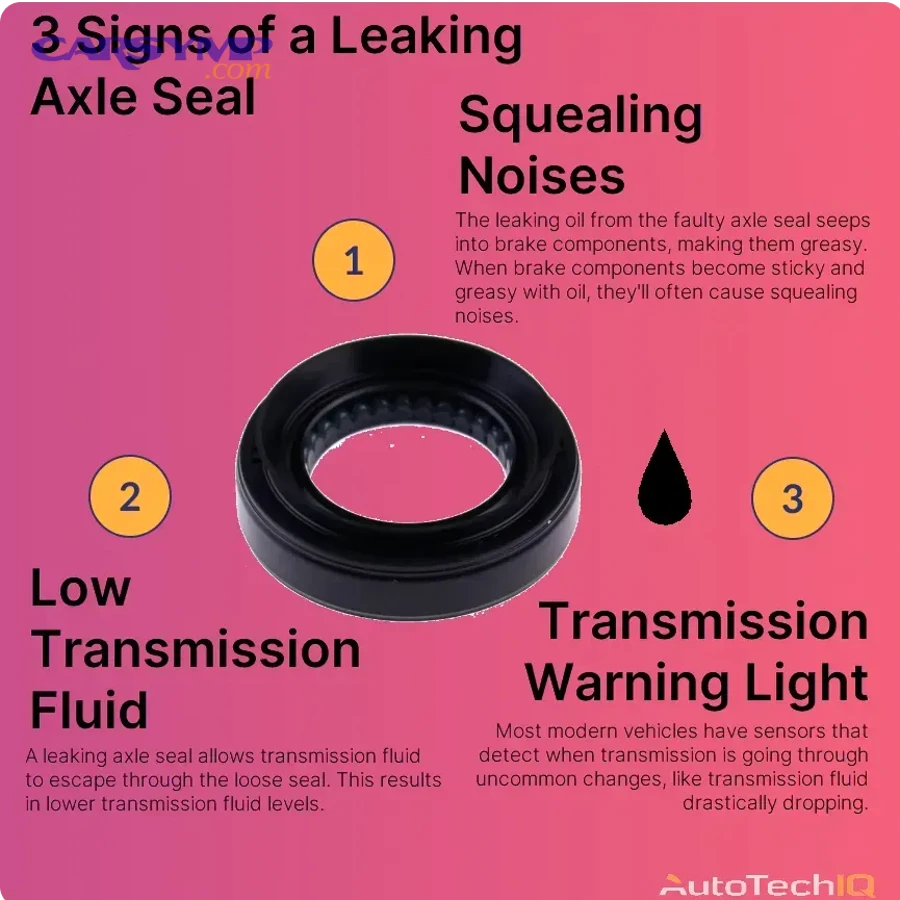
To better understand why these three are so frequently confused, it helps to examine each one individually — where it lives, what it seals, and what fluid it contains.
What Does an Oil Pan Gasket Do and Where Is It Located?
The oil pan is the steel or aluminum reservoir bolted to the very bottom of the engine block. It holds several quarts of engine oil that the pump circulates upward to lubricate the crankshaft, bearings, camshafts, and valvetrain. A rubber, cork, or molded silicone gasket seals the mating surface between the pan’s flange and the bottom of the engine block, keeping oil inside.
Over time, heat cycling — the repeated expansion and contraction of metal as the engine warms up and cools down — causes the gasket material to harden, compress, and eventually shrink away from the sealing surface. On older vehicles, pan bolts also loosen gradually due to vibration, which further compromises the seal. When the gasket fails, oil seeps through the gap around the pan’s perimeter, typically forming a slow, consistent drip that becomes a puddle on the driveway after the vehicle sits overnight.
What Does an Axle Seal Do and Where Is It Located?
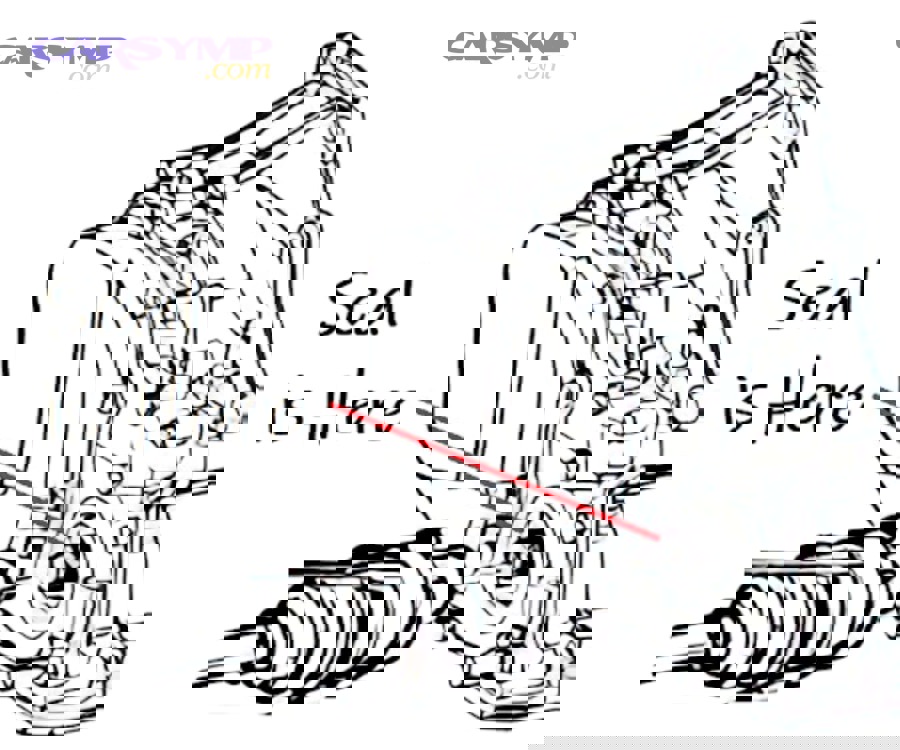
The axle seal is a circular rubber or silicone ring seated at the point where each axle shaft exits the differential housing or transaxle. Its job is to allow the axle to spin freely while maintaining a continuous contact barrier that keeps the gear oil or ATF inside the housing from leaking out along the shaft.
On rear-wheel-drive vehicles, axle seals are found at both ends of the rear axle tubes, near the wheels. On front-wheel-drive vehicles and AWD systems, they sit at the transaxle where each CV axle shaft inserts. Because the seal is in constant friction with a spinning shaft, wear is inevitable — particularly if the vehicle sits unused for long periods, which can cause the rubber to dry out and crack, or if the axle shaft develops a corrosion ridge that tears the seal’s lip.
What Do Transmission Cooler Lines Do and Where Are They Located?
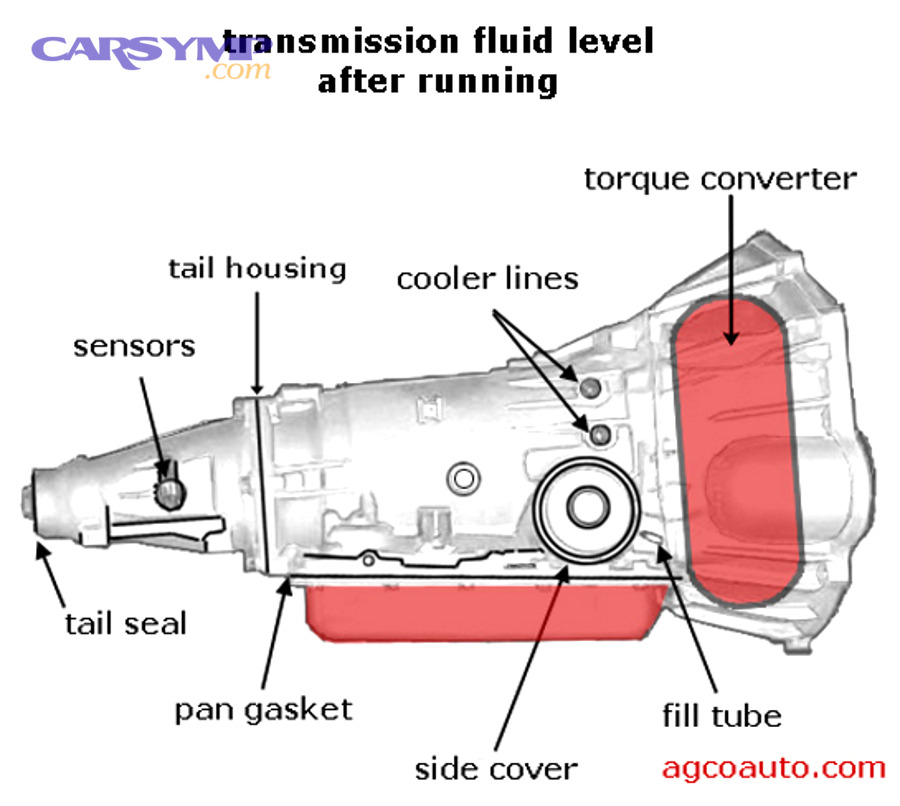
Transmission cooler lines are the steel, aluminum, or rubber-ended lines that carry hot ATF from the transmission to a cooler — either a tank integrated inside the radiator or a standalone external cooler — and back again. This continuous loop prevents the transmission from overheating under load.
The lines run along the vehicle’s frame rail and connect to the transmission and cooler via threaded fittings or quick-connect couplings. These connection points are the most common failure locations: road salt corrodes the metal fittings, and the rubber sections at each end crack and weep with age. Because ATF inside the cooler lines is pressurized whenever the engine is running, even a small crack or loose fitting can produce a surprisingly fast transmission fluid leak — far quicker than a gravity-fed pan gasket failure.
How Do You Tell the Difference Between an Oil Pan Leak, Axle Seal Leak, and Cooler Line Leak?
An oil pan leak wins on slow, gravity-fed drip behavior while parked; an axle seal leak is best identified by its location near the wheel end and gear-oil odor; and a cooler line leak is optimal to suspect when ATF appears along the frame rail or near the radiator and worsens while driving.
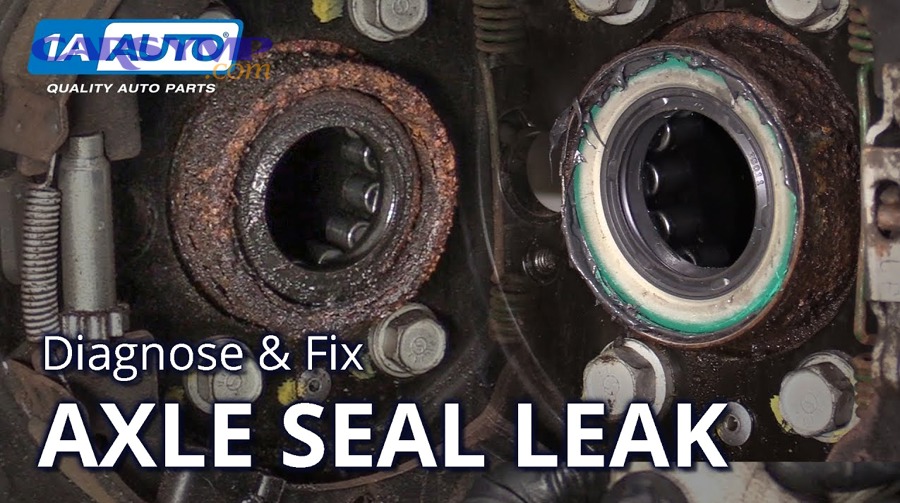
However, the challenge is that oil migrates. A leak originating at the front of the engine can travel rearward along the chassis and look exactly like a pan gasket failure. This is why comparing multiple diagnostic variables at once — fluid type, position, smell, and behavior — produces a reliable answer where any single clue alone would mislead you.
How Do Fluid Color and Smell Help Identify the Leak Source?
The single fastest first step in leak diagnosis is crouching down, looking at the puddle on the driveway, and identifying what you actually see and smell. Each fluid has a distinct profile that narrows the suspect list immediately.
Use the following ATF color and smell guide alongside engine oil characteristics as your first filter:
| Fluid | Color (Fresh) | Color (Aged/Degraded) | Smell |
|---|---|---|---|
| Engine oil (pan gasket) | Amber / golden | Dark brown to black | Slightly burnt, petroleum |
| Gear oil (axle seal) | Amber / light brown | Dark brown | Strong sulfur, rotten egg notes |
| ATF (cooler line / trans pan) | Bright red | Dark red to brown | Slightly sweet, chemical |
This table summarizes the three key fluid profiles you will encounter when diagnosing a leak. Bright red or pink fluid is almost certainly ATF — indicating a cooler line or transmission pan issue. A strong sulfur smell that stings your nose points to gear oil escaping from an axle seal. Dark, petroleum-smelling fluid pooling under the engine center is most consistent with engine oil from a pan gasket. If the fluid has already degraded and turned dark brown, smell becomes the more reliable identifier than color alone.
How Does Leak Location Under the Vehicle Point to the Source?
Leak location is the second major diagnostic variable, and it requires you to get under the vehicle and trace the fluid upward from where it drips — not from where it puddles.
- Oil pan gasket leak: Fresh oil appears along the perimeter edge of the pan, between bolt positions. The puddle on the ground forms centered beneath the engine, typically toward the middle or front of the vehicle depending on engine layout.
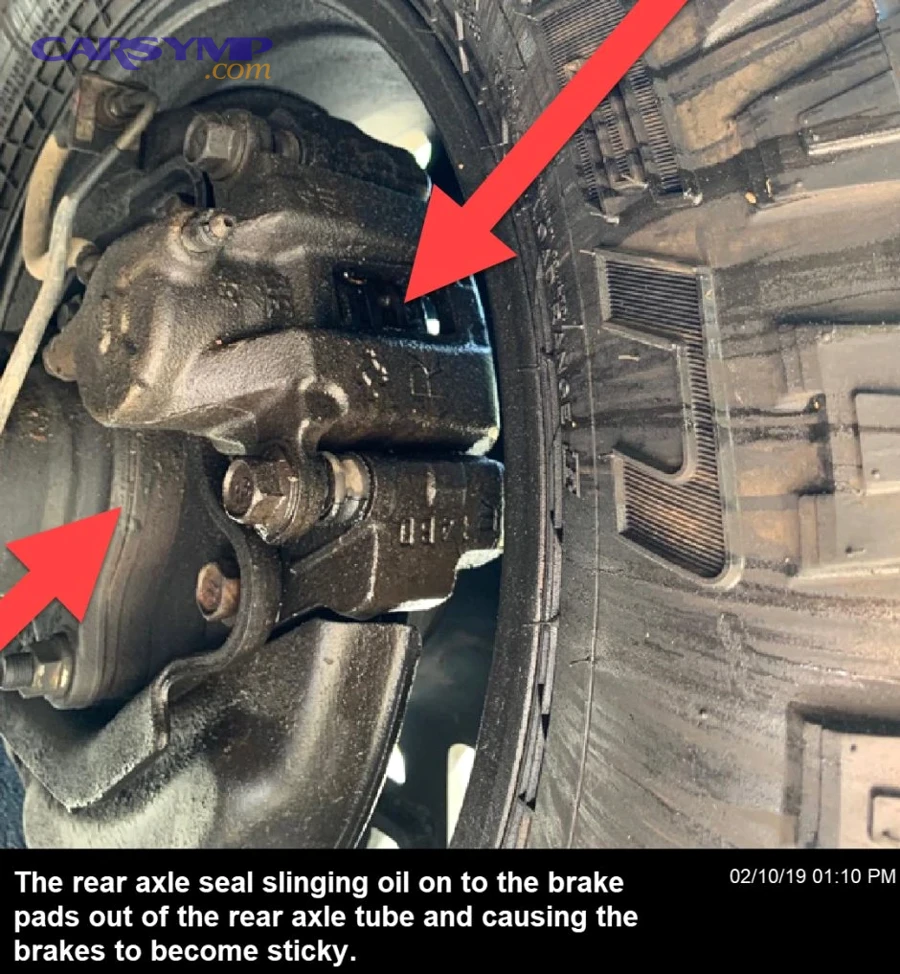
- Axle seal leak: Fluid collects on the inside of the wheel, on the backing plate behind the brake rotor or drum, or along the outer section of the axle tube. In severe cases, you will see fluid flung across the inner fender well or coating the brake shoes — a critical safety issue that demands immediate attention.
- Cooler line leak: Wetness appears along the frame rail where the lines run, at the fittings where the lines attach to the transmission, or at the radiator connection point near the front of the vehicle.
The most important rule here is to resist diagnosing from the puddle. According to experienced technicians at O’Reilly Auto Parts, a leak originating at the front crank seal can travel the entire length of the engine and drivetrain via airflow, appearing at the rear of the transmission bellhousing — a location that strongly suggests a rear main seal or pan gasket problem when the real source is completely different.
How Does Leak Behavior (Parked vs. Driving) Distinguish Each Source?
Leak timing — specifically, whether the leak is active while the vehicle sits still or only while it is in operation — is one of the most underutilized diagnostic clues available to a home mechanic.
- Oil pan gasket: Drips most actively while parked, particularly after the engine has been off for 30 minutes or more. As oil drains down from the engine’s upper components back into the pan, it pressurizes against the failing gasket and seeps through. This is why a pan gasket leak reliably produces driveway spots after overnight parking.
- Axle seal: Leaks more actively while driving. As the axle shaft spins, it generates heat inside the housing, expanding the fluid and increasing the pressure against the worn seal lip. A mild axle seal leak may leave nothing on the ground overnight but show fresh wetness on the backing plate after a 20-minute drive.
- Cooler line: Leaks most actively at operating temperature while the vehicle is running and the transmission is under load. ATF pressure inside the lines peaks during driving. When the vehicle is parked and cooled, pressure drops and the leak may slow to nothing, giving a false impression that the problem is minor or resolved.
What Does a Visual Inspection Reveal About Each Leak Type?
A hands-on visual inspection — performed after the vehicle has been cleaned and then driven to operating temperature — is the definitive technique for confirming your diagnosis before committing to a repair.
Step-by-step clean-and-recheck process:
- Raise and secure the vehicle on jack stands with proper safety equipment in place.
- Spray brake cleaner generously across the entire undercarriage — the pan, axle housings, frame rails, and cooler line runs — and wipe dry with clean rags or paper towels.
- Lower the vehicle and drive for 15–20 minutes under normal conditions, including some highway speed if safe.
- Return, re-raise the vehicle, and immediately inspect while components are still warm.
- Any fresh, wet fluid appearing on the previously dry surface is originating at or very near that point.
What to look for at each component:
- Oil pan: Wet bead of oil seeping from the gasket edge or from between bolt positions; may see a slight gloss on the pan surface just above the seep point.
- Axle seal: Fresh wet film on the inner face of the backing plate, on the axle tube near the wheel flange, or on the brake shoes if the seal has been leaking for some time.
- Cooler lines: Wet or crusty buildup at fitting connections; visible drip forming at the rubber-to-metal junction or at the radiator inlet/outlet.
How Do You Diagnose a Fluid Leak Step by Step at Home?
Diagnosing an undercarriage fluid leak at home involves four main steps — fluid identification, location tracing, clean-and-recheck inspection, and UV dye confirmation if needed — and can be completed reliably in one to two hours with basic equipment.
The following sections break this process down in full, from the tools you need before you start to the UV dye technique that resolves even the most ambiguous multi-source leaks.
What Tools Do You Need to Diagnose an Undercarriage Fluid Leak?
You do not need professional shop equipment to diagnose a fluid leak accurately. The following tools cover the full diagnostic workflow described in this guide:
Essential tools:
- Floor jack and a matched set of jack stands rated for your vehicle’s weight
- Bright LED flashlight or headlamp (the undercarriage is dark)
- Brake cleaner spray (1–2 cans)
- Clean white rags or paper towels (white makes fluid color easier to read)
- Nitrile gloves and safety glasses
Optional but highly recommended:
- UV/fluorescent leak detection dye kit specific to the fluid system you are investigating (engine oil dye, ATF dye, and gear oil dye are sold separately)
- UV blacklight flashlight (typically included with UV dye kits)
- Mirror on a telescoping handle for checking areas blocked by components
A critical safety note: never perform any inspection under a vehicle supported only by a floor jack. A floor jack is a lifting tool, not a support tool. Always transfer the vehicle’s weight to properly rated jack stands before going underneath.
What Is the Clean-and-Recheck Method for Leak Diagnosis?
The clean-and-recheck method is the single most reliable DIY approach for diagnosing any undercarriage fluid leak, and it works by eliminating all old accumulated fluid so that only fresh leakage from an active source remains visible.
The full process:
- Degrease thoroughly. With the vehicle raised and supported, spray brake cleaner across every surface in the leak zone — the oil pan and its gasket edge, both axle seals and their surrounding tubes, and the full run of both cooler lines including their fittings. Wipe everything completely dry with white rags. The undercarriage should look uniformly clean with no wet spots remaining.
- Drive to operating temperature. Lower the vehicle and drive for at least 15–20 minutes under conditions that include some acceleration and varied speeds. This ensures the engine oil reaches pressure and temperature, the axles rotate and heat up, and the ATF circulates through the cooler lines at normal operating pressure.
- Inspect immediately upon return. Re-raise the vehicle while components are still warm. Fresh fluid appears as a wet shine against the now-dry surrounding surfaces. Trace any wet surface upward toward the highest point you can find wetness — that is the origin point, not the lowest drip location.
- Mark and document. Before lowering the vehicle, use your phone to photograph every area showing fresh wetness. The photos help you communicate with a parts supplier or shop if needed and keep you anchored to the correct diagnosis if you second-guess yourself later.
How Do You Use UV Dye to Confirm a Fluid Leak Source?
UV dye is the tool of choice when the clean-and-recheck method produces an ambiguous result — either because the vehicle has multiple simultaneous leaks, or because the leak is slow enough that a single drive cycle does not produce enough fresh fluid to trace definitively.
The UV dye process:
- Select the correct dye. UV dye is system-specific. Engine oil dye goes into the crankcase with the engine oil. ATF dye goes into the transmission dipstick tube. Gear oil dye goes into the differential fill plug. Using the wrong dye in the wrong system will not show you anything useful — and adding fluid safely and with the correct type is essential here. Never add engine oil to a transmission or mix dye formulations.
- Add the dye per manufacturer instructions. Typically one half-ounce to one full ounce per system. Do not overfill the system when adding dye; account for the dye volume in the total fluid level.
- Drive 50–100 miles. The dye needs time and operating cycles to circulate fully and reach any active leak point. A single short drive is rarely sufficient.
- Scan with UV light in darkness or low light. Hold the UV blacklight 6–12 inches from surfaces in the suspect zone. Active leak paths will glow bright yellow-green against the dark metal background. The glow is unmistakable and reveals the exact origin point even when the surrounding area is contaminated with old fluid.
- Confirm and document before cleaning. Photograph the glowing leak path before wiping the area clean. The UV dye remains in the system and will continue to mark the leak on future inspections, which is useful if you need a second confirmation after an attempted repair.
Is It Safe to Drive With a Leaking Oil Pan, Axle Seal, or Cooler Line?
Yes, it is conditionally safe to drive short distances with a minor oil pan gasket leak if fluid levels are actively monitored — but no, driving with a leaking axle seal that has contaminated the brakes, or a failing cooler line losing ATF rapidly, is not safe and risks catastrophic mechanical failure or a fire hazard.
The urgency tier for each leak type is different, and understanding that difference is what determines whether you drive to the shop tomorrow or call for a tow today. Below, each component is assessed individually.
How Urgent Is an Oil Pan Gasket Leak — Can You Keep Driving?
An oil pan gasket leak carries low-to-moderate urgency in most cases, provided the seepage rate is slow and you check and maintain the engine oil level on a daily basis until the repair is made.
The actual danger is not the leaking gasket itself — it is running the engine low on oil. Engine oil pressure drops when the oil level falls below the minimum mark on the dipstick, and at critically low levels the crankshaft bearings and camshaft journals lose their lubrication film and begin to wear metal-on-metal within seconds of startup. Catastrophic engine failure from oil starvation can total a vehicle worth tens of thousands of dollars.
A practical rule of thumb: if you are losing less than one quart per 1,000 miles and you check the dipstick every morning before starting the engine, you have a manageable short-term situation. If you are losing a quart every few hundred miles, the repair window is short and the risk is real.
How Urgent Is an Axle Seal Leak — What Happens If You Ignore It?
An axle seal leak carries moderate-to-high urgency and should not be ignored for more than a few days once identified — particularly if there is any evidence that leaking fluid has reached the brake system.
Two separate failure chains make an axle seal leak dangerous. First, fluid loss from the differential or transaxle reduces the lubrication available to the ring and pinion gears and axle bearings. Running a differential low on gear oil causes these components to wear prematurely and eventually seize, which can lock the driven axle mid-corner — a dangerous situation at any speed. Second, and more critically, gear oil or ATF leaking from the axle seal can travel inward along the backing plate and saturate the brake shoes (on drum brake systems) or contaminate the brake pads and rotor on disc systems. Fluid-contaminated friction material loses most of its stopping power, dramatically extending braking distance and increasing the risk of a collision.
If you find fluid on the brake shoes or a greasy film on the inner face of the brake rotor, stop driving the vehicle immediately and arrange for a tow. Continuing to drive risks brake fade at exactly the moment you need stopping power most.
How Urgent Is a Cooler Line Leak — What Are the Risks?
A transmission cooler line leak carries high urgency and should be treated as an immediate repair regardless of how minor the drip appears at first inspection.
The pressure-fed nature of the cooler line system means that what begins as a small seep at a corroded fitting can progress to a full line failure in a short period of time — particularly as the metal fatigues further at operating temperature. Losing ATF rapidly starves the transmission of the hydraulic pressure it needs to shift, and automatic transmissions begin to slip, overheat, and sustain internal damage within miles of losing significant fluid. A Transmission fluid leak repair cost estimate for internal damage caused by running a transmission dry can reach several thousand dollars — far more than the cost of replacing a $30–$100 cooler line before it fails completely.
There is also a fire hazard dimension that makes cooler line leaks uniquely serious. ATF dripping onto a hot exhaust pipe or manifold can ignite. On vehicles where the cooler lines pass near exhaust routing, a line failure while driving represents a genuine risk of an underhood fire. This possibility alone justifies treating any identified cooler line leak as an urgent, same-week repair.
How Much Does It Cost to Fix an Oil Pan, Axle Seal, or Cooler Line Leak?
There are three main repair cost tiers for these leaks: an oil pan gasket repair runs $20–$400 depending on whether you DIY or use a shop; an axle seal replacement costs $15–$350 per side; and a cooler line repair ranges from $30–$600, with the higher end applying when the radiator-integrated cooler has been contaminated.
The following breakdown gives you realistic numbers for both the DIY path and the professional repair path, along with the key variables that push costs toward the higher end of each range.
What Is the Repair Cost for an Oil Pan Gasket Leak?
An oil pan gasket replacement is one of the more accessible DIY drivetrain repairs on most vehicles, though accessibility varies significantly by engine platform.
DIY cost: $20–$60
- Oil pan gasket or RTV sealant: $10–$30 (molded rubber gaskets cost more than cut gaskets or tube sealant)
- Fresh engine oil refill: $25–$50 depending on oil grade and quantity
- Brake cleaner and supplies: $5–$10
Shop cost: $150–$400
- Labor is the primary cost driver. On most front-wheel-drive engines and inline four-cylinder layouts, the pan is accessible with the engine in place and the repair takes two to three hours.
- On vehicles requiring differential or crossmember removal to access the pan — common on full-frame trucks and some four-wheel-drive platforms — labor time increases significantly and shop costs can reach the upper end of the range.
- A Fel-Pro one-piece molded gasket is the preferred replacement part among experienced DIYers for its consistent seal quality and reduced risk of a repeat leak.
What Is the Repair Cost for an Axle Seal Leak?
Axle seal replacement is moderately straightforward for a confident home mechanic and represents good DIY value because the parts are inexpensive and the labor involved — while significant — does not require specialized equipment on most vehicles.
DIY cost: $15–$50 per side
- Axle seal: $10–$25 (OEM or quality aftermarket)
- Gear oil refill: $10–$20 per quart (gear oils vary by viscosity and specification)
- Differential cover gasket or RTV (if the differential cover must be removed to disengage the axle): $5–$15
Shop cost: $150–$350 per axle side
- Labor involves removing the wheel and brake assembly, disengaging the axle shaft, removing the old seal, and pressing or driving the new seal into the housing.
- The critical variable that can escalate this repair is the condition of the axle shaft at the seal contact surface. If the shaft has developed a corrosion ridge or wear groove where it rides against the seal lip, the new seal will leak again immediately. In that case, the axle shaft must also be replaced — adding $80–$200 in parts and additional labor time to the total.
- When Adding fluid safely and correct type back into the differential or transaxle after the repair, always consult the vehicle’s service manual. Gear oil viscosity and friction modifier requirements vary by manufacturer and axle type, and using the wrong specification can cause clutch pack chatter in limited-slip differentials or accelerated wear in standard open differentials.
What Is the Repair Cost for a Transmission Cooler Line Leak?
Cooler line repair spans the widest cost range of the three components because the severity of the failure — and whether the transmission itself has been damaged by fluid starvation — dramatically affects the total bill.
DIY cost: $30–$100
- Replacement steel cooler line: $20–$60 depending on vehicle and line length
- Replacement rubber end sections or push-fit connectors: $10–$30
- ATF refill: $15–$40 depending on fluid specification (always use the manufacturer-specified ATF type — using the wrong fluid in a modern automatic transmission can damage solenoids and clutch packs)
Shop cost: $200–$600
- Line-only replacement at a shop is straightforward and typically falls in the $200–$350 range including fluid.
- If the vehicle uses a transmission cooler integrated inside the radiator — where the ATF tank sits within the radiator end tank — and that internal cooler has cracked and allowed coolant to mix with ATF, the repair scope expands dramatically. Coolant-contaminated ATF looks like a milky pink or light brown emulsion and causes catastrophic internal transmission damage if the vehicle is driven on it. This scenario pushes the transmission fluid leak repair cost estimate into the $500–$600 range for the cooler and flush alone, not counting any transmission internal repairs.
- A standalone external cooler is significantly cheaper to replace ($100–$200 in parts) than a radiator-integrated unit, which requires full radiator replacement ($200–$400) plus a complete transmission flush to purge any coolant contamination from the ATF circuit.
Advanced Leak Diagnosis: When the Source Is Still Not Clear
When standard visual inspection and the clean-and-recheck method fail to isolate the leak source, three specialized techniques — multi-source UV dye isolation, stop-leak additive evaluation, and load vs. idle behavior analysis — can resolve the most ambiguous cases a home mechanic will encounter.
This section shifts into the micro-diagnostic territory that matters most when you have cleaned the undercarriage twice, driven a test route twice, and still cannot point to a single confident origin.
How Do You Diagnose a Leak When Multiple Components Are Wet at the Same Time?
When multiple components show wetness after a clean-and-recheck cycle, the most likely explanation is not multiple simultaneous failures — it is one leak whose fluid has migrated across a wide area due to airflow and gravity.
Oil travels surprisingly far from its origin. A front crankshaft seal leak, for example, allows oil to drip onto the rotating harmonic balancer, which flings it rearward in a fine spray. That spray coats the oil pan, the transmission bellhousing, and the underside of the floor pan, making it appear as though the pan gasket is leaking when the pan itself is perfectly dry at its seam. A similar dynamic affects the transmission: ATF leaking from a cracked cooler line fitting near the front of the transmission can coat the pan’s underside and resemble a classic pan gasket weep.
The multi-source UV dye strategy resolves this by treating each fluid system as a separate diagnostic circuit. Add engine oil UV dye to the crankcase only. Drive 50 miles. Scan with UV light. If the glow traces back to the front of the engine near the crank, the front seal is your culprit regardless of where else the fluid appears. Only if no glow appears at the front should you add ATF dye to the transmission and repeat the cycle. Working one system at a time eliminates the ambiguity that confuses even experienced technicians on high-mileage vehicles with degraded fluid across multiple components.
Do Stop-Leak Additives Actually Work on Oil Pan, Axle Seal, or Cooler Line Leaks?
No, stop-leak additives do not provide a permanent fix for any of these three leak types, and their effectiveness even as a short-term measure varies significantly depending on which component is leaking and what mechanism is causing the failure.
Stop-leak products such as ATP AT-205 and Bar’s Leaks work by softening and slightly swelling aged rubber seal material, which can reduce minor seepage from a dried-out or lightly degraded axle seal or oil pan gasket. For a seal that has hardened with age but has not yet been physically torn or worn through, a stop-leak additive can reduce weeping enough to buy a few additional weeks of driving time before a proper repair is performed.
However, stop-leak products cannot seal mechanical damage. A corroded cooler line fitting, a cracked steel line body, or an axle seal that has been torn by a ridged axle shaft will not respond to a rubber-swelling additive because the leak path is metal-to-metal or a physical gap — not a degraded rubber interface. Adding stop-leak to a transmission with a mechanically failed cooler line creates a false sense of security while the vehicle continues to lose ATF at the same rate.
More importantly, some stop-leak formulations affect ATF viscosity when added to the transmission system. In modern automatic transmissions with electronically controlled solenoids and tightly toleranced valve bodies, viscosity changes can cause solenoids to stick, shift timing to go erratic, and clutch packs to slip. The risk is highest on late-model transmissions with many clutch packs and sensitive hydraulic controls. The general professional consensus is that stop-leak products are a bridge measure for a minor seep — never a substitute for an actual repair.
How Does a Leak Behave Differently Under Load vs. at Idle?
The timing and operating conditions under which a leak is most active reveals whether the sealing failure involves a pressurized system or a gravity-fed one — a distinction that directly identifies which component family is responsible.
Pressurized seals (rear main seal, input shaft seal, transmission output shaft seal) leak most actively at higher engine RPM and under load, when oil pump pressure is at its peak. If you notice that the leak worsens significantly after a highway drive compared to a short low-speed trip, the failure is most likely in a pressurized seal rather than a static gasket. The rear main crankshaft seal is the classic example: it may show minimal drip at idle but spray oil onto the flywheel and bellhousing floor at highway RPM.
Gravity-fed seals (oil pan gasket, differential cover gasket) leak most when the engine is off and the fluid is pooling at the lowest point of the system with only the weight of the fluid above it generating pressure. Checking the driveway spot after an eight-hour overnight park and comparing it to the spot after a 30-minute drive gives you a clear signal: if the overnight spot is larger, the leak is gravity-fed, pointing to a static gasket. If the post-drive area is wetter, the leak is pressure-related.
Cooler lines behave uniquely because their pressure is determined by transmission fluid pump output, which peaks during driving under load. A cooler line that appears completely dry after the vehicle sits overnight but shows active dripping after a 20-minute mixed-speed drive is consistent with a pressurized leak at a fitting or line crack that the fluid pressure forces open during operation.
When Should You Take the Vehicle to a Shop Instead of Diagnosing It Yourself?
You should take the vehicle to a professional shop when the leak originates inside the transmission bellhousing, when UV dye scanning has failed to isolate a single source after two test cycles, or when there is any evidence of brake system contamination from an axle seal leak.
Several leak types fall outside the practical scope of DIY diagnosis and repair. The torque converter seal and transmission input shaft seal both sit inside the bellhousing where the transmission meets the engine, and confirming a leak from either requires separating the transmission from the engine — a major undertaking requiring specialized lifting equipment and transmission jack support. Attempting this repair without the correct tools introduces significant risk of transmission housing damage, fluid spills, and incorrect reassembly of the torque converter.
Similarly, if an axle seal leak has been active long enough to saturate brake shoes or contaminate brake pads, the brake system requires a professional assessment before the vehicle returns to road use. A shop can pressure-test the brake hydraulic system, inspect all four corners for contamination, and confirm that the stopping power is fully restored after component replacement — a level of verification that is difficult to achieve with driveway tools.
The general decision rule: if the leak requires transmission removal, engine removal, or involves a compromised safety system like the brakes, invest in a professional diagnostic fee ($80–$150 at most independent shops). The fee is trivial compared to the cost of an incorrect DIY repair on a major drivetrain component.