


Low ATF is one of the most silent and destructive threats to your vehicle’s transmission. When automatic transmission fluid drops below the required level, the entire system loses its ability to lubricate, cool, and generate hydraulic pressure — triggering a chain reaction that leads directly to overheating and gear slippage. Understanding this connection is not optional; it is the first line of defense against a repair bill that can exceed several thousand dollars.
The damage caused by insufficient ATF follows a precise and predictable escalation. Heat builds rapidly inside the transmission housing when fluid volume is too low to absorb and carry away thermal energy. At the same time, gear engagement becomes unreliable as hydraulic pressure drops, causing the telltale slipping sensation where engine RPMs climb while vehicle speed stays flat. Both symptoms — overheating and slippage — are direct consequences of the same root problem: not enough fluid doing too much work.
Diagnosing and fixing low ATF requires more than simply topping off the dipstick. The condition and quality of the remaining fluid matter as much as the volume. Degraded, burnt, or contaminated ATF can mimic low-fluid symptoms even when the level appears normal, which means every driver must understand both the quantity and the quality dimension of transmission fluid health.
Beyond basic fluid management, a small number of technical factors — including transmission type, solenoid condition, and auxiliary cooling equipment — can significantly amplify or mask the effects of low ATF. Next, this guide walks through every layer of that problem, from the fundamental role ATF plays in transmission function, through every symptom, cause, and fix, to the advanced scenarios that experienced drivers and technicians need to understand.
What Is ATF and Why Is It Critical to Transmission Health?
ATF, or Automatic Transmission Fluid, is a specialized hydraulic and lubricating fluid that performs three simultaneous and non-negotiable functions inside every automatic transmission: it lubricates moving parts, dissipates heat, and generates the hydraulic pressure that physically engages gears. No other fluid in a vehicle carries this triple responsibility in a single system.
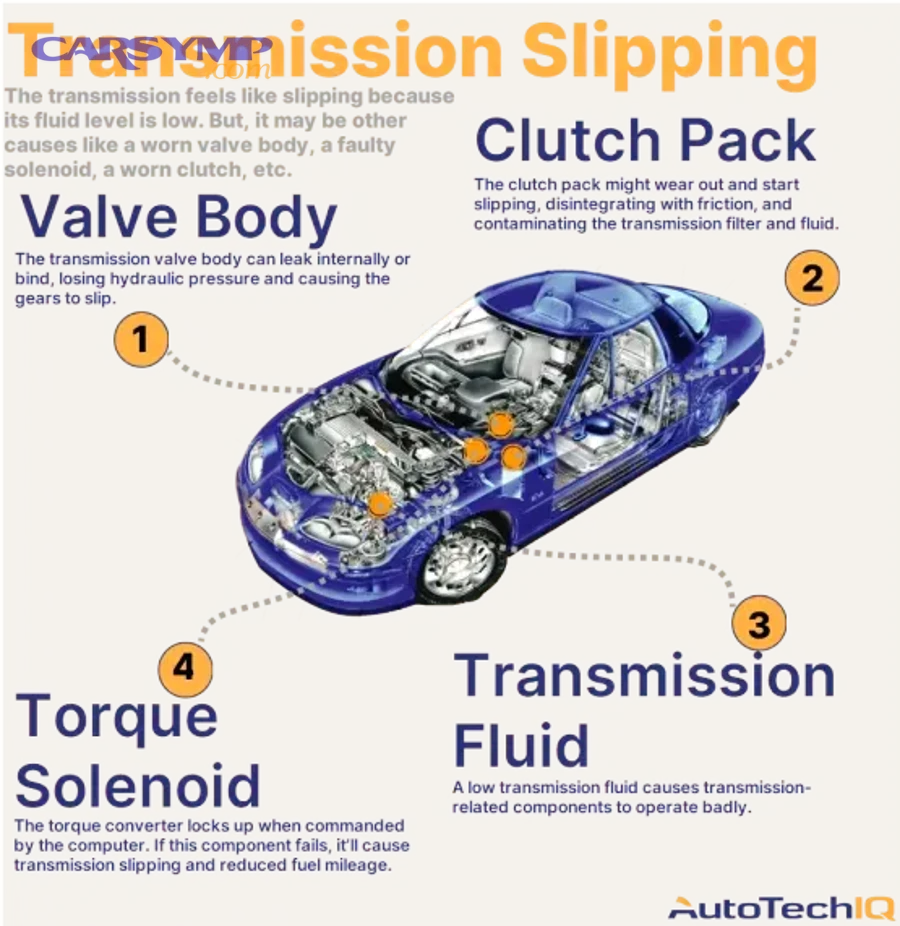
To better understand why a drop in ATF level causes such rapid and severe consequences, it helps to examine each of those three functions in detail.
How Does ATF Lubricate and Cool the Transmission?
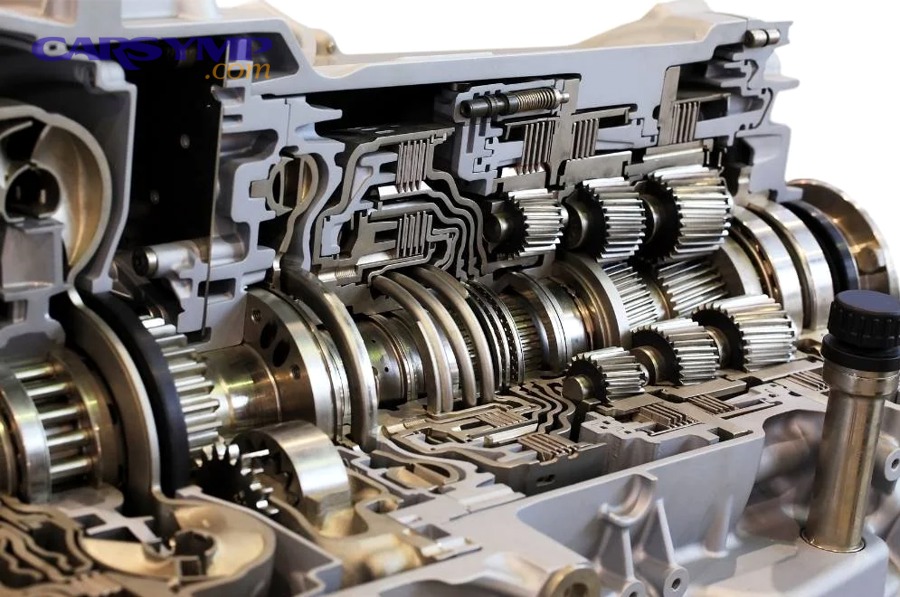
ATF lubricates the transmission by forming a continuous protective film between all metal-to-metal contact surfaces inside the housing. This includes the clutch packs, planetary gear sets, bushings, thrust washers, and bands that work together to select and hold each gear ratio.
Specifically, the fluid prevents direct contact between these components. Without that film, metal grinds against metal at high speed and under significant load, generating friction and heat far beyond what the system is designed to tolerate. The lubrication function is therefore inseparable from the thermal management function: less lubrication means more friction, and more friction means more heat.
On the cooling side, ATF acts as a heat-transfer medium. As it circulates through the transmission, it absorbs thermal energy from hot components and carries that heat out of the housing toward the transmission cooler — typically a dedicated cooler built into the vehicle’s radiator or an auxiliary unit mounted at the front of the engine bay. The fluid then releases that heat, drops in temperature, and returns to the transmission to repeat the cycle.
The safe operating temperature range for most ATF is between 175°F and 200°F (79°C–93°C). The following table summarizes what happens to transmission components as temperature rises beyond that threshold:
| ATF Temperature | Effect on Transmission |
|---|---|
| Below 160°F (71°C) | Fluid too thick; poor lubrication and sluggish shifts |
| 175°F–200°F (79°C–93°C) | Optimal operating range |
| 220°F (104°C) | Varnish begins forming on metal surfaces |
| 240°F (116°C) | ATF oxidizes and loses viscosity; clutch wear accelerates |
| 260°F (127°C) | Seals begin to harden and crack; internal leaks develop |
| 295°F (146°C) | Complete ATF breakdown; clutch material burns |
This temperature ladder illustrates why even short periods of overheating accumulate damage over time — each episode pushes internal components closer to irreversible failure.
What Role Does ATF Play in Hydraulic Pressure and Gear Engagement?
ATF is the hydraulic medium that makes gear engagement physically possible in an automatic transmission. Unlike a manual transmission, which uses a direct mechanical linkage to change gears, an automatic relies entirely on pressurized fluid routed through a valve body to actuate clutch packs and bands that lock specific gear ratios into place.
More specifically, when the transmission control module (TCM) commands a gear change, it directs ATF through a network of passages in the valve body, opening solenoid-controlled valves that route pressurized fluid to the appropriate clutch pack. That fluid pressure squeezes the clutch plates together, creating the friction coupling that locks the gear and transmits engine torque to the driveshaft.
The torque converter — the fluid coupling that connects the engine to the transmission — also depends entirely on ATF to form its hydraulic circuit. Rotating components inside the converter create a fluid vortex that transfers rotational energy from the engine flywheel to the transmission input shaft. Without sufficient ATF volume and pressure, this coupling weakens, the converter slips internally, and power transfer becomes inefficient and inconsistent.
This hydraulic dependency explains precisely why low ATF causes gear slippage. When fluid volume drops, pressure in the valve body drops with it. Clutch packs no longer receive full clamping force and begin to slip under load — exactly the sensation of engine RPMs rising without a corresponding increase in vehicle speed.
Does Low ATF Cause Transmission Overheating?
Yes, low ATF directly and reliably causes transmission overheating because insufficient fluid volume reduces the system’s heat absorption and dissipation capacity, allowing temperatures to escalate rapidly beyond the safe operating threshold of 200°F.
This is the most immediate and destructive consequence of running low on transmission fluid, and it deserves a thorough understanding.
What Are the Warning Signs That Your Transmission Is Overheating?
There are six primary warning signs that your transmission is overheating, and recognizing them early is the difference between a fluid top-off and a full transmission rebuild. These symptoms appear in a rough progression from mild to severe:
- Burning smell: The earliest thermal warning. Overheated ATF produces a sharp, acrid odor distinct from engine oil or brake smells. Degrading clutch material and hardening seals contribute an additional burnt rubber note.
- Transmission over-temperature warning light: Many modern vehicles include a dedicated transmission temperature light on the dashboard. This illuminates when internal temperature exceeds the manufacturer’s defined threshold and should be treated as an emergency signal.
- Check Engine Light (CEL): The CEL connects to transmission temperature sensors in most vehicles built after 1996. A CEL triggered by transmission codes does not always mean overheating, but combined with other symptoms, it confirms thermal stress.
- Dark, burnt-smelling ATF on the dipstick: Healthy ATF is translucent and bright red. Fluid that has been thermally degraded turns dark brown or black and carries a burnt odor. This condition indicates the fluid has already lost its cooling and lubricating effectiveness.
- Delayed or erratic gear shifts: As ATF breaks down under heat, its viscosity decreases and its ability to maintain consistent hydraulic pressure drops. Shifts become hesitant, harsh, or unpredictable.
- Sluggish acceleration or loss of power: When the torque converter slips due to insufficient fluid temperature management, power delivery from the engine to the wheels weakens noticeably.
If two or more of these symptoms appear simultaneously, the correct response is to stop the vehicle safely, allow the transmission to cool for a minimum of 30 minutes, and seek professional diagnosis before driving further.
What Happens to the Transmission If Overheating Is Ignored?
Ignoring transmission overheating initiates a damage cascade that accelerates with every mile driven. The progression moves through five distinct stages, each more expensive to repair than the last.
Stage 1 — Friction plate glazing: Overheated clutch packs develop a smooth, hardened glaze on their friction surfaces. Glazed plates lose grip and begin slipping under load even after the fluid cools, meaning the symptom persists after the root cause is addressed.
Stage 2 — Seal hardening and cracking: The rubber seals throughout the transmission are formulated to remain pliable within the normal operating temperature range. Sustained heat above 260°F causes them to harden, shrink, and crack, leading to internal fluid leaks that further reduce hydraulic pressure.
Stage 3 — Solenoid failure: Transmission solenoids are electro-hydraulic valves that regulate fluid flow to clutch packs. Heat exposure degrades the plastic components and winding insulation inside solenoids, causing erratic operation or complete failure.
Stage 4 — Valve body damage: The valve body — the aluminum manifold through which all hydraulic fluid is routed — can warp under extreme thermal stress, causing fluid to bypass intended passages and disrupting the entire shift sequence.
Stage 5 — Complete transmission failure: The end state of unchecked overheating is total mechanical breakdown. Bearings seize, gear teeth fracture, and clutch packs fuse. At this stage, the only option is a full rebuild or replacement, typically costing between $3,000 and $8,000 or more depending on vehicle make and model.
The critical insight here is that heat damage is cumulative. Even moderate, repeated overheating episodes that never trigger a warning light will shorten transmission lifespan significantly over time.
Does Low ATF Cause Gear Slipping?
Yes, low ATF causes gear slipping because insufficient fluid volume reduces hydraulic pressure in the valve body below the threshold needed to fully engage and hold clutch packs in the selected gear ratio.
Gear slippage is both one of the earliest detectable symptoms of low ATF and one of the most dangerous conditions to continue driving through.
What Does Transmission Slipping Feel and Sound Like?
Transmission slipping produces a distinctive set of sensations and sounds that most drivers describe as confusing or alarming the first time they encounter them. The clearest sign is the disconnect between engine behavior and vehicle response: the engine revs freely and the tachometer needle climbs, but the vehicle accelerates weakly or not at all. This happens because the clutch pack has lost its grip on the gear and the engine’s power is spinning through a slipping connection rather than being transferred to the wheels.
More specifically, drivers experiencing gear slippage commonly report:
- Automatic transmissions: A soft, rubbery feeling during acceleration; unexpected upshifts or downshifts without driver input; a momentary hesitation or “flare” where the engine note rises sharply before the gear catches; weak or soft shift engagement when moving from Park into Drive or Reverse (2–3 second delay).
- Manual transmissions: Slipping occurs less immediately in manuals because gear engagement is mechanical rather than hydraulic. However, low ATF in a manual application causes overheating that eventually melts gear synchronizers and causes grinding or inability to hold gears under load.
On the acoustic side, gear slippage is frequently accompanied by a whining or humming sound from the torque converter as it struggles to maintain coupling under low fluid pressure, and occasionally by a rhythmic clunking if the torque converter lockup clutch is cycling on and off erratically.
What Are All the Symptoms of Low ATF Drivers Should Know?
There are five symptom categories associated with low ATF, spanning thermal, mechanical, sensory, visual, and electronic signals. Understanding all five categories allows drivers to identify a low-fluid situation before it escalates to gear slippage or overheating.
The following table organizes all key symptoms by category for quick reference:
| Symptom Category | Specific Symptoms |
|---|---|
| Thermal | Burning smell from engine bay; transmission over-temp warning light; visible smoke in severe cases |
| Shifting | 2–3 second delay engaging Drive or Reverse; harsh or jerky shifts; gear slippage; unresponsive gears at high mileage |
| Sensory | Grinding or clunking during gear changes; whining or humming at highway speed; rhythmic pounding from torque converter area |
| Visual | Bright red or brown fluid puddle under parked vehicle (transmission fluid leak); dark or black fluid on dipstick |
| Electronic | Check Engine Light illuminated; transmission warning light on; OBD2 scan codes related to transmission pressure or temperature sensors |
Multiple symptoms appearing simultaneously — particularly any combination of a burning smell, delayed shifts, and a warning light — constitute an emergency requiring immediate attention. Driving through these combined signals risks crossing from a recoverable fluid issue into irreversible mechanical damage.
What Causes ATF to Run Low in the First Place?
There are two primary causes of low ATF: external fluid leakage and internal fluid degradation. Unlike engine oil, which gradually burns off through normal combustion processes, ATF is a sealed-system fluid designed to maintain consistent volume throughout the vehicle’s service life. A measurably low ATF level is therefore always a symptom of an underlying problem that must be identified and resolved — not simply topped off and ignored.
Is a Transmission Fluid Leak the Most Common Cause of Low ATF?
Yes, a transmission fluid leak is the most common cause of low ATF, accounting for the majority of low-fluid diagnoses across all vehicle types and model years. Leaks develop from multiple locations within the transmission system, and identifying the specific source is essential before any fluid top-off will provide lasting benefit.
The most common leak origins include:
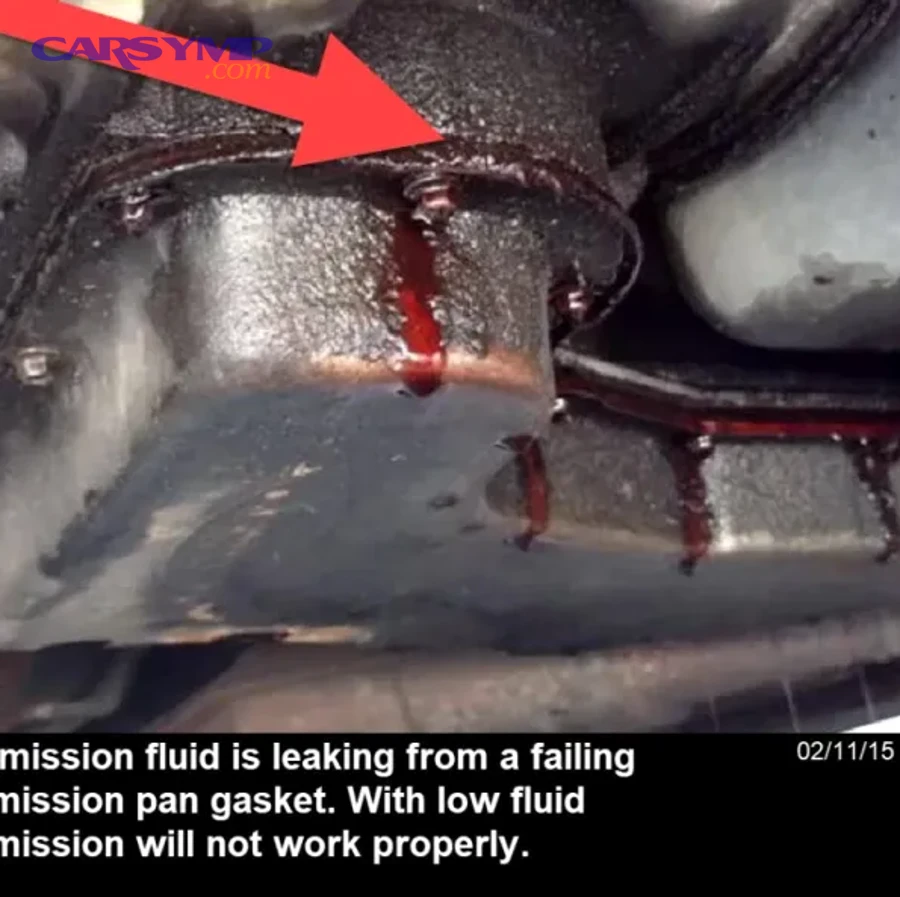
- Pan gasket deterioration: The transmission pan sits at the bottom of the housing and is sealed by a gasket that degrades over time through thermal cycling and vibration. A weeping pan gasket produces a slow, consistent drip of ATF onto the ground beneath the vehicle.
- Input and output shaft seals: The rubber seals around the transmission input shaft (connecting to the torque converter) and output shaft (connecting to the driveshaft) are among the highest-wear sealing surfaces in the system. When they fail, fluid escapes along the rotating shaft.
- Cooler line fittings: The metal or rubber lines that carry ATF from the transmission to the cooler connect via press-fit or threaded fittings that can loosen or crack over time, producing leaks that range from minor seeping to significant fluid loss.
- Transmission pan damage: Road debris, aggressive off-road driving, or improper jack placement can crack or puncture the transmission pan, causing rapid fluid loss.
A transmission fluid leak is identifiable by its visual signature: the fluid is typically bright red when fresh (deepening to brown as it ages and oxidizes), has a slightly sweet petroleum smell, and will appear as a puddle or stain beneath the transmission area of the vehicle — typically centered under the passenger compartment rather than the engine itself.
When a leak indicates internal transmission damage, the situation becomes significantly more serious. Pink or foamy ATF — fluid that has taken on a milkshake-like appearance — signals that engine coolant has entered the transmission through a failed cooler inside the radiator. This type of contamination destroys the lubricating and hydraulic properties of ATF almost immediately and requires urgent professional intervention, not just a fluid change.
Can you drive with a transmission fluid leak? The answer depends entirely on severity. A minor seep from a pan gasket may allow short-distance, low-load driving while a repair is arranged. However, any leak significant enough to lower the fluid level below the minimum mark on the dipstick makes the vehicle unsafe and potentially undrivable. Continuing to operate with active fluid loss guarantees the overheating and slippage symptoms described throughout this article, and increases the probability of catastrophic transmission failure with every mile driven.
Can Old or Degraded ATF Behave Like Low ATF?
Yes, severely degraded ATF can produce symptoms virtually identical to low ATF — including overheating and gear slippage — even when the fluid volume is at the correct level on the dipstick. This is one of the most frequently misunderstood aspects of transmission maintenance, and it leads many drivers to overlook fluid condition in favor of fluid quantity alone.
ATF contains two categories of additives that degrade over time and through thermal stress:
Viscosity index improvers are polymer additives that keep ATF at a consistent, workable thickness across a wide temperature range. As these polymers shear apart under mechanical stress and heat, the fluid becomes thinner at operating temperature, reducing its ability to maintain hydraulic pressure in the valve body. The result is the same pressure-drop-induced slippage that occurs when fluid volume is simply too low.
Friction modifiers are chemical compounds that control the engagement behavior of clutch packs — allowing them to grab smoothly and hold firmly under load. When friction modifiers deplete, clutch engagement becomes erratic: plates may slip on initial engagement or fail to hold under sustained torque load, mimicking the slippage symptoms of low fluid pressure.
Visually, degraded ATF transitions from its healthy translucent red to a progressively darker brown or black color, often accompanied by a distinct burnt odor. Any ATF displaying these characteristics should be treated as functionally depleted regardless of volume. The appropriate response is a full fluid flush and filter replacement, not a top-off with fresh fluid.
How Do You Check and Fix Low ATF?
Checking and fixing low ATF involves three sequential steps — inspecting the fluid level and condition, determining whether a top-off or full flush is required, and taking immediate corrective action if the transmission is already exhibiting overheating or slippage symptoms — with an expected outcome of restored fluid pressure, normalized operating temperature, and smooth gear engagement.
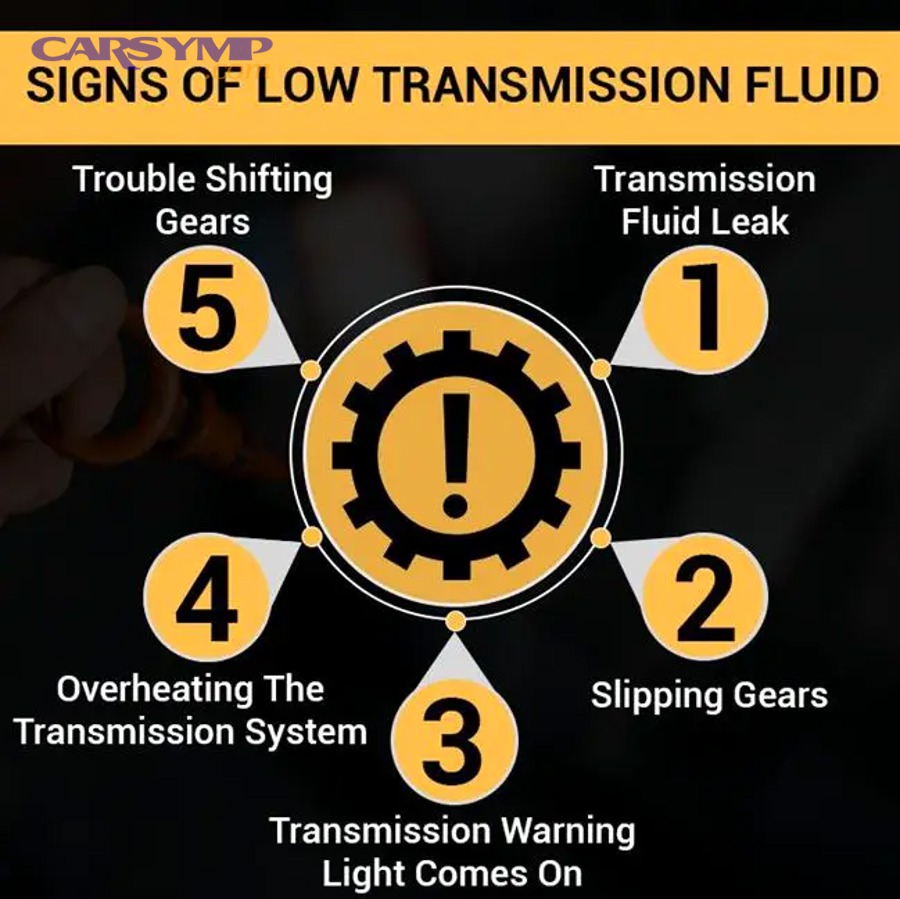
Below is a structured walkthrough of each step.
How Do You Check Your Transmission Fluid Level and Condition?
Checking ATF level and condition is a straightforward process on most vehicles, though it requires the engine to be warm and running for an accurate reading.
Step-by-step ATF check procedure:
- Drive the vehicle for 10–15 minutes to bring the transmission to normal operating temperature.
- Park on a level surface and engage the parking brake.
- With the engine running and the transmission in Park (or Neutral, per your owner’s manual), locate the ATF dipstick. On most rear-wheel-drive vehicles, it is positioned toward the rear of the engine bay near the firewall; on many front-wheel-drive vehicles, it is near the transaxle on one side of the engine.
- Pull the dipstick out, wipe it clean with a lint-free cloth, reinsert it fully, then pull it out again to read the level.
- The fluid should fall between the MIN and MAX (or COLD and HOT) markers. Any reading below the minimum line indicates a low-fluid condition requiring attention.
- While the dipstick is out, inspect the fluid using the color and odor guide below.
ATF condition guide:
| Fluid Appearance | Odor | Condition | Action Required |
|---|---|---|---|
| Translucent, bright red | Mild petroleum | Healthy | None — maintain regular change interval |
| Light pink, foamy | Sweetish but off | Coolant contamination | Urgent professional diagnosis |
| Dark red to brown | Normal to slightly burnt | Aging — approaching end of service life | Plan fluid flush at next service |
| Dark brown to black | Clearly burnt | Thermally degraded | Immediate full flush required |
Important note on sealed transmissions: A growing number of modern vehicles — particularly European makes and some Asian brands — are fitted with sealed transmissions that have no accessible dipstick. These units require fluid level checks using a fill plug procedure performed on a lift at a shop. If your vehicle has no visible ATF dipstick, do not attempt to check or add fluid without consulting your owner’s manual or a qualified transmission technician.
When Should You Top Off ATF vs. Do a Full Transmission Fluid Flush?
Topping off ATF is appropriate when the fluid level is slightly below the minimum mark and the fluid itself is still clean, translucent, and red with no burnt odor. In this scenario, adding the correct fluid type to bring the level back to the full mark restores hydraulic pressure and cooling capacity quickly. However, this is a temporary measure — the underlying cause of the fluid loss (almost always a leak) must be diagnosed and repaired, or the level will drop again.
A full transmission fluid flush is required in the following situations:
- The fluid is dark brown, black, or has a burnt odor regardless of fluid level
- The fluid appears pink or foamy (coolant contamination — requires immediate professional service)
- The vehicle has reached or exceeded the manufacturer’s recommended flush interval (typically every 30,000 to 60,000 miles, though some manufacturers specify longer intervals with synthetic ATF)
- The transmission has been operated at high temperatures, such as extended towing or driving in mountainous terrain
- Symptoms of slippage or overheating are present even after a fluid top-off
Critical caution on fluid type: ATF is not a universal fluid. Using an incompatible type can cause immediate seal damage, clutch slippage, or solenoid malfunction. Always verify the specific ATF specification required by your vehicle’s manufacturer before adding any fluid. Common specifications include Dexron VI (GM), Mercon LV (Ford), ATF+4 (Chrysler/FCA), and Toyota WS, each with distinct chemical formulations that are not interchangeable.
What Should You Do Immediately If Your Transmission Is Overheating or Slipping?
If your transmission is actively overheating or slipping, the correct immediate response follows five steps in strict sequence to prevent further damage.
Step 1 — Stop the vehicle safely. Pull off the road at the earliest safe opportunity. Continuing to drive through active overheating or slippage is the single most damaging thing a driver can do. Each additional mile under these conditions deepens the damage described in the overheating cascade section above.
Step 2 — Shift to Neutral or Park and allow the engine to idle. Do not shut the engine off immediately if the transmission is overheating — idling allows the cooling system to continue circulating coolant and helps dissipate heat more quickly than a cold shutdown.
Step 3 — Allow a minimum cooling period of 30 minutes before checking fluid or attempting to drive further. Checking ATF level on a severely overheated transmission produces inaccurate readings as the expanded hot fluid can show a falsely high level.
Step 4 — Check fluid level and condition using the procedure outlined above. If the fluid is low, adding the correct ATF type may be sufficient to restore basic function for a short, low-load drive to a nearby service facility. If the fluid is burnt, foamy, or at a normal level but symptoms persist, adding more fluid will not resolve the underlying mechanical issue.
Step 5 — Seek professional diagnosis before resuming normal driving. A qualified transmission specialist should perform an OBD2 scan for transmission fault codes, conduct a hydraulic pressure test, and inspect for leaks. Symptoms that persist after a fluid correction indicate a mechanical or electrical fault — such as a failed solenoid or worn clutch pack — that requires workshop repair.
Beyond Low ATF: Advanced Factors That Worsen Transmission Overheating and Slippage
While low ATF is the single most common cause of transmission overheating and slippage, several additional technical factors can compound the problem, mask its symptoms, or make the vehicle more vulnerable to fluid-related damage even at correct fluid levels. These factors are particularly relevant for drivers who tow heavy loads, operate in hot climates, drive high-mileage vehicles, or own cars fitted with CVT or dual-clutch transmissions.
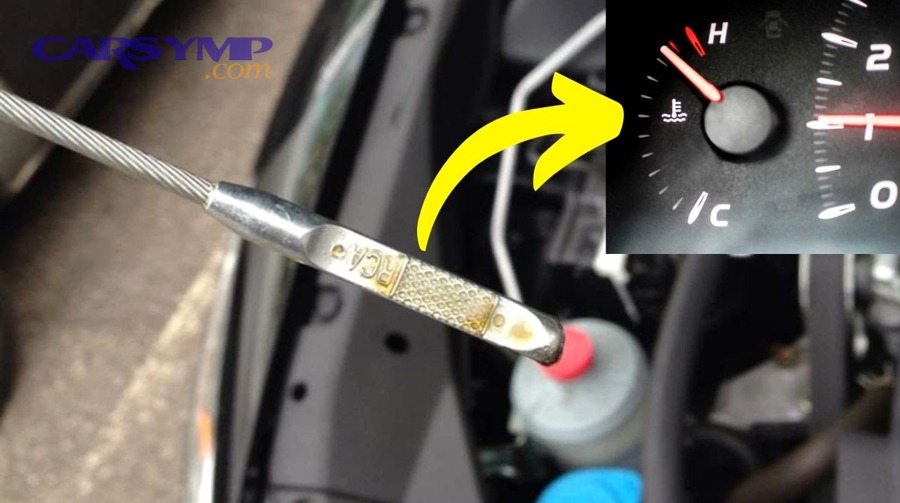
How Do ATF Temperature Thresholds Differ Between CVT, Dual-Clutch (DCT), and Traditional Automatic Transmissions?
CVT fluid operates optimally in the narrowest temperature range of the three transmission types, traditional automatic ATF tolerates the widest temperature variance, and DCT fluid sits between the two — each requiring a different approach to low-fluid risk management.
Specifically, these differences reflect fundamental design divergence:
Continuously Variable Transmissions (CVTs) use a steel push belt or chain running between two variable-diameter pulleys rather than discrete gear sets. The CVT fluid (CVTF) must simultaneously lubricate the belt/chain contact surface, cool the steel components, and maintain the hydraulic pressure that adjusts pulley diameter to vary the gear ratio. Because the belt operates under constant, high-contact-pressure conditions, CVTF is formulated with specific friction modifiers that are not interchangeable with conventional ATF. When CVTF runs low, belt or chain slippage occurs faster and with less warning than gear slippage in a traditional automatic, and the damage — typically belt wear or pulley scoring — can be both rapid and expensive. CVT repairs commonly range from $3,500 to $8,000.
Dual-Clutch Transmissions (DCTs) exist in two variants: dry-clutch DCTs (typically used in smaller, lower-torque applications) and wet-clutch DCTs (used in performance and higher-torque applications). Wet-clutch DCTs use a dedicated DCT fluid that bathes the clutch packs similarly to a conventional automatic and shares similar thermal management requirements. Dry-clutch DCTs have no fluid in the clutch cavity but still require gear lubricant for the mechanical gear sets. Low fluid in a wet-clutch DCT produces slippage and overheating symptoms closely resembling those of a conventional automatic.
Traditional automatic transmissions generally tolerate the widest temperature range among the three types, owing to their robust torque converter and multi-plate clutch design. However, this relative tolerance does not make them immune to low-fluid damage — it simply means the symptoms may develop more gradually, giving drivers a slightly longer warning window.
What Is ATF Viscosity Breakdown and Why Does It Accelerate Slippage Even at Correct Fluid Levels?
ATF viscosity breakdown is the process by which the polymer additives that maintain fluid thickness at operating temperature shear apart under mechanical and thermal stress, causing the fluid to become progressively thinner and less capable of sustaining hydraulic pressure — producing slippage symptoms even when fluid volume appears correct on the dipstick.
This phenomenon is the reason experienced transmission technicians evaluate fluid condition rather than fluid level alone when diagnosing slippage. The viscosity index improvers in ATF — long-chain polymer molecules mixed into the base oil — work by expanding at high temperatures to counteract the natural thinning effect of heat on petroleum-based fluids. Under the shear forces present inside an operating transmission, these polymers gradually break into shorter fragments that no longer expand effectively. The fluid becomes permanently thinner at operating temperature.
In parallel, friction modifiers — the additives that tune clutch engagement characteristics — deplete through chemical reaction with metal surfaces and thermal degradation. As these compounds diminish, the clutch pack engagement becomes erratic: plates may engage too abruptly (causing harsh shifts) or fail to develop full clamping force (causing slippage under sustained load).
The practical implication for maintenance intervals is significant. A transmission that is operated heavily — through frequent towing, mountainous driving, hot-climate use, or performance driving — will exhaust both its viscosity index improvers and its friction modifiers well before the mileage-based service interval suggests. For these use cases, fluid change intervals should be shortened to 15,000–20,000 miles, and fluid condition should be inspected at every oil change regardless of mileage.
Can an Auxiliary Transmission Cooler Prevent Overheating Caused by Marginal ATF Levels?
Yes, an auxiliary transmission cooler can meaningfully reduce operating temperatures and slow the rate of thermal damage when ATF levels are marginally low, but it cannot compensate for critically insufficient fluid volume or severely degraded fluid, and it functions as a preventive tool rather than a corrective one.
An auxiliary transmission cooler is a small, fin-and-tube or plate-style heat exchanger mounted in the airflow path at the front of the vehicle — typically in front of the radiator or air conditioning condenser. ATF is routed through the cooler via dedicated lines, and ambient airflow strips heat from the fluid before it returns to the transmission. This supplements the factory cooler built into the vehicle’s radiator, which in towing or high-load applications is often undersized for the thermal demands placed on it.
The scenarios where an auxiliary cooler provides meaningful benefit include:
- Towing and hauling: The most common application. Pulling a trailer increases torque demand on the transmission by 40–70%, generating proportionally more heat. An auxiliary cooler can reduce steady-state ATF temperature by 30–50°F in towing conditions.
- Hot climate operation: Ambient air temperature directly affects cooler efficiency. In climates where ambient temperature regularly exceeds 95°F, the factory cooler’s capacity margin shrinks significantly.
- Performance and enthusiast driving: Aggressive acceleration, track use, and frequent high-load gear changes generate sustained thermal stress that auxiliary cooling mitigates effectively.
However, an auxiliary cooler cannot replace an adequate volume of clean, correctly specified ATF. If the fluid is critically low, there is insufficient volume circulating through the cooler to benefit from its heat-stripping effect. If the fluid is thermally degraded, lower temperature operation will not restore its lost viscosity or friction modifier function. The auxiliary cooler is therefore best understood as a component that protects healthy, correctly filled ATF from overheating — not a remedy for a compromised fluid condition.
How Does a Faulty Transmission Solenoid Mimic Low ATF Symptoms?
A faulty transmission solenoid produces symptoms — including gear slippage, delayed shifts, erratic gear engagement, and transmission warning lights — that are nearly indistinguishable from low ATF symptoms during normal driving, making professional OBD2 diagnosis essential before assuming fluid volume is the root cause.
A transmission solenoid is an electro-hydraulic valve: an electromagnetic coil surrounds a spring-loaded plunger that opens or closes a fluid passage when energized by the transmission control module. Each gear ratio, torque converter lockup event, and line pressure adjustment is controlled by one or more solenoids. When a solenoid fails — whether through winding failure from heat exposure, contamination from degraded ATF, or electronic fault — the hydraulic circuit it controls either opens permanently, closes permanently, or cycles erratically.
The resulting symptoms map directly onto those associated with low ATF:
- Shift solenoid failure: Causes delayed, missing, or stuck gear engagements — identical to the hydraulic pressure loss symptoms of insufficient fluid.
- Pressure control solenoid failure: Causes incorrect line pressure throughout the transmission, producing slippage under load and harsh or soft shifts — identical to the pressure-drop symptoms of low fluid volume.
- Torque converter clutch solenoid failure: Causes shuddering, RPM fluctuations at highway speed, and hunting between gear ratios — similar to the torque converter slipping symptoms of low ATF.
The diagnostic distinction is straightforward in a shop setting: an OBD2 scan will typically produce specific solenoid-related fault codes (such as P0750–P0778 for shift solenoid faults in most OBD2-compliant vehicles) that point away from a fluid volume issue. Additionally, if fluid level and condition are both confirmed normal but slippage and shift symptoms persist, solenoid or TCM failure should be the primary diagnostic suspect. Replacing individual solenoids typically costs $150–$400 per unit including labor, making correct diagnosis before any transmission disassembly critically important for managing repair costs.
In short, low ATF is both a common and a consequential problem — one that progresses from a correctable fluid condition to catastrophic mechanical failure with surprising speed if left unaddressed. The combination of overheating and gear slippage that defines a low-fluid emergency is the transmission’s most urgent warning signal, and every driver benefits from understanding exactly what those symptoms mean, why they happen, and what the correct response is at each stage of severity.