


If you’re asking how long you can drive with a bad ball joint, the safest answer is: only long enough to reach a repair facility, and only if symptoms are mild.
Next, the practical question is how to judge “mild” versus “dangerous” using what you can feel, hear, and see—because a worn joint can go from annoying to unstable surprisingly fast.
Besides that, you’ll want to understand what actually fails (the boot, grease, socket, stud) so you can predict whether you have days, weeks, or only minutes of safe driving left.
To begin, “Giới thiệu ý mới” we’ll map risk by symptoms, driving conditions, and joint design so you can make a clear go/no-go decision.
Can you drive with a bad ball joint at all?
Yes, you can sometimes drive briefly with a bad ball joint, but only if it has minor play, no severe noise, and no steering instability—because separation can remove steering control and trigger a crash.
Next, the key is understanding what “bad” means in real-world terms: a joint can be worn, loose, dry, contaminated, or close to separating, and each condition changes the safe distance you can cover.
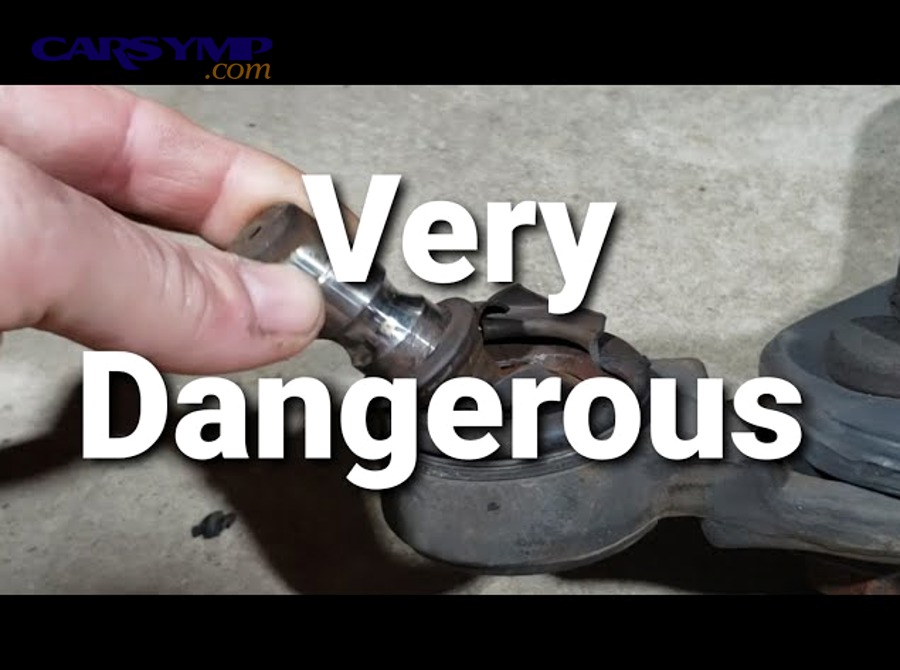
What “bad” usually means in the suspension, not just a noise
A “bad” ball joint usually means the ball-and-socket no longer holds tight tolerances, so the wheel can change angle under load, causing wandering, vibration, and accelerated tire wear as the joint’s play grows.
To illustrate, small looseness may only show up as a faint knock over bumps, but that same looseness can become a steering pull under braking or a sharp clunk during low-speed turns.
In practice, this is why the same car can feel “mostly okay” on a smooth highway yet feel scary on potholes: the joint is being loaded and unloaded rapidly, which magnifies play.
Why “upper vs lower” changes your risk
Risk is higher when the worn joint is the primary load-bearing point (often a lower joint in many designs), because it carries more vertical load and can let the wheel buckle if it separates.
However, this isn’t a universal rule; some vehicles load the upper joint significantly, and some integrate joints into the control arm, which changes the failure path and the warning timeline.
So, the safest mindset is not “upper is safe, lower is dangerous,” but “any loose joint is a countdown—how fast depends on load and contamination.”
When a short drive might be acceptable
A short drive may be acceptable only if you have no pulling, no severe clunking, no vibration that worsens with speed, and no obvious torn boot or grease leakage around the joint.
In other words, you’re aiming for a calm, predictable steering feel, because any sign of changing wheel angle is your warning that the joint’s geometry is no longer stable.
And since stability is the entire point of the joint, even one “near-miss” symptom should move you from “drive carefully” to “tow it.”
How many miles can you realistically drive before it becomes dangerous?
There’s no guaranteed mileage, but if symptoms are present, assume you have miles—not weeks—because once the boot is compromised, wear accelerates and separation becomes plausible.
After that baseline, you can estimate risk using three factors: severity of symptoms, road/usage conditions, and whether the protective boot has failed and let grit in.
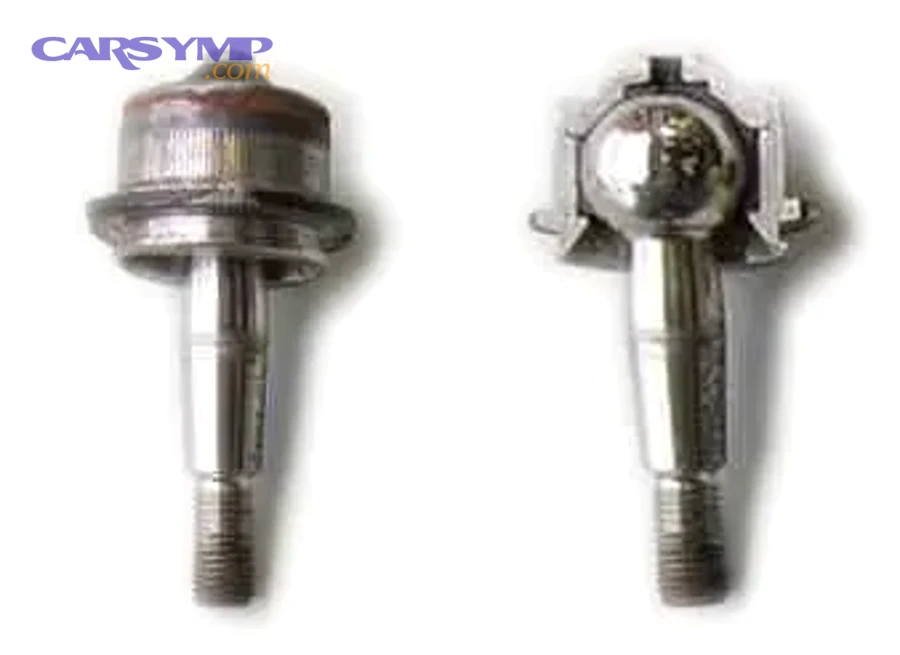
A practical “risk clock” you can use today
Think of your remaining safe distance as a sliding scale: mild noise with stable steering might mean you can drive to a shop; noise plus steering wander means you should avoid driving; loud clunks or vibration under braking means you should not drive.
Next, adjust that scale for speed and surfaces: highway speed multiplies consequences, and rough roads multiply joint movement, which multiplies wear and the chance of sudden shift in alignment.
To be more concrete, if the joint is only slightly loose, you might still cover a short commute; but if the looseness is enough to change toe or camber under load, even a few miles can chew tires and destabilize control.
Why mileage estimates are unreliable (and why that’s the point)
Mileage estimates fail because the joint doesn’t wear linearly: it can feel “about the same” for a while, then get dramatically worse once lubrication is lost and abrasive grit starts grinding the bearing surfaces.
In other words, the joint’s condition is less like a slowly draining battery and more like a dam: small leaks don’t seem urgent until the structure weakens, then failure can happen abruptly.
So, the “how long” question is best answered by symptoms and inspection, not a number you can safely bet your steering on.
A real-world context for why defects matter
The broader safety context is that mechanical defects can contribute to crashes at a measurable scale, which is why roadworthiness and inspection programs exist in the first place.
Theo nghiên cứu của Monash University từ Monash University Accident Research Centre, vào 2000, vehicle defects are described as a contributing factor in over 6% of crashes in the report’s executive findings.
That doesn’t mean every defect causes a crash; it means the odds shift in the wrong direction when a critical joint in the steering/suspension system is no longer holding geometry.
What warning signs mean you should stop driving immediately?
Stop driving immediately if you have loud clunks on turns/bumps, sudden pulling or wandering, steering shake that worsens, or a visible boot tear with heavy grease loss—because these indicate rapid progression toward separation.
Next, use a simple “symptom-to-action” checklist so you’re not guessing under stress when the car feels unstable.
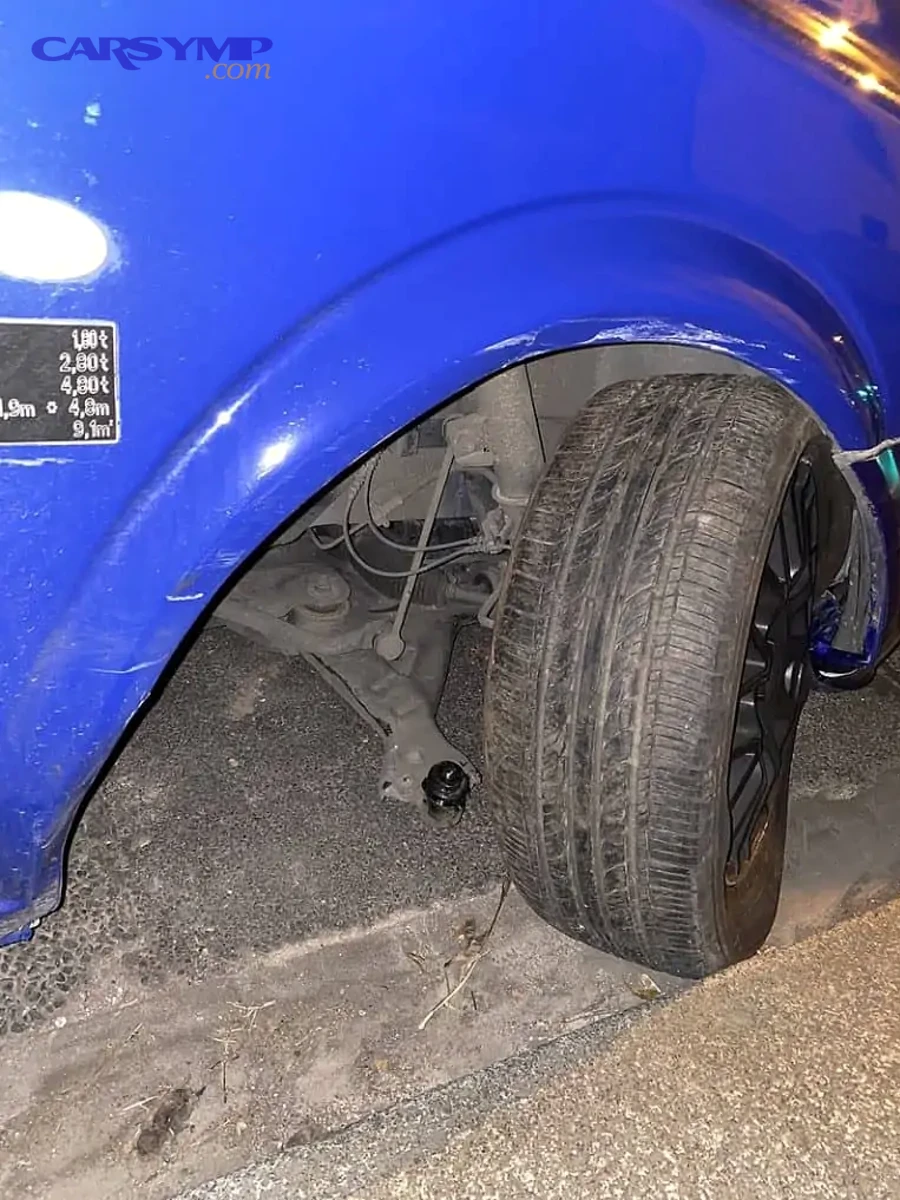
This table helps you translate what you notice into a clear decision (drive carefully to a shop, avoid highways, or tow immediately).
| What you notice | What it often means | Recommended action |
|---|---|---|
| Light, occasional noise; steering feels normal | Early wear or minor play | Drive gently to inspection soon; avoid potholes |
| Repeated clunk over bumps; feels loose when braking | Growing play affecting alignment under load | Avoid highways; schedule repair immediately |
| Wandering/drifting; steering wheel shakes | Wheel angle changing while driving | Do not delay; tow if symptoms are strong |
| Boot torn with grease leakage; noise getting worse fast | Contamination + lubrication loss accelerating wear | Tow recommended; risk of sudden failure rising |
| Sudden loud bang, wheel feels “off,” vehicle pulls hard | Near-separation or partial loss of joint integrity | Stop immediately; do not continue driving |
How to interpret clunks, squeaks, and changing noises
Not every front-end noise is a ball joint, but worsening clunks that correlate with suspension movement are especially concerning because looseness can ratchet as the wheel loads and unloads.
Specifically, many drivers notice “Squeaking or clunking front end causes” such as dry joints, loose links, or worn bushings; the danger sign is when the noise pairs with instability, not just sound.
So, if the sound is new and your steering still feels planted, treat it as urgent-but-controlled; if the sound grows and the vehicle wanders, treat it as unsafe-to-drive.
Uneven tire wear as an early “paper trail” of looseness
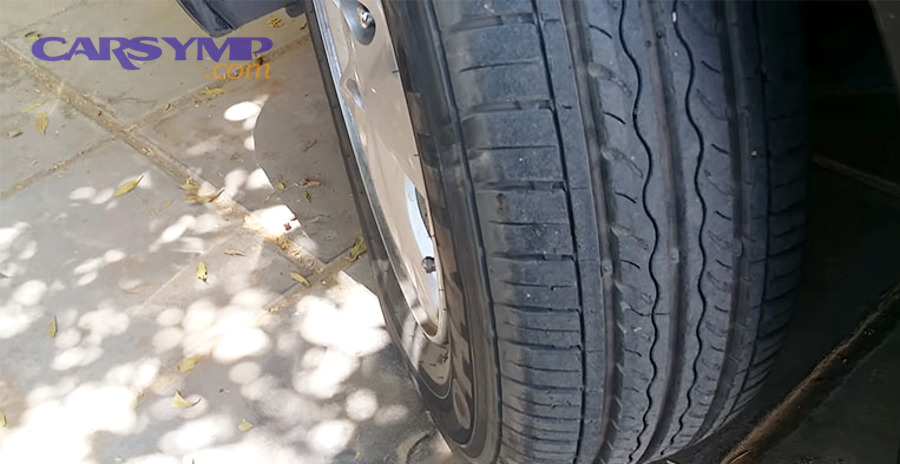
Uneven wear on the inside or outside edge of a front tire can be a warning that the wheel’s alignment is shifting, which can happen when joint play allows camber or toe to change under load.
Next, check both front tires and compare left versus right; a single side wearing faster can point to a localized joint or control arm issue rather than a general alignment drift.
Why does a worn ball joint get worse fast once the boot is torn?
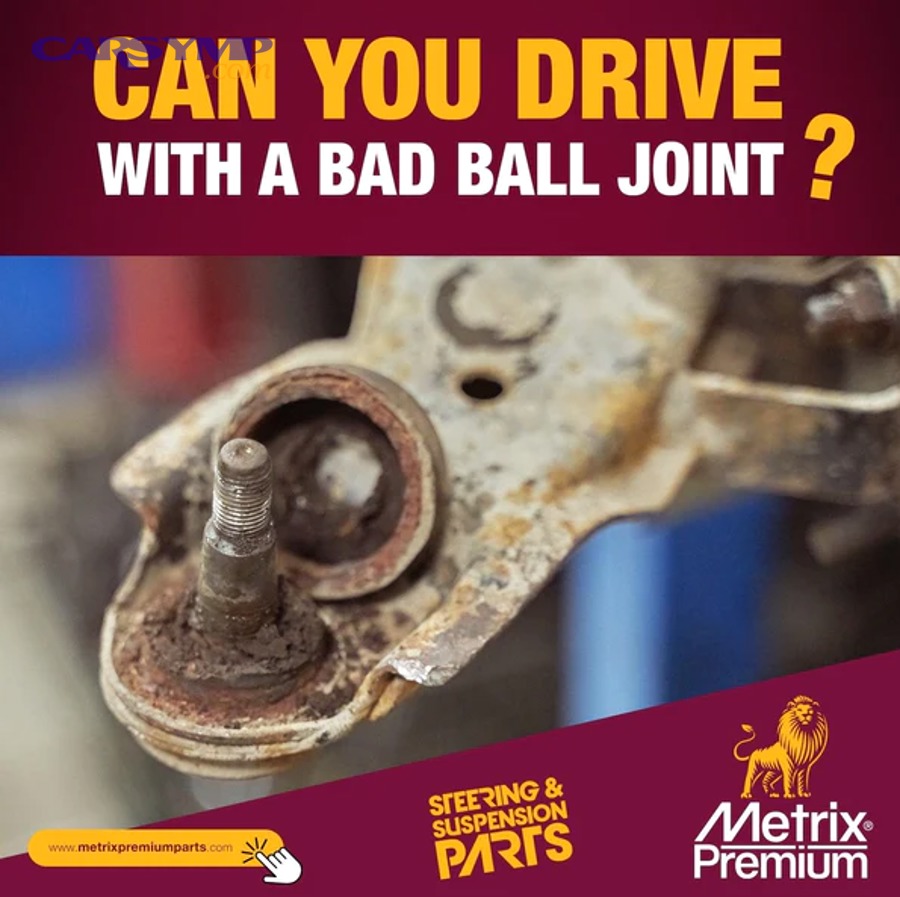
A worn ball joint often worsens quickly after the boot tears because grease escapes and road grit enters, turning the joint into an abrasive grinder that rapidly increases play and raises the chance of separation.
Next, this “boot-to-failure” chain explains why two cars with similar mileage can have totally different urgency—one still quiet, the other suddenly unsafe.
The contamination loop that accelerates wear
Once grease is diluted or lost, friction rises, temperatures rise, and metal surfaces can wear faster; then the extra play lets more grit in, which accelerates wear even more.
To illustrate, you may feel this as a “new looseness” after rain, winter road salt, or a muddy drive—conditions that push moisture and debris into any weak seal.
So, boot condition is not cosmetic; it is the gate that decides whether wear is slow or exponential.
Why you can’t “drive it gently” out of a torn boot
You can reduce loads, but you can’t prevent the joint from moving: every bump, braking event, and steering input forces articulation, and contaminated articulation is exactly what grinds away the joint’s fit.
In that sense, gentle driving may delay catastrophic failure, but it still continues the wear process that makes failure more likely with each mile.
That’s why the best “gentle” choice is often not driving at all—just towing to stop the wear clock immediately.
How do you check ball joint play at home versus at a shop?
You can do a basic home check by lifting the wheel and feeling for play, but a shop check is more reliable because technicians can load the suspension correctly and measure movement while inspecting boots and related parts.
Next, use a simple two-stage approach: a fast visual inspection, then a controlled movement test—because visuals can reveal boot failure even before play feels obvious.
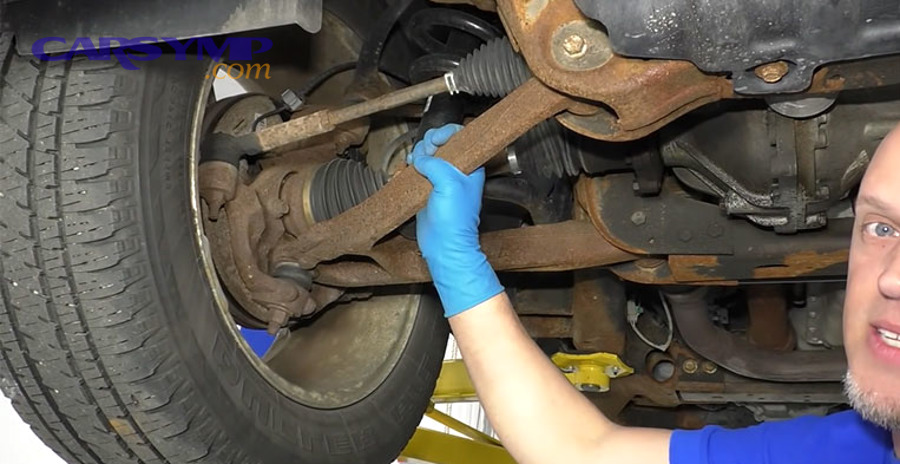
Stage 1: Visual check that takes two minutes
Look behind the wheel for a torn rubber boot, wet grease, rust dust, or a joint that looks “dry” and contaminated; these signs often appear before the steering feels dramatic.
After that, compare left and right sides: one side looking messier or more corroded can explain why noise and wear show up unevenly.
If you see clear boot damage and grease leakage, treat it as time-sensitive even if the car still feels mostly normal.
Stage 2: Basic play test (and the common mistake)
A simple test is to raise the wheel safely, then try rocking it to feel movement; however, the common mistake is testing without considering whether the suspension is loaded the way it is on the road.
Specifically, some designs show more meaningful play when the joint is loaded, which is why shops use pry bars and specific lift points to reproduce real forces.
So, if your home test feels “inconclusive,” don’t treat that as a clean bill of health—treat it as “needs proper inspection.”
What a professional inspection adds
Professionals can distinguish ball joint play from wheel bearing play, tie rod looseness, and control arm bushing movement, which matters because the wrong diagnosis can waste money and leave the real hazard unfixed.
Next, they can also spot secondary damage—like tire feathering, brake rotor contact marks, or control arm deformation—that indicates the problem has progressed beyond a simple wear stage.
And when safety is at stake, clarity beats guesswork every time.
What happens if the ball joint separates while driving?
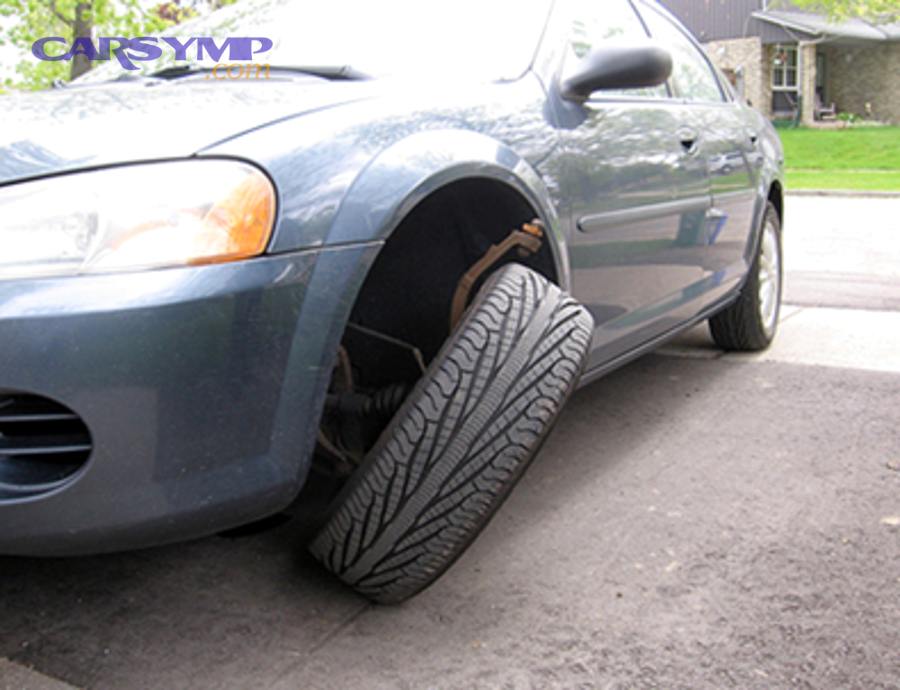
If a ball joint separates, the wheel can buckle or change orientation abruptly, which can cause loss of steering control and a high risk of crashing—especially during braking, turning, or at speed.
Next, understanding the mechanics of separation explains why “one more day” can be a risky gamble when symptoms are escalating.
Why separation is more than “a bad alignment”
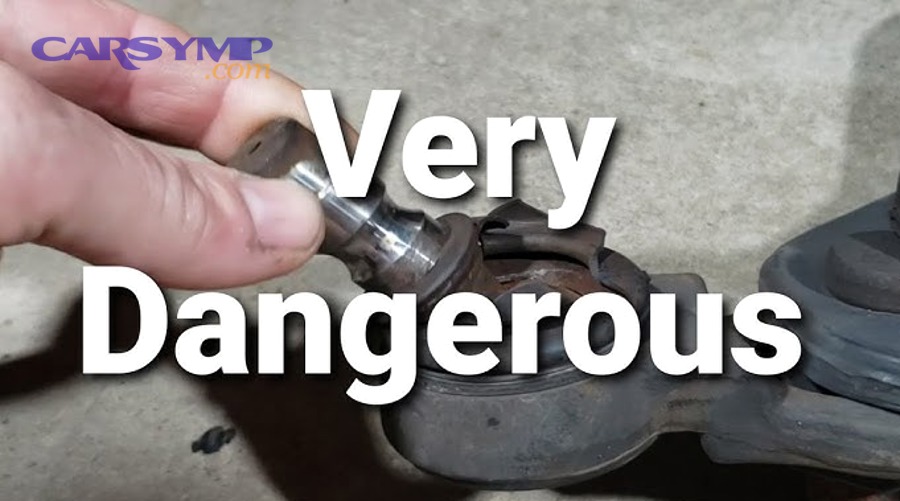
Alignment problems are gradual; separation is abrupt. When the joint no longer holds the steering knuckle to the control arm, the wheel can fold inward or outward, and the vehicle may drop onto a brake rotor or skid unpredictably.
In other words, you’re not just fighting a pull—you may suddenly be fighting a vehicle that can’t track straight because the suspension geometry is no longer intact.
So, the real danger is the transition from “loose” to “disconnected,” which is why strong symptoms should end driving immediately.
Why the risk spikes during turns, potholes, and braking
Turns load the joint sideways, potholes load it vertically, and braking loads it forward; these combined forces are exactly what can push a severely worn socket over the edge into separation.
Next, this is why some drivers report “it happened right after a bump” or “it happened during a turn”—the event isn’t random, it’s load-triggered.
So, if you must move the vehicle, keep speed low, avoid sharp steering angles, and avoid rough surfaces—but treat that as an emergency exception, not a strategy.
Should you replace just the joint or the whole control arm?
It depends on your vehicle design: some allow a standalone joint swap, while others require replacing the control arm assembly, and the correct choice balances safety, labor cost, and future wear on the matching joint.
Next, the practical point is that the repair decision can affect how soon you’ll face the same issue again, especially when the opposite joint is already worn.
When a full control arm assembly is the smarter move
If the joint is integrated into the arm, or if bushings are cracked and the arm is already fatigued, replacing the whole arm can restore multiple wear points at once and reduce repeat labor.
To illustrate, many drivers learn that “ball joint replacement” sometimes means “control arm replacement” in practice, because the manufacturer design doesn’t allow pressing the joint out safely or economically.
So, ask the shop whether the joint is serviceable separately, and whether bushings and the paired joint show wear that would make a combined repair more cost-effective.
Why pairing matters (upper/lower or left/right)
Even if only one joint is noisy, the opposite side or the paired joint on the same corner may be near the same wear stage, so doing both can prevent another alignment and labor charge soon after.
Next, this is particularly relevant when the vehicle has similar exposure on both sides—same mileage, same roads, same climate—because wear tends to be symmetrical unless one side took curb impacts.
So, the best value is often “fix the safety issue now, reduce the chance of repeating the job later.”
A short, visual guide video you can use to understand the job
This video helps you understand what technicians do during replacement so you can ask better questions and spot red flags in estimates.
How can you reduce risk if you must drive to a repair shop?
If you must drive, reduce risk by keeping speed low, avoiding highways, avoiding potholes, minimizing sharp turns, and going straight to a shop—because the goal is to minimize joint load cycles, not “stretch” its life.
Next, treat this as a controlled emergency trip: you’re managing exposure, not proving the car is safe.
Drive strategy that actually reduces load
Use the smoothest route, leave extra following distance, brake gently, and keep steering inputs small, because abrupt weight transfer increases force at the joint and can worsen play quickly.
After that, slow down before bumps instead of braking on them, because braking while the wheel is jolting can combine forces in a way that’s harsh on worn suspension pivots.
So, your mission is steady motion on smooth pavement, not speed or convenience.
When towing is the better “cheap” option
Towing is often cheaper than the secondary damage from continued driving: ruined tires, damaged fenders, broken control arms, or an accident that turns a repair into a claim.
Next, if you have heavy clunks, strong wander, or visible boot failure with worsening symptoms, towing is the financially rational choice because it stops the risk escalation immediately.
So, if you’re debating tow cost versus “maybe it’s fine,” remember that uncertain steering is one of the most expensive gambles in car ownership.
To broaden the context, the next section explains less-obvious factors—joint location, load paths, and design differences—that change how quickly a worn joint becomes unsafe.
Upper vs lower ball joints: which is riskier and why?
Lower ball joints are often riskier when they carry more vehicle weight, but either upper or lower can be dangerous if wear allows the wheel angle to change or if separation becomes possible.
Next, the smartest approach is to evaluate the joint’s role in your specific suspension design rather than relying on a universal rule.
How load paths change the failure story
In many front suspensions, the lower joint supports vertical load while the upper joint helps locate the knuckle; when the load-bearing joint loosens, it can create faster, more noticeable instability under braking and bumps.
However, in other designs, the upper joint and arm geometry can carry significant forces, especially in turns, so “upper” is not automatically safe.
So, the rare-but-important detail is not the label—it’s the load your vehicle actually puts through that pivot.
Greaseable vs sealed joints and what that changes
Sealed joints can’t be re-lubricated, so boot failure is especially punishing because there’s no practical way to restore clean grease inside the socket once contamination begins.
Next, greaseable joints may tolerate time better if maintained, but they still fail if the boot tears or if neglect allows corrosion and grit to take over.
So, “greaseable” is not a guarantee; it’s only an advantage if maintenance is actually done before damage starts.
Why alignment symptoms differ by joint position
Some vehicles show toe changes that feel like wandering steering, while others show camber changes that show up first as tire edge wear; which you see depends on how the joint sits in the control arm geometry.
Next, this explains why two drivers describing the “same problem” can report different sensations: one says “it drifts,” another says “it eats tires,” yet both can trace back to joint play.
So, follow the symptom chain back to geometry: anything that changes wheel angle is a safety priority, regardless of which joint is at fault.
FAQ
Is it safe to drive on the highway with a bad ball joint?
No, highway driving is not safe with a bad ball joint because speed magnifies instability and reduces your margin to react if the joint suddenly worsens or separates.
Next, highway lanes and wind loads can hide early symptoms until a maneuver is required, which is exactly when a loose joint becomes most dangerous.
So, if you suspect joint wear, keep trips short and slow—or tow.
Can a bad ball joint cause shaking in the steering wheel?
Yes, a bad ball joint can cause steering wheel shake when looseness lets the wheel angle change under load, and the vibration often becomes more noticeable as speed increases or during braking.
Next, because many front-end issues can shake the steering, a professional inspection helps confirm whether the source is the joint, a tie rod, a wheel bearing, or tire damage.
So, treat shaking as a “stop delaying” symptom, not something to monitor casually.
What’s the fastest way to decide between driving and towing?
Choose towing if you have loud clunks, strong wander, worsening symptoms, or visible boot failure with grease loss; choose a short, low-speed drive only if symptoms are mild and stable and you’re going straight to repair.
Next, remember that uncertainty itself is a data point: if you can’t confidently describe the symptom as mild, you should assume it isn’t.
So, when in doubt, tow—because the downside of towing is small compared to the downside of losing control.
Will replacing one ball joint fix the noise permanently?
Sometimes yes, but not always, because noise can come from multiple suspension points, and the opposite joint or related bushings may already be worn enough to start making noise soon after.
Next, that’s why estimates often include paired components or alignment: the system works as geometry, not isolated parts.
So, ask the shop to show you play, boot condition, and tire wear patterns so you understand why each line item exists.